
Reviewed · WWI & WWII BATTLEFIELD DAY TRIPS
WW1 Australian Battlefield Day Tour from PARIS: Somme, Villers-Bretonneux…
The most moving part of this day is the way it connects broad military events with small, personal places. You’ll stand beside the huge Lochnagar Crater, walk through preserved trenches at Beaumont-Hamel, and reach the Australian National Memorial at Villers-Bretonneux, where individual family names can become the focus of the day.
I like the private group of no more than seven and the chance to request a particular grave or battlefield site. I also like that the day includes both outdoor ground and the Sir John Monash Centre, which gives the story a strong visual finish. The main drawback is the long day, roughly nine to eleven hours, with lunch at your own expense in Albert.
In This Review
- Key points at a glance
- Why this Somme day trip is worth the long ride from Paris
- Lochnagar Crater puts July 1, 1916 into view
- The First Australian Division Memorial and the Pozieres area
- Thiepval Memorial gives the missing a place
- Beaumont-Hamel preserves the battlefield itself
- Albert provides a needed pause and lunch
- Villers-Bretonneux and the Australian National Memorial
- The Sir John Monash Centre adds an indoor finish
- Sylvestre and the value of a specialist guide
- Timing, comfort, and what to bring
- Who will get the most from this experience
- Should you book the Somme battlefield tour from Paris?
- FAQ
- How long is the tour from Paris?
- How many people can join the private tour?
- Is hotel pickup offered?
- Are admission fees included?
- Is lunch included in the price?
- Can I request a specific grave or battlefield site?
- Is the Sir John Monash Centre included?
- What happens if bad weather cancels the tour?
Key points at a glance
- Lochnagar Crater opens the day with scale: The mine crater gives you an immediate sense of the force used on July 1, 1916.
- Australian sites receive the main focus: Pozieres, the First Australian Division Memorial, Mouquet Farm, Villers-Bretonneux, and the Australian National Memorial all link directly to Australia’s part in the war.
- Beaumont-Hamel preserves original trenches: You get an hour at one of the clearest surviving battlefield areas in the itinerary.
- The private format keeps the day flexible: Up to seven people travel together, and you can ask about a specific site or grave.
- Sylvestre brings strong local knowledge: His clear explanations, conversation, and careful driving are repeatedly praised in the supplied feedback.
- Lunch is separate: You stop in Albert for about 50 minutes, but food and snacks are not included in the $296 price.
Why this Somme day trip is worth the long ride from Paris
The Somme is too spread out for a casual side trip from Paris. The places connected with the Australian forces sit across rural northern France, and public transport will not link them neatly in one day. This tour solves that problem with private transport, a driver-guide, and a planned route through several important sites.
The price is listed at $296, with the vehicle, guide, site access, and museum fees included. That is a serious day-trip cost, but the value becomes clearer if you compare it with arranging separate trains, taxis, local transport, entrance fees, and a guide. You are paying for access to a specialist route and for the time saved moving between places that are difficult to connect independently.
The private setup matters even more than it might on a standard sightseeing tour. You travel only with your own group, up to seven passengers, rather than waiting for a large coach to load and unload. You can also raise questions as you go and ask whether a particular grave or battlefield location can be added to the plan.
The exact day may vary because the tour is described as personalised. That is useful if your family has a connection to the Somme. It also means you should tell the provider about any priority sites when booking, rather than assuming every possible location will fit into the route.
More battlefield remembrance trips from Paris:
- Somme Battlefields Small-Group Day Trip with John Monash Centre from Paris
★ 4.5 · 270 reviews - Somme Battlefields from Paris with Australian memorial & Amiens Cathedral
★ 5.0 · 228 reviews - WWI Somme Battlefields Day Trip from Paris
★ 4.9 · 111 reviews
Lochnagar Crater puts July 1, 1916 into view
Lochnagar Crater is a powerful first stop because it makes the opening of the Somme offensive physical. An underground mine was detonated here on July 1, 1916, leaving a vast hollow in the earth.
You have about 30 minutes at the site. Admission is free, and the value lies in standing beside the crater and hearing how it fits into the first day of the battle. Photographs can show its size, but being there gives you a better sense of the scale of the engineering and destruction.
This is not a museum visit with a long indoor presentation. It is an outdoor stop, so your attention depends on the weather and your guide’s explanation. The tour requires good weather, and poor conditions can lead to a changed date or a full refund. Wear practical shoes and bring clothing for an exposed field visit.
The First Australian Division Memorial and the Pozieres area
The next stop shifts the focus firmly toward Australia. The First Australian Division Memorial marks ground connected with the Gibraltar bunker, the Windmill, and Mouquet Farm, all names tied to heavy Australian losses.
You get about 30 minutes here. That may sound brief, but it works as part of a route that covers several sites rather than staying at one memorial for half a day. A good guide can use this stop to explain how the positions related to one another and why a small area could carry such a heavy cost.
One useful point from the supplied feedback is that the battlefield area felt smaller than expected. That observation is worth keeping in mind. Maps and casualty figures can make the front seem vast, while the ground itself may reveal how tightly packed the fighting positions were.
I would pay close attention to the names of the places mentioned here. Gibraltar bunker, the Windmill, and Mouquet Farm are not simply scenic markers. They help you follow the battle through specific points on the ground, which is far more useful than hearing only a broad account of the Somme.
Thiepval Memorial gives the missing a place
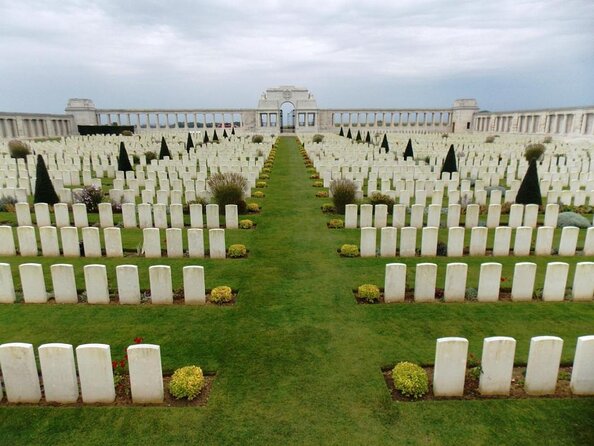
The Memorial de Thiepval is dedicated to the missing of the Somme. You have another 30-minute stop, enough to take in the memorial and let the scale of the names and the building settle.
This part of the day can be especially important if your interest is family research. The tour also allows requests for specific graves or sites in the region, so tell your guide in advance if you are searching for a relative. The supplied feedback includes a particularly personal visit to the Australian memorial, where a passenger found a husband’s great-uncle’s name.
That possibility changes the tone of the outing. This is not only a general battlefield excursion. For some people, it becomes a family memorial visit. Still, you should be realistic about the time available. A specific search works best when you provide clear information before departure.
A different way to spend the day in Paris:
- Paris: Louvre Museum Timed-Entrance Ticket
★ 4.6 · 71,977 reviews - Disneyland® Paris 1-Day Ticket
★ 4.6 · 49,412 reviews - Paris: Versailles Palace and Gardens Full Access Ticket
★ 4.6 · 41,579 reviews - Paris: Arc de Triomphe Rooftop Tickets
★ 4.6 · 34,264 reviews
Beaumont-Hamel preserves the battlefield itself
The Memorial Terre-Neuvien de Beaumont-Hamel receives the longest outdoor visit, about one hour. The preserved battlefield includes original trenches from the 1916 fighting, making it one of the most useful stops for understanding how troops moved, sheltered, and attacked.
I value this stop because preserved ground can answer questions that monuments cannot. You can look across the same type of terrain, see the relationship between trench lines, and picture why progress was so difficult. Your guide’s commentary is important here, since the physical remains need context to make sense.
The name of the memorial points to Newfoundland, so this stop broadens the story beyond Australia. That is a strength rather than a detour. The Somme was a shared Allied battle, and seeing another national memorial helps place Australia’s experience within the wider campaign.
One hour is generous by day-tour standards, though it will pass quickly if you want quiet time, photographs, and detailed questions. Outdoor access also means the quality of the visit will depend on weather. The tour is not described as strenuous, and most people can participate, but uneven historic ground may still call for sensible footwear.
Albert provides a needed pause and lunch
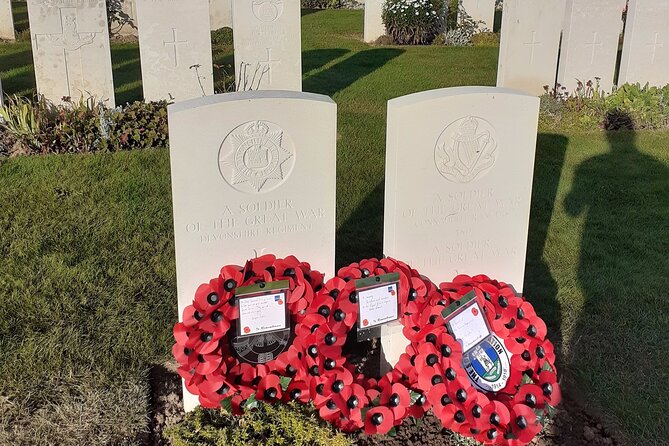
Albert is the practical midpoint of the day. The stop lasts about 50 minutes and includes time to see the town’s famous basilica.
Lunch is not included, and snacks are also your responsibility. That is easy to manage if you plan ahead, but do not treat the $296 price as an all-inclusive package. The 50-minute pause is long enough for a meal stop, yet not so long that you should expect a broad town visit.
I like having Albert in the schedule because a full day among battlefield memorials can become emotionally heavy. A short break gives you time to eat, regroup, and continue with a clearer head. It also breaks up the outdoor stops before the route turns toward Villers-Bretonneux.
Ask your guide about the timing at the start of the day if lunch is important to you. The tour gives an approximate total duration of nine to eleven hours, so the pace can vary.
Villers-Bretonneux and the Australian National Memorial
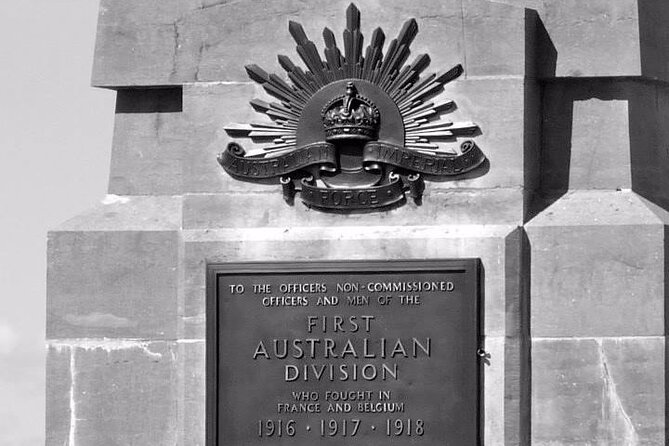
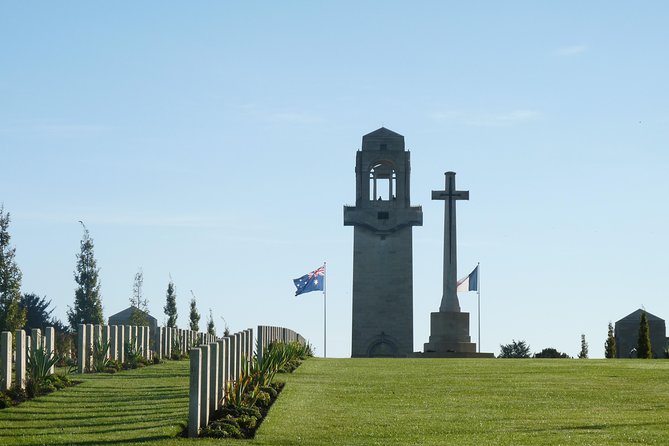
The Australian National Memorial at Villers-Bretonneux is one of the day’s main destinations. It commemorates 11,000 Australians missing in France during the First World War and is described as the largest Australian memorial in Europe.
You have about 40 minutes here. That is enough to visit the memorial and focus on the names, but family research may require careful planning. If you hope to locate someone specific, send the details before the tour and allow your guide to prepare.
This is also the point where the 1918 story enters the day. The route begins with the 1916 fighting around the Somme and finishes in the area where German forces were halted in 1918. That gives the tour a useful time span rather than treating the Somme as one isolated event.
For an Australian visitor, this may be the most personal stop. The memorial has a direct national connection, and the chance to find a relative’s name can make the visit unforgettable. For visitors without an Australian family link, it remains an important place to consider the scale of those listed as missing.
The Sir John Monash Centre adds an indoor finish
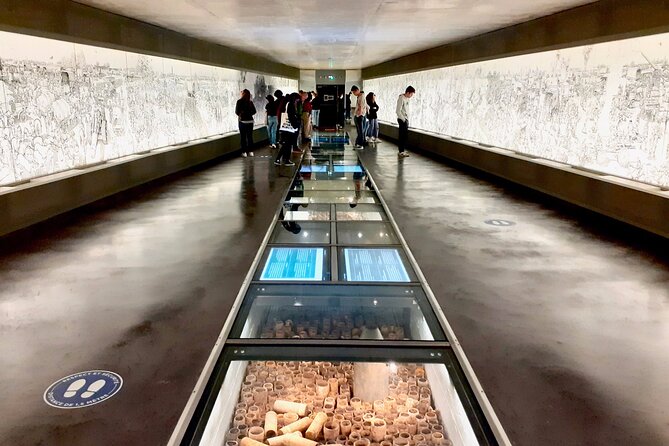
The final listed stop is the Sir John Monash Centre, with about 45 minutes to discover its exhibits and immersive room. It offers a modern presentation of the Australian experience on the Western Front.
This is a smart contrast with the outdoor sites. Earlier, you see craters, memorials, trenches, and open fields. Here, the story is presented through an indoor experience designed to draw the separate locations together. If you find battlefield visits hard to follow from monuments alone, this centre should help connect the places and dates.
The supplied feedback gives special mention to the Victoria School, although the main tour details do not set out a separate scheduled stop for it. I would ask the provider about this when discussing your preferred sites, especially if it matters to your group.
The centre is also useful late in the day because it gives you a place to process what you have seen. After several memorials, a well-designed indoor presentation can bring the military story and personal cost back into focus.
Sylvestre and the value of a specialist guide
The guide can make or break a battlefield day. The strongest praise in the supplied feedback is directed to Sylvestre, who is described as clear, deeply informed about Australia’s contribution, easy to talk with, and a safe driver.
Those qualities matter in practical ways. A guide who knows the area can explain why each site matters rather than simply pointing out a monument. A good conversationalist can adjust the discussion to your interests, whether you care about military movements, family connections, memorial design, or the human cost of the fighting.
The private format also gives Sylvestre room to answer questions. On a large group tour, one person’s family research or detailed military question can be hard to accommodate. With a maximum of seven people, the conversation should feel more direct.
The guide’s name appears as Sylvestre in most of the supplied information, with one reference spelling it Sylvester. If a particular guide is important to you, confirm who will lead your date when booking.
Timing, comfort, and what to bring
Expect a full day, not a quick morning excursion. The advertised duration is approximately nine to eleven hours, and the route includes a long drive from Paris followed by several outdoor stops.
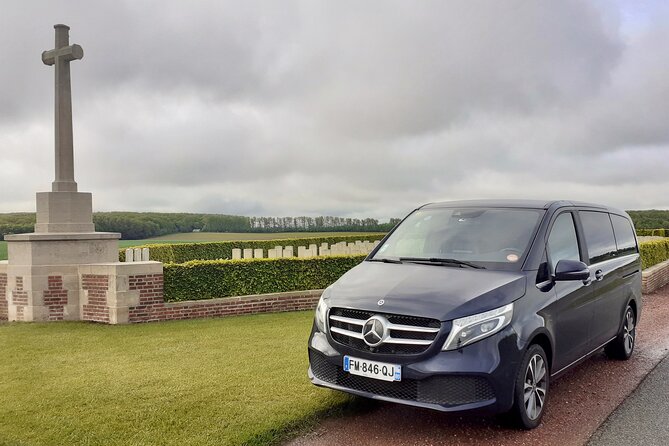
An air-conditioned vehicle and private transportation are included. Pickup is offered, and a mobile ticket is provided. The tour is near public transportation, though the main advantage is the private vehicle, since the battlefield sites themselves are spread out.
I would bring:
- A practical lunch plan or money for Albert
- Water and snacks
- Comfortable walking shoes
- Weatherproof clothing
- Any family research notes, names, dates, or grave details
- A phone or camera, if you want to record memorial names
The tour is suitable for most people, and service animals are allowed. Still, this is a battlefield day with outdoor walking and historic ground. If anyone in your group has mobility concerns, ask the provider about the specific sites before booking, since the supplied details do not describe every path or surface.
Who will get the most from this experience
This tour is a strong fit for Australians interested in national military history, especially anyone with a family connection to the Somme or Villers-Bretonneux. It also suits visitors who want a guide to handle the driving and site order while they focus on the memorials.
You do not need to be a military expert. The route includes enough variety for a first visit: a mine crater, division memorial, missing-person memorial, preserved trenches, a town break, a national memorial, and a modern interpretation centre.
I would think twice if you dislike long day trips or want a relaxed countryside outing. The subject is serious, the schedule is full, and much of the day takes place outdoors. The private vehicle helps, but it does not shorten the distance from Paris.
The tour also makes more sense for a small group than for one person looking for the lowest-cost outing. At $296, the private arrangement and specialist guide are the main value. If you can share the vehicle with family or friends, the cost may feel easier to justify.
Should you book the Somme battlefield tour from Paris?
Book it if you want a focused Australian connection to the Somme and prefer expert guidance to working out a scattered battlefield route on your own. The combination of Lochnagar Crater, Australian positions near Pozieres, Thiepval, Beaumont-Hamel, Villers-Bretonneux, and the Sir John Monash Centre gives you a serious and varied day.
I would especially recommend it if you want to search for a relative’s name or grave. Contact Terres de Mémoire early with the details, since a personalised request is one of the tour’s most useful features.
Skip it if you have only a passing interest in the First World War, need a short outing, or want lunch and snacks included. For the right visitor, though, the private format, careful driving, and Sylvestre’s clear explanations make this a practical way to reach important sites that are difficult to combine independently.
FAQ
How long is the tour from Paris?
The tour lasts approximately nine to eleven hours.
How many people can join the private tour?
The private group can include a maximum of seven passengers.
Is hotel pickup offered?
Pickup is offered, though the supplied information does not specify the exact pickup locations.
Are admission fees included?
Yes. Access to all listed sites and museum fees are included.
Is lunch included in the price?
No. Lunch and snacks are not included. The itinerary includes a 50-minute lunch stop in Albert.
Can I request a specific grave or battlefield site?
Yes. You can tell the provider if you want to visit a particular site or grave in the area.
Is the Sir John Monash Centre included?
Yes. The itinerary includes about 45 minutes at the Sir John Monash Centre, including its immersive room.
What happens if bad weather cancels the tour?
The experience requires good weather. If it is canceled because of poor weather, you will be offered another date or a full refund. You can also cancel for a full refund if you do so at least 24 hours before the start time.
Newest additions around Paris
- Family escape Game with kids and teens on the Île de la Cité★ 4.5 · 11 reviews
- Private Photoshoot with the Iconic Eiffel Tower in Paris★ 5.0 · 11 reviews
- Paris: Batobus Hop-On Hop-Off Cruise & Landmarks Audio Tour★ 3.0 · 11 reviews
- Paris Revolutionary Walking Tour: Iconic French Sights & Stories★ 5.0 · 11 reviews
- 2-day Private Mont Saint-Michel, 3 Loire Castles, D-Day Express★ 4.5 · 11 reviews
- Guided and Private Tour of 3 hours through Paris aboard a Citroën 2cv★ 5.0 · 11 reviews
- Kids in the Kitchen – CrOisSaNtS★ 4.0 · 11 reviews
- Paris: Ghosts and Dark Stories Guided Walking Tour★ 4.1 · 11 reviews
WWI & WWII Battlefield Day Trips, compared.
Somme Battlefields Small-Group Day Trip with John Monash Centre from Paris
Read our review →
Somme Battlefields from Paris with Australian memorial & Amiens Cathedral
Read our review →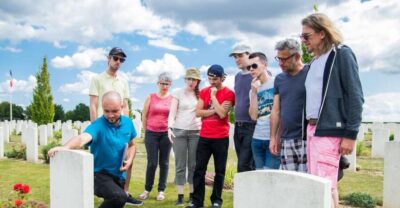
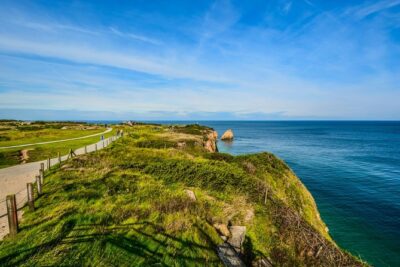
Normandy D-Day Beaches and World War II Sites Day Trip from Paris
Read our review →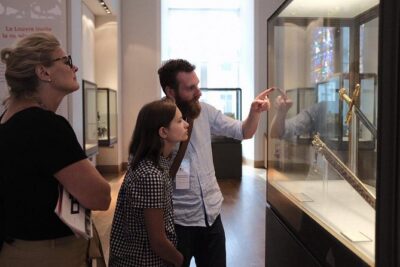
Skip-the-line Les Invalides World War Museum Guided Tour – Semi-Private 8ppl Max
Read our review →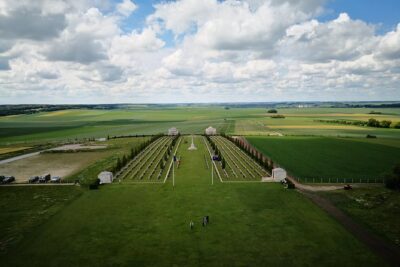
WW1 Australians in the Somme -Villers Bretonneux, Le Hamel – Day trip from Paris
Read our review →
WWI Private Day Trip with Ypres Salient Battlefield in Flanders from Paris
Read our review →
Skip-the-line Les Invalides World War Museum Guided Tour – Exclusive Guided Tour
Read our review →Browse the lists this tour appears in