
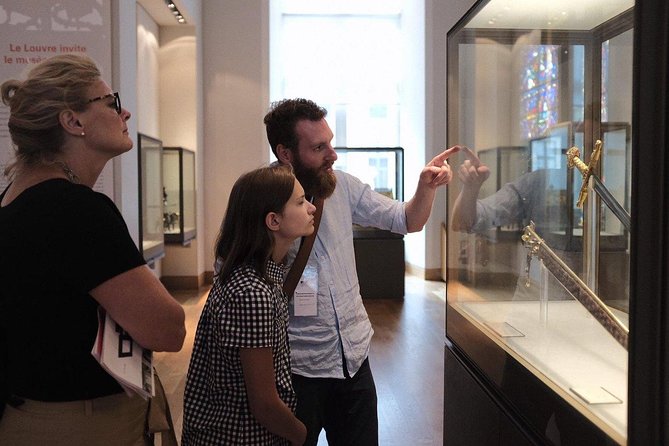
Reviewed · LES INVALIDES & NAPOLEON TOURS
Skip-the-line Les Invalides World War Museum Guided Tour – Semi-Private 8ppl Max
Les Invalides is far more than a grand gold-domed church and Napoleon’s tomb. Inside the Musée de l’Armée, World War I and World War II unfold as one connected story, from Bismarck and the Franco-Prussian War to the Liberation of Paris. That link is the main reason to book a guide rather than wander alone.
I like the eight-person limit, which gives your guide room to answer questions and adjust the pace. I also like the smart route through major objects, including the taxi linked with the Battle of the Marne and the railway carriage where the 1918 armistice was signed. The drawback is price: at $143.27 per person, this is not a casual museum add-on, and one poorly engaged guide could weaken the experience.
In This Review
- Key points to know before booking
- Why Les Invalides works best with a guide
- From Bismarck to the First World War
- Uniforms, weapons, and the human scale of war
- Versailles, the armistice, and an unfinished peace
- How the Second World War grows from the first
- Normandy and the Liberation of Paris
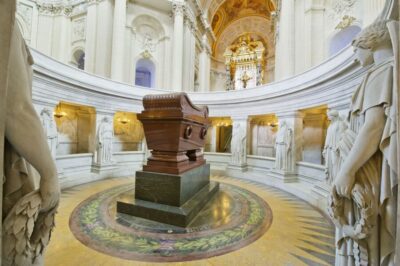
- Napoleon’s tomb and the Invalides setting
- Is $143.27 a fair price?
- Practical details that affect the day
- Who should book this Invalides tour?
- Should you book it?
- FAQ
- Where does the tour begin?
- Where does the tour end?
- How long does the tour last?
- Is museum admission included?
- Is skip-the-line entrance guaranteed to mean no waiting?
- How many people can join the semi-private tour?
- Is the tour offered in English?
- Does the price include hotel pickup?
- Are temporary exhibitions included?
- Can someone using a wheelchair join the tour?
- What bags can I bring?
- Can I cancel for a full refund?
Key points to know before booking
- The tour connects two world wars: You begin with the political tensions of the 19th century, then follow the chain through WWI, the Treaty of Versailles, Hitler, the Occupation, and the Liberation of Paris.
- The group never exceeds eight people: This is small enough for questions and a more personal pace, but it is not automatically a private tour.
- Skip-the-line entry saves orientation time: Security lines may still form, but you avoid spending your limited museum time in the main admission queue.
- The objects make the story tangible: Uniforms, weapons, battlefield equipment, film footage, a Marne taxi, and a replica or original railway carriage linked to the armistice give the history physical weight.
- Guides can shape the visit: Romain and Florian received especially strong praise for their explanations of Napoleon, WWI, and the museum’s main displays.
- Plan for walking and light luggage: Moderate fitness is required, wheelchairs are not accommodated, and only small bags pass through security.
Why Les Invalides works best with a guide

The Musée de l’Armée is large, and its collections can feel like several museums under one roof. You can admire uniforms, rifles, artillery, maps, photographs, and personal objects, but without a clear route it is easy to lose the thread.
This tour gives you that thread. Instead of treating WWI and WWII as separate blocks, the guide explains how the first conflict helped create the political conditions for the second. That approach matters in Paris, where the museum’s displays are tied closely to French national memory.
The visit also gives proper attention to the building itself. The grand setting and Napoleon’s tomb are not side notes. They help explain the military traditions and political power that shaped France long before 1914. One especially strong version of the tour included a close look at the tomb before moving into a detailed account of WWI.
The small format is useful here. With no more than eight people, you can usually hear the guide without strain, ask about an object, and pause when a particular subject catches your attention. The experience is still dependent on the individual guide, though. A strong guide can turn a display case into a story. A disengaged one may simply lead you from room to room.
More Invalides and Napoleon history visits:
- Les Invalides: Napoleon’s Tomb & Army Museum Entry
★ 4.6 · 9,185 reviews - Paris: Aura Invalides Immersive Experience Entry Ticket
★ 4.7 · 3,360 reviews - Paris Entrance Ticket to the Aura Invalides Immersive Show
★ 4.0 · 174 reviews
From Bismarck to the First World War
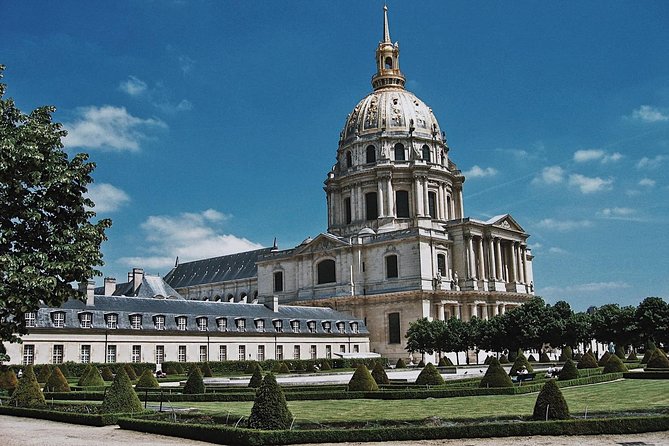
The tour starts before the familiar dates of 1914 to 1918. You look at the 19th century and the Franco-Prussian War, including the role of Otto von Bismarck. This opening may seem like a slow start if you only want battlefield objects, but it gives the later events a useful frame.
The point is to show that WWI did not appear from nowhere. Rivalries, alliances, national ambitions, and earlier conflicts created a tense Europe. Your guide then brings you to the assassination of Archduke Franz Ferdinand and explains how a local crisis spread into a continental war.
This is where a guide earns the fee. The museum contains plenty of information, but the political chain is easier to follow when someone selects the important links. You will not get every detail of European diplomacy in two hours, and you should not expect a university lecture. You should get a clear explanation of why the war widened and why France was central to it.
For visitors who know little about the period, this structure is particularly helpful. For serious military-history fans, the tour may feel selective, since two hours cannot cover every front, commander, and campaign. The benefit is clarity rather than total coverage.
Uniforms, weapons, and the human scale of war
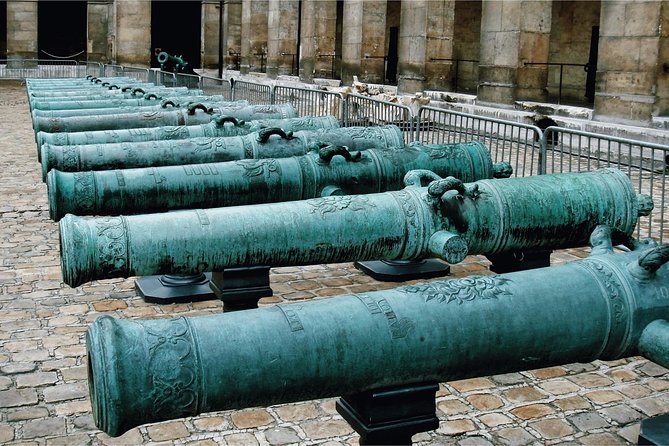
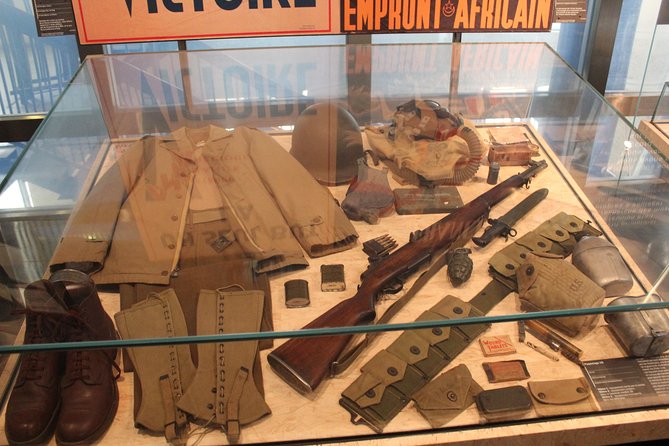
The WWI displays bring the story down from treaties and generals to the people who fought. You see equipment, uniforms, weapons, and other objects used in the battles. These pieces help you picture the practical demands of war: what soldiers wore, carried, and faced.
A guide can also point out details that are easy to miss when you walk alone. The objects are not there simply to decorate the room. They show changing technology, battlefield conditions, and the way armies adapted during a long and destructive conflict.
The tour includes original film footage about the atrocities of the war. This section can be sobering, and it is one reason the experience is better suited to adults and older children than to very young children. The presentation is intended to explain the cost of war, not soften it.
The Battle of the Marne receives special attention, including one of the famous taxis associated with the battle. The taxi is memorable because it connects a major military event with an ordinary Parisian object. It gives the story a local hook: the war was not only fought by distant armies on abstract maps, but also affected the city and its people.
Versailles, the armistice, and an unfinished peace
The visit then moves toward the war’s end and the Treaty of Versailles. This is an important stopping point because the armistice did not create a simple or lasting peace.
You also see the railway carriage associated with the signing of the armistice. It is the kind of object that makes a date in a textbook feel concrete. Your guide explains what happened there and how the agreement ended the fighting in 1918.
The two-hour time limit becomes noticeable around this point. There is enough time to understand the main sequence and see important pieces, but not enough to examine every gallery at length. If you want to read every label or study the military technology in detail, plan to return on your own.
That is not necessarily a fault. A guided tour works best as a focused first visit. You leave with a map of the museum in your head and can decide which sections deserve more time later.
More battlefield remembrance trips from Paris:
- Somme Battlefields Small-Group Day Trip with John Monash Centre from Paris
★ 4.5 · 270 reviews - Somme Battlefields from Paris with Australian memorial & Amiens Cathedral
★ 5.0 · 228 reviews - WWI Somme Battlefields Day Trip from Paris
★ 4.9 · 111 reviews - Normandy D-Day Beaches and World War II Sites Day Trip from Paris
★ 4.5 · 56 reviews
How the Second World War grows from the first
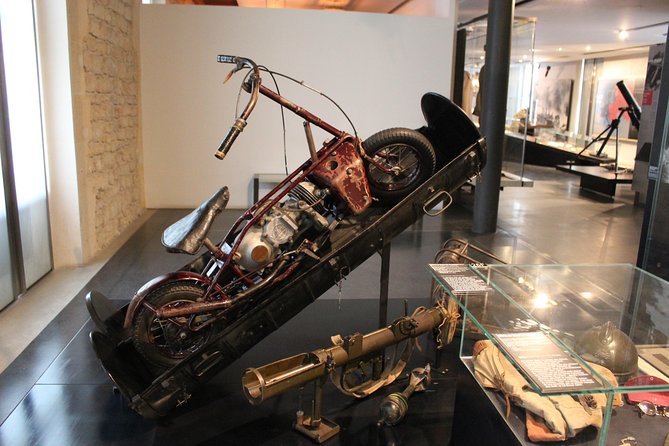
The transition to WWII is one of the tour’s strongest features. Rather than ending with the armistice, the guide explains how the threat posed by Adolf Hitler became a reality.
You discuss the Maginot Line, Dunkirk, and the Occupation of Paris. These topics show the changing nature of warfare and France’s difficult position. They also keep the tour tied to the city outside the museum walls. Paris is not just a backdrop here. Its wartime experience becomes part of the story.
The displays include battlefield objects from WWII, and the guide uses them to explain the conflict in practical terms. You will hear about figures such as Philippe Pétain and Charles de Gaulle, whose roles represent sharply different paths through France’s wartime crisis.
This section requires careful explanation. A quick list of names and battles would not be enough. The guide needs to clarify why Pétain and de Gaulle mattered, how France responded to defeat, and why the Occupation remains such a sensitive part of French memory.
The strongest guides appear to do more than recite dates. Romain was praised for his handling of WWI and for his explanation of Napoleon’s tomb. Florian was singled out for making the overall visit worthwhile and for covering a lot in the allotted time. Those names are useful to note, but guide assignments can change, so you should not book on the assumption that a particular person is guaranteed.
Normandy and the Liberation of Paris
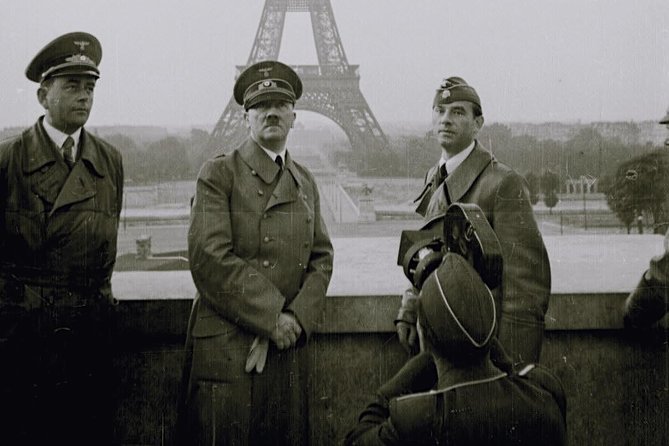
The final part of the route reaches the Normandy battles and the Liberation of Paris. This gives the visit a forward movement from defeat toward recovery, while avoiding the false idea that liberation brought an instant end to every hardship.
Your guide links those events to the preservation of Paris. That connection is meaningful: the city you see today survived a period when its buildings, streets, and cultural treasures were at risk. The tour helps you understand why the Liberation was both a military event and a moment of national identity.
Again, expect selected stories rather than a complete account of the war. Two hours is enough for a strong narrative, not for every battle in Normandy or every stage of the French Resistance. If WWII is your main interest, ask questions early so the guide can give that period enough attention.
Napoleon’s tomb and the Invalides setting
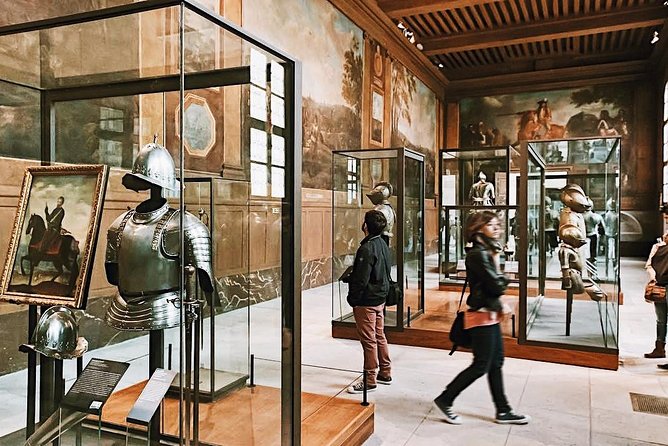
Although the title emphasizes the world wars, the setting also includes Napoleon’s tomb. The tomb is one of the museum’s most recognizable sights, and it gives you a chance to consider how France remembers military leaders across different centuries.
The contrast is useful. Napoleon belongs to an earlier age of warfare and empire, while the world-war galleries show industrial conflict on a much larger scale. Seeing both in one visit helps you understand how military power and national memory changed over time.
The building itself adds ceremony to the experience. That can be part of the appeal, but it can also make the visit feel grander than intimate. You are in a major national museum, not a small specialist collection. The guide’s job is to make the objects feel personal despite the scale of the setting.
Is $143.27 a fair price?
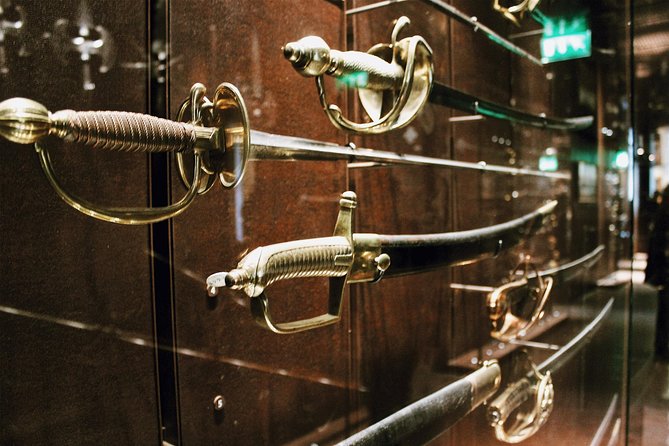
At $143.27 per person, the tour sits firmly in the paid-guidance category. You are paying for admission, an English-speaking professional guide, a two-hour route, and the convenience of skip-the-line access. You are not paying for transport, meals, hotel pickup, or temporary exhibitions.
The value depends on how you use the two hours. If you would otherwise wander without knowing which rooms matter, the guide can save time and provide the historical connections that are hardest to build alone. The small group also gives you a better chance to ask questions than a large coach tour.
The price feels less attractive if you already know the museum well or prefer to read at your own pace. It may also feel steep for a family, even with group discounts available. One family of four enjoyed seeing a lot with a guide but still found Paris tours generally expensive. That is a fair warning: the experience can be worthwhile without feeling inexpensive.
A private upgrade is available if you want the guide’s full attention. The semi-private version is the better compromise for many people, especially solo visitors, couples, or small families who want personal contact without paying for an entirely private booking.
Practical details that affect the day
The meeting point is at Hôtel des Invalides, 75007 Paris. The tour returns to the same point, and hotel pickup and drop-off are not included. Use public transport, a taxi, or Uber to reach the meeting point, and allow enough time to find the entrance.
The activity lasts about two hours. That is a good length for a focused museum visit, though you may want to stay longer afterward if you enjoy reading labels and examining the collections. Temporary exhibitions are not included.
Skip-the-line does not mean you will never wait. Security checks can still create a queue, especially when museum procedures tighten. No large bags or suitcases are allowed. Bring only a handbag or small, thin backpack.
Wear suitable clothing for entry into the site. You should also be prepared to walk and remain on your feet for much of the visit. The activity is not available to people with walking disabilities or those using a wheelchair.
The museum or Invalides dome can occasionally close without warning. If opening is delayed by more than an hour, an alternative may be offered, but a refund or discount is not promised in that situation. Give the provider a mobile phone number with country code so the tour team can contact you if needed.
Who should book this Invalides tour?
I would choose this tour if you want a clear introduction to French military history and prefer stories over silent gallery browsing. It suits first-time visitors to Les Invalides, history-minded couples, and families with older children who can handle serious wartime material.
The eight-person cap is also useful if you dislike large groups. You will probably get more direct contact with the guide and a better chance to ask about a particular display.
I would hesitate if you want a leisurely museum day. The route is focused and selective, and the guide controls the pace. I would also hesitate if your main interest is only Napoleon, since the tour gives substantial time to WWI and WWII.
The guide matters enormously. Romain and Florian have shown the kind of subject command and energy this museum needs, while the experience can suffer when the guide does not engage with the group. That is the central risk of any guided tour, and the high price makes it worth considering.
Should you book it?
Book this tour if you want the museum’s major stories explained in a logical order, especially the link between WWI and WWII. The armistice carriage, Battle of the Marne taxi, wartime footage, Napoleon’s tomb, and small group make two hours go a long way.
Skip it if you are comfortable researching the museum yourself, need wheelchair access, or want a slow and exhaustive visit. For everyone else, this is a focused way to make sense of a vast collection, provided you accept the premium price and the fact that the guide will shape much of your experience.
FAQ
Where does the tour begin?
It begins at Hôtel des Invalides, 75007 Paris, France.
Where does the tour end?
The activity ends back at the meeting point.
How long does the tour last?
The tour lasts approximately two hours.
Is museum admission included?
Yes. All entrance fees for the included museum visit are covered.
Is skip-the-line entrance guaranteed to mean no waiting?
No. Security measures can still create lines, even with skip-the-line access.
How many people can join the semi-private tour?
The group can have a maximum of eight people.
Is the tour offered in English?
Yes. The tour is offered in English and includes a professional tour guide.
Does the price include hotel pickup?
No. Hotel pickup and drop-off are not included. You must make your own way to the meeting point.
Are temporary exhibitions included?
No. Temporary exhibitions are not included in the tour.
Can someone using a wheelchair join the tour?
No. The activity is not available for people with walking disabilities or those using a wheelchair.
What bags can I bring?
Large bags and suitcases are not allowed inside. Only handbags or small, thin backpacks can pass through security.
Can I cancel for a full refund?
Yes, if you cancel at least 24 hours before the experience start time. Changes or cancellations made less than 24 hours before the start time are not accepted for a refund.
More Skip the Line in Paris
- Versailles: Skip-the-Line Tour of Palace with Gardens Access
★ 4.7 · 9,778 reviews - Versailles: Skip-the-Line Guided Palace Tour and Full Access
★ 4.6 · 5,214 reviews - Louvre Museum: Skip-the-Line Small Group Guided Tour
★ 4.6 · 3,960 reviews - From Paris: Versailles Skip-the-Line Tour & Gardens Access
★ 4.7 · 3,011 reviews
More Paris museums to visit
- Paris: Louvre Museum Timed-Entrance Ticket
★ 4.6 · 71,977 reviews - Paris: Orsay Museum Entry Ticket
★ 4.7 · 25,647 reviews - Louvre Museum Masterpieces Guided Tour with Access
★ 4.5 · 12,023 reviews - Paris: Louvre Museum Entry Ticket With Host and River Cruise
★ 4.6 · 9,926 reviews
Newest additions around Paris
- Family escape Game with kids and teens on the Île de la Cité★ 4.5 · 11 reviews
- Private Photoshoot with the Iconic Eiffel Tower in Paris★ 5.0 · 11 reviews
- 2-day Private Mont Saint-Michel, 3 Loire Castles, D-Day Express★ 4.5 · 11 reviews
- Paris: Batobus Hop-On Hop-Off Cruise & Landmarks Audio Tour★ 3.0 · 11 reviews
- Paris Revolutionary Walking Tour: Iconic French Sights & Stories★ 5.0 · 11 reviews
- Guided and Private Tour of 3 hours through Paris aboard a Citroën 2cv★ 5.0 · 11 reviews
- Kids in the Kitchen – CrOisSaNtS★ 4.0 · 11 reviews
- Paris: Ghosts and Dark Stories Guided Walking Tour★ 4.1 · 11 reviews
Les Invalides & Napoleon Tours, compared.
Les Invalides: Napoleon’s Tomb & Army Museum Entry
Read our review →
Aura Invalides Immersive Experience Entry Ticket
Read our review →
Paris Entrance Ticket to the Aura Invalides Immersive Show
Read our review →Skip-the-line Invalides Dome Louis XIV & Napoleon Tour – Exclusive Guided Tour
Read our review →
Napoleon’s Tomb & Invalides Small Group Guided Tour
Read our review →
Napoleon’s Tomb and the Invalides Small-Group Guided Tour
Read our review →
Napoleon Bonaparte: Life & Legacy Guided Tour + Visit to his Tomb
Read our review →
Invalides Dome – Skip-the-Line Guided Museum Tour
Read our review →Browse the lists this tour appears in