
Reviewed · WWI & WWII BATTLEFIELD DAY TRIPS
Somme Battlefields Small-Group Day Trip with John Monash Centre from Paris
The most powerful part of this day is how quickly the Somme stops being a name in a history book and becomes a series of real places: a huge mine crater, preserved trenches, military cemeteries, and memorial walls covered with missing soldiers’ names. The Sir John Monash Centre and the Australian sites at Villers-Bretonneux and Pozières give special weight to the Australian story.
I like the small-group format, which makes it easier to ask questions and gives the guide room to adjust the commentary. I also like the range of stops, from quiet cemeteries to the excellent Historial museum in Péronne. The drawback is simple: this is an 11-hour day with a very early start, and some stops can feel rushed because the Somme covers so much ground.
In This Review
- Key points to know before booking
- Why the Somme is worth a day from Paris
- The 6:50 a.m. start from central Paris
- Sir John Monash Centre: the modern starting point
- Australian National Memorial at Villers-Bretonneux
- Pozières and the First Australian Division Memorial
- Lochnagar Crater at La Boisselle
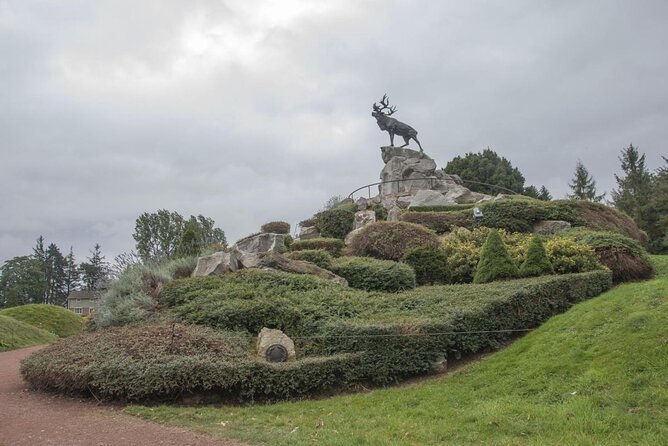
- Thiepval, Ulster Tower, and Beaumont-Hamel
- Delville Wood Cemetery at Longueval
- Péronne and the Historial of the Great War
- Guide quality and the small-group experience
- Is $294.36 good value?
- Who should book this Somme day trip?
- Practical details before you go
- Should you book it?
- FAQ
- How long does the Somme Battlefields tour last?
- Where does the tour begin?
- Where does the tour end?
- What time does the tour start?
- What is included in the price?
- Are food and drinks included?
- What is the group size?
- What should I wear?
- Can I cancel for a full refund?
Key points to know before booking
- A full day beyond Paris: Leave at 6:50 a.m. and return in the early evening after a long minivan journey north.
- Strong Australian focus: Visit Villers-Bretonneux, the Sir John Monash Centre, Pozières, Mouquet Farm, and the Australian National Memorial.
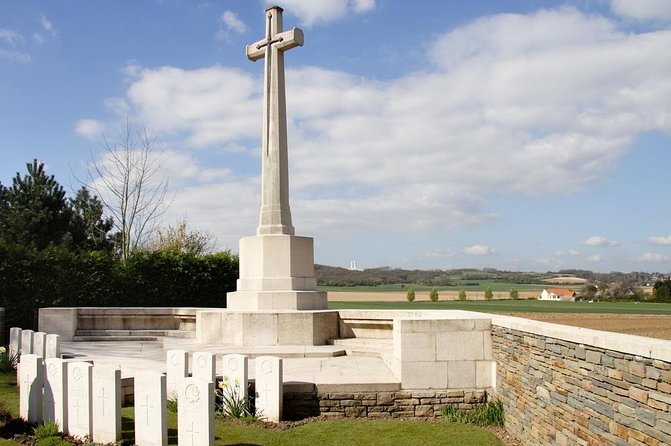
- Major British and Commonwealth sites: See Thiepval, Ulster Tower, Beaumont-Hamel, and Delville Wood.
- The Somme in physical form: Walk near preserved trenches and see the 100-meter-wide Lochnagar Crater.
- Guide quality matters: Régis, Honoré, Heniere, and Julian have received especially warm praise for their history knowledge and care.
- Check the group size: The tour is promoted as small, with eight people in some descriptions, but the practical maximum is also listed as 16.
Why the Somme is worth a day from Paris
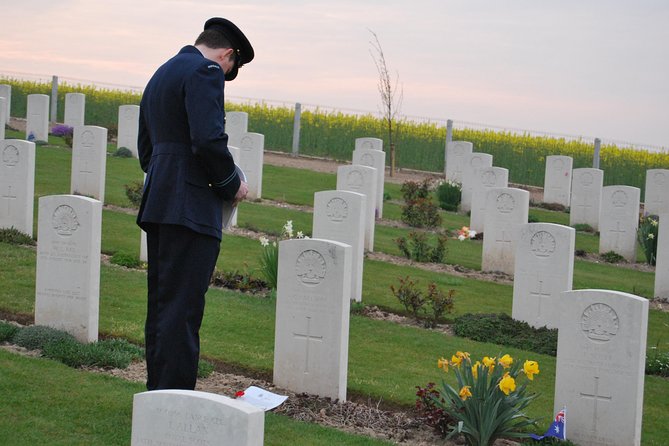
The Somme battlefields are about the cost of war, but they are also about memory. The 1916 Battle of the Somme became one of the First World War’s bloodiest campaigns. For many families from Australia, New Zealand, Britain, Canada, France, and Ireland, the area is tied to a relative who served, disappeared, or never came home.
You will not find one single battlefield here with a neat entrance and a simple route. Instead, the Somme is spread across villages, farms, cemeteries, memorials, and former trench lines. That makes an organized day trip useful. A guide can connect the sites and explain why a quiet patch of farmland mattered in 1916.
The drive from Paris is long, but it is also what makes the minivan practical. You avoid arranging several regional trains, local taxis, and rural connections. The air-conditioned minibus gives you a place to rest between stops, though you should expect a demanding day rather than a relaxed country outing.
More battlefield remembrance trips from Paris:
- Somme Battlefields from Paris with Australian memorial & Amiens Cathedral
★ 5.0 · 228 reviews - WWI Somme Battlefields Day Trip from Paris
★ 4.9 · 111 reviews - Normandy D-Day Beaches and World War II Sites Day Trip from Paris
★ 4.5 · 56 reviews
The 6:50 a.m. start from central Paris
The meeting point is Le Duplex, 2 bis Avenue Foch, close to the Arc de Triomphe. The tour begins at 6:50 a.m., so arrive early. The group will not wait for late arrivals, and missing the departure because of a delay does not qualify for a refund.
That early start is not just a scheduling nuisance. It is the reason you can fit Villers-Bretonneux, Pozières, Thiepval, La Boisselle, Delville Wood, Beaumont-Hamel, and Péronne into one day. By the time you return to Paris, the drop-off is at the Arc de Triomphe in the early evening.
Wear comfortable shoes and dress for changing weather. The tour operates in all conditions, and several stops involve walking outdoors on uneven ground. A moderate level of fitness is recommended.
Sir John Monash Centre: the modern starting point
The Sir John Monash Centre sits beside the Australian National Memorial and Villers-Bretonneux Military Cemetery. It is the main point of the Australian Remembrance Trail on the Western Front.
The centre uses interactive displays and multimedia presentations to explain the Australian experience in France. This gives you more than dates and troop movements. The material helps place soldiers within the wider war, including the conditions faced by military personnel and the importance of the Australian contribution.
Allow about an hour here. That sounds generous, but it is one of the places where you may wish for even more time. The centre is designed for attention, not a quick photograph and a short walk. If Australian military history is your main reason for booking, this will likely be one of the day’s most important stops.
The practical trade-off is that time spent inside the centre means less time elsewhere. The guide has to keep the full itinerary moving, so do not expect an open-ended museum visit.
Australian National Memorial at Villers-Bretonneux
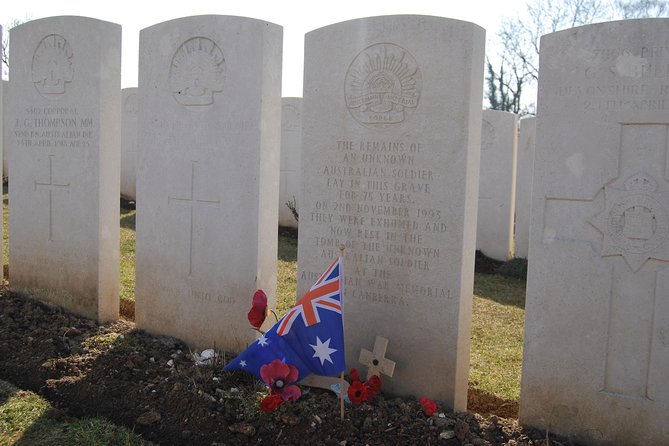
The memorial is within the military cemetery and commemorates Australian soldiers who fought in France and Belgium during the First World War. A total of 10,729 Australian servicemen are officially remembered here.
The site has a strong connection with Anzac Day. A Dawn Service takes place here each April 25, and the memorial remains an important place of remembrance for Australian families.
This is a stop for quiet attention rather than a long list of sightseeing tasks. You can take in the scale of the memorial, the cemetery, and the names connected to the campaign. If you are tracing a family connection, bring the details with you. One person on the tour was able to locate a New Zealand serviceman listed as missing after the guide made a small adjustment to the route.
That kind of flexibility cannot be guaranteed, but it shows why it helps to tell the guide at the start if you have a particular name, unit, or cemetery in mind.
A few more Paris ideas to compare
- Disneyland® Paris 1-Day Ticket
★ 4.6 · 49,412 reviews - Normandy D-Day Sites & Cemetery Day Trip from Paris with Lunch
★ 5.0 · 6,877 reviews - Day Trip to Mont-Saint-Michel from Paris
★ 4.5 · 4,876 reviews - Disneyland® Paris 1-Day Flexible Date Ticket
★ 4.3 · 4,347 reviews
Pozières and the First Australian Division Memorial
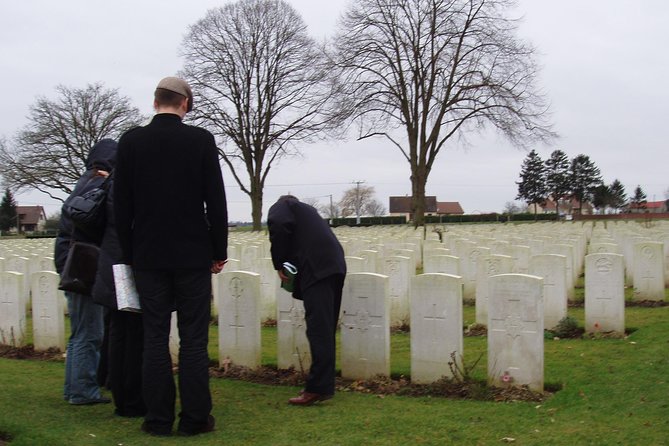
At Pozières, the tour visits the First Australian Division Memorial near the former Gibraltar blockhouse. The German position was captured and held by the Australian 1st Division between July 23 and 26, 1916.
You have about 15 minutes at this memorial, so this is a short but significant stop. The guide’s explanation is important because the remains of a battlefield are not always obvious to an untrained eye. A field or village road can look ordinary until you understand the attack that took place there.
The route also includes Australian battlefield sites at Pozières and Mouquet Farm. An Australian flag still flies over Pozières, providing a visible link to the troops remembered there.
If your main interest is the Anzac story, these stops will feel especially relevant. If you want long walks across every former trench line, this day may feel too compressed.
Lochnagar Crater at La Boisselle
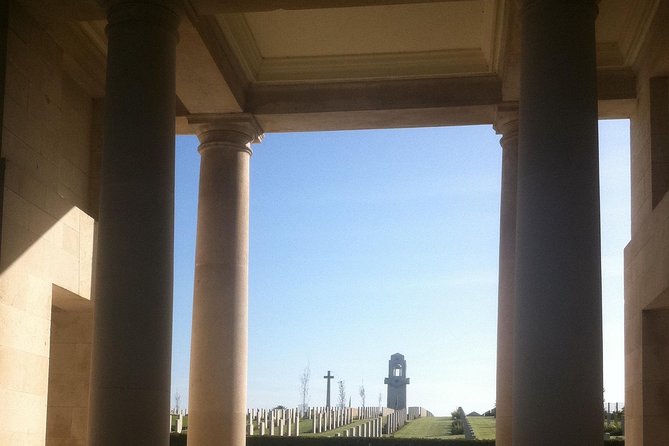
At La Boisselle, you see the Lochnagar Crater, created by a huge mine explosion during the opening of the Battle of the Somme. The preserved crater measures about 100 meters across, or roughly 330 feet.
It is hard to understand the force of underground mining until you see the size of the result. The crater is not a small hollow in the ground. It is a broad, unmistakable scar that gives physical scale to the battle.
This is one of the most memorable outdoor stops because it needs little interpretation to make an impression. Still, the guide’s context helps explain how mines, artillery, trenches, and infantry attacks fit together.
Take care around the site and follow the guide’s directions. The visit is outdoors, and the ground may be less comfortable in wet weather.
Thiepval, Ulster Tower, and Beaumont-Hamel
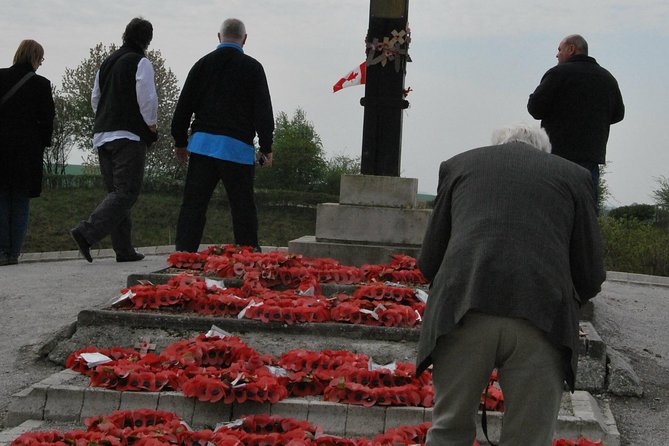
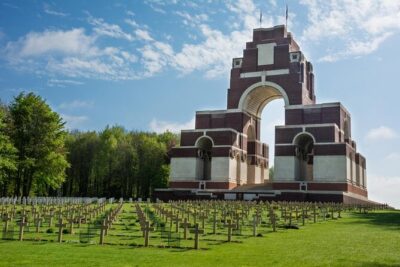
The Thiepval Memorial is dedicated to British soldiers who died on the Somme and have no known grave. Its enormous memorial structure and extensive names make it one of the area’s most serious places of remembrance.
The tour also includes the Ulster Tower, a memorial connected with the soldiers of Northern Ireland, and the Beaumont-Hamel Newfoundland Memorial. At Beaumont-Hamel, you can see preserved battlefield ground and trench remains, offering one of the clearest chances to picture how soldiers lived and fought.
These sites broaden the day beyond the Australian story. The Somme was an international campaign, and the memorials reflect the many forces involved. The guide can help you see the links between national memories without reducing the visit to a parade of monuments.
Allow yourself some silence. One important caution is that guide style can affect this part of the day. Most of the guides praised for this tour, including Régis and Honoré, are described as friendly, thoughtful, and willing to answer questions. One account raised concerns about excessive talking and a lack of quiet at a cemetery. At sites of this kind, respectful pacing matters as much as facts.
Delville Wood Cemetery at Longueval
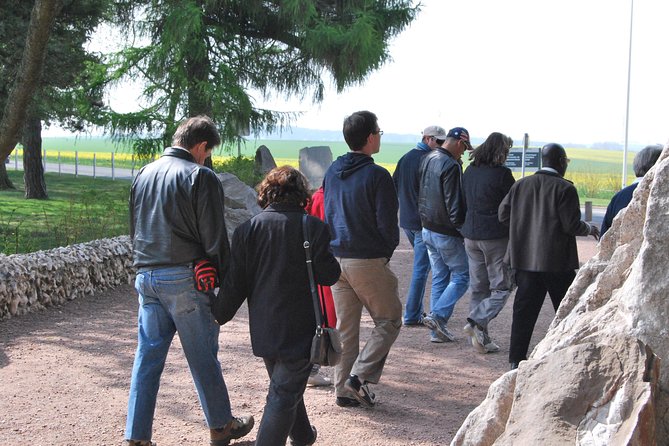
Delville Wood Cemetery is the final resting place of more than 5,500 soldiers from the First World War. It is another place where the numbers become personal because the cemetery gives those losses names, dates, and individual graves.
The setting is quiet, but the history is not simple. The fighting around Delville Wood was severe, and the cemetery forms part of a wider group of memorial sites in the Longueval area.
This stop suits anyone interested in genealogy, military history, or the human cost of the campaign. It also suits anyone who simply wants time away from the larger monuments. Ask the guide about the particular units represented if that is important to you.
Péronne and the Historial of the Great War
The final major stop is the Historial of the Great War in Péronne. This museum holds more than 50,000 historic objects connected with military and civilian life during the conflict.
That civilian focus is valuable. A battlefield tour can otherwise become a sequence of troop movements, generals, and casualty figures. The Historial helps you consider the war beyond the front line, including how ordinary people lived through it and how the conflict began and ended.
The museum is well suited to the end of the day because it gives you time to gather the many pieces you have seen outdoors. You will have already visited cemeteries, memorials, trenches, and crater sites. Here, objects and displays can help connect those physical places to the wider story.
The amount of time available depends on the day’s schedule, so do not assume you can examine every display at length. Still, this is an important reason the tour offers more value than a simple drive past battlefield monuments.
Guide quality and the small-group experience
The guide can make or break a history tour. Régis is repeatedly praised for being well informed, efficient, friendly, and attentive, including helping older members of a group at each stop. Honoré is described as engaging, amusing, and highly informed. Heniere and Julian are also singled out for strong explanations.
The best use of a guide here is not just to recite dates. You want someone who can explain what happened at a particular field, why a memorial is located there, and how Australian, British, Canadian, New Zealand, French, and Irish stories fit together.
The tour details are slightly inconsistent about capacity. The headline describes a maximum of eight people, while the included information and additional details list a maximum of 16. If eight is important to you, confirm the size when booking. Either way, a minivan group is more personal than a large coach excursion.
A small group also helps if you have a family name to find or a question about a particular unit. It does not guarantee a private tour, and it does not mean every stop can be extended.
Is $294.36 good value?
At $294.36 per person, this is not a cheap day trip. The price covers transport from Paris, an English-speaking driver-guide, taxes, and handling charges. Food and drinks are not included, so budget separately for lunch and carry water and snacks.
I think the price can be justified if you want to see many Somme sites in one day without arranging rural transport. The route is too spread out for an easy independent visit from Paris, especially when you factor in train connections, taxis, opening hours, and navigation between cemeteries and memorials.
The value is also tied to the guide. A strong explanation at Thiepval, Pozières, or Beaumont-Hamel can turn an otherwise confusing stop into a meaningful one. The risk is that a rushed itinerary or a guide who gets facts wrong will make the cost feel high.
This is best viewed as a specialist history day trip, not a general sightseeing excursion. You are paying for access to a difficult-to-reach region, a full route, and historical interpretation.
Who should book this Somme day trip?
I would recommend it most strongly if you are:
- Interested in the First World War or military history
- Australian, New Zealand, British, Canadian, or Irish, with family connections to the Somme
- Looking for a structured visit to cemeteries and memorials
- Comfortable with an early start and a long day
- Happy to spend much of the day moving between outdoor sites
- Traveling with older relatives who may benefit from minivan transport and guide assistance
You do not need an advanced military background. Several parts of the route, especially Lochnagar Crater and the preserved trenches, communicate their importance visually. Still, you should enjoy history and be ready for a solemn day.
This may not suit you if you want a leisurely pace, extended museum time, or a trip built around food and village sightseeing. The route includes villages, churches, and rural sites, but its purpose is remembrance and historical understanding.
Practical details before you go
The tour lasts about 11 hours and departs at 6:50 a.m. from Le Duplex on Avenue Foch. You return to the Arc de Triomphe in the early evening.
Transport is by air-conditioned minibus. The tour includes an English-speaking driver-guide and all listed taxes and handling charges. Food and drinks are extra.
Wear shoes suitable for walking outdoors and dress for the forecast. The tour runs in all weather, and a moderate fitness level is advised. Confirmation is issued within 48 hours of booking, subject to availability.
Free cancellation is available until 24 hours before the start time. After that point, the amount paid is not refunded, and changes are not accepted. A minimum number of participants is required, and if that minimum is not met, you will be offered another date or experience, or a full refund.
Should you book it?
Book this tour if you want the Somme’s major Australian, British, and Commonwealth sites in one carefully planned day from Paris. The Sir John Monash Centre, Villers-Bretonneux, Pozières, Lochnagar Crater, Thiepval, Delville Wood, Beaumont-Hamel, and the Historial make for a full and serious introduction.
Before paying, confirm the expected group size and ask about the day’s timing at the Sir John Monash Centre. If you have a family connection, bring names and service details, then tell the guide early.
For history-minded visitors, especially Australians and New Zealanders, this is one of the more worthwhile excursions you can make from Paris. Just bring patience, good shoes, and enough emotional space for a long day among the dead.
FAQ
How long does the Somme Battlefields tour last?
The tour lasts approximately 11 hours, beginning early in the morning and returning to Paris in the early evening.
Where does the tour begin?
The meeting point is Le Duplex, 2 bis Avenue Foch, 75116 Paris, near the Arc de Triomphe.
Where does the tour end?
The drop-off point is the Arc de Triomphe at Place Charles de Gaulle, 75008 Paris.
What time does the tour start?
The listed start time is 6:50 a.m. You should arrive promptly because the group will not wait for late arrivals.
What is included in the price?
The price includes transport by air-conditioned minibus, an English-speaking driver-guide, and all listed taxes, fees, and handling charges.
Are food and drinks included?
No. Food and drinks are not included in the tour price.
What is the group size?
The tour is described as a small-group experience. Some details list a maximum of eight participants, while the formal capacity is also listed as 16, so confirm the expected group size when booking.
What should I wear?
Dress appropriately for the weather and wear comfortable shoes. The tour operates in all weather conditions, and a moderate level of physical fitness is recommended.
Can I cancel for a full refund?
Yes. You can cancel at least 24 hours before the experience start time for a full refund. Cancellations and changes made less than 24 hours before departure are not accepted for a refund.
Newest additions around Paris
- Family escape Game with kids and teens on the Île de la Cité★ 4.5 · 11 reviews
- Private Photoshoot with the Iconic Eiffel Tower in Paris★ 5.0 · 11 reviews
- 2-day Private Mont Saint-Michel, 3 Loire Castles, D-Day Express★ 4.5 · 11 reviews
- Paris: Batobus Hop-On Hop-Off Cruise & Landmarks Audio Tour★ 3.0 · 11 reviews
- Paris Revolutionary Walking Tour: Iconic French Sights & Stories★ 5.0 · 11 reviews
- Guided and Private Tour of 3 hours through Paris aboard a Citroën 2cv★ 5.0 · 11 reviews
- Kids in the Kitchen – CrOisSaNtS★ 4.0 · 11 reviews
- Paris: Ghosts and Dark Stories Guided Walking Tour★ 4.1 · 11 reviews
WWI & WWII Battlefield Day Trips, compared.
Somme Battlefields from Paris with Australian memorial & Amiens Cathedral
Read our review →
Normandy D-Day Beaches and World War II Sites Day Trip from Paris
Read our review →
Skip-the-line Les Invalides World War Museum Guided Tour – Semi-Private 8ppl Max
Read our review →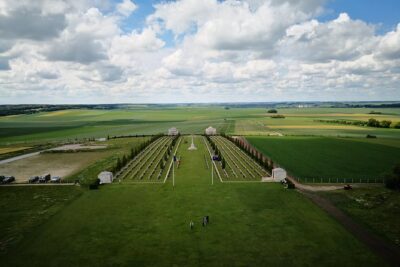
WW1 Australians in the Somme -Villers Bretonneux, Le Hamel – Day trip from Paris
Read our review →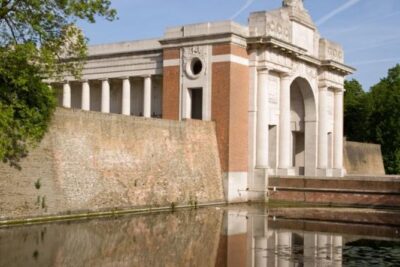
WWI Private Day Trip with Ypres Salient Battlefield in Flanders from Paris
Read our review →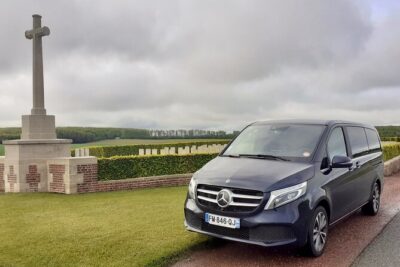
WW1 Australian Battlefield Day Tour from PARIS: Somme, Villers-Bretonneux…
Read our review →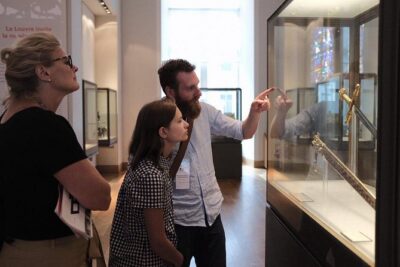
Skip-the-line Les Invalides World War Museum Guided Tour – Exclusive Guided Tour
Read our review →Browse the lists this tour appears in