
Reviewed · PASTRY & MACARON CLASSES
Kids in the Kitchen – CrOisSaNtS
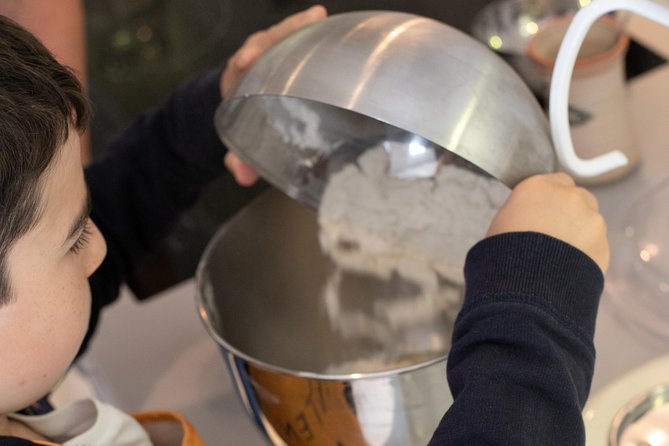
Paris has a fine way of turning breakfast into an activity. In this small Le Marais pastry workshop, children work with croissant dough, shape pain au chocolat, and add color to their creations before tasting the results. I like the hands-on format and the chance to learn why viennoiseries are different from French pastries.
I also like the warm, personal setting. The class takes place in a private apartment near the Picasso Museum, not a large cooking school, and past sessions have been led by hosts including Yasmin, Noura, and Maria. The main caution is the price: at $159.70 per person, this is a costly 90 minutes, especially since a nonparticipating companion pays 35 euros and the apartment is on the fifth floor without an elevator.
In This Review
- Key points at a glance
- What this Paris pastry class is really about
- Arriving in Le Marais near the Picasso Museum
- Getting hands-on with laminated dough
- Croissants, pain au chocolat, and colorful breakfast pastries
- The hosts make the difference
- What the 90-minute schedule gives you
- Is $159.70 per person a fair price?
- Who will enjoy this most
- What to bring and what to plan around it
- Booking and cancellation details to know
- Should you book Kids in the Kitchen?
- FAQ
- Where does the croissant workshop take place?
- How long does the activity last?
- Is the workshop offered in English?
- How many people can join?
- What pastries will children make?
- Are ingredients and equipment included?
- Are coffee and tea included?
- Can a nonparticipating companion attend?
- Is the apartment accessible by elevator?
Key points at a glance
- Croissant dough is the main lesson: You learn about pâte feuilletée levée, the laminated dough used for classic French breakfast pastries.
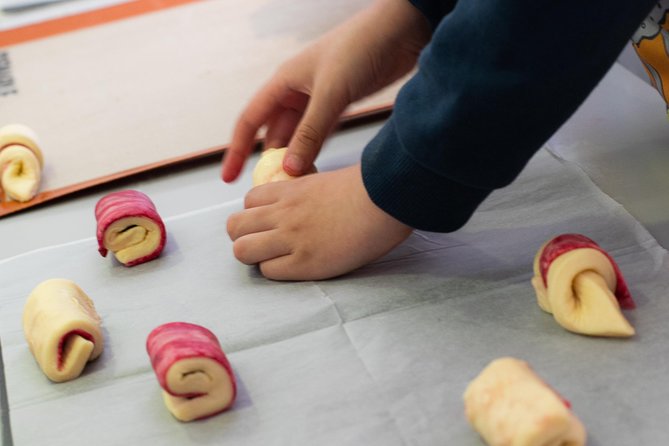
- Children do the baking: Kids shape their own croissants and pain au chocolat rather than simply watching a demonstration.
- A private Paris apartment sets the mood: The workshop takes place near the Picasso Museum in Le Marais.
- The group is small: A maximum of six participants allows for close help at the worktable.
- Coffee and tea are included: The class also provides ingredients, tools, aprons, and the pastries you make.
- The fifth-floor walk-up matters: This is not suitable for anyone who cannot manage stairs, and the access details should be checked before booking.
What this Paris pastry class is really about
This is a short family baking class built around one central French skill: making laminated dough. The French term is pâte feuilletée levée, a dough that combines layers of butter with yeast-raised pastry.
You are not signing up for a full French cooking course. The focus is narrower and more useful for a family: make croissants, make pain au chocolat, understand the difference between viennoiseries and French pastries, and eat what you have prepared.
That focus is a strength. Croissants are familiar to nearly every child, and the class gives them a clear job from start to finish. They can handle the dough, shape the pastries, and decorate or color them in a way that makes the lesson feel like play rather than school.
The workshop lasts about 90 minutes. That is long enough to keep most children interested, but short enough to fit into a busy Paris day. You will not lose an entire afternoon, though you should not expect the full technical process of a professional bakery course in this time.
More pastry and macaron classes:
- Paris: Montmartre Cheese, Wine & Pastry Guided Walking Tour
★ 4.8 · 2,255 reviews - Paris Croissant Small-Group Baking Class with a Chef
★ 5.0 · 910 reviews - Paris: Macaron Class at Galeries Lafayette
★ 4.3 · 905 reviews
Arriving in Le Marais near the Picasso Museum
The meeting point is 14 Rue des Coutures Saint-Gervais, 75003 Paris, close to the Picasso Museum. This puts the activity in a central part of Le Marais, an area that is easy to pair with museums, shopping, and a walk through the old streets of the 3rd arrondissement.
The class takes place inside a private Parisian apartment. That gives the experience a personal feel, but it also means the setting is not designed like a purpose-built cooking school. You should think of it as baking in someone’s home, with a small group gathered around the available kitchen space.
The apartment is on the fifth floor and has no elevator. This is the most important practical detail for families with strollers, anyone with limited mobility, or anyone who finds stairs difficult. The activity is specifically not suitable for travelers with disabilities who cannot access a fifth-floor walk-up.
Public transportation is nearby, but the supplied information does not name a particular Metro station or give walking times. Allow enough time to find the address, especially if you are arriving with children and baking supplies are not the only thing on your mind.
Getting hands-on with laminated dough
The heart of the lesson is the croissant dough. Your host introduces the idea of lamination, the process that gives croissants their many light layers.
You should expect an instructional, hands-on session rather than a pastry tasting. The ingredients, tools, and aprons are provided, so you do not need to bring baking equipment. Each participating child or adult is meant to have a batch to work with.
This point is worth clarifying at the start. One booking party felt that only two of six people could take part because the materials seemed limited. The host later explained that each participant had a batch, but the confusion shows why it is smart to ask how the work will be divided when you arrive. If six people book, confirm that all six are active participants rather than observers.
The small maximum group size of six is helpful here. Croissant dough takes room, and children need space to shape it without constantly waiting for someone else. A small class also gives the host more time to correct a fold, explain a step, or encourage a child who is unsure.
The class is designed for children, but adults are not left out. Parents can help with the process, learn the basic technique, and take notes for a home attempt later. One of the best benefits of a family workshop like this is that the activity continues after Paris, when your kitchen becomes the next test site.
Croissants, pain au chocolat, and colorful breakfast pastries
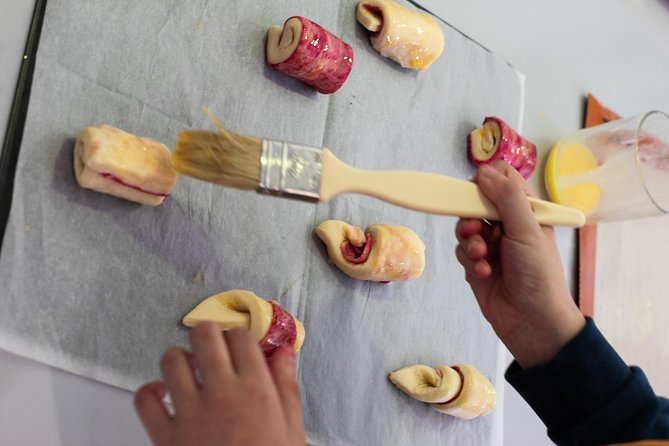
The sample menu includes croissants and pain au chocolat. Both are classic viennoiseries, the French family of baked breakfast goods made with doughs that are often enriched, laminated, or both.
The class also explains how viennoiseries differ from French pastries. That distinction is useful because the words are often treated as if they mean the same thing. A croissant or pain au chocolat is a viennoiserie, while French pastry is a wider category that includes many other sweet baked preparations.
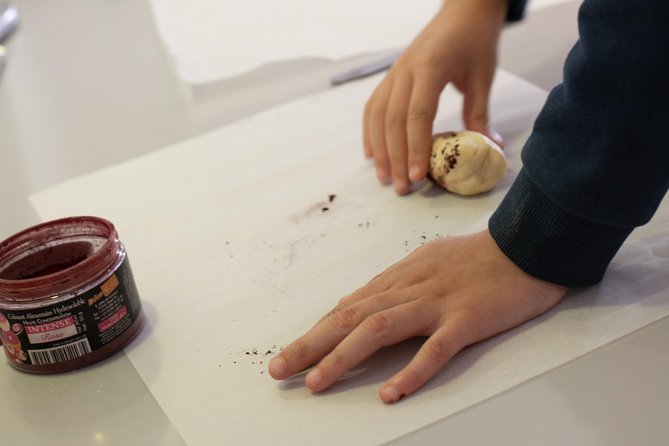
For children, the coloring element adds a clear point of difference. You are not only shaping standard brown pastries. Kids can color their croissants in a playful way, which makes the finished breakfast feel personal and gives younger children a creative task while adults focus on the dough.
The listed snacks are the croissants and pain au chocolat made during the class. Coffee and tea are included, giving adults something simple to drink while the pastries are prepared and served.
Do not expect a large meal. This is a pastry activity, not lunch. If your family arrives hungry, a small snack beforehand may help, particularly for younger children who may need patience during the dough work and baking process.
A different way to spend the day in Paris:
- Paris: Louvre Museum Timed-Entrance Ticket
★ 4.6 · 71,977 reviews - Disneyland® Paris 1-Day Ticket
★ 4.6 · 49,412 reviews - Paris: Versailles Palace and Gardens Full Access Ticket
★ 4.6 · 41,579 reviews - Paris: Arc de Triomphe Rooftop Tickets
★ 4.6 · 34,264 reviews
The hosts make the difference
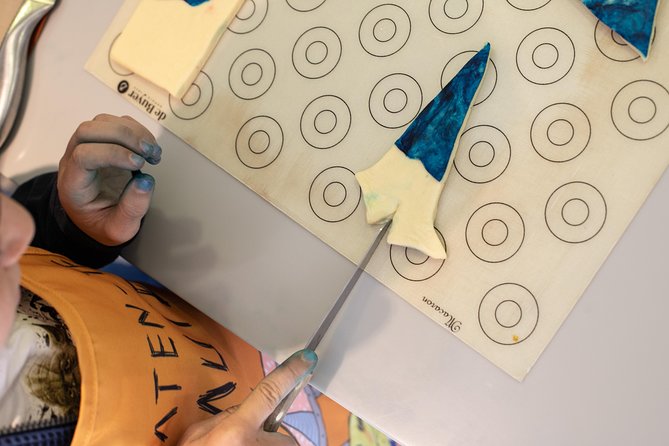
The individual host matters a great deal in a small apartment class. A good instructor must explain pastry technique in simple words, keep children moving, and give enough praise without losing control of the session.
Several hosts have been named in the feedback: Yasmin, Noura, and Maria. Yasmin was described as fun, while Maria was praised for her ability to work with children and for her passion for cooking. Noura received especially strong praise for patience, kindness, and clear help with the baking steps.
Carlos also responded personally to one family, thanking them for enjoying the activity. The available information does not establish which host leads every date, so you should not book expecting a particular person unless the provider confirms it.
The strongest pattern is the attention given to children. Parents described their daughters and children receiving praise at each stage, with the instructor making the process easy to follow. That matters more here than a lecture filled with pastry terms. If your child likes making things with their hands, an encouraging host can turn a simple recipe into one of the trip’s most memorable hours.
At the same time, expectations should stay realistic. This is not presented as a formal pastry-chef certification class, and one family found the organization less professional than expected. The experience seems best suited to families seeking a friendly activity, not to serious bakers who want advanced instruction or commercial-kitchen standards.
What the 90-minute schedule gives you
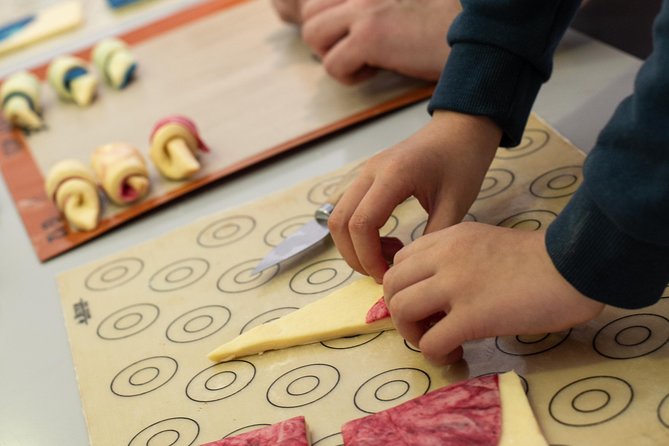
The short duration keeps the class manageable, but it also limits how much dough science can be covered. A typical session will center on the dough, shaping, and the finished pastries, with the host explaining the terms and techniques along the way.
The supplied details do not give exact minute-by-minute timings, so you should not assume that every stage will be demonstrated in full. The listed experience promises teaching about laminated dough, tips for good results, and baking with the children. The practical focus is on doing rather than watching.
The likely rhythm is straightforward:
- You meet the host and settle into the apartment.
- Ingredients, tools, and aprons are provided.
- The host explains croissant dough and the difference between viennoiseries and French pastries.
- Children take part in preparing and shaping croissants and pain au chocolat.
- The pastries are colored or decorated in a child-friendly way.
- You enjoy the finished pastries with coffee or tea.
Because the class lasts only 90 minutes, some dough preparation may need to be organized in advance. The supplied information does not promise that you will make every stage from raw ingredients through final bake without pauses or prepared components. If that detail matters to you, ask before booking.
Is $159.70 per person a fair price?
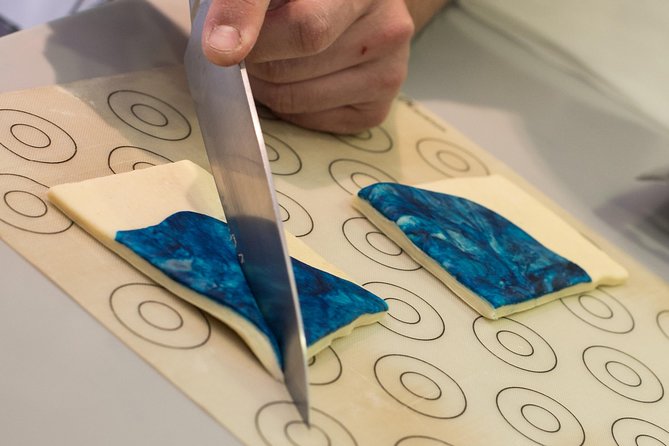
At $159.70 per person, this is a premium family activity. The price covers the workshop, ingredients, tools, an apron to borrow, coffee or tea, and the croissants and pain au chocolat prepared during the class.
The value comes from the personal format and the chance for children to participate directly. A family that wants a private-feeling kitchen activity near a major Paris museum may find the price acceptable, particularly if the class becomes a highlight of the trip.
The value is weaker if only one family member plans to bake. Every participating person pays the per-person rate, while a companion who does not participate pays 35 euros on site. That means a parent who only wants to watch should factor in the extra fee rather than assume observation is free.
You are also paying for convenience. The provider supplies the tools and ingredients, and you do not need to plan a recipe, buy butter, or carry baking equipment through Paris. For a short holiday, that can be worthwhile.
Still, the duration is only about an hour and a half, and the class is held in a private apartment rather than a large professional kitchen. I would book it for the child-focused experience and the setting, not because it is the cheapest way to eat a croissant or the most advanced baking lesson in Paris.
Who will enjoy this most
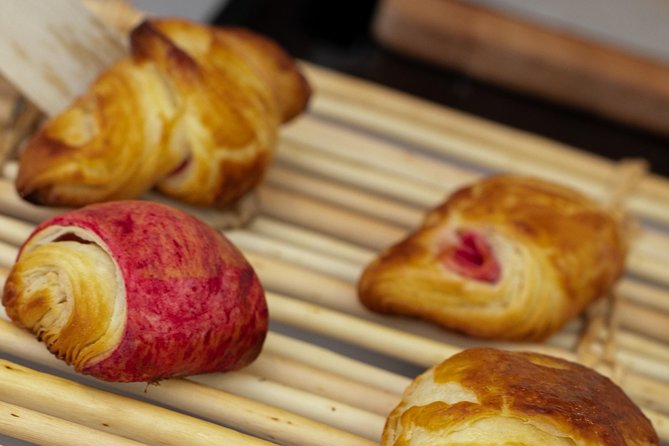
This activity fits families with children who like craft projects, baking, and active participation. It is especially useful on a Paris trip when younger children need a break from museums, churches, and long walks.
It also suits parents who want an activity with a clear local connection. Croissants and pain au chocolat are not just generic baked goods here. They introduce your family to a basic part of French breakfast culture and give you a technique to discuss afterward.
The small group size is a plus for families who want personal attention. It may also suit a child who is shy in a large class, since a maximum of six people creates a quieter setting.
I would hesitate if your child dislikes touching dough, waiting for food, or following several steps. I would also choose another activity if anyone in your party cannot climb five flights of stairs.
Serious pastry fans should check the teaching format before paying. The class promises useful instruction, but the short schedule and family focus suggest a simple introduction rather than a detailed professional course.
What to bring and what to plan around it
Ingredients, tools, and aprons are supplied. You are welcome to take photographs and videos during the activity, which is useful because children often forget the order of the steps once they are back home.
Wear clothes that can handle a little flour or butter. The supplied information does not require special clothing, but baking with children is rarely spotless.
Plan the rest of your day around Le Marais. The Picasso Museum is nearby, making it easy to combine the workshop with art and neighborhood walking. Since the activity ends back at the meeting point, you can continue exploring from there rather than arranging a separate return transfer.
The time of day may matter for children. The booking details give the duration but not a fixed departure time. Check your selected time carefully so the workshop does not collide with a museum reservation or a meal.
The experience is offered in English, which removes one major concern for families who do not speak French. The class itself is meant to explain the pastry terms and steps in English.
Booking and cancellation details to know
Confirmation is received at the time of booking. The activity is offered with a mobile ticket, so keep the booking accessible on your phone.
The group maximum is six participants. A companion who does not take part pays 35 euros on site, so include only active bakers in the main booking and plan for the companion charge if needed.
The experience is non-refundable and cannot be changed for any reason. If you cancel or request an amendment, the amount paid will not be returned. The provider also requires a minimum number of participants. If that minimum is not met and the activity is canceled, you will be offered another date or experience, or a full refund.
For a costly family booking, that strict policy is important. Make sure your Paris schedule, stair access, and children’s interest in the activity are all reasonably secure before you commit.
Should you book Kids in the Kitchen?
I would book this for a family that wants a small, cheerful baking activity in central Paris and values child participation more than formal pastry training. The strongest part is the attention given to children, with hosts such as Noura, Maria, and Yasmin helping kids shape, decorate, and enjoy their own work.
I would skip it if the price feels high for 90 minutes, if a nonparticipating adult would need to pay extra, or if the fifth-floor walk-up is a problem. The mixed overall rating of 3.8 from 11 ratings also points to a real difference between a warm, well-run session and a less organized one.
Before booking, ask how many people will actively bake, which host is scheduled, and how much of the dough process is completed during the session. If the answers suit your family, this can be a sweet change of pace from sightseeing, with a useful French breakfast lesson at the end.
FAQ
Where does the croissant workshop take place?
It takes place in a private Parisian apartment at 14 Rue des Coutures Saint-Gervais, 75003 Paris, in Le Marais near the Picasso Museum.
How long does the activity last?
The workshop lasts approximately 1 hour and 30 minutes.
Is the workshop offered in English?
Yes. The activity is offered in English.
How many people can join?
The activity has a maximum of six participants.
What pastries will children make?
The sample menu includes croissants and pain au chocolat. The workshop is based on croissants and teaches the laminated dough used for French breakfast pastries.
Are ingredients and equipment included?
Yes. Ingredients, tools, and an apron are provided for use during the experience.
Are coffee and tea included?
Yes. Coffee and/or tea are included.
Can a nonparticipating companion attend?
Yes, but a companion who does not participate must pay 35 euros on site.
Is the apartment accessible by elevator?
No. The apartment is on the fifth floor without an elevator, so the activity is not suitable for anyone unable to manage those stairs.
Newest additions around Paris
- Family escape Game with kids and teens on the Île de la Cité★ 4.5 · 11 reviews
- Private Photoshoot with the Iconic Eiffel Tower in Paris★ 5.0 · 11 reviews
- 2-day Private Mont Saint-Michel, 3 Loire Castles, D-Day Express★ 4.5 · 11 reviews
- Paris: Batobus Hop-On Hop-Off Cruise & Landmarks Audio Tour★ 3.0 · 11 reviews
- Paris Revolutionary Walking Tour: Iconic French Sights & Stories★ 5.0 · 11 reviews
- Guided and Private Tour of 3 hours through Paris aboard a Citroën 2cv★ 5.0 · 11 reviews
- Paris: Ghosts and Dark Stories Guided Walking Tour★ 4.1 · 11 reviews
- Paris: Professional Photoshoot★ 4.9 · 11 reviews
Pastry & Macaron Classes, compared.
Montmartre Cheese, Wine & Pastry Guided Walking Tour
Read our review →
Paris Croissant Small-Group Baking Class with a Chef
Read our review →
Paris Cooking Class: Learn How to Make Macarons
Read our review →
A Morning in Paris Food Tour: Croissants, Baguettes & Chocolate
Read our review →
Paris Chocolate, Macaron & Pastry Food Tour: 10 Gourmet Tastings
Read our review →Browse the lists this tour appears in