
Reviewed · PASTRY & MACARON CLASSES
Paris Croissant Small-Group Baking Class with a Chef
The best part of this Paris class is that you do not just watch a chef fold dough. You work the butter into the pastry, shape the rolls, and pull the finished goods from the oven. It takes place in the Marais, a handy setting near Place des Vosges, and the results are both edible and useful.
I like the small class format, which gives you a real chance to ask questions. I also like the recipe booklet and the generous haul of pastries, often reported as two croissants and two pain au chocolat per person. Chefs such as Clara, Prisca, Milly, Felix, and Ines have all been singled out for clear, friendly teaching.
The main caution is the price, $157.21 per person. That is a serious pastry bill, even in Paris, and last-minute cancellations have affected a small number of bookings. Still, the class offers far more than a quick demonstration, so the value depends on how much you want hands-on instruction.
In This Review
- Key points at a glance
- Starting at 7 Rue de Béarn near Place des Vosges
- Meeting the chef and settling into the studio
- Kneading dough, then learning why butter matters
- Shaping three French favorites
- Baking and tasting the warm results
- What the instruction is really like
- The value of $157.21 per person
- Who should book this class
- Timing, cancellations, and practical planning
- A good fit for a Marais day
- Should you book the Maison Fleuret croissant class?
- FAQ
- Where does the croissant baking class begin?
- How long does the workshop last?
- Which pastries will I make?
- Is the class taught in English?
- What is included in the price?
- How many people can join the class?
- Can I cancel for a full refund?
Key points at a glance
- Three classic pastries in one class: Make croissants, pain au chocolat, and pain au raisin during a single workshop.
- Hands-on from dough to oven: You knead, laminate, shape, and bake instead of standing at the back of a demonstration.
- A useful Marais location: The studio at 7 Rue de Béarn is near Place des Vosges and public transportation.
- Small groups help beginners: Sessions are designed for personal guidance, with a stated maximum of 12 people and many classes running with fewer.
- You eat and take away the results: Enjoy fresh pastries at the end and bring the rest of your baked goods with you.
- Recipes make the class last longer: An illustrated booklet helps you repeat the process at home.
Starting at 7 Rue de Béarn near Place des Vosges
Your workshop starts at Maison Fleuret, The Baking School, at 7 Rue de Béarn in Paris’s third arrondissement. The studio sits around the corner from Place des Vosges, one of the most pleasant squares in the Marais, so this is easy to pair with a walk through the neighborhood.
The meeting point is near public transportation, but private transportation is not included. You will need to make your own way there and return to the same place at the end. Give yourself enough time to find the address, especially if you are crossing Paris from another neighborhood.
This location works well for a cooking class because it pulls you away from the usual parade of monuments for a few hours. You can schedule the class before or after a Marais stroll, though you may want to leave room in your day for the pastry box you carry out.
The activity lasts about two and a half hours. That is long enough to learn the basic stages without turning the class into a full-day baking course. It also means you should not book it in a tight gap between major sightseeing plans.
More pastry and macaron classes:
- Paris: Montmartre Cheese, Wine & Pastry Guided Walking Tour
★ 4.8 · 2,255 reviews - Paris: Macaron Class at Galeries Lafayette
★ 4.3 · 905 reviews - Paris: French Croissant Baking Class with a Chef
★ 4.9 · 712 reviews
Meeting the chef and settling into the studio
Inside the pastry studio, you meet the professional chef leading your session and the other participants. Aprons and utensils are provided, along with hot and cold drinks throughout the workshop.
The group size deserves a close look. The experience is promoted as a small-group class, with a maximum of 12 participants. Several sessions described by participants had eight to ten people, while another had a student-to-teacher ratio of about six to one. A two-person class has also taken place.
That range matters. With six to eight people, you can usually ask for help at the exact moment your dough starts looking wrong. With 12, the class may feel less personal, though it is still much more manageable than a large demonstration.
The instructors named in the feedback include Clara, Felix, Milly, Prisca, Rosalie, Lizzy, Delphine, Leslie, and Ines. Their teaching styles may differ, but the strongest pattern is clear instruction, patience, and willingness to explain why a step matters. Prisca also added a little French language and pastry culture to the lesson, which gives the class a touch more local flavor.
Kneading dough, then learning why butter matters
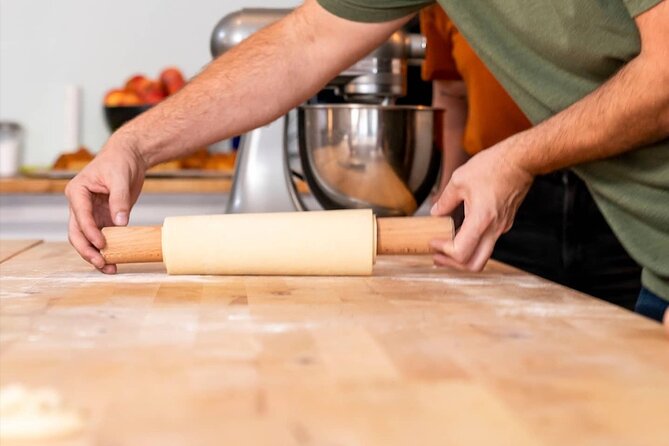
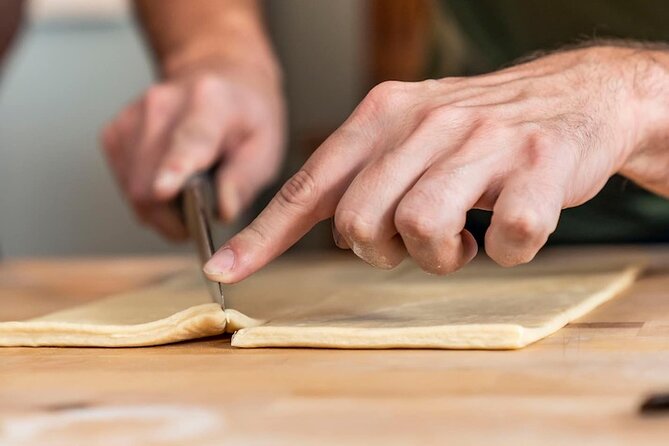
The practical work begins with dough. You knead it, handle it, and follow the chef’s instructions as it becomes the base for several pastries.
This is the point where the class earns its keep. Croissants look simple in a bakery case, but the dough requires care. You learn through touch as much as through words. The chef guides you through the process step by step, helping you see how the dough should feel and behave.
The most useful part for a home baker is the butter stage. One participant specifically described laminating the dough with butter, rather than merely watching the chef do it. That hands-on step shows you why French croissants have layers and why the butter must be worked into the dough with care.
You should not expect to become a professional pastry chef in 150 minutes. The class gives you a working introduction, not every detail of a long bakery apprenticeship. But you leave with techniques you can try again, which is a better souvenir than another Eiffel Tower key ring.
Shaping three French favorites
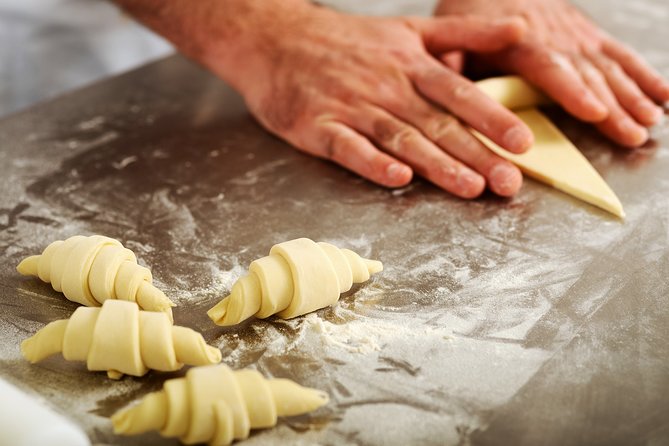
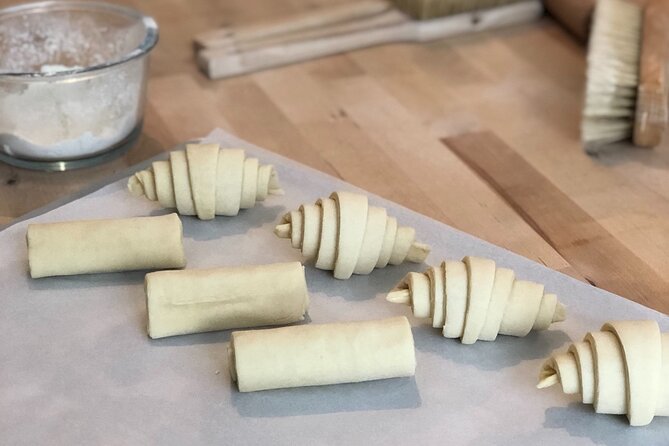
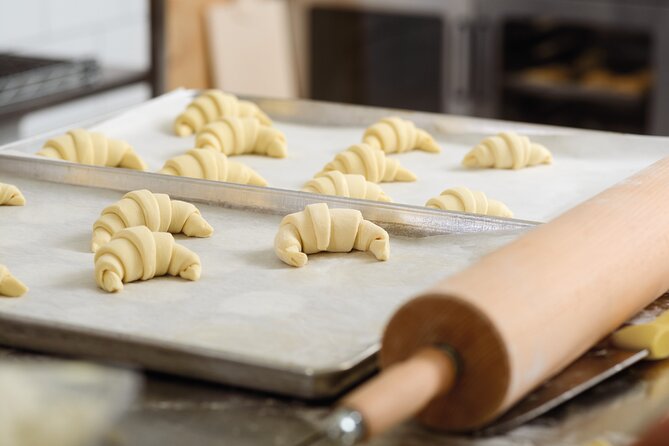
Once the dough is ready, you shape the pastries. The class covers the classic croissant, pain au chocolat, and pain au raisin.
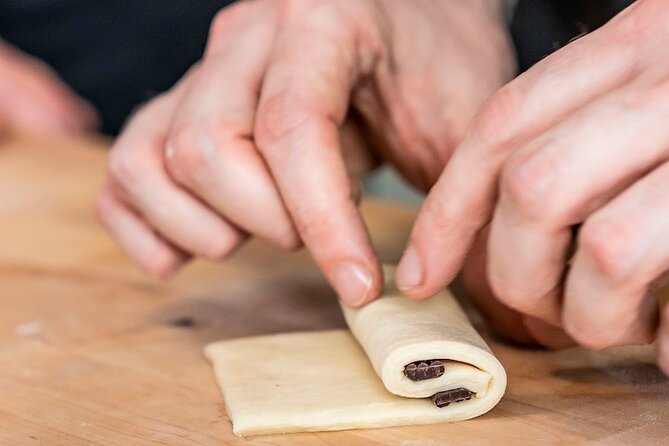
The croissant is the main event. You form the familiar crescent shape and prepare it for baking. Pain au chocolat uses the same pastry family but brings chocolate into the center, giving you a second form to practice.
Pain au raisin rounds out the lesson. It is a useful addition because it shows how one dough can produce different French bakery staples. The class description lists all three, though the exact number of each pastry you make can vary by session.
Some participants left with two croissants and two pain au chocolat each. Another described leaving with about four pastries per person, and a separate class used dough remnants to make cinnamon rolls as well. Those extras are not guaranteed in the stated menu, so treat them as possible variations rather than part of the firm promise.
The shaping stage is also where a chef’s close attention helps. Croissant dough can tear, stick, or lose its form. A teacher who walks around the table can correct your technique before a small mistake becomes a large pastry problem.
More cooking classes in Paris:
- Paris Cooking Class and Lunch with Wine plus Market Visit Option
★ 5.0 · 1,024 reviews - Paris Cooking Class: Learn How to Make Macarons
★ 5.0 · 634 reviews - Paris Evening Cooking Class French Dinner and Market Visit Option
★ 5.0 · 430 reviews - Paris French Cuisine Small Group Cooking Class with Lunch
★ 4.5 · 418 reviews
Baking and tasting the warm results
The final stretch takes you to the oven. After shaping and baking, you taste the pastries at the studio and take away the rest of your produce.
Fresh pastry is the natural payoff. You get to see the layers, smell the butter, and compare your result with the examples made during the lesson. The experience is not only about eating, but the eating is a very welcome part of the schedule.
Hot and cold drinks are included throughout the workshop. That small detail helps the class feel relaxed, especially as you work with flour and dough for more than two hours.
The quantity can be generous. Plan accordingly. If you are spending the rest of the day walking through Paris, a pastry box may become your most important piece of luggage. You can eat some at the studio and carry the remainder with you, though the provided information does not specify packaging details.
The class ends back at the meeting point. There is no separate restaurant stop or city transfer built into the experience.
What the instruction is really like
A good baking class explains the reason behind each action, not just the action itself. That is where this experience seems strongest. Milly was praised for explaining why certain steps were needed, while Ines was noted for clear, patient instruction and useful techniques.
Clara has been especially well regarded as a teacher, with several sessions described as fun and easy to follow. Felix was praised for making the class interactive. Lizzy was described as warm and welcoming, and Delphine received strong marks from a family with teenagers.
This matters if you are new to baking. You are not expected to arrive with pastry skills. The lesson is also suitable for people who already bake and want a better feel for laminated dough.
Children can take part, too. A seven-year-old handled the class well with instruction, and families with children aged nine, 12, 13, and 15 enjoyed the activity. Younger children may need more help with kneading and shaping, but the hands-on format gives them a real job instead of asking them to sit quietly through a lecture.
English is offered, making the class practical for international visitors. You should still expect French pastry terms to appear along the way, especially for the names of the pastries and ingredients. That is part of the fun, and one instructor included a few French words during the lesson.
The value of $157.21 per person
At $157.21 per person, this is not a budget activity. You can buy excellent croissants in Paris for a small fraction of that price. If your goal is simply to eat a pastry, visit a bakery.
The price makes more sense if you value instruction, participation, and the social part of the workshop. You are paying for about two and a half hours with a professional chef, use of the studio and equipment, ingredients, aprons, utensils, hot and cold drinks, tasting, pastries to take away, and an illustrated recipe booklet.
The take-home food adds real value, especially when the class produces several pastries per person. The booklet matters even more. It gives you a way to repeat the process at home, and some participants have managed to make successful croissants and pain au chocolat after returning from Paris.
There is also value in learning the difficult parts under supervision. A recipe can tell you what to do, but it cannot easily show you when dough feels too stiff or butter is not behaving. A chef can spot those problems at once.
I would call the price fair for a serious food experience, but not cheap. Couples, families, and keen home bakers are likely to get more from it than visitors trying to keep every Paris activity under $50.
Who should book this class
I would point this class toward four types of visitors:
- Families with children: Several age groups have taken part successfully, and the work keeps children involved.
- Home bakers: You get practical pastry methods and a recipe booklet to use later.
- Food-focused visitors: The class gives you a stronger connection to a French staple than simply ordering one with coffee.
- Repeat Paris visitors: It makes a good break from museums and monuments, especially if you already know the Marais.
It is less suitable if you want a quiet, polished afternoon with no mess. You will handle dough, work at a shared table, and spend much of the session actively following instructions.
It may also disappoint you if you expect to master every secret of French pastry in one visit. The class offers a strong foundation, but your first home batch may still need practice.
Timing, cancellations, and practical planning
The experience is booked, on average, about 43 days ahead, so popular dates can fill early. If your Paris schedule is fixed, book before arriving rather than assuming you can find a convenient last-minute place.
Confirmation is provided when you book, and the activity is offered in English with a mobile ticket. The stated maximum is 12 participants, though the actual group can be smaller.
Free cancellation is available until 24 hours before the start time. Canceling or changing the booking inside that 24-hour window does not qualify for a refund. Use Paris local time when judging the cutoff.
There have been isolated cases of same-day cancellation due to an instructor’s illness, with an alternate Maison Fleuret location offered in at least one case. One separate report described an instructor not arriving without notice. These incidents appear to be exceptions beside a very strong overall record, but they are worth keeping in mind if you are planning a tightly timed birthday or anniversary activity.
Do not schedule an airport transfer, train departure, or major timed entry immediately afterward. The class lasts approximately two and a half hours, and pastry work is more enjoyable when you are not watching the clock.
A good fit for a Marais day
The class fits neatly into a day based around the Marais. Start with the workshop, then walk toward Place des Vosges, or explore the area first and bake later.
The setting is a useful part of the appeal. You are not being driven out to a distant cooking school. You meet in central Paris, near a square that already deserves time on your itinerary.
The class also gives you a break from sightseeing fatigue. Paris can become a march from one famous building to the next. Sitting down with dough, butter, and a small group changes the pace without taking you far from the city center.
I would avoid placing it on the same morning as a must-see attraction with a strict entry time. The class itself is the main appointment, and it works best when you let it fill the morning or afternoon.
Should you book the Maison Fleuret croissant class?
Book it if you want to learn by doing, not by watching. The small setting, English instruction, named chefs such as Clara, Prisca, Milly, and Ines, fresh pastries, and take-home recipes make this one of the more useful food activities you can add to a Paris visit.
The strongest reason to choose it is the chance to handle laminated dough under guidance. The best souvenir is not only the pastries you eat in Paris, but the possibility of making them again at home.
Skip it if $157.21 feels too high for a cooking activity, or if you only want a bakery breakfast. For everyone else, especially families and home bakers, this is a tasty and practical way to spend two and a half hours in the Marais.
FAQ
Where does the croissant baking class begin?
The class begins at Maison Fleuret, The Baking School, at 7 Rue de Béarn, 75003 Paris, France.
How long does the workshop last?
The workshop lasts approximately two hours and 30 minutes.
Which pastries will I make?
You will learn to make a classic croissant, pain au chocolat, and pain au raisin.
Is the class taught in English?
Yes. The experience is offered in English.
What is included in the price?
Hot and cold drinks, cooking supplies, instruction, tasting of the baked goods, pastries to take away, an illustrated recipe booklet, aprons and utensils, and health and safety equipment are included.
How many people can join the class?
The stated maximum is 12 participants. Some sessions may be smaller, with several described as having eight to ten people or fewer.
Can I cancel for a full refund?
Yes. You can cancel at least 24 hours before the local start time for a full refund. Cancellations or changes made less than 24 hours before the start time are not refunded.
More Workshops in Paris
- Fragonard Paris: Mini Perfume Workshop
★ 4.5 · 1,924 reviews - Paris: 2-Hour Perfume Creation Workshop
★ 4.8 · 731 reviews - Paris: French Macaron Culinary Class with a Chef
★ 4.9 · 591 reviews - Paris: French Wine Tasting Class with Sommelier
★ 4.8 · 505 reviews
Newest additions around Paris
- Family escape Game with kids and teens on the Île de la Cité★ 4.5 · 11 reviews
- Private Photoshoot with the Iconic Eiffel Tower in Paris★ 5.0 · 11 reviews
- 2-day Private Mont Saint-Michel, 3 Loire Castles, D-Day Express★ 4.5 · 11 reviews
- Paris: Batobus Hop-On Hop-Off Cruise & Landmarks Audio Tour★ 3.0 · 11 reviews
- Paris Revolutionary Walking Tour: Iconic French Sights & Stories★ 5.0 · 11 reviews
- Kids in the Kitchen – CrOisSaNtS★ 4.0 · 11 reviews
- Guided and Private Tour of 3 hours through Paris aboard a Citroën 2cv★ 5.0 · 11 reviews
- Paris: Ghosts and Dark Stories Guided Walking Tour★ 4.1 · 11 reviews
Pastry & Macaron Classes, compared.
Montmartre Cheese, Wine & Pastry Guided Walking Tour
Read our review →
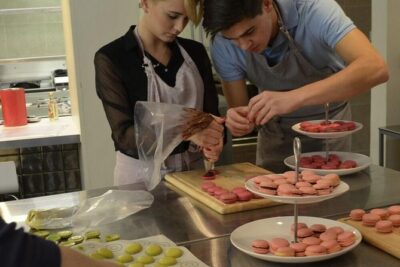
Paris Cooking Class: Learn How to Make Macarons
Read our review →
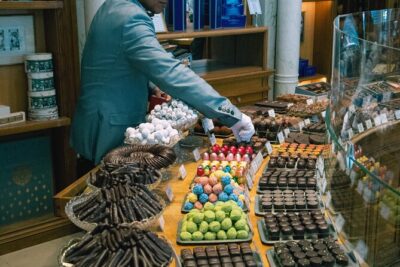
A Morning in Paris Food Tour: Croissants, Baguettes & Chocolate
Read our review →
Paris Chocolate, Macaron & Pastry Food Tour: 10 Gourmet Tastings
Read our review →
Paris Macarons Small-Group Baking Class with a Chef
Read our review →Browse the lists this tour appears in