
Reviewed · PASTRY & MACARON CLASSES
Paris Macarons Small-Group Baking Class with a Chef
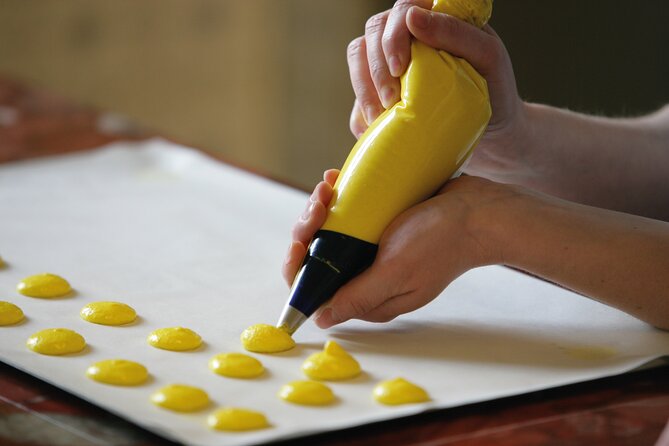
Making a proper French macaron is less like baking a cookie and more like managing a tiny pastry science project. In this two-hour class near Place des Vosges, a chef takes you through mixing, piping, baking, filling, and packing your own colorful macarons. You choose the flavor, and the small group keeps the workbench from turning into a floury free-for-all.
I like the maximum group size of seven, which makes it easier to see the demonstrations and get help with tricky steps. I also like the generous result: you make about 15 to 20 macarons, enough to eat during the class and carry back to your hotel in a supplied box.
The main consideration is price. At $157.28 per person, this is not a bargain if you simply want a pastry demonstration or a few sweets. It makes more sense if you want hands-on time, a family activity, and the chance to make your own edible Paris souvenir.
In This Review
- Key points at a glance
- What this macaron class is really teaching you
- Arriving at 7 Rue de Béarn
- A short introduction to France’s famous pastry
- Pre-weighed ingredients keep the class moving
- Mixing, macaronage, and the moment things get tricky
- Choosing your flavor and color
- Baking, filling, and packing your Paris souvenir
- How personal is a maximum-seven class?
- Is $157.28 a fair price?
- Best for children, couples, and first-time bakers
- What to clarify before booking
- Cancellation and timing
- Should you book the Paris macaron class?
- FAQ
- How long does the macaron class last?
- Where does the activity start and finish?
- How many people can join the class?
- Are ingredients and baking equipment provided?
- How many macarons will I make?
- Is cancellation free?
Key points at a glance
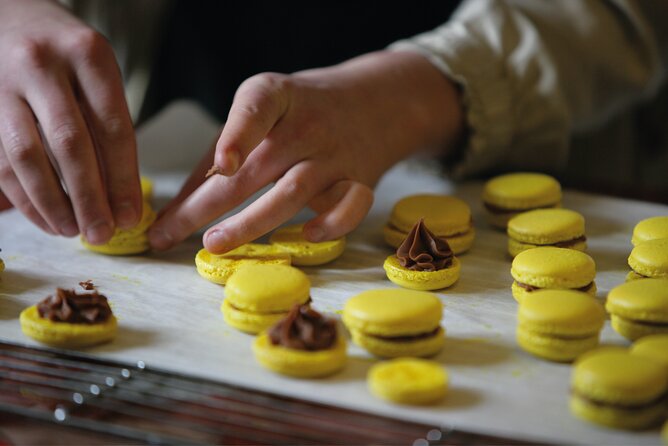
- Make 15 to 20 macarons: You do the practical work and leave with a full box of your own pastries.
- Small class, maximum seven people: The compact group allows the chef to watch your technique and offer help.
- Choose your flavor and color: Your batch can reflect your taste rather than following one fixed recipe.
- Pre-weighed ingredients save time: You can focus on mixing and technique instead of measuring every gram.
- Family-friendly format: Children as young as five have taken part with some help, while ages seven and up appear especially comfortable.
- Central Marais setting: The workshop is at 7 Rue de Béarn, near Place des Vosges and the galleries and shops of the Marais.
What this macaron class is really teaching you
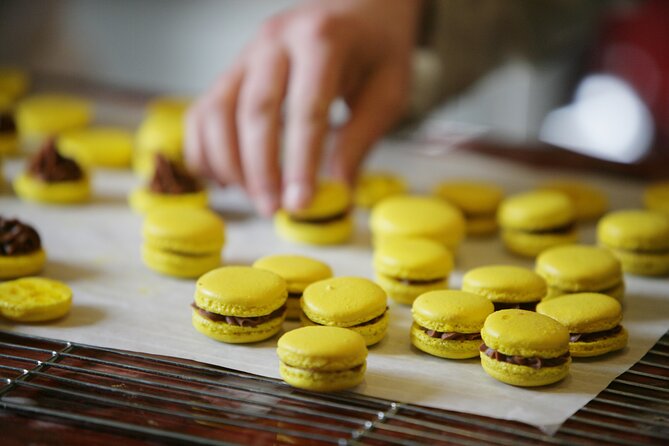
Macarons are a classic French pastry, but they are not especially forgiving. The shells need the right texture, the batter must be mixed carefully, and the finished cookies need to be piped evenly if you want matching halves. A home baker can follow a recipe and still end up with cracked, hollow, or lopsided results.
That is why a hands-on lesson has value. You can watch the chef demonstrate the movements, then try them yourself while the technique is still fresh. If your batter is too thick or your piping is uneven, help is available before the tray goes into the oven.
The class presents macarons in an accessible way rather than as a professional pastry-school course. The aim is to get you working quickly and enjoying the process. You will not spend the whole session listening to a lecture on the chemistry of egg whites and sugar.
That approach suits first-time bakers well. It also explains the mixed value for serious pastry students. One piece of feedback specifically wanted more detail about macaronage, measurements, oven reliability, and the science behind the recipe. If you want a technical master class, ask in advance how much theory and written material will be provided.
More pastry and macaron classes:
- Paris: Montmartre Cheese, Wine & Pastry Guided Walking Tour
★ 4.8 · 2,255 reviews - Paris Croissant Small-Group Baking Class with a Chef
★ 5.0 · 910 reviews - Paris: Macaron Class at Galeries Lafayette
★ 4.3 · 905 reviews
Arriving at 7 Rue de Béarn
The workshop begins and ends at 7 Rue de Béarn, 75003 Paris, in the Marais. It is near public transportation, and the location is described as a pastry studio close to Place des Vosges. That gives you an easy way to pair the class with an afternoon of exploring the neighborhood.
The Marais is a useful part of Paris for this type of activity. You have contemporary art galleries, small design shops, cafés, and old Parisian streets nearby. Plan a little extra time before or after class, since the area rewards slow wandering.
The studio itself is fully equipped, and aprons and utensils are provided. You do not need to arrive carrying baking tools. Wear clothes you can work comfortably in, but there is no need to pack special equipment.
The meeting point is important because private transportation is not included. You make your own way there by foot, metro, taxi, or another local option. Confirmation arrives at booking, so keep the address handy on the day of the class.
A short introduction to France’s famous pastry
The chef begins by placing macarons in their French culinary setting. The pastry is associated with Catherine de Medici and has since been reworked by famous pastry chefs, including Pierre Hermé and Cédric Grolet.
That history is a pleasant opening, but the practical part comes quickly. This is not a museum-style talk about pastry. You are there to make macarons, and the class moves toward the workbench.
The instructors named in the class feedback include Nogo, Mateo, Lauryn, Felix, Delphin, and Ilena. The individual teaching style may vary by session, but the pattern is consistent: clear demonstrations, patient assistance, and a friendly tone. Several families found that children could follow along with only modest help.
Pre-weighed ingredients keep the class moving
One smart feature is the use of pre-weighed ingredients. This removes one of the biggest sources of error for a short class. You are not spending ten minutes weighing almond flour or trying to divide sugar accurately while the clock runs.
The tradeoff is that you may learn less about recipe scaling and measurement. If your goal is to recreate the macarons at home, pay attention to quantities and ask questions as you work. Do not assume that watching the chef will give you everything you need for a reliable home batch.
This setup works especially well for families. Children can participate in the visible parts of the process instead of waiting while an adult measures each ingredient. Adults still get useful practice with mixing and piping, but the class does not become bogged down in preparation.
More cooking classes in Paris:
- Paris Cooking Class and Lunch with Wine plus Market Visit Option
★ 5.0 · 1,024 reviews - Paris: French Croissant Baking Class with a Chef
★ 4.9 · 712 reviews - Paris Cooking Class: Learn How to Make Macarons
★ 5.0 · 634 reviews - Paris Evening Cooking Class French Dinner and Market Visit Option
★ 5.0 · 430 reviews
Mixing, macaronage, and the moment things get tricky
The heart of the class is the batter. You will work through the steps that turn the dry ingredients and meringue into a smooth mixture suitable for piping. This is where a chef’s guidance matters most.
Macaronage is easy to underestimate. Mix too little and the batter may remain thick and uneven. Mix too much and it can become loose. The class gives you a chance to see the correct consistency and compare it with your own bowl.
The chef also helps with piping. You will form the shells on a baking tray, aiming for consistent sizes. Some instructors add playful shapes, which is a nice touch for children and anyone more interested in enjoying the pastry than producing a perfect professional circle.
Expect a few imperfect shells. A small number may crack, spread oddly, or fail to match their partner. That is normal for a first attempt, and the class appears to treat mistakes as part of the process. Still, one caution is worth noting: if the oven or first batch is not behaving well, ask what went wrong and how you can avoid the same problem at home.
Choosing your flavor and color
You get to choose the flavor of your macarons, along with the color. That personal choice gives the class more appeal than a demonstration where everyone produces an identical batch.
The flavor decision also helps make the activity feel creative. You are not just copying the chef. You are making a batch with your own preferred look and taste, then seeing how it comes together in the finished pastry.
The exact choices may depend on the day’s supplies, so ask the instructor what is available before you begin. The supplied information confirms a choice of flavor and color, but it does not list a fixed menu of options.
Baking, filling, and packing your Paris souvenir
After piping, the shells are baked and then paired with filling. This is the point when the macarons start to look like the pastry you recognize in a Paris shop.
The class provides coffee and tea, along with snacks. These are useful extras during a two-hour activity, but keep your expectations modest. The refreshments are described as a self-serve station with coffee and water rather than a full café service or a separate tasting menu.
Your finished macarons go into a macaron box supplied by the workshop. The stated yield is around 15 to 20 macarons per person. That is a substantial amount for one class, especially if you are traveling with children who want to eat a few immediately and save the rest.
The box is also practical. Macarons are delicate, so having proper packaging is better than trying to wrap them in a hotel napkin. Take care with the box as you continue sightseeing, since the pastries can be damaged if you toss them into a crowded day bag.
How personal is a maximum-seven class?
The group size is one of the strongest reasons to choose this activity. With no more than seven people, you should have a reasonable view of the chef’s work and a chance to ask for help. That matters when the batter texture or piping angle is not clear.
Some sessions may feel even more personal. A mother and daughter, a couple, or a small family could find the class quite intimate if the group does not fill completely. Other sessions may include several families, so the pace and noise level can vary.
The small format also helps children. An instructor can correct a piping technique or guide a young baker without taking over entirely. One especially good teaching detail came through in the way the chef helped a child while allowing the child to feel independent. That is exactly the right balance for a family activity.
For adults who already bake often, the class may feel basic. You will get hands-on practice, but do not book it expecting advanced pastry theory or professional kitchen training.
Is $157.28 a fair price?
At $157.28, this is a premium two-hour activity. You are paying for the chef’s instruction, the prepared ingredients, use of the studio and equipment, apron, refreshments, and a box of 15 to 20 macarons.
The math looks better if you are traveling as a family and want a shared activity. Four people each making a box of pastries creates a substantial amount of food and a memorable afternoon. The price is harder to justify if you are mainly seeking a cheap dessert or a recipe you could learn from a book.
I would compare it with other Paris cooking classes based on three questions:
- Do you want to work with your own hands?
- Do you value a small group and a central location?
- Will you actually enjoy taking home a large box of macarons?
If the answer is yes to all three, the price can be reasonable for a special Paris occasion. If your main interest is the science of pastry, you may want to ask about the level of written instruction before paying.
Best for children, couples, and first-time bakers
This is one of the more family-friendly cooking activities in Paris. Children aged five and seven have participated with limited help, while ages seven, eight, and up appear to be an ideal range for taking part more independently.
Parents should still expect to assist younger children with some steps. Hot equipment, careful piping, and the need to follow several instructions mean that small children will not manage the class entirely alone. The format works best when adults are ready to share the work rather than simply watch.
Couples and friends can also enjoy it. You each make your own batch, choose your own flavor and color, and leave with something tangible. It is more active than sitting through a tasting and less demanding than a full multi-course cooking class.
The class is offered in English, which makes the instructions easier to follow for English-speaking visitors. Service animals are allowed, and the workshop is near public transportation.
What to clarify before booking
The class description says you will learn the process step by step, and the strong overall score of 4.8 from 316 ratings suggests that most people find the format successful. Still, you should know what kind of lesson you are buying.
This is a fun, guided baking activity with real participation. It is not clearly presented as a technical pastry course. The pre-weighed ingredients make the session smoother, but they also mean you may not practice every part of a home recipe.
There is also some inconsistency about take-home recipes. One account says a recipe was provided, while another specifically says no recipe was handed out. Ask the provider before class if receiving a written recipe matters to you.
The same practical question applies to refreshments. Coffee and tea are included, but the snack offering is limited rather than a separate food experience. Go for the macarons, not for a meal.
Cancellation and timing
You can cancel up to 24 hours before the start time for a full refund. Changes or cancellations made less than 24 hours before the activity are not accepted, and the local Paris cut-off time applies.
The class lasts about two hours. That makes it easy to fit into a day of sightseeing, but do not schedule it so tightly that a delayed metro ride leaves you sprinting through the Marais. One family had help after running into traffic problems, but it is still wise to arrive with time to spare.
Because the activity ends back at the meeting point, you can continue exploring the neighborhood afterward. A box of macarons may make a museum visit less convenient, so think about your day’s order before you book.
Should you book the Paris macaron class?
Book this class if you want a cheerful, hands-on Paris activity rather than a formal pastry course. The small group, patient chefs, flavor choices, child-friendly format, and generous box of finished macarons make it especially appealing for families, couples, and beginners.
Think twice if $157.28 feels high for two hours or if you want detailed instruction on measurements, macaronage science, oven control, and recipe troubleshooting. In that case, confirm the written materials and technical depth before booking.
For most first-time bakers, I would consider it a good special-occasion choice. You get to make the pastry, not simply watch it being made, and you leave with something you can share back at your hotel. Just keep your expectations focused: this is a polished and enjoyable introduction to macarons, not a professional baking qualification.
FAQ
How long does the macaron class last?
The class lasts approximately two hours.
Where does the activity start and finish?
It starts at 7 Rue de Béarn, 75003 Paris, France, and ends back at the same meeting point.
How many people can join the class?
The activity has a maximum of seven participants.
Are ingredients and baking equipment provided?
Yes. Ingredients, utensils, aprons, and the needed baking equipment are provided.
How many macarons will I make?
You will make approximately 15 to 20 macarons per person and receive a macaron box for taking them with you.
Is cancellation free?
Yes. You can cancel at least 24 hours before the start time for a full refund. Cancellations or changes made less than 24 hours before the start time are not accepted.
More Workshops in Paris
- Fragonard Paris: Mini Perfume Workshop
★ 4.5 · 1,924 reviews - Paris: 2-Hour Perfume Creation Workshop
★ 4.8 · 731 reviews - Paris: French Macaron Culinary Class with a Chef
★ 4.9 · 591 reviews - Paris: French Wine Tasting Class with Sommelier
★ 4.8 · 505 reviews
Newest additions around Paris
- Family escape Game with kids and teens on the Île de la Cité★ 4.5 · 11 reviews
- Private Photoshoot with the Iconic Eiffel Tower in Paris★ 5.0 · 11 reviews
- Paris: Batobus Hop-On Hop-Off Cruise & Landmarks Audio Tour★ 3.0 · 11 reviews
- Paris Revolutionary Walking Tour: Iconic French Sights & Stories★ 5.0 · 11 reviews
- 2-day Private Mont Saint-Michel, 3 Loire Castles, D-Day Express★ 4.5 · 11 reviews
- Guided and Private Tour of 3 hours through Paris aboard a Citroën 2cv★ 5.0 · 11 reviews
- Kids in the Kitchen – CrOisSaNtS★ 4.0 · 11 reviews
- Paris: Ghosts and Dark Stories Guided Walking Tour★ 4.1 · 11 reviews
Pastry & Macaron Classes, compared.
Montmartre Cheese, Wine & Pastry Guided Walking Tour
Read our review →
Paris Croissant Small-Group Baking Class with a Chef
Read our review →
Paris Cooking Class: Learn How to Make Macarons
Read our review →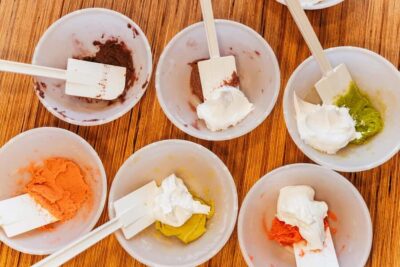
A Morning in Paris Food Tour: Croissants, Baguettes & Chocolate
Read our review →
Paris Chocolate, Macaron & Pastry Food Tour: 10 Gourmet Tastings
Read our review →Browse the lists this tour appears in