
Reviewed · WALKING TOURS
Paris Revolutionary Walking Tour: Iconic French Sights & Stories
Paris reveals its political soul on this two-hour walk from the National Assembly to the Palais Garnier. Instead of simply ticking off famous sights, you follow the places where power shifted, kings fell, public life changed, and modern Paris took shape.
I love the compact route and the chance to see several major sights without rushing. I also like the small group size, capped at eight, which gives you room to ask questions and makes a talk about revolution feel more like a conversation than a lecture.
The main drawback is the price, $66.23 per person, for a two-hour outdoor walk with no admissions included. You are paying for the guide’s storytelling, context, and local advice, so this works best if you want history brought to life rather than a basic orientation stroll.
In This Review
- Key points to know before you book
- Why this revolutionary route works
- Starting at the National Assembly
- Crossing the Pont de la Concorde
- Place de la Concorde and the execution of Louis XVI
- A calmer walk through the Tuileries Gardens
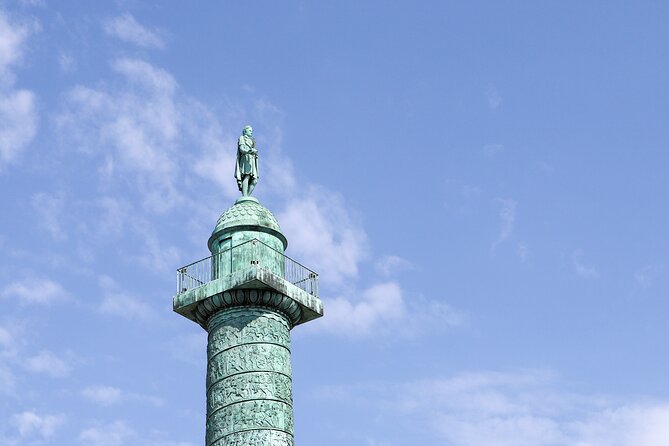
- Place Vendôme and modern Parisian luxury
- Finishing at the Palais Garnier
- What the small group adds
- Is $66.23 a fair price?
- Practical details for a smooth walk
- Who should book this Paris walk?
- Should you book it?
- FAQ
- How long does the Paris Revolutionary Walking Tour last?
- Where does the tour begin?
- Where does the tour finish?
- What language is the tour offered in?
- How many people can join the group?
- What sights are included on the route?
- Are admission tickets included?
- Does the tour operate in bad weather?
- Can I cancel for a refund?
Key points to know before you book
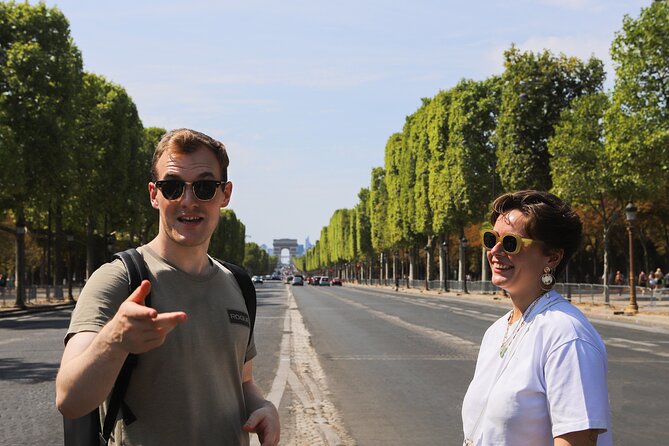
- The French Revolution is the main thread, from the National Assembly to the execution site of Louis XVI.
- The route connects six major stops, ending at the Palais Garnier after roughly two hours.
- Small groups are limited to eight people, or you can arrange a private experience.
- Guides such as Lou, Alex, and Walid are praised for clear storytelling, humor, local advice, and a strong command of Parisian history.
- The Pont de la Concorde gives you a wide monument-filled view, including Notre Dame, the Eiffel Tower, Alexander III Bridge, and Sacré-Coeur.
- You walk in all weather, with no hotel pickup or drop-off and no admission tickets included.
Why this revolutionary route works
Many Paris walks give you names, dates, and a quick photo stop. This one tries to explain how the city’s buildings and public spaces connect to political change. That difference matters. You are not just looking at the National Assembly, Place de la Concorde, or the Tuileries Gardens. You are asking what happened there, who held power, and how the city changed afterward.
The route also gives you a useful first look at central Paris. It begins in the 7th arrondissement and crosses toward the 9th, finishing at the Palais Garnier. Along the way, you get government buildings, a major bridge, a former royal garden, a luxury square, and an opera house.
I would expect the guide to do much of the heavy lifting. Names such as Lou, Alex, and Walid have been associated with particularly strong tours. Lou is described as personable and engaging, with a clear passion for Paris and the revolutionary period. Alex connects history with architecture, while Walid adds practical restaurant and sightseeing advice. That mix is valuable because the best walking tours leave you better prepared for the rest of your stay.
The two-hour duration is another plus. You get a focused introduction without giving up half a day. Still, six stops in two hours means this is an overview, not a full study of the Revolution. If you already know the period well, you may want more detail at each site.
More Paris walking tours:
- Paris Top Sights Half Day Walking Tour with a Fun Guide
★ 5.0 · 2,893 reviews - Montmartre Hidden Gems and Scenic Highlights Walking Tour
★ 5.0 · 2,684 reviews - Montmartre Hill French Gourmet Food and Wine Tasting Walking Tour
★ 5.0 · 2,588 reviews
Starting at the National Assembly
Your walk begins at 1 Place du Palais Bourbon, outside the Assemblée Nationale. This is a fitting place to start because the building represents French political life and the long struggle over how the country should be governed.
The guide uses the National Assembly to explain the development of French democracy and the decisions that shaped the nation. The stop lasts about 20 minutes, with no admission fee. You should expect to remain outside while the guide supplies the background.
This opening gives the tour a clear purpose. The French Revolution was not only a story of streets, crowds, and dramatic violence. It was also a fight over representation, authority, and the structure of government. Beginning here helps you understand the political ideas behind the events you will hear about later.
I would pay close attention to how your guide links the building to the broader story. A good explanation here can help you make sense of the monuments that follow. The setting is also practical: the meeting point is near public transportation, so reaching the start should be manageable, though hotel pickup is not provided.
Crossing the Pont de la Concorde
The next stop is the Pont de la Concorde, where you spend about 10 minutes. The bridge gives you a broad view across the Seine and toward several of Paris’s most recognizable landmarks.
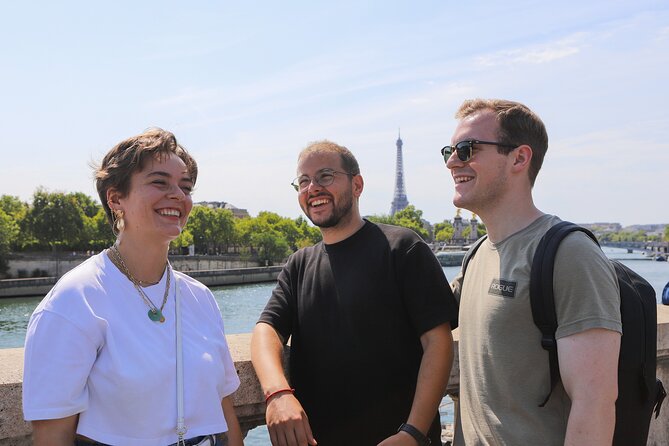
From here, you can see Notre Dame, the Eiffel Tower, the Alexander III Bridge, and Sacré-Coeur. That makes this a strong photo stop, but the guide also uses the location to keep the city’s political geography in view. Paris is easier to understand when you see how its monuments, river, government buildings, and grand avenues relate to one another.
Ten minutes is enough for a quick explanation and photographs, but it is not long. Keep your camera ready and listen closely. The bridge may also feel exposed in poor weather, and this tour runs rain or shine.
That all-weather policy is worth taking seriously. One guide continued through pouring rain, which tells you the walk does not simply stop when conditions turn wet. Bring suitable clothing and comfortable shoes. There is no promise of shelter or a weather-related reschedule.
Place de la Concorde and the execution of Louis XVI
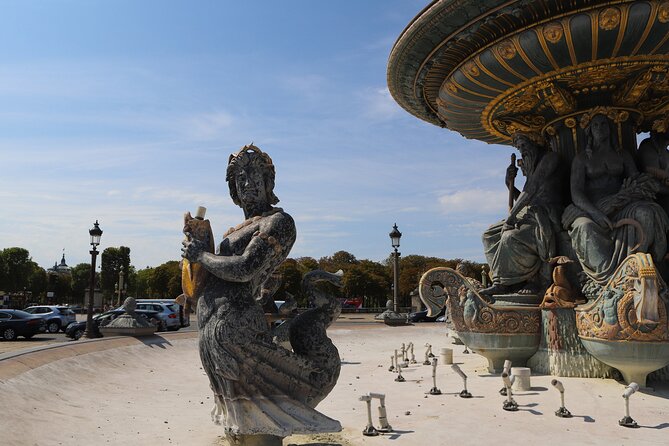
Place de la Concorde is the historical center of the walk. You spend about 30 minutes here, the longest single stop, and for good reason. This was the site where Louis XVI was executed during the French Revolution.
The square you see today is grand and open, with its famous fountain and obelisk. Its current appearance can make the past feel distant, so the guide’s role is especially important. You need help picturing how this public space functioned during one of the most turbulent periods in French history.
This is where the tour’s subject becomes most direct. You are standing in a place linked to the collapse of the monarchy and the violence that followed. The guide can place the execution within the larger sequence of revolutionary events rather than treating it as an isolated dramatic fact.
I like that the tour gives this site half an hour. You have time to look around, ask questions, and consider how the same square can carry different meanings across centuries. It is also a busy central location, so do not expect a quiet, private atmosphere. The value comes from the explanation, not from solitude.
A different way to spend the day in Paris:
- Paris: Louvre Museum Timed-Entrance Ticket
★ 4.6 · 71,977 reviews - Disneyland® Paris 1-Day Ticket
★ 4.6 · 49,412 reviews - Paris: Versailles Palace and Gardens Full Access Ticket
★ 4.6 · 41,579 reviews - Paris: Arc de Triomphe Rooftop Tickets
★ 4.6 · 34,264 reviews
A calmer walk through the Tuileries Gardens
From Place de la Concorde, the route continues into the Jardin des Tuileries for around 20 minutes. The change of mood is welcome. After the political tension of the National Assembly and the execution site, the garden offers a more peaceful setting for discussion.
The Tuileries are useful here because they show how Paris mixes formal beauty with political memory. You stroll through landscaped grounds while learning about the garden’s cultural past and its place in the city. The guide can also help you notice the relationship between the gardens and the grand spaces around them.
This stop gives the walk a little breathing room. You are still learning, but the pace feels less intense than standing in a large public square. If you are visiting Paris with family, this may be one of the easier sections for everyone to enjoy.
The tradeoff is that 20 minutes is brief for such a large garden. You will get an introduction, not a full garden tour. If you like the setting, mark it for a return visit when you can wander without a schedule.
Place Vendôme and modern Parisian luxury
Place Vendôme shifts the subject from revolution and government to luxury, commerce, and Parisian style. The stop lasts about 20 minutes and focuses on the square’s prestigious hotels, high-end shops, and architecture.
This contrast is one of the route’s strengths. Paris is not only a city of political monuments. It is also a place where grand design, wealth, fashion, and public image matter. Seeing Place Vendôme after the Tuileries helps you understand how the center of Paris developed into both a seat of power and a showcase for luxury.
You may find this section less directly tied to the Revolution than Place de la Concorde. That is not necessarily a flaw. It broadens the walk and shows how the city’s identity reaches beyond one historical period.
The square is also a useful orientation point for later exploring. You can ask the guide for suggestions about nearby sights, restaurants, or ways to continue walking. Practical advice is part of what makes a small group worthwhile, especially when the guide has time to respond to individual questions.
Finishing at the Palais Garnier
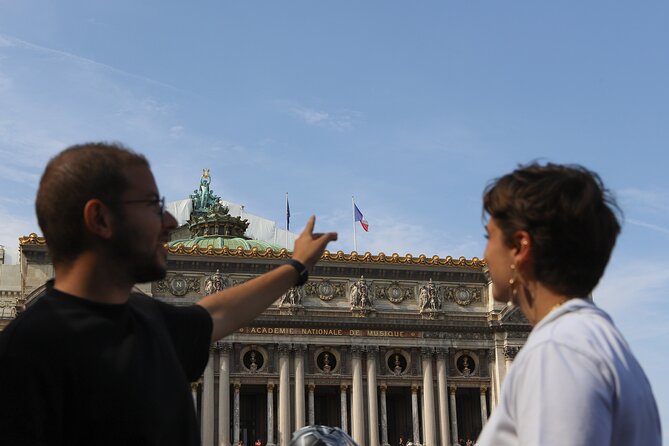
The final stop is the Opéra, officially the Palais Garnier, at Place de l’Opéra. You spend about 20 minutes learning about Paris’s artistic, musical, and cultural life while admiring the opera house’s elaborate exterior.
Ending here gives the tour a satisfying change of subject. You begin with political power and revolutionary change, then finish with the grand cultural image of Paris. The building’s architecture provides a strong final sight and a clear landmark for the rest of your day.
The tour finishes at the opera house, not back at the starting point. That matters when planning your schedule. You can continue toward nearby shopping streets or other central sights, but you will need to arrange your own way afterward.
Because the experience does not include admission tickets, you should not assume that you will enter the Palais Garnier. The scheduled stop is about the building, its architecture, and its cultural role. If you want to see the interior, plan that separately.
What the small group adds
The maximum group size is eight people, and that is a real advantage for this kind of walk. Revolutionary history can become dry when delivered to a large crowd. A smaller group gives the guide a better chance to adjust the pace, answer questions, and use humor naturally.
The feedback attached to this experience points to clear speech, preparation, passion, and a good sense of humor. One guide’s humor worked especially well for a family group, while Lou is praised for being engaging and personable. These details suggest that the guide’s style may be as important as the route itself.
You should still keep your expectations sensible. This is not a private lecture with unlimited time at every site. A small group makes the experience more personal, but the route remains fixed and the total time remains about two hours.
A private option is also available if you want more control over the pace or the questions. The supplied information does not give a separate private price, so check the current amount before booking.
Is $66.23 a fair price?
At $66.23 per person, this is not a cheap way to walk through central Paris. You do not receive entry to attractions, transportation, food, or hotel transfers. You are paying for a local guide, a small group, historical interpretation, and practical tips for navigating the city afterward.
I think the price can make sense for a first or second visit, especially if you want a clear introduction to the Revolution and central Paris. The route covers six important places, and the small group limit gives you more access to the guide than a large city walk.
The value is weaker if you mainly want photographs or a basic list of landmarks. You can see the exteriors and public spaces without paying for a tour. You should book this for the explanations, connections, and questions, not simply for the stops.
The included city advice may also save you time later. Guides have offered restaurant recommendations and suggestions for other things to see. That is a useful bonus, though it should be treated as an extra rather than the main reason to book.
Practical details for a smooth walk
The experience is offered in English and includes a mobile ticket. Confirmation arrives when you book, and the tour operates in rain or shine. Comfortable footwear is sensible because the route moves through public squares, a bridge, gardens, and city streets.
The meeting point is 1 Place du Palais Bourbon, 75007 Paris. The finish is Palais Garnier at Place de l’Opéra, 75009 Paris. Since there is no hotel pickup or drop-off, allow time to reach the first point and make your own plans from the opera house.
Most people can participate, and service animals are allowed. The tour is near public transportation. The minimum group size is two people, so the experience may be canceled if that minimum is not reached.
The route can change because of special city conditions, including adjustments connected with the 2024 Olympics. Since that event period may affect planning information, check the current details close to your date.
You can cancel for a full refund if you do so at least 24 hours before the start time. Cancellations or changes made inside that window are not accepted for a refund.
Who should book this Paris walk?
I would choose this tour if you like history but do not want to spend hours inside a museum. It is also a good fit if you want an introduction to central Paris that explains why the places matter.
Families may appreciate the short duration, the humor, and the chance to keep moving. The small group can also make it easier for children or parents to ask questions without speaking to a large crowd.
First-time visitors can use the route as a practical city orientation. You finish near a major landmark and receive tips for future exploring. Repeat visitors may also enjoy it if they have seen the monuments before but never understood their political connections.
I would hesitate if you want a private, highly detailed study of the French Revolution. Two hours and six stops require selection. You will get a lively framework and useful context, not every date, faction, or battle.
Should you book it?
Book this walk if you want Paris to make more sense, not just look beautiful. The best reasons are the carefully connected route, the 30-minute stop at Place de la Concorde, the wide view from the Pont de la Concorde, and the chance to ask questions in a group of eight or fewer.
At $66.23, it is a considered purchase. Go ahead if you value a strong guide and want local suggestions for the rest of your visit. Skip it if you only need transportation between sights or prefer to explore public monuments on your own.
FAQ
How long does the Paris Revolutionary Walking Tour last?
The tour lasts approximately two hours.
Where does the tour begin?
It begins at 1 Place du Palais Bourbon, 75007 Paris, France, near the National Assembly.
Where does the tour finish?
The tour finishes at Palais Garnier, Place de l’Opéra, 75009 Paris.
What language is the tour offered in?
The tour is offered in English.
How many people can join the group?
The maximum group size is eight people. A private option is also available.
What sights are included on the route?
The route includes the Assemblée Nationale, Pont de la Concorde, Place de la Concorde, Jardin des Tuileries, Place Vendôme, and the Opéra, or Palais Garnier.
Are admission tickets included?
The listed stops have no admission tickets included. The tour includes a local guide and a walking experience, but not attraction entry.
Does the tour operate in bad weather?
Yes. The tour takes place rain or shine.
Can I cancel for a refund?
Yes. You can receive a full refund if you cancel at least 24 hours before the experience start time. Cancellations made less than 24 hours before the start time are not refunded.
Newest additions around Paris
- Family escape Game with kids and teens on the Île de la Cité★ 4.5 · 11 reviews
- Private Photoshoot with the Iconic Eiffel Tower in Paris★ 5.0 · 11 reviews
- 2-day Private Mont Saint-Michel, 3 Loire Castles, D-Day Express★ 4.5 · 11 reviews
- Paris: Batobus Hop-On Hop-Off Cruise & Landmarks Audio Tour★ 3.0 · 11 reviews
- Kids in the Kitchen – CrOisSaNtS★ 4.0 · 11 reviews
- Guided and Private Tour of 3 hours through Paris aboard a Citroën 2cv★ 5.0 · 11 reviews
- Paris: Ghosts and Dark Stories Guided Walking Tour★ 4.1 · 11 reviews
- Paris: Professional Photoshoot★ 4.9 · 11 reviews
Walking Tours, compared.
Paris Top Sights Half Day Walking Tour with a Fun Guide
Read our review →
Montmartre Hidden Gems and Scenic Highlights Walking Tour
Read our review →
Montmartre Hill French Gourmet Food and Wine Tasting Walking Tour
Read our review →
Paris Île de la Cité and Notre-Dame Walking Tour With Crypt
Read our review →
Montmartre Cheese, Wine & Pastry Guided Walking Tour
Read our review →
Paris in a Day: Louvre or Orsay, Eiffel Tower, City Walk & Cruise
Read our review →
Montmartre Highlights Walking Tour with a Local Guide
Read our review →
Browse the lists this tour appears in