

Reviewed · MONTMARTRE & SACRé-COEUR TOURS
Montmartre Hidden Gems and Scenic Highlights Walking Tour
Montmartre is best understood on foot, one uphill street and odd little corner at a time. This 90-minute walk links famous sights with the places that explain why artists, singers, writers, and dreamers made the hill their Paris home. You’ll see the Moulin de la Galette, La Maison Rose, the Montmartre Vineyard, and Sacré-Cœur, while your guide fills in the stories between them.
I like the tour’s easy pace and its focus on places you could easily miss alone, such as the Man Who Walked Through the Wall and Dalida’s bronze bust. I also like the practical ending near La Bonne Franquette, where you can continue exploring or stop for lunch. The main caution is the terrain: there are no stairs on the planned route, but the walk includes hills, cobbles, narrow streets, and busy stretches.
In This Review
- Key points to know before booking
- Why Montmartre works best as a walking tour
- Rue des Abbesses and the I Love You Wall
- Bateau-Lavoir and the artists of Montmartre
- Moulin de la Galette and Montmartre’s social life
- The Man Who Walked Through the Wall
- Dalida’s bust and La Maison Rose
- Montmartre Vineyard and the village that remains
- Sacré-Cœur and the best city views
- Place du Tertre and the end at La Bonne Franquette
- What the $38.70 price really buys you
- Pace, group size, weather, and accessibility
- Who will get the most from this walk?
- Should you book the Montmartre walking tour?
- FAQ
- How long does the Montmartre walking tour last?
- How much does the tour cost?
- Is the tour offered in English?
- Where does the tour begin?
- Where does the tour finish?
- Does the tour enter Sacré-Cœur Basilica?
- Is the Moulin Rouge included?
- Is the walk suitable for people with limited mobility?
- What happens if I arrive late or need to cancel?
Key points to know before booking
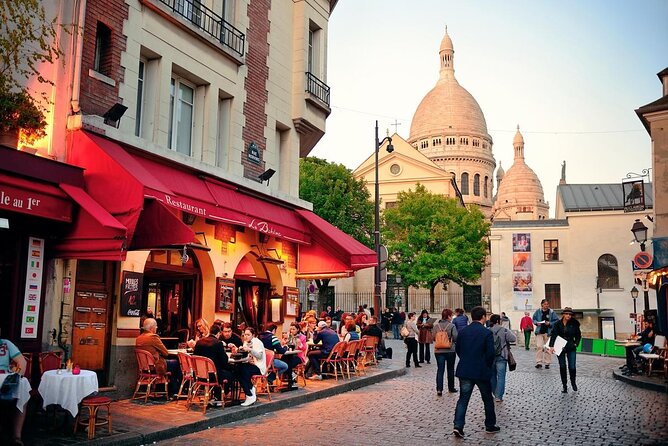
- A compact introduction to Montmartre: The route covers major sights and lesser-known corners in about 90 minutes.
- Art history with personality: Expect stories about Picasso, Modigliani, Braque, Renoir, Van Gogh, and Dalida.
- Sacré-Cœur from the outside: Entry is not part of the tour, but your guide gives advice for visiting inside afterward.
- A useful early start: Montmartre gets crowded quickly, so an early departure can make the walk easier.
- A small-group format: The maximum is 25 people, though a larger group can still make hearing difficult.
- Good value for a first visit: At $38.70, you pay for orientation, local context, and a route that saves you from piecing the neighborhood together yourself.
Why Montmartre works best as a walking tour
Montmartre can feel confusing on a first visit. The Sacré-Cœur dome draws you uphill, but the neighborhood’s real character is spread across side streets, small squares, old cafés, artists’ studios, and traces of village life.
That is where a guided walk earns its price. Instead of simply pointing out a church and a famous windmill, the route explains how Montmartre changed from a cheaper district favored by artists into one of Paris’s most expensive addresses. Laura, Denise, David, Sylvia, Linda, and other guides have received especially strong praise for turning that change into an engaging story.
You should not expect a full museum tour or a detailed visit inside every landmark. This is an outdoor introduction. The goal is to help you understand the neighborhood, spot details you might pass without noticing, and leave you with a clear plan for the rest of your time on the hill.
The tour begins at 19 Rue des Abbesses. Arrive 15 minutes early. The walk starts on time, and catching up can be difficult once the group moves into Montmartre’s narrow streets.
More Montmartre walks and visits:
- Montmartre Hill French Gourmet Food and Wine Tasting Walking Tour
★ 5.0 · 2,588 reviews - Paris: Montmartre Cheese, Wine & Pastry Guided Walking Tour
★ 4.8 · 2,255 reviews - Paris: Montmartre Highlights Walking Tour with a Local Guide
★ 4.9 · 1,668 reviews
Rue des Abbesses and the I Love You Wall

The opening stop is the I Love You Wall, a small-square installation where the phrase appears in more than 300 languages. It is a quick visit, but a useful first pause. The artwork gives your guide a way to introduce Montmartre as a place linked with romance, art, migration, and many different lives.
From there, the walk explores Rue des Abbesses, one of the oldest streets in the district. Cafés, small shops, and old buildings give it a more lived-in feel than the grand avenues elsewhere in Paris. Your guide uses the street to explain Montmartre’s bohemian past and how the area’s reputation has shifted over time.
This part of the route is also a reminder that Montmartre is not a quiet open-air museum. You share the pavement with residents, shoppers, delivery vehicles, and other sightseeing groups. Stay close to your guide and listen carefully at corners.
Bateau-Lavoir and the artists of Montmartre
The Bateau-Lavoir is one of the most important art stops. It was once a modest artists’ residence, but its occupants included Picasso, Modigliani, and Braque. Their work helped change modern art, making this unassuming place far more important than its appearance suggests.
You will not be entering a working museum here. The value comes from the story and the setting. A good guide helps you picture the creative circles that formed around Montmartre and explains why the district attracted artists who wanted cheap rooms, company, and freedom from conventional Paris life.
Linda has been praised for bringing these artist stories to life with humor, while Denise and Laura are noted for connecting individual landmarks with the larger story of the neighborhood. If art history usually feels dry to you, the personal anecdotes are likely to be the strongest part of the walk.
Moulin de la Galette and Montmartre’s social life
The Moulin de la Galette is a historic windmill and one of Montmartre’s recognizable symbols. Renoir and Van Gogh included it in their paintings, and it once served as a popular dance hall.
The important detail here is that Montmartre’s artistic life was not limited to studios. Cafés, dance halls, cheap lodgings, and informal gatherings helped create the setting in which artists met and worked. The windmill connects that social side of the neighborhood with the paintings that later made it famous.
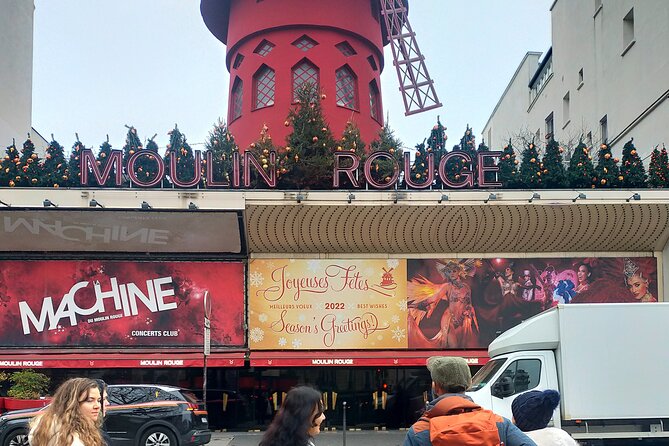
The tour passes the Moulin de la Galette from outside. If you want the Moulin Rouge, this is not the right route. The Moulin de la Galette and the Moulin Rouge are different Paris sights, and the red windmill is not included in this walk.
More Paris walking tours:
- Paris Top Sights Half Day Walking Tour with a Fun Guide
★ 5.0 · 2,893 reviews - Paris Île de la Cité and Notre-Dame Walking Tour With Crypt
★ 5.0 · 2,272 reviews - Paris in a Day: Louvre or Orsay, Eiffel Tower, City Walk & Cruise
★ 5.0 · 1,956 reviews - Paris City Center Free Walking Tour (Tip-Based)
★ 5.0 · 1,340 reviews
The Man Who Walked Through the Wall
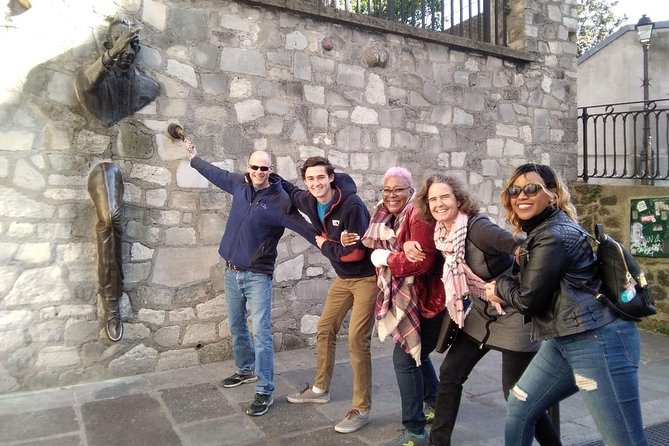
Near the former home of writer Marcel Aymé, you’ll find a sculpture of a man partly disappearing through a wall. It comes from Aymé’s short story and adds a playful note to the route.
I like this stop because it breaks up the art history with something odd and memorable. Montmartre is often associated with painters and grand views, but small pieces of public art help you see the neighborhood’s humorous, slightly surreal side.
It is also the kind of place that benefits from a guide. Without context, you might walk past the sculpture, assume it is random street decoration, and never know why it is there.
Dalida’s bust and La Maison Rose
The bronze bust of Dalida sits in a peaceful square and honors the French singer who lived in Montmartre for many years. Your guide can explain her connection to the area and why local fans continue to treat the sculpture as a place of tribute.
The stop works well because it widens the story beyond the painters who usually dominate Montmartre’s image. Dalida gives the neighborhood a musical and personal connection, with a quieter memorial that feels different from the busy tourist sights.
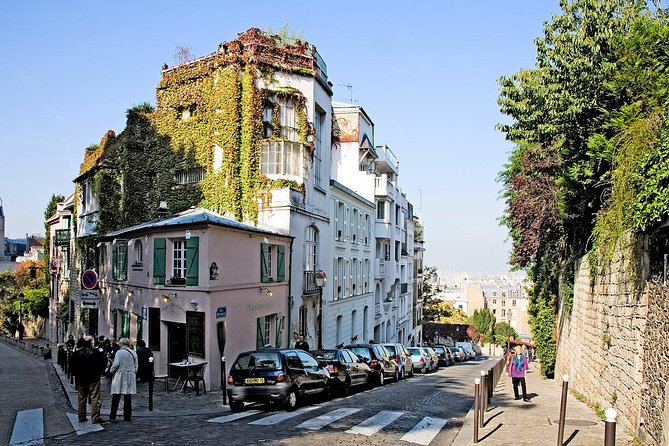
La Maison Rose offers another change of mood. The small pink house has long been photographed and was once associated with artists including Picasso and Utrillo. It now operates as a café serving French food.
You should have time to admire it from outside and take photographs, but this is not a meal stop. The tour ends at La Bonne Franquette, so you can consider continuing there or asking your guide for food suggestions. Several guides, including Laura and Linda, are praised for offering useful ideas about where to eat and what to see after the walk.
Montmartre Vineyard and the village that remains
The Montmartre Vineyard is one of the route’s most appealing surprises. It was established in 1933 to protect the district’s winemaking tradition and still produces wine.
Paris is a dense capital, so a vineyard tucked into Montmartre feels unexpected. It gives you a glimpse of the hill’s older, more rustic identity, before the neighborhood became a major stop on every Paris itinerary.
The vineyard is viewed from outside. Do not book this tour expecting a tasting or a winery visit. Instead, treat it as a brief look at a surviving piece of Montmartre’s village past.
Sacré-Cœur and the best city views
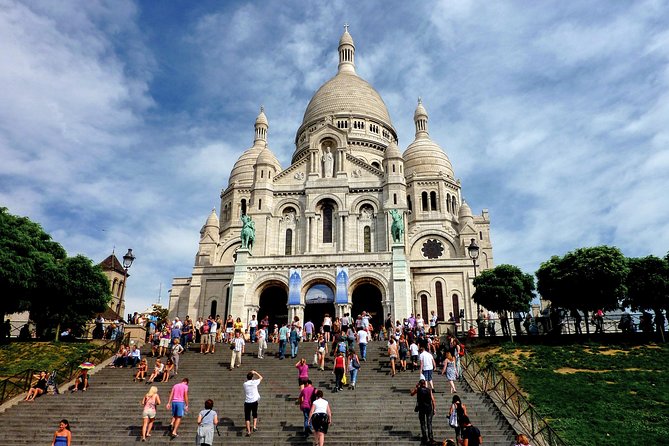
The walk continues toward the Sacré-Cœur Basilica, perched at Paris’s highest point. The white domes and mosaics make it one of the city’s most recognizable buildings, and the hilltop provides broad views across Paris.
The tour visits the exterior only. Entry to the basilica is free when it is open, but it is not included in the $38.70 tour price. Your guide gives you tips about what to see inside if you decide to visit after the walk.
This arrangement has both advantages and limits. You keep the group moving and avoid turning a short neighborhood walk into a long church visit. On the other hand, if your main goal is the basilica interior, you will need to plan extra time afterward.
The view is one of the strongest reasons to take the route. Several people have found the walk scenic, and the high point helps you understand Paris’s layout. Still, the approach involves hills, and the paving can be hard for anyone who struggles with steep grades or uneven ground.
Place du Tertre and the end at La Bonne Franquette
The tour finishes around Place du Tertre, the square most closely linked with Montmartre’s working artists. Painters, caricaturists, cafés, and restaurants fill the area, creating a lively but crowded scene.
This is the most touristy part of the route, so your guide’s advice matters. You’ll get a better sense of how the square works, what to look for, and how to continue exploring without wasting time.
The official end is La Bonne Franquette at 18 Rue Saint-Rustique. Ending here is practical. You are close to Sacré-Cœur and Place du Tertre, with easy access to continue your own walk, find a meal, or return to a spot that caught your eye.
What the $38.70 price really buys you
At $38.70 per person, this is not the cheapest way to wander Montmartre. You can walk around the hill on your own for free, and Sacré-Cœur does not charge admission when open.
The value comes from local orientation in a short window. A good guide helps you connect places that otherwise seem unrelated: a windmill becomes part of an artist’s social world, a pink café becomes part of the district’s creative past, and a vineyard points to Montmartre before tourism took over.
The 90-minute length also suits a busy Paris schedule. You can fit it into a morning or afternoon, then use the guide’s suggestions to plan the rest of your visit. For a first look at Montmartre, I consider the price fair, especially if you are short on time.
If you already know the district well, or want long stops inside landmarks, the value is weaker. This is an overview, not an exhaustive study.
Pace, group size, weather, and accessibility
The maximum group size is 25 people. That is smaller than a large bus excursion, but it is not an intimate private walk. One person found a large group made it hard to hear, so position yourself near the guide and speak up if you miss a point.
The route operates in all weather. Wear shoes suited to hills and uneven streets, and bring protection from rain or sun. The walk has no planned stairs, but that should not be confused with full accessibility. Montmartre’s slopes, cobbled surfaces, and narrow streets can be difficult for wheelchair users and anyone with limited mobility.
The tour requires moderate physical fitness. If you are comfortable walking uphill for 90 minutes, with pauses at sights, you should find it manageable. If steep grades cause trouble, you may prefer exploring only the flatter sections or visiting Sacré-Cœur by a different plan.
An early tour is a smart choice. David’s morning group found the district became busy quickly, and that pattern makes sense around the popular squares and basilica. Morning light can also make the hilltop views pleasant, though the tour schedule is what determines your exact conditions.
Who will get the most from this walk?
I would choose this tour for a first visit to Montmartre, a short Paris stay, or a family group that wants a clear introduction without spending half a day in a museum. It is also a good match if you like history told through people and places rather than dates alone.
English-speaking guides such as Laura, Denise, David, Sylvia, Linda, Sophie, and others have been praised for friendly storytelling, clear explanations, humor, and useful suggestions for the rest of your day. Guide quality can vary from one departure to another, but the consistently strong ratings suggest the human side of the tour is a major part of its appeal.
I would skip it if your priorities are the Moulin Rouge, the funicular, a long visit inside Sacré-Cœur, or a dedicated street-art tour. The route includes artistic stories and some public art, but it is not designed around graffiti. It also is not a food tour, wine tasting, or private walk.
Should you book the Montmartre walking tour?
Book it if you want a short, well-organized introduction to Montmartre with a mix of famous sights, art stories, local characters, and excellent views. The $38.70 cost is reasonable for the time saved and the context a strong guide can provide.
Choose an early departure if possible, arrive 15 minutes ahead, and plan extra time afterward for the basilica interior and Place du Tertre. Skip it if you need a fully accessible route or want the Moulin Rouge and funicular included.
You can cancel for a full refund up to 24 hours before the start time. Inside that window, the payment is not refunded.
FAQ
How long does the Montmartre walking tour last?
The tour lasts approximately 90 minutes.
How much does the tour cost?
The listed price is $38.70 per person.
Is the tour offered in English?
Yes. The guided visit is offered in English.
Where does the tour begin?
The meeting point is 19 Rue des Abbesses, 75018 Paris, France.
Where does the tour finish?
The tour ends at La Bonne Franquette, 18 Rue Saint-Rustique, 75018 Paris, France.
Does the tour enter Sacré-Cœur Basilica?
No. The tour passes the basilica from the outside. Your guide can share advice for visiting the interior on your own.
Is the Moulin Rouge included?
No. The route visits the Moulin de la Galette, not the Moulin Rouge.
Is the walk suitable for people with limited mobility?
The planned route does not include stairs, but it does include hills, narrow streets, cobblestones, and busy areas. You should book only if you are confident you can complete that type of walk comfortably.
What happens if I arrive late or need to cancel?
You should arrive 15 minutes early because the tour starts on time and you may not be able to catch up if late. Cancellation is free up to 24 hours before the start time. Cancellations within 24 hours are not refunded.
Newest additions around Paris
- Family escape Game with kids and teens on the Île de la Cité★ 4.5 · 11 reviews
- Private Photoshoot with the Iconic Eiffel Tower in Paris★ 5.0 · 11 reviews
- 2-day Private Mont Saint-Michel, 3 Loire Castles, D-Day Express★ 4.5 · 11 reviews
- Paris: Batobus Hop-On Hop-Off Cruise & Landmarks Audio Tour★ 3.0 · 11 reviews
- Paris Revolutionary Walking Tour: Iconic French Sights & Stories★ 5.0 · 11 reviews
- Guided and Private Tour of 3 hours through Paris aboard a Citroën 2cv★ 5.0 · 11 reviews
- Kids in the Kitchen – CrOisSaNtS★ 4.0 · 11 reviews
- Paris: Ghosts and Dark Stories Guided Walking Tour★ 4.1 · 11 reviews
Montmartre & Sacré-Coeur Tours, compared.
Montmartre Hill French Gourmet Food and Wine Tasting Walking Tour
Read our review →
Montmartre Cheese, Wine & Pastry Guided Walking Tour
Read our review →
Montmartre Highlights Walking Tour with a Local Guide
Read our review →
Sacré-Coeur and Montmartre Tour with Expert Guide
Read our review →
Private Montmartre Food Tour with Wine, Cheese & Pastries
Read our review →
Paris Montmartre Food Tour – A Full French Meal by Do Eat Better
Read our review →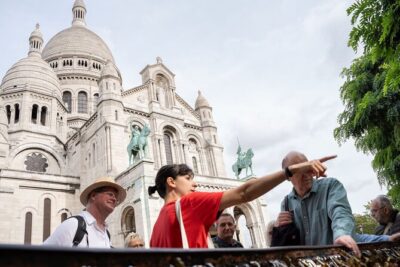
Hidden Montmartre: Paris’ Secret Streets Walking Tour
Read our review →
Paris Montmartre Food & Wine Tour with Eating Europe
Read our review →Browse the lists this tour appears in