
Reviewed · WWI & WWII BATTLEFIELD DAY TRIPS
Somme Battlefields from Paris with Australian memorial & Amiens Cathedral
The most powerful part of this day is how quickly the Somme stops being a chapter in a book and becomes a series of real places: a vast crater, battered earthworks, rows of graves, and memorials carrying thousands of names. You leave Paris for the northern French countryside and return with a much clearer sense of what the Battle of the Somme meant to British, Canadian, Newfoundland, and Australian forces.
I like the small group of up to eight, which gives your guide room to explain the sites without a microphone or a rush of strangers. I also like the mix of open-air battlefield stops and the excellent Sir John Monash Centre, where film and interactive displays put personal stories beside military events.
The main catch is the length. This is an 11-hour day, with much of it spent in a minivan, and the Somme can be brutally cold, wet, and windy. One poor experience also involved a cramped vehicle and an unsuitable guide, so the quality of your particular driver-guide matters.
In This Review
- Key things to know before you book
- Why the Somme makes a worthwhile day from Paris
- Paris pickup and the long ride north
- Thiepval Memorial: 72,000 names without graves
- Lochnagar Crater and the force beneath the ground
- Beaumont-Hamel: the clearest surviving trenches
- Pozières and the Australian part of the story
- The Sir John Monash Centre brings the war closer
- Lunch at Le Tommy in Pozières
- Amiens Cathedral gives the day a different ending
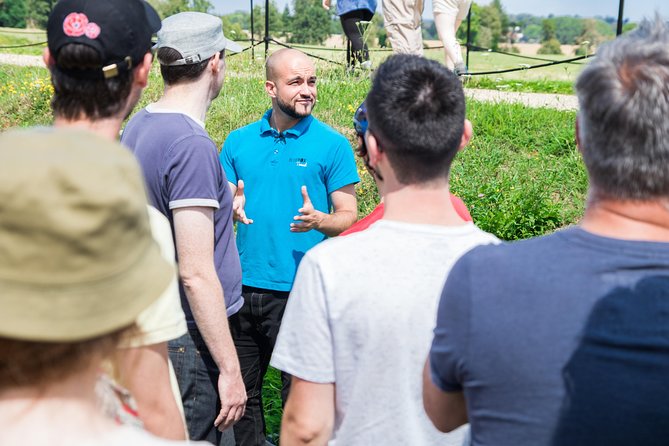
- What the guides add to the experience
- Is $278.26 good value for an 11-hour day?
- What to wear and bring
- Who should book this Somme battlefield tour?
- Should you book it?
- FAQ
- Where does the Somme battlefield tour start?
- How long does the tour last?
- How many people can join the tour?
- Is transportation included?
- Is lunch included in the price?
- What age can participate?
- Can I cancel for a full refund?
Key things to know before you book
- Walk through preserved trenches at Beaumont-Hamel, one of the most tangible stops on the route.
- See the Australian connection at Villers-Bretonneux, including the memorial to 10,738 servicemen with no known grave.
- Stand beside Lochnagar Crater, a huge reminder of the underground explosion that opened the Battle of the Somme.
- Use the Sir John Monash Centre to connect names with faces, through films, voices, and interactive displays.
- Allow time for lunch at Le Tommy, where the food is separate from the tour price but the attached collection of war artifacts adds real interest.
- Expect a long, serious day, best suited to people who want battlefield history rather than a light sightseeing outing.
Why the Somme makes a worthwhile day from Paris
Paris has plenty of famous monuments, but the Somme offers a different kind of French experience. The region is quiet, rural, and marked by war memorials that remain part of everyday life. You are not simply looking at a single museum. You are moving through the places where the fighting happened and seeing how different communities remember their dead.
The Battle of the Somme began on July 1, 1916. The first day alone produced immense losses, and the fighting continued for months. Your guide sets the individual sites within that wider story, explaining the British, Canadian, Newfoundland, and Australian roles rather than treating the battle as one large, vague tragedy.
I would book this day if you have a serious interest in World War I, family connections to the Western Front, or an Australian or Canadian connection to the conflict. You do not need to be an expert. Several guides, including Aaron, Etienne, Oliver, Matthew, Pierre, Victor, and Clement, have been praised for turning complicated events into understandable stories. The strongest guides also allow quiet time at memorials, which is just as important as the facts.
More battlefield remembrance trips from Paris:
- Somme Battlefields Small-Group Day Trip with John Monash Centre from Paris
★ 4.5 · 270 reviews - WWI Somme Battlefields Day Trip from Paris
★ 4.9 · 111 reviews - Normandy D-Day Beaches and World War II Sites Day Trip from Paris
★ 4.5 · 56 reviews
Paris pickup and the long ride north
The day begins at 7:00 a.m. at Dada12, 12 Avenue des Ternes in Paris. Round-trip transport is by air-conditioned minivan, and the group limit is eight people. That is a useful size for a day built around several short stops. You can usually hear the guide clearly, ask questions, and move between sites faster than a large coach.
The trade-off is space. One poor experience described a cramped vehicle and an uncomfortable ride lasting nearly 12 hours. That appears to be an exception rather than the usual pattern, since the tour is designed for eight people, but it is still a fair concern. If you dislike long drives or have trouble sitting for extended periods, think carefully before booking.
The early departure helps fit a lot into one day. It also means this is not a casual late-morning outing. Bring breakfast or buy something before leaving Paris, since lunch comes later at Le Tommy and food is not included.
Thiepval Memorial: 72,000 names without graves
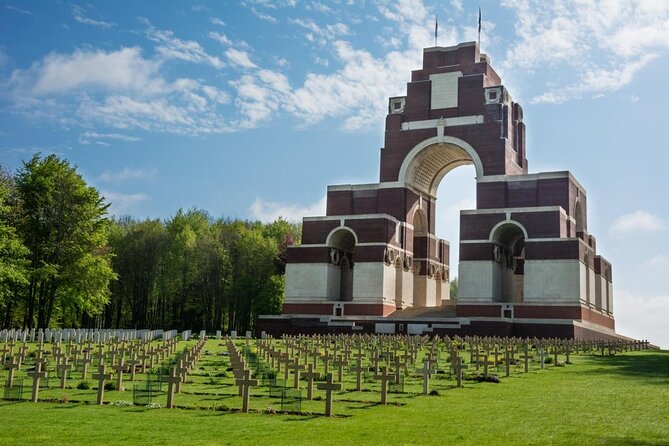
The Thiepval Memorial of the Missing is one of the day’s great emotional stops. Its walls carry the names of more than 72,000 United Kingdom and South African servicemen who died in the Somme sector and have no known grave.
You have about 30 minutes here. That is enough to walk around, read some names, and take in the scale of the memorial, though it is not enough for a long, detailed visit. The number is difficult to grasp until you see the names arranged across the structure. The memorial does not focus on one hero or one dramatic incident. It confronts you with the sheer number of men who disappeared into the battle.
I recommend having a family name or regiment ready if you are researching someone. The guide can add context, but the stop is also valuable when approached quietly. This is a place where the absence of a grave becomes the central story.
Lochnagar Crater and the force beneath the ground
At Lochnagar Crater, you see the result of the mine exploded on July 1, 1916, the first day of the Battle of the Somme. The crater is about 30 meters deep and 100 meters wide.
The dimensions sound abstract until you stand at its edge. The ground itself records the violence. You have roughly 30 minutes here, enough to understand the scale and hear how underground mines were used before the infantry attack.
This stop works best when your guide explains what happened around it. On its own, Lochnagar is a large depression in a field. With the battle context, it becomes evidence of the planning, engineering, and destructive force behind the opening of the offensive.
Wear shoes with a decent tread. You may find the ground muddy, especially after rain, and the weather can change quickly.
A different way to spend the day in Paris:
- Paris: Louvre Museum Timed-Entrance Ticket
★ 4.6 · 71,977 reviews - Disneyland® Paris 1-Day Ticket
★ 4.6 · 49,412 reviews - Paris: Versailles Palace and Gardens Full Access Ticket
★ 4.6 · 41,579 reviews - Paris: Arc de Triomphe Rooftop Tickets
★ 4.6 · 34,264 reviews
Beaumont-Hamel: the clearest surviving trenches
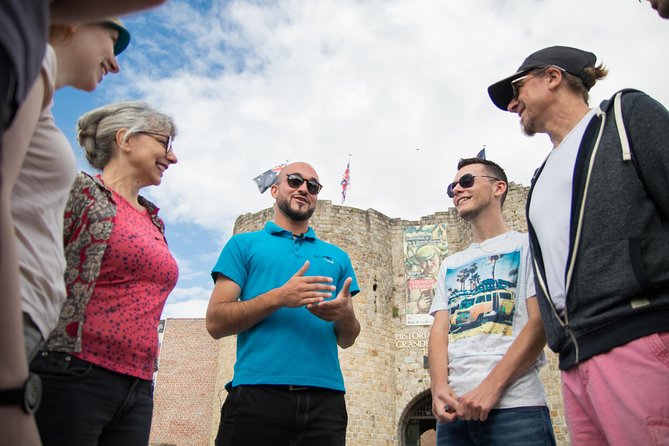
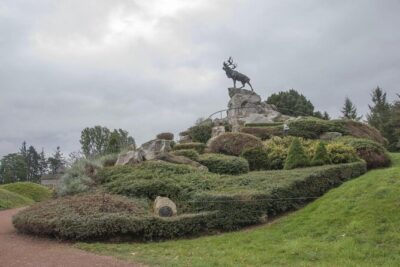
The Newfoundland Memorial at Beaumont-Hamel is the largest preserved Somme battlefield site on the route. Here, you can still walk through sections of trench and see how close the soldiers lived to the fighting.
For me, this is one of the most useful stops for understanding daily conditions. Memorial walls tell you who died. The trenches help you picture where men stood, waited, moved, and tried to survive. The scale is still hard to comprehend, but the physical remains make the story less distant.
The visit lasts about 30 minutes, so you will not have time to explore every corner. Still, it is enough for a direct look at the earthworks and the Newfoundland memorial. The site can be exposed and wet, so waterproof footwear is more than a nice extra. In winter, add serious layers. Australian winter clothing may not be enough for a cold, rainy Somme day.
Pozières and the Australian part of the story
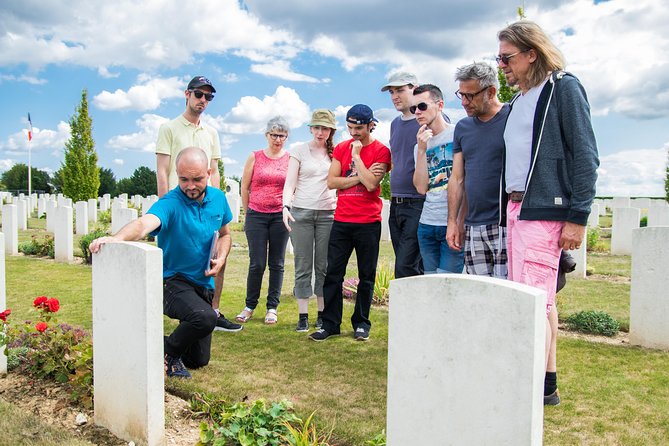
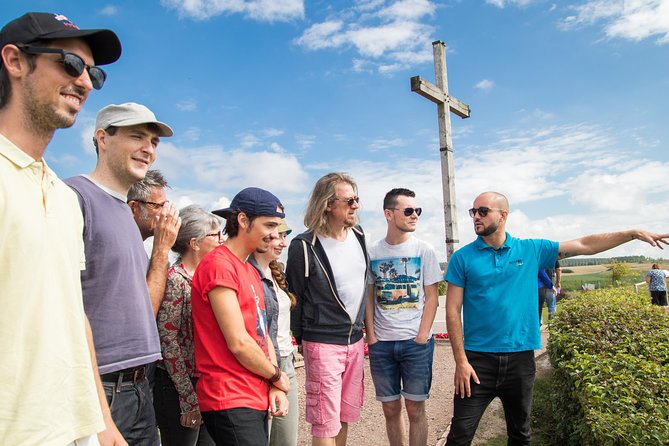
The Pozières Memorial is a shorter stop, about 10 minutes, but it adds an important Australian chapter to the day. The tour then continues to Villers-Bretonneux Military Cemetery, which commemorates 10,738 Australian servicemen with no known grave who died on the Western Front.
For many Australian visitors, Villers-Bretonneux is the emotional center of the trip. The Australian defence of the town helped prevent German forces from advancing on Amiens, and the town later became a safe area for Allied forces. The connection between the French community and Australian service is a key reason this route feels personal rather than abstract.
The cemetery is carefully maintained and solemn without being theatrical. Anzac Day ceremonies take place at the memorial every April 25, adding another layer of meaning for anyone visiting around that date.
You have around 30 minutes here. That gives you time to walk among the graves and study the memorial, but not to examine every name. If you are tracing a relative, bring details in advance. The guide may be able to adjust the visit when the group is small. Nessa, for example, has tailored a private day around a participant’s requests, while other guides have adjusted the pacing for Australian families.
The Sir John Monash Centre brings the war closer
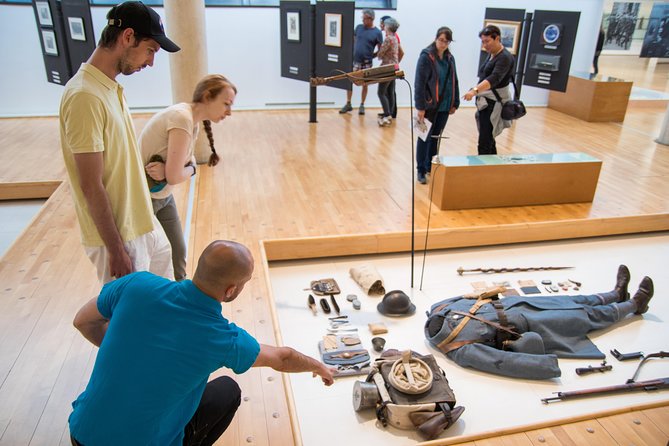
The one-hour visit to the Sir John Monash Centre is a major strength of the tour. Located near Villers-Bretonneux, it uses video testimony and interactive displays to present the experiences of men who lived through the Great War.
This is a useful change of pace after the open-air memorials. At the cemeteries, you see names and dates. At the centre, you get voices, images, and personal accounts that help explain what those names represented. The displays also provide a clearer picture of the Australian contribution and the leadership of Sir John Monash.
The centre is especially helpful if you arrive with only a general knowledge of Gallipoli and want to understand the Australian role on the Western Front. The battlefield stops show the ground. The centre fills in the human and military story.
An hour is a sensible amount of time. You can see the main displays without the visit taking over the whole day. If you are traveling with teenagers, this may be the stop that holds their attention best, since the material is presented through more than printed panels.
Lunch at Le Tommy in Pozières
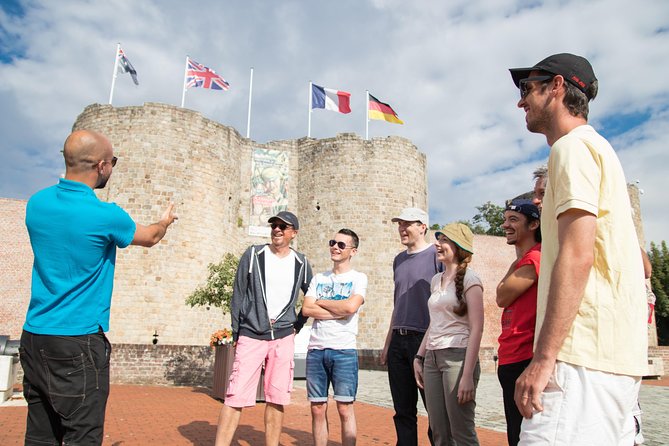
You get about an hour for lunch at Le Tommy. Your meal is not included, so bring money for food. The restaurant serves classic meals at reasonable prices, and the owner, Dominique, is known locally for his strong personality and interest in Somme history.
The attached private collection is part of the appeal. Dominique has gathered battlefield artifacts and created displays that help you picture the conditions on both sides. Even if lunch is ordinary, the collection gives the stop extra value.
Food quality may vary. One disappointing meal included poorly prepared steaks, and the menu may not suit vegans. That is worth noting if you have dietary needs. The restaurant is a practical rural lunch stop, not a reason to book the tour by itself.
I would use the hour to eat, look through the collection, and ask your guide about anything you have just seen. The pause also breaks up the day before the final cathedral visit and the return drive.
Amiens Cathedral gives the day a different ending
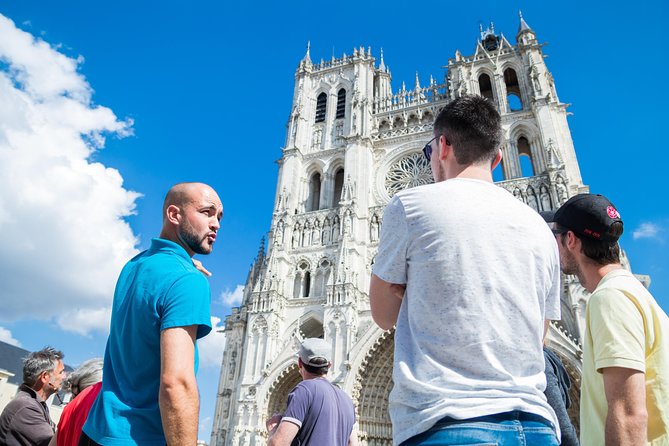
The final visit is to Notre-Dame d’Amiens, a 13th-century cathedral and the largest cathedral in France. You have about 20 minutes inside.
After a day of war memorials, the cathedral changes the mood. Its age, scale, and craftsmanship remind you that the Somme is not only a battlefield region. Amiens is an old French city with its own religious and architectural story, and the cathedral adds a broader sense of place.
Twenty minutes is short. You will get a look rather than a full architectural study. If the cathedral is a major priority for you, plan a separate visit on another day. Here, it works as a striking final stop before returning to Paris.
What the guides add to the experience
The guide is the key variable on this tour. Strong guides such as Aaron, Etienne, Oliver, Matthew, Pierre, Victor, Clement, Sarah, Marie, and Nessa have been praised for clear explanations, patience, humor when appropriate, and a genuine interest in the subject.
Aaron’s military background has been especially useful for people wanting detail about tactics, service conditions, and the human cost of mechanized warfare. Etienne has been noted for bringing each memorial to life with stories and facts while allowing enough time for reflection. Other guides have adapted the route when a group had a particular Australian connection or family research request.
There was also one very poor account involving a late arrival, weak historical explanations, an overly strong accent, and unsafe-feeling driving. The overall score is high, at 4.9 out of 5 from 228 ratings, and 98 percent of people recommend the experience, but that criticism should not be ignored. You are paying for a guide-led history day, so professionalism and safe driving are essential.
Is $278.26 good value for an 11-hour day?
At $278.26 per person, this is not a cheap excursion. I think the price can make sense if you value door-to-door transport from Paris, a small group, several widely scattered sites, and a guide who can explain the battlefield as you move through it.
Doing the Somme independently would mean arranging transport across rural sites, working out timing, and learning enough background to connect Thiepval, Beaumont-Hamel, Pozières, and Villers-Bretonneux. The minivan removes that burden. You also avoid the fatigue of driving after a full day outdoors.
The value drops if you want a relaxed pace, a long cathedral visit, or only one or two memorials. The itinerary is busy, and most stops last between 10 and 30 minutes. You are buying access to a broad story in one day, not a slow, specialist study of each site.
The booking terms are practical: free cancellation is available up to 24 hours before the start time. The tour runs in all weather, and the minimum age is seven.
What to wear and bring
Treat this as an outdoor history day, not a city museum outing. You will walk at memorials, trenches, and the crater, often in exposed conditions.
Bring:
- Waterproof shoes with good tread
- Warm layers, especially from autumn through spring
- Rain protection
- Food or a snack for the early departure
- Money for lunch at Le Tommy
- Family military records, if you are researching a relative
The cold deserves special attention. People who arrived prepared for an Australian winter still found the Somme winter much harsher. Rain, wind, and mud can change the feel of the day quickly.
Who should book this Somme battlefield tour?
I would recommend it to Australians, Canadians, British visitors, and anyone with a family connection to the Western Front. It is also a strong choice for parents with older children. The minimum age is seven, but the serious subject matter is likely to work best for children who can handle memorials, graves, and wartime stories. Families with teenagers and young adults have found the mix of physical sites and interactive displays useful.
This is also a good fit if you want a personal small-group format. On quiet days, the group may be very small, even just one couple or one participant. That can lead to extra questions and a more flexible pace.
I would skip it if you dislike long road journeys, need a full lunch with many dietary choices, or prefer to spend an entire day inside museums. The weather can be rough, the schedule is full, and the subject is solemn from start to finish.
Should you book it?
Book this tour if you want the Somme explained as a connected story, from the crater and trenches to the memorials, Australian service, and personal accounts at the Sir John Monash Centre. The small minivan, return transport, and wide range of sites make it a practical choice from Paris.
Before booking, accept two facts: it is a long day, and your comfort depends heavily on the vehicle and guide. Pack for rain and cold, wear sturdy shoes, and bring any family research that could make the memorials more personal. For anyone drawn to World War I history, this is a serious, moving, and useful day beyond Paris.
FAQ
Where does the Somme battlefield tour start?
The tour starts at Dada12, 12 Avenue des Ternes, 75017 Paris, at 7:00 a.m.
How long does the tour last?
The experience lasts approximately 11 hours and returns to the original meeting point.
How many people can join the tour?
The maximum group size is eight participants.
Is transportation included?
Yes. Round-trip transport in an air-conditioned minivan is included.
Is lunch included in the price?
No. Lunch at Le Tommy is not included, and you should budget separately for your meal.
What age can participate?
The minimum age is seven years old.
Can I cancel for a full refund?
Yes. You can cancel at least 24 hours before the experience start time for a full refund. Cancellations or changes made less than 24 hours before the start time are not accepted for a refund.
Newest additions around Paris
- Family escape Game with kids and teens on the Île de la Cité★ 4.5 · 11 reviews
- Private Photoshoot with the Iconic Eiffel Tower in Paris★ 5.0 · 11 reviews
- 2-day Private Mont Saint-Michel, 3 Loire Castles, D-Day Express★ 4.5 · 11 reviews
- Paris: Batobus Hop-On Hop-Off Cruise & Landmarks Audio Tour★ 3.0 · 11 reviews
- Paris Revolutionary Walking Tour: Iconic French Sights & Stories★ 5.0 · 11 reviews
- Kids in the Kitchen – CrOisSaNtS★ 4.0 · 11 reviews
- Guided and Private Tour of 3 hours through Paris aboard a Citroën 2cv★ 5.0 · 11 reviews
- Paris: Ghosts and Dark Stories Guided Walking Tour★ 4.1 · 11 reviews
WWI & WWII Battlefield Day Trips, compared.
Somme Battlefields Small-Group Day Trip with John Monash Centre from Paris
Read our review →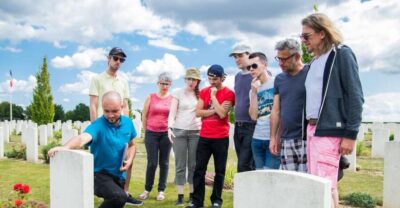
Normandy D-Day Beaches and World War II Sites Day Trip from Paris
Read our review →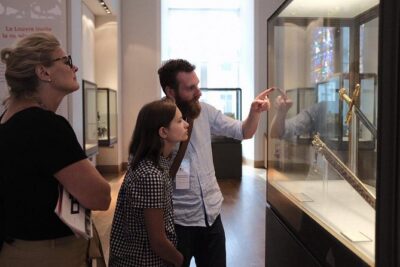
Skip-the-line Les Invalides World War Museum Guided Tour – Semi-Private 8ppl Max
Read our review →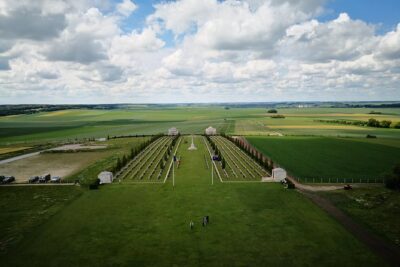
WW1 Australians in the Somme -Villers Bretonneux, Le Hamel – Day trip from Paris
Read our review →
WWI Private Day Trip with Ypres Salient Battlefield in Flanders from Paris
Read our review →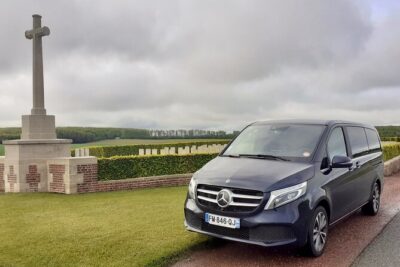
WW1 Australian Battlefield Day Tour from PARIS: Somme, Villers-Bretonneux…
Read our review →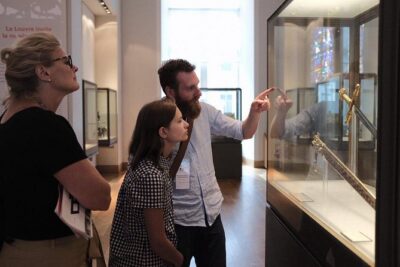
Skip-the-line Les Invalides World War Museum Guided Tour – Exclusive Guided Tour
Read our review →Browse the lists this tour appears in