
Reviewed · PASTRY & MACARON CLASSES
Paris: Pastry & Chocolate Walking Tour with Tastings
Paris reveals itself especially well through its sweets. This 2.5-hour walk links family-run chocolate shops, old patisseries, and local cafés with three elegant covered passages, so you get food and a look at lesser-known corners of central Paris in one outing.
I like the small group, capped at 10, and the way the route mixes famous names such as Stohrer with quiet passageways you could easily miss. I also like that guides such as Emily, Sam, Khosi, Juan, Michelle, and Joshua have brought warmth, good pacing, and useful architectural detail to the walk.
The main caution is simple: arrive hungry. Six or more tastings add up quickly, and this is not the right tour for vegans, people avoiding gluten, or anyone with serious nut allergies. Almonds, hazelnuts, and pecans are used, though no peanuts are served.
In This Review
- Key points at a glance
- Why this pastry walk works so well
- Chocolate first at Le Petit Parisien
- Pastries and coffee in a covered passage
- Three covered passages, three different moods
- Macarons and the long-running Stohrer stop
- A Breton break at Le Comptoir du Commerce
- Finishing along Rue Montorgueil
- What the $90 price gets you
- The guides shape the experience
- Who should book this experience?
- Practical planning for a sweet morning
- Should you book the Paris pastry and chocolate walk?
- FAQ
- How long does the Paris pastry and chocolate tour last?
- Where does the tour begin?
- How early should I arrive?
- Where does the tour finish?
- How many people are in the group?
- Is the tour conducted in English?
- What food is included?
- Is the tour suitable for vegetarians?
- Is the tour suitable for vegans or people avoiding gluten?
- Can people with nut allergies join?
- What should I bring?
- Can wheelchair users participate?
Key points at a glance
- Six or more substantial tastings: Chocolate, croissant, café crème, macarons, crêpe, cider, and bean-to-bar chocolate make this closer to a sweet meal than a light snack.
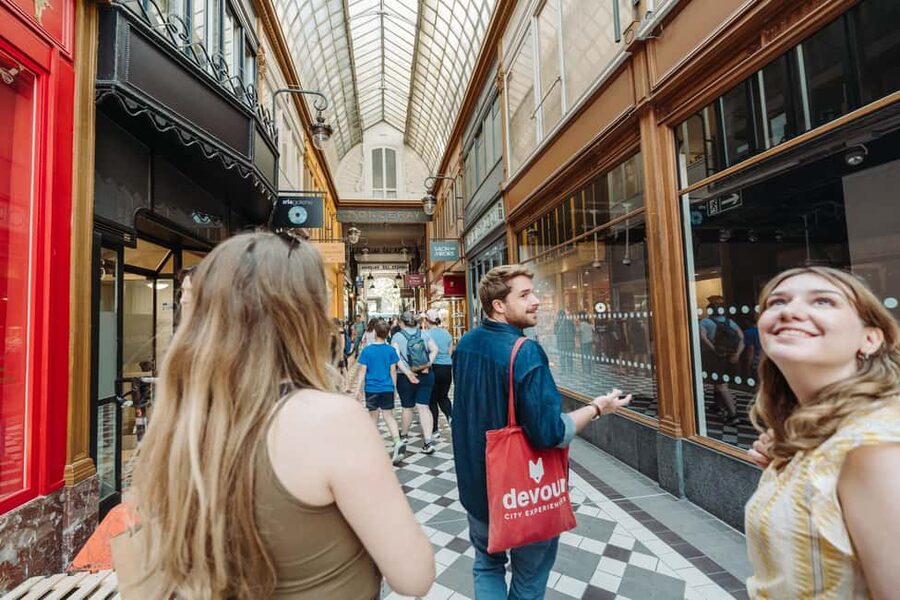
- Covered passages with character: Passage de l’Ancre, Passage du Bourg l’Abbé, and Passage du Grand Cerf add architecture, old cafés, boutiques, and good photo stops.
- A compact central Paris route: The walk starts on Rue du Faubourg Montmartre and finishes around Rue Montorgueil, leaving you well placed for more sightseeing.
- A guide-led introduction to French sweets: You hear where classic pastries and macarons came from, not just which shop sells them.
- Small-group pacing: With no more than 10 people, it is easier to hear the guide and keep the stops moving at a comfortable pace.
- Best for flexible eaters: Vegetarians and pescatarians can be accommodated, but strict dietary restrictions will make this a poor match.
Why this pastry walk works so well
Many Paris food walks try to cover too much ground. This one keeps its sights fairly close together and gives the food room to take center stage. You are not racing between distant neighborhoods or spending half the morning on public transport.
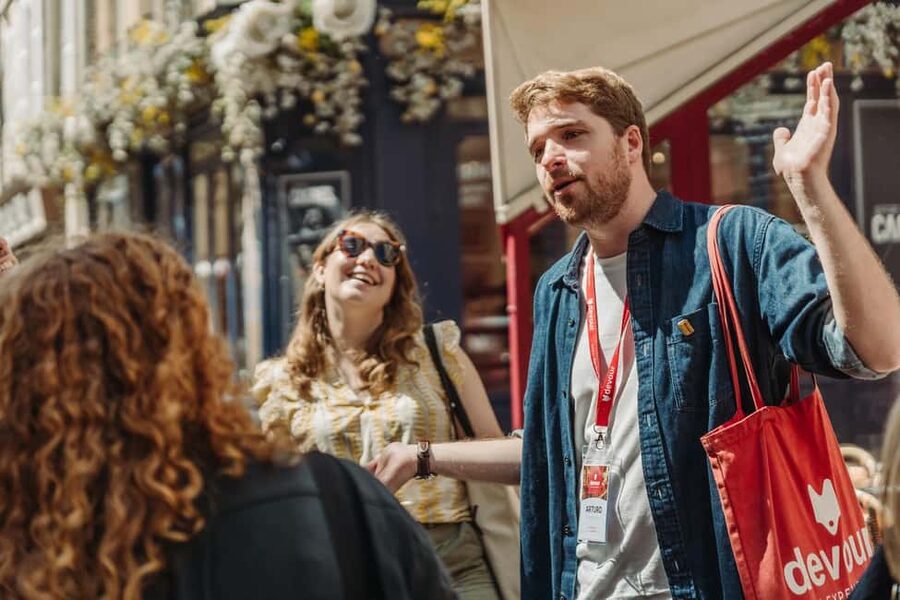
The route begins at 34 Rue du Faubourg Montmartre, in front of Faubourg 34. Arrive 15 minutes early and look for a guide carrying a red bag or a Devour Tours sign. The experience is conducted in English, and the group limit of 10 should make the opening instructions and food explanations easy to follow.
The strongest part of the plan is its mix. You get familiar Paris pleasures, such as a warm croissant and a macaron, but also a stroll through covered passages and a taste of Breton food. That keeps the morning from becoming a string of identical sugar stops.
The walk lasts about 2.5 hours. That is long enough for a proper introduction but short enough to leave most of your day free. I would schedule it early in your Paris stay, since the guide can point out streets and food shops that may help shape the rest of your visit.
More pastry and macaron classes:
- Paris: Montmartre Cheese, Wine & Pastry Guided Walking Tour
★ 4.8 · 2,255 reviews - Paris Croissant Small-Group Baking Class with a Chef
★ 5.0 · 910 reviews - Paris: Macaron Class at Galeries Lafayette
★ 4.3 · 905 reviews
Chocolate first at Le Petit Parisien
The first tasting stop is Le Petit Parisien, where you try two homemade chocolates from a family-run shop. The focus here is traditional French chocolate-making, with the guide explaining how classic methods and ingredients shape the finished pieces.
This is a good opening because two small chocolates give you a taste without filling you up too soon. You can also begin to notice differences in texture and intensity, which helps you approach the later bean-to-bar tasting with a more practiced palate.
Keep your expectations in check, though. The experience is a tasting, not a chocolate-making workshop. You will not be watching a full production session or making your own confection. If your main goal is to see chocolate being prepared, this tour may feel light on that front.
Pastries and coffee in a covered passage
The next stops bring you to Philippe Conticini and Boulangerie LIBERTÉ. The tasting schedule allows about 20 minutes at Philippe Conticini and 10 minutes at the bakery, so these visits are brief but central to the tour’s purpose.
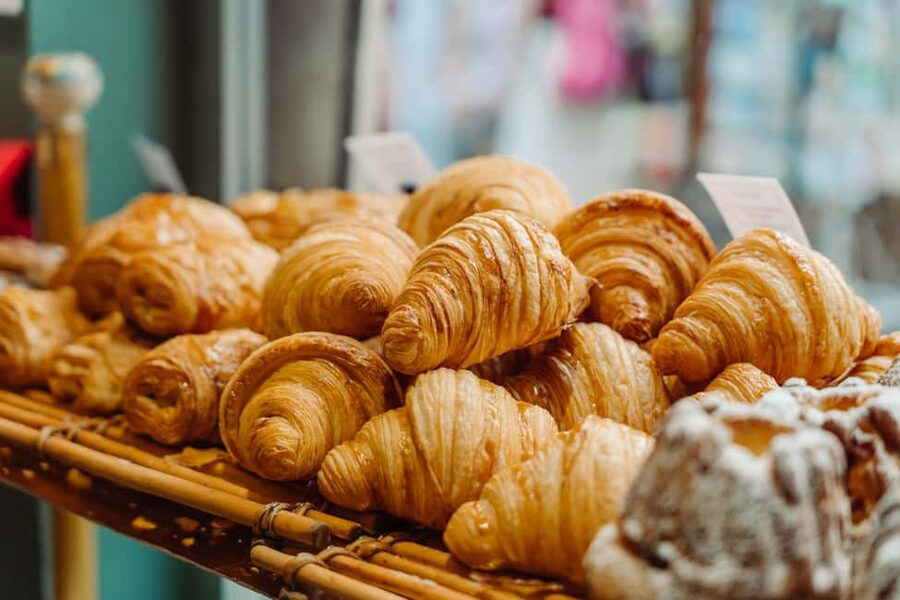
At a cozy café in a tucked-away passage, you pair a buttery croissant with a velvety café crème. This is one of the most appealing combinations on the route because it reflects a familiar French morning habit rather than an elaborate dessert performance.
You should not eat breakfast before this tour. One participant specifically found the first bakery stop too much after having already eaten, and the later tastings only increase the problem. A small coffee or water before arriving is sensible, but save your appetite for the route.
The café stop also shows why the walk is more than a bakery crawl. You are taking in the setting, learning how locals enjoy the food, and moving through older parts of Paris at street level.
Three covered passages, three different moods
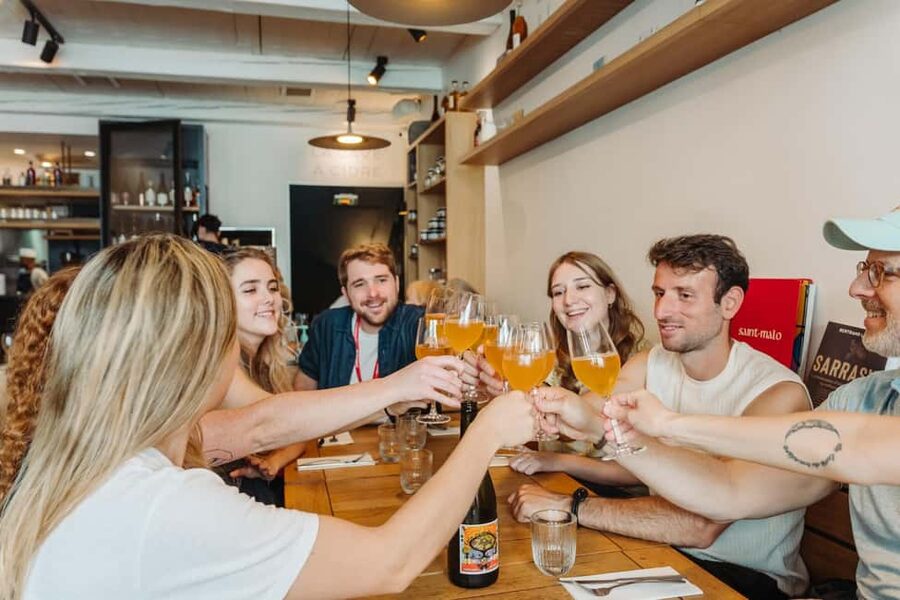
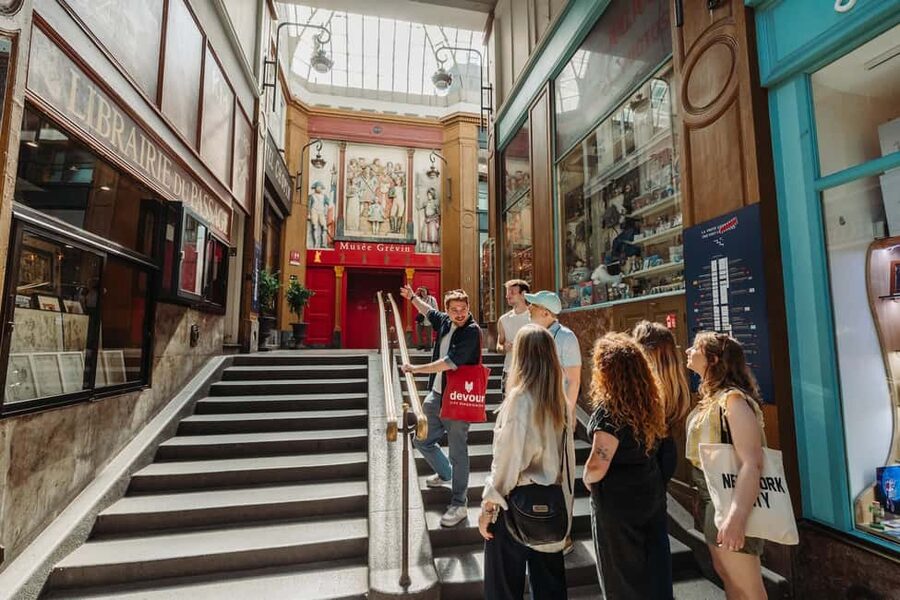
After the first food stops, the guide leads you past Passage de l’Ancre, Passage du Bourg l’Abbé, and Passage du Grand Cerf. Each receives about 10 minutes, enough for photos and short explanations without turning the tour into a long architecture lecture.
Covered passages are a fine way to see another side of Paris. They offer shelter from rain, interesting shopfronts, old cafés, and a slower rhythm than the main roads. The route gives you a chance to notice details that are easy to miss when you are focused on major monuments.
Passage de l’Ancre, Passage du Bourg l’Abbé, and Passage du Grand Cerf are not simply connectors between tastings. They give the guide material for discussing Parisian design and the way these enclosed streets helped shape city life. One guide, Joshua, was praised for adding architectural history to the food talk, which is useful if you want more than a dessert checklist.
The passages are also practical photo stops. Wear shoes with good support, since this is a walking tour with a moderate pace. You should be comfortable walking between stops without difficulty.
A few more Paris ideas to compare
- Paris: Day or Sunset Cruise with Drink, Ice Cream or Dessert
★ 4.4 · 4,225 reviews - Paris: Entrance Ticket to the Chocolate Museum
★ 4.1 · 1,105 reviews - Private Montmartre Food Tour with Wine, Cheese & Pastries
★ 5.0 · 1,027 reviews - Paris French Sweets Tasting Tour with Pastries and Chocolates
★ 4.5 · 947 reviews
Macarons and the long-running Stohrer stop
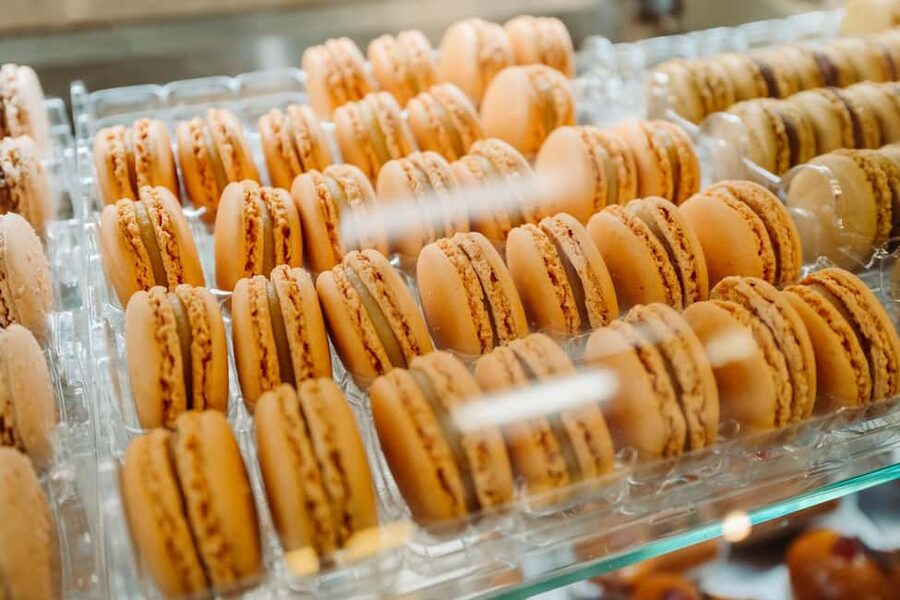
Stohrer is the next major food stop, with about 25 minutes set aside for tasting and explanation. You try colorful macarons and hear about the dessert’s origins.
Macarons are easy to recognize but less easy to place in context. The guide’s explanation gives you a reason to pause over what you are eating instead of treating the colorful shells as simple sweets. This is also a useful point of comparison with the earlier chocolate and croissant stops, since the textures and sweetness are quite different.
Stohrer adds a sense of continuity to the walk. It is presented as the oldest patisserie in Paris, making it a natural place to discuss how French pastry traditions became part of the city’s identity. You are not just sampling one fashionable item. You are connecting that item with a long-running shop and the wider pastry culture around it.
That said, macarons are sweet and compact, but they are not weightless. By this stage, the croissant, chocolates, and café crème will already be working on your appetite. Take small bites and listen to the guide before rushing on to the next taste.
A Breton break at Le Comptoir du Commerce
At Crêperie Le Comptoir du Commerce, you taste a traditional French crêpe with a glass of apple cider. The stop lasts about 30 minutes, making it one of the more relaxed food breaks.
This is a welcome change from pastries and chocolate. Brittany’s crêpe tradition brings a savory or buttery note to a morning that could otherwise become overwhelmingly sweet, while the cider provides a crisp contrast.
The crêpe also makes the tour feel more like an introduction to French food than a narrow pastry lesson. You are still on the sweet side of the cuisine, but the regional connection adds variety and gives the guide another useful story to tell.
Vegetarians and pescatarians can be accommodated, but you should contact the provider’s Guest Experience team after booking if you have dietary restrictions. This tour is not recommended for vegans, people with gluten intolerance, or people who need to avoid nuts.
Finishing along Rue Montorgueil
The final food section takes place around Rue Montorgueil, with about 20 minutes devoted to tasting. The experience finishes at 51 Rue Montorgueil, 75002 Paris, according to the route details, while the meeting information says the activity ends back at the meeting point. Confirm the exact end instructions when you book if your next reservation depends on a precise location.
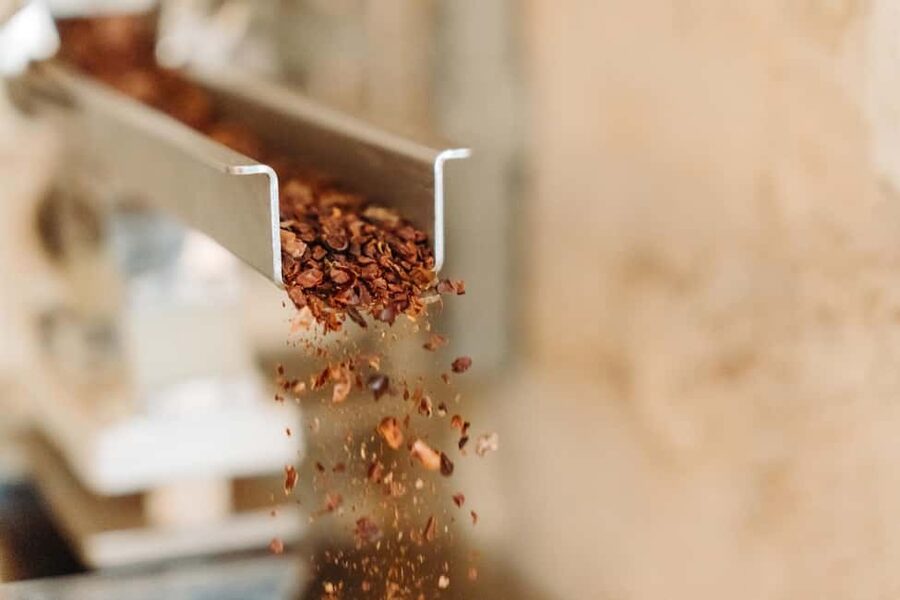
The closing taste is bean-to-bar chocolate made by artisanal chocolatiers in the center of Paris. This gives you one last contrast with the homemade chocolates at the beginning. The point is not simply to pile on another sweet, but to show how traditional chocolate and newer craft production can sit side by side.
Rue Montorgueil is a useful ending area because you remain in central Paris with plenty of options for continuing your day. The tour itself does not include hotel pickup or drop-off, so plan your route to the starting point and your onward journey separately.
What the $90 price gets you
At $90 per person, this is not a cheap way to grab a croissant and coffee. You are paying for six or more tastings, an English-speaking guide, the planning between stops, and a small group limited to 10 people.
The value improves if you want context and direction. Paris has no shortage of bakeries, but choosing good stops, fitting them into a walk, and understanding what you are tasting takes time. The route also includes passageways and streets you might not find easily on your own.
The value is weaker if you mainly want a large meal or a hands-on chocolate class. Portions are tasting portions, and one chocolate stop was considered less impressive by a participant who expected to see chocolates being made. The tour is best understood as a guided sampling morning with city history, not a cooking course.
The price also makes sense for families and mixed-age groups who prefer a clear plan. Sam was praised for creating a relaxed group dynamic and keeping the pace suitable for a multigenerational family. That kind of guidance can remove the stress of deciding where to go next, especially during a first Paris visit.
The guides shape the experience
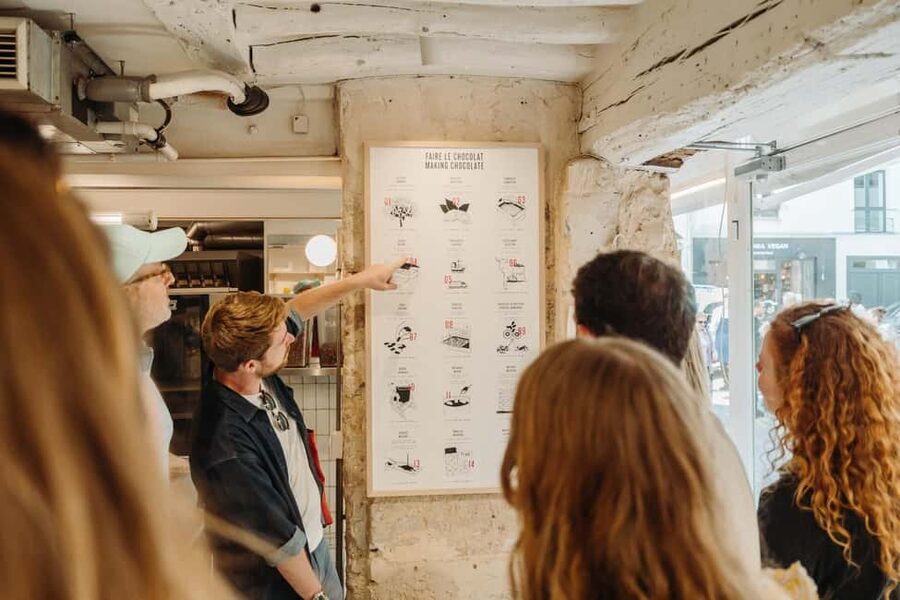
Food tours depend heavily on the person leading them. Emily was praised for her friendly welcome and for showing lesser-known sights. Khosi took participants onto streets and into areas they would not have found easily, while Juan was warmly praised for his food knowledge and easy manner.
Michelle brought attention to both the food and the neighborhoods along the way. Joshua added architectural detail, which may appeal to you if you want the walk to cover Parisian buildings as well as pastry.
These names reflect guides who have led the experience, not a promise that you will receive a particular person. Still, the pattern is clear: the guide matters here. The best version of this tour is not just about getting fed. It is about having someone explain why each stop belongs on the route and how the surrounding streets fit into Paris.
Who should book this experience?
You should book this walk if you like trying several small portions, enjoy learning the story behind familiar foods, and want a short guided introduction to central Paris. It suits first-time visitors, couples, families with older children, and anyone who wants a planned morning before visiting more major sights.
It also works well for people who prefer food with a side of architecture. The covered passages and Rue Montorgueil stops give the experience a stronger sense of place than a simple bakery tasting.
You should skip it if you are vegan, gluten-free, or have a serious nut allergy. There are no peanuts, but almonds, hazelnuts, and pecans are present. Serious allergies require an allergy waiver at the start, and anyone with dietary restrictions must email the provider after booking to discuss possible ingredient changes.
Mobility access may be possible, including for wheelchair users, but you need to contact the Guest Experience team at booking so proper arrangements can be made. The standard experience requires walking at a moderate pace.
Practical planning for a sweet morning
Wear comfortable shoes and bring a passport or ID card. Children also need identification, and participants with serious allergies must sign the required waiver at the start.
Do not plan a large breakfast beforehand. The chocolate, croissant, café crème, macarons, crêpe, cider, and final chocolate can amount to a full morning meal, especially for smaller appetites.
The tour is offered in English. You can cancel up to 24 hours before the start for a full refund, and the reserve-now, pay-later option gives you some flexibility while arranging your Paris schedule.
Should you book the Paris pastry and chocolate walk?
Book it if you want a friendly, tightly planned food walk that combines classic French sweets with covered passages and central streets. The strongest reasons are the small group, the variety of stops, and the chance to see parts of Paris that are easy to pass without noticing.
Do not book it expecting a chocolate factory visit, a full breakfast, or a class where you make your own desserts. You will taste a lot, hear useful food and architecture stories, and leave well placed to continue around Paris. For an appetite-first introduction to French pastry, the $90 cost is reasonable, especially if the alternative is spending your own morning guessing which shops deserve your time.
FAQ
How long does the Paris pastry and chocolate tour last?
The tour lasts 2.5 hours. Starting times vary, so check availability when booking.
Where does the tour begin?
It begins at 34 Rue du Faubourg Montmartre, 75009 Paris, in front of the restaurant Faubourg 34, at the beginning of the pedestrian street.
How early should I arrive?
Arrive 15 minutes before the scheduled start. The guide will carry a red bag or a Devour Tours sign.
Where does the tour finish?
The route details list the final stop at 51 Rue Montorgueil, 75002 Paris. The meeting information says the activity ends back at the meeting point, so confirm the final location when booking.
How many people are in the group?
The group is limited to a maximum of 10 participants.
Is the tour conducted in English?
Yes. The tour has a live English-speaking guide.
What food is included?
The tour includes six or more tastings, including chocolate, croissant, café crème, macarons, a traditional crêpe, apple cider, and bean-to-bar chocolate.
Is the tour suitable for vegetarians?
Vegetarians and pescatarians can be accommodated. Contact the provider’s Guest Experience team after booking to arrange ingredients.
Is the tour suitable for vegans or people avoiding gluten?
No. The tour is not suitable for vegans or people with gluten intolerance.
Can people with nut allergies join?
The tour is not suitable for people with serious nut allergies. No peanuts are served, but almonds, hazelnuts, and pecans are used. Serious allergies require an allergy waiver at the start.
What should I bring?
Bring comfortable shoes and a passport or ID card. Children also need a passport or ID card.
Can wheelchair users participate?
The provider can accommodate mobility impairments or wheelchairs with advance arrangements. Email the Guest Experience team when booking so the route and ingredients can be planned properly.
More Paris walking tours
- Paris Top Sights Half Day Walking Tour with a Fun Guide
★ 5.0 · 2,893 reviews - Montmartre Hidden Gems and Scenic Highlights Walking Tour
★ 5.0 · 2,684 reviews - Montmartre Hill French Gourmet Food and Wine Tasting Walking Tour
★ 5.0 · 2,588 reviews - Paris Île de la Cité and Notre-Dame Walking Tour With Crypt
★ 5.0 · 2,272 reviews
Newest additions around Paris
- Family escape Game with kids and teens on the Île de la Cité★ 4.5 · 11 reviews
- Private Photoshoot with the Iconic Eiffel Tower in Paris★ 5.0 · 11 reviews
- 2-day Private Mont Saint-Michel, 3 Loire Castles, D-Day Express★ 4.5 · 11 reviews
- Paris: Batobus Hop-On Hop-Off Cruise & Landmarks Audio Tour★ 3.0 · 11 reviews
- Paris Revolutionary Walking Tour: Iconic French Sights & Stories★ 5.0 · 11 reviews
- Guided and Private Tour of 3 hours through Paris aboard a Citroën 2cv★ 5.0 · 11 reviews
- Kids in the Kitchen – CrOisSaNtS★ 4.0 · 11 reviews
- Paris: Ghosts and Dark Stories Guided Walking Tour★ 4.1 · 11 reviews
Pastry & Macaron Classes, compared.
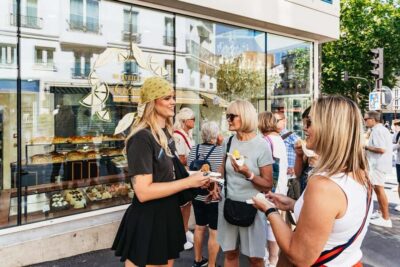
Montmartre Cheese, Wine & Pastry Guided Walking Tour
Read our review →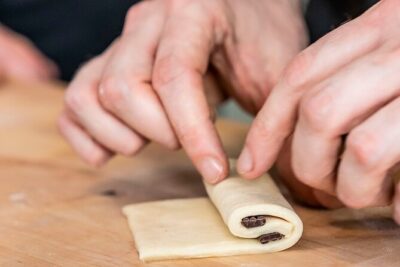
Paris Croissant Small-Group Baking Class with a Chef
Read our review →
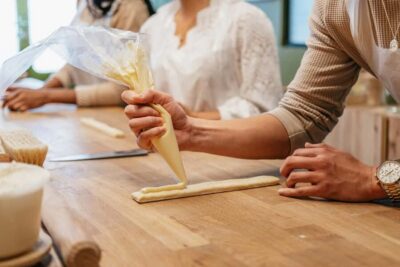
Paris Cooking Class: Learn How to Make Macarons
Read our review →
A Morning in Paris Food Tour: Croissants, Baguettes & Chocolate
Read our review →
Paris Chocolate, Macaron & Pastry Food Tour: 10 Gourmet Tastings
Read our review →Browse the lists this tour appears in