
Reviewed · DESSERT TOURS
Paris: Entrance Ticket to the Chocolate Museum
Paris’s Chocolate Museum turns cacao into a small, tasty trip through 4,000 years of history. You’ll see how the Olmecs, Mayas, and Aztecs used cocoa in rituals, learn why Christopher Columbus disliked the first chocolate drink he tried, and watch modern chocolate-making techniques in action. I love the mix of history and hands-on tasting, and I like that the displays work for adults as well as children.
The best parts are the samples and the virtual demonstration with two Meilleurs Ouvriers de France, France’s top craft professionals. Children get their own activity booklet and treasure hunt, while adults can follow the displays, take an optional audio guide, and finish with chocolate drinks. The main caution is value: at $21 per person, this is a relatively small museum, and some visitors finish in under an hour.
In This Review
- Key points to know before you go
- What the Chocolate Museum actually offers
- Starting with the Olmecs, Mayas, and Aztecs
- Following cocoa into Europe and the modern era
- Seeing how glossy chocolate is made
- Tasting chocolate from Costa Rica, Peru, and Vanuatu
- Keeping children interested with a treasure hunt
- How long to allow and when to arrive
- The shop and the final chocolate stop
- Who will get the most from the $21 ticket
- Should you book the Chocolate Museum?
- FAQ
- Where is the Chocolate Museum in Paris?
- How much does admission cost?
- How long does the visit take?
- Is the tour guided?
- Which languages are available for the audio guide?
- What languages are used on the museum panels?
- Are chocolate samples included?
- Is hot chocolate included?
- Is the museum suitable for children?
- Can I bring luggage or a large bag?
- Is the museum wheelchair accessible?
- What is the cancellation policy?
Key points to know before you go
- 4,000 years of cacao history: Follow chocolate from ancient Central American cultures to today’s confectionery.
- More than 1,000 objects: See chocolate-making tools, containers, utensils, displays, and other cacao-related artifacts.
- Tastings included: Sample chocolate made on-site, including praliné and ganache-style treats.
- Virtual craft demonstration: Watch two Meilleurs Ouvriers de France explain the secrets of chocolate’s glossy coating.
- Family-friendly activities: Children can complete a treasure hunt with stickers and a prize.
- Central Paris location: Find the museum at 28 Boulevard de Bonne Nouvelle in the 10th arrondissement.
What the Chocolate Museum actually offers
Le Musée Gourmand du Chocolat is a self-guided museum spread across 850 square meters, or about 2,789 square feet. It is not a grand national museum with vast galleries. Think of it as a compact specialty museum where the subject is narrow, approachable, and edible.
You set your own pace. You can read the panels, watch the videos and demonstrations, pause at the tasting stations, and browse the shop before leaving. That freedom helps if your group has different interests. I can spend more time on the cultural background, while children can move toward the activity booklet and chocolate samples.
The museum’s central idea is simple: chocolate is not only a sweet sold in shops. It began as a cultivated crop, a ritual drink, a trade product, and a carefully controlled luxury. The displays connect those stages in a way that makes the modern chocolate bar seem less ordinary.
The descriptive panels are available in English, French, and Spanish. An audio guide can be rented at the welcome desk for €3 per person, with French, English, German, Dutch, Spanish, Italian, and Portuguese available. If you enjoy reading every panel, the guide may not be essential. If you prefer listening, it adds useful structure and can make the visit more satisfying.
A few more Paris ideas to compare
- Paris: Day or Sunset Cruise with Drink, Ice Cream or Dessert
★ 4.4 · 4,225 reviews - Private Montmartre Food Tour with Wine, Cheese & Pastries
★ 5.0 · 1,027 reviews - Paris French Sweets Tasting Tour with Pastries and Chocolates
★ 4.5 · 947 reviews
Starting with the Olmecs, Mayas, and Aztecs
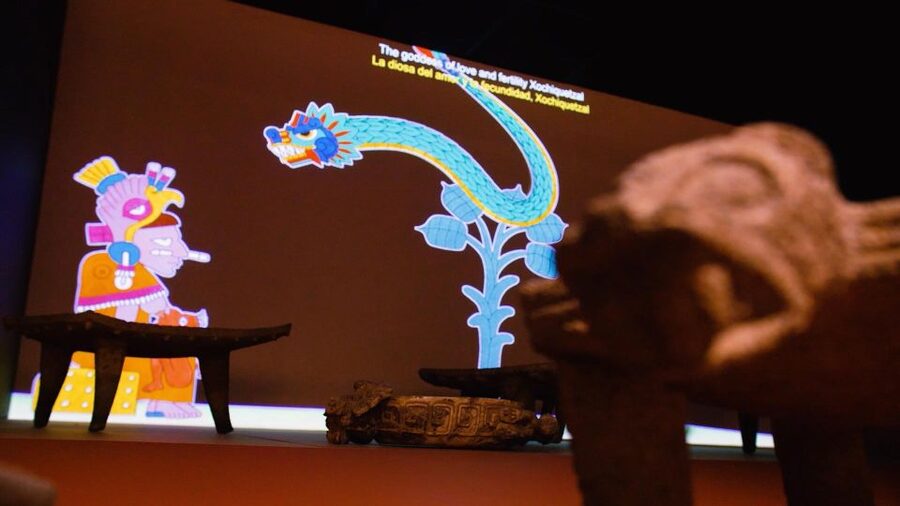
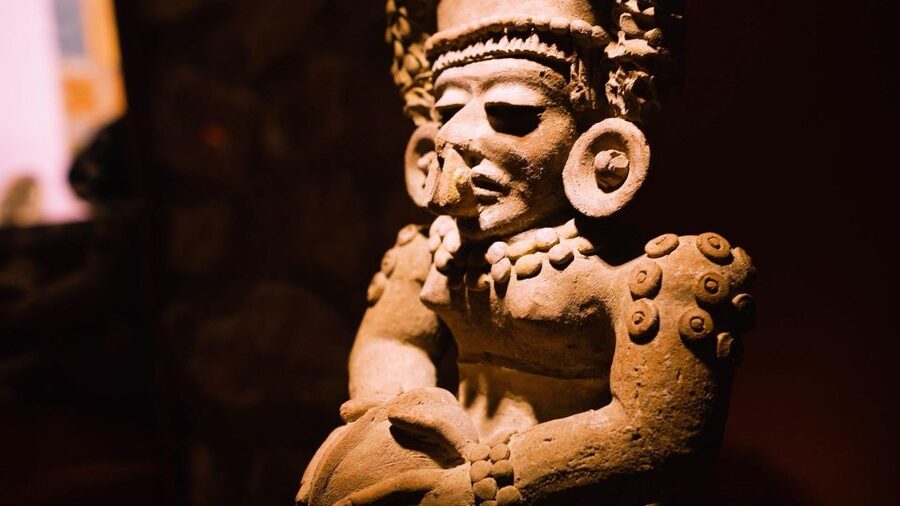
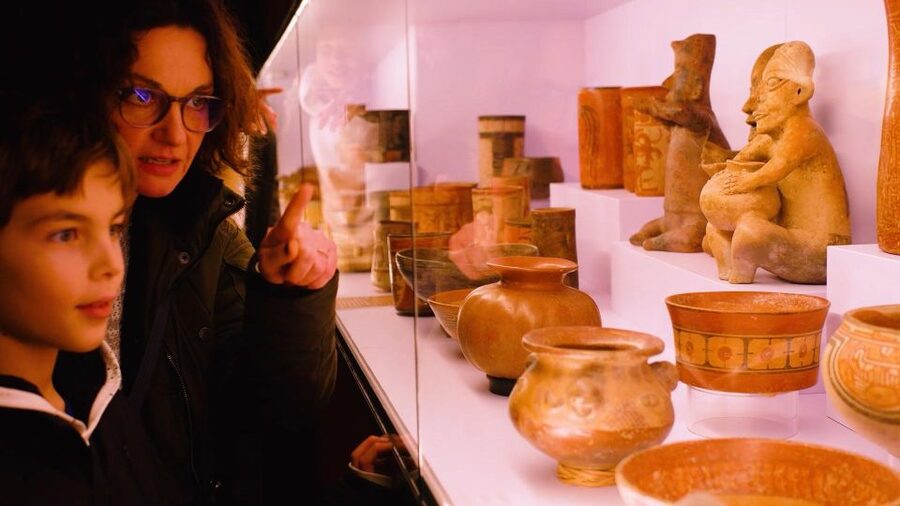
The museum begins far from the familiar French chocolate shop. The early displays explain the role of cocoa among the Olmecs, Mayas, and Aztecs, giving you a useful reminder that cacao was important long before European confectioners turned it into bars and truffles.
Here, chocolate is presented as part of daily life and ceremony. Cocoa drinks had a place in mystical rituals and ancient customs, so the story is about belief and status as much as taste. The museum helps you see why cacao mattered to people who did not think of it as a dessert.
This section is especially helpful for children because it gives them a clear story to follow. Instead of beginning with a technical explanation of tempering or roasting, the displays begin with people and customs. The activity booklet gives younger visitors something active to do while you read.
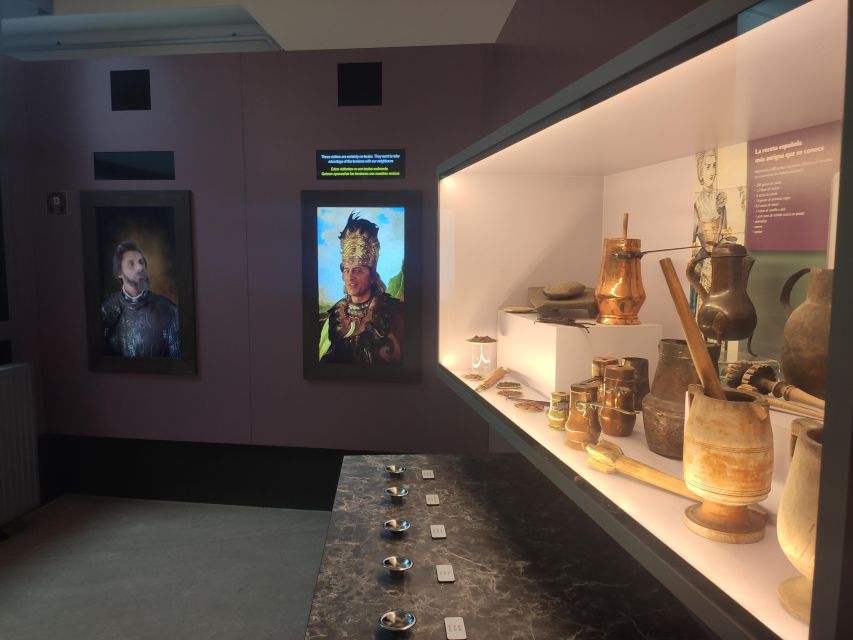
The museum also tells the amusing story of Christopher Columbus and tchocoatl, the chocolate drink he encountered. Columbus was the first European to taste it, but he disliked it and paid little attention to the discovery. Fortunately for chocolate lovers, other Europeans were more willing to give cocoa another chance.
The exact historical sequence is one of the museum’s strengths. You are not simply shown attractive chocolate sculptures and sent to the shop. You first learn how cacao moved from ancient cultures into European life, and then you see how technology changed what could be made from it.
Following cocoa into Europe and the modern era
The European section explains how chocolate became more widely produced and consumed. The museum connects the early trade in cacao with the later streamlining of chocolate production, showing why chocolate gradually shifted from a rare drink into the many forms you know today.
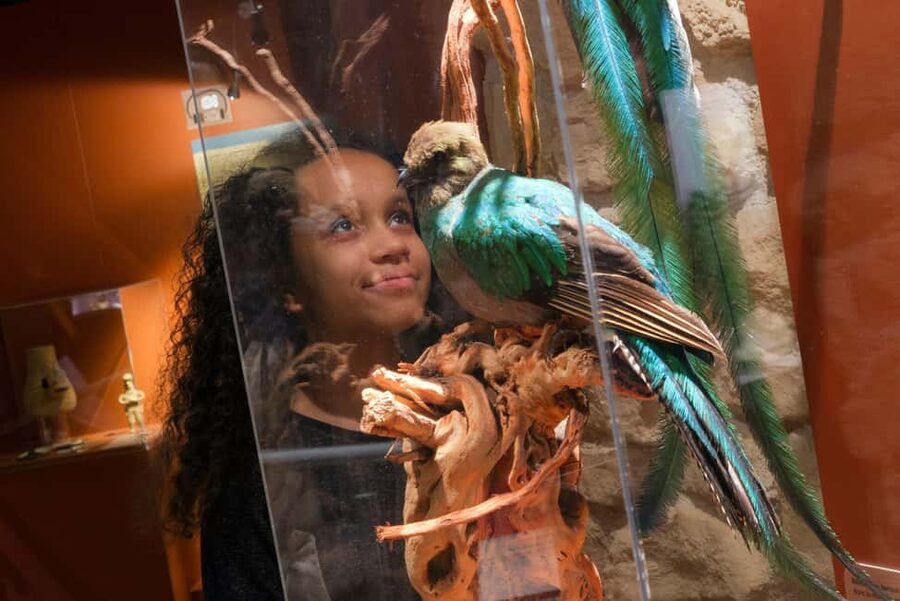
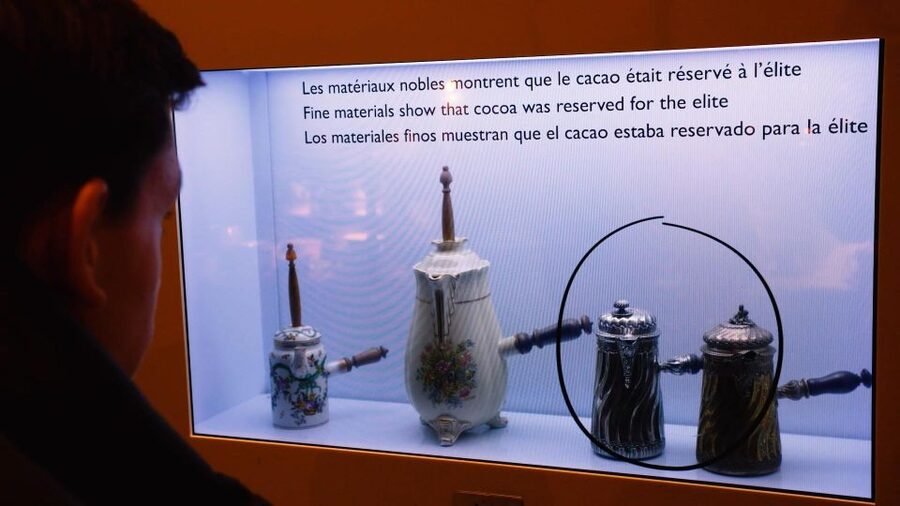
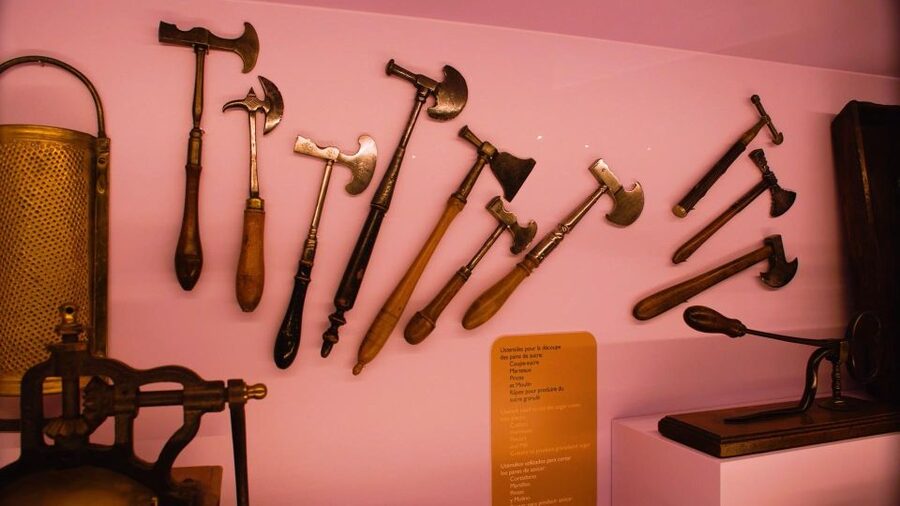
This is where the displays become familiar but still useful. You may recognize brands, tools, molds, and serving pieces, yet the museum gives them a larger setting. Chocolate utensils and containers are among the most visually appealing objects, and they show how much ceremony once surrounded serving cocoa.
I particularly like that the museum covers the full process rather than focusing only on finished sweets. The story includes cocoa beans, chocolate drinks, production methods, and the transition to modern confectionery. You get a better sense of the work behind the smooth result in your hand.
The museum’s many artifacts give the visit visual variety. More than 1,000 chocolate-related objects are presented across the galleries, including historical items, utensils, containers, and displays. Because the museum is compact, you can usually keep the story in your head without becoming lost in too many rooms.
Still, the museum rewards attention. A quick walk through the displays may take less than 30 minutes, but reading the panels and watching the demonstrations can stretch the visit considerably. One family reported spending about three hours, while another visit was completed in under half an hour. Your pace and interest matter here.
Seeing how glossy chocolate is made
The demonstration portion is the museum’s most practical feature. A virtual presentation with two Meilleurs Ouvriers de France explains how chocolate makers create the shiny outer coating that gives many sweets their polished appearance.
This is a good bridge between museum history and real technique. You have already seen how cocoa developed over time. Now you learn why professional chocolate looks smooth, glossy, and inviting instead of dull or streaked.
The demonstration also includes chocolate products made on-site, so you are not left with theory alone. You learn how chocolate sweets are prepared and then taste examples such as a praliné and a ganache-style chocolate. These samples are small, but they make the process easier to understand because you can connect the explanation with texture and flavor.
The presentation is virtual rather than a guaranteed live class with a chef standing in front of you. That distinction matters if you are expecting a hands-on workshop. The supplied experience includes the virtual demonstration, but separate chocolate workshops have caused confusion for some visitors, so check carefully if making chocolate yourself is your main goal.
The museum also uses videos in the galleries. One visitor appreciated the Spanish-language videos, and the audio guide gives you another way to follow the material. The mix of panels, film, virtual demonstration, and tasting keeps the visit from becoming a silent display case tour.
More Paris museums to visit:
- Paris: Louvre Museum Timed-Entrance Ticket
★ 4.6 · 71,977 reviews - Paris: Orsay Museum Entry Ticket
★ 4.7 · 25,647 reviews - Louvre Museum Masterpieces Guided Tour with Access
★ 4.5 · 12,023 reviews - Paris: Louvre Museum Entry Ticket With Host and River Cruise
★ 4.6 · 9,926 reviews
Tasting chocolate from Costa Rica, Peru, and Vanuatu
The tasting stations are a major reason to visit. You can sample chocolates connected with different growing regions, including Costa Rica, Peru, and Vanuatu. Each origin offers a different flavor profile, from smooth and milky Costa Rican chocolate to fruitier Peruvian chocolate and the sweet aromas associated with Vanuatu cocoa beans.
This is a useful lesson in how origin affects taste. You do not need to be a chocolate expert. Simply tasting several samples side by side helps you notice that cocoa is not one single flavor.
The samples are part of the entrance experience, but do not assume that every drink is included in the ticket. Hot chocolate has been offered separately at €3 per cup. It is often described as one of the best parts of the visit, but you may already feel full after the samples, so decide at the end rather than automatically adding it.
The hot chocolate is a good final treat, especially on a cool Paris day. It also changes the value calculation. At $21 for admission, the included samples help, but a separate drink adds to the total. If you are comparing this with a simple chocolate-shop visit, remember that the ticket pays for the museum story, objects, demonstrations, and tastings, not unlimited access to every menu item.
You can also learn about claimed health benefits of chocolate during the visit. Treat that section as general educational context, not as a reason to eat unlimited sweets. The museum’s real value is showing how cacao is grown, used, processed, and enjoyed.
Keeping children interested with a treasure hunt
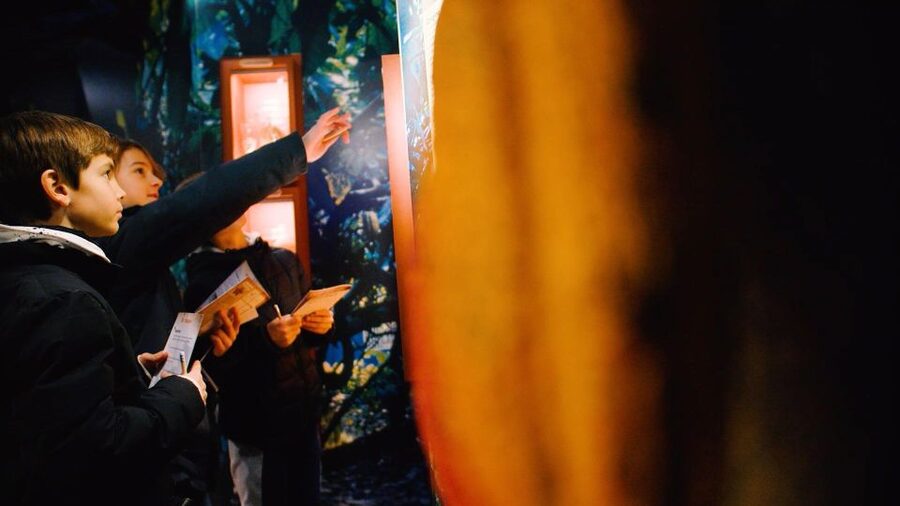
This is one of the better Paris museum choices for families who do not want a long, quiet art visit. Children receive an activity booklet and can follow a treasure hunt through the exhibits. Stickers and a prize at the end give the visit a clear goal.
The activity works particularly well for children around primary-school age. Five- and eight-year-olds have been able to enjoy it, and an 11-year-old found the treasure hunt engaging. Older children and teenagers may also appreciate the chocolate samples and the chance to spot familiar brands and unusual objects.
I would still set expectations. This is a self-guided museum, not a nonstop children’s show. Adults may need to help younger children with the booklet and explain parts of the story. The reward is that everyone can move at a comfortable pace, stopping for samples instead of trying to keep a group together during a fixed tour.
The chocolate-making displays give children a concrete reason to pay attention. They can see how a glossy coating forms, learn where cocoa comes from, and taste the results. That combination works better for many families than a museum based only on written information.
The museum can also serve as a break between larger Paris sights. It gives you an indoor activity without requiring a full day, and its central address makes it easy to pair with other plans in the city.
How long to allow and when to arrive
The ticket is valid for one day, but the museum has a final admission time of 4:30 PM. Plan to arrive well before then if you want time for the historical displays, tasting stations, demonstration, and shop.
For a quick visit, you might spend less than 30 minutes. If you read the panels, use the audio guide, watch the demonstration, follow the children’s treasure hunt, and stop for samples, allow one to three hours.
That range is important when judging the $21 price. A fast visitor may find the ticket expensive for a small museum. A family that uses the activity booklet and stays for the demonstrations may find the visit much better value.
Do not bring luggage or large bags. That rule matters if you are visiting between hotels or arriving from a station. The meeting point is the museum itself at 28 Boulevard de Bonne Nouvelle, 75010 Paris, rather than a separate meeting location.
The museum is wheelchair accessible. Since the tour is self-guided, you are not tied to a group departure or a fixed route. You can pause when needed and spend more time at the sections that interest you.
Free cancellation is available up to 24 hours in advance, and you can reserve now and pay later. Those terms are useful if your Paris schedule is still shifting, though you should still check the available opening time before booking.
The shop and the final chocolate stop
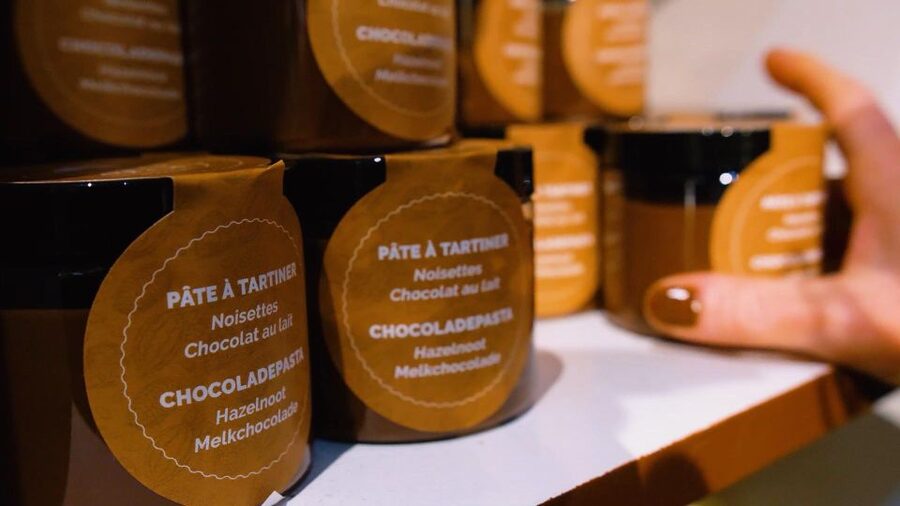
The museum shop completes the experience with books, souvenirs, molds, and chocolate-related products. It is a practical place to look for something more distinctive than a standard postcard.
A three-dimensional chocolate mold can make a memorable purchase for a child or home baker. Books and packaged sweets are easier to carry, while the utensils and containers reflect the museum’s historical side. You do not need to buy anything, but browsing helps extend the visit beyond the final tasting.
If you choose the hot chocolate, have it after exploring the displays rather than before. You will already have sampled several chocolates, and the drink is more enjoyable when it serves as a finish instead of one more item competing for your attention.
The shop also gives you a chance to connect the museum’s past with modern chocolate brands. You can recognize some products, compare regional flavors, and take home something that relates directly to what you learned.
Who will get the most from the $21 ticket
I would recommend this museum most strongly to families, chocolate lovers, and anyone looking for a light indoor activity with a clear theme. The children’s booklet, treasure hunt, samples, and friendly staff make it easy to include several generations.
It also suits adults who enjoy food history. The displays explain ancient rituals, European adoption of cocoa, growing regions, production methods, and the visual culture around chocolate. You do not need a technical background to follow the story.
The ticket is less convincing for someone who wants a full chocolate-making workshop. The included demonstration is virtual, and the experience does not promise a hands-on class. It may also disappoint visitors expecting a large museum, since the galleries are compact and the visit can be brief.
At $21 per person, value depends on how you use the museum. Read the panels, take the audio guide if you prefer listening, watch the demonstration, sample carefully, and allow your children to complete the hunt. A quick walk-through will not make as strong a case for the price.
The museum has earned a generally positive score of 4.1 from 1,105 ratings, which fits the experience’s profile: strong appeal, especially for families, with some concern about size and cost. The most praised features are consistent: chocolate samples, hot chocolate, clear historical displays, friendly staff, and activities that keep children involved.
Should you book the Chocolate Museum?
Book it if you want a manageable Paris activity that combines food, history, and family fun. It is especially useful on a rainy day or as a break from major monuments, and the regional tastings give you something more thoughtful than a simple confectionery stop.
Skip it if you are seeking a long, hands-on workshop or a major museum with hours of galleries. Before paying, check the last admission time, remember that hot chocolate may cost an additional €3, and leave large bags elsewhere.
For most families and chocolate fans, the best plan is to allow one to two hours, use the children’s booklet or audio guide, watch the demonstration, and save room for the final tasting. That approach gives you the full story and makes the $21 ticket easier to justify.
FAQ
Where is the Chocolate Museum in Paris?
The museum is at Le Musée Gourmand du Chocolat, 28 Boulevard de Bonne Nouvelle, 75010 Paris.
How much does admission cost?
The listed price is $21 per person.
How long does the visit take?
The ticket is valid for one day. A quick visit can take less than 30 minutes, while reading the displays, watching demonstrations, tasting, and completing the children’s activities can take one to three hours.
Is the tour guided?
No. This is a self-guided museum visit. An audio guide is available at the welcome desk for €3 per person.
Which languages are available for the audio guide?
The audio guide is available in French, English, German, Dutch, Spanish, Italian, and Portuguese.
What languages are used on the museum panels?
The descriptive panels are in English, French, and Spanish.
Are chocolate samples included?
Yes. Chocolate samples are included with admission, including tastings of products made on-site.
Is hot chocolate included?
Hot chocolate may be available for an additional €3 per cup. It is not part of the included chocolate samples.
Is the museum suitable for children?
Yes. Children can use an activity booklet and take part in a treasure hunt. The activity includes stickers and a prize.
Can I bring luggage or a large bag?
No. Luggage and large bags are not allowed.
Is the museum wheelchair accessible?
Yes, the activity is listed as wheelchair accessible.
What is the cancellation policy?
You can cancel up to 24 hours in advance for a full refund. You can also reserve now and pay later.
Newest additions around Paris
- Family escape Game with kids and teens on the Île de la Cité★ 4.5 · 11 reviews
- Private Photoshoot with the Iconic Eiffel Tower in Paris★ 5.0 · 11 reviews
- 2-day Private Mont Saint-Michel, 3 Loire Castles, D-Day Express★ 4.5 · 11 reviews
- Paris: Batobus Hop-On Hop-Off Cruise & Landmarks Audio Tour★ 3.0 · 11 reviews
- Paris Revolutionary Walking Tour: Iconic French Sights & Stories★ 5.0 · 11 reviews
- Guided and Private Tour of 3 hours through Paris aboard a Citroën 2cv★ 5.0 · 11 reviews
- Kids in the Kitchen – CrOisSaNtS★ 4.0 · 11 reviews
- Paris: Ghosts and Dark Stories Guided Walking Tour★ 4.1 · 11 reviews
Dessert Tours, compared.

Day or Sunset Cruise with Drink, Ice Cream or Dessert
Read our review →
Private Montmartre Food Tour with Wine, Cheese & Pastries
Read our review →
Paris French Sweets Tasting Tour with Pastries and Chocolates
Read our review →
A Morning in Paris Food Tour: Croissants, Baguettes & Chocolate
Read our review →
45-minute Chocolate Making Workshop at Choco-Story
Read our review →
Chocolate & Patisserie Walking Tour with Tastings
Read our review →
Paris Chocolate, Macaron & Pastry Food Tour: 10 Gourmet Tastings
Read our review →
Discover Brussels and Bruges & Optional Chocolate Tasting
Read our review →Browse the lists this tour appears in