
Reviewed · ORSAY & ART MUSEUM TOURS
Skip-the-line Centre Pompidou Guided Museum Tour – Exclusive Guided Tour
The Centre Pompidou is Paris’s great art-world oddball: a museum turned inside out, with colored pipes, exposed machinery, and galleries devoted to art that often refuses to behave. This tour makes sense of both the building and its collection, moving from Picasso and Matisse to Warhol and other major figures of modern art.
I like the private guide, which gives you room to ask questions and set the pace. I also like the clear route through Cubism, Dada, Futurism, Bauhaus, and Pop Art, since these movements can feel like a pile of strange names without a guiding thread.
The main consideration is timing. This is a 5pm tour lasting about two and a half hours, and temporary exhibitions are not included. Museum closures, security checks, and changing collections can also affect the visit.
In This Review
- Key points to know before booking
- Why the Centre Pompidou is worth seeing
- Meeting at 5pm in the Pompidou district
- The architecture comes before the art
- Picasso, Matisse, and the break from tradition
- Dada, wartime art, and the value of context
- From Bauhaus and Futurism to the Pop Art era
- A private format that keeps the conversation moving
- What the 2.5-hour length means for you
- Who will get the most from this Pompidou tour
- Small details that make the visit easier
- Should you book the Centre Pompidou guided tour?
- FAQ
- Where does the tour begin?
- What time does the tour start?
- How long does the tour last?
- Is museum admission included?
- Is this a private tour?
- Are temporary exhibitions included?
- Is the tour wheelchair accessible?
- Can I bring a large bag or suitcase?
- What is the cancellation policy?
Key points to know before booking
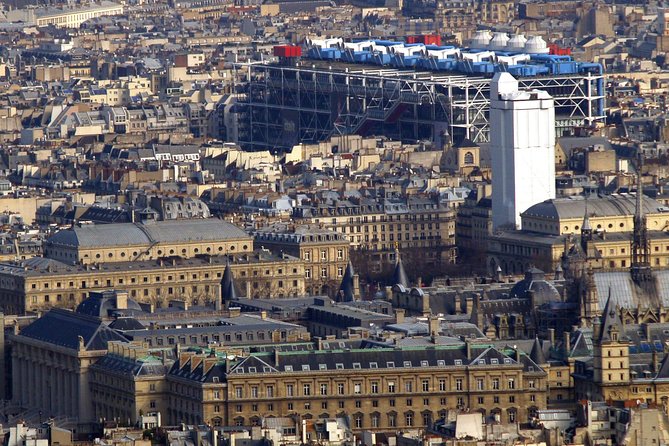
- The building gets its own history lesson: Learn why Renzo Piano’s exposed pipes and color-coded systems caused such a stir.
- The tour connects art movements: Picasso, Matisse, Warhol, and others are placed within Cubism, Fauvism, Dada, Bauhaus, and Pop Art.
- You get a private guide: Only your group participates, unless you choose the separate Save! Book Semi-Private option.
- The tour lasts 2.5 hours: The length gives you time for context without turning the museum into an all-day commitment.
- Entry is included: Skip-the-line access is part of the tour, though security lines can still form.
- Small bags only: Large bags and suitcases are not allowed inside. Bring a handbag or small, thin backpack.
Why the Centre Pompidou is worth seeing
If you have already spent time with Paris’s Impressionist collections, the Pompidou offers a useful change of direction. Here, paint may be only one part of the work. You might find sculpture, collage, found objects, photography, design, and installations that ask you to rethink what art can be.
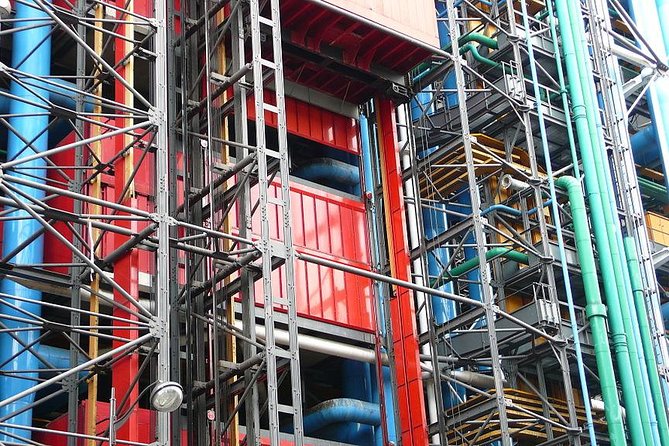
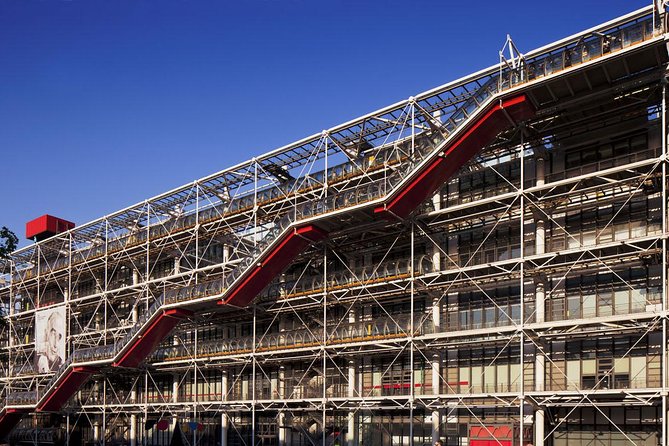
The building prepares you for that shift. Its pipes, ducts, escalators, and structural parts are placed on the outside rather than hidden behind walls. The result is practical in theory and startling in person. It looks more like a machine than a traditional Paris museum.
That odd design is not a side note. It frames the whole visit. Your guide explains the inside-out concept and the building’s color coding before leading you into the galleries. This gives you a useful starting point, especially if modern architecture is as interesting to you as modern art.
The Pompidou’s collection also rewards explanation. A portrait by Picasso is easier to place when you understand Cubism. An abstract work by Mondrian or Pollock becomes less mysterious when you know what earlier artists were trying to reject. The guide’s job here is not just to name artists. It is to show you the argument taking place from one gallery to the next.
More Orsay and art museum visits:
- Paris: Orsay Museum Entry Ticket
★ 4.7 · 25,647 reviews - Paris: Orsay Museum Entry Ticket and Digital Audio Guide App
★ 4.4 · 3,170 reviews - Paris in a Day: Louvre or Orsay, Eiffel Tower, City Walk & Cruise
★ 5.0 · 1,956 reviews
Meeting at 5pm in the Pompidou district
The tour begins at Centre Georges Pompidou in Paris’s 4th arrondissement. The museum is near public transportation, but hotel pickup and drop-off are not included. Plan your route before the afternoon begins, and allow time to reach the meeting point without rushing.
The scheduled start is 5pm. That late-afternoon hour can work well if you want to spend your morning at another museum or walk through central Paris first. It also creates a firm planning issue: you need to arrive on time, since a private tour is built around a set start.
Bring the mobile phone number you use during your trip, including your country code. The operator says this information is required. A mobile ticket is provided, so keep your booking details easy to reach.
Wear suitable clothing for museum entry. Large bags and suitcases are not permitted, and only handbags or small, thin backpacks can pass through security. Even with skip-the-line access, security checks may create a wait. That is normal at major Paris sights.
The architecture comes before the art
Your first major subject is the Centre Pompidou itself. Renzo Piano and the building’s unusual design receive attention before you move through the collection. This is one of the strongest reasons to book a guide rather than simply walk in with a map.
The exterior is organized around pipes and systems that would normally be hidden. The color coding helps identify their purpose, while the exposed structure creates the museum’s famous industrial look. Your guide explains how this design challenged the traditional idea of what a Paris cultural building should look like.
That context changes the way you see the place. Without it, the exterior can seem like a noisy collection of tubes. With it, the building becomes part of the museum’s larger message: art, culture, and public space do not have to follow old rules.
The tour does not treat architecture as a quick photo stop. You spend time understanding why the building was controversial and how its design relates to the experimental works inside. If you enjoy unusual buildings, this portion may be as memorable as the paintings.
Picasso, Matisse, and the break from tradition
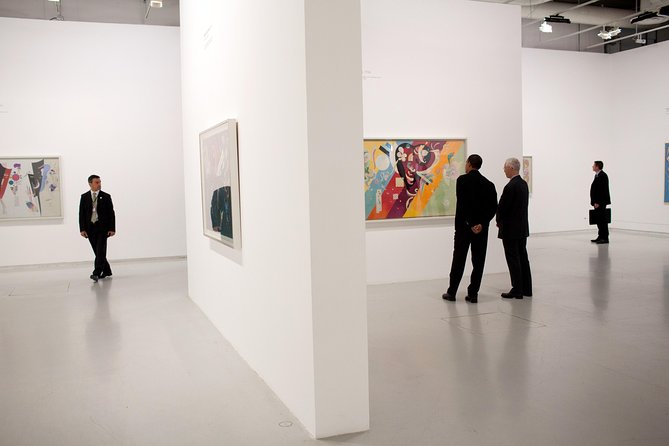
Inside, the tour moves into the modern collection, with attention to major artists such as Pablo Picasso and Henri Matisse. The focus includes Picasso’s contribution to Cubism and Matisse’s role in Fauvism.
These movements are easier to understand when placed side by side with the art that came before them. Cubism breaks forms into shifting viewpoints and geometric parts. Fauvism uses powerful, often non-natural color. You do not need a degree in art history to follow the discussion, but the guide helps you notice choices that can otherwise look random.
Picasso is especially useful as a starting point because his work connects several changes in modern art. A guide can point out how artists began to question realistic space, familiar proportions, and the expectation that a painting should simply copy the visible world.
Matisse provides a different route. His use of color and simplified forms shows how a painting can aim for feeling and visual force rather than exact description. The pairing of Picasso and Matisse helps you see that modern art was not one single style. It was a series of experiments moving in different directions.
The collection changes during the year, so the exact works on view can vary. Treat the artist list as a guide to the themes you are likely to encounter, not a promise that every named work will be hanging during your visit.
More Paris museums to visit:
- Paris: Louvre Museum Timed-Entrance Ticket
★ 4.6 · 71,977 reviews - Louvre Museum Masterpieces Guided Tour with Access
★ 4.5 · 12,023 reviews - Paris: Louvre Museum Entry Ticket With Host and River Cruise
★ 4.6 · 9,926 reviews - Les Invalides: Napoleon’s Tomb & Army Museum Entry
★ 4.6 · 9,185 reviews
Dada, wartime art, and the value of context
The tour also reaches art connected with the World Wars and the Dada movement. This is where a guide can make a particularly big difference.
Dada grew from a refusal to accept conventional ideas of order, taste, and artistic authority. Its works can look silly, aggressive, or deliberately nonsensical. Without historical context, you might wonder if the artist is joking. With context, the strange choices begin to look like a response to a world that had already become absurd.
Your guide discusses the way modern artists reacted to war and social upheaval. That background gives the work emotional weight without requiring you to admire every piece. A good museum visit does not mean liking everything. It means having enough information to decide what you think.
Some rooms have quiet or restricted speaking rules. The guide explains these limits before you enter, so you know when a discussion must pause. This is a small but useful part of a structured museum visit.
From Bauhaus and Futurism to the Pop Art era
The tour covers modern art movements including Futurism and Bauhaus, then moves toward the 1950s and 1960s. This wider path helps show how artists moved from breaking apart traditional forms to rethinking design, machines, mass production, and popular culture.
Bauhaus connects art with architecture, design, and everyday objects. Futurism looks toward speed, technology, and the energy of the modern city. These themes help explain why the Centre Pompidou feels like more than a painting museum. Its collection crosses disciplines.
The later section includes Andy Warhol and Pop Art. Warhol’s work gives you a clear example of how advertising, celebrity, packaging, and repeated images entered high art. The subject matter may look familiar, but the repetition changes how you see it.
This is a good point in the tour to consider the difference between popular and important. Warhol’s images draw on everyday commercial culture, yet they also ask questions about fame, copies, desire, and the value of an original. Your guide helps connect the famous images to those larger ideas.
You may also encounter international names such as Piet Mondrian, Jackson Pollock, and Georgia O’Keeffe, along with French artists. The precise selection can vary, but the goal is to place French and international modern art in the same story rather than treating Paris as an isolated center.
A private format that keeps the conversation moving
The exclusive format is the tour’s clearest practical advantage. Only your group participates, so you can ask for clarification, spend more time with a work that interests you, or move on from a piece that does not hold your attention.
That matters at the Pompidou because modern art often produces quick questions. Why is this object in a gallery? Why is the picture distorted? What makes this art rather than design, advertising, or a joke? A private guide can respond to your questions instead of delivering a fixed speech to a large crowd.
The private format is not the same as the Save! Book Semi-Private option. The listed benefits, including the exclusive guide and wheelchair-friendly access, do not apply in the same way to that lower-priced choice. Check the option you select carefully before paying.
The available price is $75. That is a reasonable value if you want a focused introduction and would otherwise feel lost in a large modern-art collection. It is less attractive if you prefer to wander alone, already know the major movements, or want to spend most of your time with temporary displays, which are not included.
The tour also advertises group discounts. The exact discount terms are not provided, so ask for the current rate if you are booking for several people.
What the 2.5-hour length means for you
Two and a half hours is long enough to build a story, but short enough to fit into a full Paris day. You will not see every corner of the museum, and you should not expect that. The guide has to make choices.
That selectivity is useful. A museum as large and idea-heavy as the Pompidou can leave you tired and scattered if you try to take in everything. A guided route gives you a framework: architecture first, then modern movements, major artists, wartime responses, and Pop Art.
You should still expect a fair amount of standing and walking through galleries. A moderate level of physical fitness is recommended. The private tour is wheelchair friendly, but the supplied information specifically limits that benefit to the exclusive private option, not the semi-private choice.
The museum may occasionally close without warning. If opening is delayed by more than an hour after the scheduled start, an alternative is offered. Refunds or discounts are not provided in that situation, so keep your schedule flexible if the museum is an essential part of your day.
Who will get the most from this Pompidou tour
I would choose this experience if you want modern art explained in plain language rather than left as a guessing game. It suits first-time visitors to the Pompidou, couples or families with different levels of art knowledge, and anyone who wants a clear route through a complicated collection.
It also works well after visits to the Louvre or Musée d’Orsay. Those museums give you centuries of traditional painting and sculpture. The Pompidou then shows what happened when artists questioned perspective, materials, subject matter, and the very definition of art.
You may prefer another plan if your main goal is a temporary exhibition. Those displays are not included. You may also prefer independent entry if you dislike set times or want to spend several hours studying a small number of works.
The private option is particularly useful for people who learn best by asking questions. The guide can explain unfamiliar terms such as Dada, Fauvism, or Bauhaus as they arise, rather than expecting you to memorize them before arrival.
Small details that make the visit easier
The tour includes all entry fees and skip-the-line guided admission. That saves you from arranging a separate museum ticket, but it does not guarantee that every security check will be instant.
Keep your phone available, since the operator requires a mobile number with the country code. Carry only a small bag, and avoid arriving with luggage that cannot enter the building.
Gratuities are not included. They are optional, so you can decide at the end based on the guide’s service.
Free cancellation is available if you cancel at least 24 hours before the local start time. Within 24 hours, the payment is not refunded, and changes are not accepted. That deadline matters because the tour begins at a specific hour and is reserved for your group.
Should you book the Centre Pompidou guided tour?
Book it if you want the Pompidou to make sense, not merely to collect a few famous names. The best parts are the connection between the museum’s strange architecture and its art, the clear movement through major modern-art schools, and the chance to ask questions in a private setting.
At $75, the value depends on how much help you want. For an art-history beginner, the guide can turn confusing galleries into a readable story. For an experienced museum visitor, the price may be harder to justify unless you value a private conversation and a carefully chosen route.
Choose the exclusive private option if wheelchair-friendly access or personal pacing matters. Arrive ready for security, leave large bags behind, and remember that temporary exhibitions are outside the package. If those limits fit your plans, this is a smart two-and-a-half-hour way to meet Paris’s most unconventional museum.
FAQ
Where does the tour begin?
The tour begins at Centre Georges Pompidou, 75004 Paris, France.
What time does the tour start?
The scheduled start time is 5pm.
How long does the tour last?
The tour lasts approximately two hours and 30 minutes.
Is museum admission included?
Yes. All entry fees and skip-the-line guided museum admission are included.
Is this a private tour?
Yes. The private activity is for your group only. The exclusive guide benefit does not apply if you choose the Save! Book Semi-Private option.
Are temporary exhibitions included?
No. Temporary exhibitions are not included in the tour.
Is the tour wheelchair accessible?
The exclusive private tour is listed as wheelchair friendly. This does not apply to the Save! Book Semi-Private option.
Can I bring a large bag or suitcase?
No. Large bags and suitcases are not allowed inside. Only handbags or small, thin backpacks can pass through security.
What is the cancellation policy?
You can cancel up to 24 hours before the local start time for a full refund. Cancellations or changes made less than 24 hours before the start time are not refunded or accepted.
More Skip the Line in Paris
- Versailles: Skip-the-Line Tour of Palace with Gardens Access
★ 4.7 · 9,778 reviews - Versailles: Skip-the-Line Guided Palace Tour and Full Access
★ 4.6 · 5,214 reviews - Louvre Museum: Skip-the-Line Small Group Guided Tour
★ 4.6 · 3,960 reviews - From Paris: Versailles Skip-the-Line Tour & Gardens Access
★ 4.7 · 3,011 reviews
Newest additions around Paris
- Private Photoshoot with the Iconic Eiffel Tower in Paris★ 5.0 · 11 reviews
- Family escape Game with kids and teens on the Île de la Cité★ 4.5 · 11 reviews
- 2-day Private Mont Saint-Michel, 3 Loire Castles, D-Day Express★ 4.5 · 11 reviews
- Paris: Batobus Hop-On Hop-Off Cruise & Landmarks Audio Tour★ 3.0 · 11 reviews
- Paris Revolutionary Walking Tour: Iconic French Sights & Stories★ 5.0 · 11 reviews
- Guided and Private Tour of 3 hours through Paris aboard a Citroën 2cv★ 5.0 · 11 reviews
- Kids in the Kitchen – CrOisSaNtS★ 4.0 · 11 reviews
- Paris: Ghosts and Dark Stories Guided Walking Tour★ 4.1 · 11 reviews
Orsay & Art Museum Tours, compared.
Orsay Museum Entry Ticket and Digital Audio Guide App
Read our review →
Paris in a Day: Louvre or Orsay, Eiffel Tower, City Walk & Cruise
Read our review →
Musée d’Orsay Skip-the-Line Tour with Expert Guide
Read our review →
Musée d’Orsay Skip-the-Line Tour with Expert Guide
Read our review →
The Musée d’Orsay Guided Tour Orsay Museum Semi-Private 6ppl Max
Read our review →
Louvre & Musée d’Orsay Guided Museum Tour Semi-Private 6ppl Max
Read our review →
Browse the lists this tour appears in