
Reviewed · ORSAY & ART MUSEUM TOURS
Musée d’Orsay Skip-the-Line Tour with Expert Guide
Musée d’Orsay makes art history feel wonderfully close to everyday life. Inside a grand former railway station, you’ll follow the artists who turned modern streets, leisure, theater, and private life into serious subjects. The focus is Impressionism and its rebellious neighbors, with Monet, Manet, Renoir, Degas, and Van Gogh at the center.
I like the dedicated entrance, which saves you from joining the museum’s ticket line, and I like the way the guide connects paintings to the scandals and social rules of their time. Guides such as Anthony, Avi, Sarah, and Perrine are praised for making difficult ideas clear and keeping groups moving through crowded rooms.
The main tradeoff is time. The guided portion is listed as 90 to 150 minutes, with the tour itself described as 1 hour 45 minutes. That is enough for a strong overview, but not enough to study every artist in detail. One guest also found the pace rushed and a guide spoke too quickly, so this is best seen as an introduction, not a full day at the museum.
In This Review
- Key points to know before you book
- Why Musée d’Orsay feels different from other Paris museums
- Meeting your guide outside the main entrance
- The opening story: from railway station to art museum
- Following the artists who broke the rules
- Seeing the major works without losing the thread
- Van Gogh and the later turn toward personal expression
- What the guides do best
- Is $82 good value for this museum visit?
- Timing, crowds, and the limits of a short tour
- Who will get the most from this experience
- Booking details that matter
- Final verdict: book it for structure, not extra hours
- FAQ
- How long does the Musée d’Orsay tour last?
- What language is the tour conducted in?
- Where do I meet the guide?
- Should I join the museum entrance line before the tour?
- Are museum admission and entrance fees included?
- Can I stay inside the museum after the tour?
- Are headsets provided?
- Can I bring luggage or a large bag?
Key points to know before you book
- A former railway station sets the scene: The Beaux-Arts building was created for the World’s Fair and is part of the museum visit, not just a container for the art.
- The tour explains why Impressionism caused outrage: Visible brushstrokes, bright color, and ordinary modern subjects once challenged the rules of serious painting.
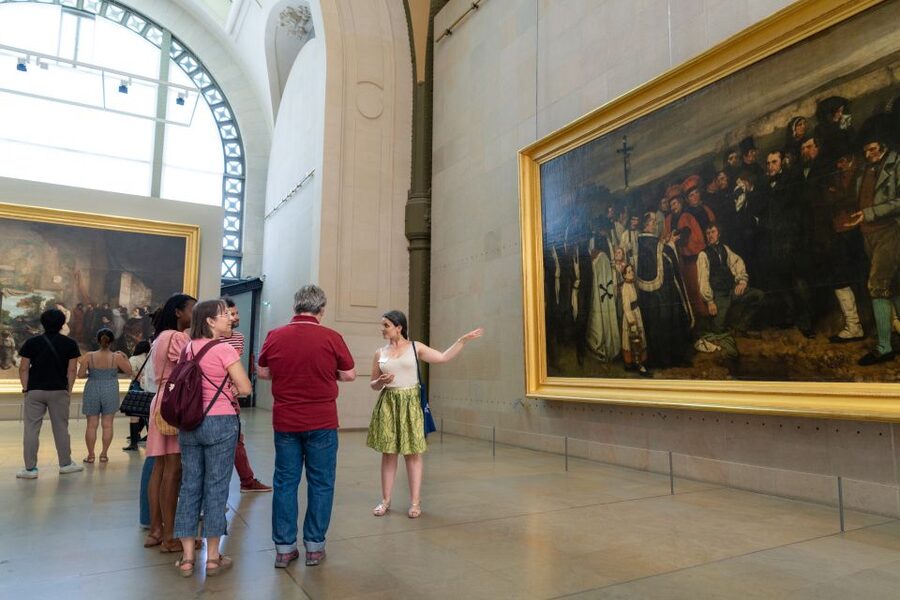
- You see the major highlights with a clear route: Your guide leads you through famous works while adding lesser-known pieces and useful background.
- Dedicated entry saves time at a busy museum: Meet outside, next to the entrance of the Legion d’Honneur Museum, and do not join the museum lines.
- Headsets help in crowded galleries: They are supplied when appropriate, a useful detail for older ears or anyone who has trouble hearing in busy rooms.
- You can stay after the guided visit: Once the tour ends, you may continue through the galleries or visit a temporary exhibition on your own.
Why Musée d’Orsay feels different from other Paris museums
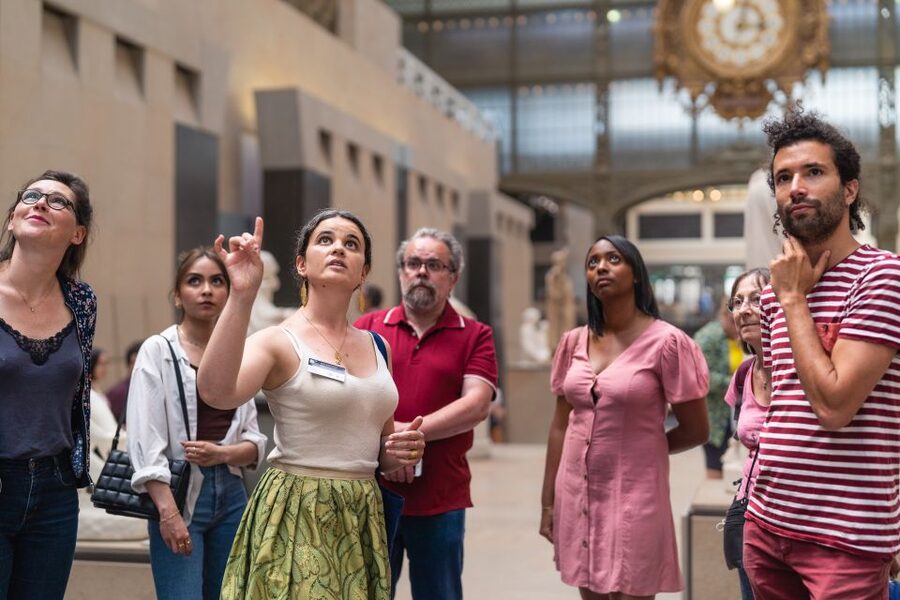
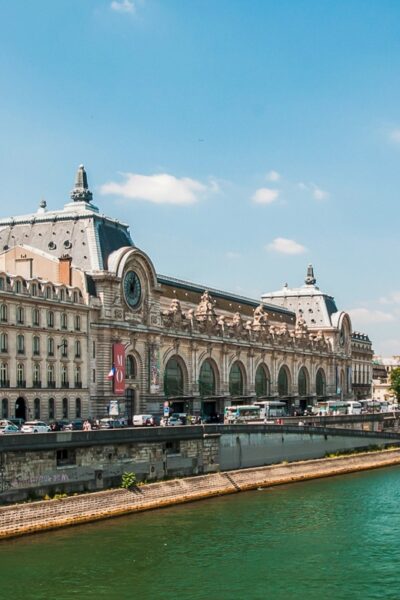
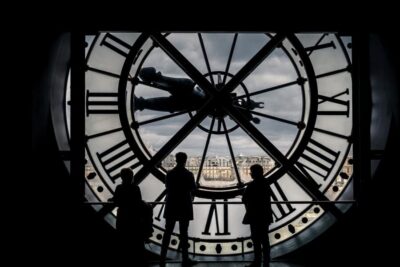
The first surprise is the building. Musée d’Orsay occupies a grand Beaux-Arts railway station built for the 1900 World’s Fair. Its enormous clock, open central space, and former platform create a setting that feels more like a piece of Paris than a conventional gallery.
That setting suits the art. The museum’s collection centers on a period when artists broke from academic habits and looked directly at modern life. You are not only seeing paintings by famous names. You are seeing a change in what artists believed was worth painting, and how a picture could be made.
This is why a guide helps. Without context, an Impressionist painting can look pleasant and familiar. With the story behind it, you begin to see the risk. Loose brushwork, sharp light, cropped views, casual poses, and scenes from daily life were not always accepted as serious art.
The tour gives you a route through that change. Rather than wandering from room to room and wondering what matters most, you get a connected story about artists, ideas, rivalries, and the public reaction to their work.
More Orsay and art museum visits:
- Paris: Orsay Museum Entry Ticket
★ 4.7 · 25,647 reviews - Paris: Orsay Museum Entry Ticket and Digital Audio Guide App
★ 4.4 · 3,170 reviews - Paris in a Day: Louvre or Orsay, Eiffel Tower, City Walk & Cruise
★ 5.0 · 1,956 reviews
Meeting your guide outside the main entrance
The meeting point is opposite the main entrance to Musée d’Orsay, beside the entrance to the Legion d’Honneur Museum. Your guide wears a guide badge on an orange lanyard, so look for that marker rather than joining a museum queue.
The easiest nearby transport options are the RER Musée d’Orsay station on Line C and Solferino on Metro Line 12. Allow enough time to find the exact meeting point. The instruction is specific: do not get in the lines for the museum.
Hotel pickup and drop-off are not included. You make your own way to the museum, which is typical for a central Paris museum tour and gives you control over your arrival time.
The tour is in English and led by a fully accredited local guide. Names vary by departure, but the guides praised most often include Anthony or Antony, Avi, Sarah, Perrine, Sophia, Simone, Fanny, and Marjolein. Do not book expecting one particular person unless your confirmation specifically names that guide.
The opening story: from railway station to art museum
A good guide begins by helping you understand the building. Its former railway purpose explains the scale, the light, and the unusual shape of the central hall. You get a sense of why this museum feels more open and dramatic than a palace gallery.
The building also provides a useful time marker. The art inside belongs mainly to a period of rapid change, when Paris and its people were being seen in new ways. The guide uses the station and the collection together, so the museum’s architecture becomes part of the explanation.
This early context matters because it gives the tour a logical beginning. You are not simply shown a list of famous pictures. You start with the place, the period, and the artistic rules that the next generation would challenge.
Following the artists who broke the rules
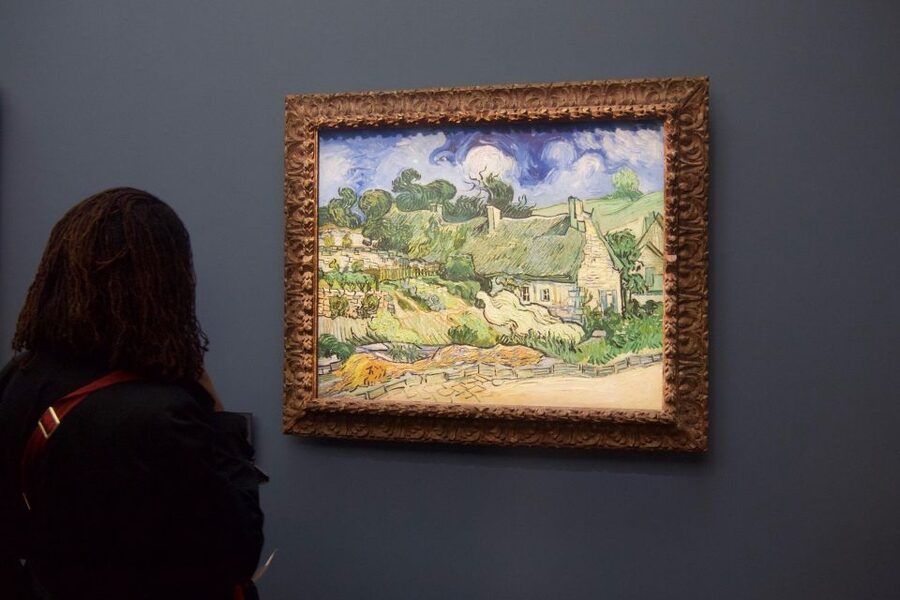
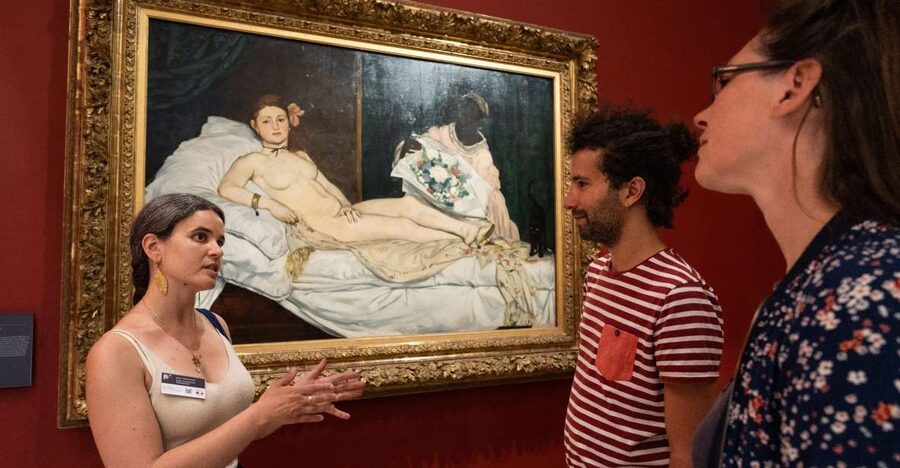
The central part of the tour follows the shift from traditional painting toward the approaches associated with Impressionism. Artists such as Monet, Manet, Renoir, and Degas did not all work in the same way, but they shared an interest in new subjects and new methods.
Your guide explains how ordinary scenes could become worthy subjects. Modern streets, leisure, theater, and social life entered paintings with a freshness that unsettled people who expected historical, religious, or idealized subjects.
The best explanations go beyond naming an artist and a date. Guides such as Avi have been praised for making art history personal and entertaining, while Sarah has been noted for explaining relationships between artists, humor, irony, and social commentary. Those details help you look more closely instead of simply recognizing a famous name.
The story also includes the scandals of the Impressionist era. That does not mean the tour turns into gossip. The private lives and public behavior of artists are used to explain how people of the time understood respectability, gender, class, and public appearance.
That approach is especially useful if you normally feel uncertain in art museums. You do not need a technical background. The guide gives you practical ways to look at the work, including the effect of brushstrokes, color, composition, and subject matter.
A few more Paris ideas to compare
- Versailles: Skip-the-Line Tour of Palace with Gardens Access
★ 4.7 · 9,778 reviews - Versailles: Skip-the-Line Guided Palace Tour and Full Access
★ 4.6 · 5,214 reviews - Louvre Museum: Skip-the-Line Small Group Guided Tour
★ 4.6 · 3,960 reviews - From Paris: Versailles Skip-the-Line Tour & Gardens Access
★ 4.7 · 3,011 reviews
Seeing the major works without losing the thread
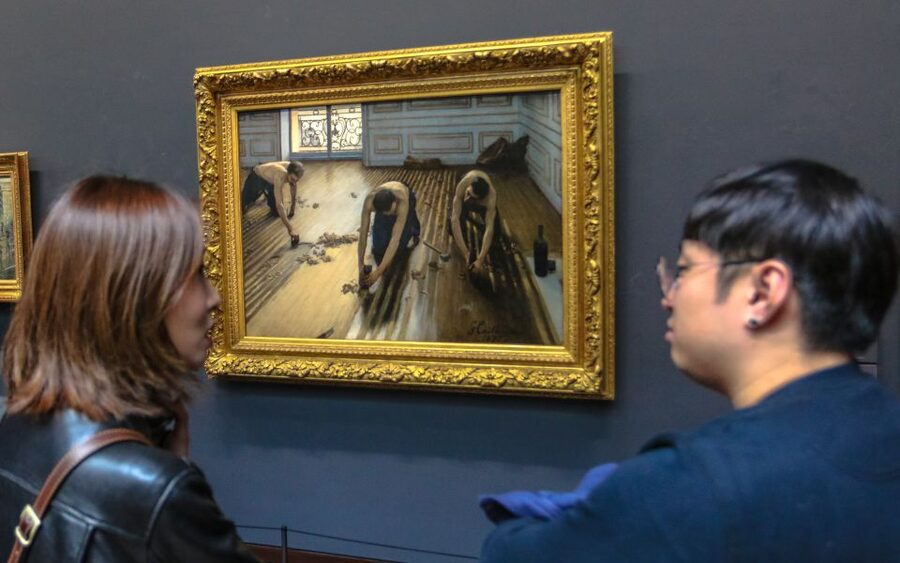
The museum is large enough to overwhelm a first-time visitor. A 90-minute or 1-hour-45-minute route cannot cover every room, but it can give you a strong framework and the main highlights.
Expect the guide to lead you toward major works by the best-known artists, then add less familiar pieces that explain the period. This balance is important. A route made up only of famous paintings can feel like a checklist. A route made up only of obscure works may leave you wondering why you came.
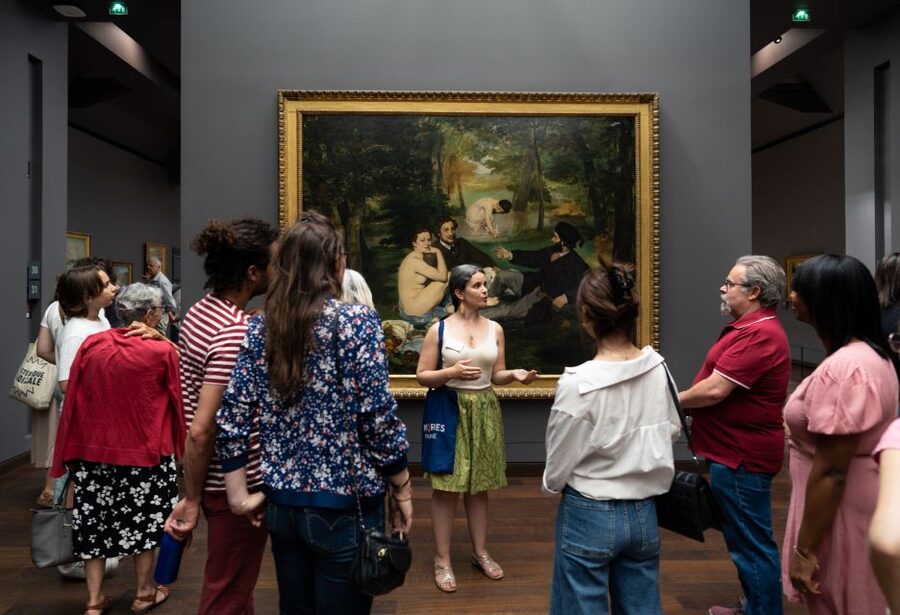
Crowds can affect the experience. Several tour groups have had to work around busy galleries, and guides such as Sophia and Simone were praised for finding good viewing positions and keeping the group together. Headsets are provided when appropriate, which means you can hear the explanation without standing directly beside the guide.
The museum’s popularity also means you may not get a quiet, private look at every painting. Your guide may need to move you along, especially in front of the most famous works. That is one reason the free time after the tour matters.
Van Gogh and the later turn toward personal expression
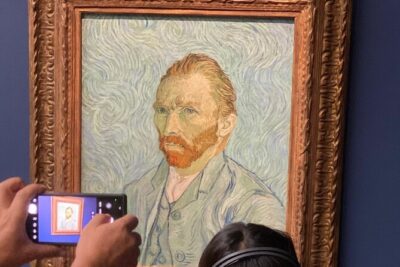
The route includes the museum’s major highlights and reaches the Van Gogh section, though the exact order can vary. Van Gogh is a natural point in the story because his work shows how the changes begun by earlier artists could lead toward a more personal and emotionally charged style.
One family had a child especially interested in Van Gogh, and the guide adjusted the route to begin with the Impressionists before the crowds built up. That kind of flexibility may be possible when the group and timing allow it, but you should not count on a custom itinerary every time.
The useful lesson here is that artists did not work in isolation. The tour connects the people who influenced one another and shows how one generation’s experiment could become the next generation’s starting point.
If Van Gogh is your main reason for visiting, tell your guide at the start. The tour is designed to cover the museum highlights, not to spend the whole visit on one artist. Still, guides have shown an ability to give extra attention to a personal interest when time and group size permit.
What the guides do best
The strongest part of this tour is the human explanation. The guides are consistently praised for passion, clarity, patience, and a friendly manner. Anthony is often singled out for making the subject lively and for answering questions carefully. Avi is valued for mixing art history with humor and social detail. Perrine and Sarah receive praise for enthusiasm and clear storytelling.
That variety matters because a museum tour depends heavily on the individual guide. One guide may emphasize the history of the building, another the private lives of the artists, and another the technical details of brushwork and composition.
The guides also handle the practical side of the visit. They keep the group together, choose viewing spots, and adjust to crowds. One guide remembered everyone’s names and used them during the tour, while another kept a seven-year-old engaged and even took family photos.
The age range can work well. One group included people from their late teens to their late seventies and found the explanations clear. Headsets are especially helpful if you are hard of hearing or if gallery noise makes conversation difficult.
There is one clear caution: pace. The collection is broad, and some guides move quickly between rooms. If you want more time with each painting, speak up politely. You may not be able to change the entire route, but the guide can sometimes allow extra time for a work that matters to you.
Is $82 good value for this museum visit?
At $82 per person, this is not the cheapest way to enter Musée d’Orsay. The value comes from combining admission, a dedicated entrance, and an expert-led route through a major collection.
If you already know the artists and enjoy finding your own way around museums, you may prefer a standard entry ticket and several unhurried hours alone. You will have more time to read labels, return to favorite works, and explore rooms outside the main route.
For a first visit, the price is easier to justify. You get a clear explanation of the period, help with the museum’s layout, and the chance to ask questions. The tour also prevents you from spending your first hour trying to decide where to go.
The free time after the tour improves the value. You are not required to leave when the guided portion ends. You can revisit a painting, continue through the collection, or visit a temporary exhibition with the background fresh in your mind.
I would especially consider this tour if Musée d’Orsay is high on your Paris list but you do not usually feel confident interpreting art. The guide turns a large museum into a manageable first pass.
Timing, crowds, and the limits of a short tour
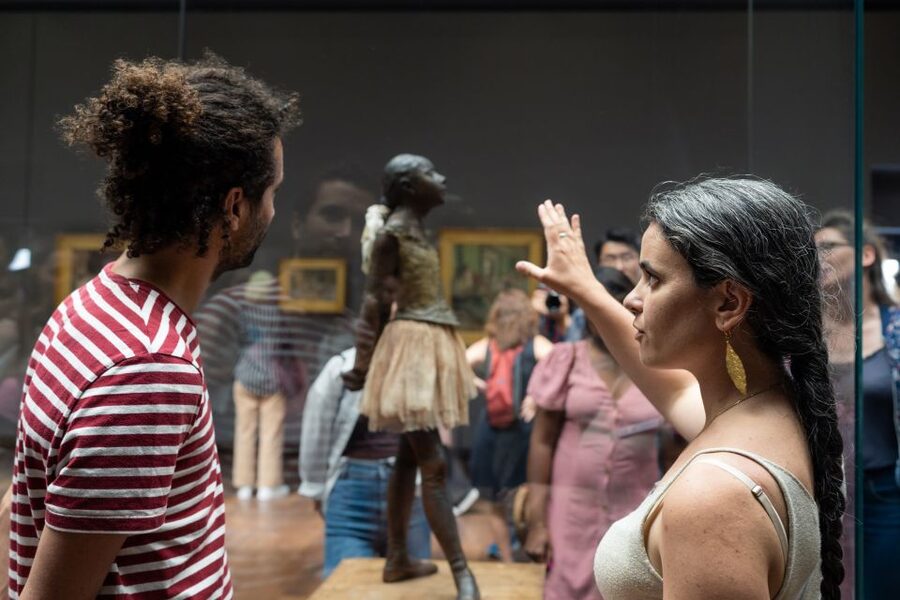
The advertised duration ranges from 90 to 150 minutes, while the included guided tour is described as 1 hour 45 minutes. Check the available start time and the exact duration when booking, since this affects your plans for the rest of the day.
A morning departure may offer a better chance of seeing the main gallery before it becomes extremely crowded, although the available schedule matters most. One family had a notably calm early visit, while other groups found the museum very busy and depended on their guide to move through the crowds.
Do not schedule an important appointment immediately afterward. The tour itself may finish close to its stated time, but you will want a few minutes to orient yourself before continuing alone.
Wear comfortable shoes. You will be on your feet in a large museum, and the route moves from room to room. Large bags and luggage are not allowed, so arrive without anything bulky.
Wheelchair users should note that the activity is listed as unsuitable for them. If accessibility is essential, this is a serious reason to choose another arrangement and confirm the museum’s current options directly.
Who will get the most from this experience
I would choose this tour for a first-time visitor who wants the major ideas and works without spending hours preparing. It is also a good fit for families, since guides have shown they can explain the subject to different ages and keep children involved.
Art lovers can benefit too, especially if you enjoy hearing about artistic relationships, social rules, and the motives behind a painting. The tour is not limited to surface facts. It can give you a sharper way to look at brushwork, color, composition, and subject matter.
It may be less suitable if you want a slow, quiet museum morning. The group pace, crowds, and fixed route mean you will not linger everywhere. You also cannot assume that your favorite artist will receive extended attention.
The best plan is to treat the tour as your introduction. Listen closely, note the rooms or works that catch your attention, then stay afterward and explore those areas again.
Booking details that matter
You can cancel up to 24 hours before departure for a full refund. Missed tours are not refundable, so arrive at the meeting point on time.
You may reserve now and pay later, which helps if your Paris schedule is still changing. The tour is in English only, and headsets are used when appropriate.
The experience provider is Memories France. Admission fees and the dedicated entrance are included, while hotel transportation is not.
Final verdict: book it for structure, not extra hours
Book this Musée d’Orsay tour if you want a lively, well-organized introduction to Impressionism and the museum’s major works. The building, the art, and the stories about artistic rebellion make a strong combination, and the guides are the main reason the visit works so well.
Skip it if you already know the collection well or want to spend several hours studying paintings at your own pace. For most first-time visitors, though, $82 buys more than entry. It buys a useful route, context that makes the art easier to understand, and the freedom to continue exploring once the guide has finished.
FAQ
How long does the Musée d’Orsay tour last?
The guided visit is listed as 1 hour 45 minutes. The activity duration is shown as 90 to 150 minutes, so check the available departure details when booking.
What language is the tour conducted in?
The live tour guide speaks English. English is the only language listed for this activity.
Where do I meet the guide?
Meet opposite the main entrance to Musée d’Orsay, next to the entrance of the Legion d’Honneur Museum. The guide wears a badge on an orange lanyard.
Should I join the museum entrance line before the tour?
No. Do not get in the museum lines. Meet the guide at the specified meeting point and use the dedicated entrance included with the activity.
Are museum admission and entrance fees included?
Yes. The guided tour includes the museum entrance fees and a dedicated entrance.
Can I stay inside the museum after the tour?
Yes. You may remain in the museum after the guided portion and continue exploring the galleries or visit a temporary exhibition.
Are headsets provided?
Headsets are provided when appropriate, so you can hear the guide in crowded galleries.
Can I bring luggage or a large bag?
No. Luggage and large bags are not allowed. Hotel pickup and drop-off are also not included.
Newest additions around Paris
- Family escape Game with kids and teens on the Île de la Cité★ 4.5 · 11 reviews
- Private Photoshoot with the Iconic Eiffel Tower in Paris★ 5.0 · 11 reviews
- 2-day Private Mont Saint-Michel, 3 Loire Castles, D-Day Express★ 4.5 · 11 reviews
- Paris: Batobus Hop-On Hop-Off Cruise & Landmarks Audio Tour★ 3.0 · 11 reviews
- Paris Revolutionary Walking Tour: Iconic French Sights & Stories★ 5.0 · 11 reviews
- Guided and Private Tour of 3 hours through Paris aboard a Citroën 2cv★ 5.0 · 11 reviews
- Kids in the Kitchen – CrOisSaNtS★ 4.0 · 11 reviews
- Paris: Ghosts and Dark Stories Guided Walking Tour★ 4.1 · 11 reviews
Orsay & Art Museum Tours, compared.
Orsay Museum Entry Ticket and Digital Audio Guide App
Read our review →
Paris in a Day: Louvre or Orsay, Eiffel Tower, City Walk & Cruise
Read our review →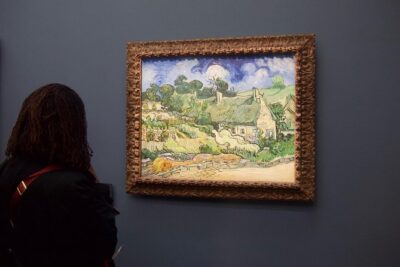
Musée d’Orsay Skip-the-Line Tour with Expert Guide
Read our review →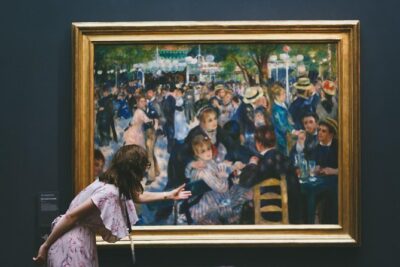
The Musée d’Orsay Guided Tour Orsay Museum Semi-Private 6ppl Max
Read our review →
Louvre & Musée d’Orsay Guided Museum Tour Semi-Private 6ppl Max
Read our review →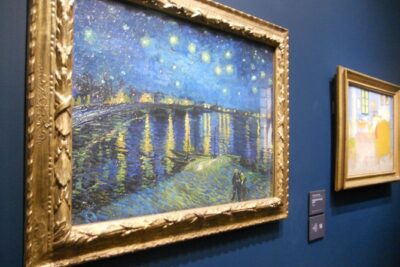
Browse the lists this tour appears in