
Reviewed · ORSAY & ART MUSEUM TOURS
The Musée d’Orsay Guided Tour Orsay Museum Semi-Private 6ppl Max
The best thing about this Musée d’Orsay tour is its small-group format. With no more than six people advertised, you can ask questions, hear the guide clearly, and move through the former railway station without being swallowed by a large crowd.
I like the clear artistic storyline, from Millet and Manet through Monet and Renoir to Van Gogh. I also like the choice of morning, afternoon, and evening departures, plus the chance to request a private or family-focused version. The main caution is price: at $144.21 per person, this is a premium museum visit, and temporary exhibitions are not included.
In This Review
- Key points to know before booking
- Why the Musée d’Orsay works so well with a guide
- Entering a former railway station with reserved admission
- Following the road to Impressionism
- Monet, Degas, and the appeal of looking closely
- Van Gogh and the artists who came afterward
- How the six-person group changes the visit
- Is $144.21 per person a fair price?
- Choosing the best time and preparing for the museum
- Who will get the most from this Orsay visit?
- Should you book the Musée d’Orsay semi-private tour?
- FAQ
- How long does the Musée d’Orsay guided tour last?
- How many people are in the group?
- Is museum admission included?
- Is the tour offered in English?
- Which artworks are usually included?
- Does the tour include temporary exhibitions?
- Where does the tour begin and end?
- Can I bring a large bag or suitcase?
- Can I cancel for a full refund?
- Is the tour wheelchair accessible?
Key points to know before booking
- Six-person maximum: The tour is designed to feel more like a guided conversation than a standard crowd tour.
- Reserved museum entry: You avoid buying a separate admission ticket, though security lines can still form.
- A useful art timeline: The guide connects Realism, Impressionism, and later movements instead of treating each painting as an isolated object.
- Strong family potential: Guides such as Lilly, Christophe, and Alexandra have been praised for keeping children and teenagers involved.
- Flexible timing: Morning, afternoon, and evening options make it easier to fit around a Paris sightseeing day.
- Important practical limit: The tour is not available for wheelchair users or people with walking disabilities, and large bags cannot enter the museum.
Why the Musée d’Orsay works so well with a guide
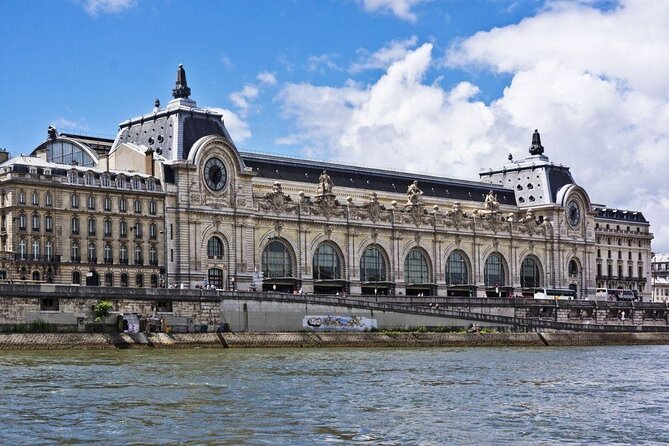
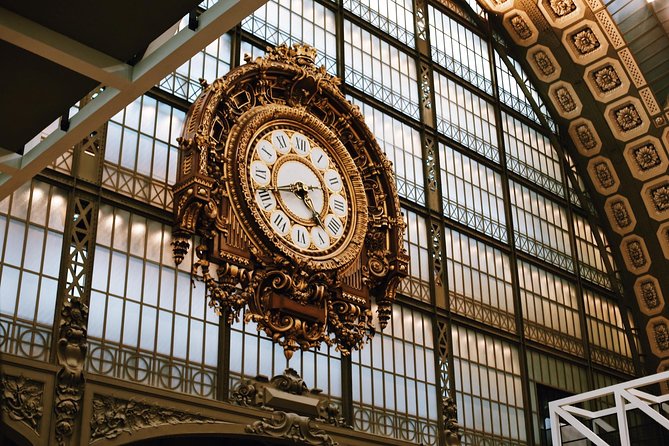
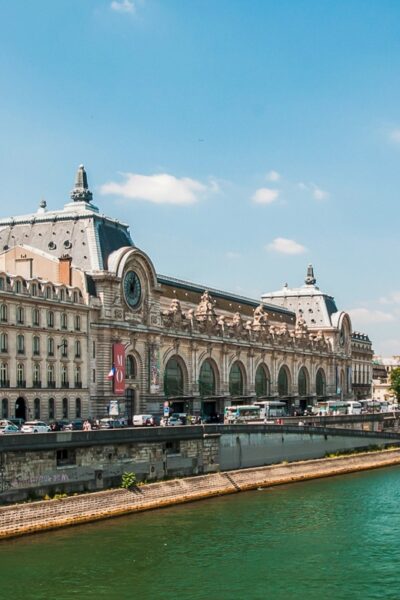
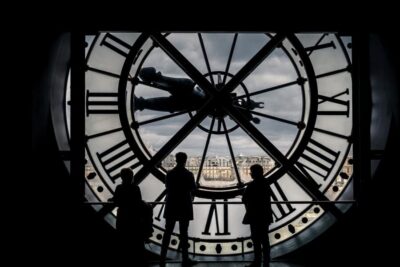
The Musée d’Orsay is not simply a gallery full of famous French paintings. It is also a grand Beaux-Arts railway station, built for the 1900 World’s Fair and later converted into a museum. The building itself helps explain the collection. Its long central hall, giant clock, high roof, and open galleries give the art a setting with real character.
That scale can also make the museum tiring. You may know you want to see Monet, Renoir, Degas, and Van Gogh, but finding the right rooms and understanding how the artists connect takes time. A good guide gives you a route and a reason for following it.
This tour focuses on the artistic changes that led to Impressionism and what happened afterward. You are not just shown a famous painting and handed a date. The guide explains why artists began to question the official art system, how they treated light and modern life, and why their work first seemed shocking to many people.
That approach is especially useful if you are new to art history. You can ask what you are looking at without feeling that you should already know the answer. If you already enjoy art, the small group gives you room to ask more specific questions about technique, artists, and the stories behind individual works.
More Orsay and art museum visits:
- Paris: Orsay Museum Entry Ticket
★ 4.7 · 25,647 reviews - Paris: Orsay Museum Entry Ticket and Digital Audio Guide App
★ 4.4 · 3,170 reviews - Paris in a Day: Louvre or Orsay, Eiffel Tower, City Walk & Cruise
★ 5.0 · 1,956 reviews
Entering a former railway station with reserved admission
The tour begins at the Musée d’Orsay in Paris’s seventh arrondissement and ends there. Admission is included, and reserved entry is provided, so you do not have to arrange a separate museum ticket.
Reserved entry does not mean the door will always be completely empty. The museum can bring extra security measures, and lines may form even for visitors with priority access. Still, having the ticket arranged in advance is useful at a museum that can be very busy.
You should arrive with only a small handbag or thin backpack. Large bags and suitcases are not allowed inside. This matters if you are visiting Paris between hotels or arriving with luggage, since the museum is not a place to bring your full-size travel bag.
The museum can also close or delay opening with little warning. If opening is delayed by more than an hour, the operator says it will offer an appropriate alternative, but it does not promise a refund or discount for such a change. That is rare planning information, yet worth knowing before you build a tightly timed day around the visit.
Following the road to Impressionism
The tour’s strongest teaching feature is its order. Rather than jumping randomly between famous canvases, the guide generally explains the movements that came before Impressionism, then introduces the Impressionists and the artists who followed them.
Millet’s The Gleaners gives you an early look at the subject of ordinary working people. The painting’s focus on rural labor helped challenge the idea that only grand historical or religious subjects deserved serious art. A guide can point out how the subject itself carried social meaning.
Manet’s Luncheon on the Grass takes the challenge further. Its modern setting and direct presentation caused a scandal when it appeared. The painting is useful on a guided tour because its importance is not always obvious at first glance. You may notice the figures, the picnic, and the unusual contrast before understanding why the work upset the art establishment.
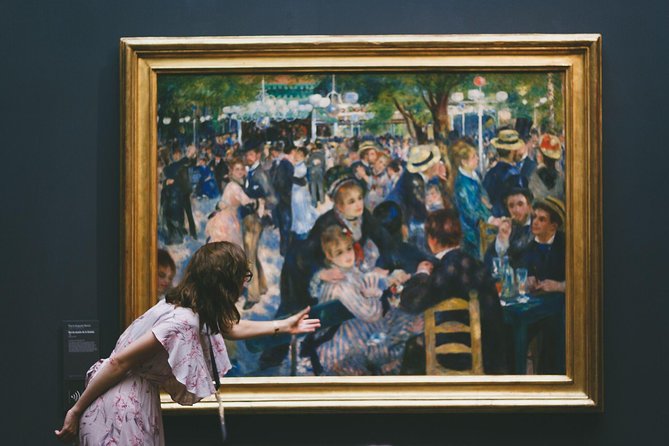
The guide then moves toward the Impressionists and their interest in changing light, open-air scenes, and quick-looking brushwork. Renoir’s Dance at Le Moulin de la Galette shows this interest through a lively view of people enjoying a Paris afternoon. Instead of presenting an arranged historical scene, Renoir treated everyday social life as a worthy subject.
This is where the storytelling matters. Guides such as Eduardo, Beatrice T, Ivana, Hugo, and Florent S have been praised for arranging the art in a timeline and explaining the shift from Academic painting to Realism, Impressionism, Cubism, and Neo-Impressionism. The exact route can change with gallery layouts, loans, and restoration work, but the larger sequence gives the visit a strong sense of direction.
Monet, Degas, and the appeal of looking closely
Monet’s poppy field and water-lily works are among the expected highlights. You will likely hear about his use of repeated marks, shifting light, and color relationships. These paintings can look simple from a distance, but their effect changes when you stand close enough to see how the surface is built.
That is one reason I prefer viewing Impressionist art with a guide. A quick photograph does not show how a painting works. The guide can encourage you to look at the brushwork, step back, then consider how your eye blends the marks from farther away.
Degas’s ballerinas offer a different lesson. His compositions often feel like quick glimpses rather than carefully centered scenes. A guide can help you notice unusual cropping, the sense of movement, and the way the dancers appear caught in an unposed moment.
The tour is not only a greatest-hits dash. It also promises lesser-known works, though the exact choices depend on the guide and the collection on the day. That flexibility is helpful because the museum’s best lesson may come from a work you did not arrive expecting to see.
More Paris museums to visit:
- Paris: Louvre Museum Timed-Entrance Ticket
★ 4.6 · 71,977 reviews - Louvre Museum Masterpieces Guided Tour with Access
★ 4.5 · 12,023 reviews - Paris: Louvre Museum Entry Ticket With Host and River Cruise
★ 4.6 · 9,926 reviews - Les Invalides: Napoleon’s Tomb & Army Museum Entry
★ 4.6 · 9,185 reviews
Van Gogh and the artists who came afterward
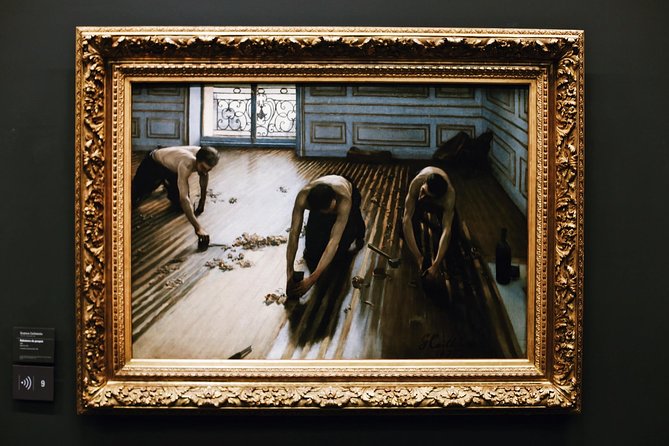
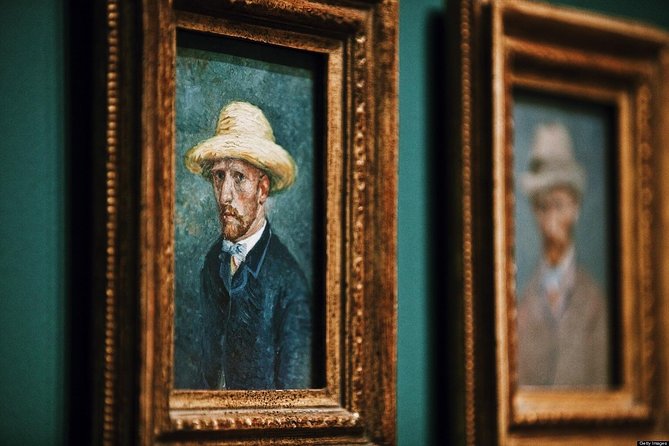
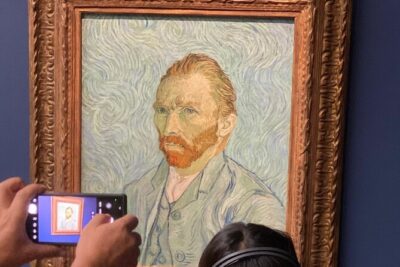
Van Gogh’s Bedroom in Arles is another major stop. The painting gives a guide a chance to discuss his strong use of color, simplified forms, and personal approach to space. It also helps show that the story does not end with the first Impressionists.
The move from Impressionism to Post-Impressionism is important. Van Gogh shared the earlier artists’ interest in modern color and direct sensation, yet his work pushes emotion and structure in a different direction. A good explanation makes clear that these movements were not neat boxes. Artists borrowed from one another, reacted against one another, and developed at different speeds.
The tour may also place later work in the wider sequence, including movements such as Neo-Impressionism and Cubism. The supplied program does not promise every specific painting from those movements, so you should think of the experience as a guided introduction to the collection, not a guaranteed checklist of every room.
Art can be on loan or under restoration. The listed works usually include Manet, Renoir, Monet, Van Gogh, Degas, and Millet, but no museum tour can guarantee that every painting will be on display. If one particular canvas is the sole reason you are booking, check its current status before paying.
How the six-person group changes the visit
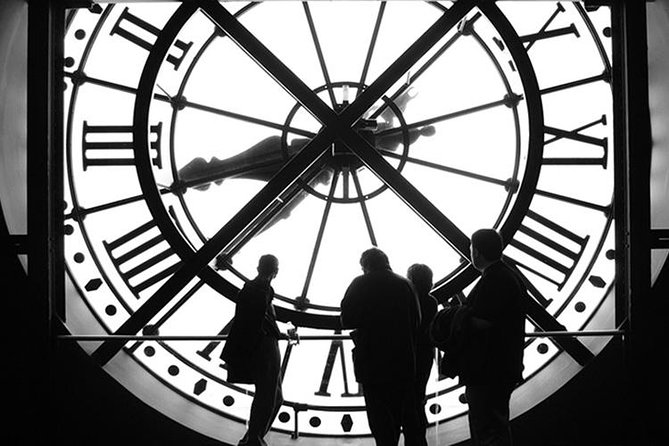
A small group is the heart of this experience. Six people is enough for a shared discussion but small enough for the guide to notice when someone has a question or needs a moment to catch up.
That matters in a museum. In a large group, you may stand at the back, miss part of the explanation, or hesitate to interrupt. Here, the structure should give you more room to ask why a work matters, how a technique operates, or what you are meant to notice.
The booking information also includes one conflicting note that mentions a maximum of eight people. Elsewhere, the tour is clearly described as semi-private with a maximum of six, and the final activity note repeats six. I would confirm the group limit when booking if the small size is central to your decision.
The guides receive especially strong praise for warmth, clear explanations, and storytelling. Kotryna S is described as funny and passionate. Liliya is praised for making art history easy to follow and for working well with children. Christophe is noted for a steady pace and willingness to answer questions. Valerie, Achille, Ana, Zdravko, Ivana, Sunday, Nancy, and Alexandra are also singled out for friendly, engaging tours.
Names are not a guarantee of assignment, so you should not book solely to get one particular guide. Still, the repeated pattern is useful: this tour depends heavily on the person leading it, and the available feedback suggests the operator has a broad team of guides who can make the material approachable.
Is $144.21 per person a fair price?
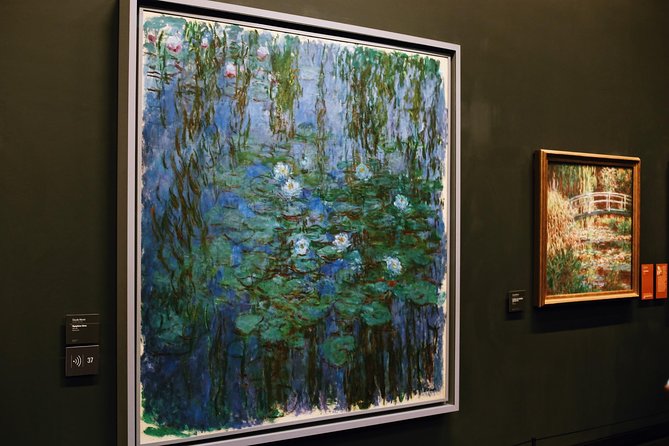
At $144.21 per person, this costs far more than entering the Musée d’Orsay on your own. You are paying for reserved admission, an English-speaking professional guide, and a maximum group size intended to keep the visit personal.
The value depends on how you use museums. If you enjoy reading wall labels, planning your own route, and spending a long time with one painting, an independent visit may make more sense. The tour will move through selected highlights in roughly 2 to 2.5 hours, so you give up some freedom in exchange for structure.
I see better value for a first visit, a short Paris stay, or a family that does not want to spend hours navigating a large collection. It is also useful if you want an art-history framework rather than a parade of famous names.
A private upgrade costs more, but it may suit you if your group wants to set the pace or focus on a narrow theme. The kid-friendly family option is worth considering for parents who want explanations adapted to children rather than a standard adult art talk.
The tour does not include temporary exhibitions. If you want to see a special show, you will need to arrange that separately and check the museum’s current ticket rules.
Choosing the best time and preparing for the museum
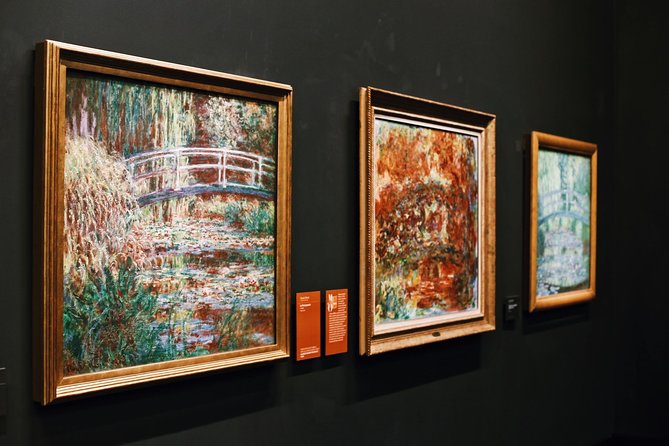
Morning tours are a sensible choice if you want to start your sightseeing day with the museum. Afternoon departures can fit around other plans, while evening tours offer a useful option when available. The best time is the one that leaves you alert enough to pay attention, since two and a half hours of art can be tiring.
The museum is near public transportation, and the meeting point is the museum itself. Hotel pickup and drop-off are not included, so plan to reach the entrance by taxi, Uber, or public transit.
Wear comfortable clothing and shoes. The operator requires a moderate level of physical fitness and does not accept wheelchair users or people with walking disabilities on this tour. One review describes a guide helping an older couple find a chair, but that kind of assistance should not be treated as a substitute for accessible-tour arrangements.
Keep your phone available and provide a mobile number with the country code when booking. The operator says this is imperative, presumably so the guide or company can reach you if meeting details change.
Free cancellation is available up to 24 hours before the local start time. Changes or cancellations made inside that window are not refunded, so do not book the tour until your Paris schedule is reasonably firm.
Who will get the most from this Orsay visit?
I would choose this tour for a first-time visitor who wants to understand why Impressionism mattered, not simply photograph the famous works. The chronological approach gives you a useful base for later museum visits.
Families can also do well here, especially with a family-focused upgrade or a guide who adjusts the presentation. The feedback about Lilly, Christophe, and Alexandra suggests that children and teenagers can stay involved when the guide uses stories, questions, and a manageable pace.
Art enthusiasts may appreciate the chance to ask detailed questions in a group of six. You may also like having time at the end to explore on your own, a feature one review specifically noted.
I would hesitate if you dislike guided schedules, want to see temporary exhibitions, or need full mobility access. I would also compare the price with a self-guided visit if you already know the Orsay collection well.
Should you book the Musée d’Orsay semi-private tour?
Book it if you want the museum’s major works arranged into a clear story and you value personal attention. The strongest reasons are the small group, included reserved entry, and guides who explain art in a way that works for beginners and families.
Skip it if you are comfortable finding the galleries yourself, need a wheelchair-accessible activity, or want unlimited time with your own selection of paintings. At this price, the guide must matter to you.
For most first-time visitors with only a few hours, I think the tour earns its cost more readily than a large group option. Just confirm the group limit, check whether your must-see paintings are currently displayed, leave large bags behind, and keep your schedule flexible enough to handle museum delays.
FAQ
How long does the Musée d’Orsay guided tour last?
The tour lasts approximately two to two and a half hours. The stated duration for the semi-private tour is 2.5 hours.
How many people are in the group?
The tour is advertised as semi-private with a maximum of six people. One booking note mentions up to eight, so confirm the group size if six or fewer is essential to you.
Is museum admission included?
Yes. All entrance fees and reserved museum entry are included.
Is the tour offered in English?
Yes. The tour is offered in English.
Which artworks are usually included?
The usual highlights include Manet’s Luncheon on the Grass, Renoir’s Dance at Le Moulin de la Galette, Monet’s Poppy Field and water lilies, Van Gogh’s Bedroom in Arles, Degas’s ballerinas, and Millet’s The Gleaners. Works can be on loan, under restoration, or changed during the year.
Does the tour include temporary exhibitions?
No. Temporary exhibitions are not included.
Where does the tour begin and end?
It begins at the Musée d’Orsay at 75007 Paris, France, and ends back at the meeting point.
Can I bring a large bag or suitcase?
No. Large bags and suitcases are not allowed inside. Only handbags or small, thin backpacks can pass through security.
Can I cancel for a full refund?
Yes, if you cancel at least 24 hours before the experience’s local start time. Cancellations or changes made less than 24 hours in advance are not refunded.
Is the tour wheelchair accessible?
No. The activity is not available for people with walking disabilities or those using a wheelchair.
Newest additions around Paris
- Family escape Game with kids and teens on the Île de la Cité★ 4.5 · 11 reviews
- Private Photoshoot with the Iconic Eiffel Tower in Paris★ 5.0 · 11 reviews
- 2-day Private Mont Saint-Michel, 3 Loire Castles, D-Day Express★ 4.5 · 11 reviews
- Paris: Batobus Hop-On Hop-Off Cruise & Landmarks Audio Tour★ 3.0 · 11 reviews
- Paris Revolutionary Walking Tour: Iconic French Sights & Stories★ 5.0 · 11 reviews
- Guided and Private Tour of 3 hours through Paris aboard a Citroën 2cv★ 5.0 · 11 reviews
- Kids in the Kitchen – CrOisSaNtS★ 4.0 · 11 reviews
- Paris: Ghosts and Dark Stories Guided Walking Tour★ 4.1 · 11 reviews
Orsay & Art Museum Tours, compared.
Orsay Museum Entry Ticket and Digital Audio Guide App
Read our review →
Paris in a Day: Louvre or Orsay, Eiffel Tower, City Walk & Cruise
Read our review →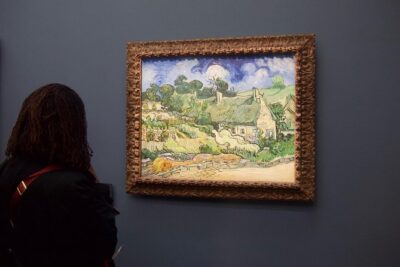
Musée d’Orsay Skip-the-Line Tour with Expert Guide
Read our review →
Musée d’Orsay Skip-the-Line Tour with Expert Guide
Read our review →
Louvre & Musée d’Orsay Guided Museum Tour Semi-Private 6ppl Max
Read our review →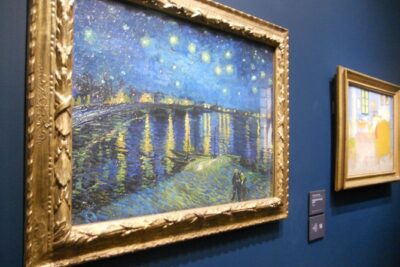
Browse the lists this tour appears in