
Reviewed · MONTMARTRE & SACRé-COEUR TOURS
Paris: Pastries & Tragedies – A sweet tour of Montmartre
Montmartre’s best stories come with a sugar coating. This two-hour walk pairs at least six pastry and chocolate tastings with tales of artists, cabarets, war, betrayal, and the personal dramas that shaped this famous hilltop quarter. Guide Loïk leads the English tour with the ease of a born Parisian storyteller.
I like the unusual balance here: you get both food and local history, rather than a standard sightseeing walk or a meal-by-meal tasting crawl. I also like that the small group is capped at 10, which leaves room for questions and can sometimes turn the outing into a private tour. The main caution is physical: Montmartre means steep streets, cobblestones, and a steady climb toward Sacré-Cœur.
In This Review
- Key points at a glance
- Why pastries and tragedies work in Montmartre
- Starting at Place Blanche and the cabaret district
- Pastry shops with stories behind the counter
- Artists, studios, and Montmartre’s creative past
- Windmills, cobblestones, and the uphill route
- Ending at Sacré-Cœur
- How much value do you get for $83.45?
- Who will enjoy this tour most?
- Timing, language, and practical planning
- Should you book Pastries and Tragedies?
- FAQ
- Where does the Montmartre pastry tour begin?
- Where does the tour end?
- How long does the experience last?
- How many sweets are included?
- What types of treats might be sampled?
- Is the tour offered in English?
- How many people can join the group?
- Is water included?
- Is the tour suitable for people who dislike steep walking?
- Can I cancel for a refund?
Key points at a glance
- Six or more sweet tastings included: Expect a rotating mix that can include chocolates, macarons, éclairs, merveilleux, jams, jellies, cookies, and other French pastries.
- Loïk is the main draw: His storytelling covers Montmartre, Paris, French history, artists, and the people behind the pastry shops.
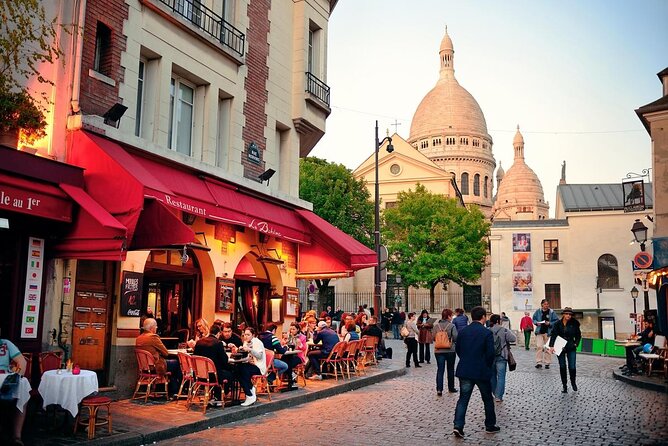
- A walk through the real Montmartre: The route includes Place Blanche, artist connections, an old studio, surviving windmills, and the streets leading to Sacré-Cœur.
- Small groups matter: The maximum is 10 people, and some departures may feel nearly private if bookings are light.
- The hill is part of the experience: Wear comfortable shoes and be ready for an uphill walk over uneven cobblestones.
- Good value for a sweet tooth: At $83.45 per person, the price covers the guide and all listed tastings, but not water or a tip.
Why pastries and tragedies work in Montmartre
Montmartre can look like a postcard of white stone, painters, souvenir shops, and sweeping Paris views. Yet the neighborhood has a darker pulse. Political unrest, war, artistic rivalries, poverty, romance, and loss all left their mark here.
That contrast gives this tour its shape. You stop for something sweet, then hear the story behind a street, building, artist, or local custom. The food keeps the pace light, while the tales give the streets more meaning. You are not simply walking uphill to Sacré-Cœur. You are learning why Montmartre became such a magnet for artists and performers.
The word tragedies is not just a clever title. The tour deals with heartbreak, betrayal, personal disasters, and difficult moments in French history. If you want only cheerful food sampling, this may feel heavier than expected. If you enjoy history with a dramatic edge, the darker material makes the tour more memorable.
Loïk is repeatedly praised for making complicated subjects easy to follow. His style seems especially useful for families, since children as young as eight and ten have been able to stay engaged. He also welcomes questions, so you can steer the conversation toward art, politics, food, or daily Parisian life.
More Montmartre walks and visits:
- Montmartre Hidden Gems and Scenic Highlights Walking Tour
★ 5.0 · 2,684 reviews - Montmartre Hill French Gourmet Food and Wine Tasting Walking Tour
★ 5.0 · 2,588 reviews - Paris: Montmartre Cheese, Wine & Pastry Guided Walking Tour
★ 4.8 · 2,255 reviews
Starting at Place Blanche and the cabaret district
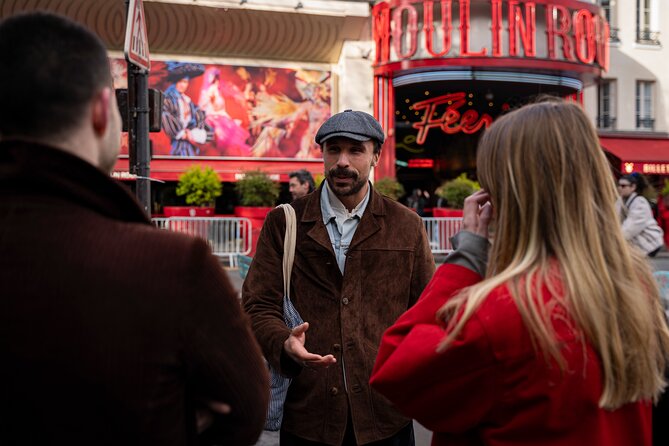
The tour begins at 5 Place Blanche, in the 9th arrondissement, near public transportation. This is a smart starting point because Place Blanche puts you close to the old entertainment quarter and the famous Moulin Rouge area.
Here, your guide explains the story of the district and its role in Montmartre’s nightlife. You’ll hear that the French can-can was invented here, along with the connection between Henri de Toulouse-Lautrec and the area’s performers and women. His fascination with the red-light district is part of a larger story about how artists turned nightlife into subject matter.
This opening also gives you a useful orientation. Montmartre is not one uniform neighborhood. Some streets are crowded and commercial, while others are quieter and more residential. A good guide helps you understand how the entertainment zone, artists’ quarter, village-like lanes, and religious hilltop fit together.
The first tasting arrives as part of that local exploration. The food is not an afterthought or a single café stop at the end. The sweets break up the walking and give you a reason to pay attention to the shops and producers along the way.
Pastry shops with stories behind the counter
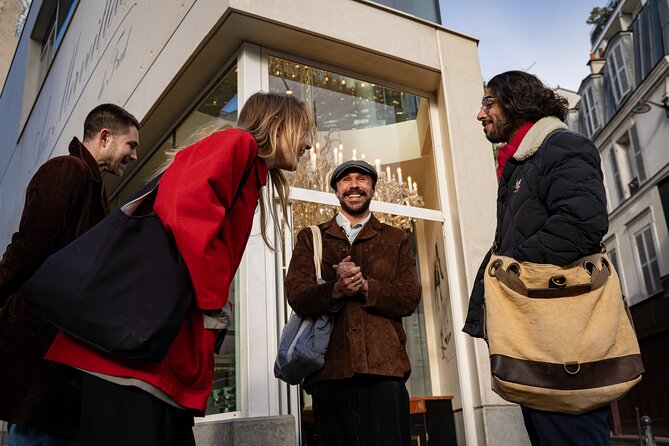
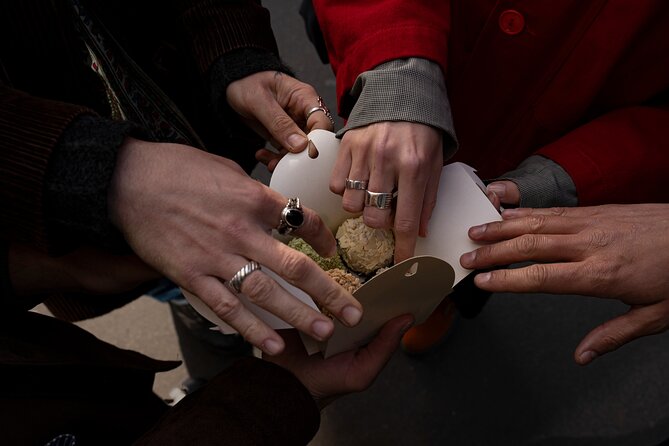
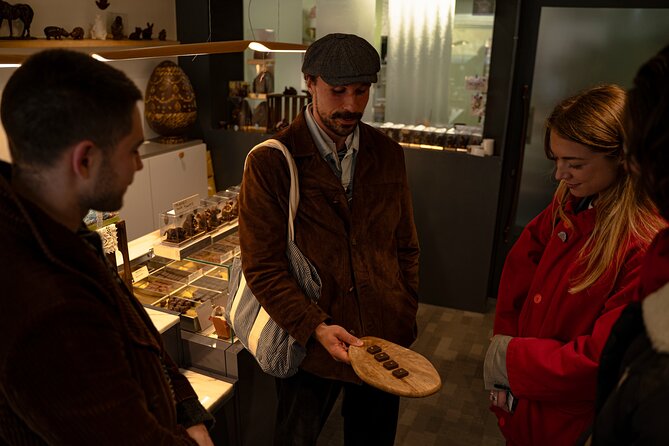
The strongest feature of the experience is the connection between each treat and its setting. You are not simply handed a macaron and told whether it is good. Loïk introduces local pastry shops and artisan producers, then adds the story that makes the stop worth remembering.
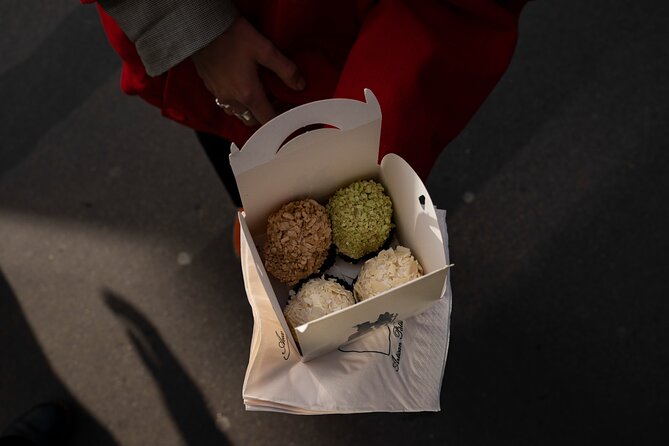
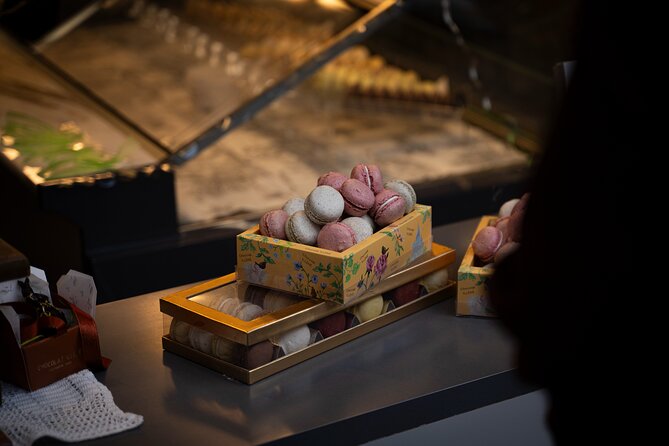
The selection can include chocolates, macarons, merveilleux, éclairs, cookies, jams, and jellies. One particularly useful detail for serious food lovers is the mention of a chocolatier founded in 1760. That date places the business older than the United States, giving you a clear sense of how long French confectionery traditions can last.
Another stop involves Aux Merveilleux, including an explanation of the chandelier inside. Small details like this are exactly what separate a guided walk from a list of famous storefronts. You learn to look up, notice interiors, and connect the design of a shop with the food it sells.
The minimum is six treats, with all food included in the price. That sounds generous for a two-hour walk, though portions may be tasting-sized rather than full desserts. Plan to arrive hungry, but do not treat the tour as lunch. It is a progressive sampling of sweets, not a substitute for a proper meal.
If you have a nut allergy, mention it when booking or at the start. One family experience included alternatives for nut allergies, but the supplied information does not promise a fixed allergy menu for every departure. The range of treats may change, so the safest approach is to explain your needs clearly before sampling.
Artists, studios, and Montmartre’s creative past
The route moves from food into the creative life of the neighborhood. Montmartre was home to painters and artists including Monet, Renoir, Degas, Picasso, and Van Gogh. The point is not simply to list famous names. Loïk connects artists to specific residences, studios, streets, and the social world that made Montmartre attractive to them.
You also discover one of the area’s most notable artist studios. The exact studio name is not provided, but the stop is billed as one of Montmartre’s most iconic. This is an important part of the route for anyone who wants more than pastry facts. You get a sense of how artists worked and lived, and how the neighborhood’s physical setting helped build its reputation.
The walking route includes quieter streets that many first-time visitors miss. That is valuable because the most famous parts of Montmartre can feel crowded and commercial. Souvenir shops are part of the current scene, especially around major sights, but the guide helps you move beyond them and see the older character of the quarter.
The art focus also makes this a good companion to the Musée d’Orsay. If you visit that museum before or after the walk, the references to Impressionist painters and Parisian artistic life may have more meaning. That pairing is a suggestion, not a requirement, but it can help you place the neighborhood’s stories in a wider context.
A few more Paris ideas to compare
- Paris: Day or Sunset Cruise with Drink, Ice Cream or Dessert
★ 4.4 · 4,225 reviews - Paris: Entrance Ticket to the Chocolate Museum
★ 4.1 · 1,105 reviews - Private Montmartre Food Tour with Wine, Cheese & Pastries
★ 5.0 · 1,027 reviews - Paris French Sweets Tasting Tour with Pastries and Chocolates
★ 4.5 · 947 reviews
Windmills, cobblestones, and the uphill route
Montmartre still has real windmills, a surprising reminder that this hill was once outside central Paris and had a more rural character. The windmill stop adds texture to the usual artist-and-basilica story. It shows that Montmartre was not always an urban sightseeing district.
The route is also a physical lesson in the neighborhood. You will walk over cobblestones and gradually make your way uphill. The pace is described as leisurely, but leisurely does not mean flat or effortless. One participant in their 80s found the climb too strenuous, while other families and children managed it comfortably.
For most people, the practical advice is simple:
- Wear shoes with good support.
- Expect uneven cobblestones.
- Leave room in your schedule rather than rushing straight to another appointment.
- Bring water, since bottled water is not supplied.
- In colder weather, consider carrying a warm drink to balance the sweets and take the chill off.
The walk is about two hours, so the physical demand is moderate rather than all-day. Still, age, mobility, weather, and footwear will make a real difference. If steep hills are a concern, contact the provider before booking rather than assuming the leisurely pace solves the problem.
Ending at Sacré-Cœur
The tour ends at 35 Rue du Chevalier de la Barre, directly in front of the Basilique du Sacré-Cœur de Montmartre. This is a strong finish. You arrive at one of Paris’s most recognizable monuments after learning how the neighborhood grew around art, entertainment, religion, and upheaval.
Loïk explains the basilica’s construction, including the unusual stone used for the building. The stone has a self-cleaning quality, which helps explain why the white exterior remains so striking. You also hear about Sacré-Cœur as the largest crowdfunded project of the 19th century, an unexpected detail that adds a financial and political side to the monument’s story.
The basilica itself is not included as a formal admission stop, but entering is free. If you have time, going inside is a sensible follow-up. The tour ends outside, so you can choose to continue into the church, take in the Paris view, explore more of Montmartre, or stop for lunch or dinner.
The endpoint also makes transport easy at the end of your sightseeing. You are already at one of the main attractions of the area rather than being returned to the starting point. That is convenient, but it means you should plan your day around finishing at the top of the hill.
How much value do you get for $83.45?
At $83.45 per person, this is not the cheapest way to see Montmartre. You could walk the neighborhood for free and buy one or two pastries on your own. The value comes from combining a guide, a planned route, several tastings, shop introductions, and historical interpretation in a compact two-hour outing.
Six or more included treats make the cost easier to justify for anyone who already planned to spend money on chocolates and pastries. You are also paying for Loïk’s local knowledge and his ability to connect the food with the neighborhood. A self-guided walk can show you the same streets, but it will not necessarily explain why a shop interior matters or how artists, cabarets, and old businesses fit into the area’s past.
The small group limit helps. With no more than 10 people, you have a better chance of hearing the guide clearly and asking questions. If only one family or a couple books, the experience may become private without a private-tour price. That is not guaranteed, but it has happened on several departures.
Group discounts are available, and mobile tickets make the booking side simple. The guide’s tip is not included, so budget for that separately if you feel the service deserves it. Water is also not included, a minor point, but one worth remembering on a hill walk.
Who will enjoy this tour most?

I would recommend it first to people who want a gentle introduction to Montmartre with a clear theme. It suits couples, families, solo visitors, and small groups who like sweets but do not want a standard food crawl.
It is particularly good for:
- Art lovers who want stories about painters and studios.
- History fans who enjoy dramatic personal stories and political context.
- Parents looking for an activity that can hold a child’s attention.
- Repeat visitors who have seen Sacré-Cœur but want to understand the neighborhood better.
- Food-focused visitors who want more than the usual croissant stop.
- People who prefer a small group to a large city tour.
It is less suitable if you have difficulty with steep hills or uneven surfaces. It is also not ideal if you need a full meal, dislike sweet foods, or want a tour devoted only to major monuments. The route is built around pastry, storytelling, and walking, so those three parts need to appeal to you.
Timing, language, and practical planning
The experience is offered in English and lasts about two hours. It is booked, on average, 41 days in advance, which suggests you should not leave it until the last minute if your Paris dates are fixed. The maximum group size is 10.
Place Blanche is near public transportation, making the start fairly easy to reach. The end at Sacré-Cœur is more useful for continuing your day than returning to the starting point. You might visit the basilica, enjoy the view, eat nearby, or keep walking through the upper streets.
Confirmation arrives at booking, and most people can participate. That broad statement should not be confused with a promise of an easy route. The hill and cobbles are the key practical issue, especially for older people or anyone who walks with difficulty.
You can cancel for a full refund up to 24 hours before the start time. Changes or cancellations inside that 24-hour window are not accepted for a refund, and the cut-off follows Paris local time.
Should you book Pastries and Tragedies?
I would book this tour if you want Montmartre to feel like more than a photo stop. The combination of six or more sweets, artist stories, cabaret history, windmills, old shops, and Sacré-Cœur gives you a strong two-hour introduction to the area.
The biggest reasons to choose it are Loïk’s storytelling, the small group size, and the smart pairing of food with place. You may even leave with useful restaurant suggestions, since Loïk has offered dinner recommendations that led to memorable meals.
Skip it if hills are a serious problem or if you prefer a formal museum tour with little walking. For everyone else, especially art, history, and dessert lovers, this is a distinctive way to meet Montmartre. Just bring comfortable shoes, an appetite, and room for one more sweet.
FAQ
Where does the Montmartre pastry tour begin?
The tour begins at 5 Place Blanche, 75009 Paris, France. The meeting point is near public transportation.
Where does the tour end?
The walk ends in front of the Basilique du Sacré-Cœur de Montmartre at 35 Rue du Chevalier de la Barre, 75018 Paris.
How long does the experience last?
The tour lasts approximately two hours.
How many sweets are included?
The price includes a minimum of six different treats. The food is included in the tour price.
What types of treats might be sampled?
The tastings can include pastries, chocolates, macarons, merveilleux, éclairs, jams, jellies, and cookies. The exact selection may vary.
Is the tour offered in English?
Yes. The experience is offered in English.
How many people can join the group?
The maximum group size is 10 travelers.
Is water included?
No. Bottled water is not provided, so you should bring your own water.
Is the tour suitable for people who dislike steep walking?
The route includes a gradual uphill walk over cobblestones in Montmartre. People with limited mobility or low activity levels should consider this before booking.
Can I cancel for a refund?
Yes. You can cancel at least 24 hours before the start time for a full refund. Cancellations or changes made less than 24 hours before the start time are not refunded.
Newest additions around Paris
- Family escape Game with kids and teens on the Île de la Cité★ 4.5 · 11 reviews
- Private Photoshoot with the Iconic Eiffel Tower in Paris★ 5.0 · 11 reviews
- 2-day Private Mont Saint-Michel, 3 Loire Castles, D-Day Express★ 4.5 · 11 reviews
- Paris: Batobus Hop-On Hop-Off Cruise & Landmarks Audio Tour★ 3.0 · 11 reviews
- Paris Revolutionary Walking Tour: Iconic French Sights & Stories★ 5.0 · 11 reviews
- Guided and Private Tour of 3 hours through Paris aboard a Citroën 2cv★ 5.0 · 11 reviews
- Kids in the Kitchen – CrOisSaNtS★ 4.0 · 11 reviews
- Segway tour Capital sites★ 5.0 · 11 reviews
Montmartre & Sacré-Coeur Tours, compared.
Montmartre Hidden Gems and Scenic Highlights Walking Tour
Read our review →
Montmartre Hill French Gourmet Food and Wine Tasting Walking Tour
Read our review →
Montmartre Cheese, Wine & Pastry Guided Walking Tour
Read our review →
Montmartre Highlights Walking Tour with a Local Guide
Read our review →
Sacré-Coeur and Montmartre Tour with Expert Guide
Read our review →
Private Montmartre Food Tour with Wine, Cheese & Pastries
Read our review →
Paris Montmartre Food Tour – A Full French Meal by Do Eat Better
Read our review →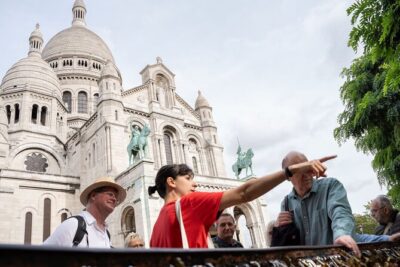
Hidden Montmartre: Paris’ Secret Streets Walking Tour
Read our review →Browse the lists this tour appears in