
Reviewed · MONTMARTRE & SACRé-COEUR TOURS
Paris : Pastries and Tragedies, The sweet tour of Montmartre
Montmartre has always mixed art, romance, poverty, and drama. This two-hour walking tour adds a generous stream of French pastries to the neighborhood’s darker stories, taking you from Place Blanche past the Moulin Rouge, old artist haunts, windmills, and up to Sacré-Cœur.
I like two things in particular: the guide-led stories give the cobblestone streets more meaning, and the minimum of six food stops lets you try sweets you might not choose on your own. The small group, limited to 10 people, also gives the walk a friendly feel.
The main drawback is physical. Montmartre is a hill, and this route climbs toward the basilica with stairs and uphill sections. You should also expect a full two hours of standing, walking, and eating, with drinks not included.
In This Review
- Key points to know before booking
- Why this Montmartre walk works so well
- Starting at Place Blanche and the Moulin Rouge
- The first bakery stops: food with a story
- Stories of love, loss, and Montmartre life
- Le Bateau-Lavoir and the artist side of Montmartre
- Windmills, a tucked-away stop, and the changing streets
- The pastry stops are the main value
- Reaching the viewpoint and Sacré-Cœur
- Group size, timing, and practical fit
- Who should book this experience
- Should you book the Montmartre pastry tour?
- FAQ
- How long does the Montmartre pastry tour last?
- How much does the tour cost?
- Where does the tour begin?
- Where does the tour finish?
- How many food tastings are included?
- Are drinks included?
- What language is the tour offered in?
- How large is the group?
- Is the route physically demanding?
- Can I cancel for a refund?
- Do I have to pay when I reserve?
- What sights are included along the route?
Key points to know before booking
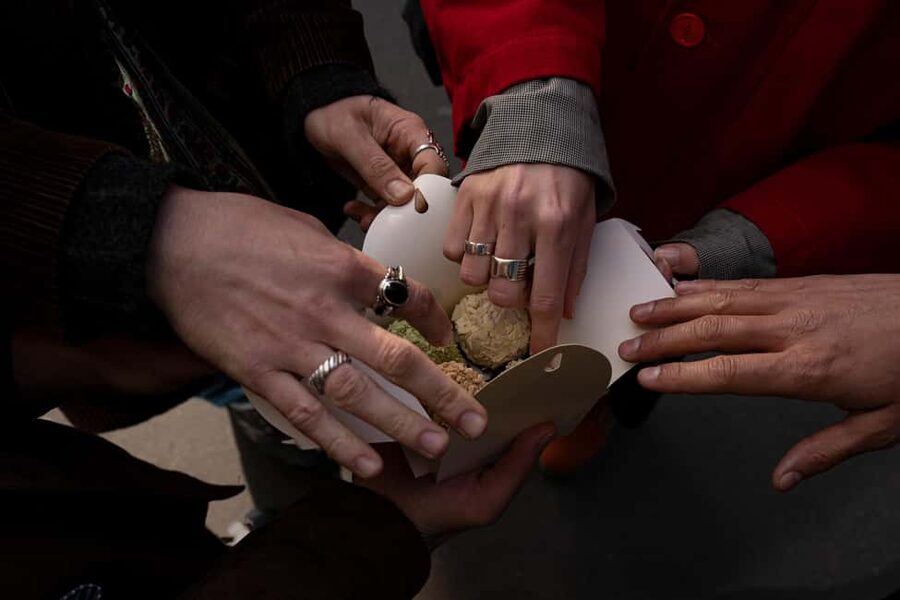
- Six or more tastings are included: The food is part of the $79 price, so you can sample a range of pastries and sweets without paying at each bakery.
- The stories are not only about art: The guide covers love, loss, tragedy, resilience, and the colorful people connected with Montmartre.
- The route links major sights: You pass the Moulin Rouge, Le Bateau-Lavoir, old windmills, a viewpoint, and Sacré-Cœur.
- Expect an uphill walk: Montmartre’s slopes and stairs are real, even if the pace is described as manageable.
- Guide quality matters: Loïk and Lancelot receive repeated praise for storytelling, warmth, and food choices. Laurent is also named as a guide.
- The English-speaking group is small: The maximum group size is 10, which is useful on narrow streets and at compact bakeries.
Why this Montmartre walk works so well
Most Montmartre walks lean hard toward art, film, or postcard views. This one uses food as a kind of punctuation. A sad story is followed by a pastry stop. A turn down a cobbled lane leads to a bakery. A discussion of artists or old Paris is broken up by something sweet.
That structure matters because Montmartre can feel like a lot in a short visit. The neighborhood has steep streets, famous landmarks, small squares, and plenty of tourist traffic. A guide gives you a route and a reason to keep moving, while the tastings provide regular pauses.
I also like the contrast in the theme. The title is playful, but the tour is not simply a sugar-fueled sightseeing walk. The guide talks about love and loss, the hardships of earlier residents, and the people who shaped Montmartre. The food offers relief rather than replacing the history.
Guides named in the feedback include Loïk, Lancelot, and Laurent. Loïk is repeatedly described as warm, engaging, and passionate about Parisian history and art. Lancelot is noted for a laid-back style, strong local stories, and personal food selections. Laurent is praised for combining good information with a wide range of pastry stops.
More Montmartre walks and visits:
- Montmartre Hidden Gems and Scenic Highlights Walking Tour
★ 5.0 · 2,684 reviews - Montmartre Hill French Gourmet Food and Wine Tasting Walking Tour
★ 5.0 · 2,588 reviews - Paris: Montmartre Cheese, Wine & Pastry Guided Walking Tour
★ 4.8 · 2,255 reviews
Starting at Place Blanche and the Moulin Rouge
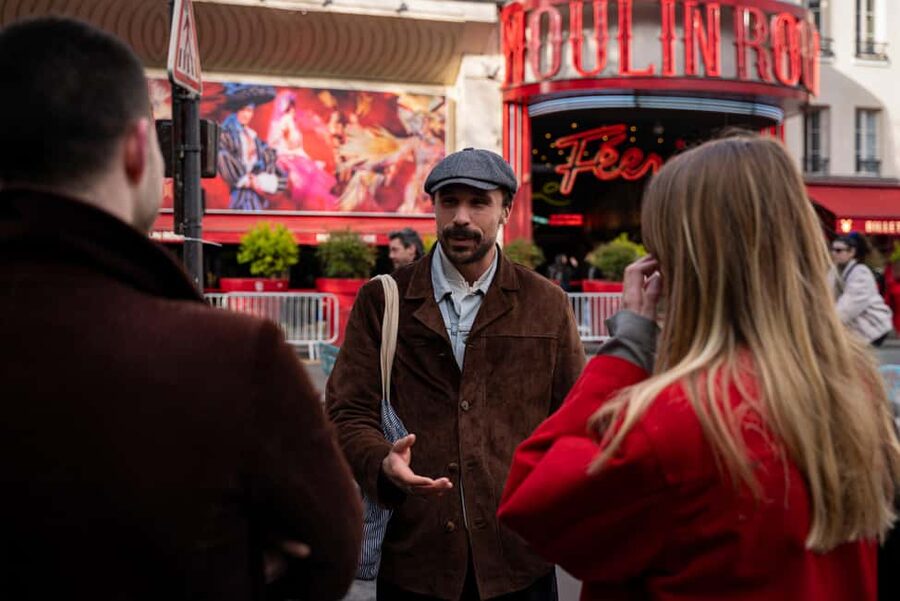
The tour begins at 5 Place Blanche, in front of the pharmacy. Look for the guide wearing a badge and sporting a moustache. That is a more useful meeting-point marker than simply searching for a person in a crowded Paris square.
Place Blanche puts you at the southern foot of Montmartre, close to the Moulin Rouge. The famous cabaret is a sightseeing stop rather than a performance visit, so you should not expect entry or a show. It works as an opening scene: you start amid the bright, theatrical side of Montmartre before heading into the older streets uphill.
The contrast is one of the route’s strengths. The Moulin Rouge area is busy and commercial, while the streets higher up can feel more residential and old-fashioned. Your guide uses the walk between these areas to explain how Montmartre became associated with artists, entertainers, romance, and hardship.
This is also where you begin to notice the physical demands of the route. The tour ends at the top near Sacré-Cœur, so the direction is mostly uphill. Wear shoes that are comfortable on uneven pavement, and do not treat this as a flat food crawl.
The first bakery stops: food with a story
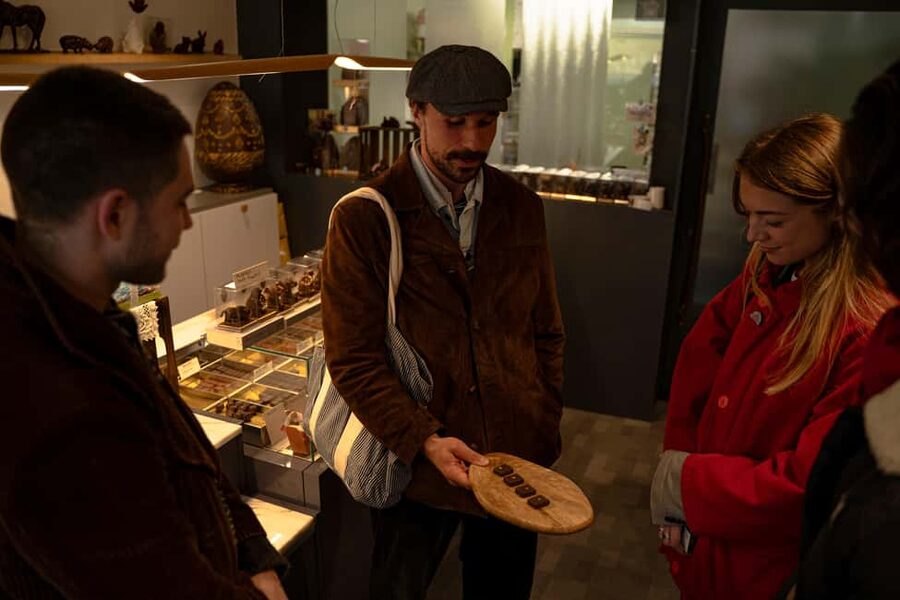
The itinerary includes several local bakeries, with a minimum of six food tastings in all. The bakeries are not listed by name in the tour details, which is a minor annoyance if you want to plan a return visit. One past participant specifically wished for a list of the pastry shops afterward.
Still, the lack of a fixed shop list may allow the guide to choose places based on the day’s route and availability. The important point for your budget is clear: the tastings are included, while drinks are not.
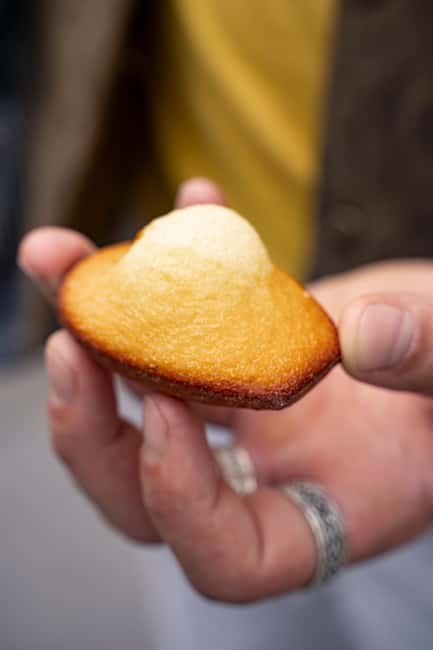
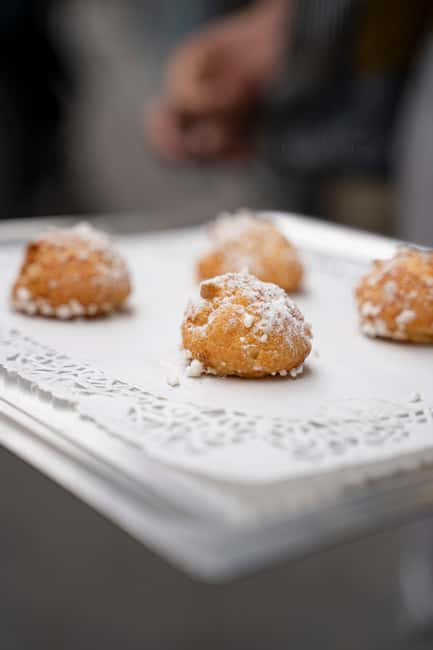
The selection is described as a variety of pastries, cakes, sweets, and chocolate. Several people appreciated being offered items they would not have known to order alone. That is where a guided food walk earns its keep. You are not merely buying a familiar croissant and calling it a food tour. You are being introduced to a range of French bakery treats selected by the guide.
Pacing matters here. Six or more tastings over two hours can add up quickly, especially if several portions are substantial. You may want to arrive hungry and avoid scheduling a large meal immediately afterward. The food is meant to be shared as part of the walking route, but the descriptions make clear that many people finish feeling quite full.
Stories of love, loss, and Montmartre life
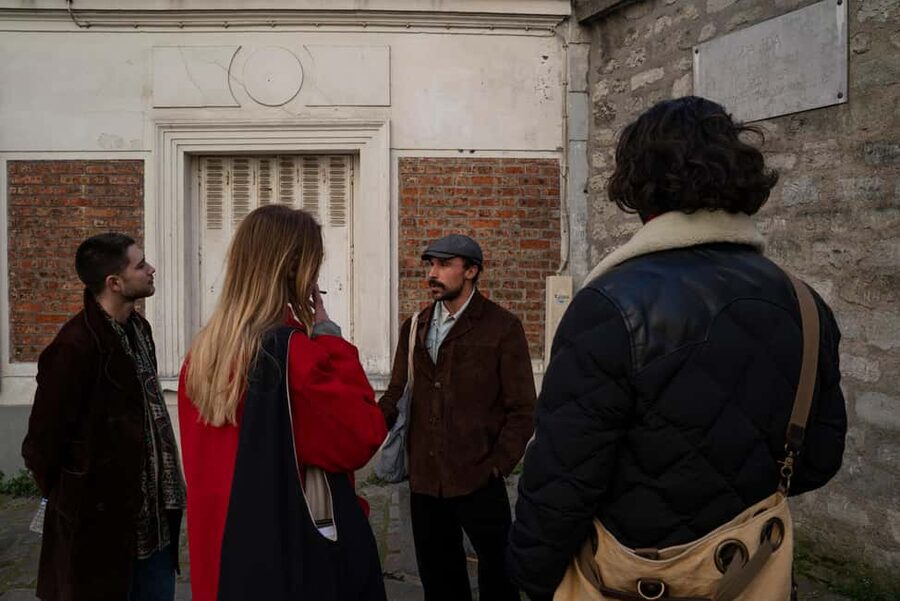
Between bakery visits, the guide takes you through narrow lanes and small squares while explaining the neighborhood’s more difficult past. Expect stories about love, loss, tragedy, and resilience, rather than a simple list of dates and building names.
The tone seems to be one of the best reasons to book this tour. Loïk is repeatedly praised for balancing serious subjects with humor and a friendly manner. Lancelot is described as entertaining and relaxed, with a strong interest in Parisian history and art.
That balance is important in Montmartre. The neighborhood is often presented as a charming maze of cafés and artist studios, but its past was not all romance and pretty views. A good guide can show you why the streets became associated with outsiders, artists, performers, and people living on the margins.
The tour does not promise a museum-style lecture. You will be walking, stopping, tasting, and listening in short stretches. If you want an exhaustive study of French art or a detailed architectural tour, this is not the right format. If you want memorable stories that help you read the neighborhood as you walk, it is a better match.
A few more Paris ideas to compare
- Paris: Day or Sunset Cruise with Drink, Ice Cream or Dessert
★ 4.4 · 4,225 reviews - Paris: Entrance Ticket to the Chocolate Museum
★ 4.1 · 1,105 reviews - Private Montmartre Food Tour with Wine, Cheese & Pastries
★ 5.0 · 1,027 reviews - Paris French Sweets Tasting Tour with Pastries and Chocolates
★ 4.5 · 947 reviews
Le Bateau-Lavoir and the artist side of Montmartre
Le Bateau-Lavoir is one of the key sightseeing stops. The name is closely tied to the artists who gathered in Montmartre, and the stop gives the guide a natural opening to discuss the neighborhood’s artistic life.
The attraction here is context. A building can be easy to pass without a guide, but its importance becomes clearer when you hear about the artists and creative circles connected to it. The tour’s history-and-food format means you will not spend a long time inside or studying a collection. Instead, you get a concise explanation before continuing through the streets.
This is a good example of the tour’s overall rhythm. You see a major name or place, hear a human story, then move on to another tasting. I find that approach easier to remember than a long succession of monuments.
The route is also suitable for families, based on the strong response from a group that included young teenagers, parents, and grandparents. That said, the hill remains a practical concern for older family members or anyone who tires easily.
Windmills, a tucked-away stop, and the changing streets
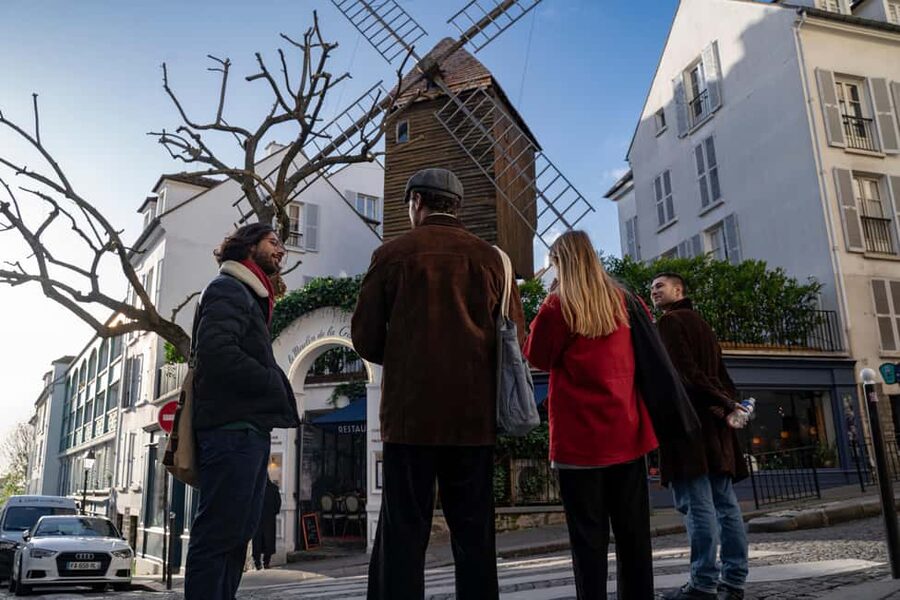
The windmills provide another reminder that Montmartre was once more than the polished tourist district around Sacré-Cœur. They add visual variety to a route that otherwise moves between bakeries, lanes, and famous landmarks.
There is also a stop described simply as a tucked-away place. Since no precise name is provided, you should not book expecting a particular attraction. Think of it as a pause to see a less obvious corner of the neighborhood and hear how the guide connects it to Montmartre’s past.
That flexibility is part of the experience. The best moments may not be the most famous addresses. A guide such as Lancelot can steer you away from the busiest tourist areas and point out a quieter street or a local food stop. You still see the headline sights, but the walk is not built only around them.
Montmartre can be crowded, especially around the Moulin Rouge and Sacré-Cœur. Keep your wallet and phone secure. One person who enjoyed the route also warned about pickpockets, a sensible reminder in any busy Paris district.
The pastry stops are the main value
At $79 per person, this is not a cheap neighborhood stroll. The value depends on how much you would otherwise spend on individual pastries, how much you care about a guide, and whether you want a structured introduction to Montmartre.
At least six tastings are included, along with an English-speaking local guide and the walking tour. That makes the price easier to justify for someone who would happily buy several pastries and pay for a separate history walk. You are paying for the food, but also for the guide’s choices, explanations, route planning, and local recommendations.
The food quality is a recurring strength. The tastings are described as delicious, varied, and carefully chosen. Several people specifically liked trying sweets they would not have selected without help. That is more useful than visiting a famous bakery simply because it appears in a guidebook.
The weakness is that the exact food lineup can vary or is not stated. You should not book expecting specific named pastries. If you have allergies or strict dietary needs, the available information does not explain how the tour handles them, so ask before reserving.
Drinks are not included. Carry water, especially on a warm day and during the uphill portion. You may also want to budget for a favorite item to take away, though no purchase beyond the included tastings is required.
Reaching the viewpoint and Sacré-Cœur
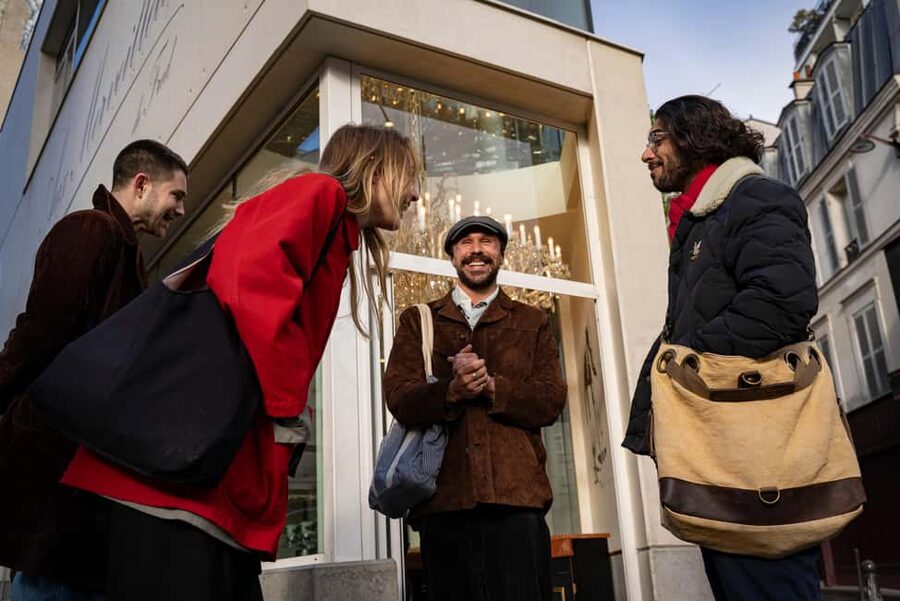
The final stretch brings you to a viewpoint and then to the Basilica of Sacré-Cœur de Montmartre. This gives the tour a satisfying finish, since the route rises from Place Blanche to one of Montmartre’s defining sights.
The viewpoint is a chance to pause and take in Paris from above. The exact view location is not specified, but it is placed near the end of the route. The climb has a purpose here: you finish at the high point rather than having to tackle the hill on your own later.
The tour concludes at Sacré-Cœur, and the activity information also says the walk ends back at the meeting point. Because those descriptions do not match perfectly, confirm the exact end point and whether the guide returns the group to Place Blanche when you book. In practical terms, the route is presented as finishing at the basilica, with time to see the church afterward.
One useful detail is that you may have an opportunity to go inside Sacré-Cœur after the tour. The tour itself does not include a separate basilica visit or interior guide, so treat this as a chance to continue independently rather than a guaranteed guided entry.
Group size, timing, and practical fit
The walk lasts two hours, with starting times shown when you check availability. A small group of no more than 10 people is a real advantage here. It is easier to hear the guide, ask questions, gather around a bakery counter, and keep together on narrow streets.
The tour is offered in English with a live guide. The guides named in the feedback are Loïk, Lancelot, and Laurent, but you should check who is assigned to your departure. The quality of the storytelling appears central to the experience, so the guide makes a meaningful difference.
The pace is described as manageable, including for a mixed-age family, but the route has stairs and uphill sections. The activity advises being in decent shape. I would not choose it for a completely flat, low-effort afternoon.
Free cancellation is available up to 24 hours in advance for a full refund, and you can reserve now and pay later. Those terms are useful if your Paris schedule is still shifting. They do not change the physical demands or guarantee a particular guide.
Who should book this experience
I would choose this tour if you want three things in one outing: an introduction to Montmartre, personal stories about the area, and a substantial sample of French pastries.
It suits first-time visitors who might otherwise wander around without knowing which streets or bakeries matter. It also works well for families with older children and teenagers, couples, and food-focused visitors who want more substance than a standard bakery crawl.
The tour is less suitable if you dislike sweets, need a precise dietary plan, want a flat route, or prefer to explore at your own pace. It may also feel rushed if you want extended time at each landmark. Two hours is enough for a strong overview, not a full study of Montmartre.
I would bring water, wear supportive shoes, keep valuables secure, and arrive with room in your stomach. If the guide is Loïk or Lancelot, expect a story-led walk with plenty of personality. Laurent is also noted for combining a good range of stops with historical commentary.
Should you book the Montmartre pastry tour?
Book it if the idea of pairing Montmartre’s tragic stories with six or more excellent sweets sounds better than choosing between a history tour and a bakery crawl. The format gives you a clear route, a small group, a local English-speaking guide, and a practical way to see the Moulin Rouge, Le Bateau-Lavoir, windmills, viewpoint, and Sacré-Cœur in one outing.
Skip it if the hill, stairs, or unknown pastry lineup will bother you. At $79, it is best value for people who will enjoy both the food and the storytelling. For the right audience, it is a memorable way to meet Montmartre: one uphill street, one old tale, and one pastry at a time.
FAQ
How long does the Montmartre pastry tour last?
The tour lasts two hours.
How much does the tour cost?
The listed price is $79 per person.
Where does the tour begin?
It begins at 5 Place Blanche. Meet in front of the pharmacy and look for a guide with a badge and a moustache.
Where does the tour finish?
The route is described as finishing at the Basilica of Sacré-Cœur de Montmartre. The meeting-point information also says the activity ends back at the meeting point, so confirm the exact end location when booking.
How many food tastings are included?
The tour includes a minimum of six food stops, with all food included in the price.
Are drinks included?
No. Drinks are not included.
What language is the tour offered in?
The live tour guide speaks English.
How large is the group?
The tour is limited to 10 participants.
Is the route physically demanding?
Yes. Montmartre is a hill, and the tour climbs toward the top. The activity advises being in decent shape, and the route includes uphill sections and stairs.
Can I cancel for a refund?
Yes. You can cancel up to 24 hours in advance for a full refund.
Do I have to pay when I reserve?
No. The reserve-now, pay-later option lets you book without paying immediately.
What sights are included along the route?
The route includes sightseeing at the Moulin Rouge, Le Bateau-Lavoir, Montmartre’s windmills, a viewpoint, and Sacré-Cœur, along with several local bakery stops.
Newest additions around Paris
- Family escape Game with kids and teens on the Île de la Cité★ 4.5 · 11 reviews
- Private Photoshoot with the Iconic Eiffel Tower in Paris★ 5.0 · 11 reviews
- Paris: Batobus Hop-On Hop-Off Cruise & Landmarks Audio Tour★ 3.0 · 11 reviews
- Paris Revolutionary Walking Tour: Iconic French Sights & Stories★ 5.0 · 11 reviews
- 2-day Private Mont Saint-Michel, 3 Loire Castles, D-Day Express★ 4.5 · 11 reviews
- Guided and Private Tour of 3 hours through Paris aboard a Citroën 2cv★ 5.0 · 11 reviews
- Kids in the Kitchen – CrOisSaNtS★ 4.0 · 11 reviews
- Paris: Ghosts and Dark Stories Guided Walking Tour★ 4.1 · 11 reviews
Montmartre & Sacré-Coeur Tours, compared.
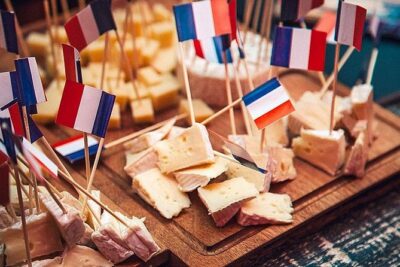
Montmartre Hidden Gems and Scenic Highlights Walking Tour
Read our review →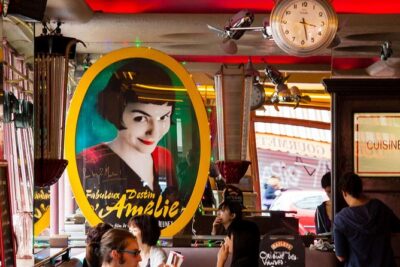
Montmartre Hill French Gourmet Food and Wine Tasting Walking Tour
Read our review →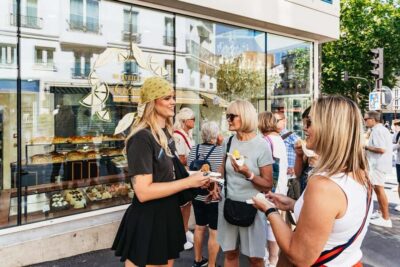
Montmartre Cheese, Wine & Pastry Guided Walking Tour
Read our review →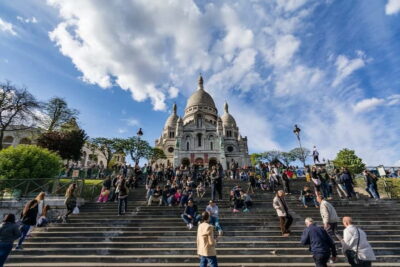
Montmartre Highlights Walking Tour with a Local Guide
Read our review →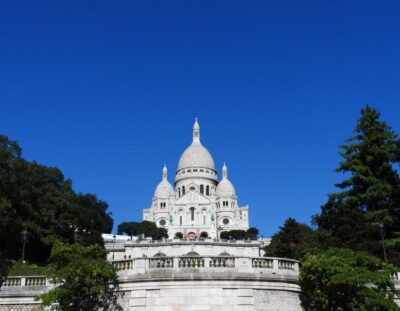
Sacré-Coeur and Montmartre Tour with Expert Guide
Read our review →
Private Montmartre Food Tour with Wine, Cheese & Pastries
Read our review →
Paris Montmartre Food Tour – A Full French Meal by Do Eat Better
Read our review →
Hidden Montmartre: Paris’ Secret Streets Walking Tour
Read our review →Browse the lists this tour appears in