
Reviewed · ORSAY & ART MUSEUM TOURS
Paris: Centre Pompidou Skip-the-Line Guided Museum Tour
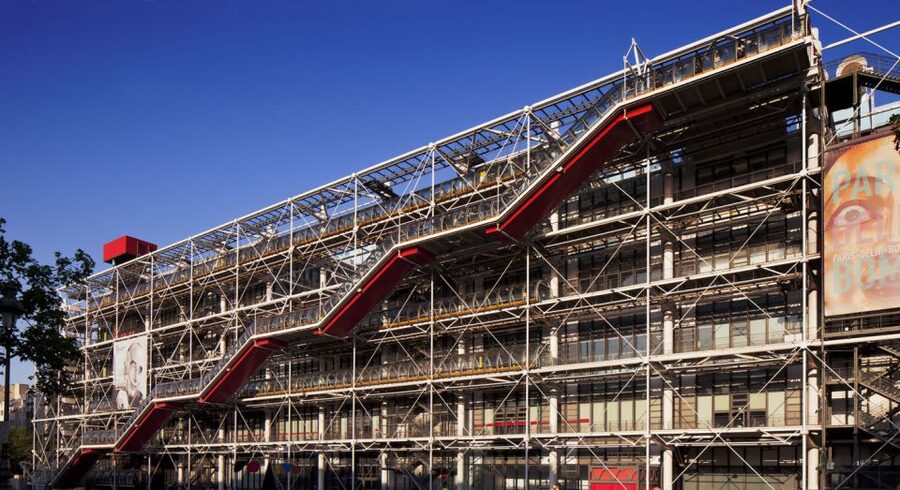
The Centre Pompidou is not a quiet, traditional museum. Its pipes, escalators, and brightly colored exterior are part of the show, and this tour starts outside so your guide can explain why Renzo Piano designed the building as an inside-out machine. Then you trace modern art from Picasso and Matisse to Warhol, Dalí, and recent movements that are harder to decode alone.
I like the small group of up to eight, which gives you room to ask questions, and I like the clear sweep through major art movements rather than a random march past famous canvases. Guides including Dunya, Belen, and Tanya have earned special praise for making difficult art understandable and linking it to social events. The main caution is the price, $371 per person, which makes the tour best for people who want expert help, not simply a quick museum visit.
In This Review
- Key points at a glance
- Why the Centre Pompidou works best with a guide
- Meeting the Pompidou outside on Rue Beaubourg
- Cubism and Fauvism: learning to see differently
- War, Dada, Surrealism, and the darker side of art
- Pop Art, Bauhaus, and American modernism
- Contemporary galleries and Dubuffet’s winter garden
- The top floor view of Paris
- What $371 per person really buys you
- Timing, bags, identification, and mobility
- Who will enjoy this Pompidou tour most
- Should you book the Centre Pompidou guided visit?
- FAQ
- How long does the Centre Pompidou tour last?
- What language is the tour conducted in?
- How many people can join the small-group tour?
- Where do I meet the guide?
- What is included in the price?
- Are temporary exhibitions included?
- Can I bring a suitcase or large bag?
- Is the tour suitable for wheelchair users?
Key points at a glance
- The building is part of the tour: Learn how Renzo Piano’s unusual exterior works before entering the galleries.
- A fast education in modern art: Follow Cubism, Fauvism, Dada, Surrealism, Pop Art, Bauhaus, and Abstract Expressionism in one organized visit.
- Small means personal: The semi-private format accommodates no more than eight people, while a private option offers more individual attention.
- Big names, carefully placed: See works connected with Picasso, Matisse, Salvador Dalí, Marcel Duchamp, Andy Warhol, Mondrian, Pollock, and others.
- The rooftop view is included: Finish with a panorama over Paris from the museum’s top floor.
- Plan around the restrictions: Large bags are forbidden, collections can change, and the semi-private tour needs at least two participants to run.
Why the Centre Pompidou works best with a guide
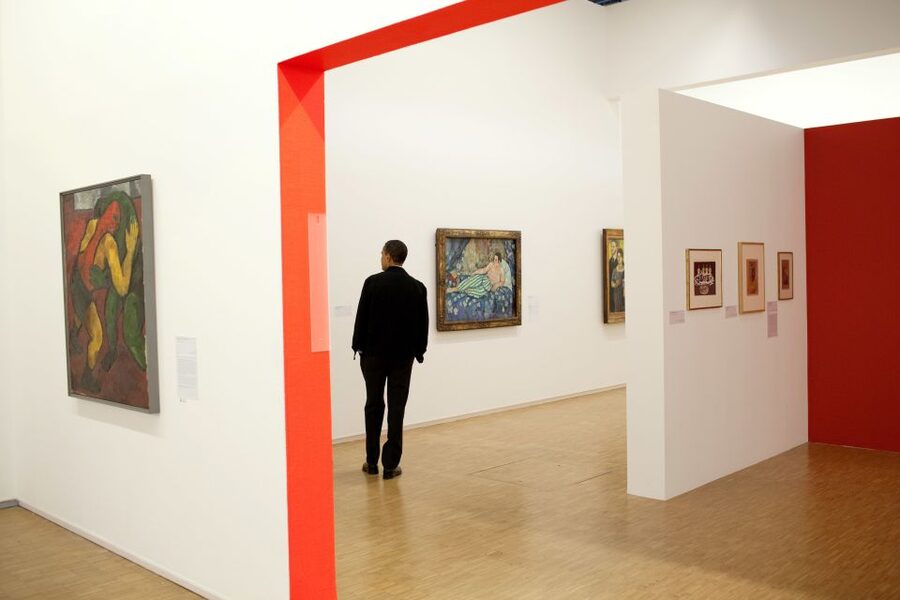
Modern art can be thrilling, funny, disturbing, or simply baffling. A painting that looks like a collection of colored blocks may represent a major break with older ideas about space. A urinal displayed as art may seem like a joke until you understand what Marcel Duchamp was challenging.
That is where this tour earns its keep. Instead of treating the Musée National d’Art Moderne as a warehouse of famous names, the guide gives you a route through the arguments that shaped modern art. You see how artists changed their methods, reacted to war, questioned old standards, and responded to mass culture.
The 2.5-hour length is useful here. It is long enough for a real overview but short enough to fit into a busy Paris day. You will not see every room or every work. That is a benefit, not a failure. The collection holds nearly 3,200 works, and trying to cover it all would turn your visit into a tiring parade of labels.
A good guide can also adjust the pace. The particularly praised guides, Dunya, Belen, and Tanya, are noted for explaining art in a current, social context. That matters at the Pompidou, where a little background often changes your reaction from I do not get this to now I see what the artist was doing.
More Orsay and art museum visits:
- Paris: Orsay Museum Entry Ticket
★ 4.7 · 25,647 reviews - Paris: Orsay Museum Entry Ticket and Digital Audio Guide App
★ 4.4 · 3,170 reviews - Paris in a Day: Louvre or Orsay, Eiffel Tower, City Walk & Cruise
★ 5.0 · 1,956 reviews
Meeting the Pompidou outside on Rue Beaubourg
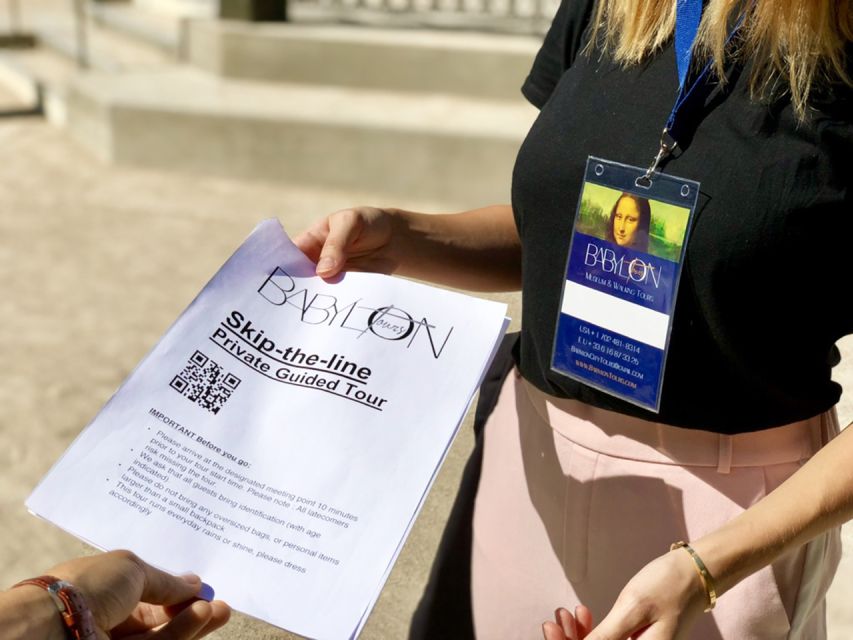
The tour begins outside the museum, at the corner of Rue Beaubourg and Rue Rambuteau, near the blue parking sign. This is a practical meeting point, but pay attention when you arrive. The Centre Pompidou is a large building, and the guide is not meeting you inside at the ticket desk.
You should have your guide’s contact information with you. It is sent by email by the morning of the tour under Babylon Tours, and checking your spam folder before leaving your hotel is sensible. For urgent matters, you can call or text the guide.
The outside introduction is more than a way to fill time before admission. The Pompidou’s design caused a stir because it placed much of the building’s functional machinery on the exterior. Pipes, ducts, escalators, and structural elements are displayed rather than hidden. The colors help identify different functions, and the open interior creates large exhibition spaces.
Your guide explains the building’s origins and Renzo Piano’s design choices before you go inside. This gives you a useful frame for the art. The museum is not housed in a neutral white box. Its structure reflects the same willingness to question convention that you will see in the galleries.
Cubism and Fauvism: learning to see differently
Once inside, the tour begins with modern art and the early movements that changed European painting. In front of a Picasso, you discuss Cubism, a movement that broke subjects into shifting planes and viewpoints. Picasso’s work is useful for showing how artists moved away from simply copying the visible world.
You then examine Fauvism with a Matisse. Fauvist artists used strong, unexpected color and expressive brushwork. The point is not just to identify a style. You learn to notice how color can carry feeling and structure instead of merely recording what an object looks like.
This guided comparison is one of the tour’s practical strengths. On your own, you might admire Picasso and Matisse as isolated masters. With a clear route, you see the conversation between movements and the reasons each new approach mattered.
Do not expect a survey course with every artist and date. The tour aims at a broad understanding through selected works. That makes it accessible, but anyone wanting a detailed study of one painter should plan a separate visit.
War, Dada, Surrealism, and the darker side of art
The World Wars changed the direction of European art, and the tour spends time showing how. Dada emerged partly as a reaction to the horror and absurdity of World War I. Its artists used chance, provocation, collage, and dark humor to attack the cultural systems they believed had helped produce the conflict.
This section may be among the most revealing parts of the visit. Dada is easy to dismiss if you see only odd objects and strange gestures. With context, its disorder becomes a deliberate response to a world that no longer seemed orderly or rational.
The tour also introduces Surrealism and works by Salvador Dalí. Surrealist art draws on dreams, the unconscious, and unexpected combinations. Dalí’s work gives you an accessible doorway into the movement, although the guide can also show you that Surrealism was more than melting clocks and eccentric images.
Marcel Duchamp appears as another important figure. His work raises a basic question that still shapes contemporary art: who decides what counts as art, and does the artist’s choice matter more than traditional skill? These discussions are especially useful for first-time visitors who want more than a list of famous names.
More Paris museums to visit:
- Paris: Louvre Museum Timed-Entrance Ticket
★ 4.6 · 71,977 reviews - Louvre Museum Masterpieces Guided Tour with Access
★ 4.5 · 12,023 reviews - Paris: Louvre Museum Entry Ticket With Host and River Cruise
★ 4.6 · 9,926 reviews - Les Invalides: Napoleon’s Tomb & Army Museum Entry
★ 4.6 · 9,185 reviews
Pop Art, Bauhaus, and American modernism
The route continues into movements that responded to industry, design, advertising, and popular culture. Andy Warhol’s works provide a clear entry point to Pop Art, with its interest in repeated images, consumer products, and celebrity.
Warhol can look simple at first glance. The guide helps you consider why repetition matters and how Pop Art blurred the border between commercial imagery and fine art. You may not leave convinced by every work, but you will understand why the movement changed the conversation.
The tour also covers Bauhaus and Abstract Expressionism. Bauhaus linked art, architecture, and functional design, while Abstract Expressionism placed emphasis on gesture, scale, and the act of painting. Works connected with artists such as Georgia O’Keeffe, Jackson Pollock, and Piet Mondrian broaden the story beyond France.
This international range is important. The Centre Pompidou is a French museum, but modern art did not develop in one country. Seeing French and international artists together helps you understand the exchange of ideas across Europe and the United States.
Contemporary galleries and Dubuffet’s winter garden
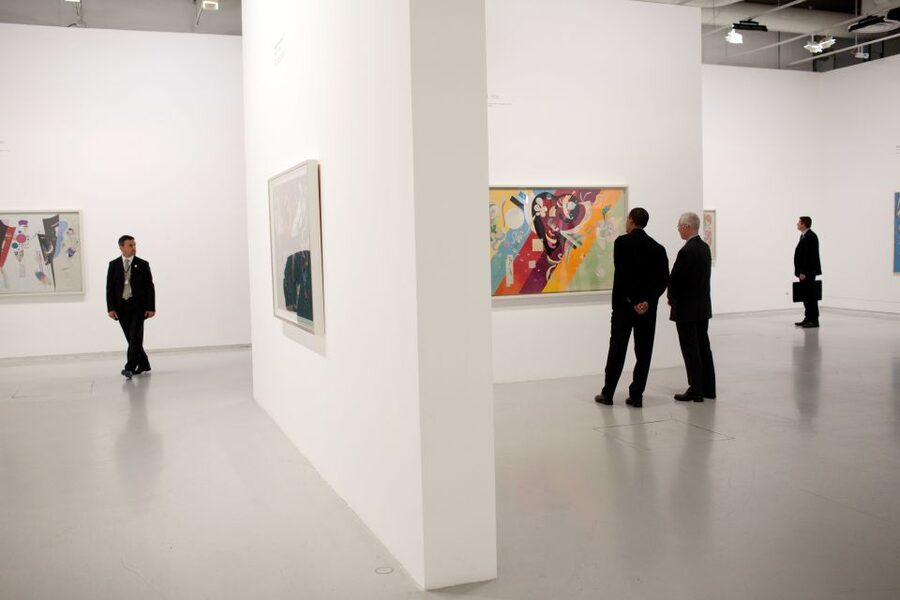
The final gallery section moves toward contemporary art and more recent movements such as Fluxus and Minimalism. Here, you should expect less familiar territory and fewer easy answers.
Fluxus often challenged the border between art, performance, ordinary activity, and humor. Minimalism reduced form and visual clutter, asking you to pay attention to space, materials, proportion, and repetition. Without a guide, these rooms can feel especially demanding because the works may not look like conventional paintings or sculptures.
A highlight is Dubuffet’s winter garden installation. It gives the tour a chance to discuss an environment rather than a single framed work. Installations ask you to consider the whole room, including scale, texture, movement, and your own position inside it.
Some museum spaces are silent rooms, where talking is not allowed. Your guide will need to respect those rules, and you should be prepared for moments when explanation pauses. That is not a flaw in the tour, but it does mean the experience is not continuous conversation from start to finish.
Collections can change during the year. A particular work mentioned in a general description may be moved, loaned, or replaced. The movements and artists covered should remain the main value of the visit, rather than one guaranteed object.
The top floor view of Paris

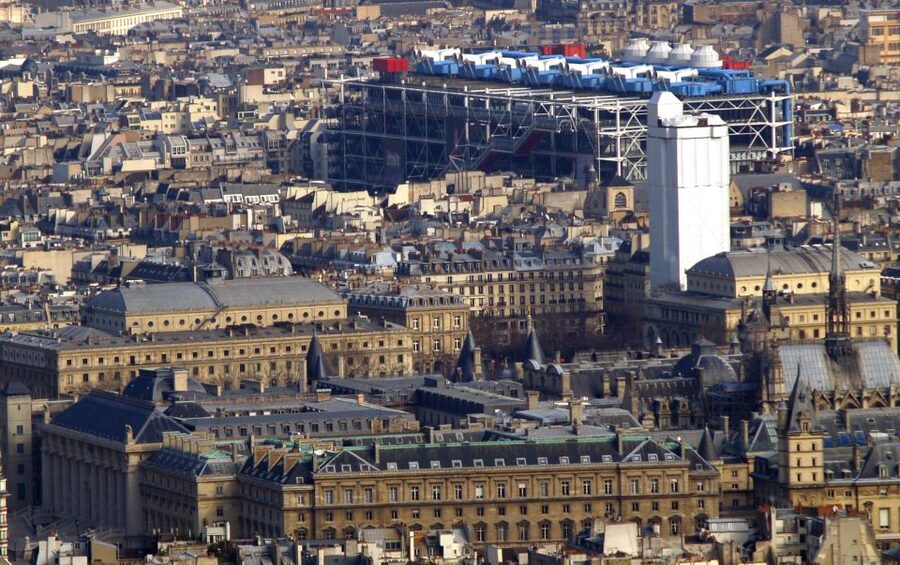
The tour ends with time on the museum’s top floor, where you take in a distinctive panorama of Paris. This is a welcome change after several hours of concentrated looking and discussion.
The view also gives you a fresh sense of the Pompidou’s location. From above, you can place the city’s rooftops and major landmarks in relation to the museum. It is not simply a photo stop. After studying a building designed to make its workings visible, you get a chance to look outward at the city it serves.
The rooftop portion is a strong reason to keep the tour’s final stretch in your schedule. Still, the main value remains the guided museum route. If you are booking only for a view, a museum tour at this price may not be the right choice.
What $371 per person really buys you
At $371 per person, this is a serious purchase. The price includes admission, skip-the-line entry, an English-speaking professional guide, and the 2.5-hour museum tour. It does not include food, drinks, hotel pickup, or temporary exhibitions.
The value depends on how you use museums. If you are comfortable reading labels, choosing your own rooms, and accepting that some modern art will remain puzzling, you can visit the Centre Pompidou without a guide for much less. The regular admission route gives you freedom to stay longer with favorite works and move at your own speed.
If you want a structured introduction, the calculation changes. You are paying for a selected path through a huge collection, the chance to ask questions, help connecting styles to history, and the convenience of skipping the ticket line. A group capped at eight is far more personal than a large coach tour.
The private option makes more sense for art lovers, families with a focused interest, or anyone who wants the guide to shape the discussion around a particular level of knowledge. The semi-private option offers a better balance if you want personal attention but do not need the entire guide to yourself.
The tour does not promise temporary exhibitions, so check that separately if a special show is your main reason for visiting. Your included museum experience focuses on the permanent collection and the selected route through it.
Timing, bags, identification, and mobility
The tour lasts 2.5 hours, but allow extra time to reach the meeting point and deal with the end of the visit. Starting times vary, so check the available schedule before booking.
Bring a valid passport or photo ID. Full names for everyone in your party, along with a mobile number and email address, are required so the company can reach you during your trip.
Do not bring luggage or large bags. The restriction is especially important if you are moving between hotels or arriving from a train station. A large suitcase can prevent you from entering, so arrange storage before meeting the guide.
The general information lists wheelchair access, but the semi-private tour is specifically described as unsuitable for people with mobility impairments or wheelchair users. Accessible tours may be available upon request only. Contact the provider before booking if this affects your plans.
Museum closures can occasionally happen without warning. If opening is delayed by more than an hour after your scheduled start, an alternative arrangement may be offered. No refund or discount is promised for a shorter disruption, so keep your day flexible.
Cancellation is free up to 24 hours before the tour, and you can reserve now and pay later. The semi-private tour also needs at least two participants to operate. If that minimum is not reached, an alternative date or full refund is offered.
Who will enjoy this Pompidou tour most
I would choose this experience if you are visiting the Centre Pompidou for the first time and want a clear story rather than an unplanned wander. It suits couples, families with older children, and small groups who enjoy conversation and want help with art that does not explain itself immediately.
It is also a good fit if you have limited time in Paris. The guide makes difficult choices for you, moving from early modern art into contemporary rooms and ending with the rooftop view. You get a strong introduction without spending an entire day trying to map the museum yourself.
You may want to skip it if you prefer total independence, dislike fixed routes, or mainly want to see temporary exhibitions. The price also requires honest thought. At $371 per person, you should value the guide’s teaching and the small-group format enough to justify a premium over ordinary admission.
Keep your expectations realistic. You will not see every important work, and the collection changes. You will get a guided framework, major artists, the building story, and a better chance of understanding why modern art took the turns it did.
Should you book the Centre Pompidou guided visit?
Book it if the Centre Pompidou feels intimidating, if you want an English-speaking guide who can connect Picasso to Duchamp and Dalí to Warhol, or if a small group matters to you. The rooftop panorama and skip-the-line entry add practical value, but the strongest reason to go is the art history thread.
I would be more cautious at $371 if you already know modern art well or plan to spend many hours exploring alone. For most first-time visitors who want a focused, lively introduction, the tour offers a sensible route through a famously challenging museum, provided the price fits your Paris budget.
FAQ
How long does the Centre Pompidou tour last?
The tour lasts 2.5 hours. Starting times vary, so check availability when booking.
What language is the tour conducted in?
The live tour guide speaks English.
How many people can join the small-group tour?
The semi-private group has a maximum of eight people. A private tour option is also available.
Where do I meet the guide?
Meet the guide by the blue parking sign at the corner of Rue Beaubourg and Rue Rambuteau.
What is included in the price?
The price includes museum admission, skip-the-line entrance, a professional guide, and the museum tour.
Are temporary exhibitions included?
No. Temporary exhibitions are not included.
Can I bring a suitcase or large bag?
No. Luggage and large bags are not allowed.
Is the tour suitable for wheelchair users?
The semi-private tour is not suitable for people with mobility impairments or wheelchair users. Tours suitable for wheelchair users may be available upon request, so contact the provider before booking.
More Skip the Line in Paris
- Versailles: Skip-the-Line Tour of Palace with Gardens Access
★ 4.7 · 9,778 reviews - Versailles: Skip-the-Line Guided Palace Tour and Full Access
★ 4.6 · 5,214 reviews - Louvre Museum: Skip-the-Line Small Group Guided Tour
★ 4.6 · 3,960 reviews - From Paris: Versailles Skip-the-Line Tour & Gardens Access
★ 4.7 · 3,011 reviews
Newest additions around Paris
- Family escape Game with kids and teens on the Île de la Cité★ 4.5 · 11 reviews
- Private Photoshoot with the Iconic Eiffel Tower in Paris★ 5.0 · 11 reviews
- 2-day Private Mont Saint-Michel, 3 Loire Castles, D-Day Express★ 4.5 · 11 reviews
- Paris: Batobus Hop-On Hop-Off Cruise & Landmarks Audio Tour★ 3.0 · 11 reviews
- Paris Revolutionary Walking Tour: Iconic French Sights & Stories★ 5.0 · 11 reviews
- Kids in the Kitchen – CrOisSaNtS★ 4.0 · 11 reviews
- Guided and Private Tour of 3 hours through Paris aboard a Citroën 2cv★ 5.0 · 11 reviews
- Paris: Ghosts and Dark Stories Guided Walking Tour★ 4.1 · 11 reviews
Orsay & Art Museum Tours, compared.
Orsay Museum Entry Ticket and Digital Audio Guide App
Read our review →
Paris in a Day: Louvre or Orsay, Eiffel Tower, City Walk & Cruise
Read our review →
Musée d’Orsay Skip-the-Line Tour with Expert Guide
Read our review →
Musée d’Orsay Skip-the-Line Tour with Expert Guide
Read our review →
The Musée d’Orsay Guided Tour Orsay Museum Semi-Private 6ppl Max
Read our review →
Louvre & Musée d’Orsay Guided Museum Tour Semi-Private 6ppl Max
Read our review →
Browse the lists this tour appears in