
Reviewed · ORSAY & ART MUSEUM TOURS
Impressionist Paris: d’Orsay & Montmartre Exclusive Guided Tour
The clever idea here is to connect the paintings inside the Musée d’Orsay with the Paris streets that helped shape them. You see Renoir, Monet, Manet, Cézanne, and Van Gogh in the museum, then walk through Montmartre, where several of those artists lived, worked, argued, and made art.
I like the reserved museum entry and the private ride between the two districts. I also like the personal format: guides such as Belen, Lili, Michele, and Laura have been praised for adapting the pace and explaining art in a lively way. The main drawback is the price, $259.04 per person, and the Montmartre section involves plenty of uphill walking on cobblestones.
In This Review
- Key points to know before booking
- Why this Paris pairing works so well
- Two and a half hours inside the Musée d’Orsay
- The ride from the Orsay to Montmartre
- Starting low in Montmartre at the Moulin Rouge
- Following Van Gogh and the artists of Rue Lepic
- The quieter side of Montmartre
- Sacré-Coeur and the best city view
- Place du Tertre, Dalí, and the Bateau-Lavoir
- What the private format is worth at $259.04
- Which guide style suits you best
- Timing, fitness, and small practical details
- Who should book this tour
- Should you book it?
- FAQ
- Where does the tour start?
- Where does the tour end?
- How long does the experience last?
- Is museum admission included?
- Is transportation included between the museum and Montmartre?
- Is this a private tour?
- What should I bring or wear?
Key points to know before booking
- Two major Paris experiences in one afternoon: About 2.5 hours at the Musée d’Orsay followed by an art-focused walk through Montmartre.
- Reserved museum entry is included: You avoid the regular ticket line, though security checks and occasional museum queues can still occur.
- A truly private format: Your own group participates, with the guide’s attention available for questions and changes in pace.
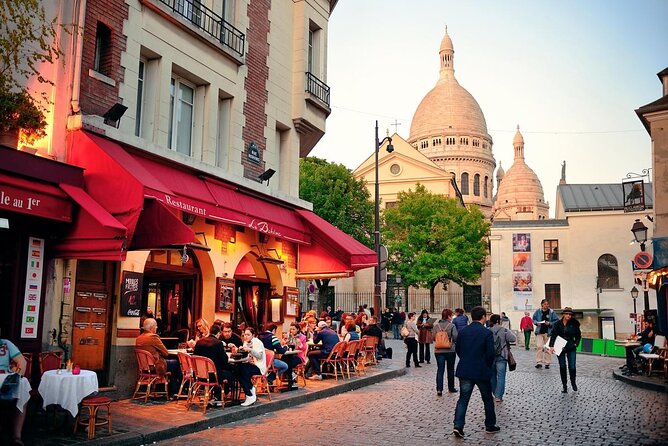
- Montmartre is more than Sacré-Coeur: The route includes the Moulin Rouge, Van Gogh’s former home, Place Dalida, the vineyard, Au Lapin Agile, Place du Tertre, and the Bateau-Lavoir.
- The climb is real: Comfortable shoes matter, especially on the winding streets leading to the basilica.
- Best value for a small group: The per-person price is high for one or two people, but easier to justify when divided among several people.
Why this Paris pairing works so well
Paris can make art feel scattered. A painting hangs in one museum, an artist’s old neighborhood lies across town, and the connection is left for you to piece together. This tour does that work for you.
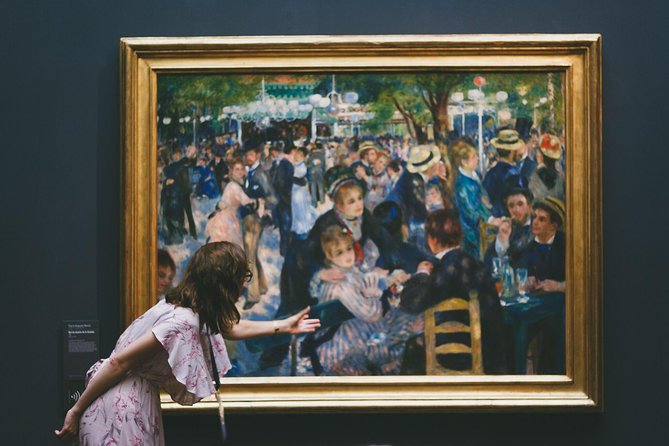
At the Musée d’Orsay, you begin with the art itself. Your guide sets Impressionism in context, showing what came before it and what followed. Later, in Montmartre, the names become streets, buildings, cafés, windmills, and steep lanes. Renoir’s Bal du moulin de la Galette is no longer just a famous canvas. You see the Moulin de la Galette area that inspired it.
That link is the heart of the experience. It gives you a clearer sense of why the artists painted everyday life, open air, changing light, and modern Paris. You are not simply collecting famous sights. You are following an artistic movement through the city.
The schedule begins at 1:30 p.m. outside the Musée d’Orsay. The advertised length is about five and a half hours. You finish in Montmartre, generally near Sacré-Coeur, with Paris spread out below you.
More Montmartre walks and visits:
- Montmartre Hidden Gems and Scenic Highlights Walking Tour
★ 5.0 · 2,684 reviews - Montmartre Hill French Gourmet Food and Wine Tasting Walking Tour
★ 5.0 · 2,588 reviews - Paris: Montmartre Cheese, Wine & Pastry Guided Walking Tour
★ 4.8 · 2,255 reviews
Two and a half hours inside the Musée d’Orsay
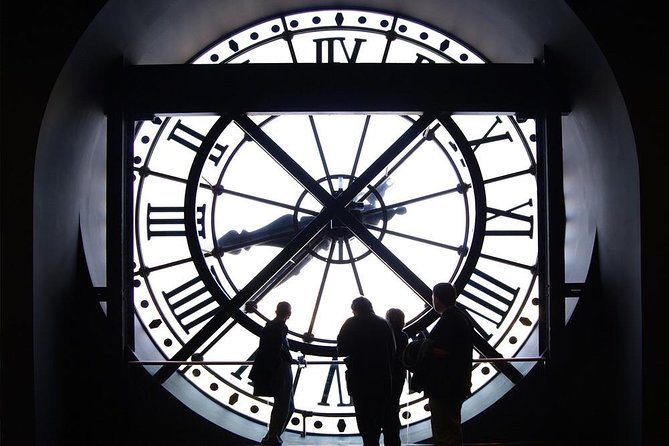
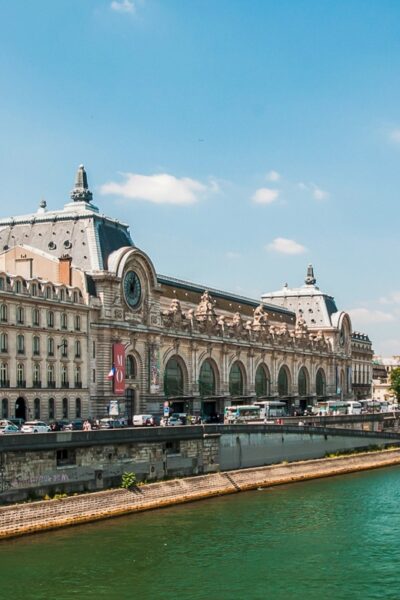
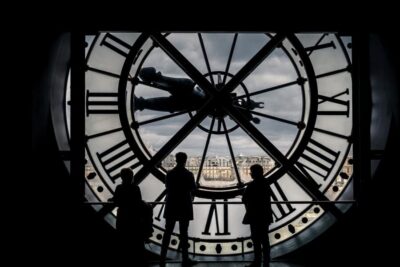
The Musée d’Orsay occupies a former Beaux-Arts railway station beside the Seine. The building is part of the visit. Its grand clock, high ceilings, and long central space give the museum a sense of drama before you even reach the pictures.
Your guide takes you through the artistic changes that led to Impressionism. That beginning matters. Manet’s Luncheon on the Grass caused a stir because of its subject and direct, modern presentation. Millet’s The Gleaners helps show an earlier approach to rural life and social subjects.
Then the tour moves toward the Impressionists themselves. You can expect attention to Renoir’s Dance at Le Moulin de la Galette, Monet’s paintings of poppies, and works by Manet, Cézanne, Gauguin, and others. Van Gogh’s Bedroom in Arles provides a strong example of the Post-Impressionist direction that followed.
The point is not only to identify famous canvases. A good guide explains the choices behind them: broken color, quick brushwork, outdoor light, unusual framing, and scenes that seemed ordinary or unfinished to earlier audiences. You learn why these paintings once felt radical.
A two-and-a-half-hour visit is long enough to build a story, but not long enough to see every gallery. That is a strength for many people. The Orsay holds more than 4,000 works, and trying to cover the whole collection would leave you tired and confused. Your guide selects major works and lesser-known pieces, giving you a path through the museum instead of a race through every room.
The private setup makes a difference here. You can ask why one painting matters, return to a work that catches your eye, or request more attention to a particular artist. Several guides have been praised for making the museum visit interactive, asking questions rather than giving a nonstop lecture.
One practical point: temporary exhibitions are not included. The permanent collections are the focus, and the museum’s displays can change during the year. Small handbags or thin backpacks are permitted through security, but large bags and suitcases are not.
The ride from the Orsay to Montmartre
After the museum, private transport takes you to Montmartre. This short transfer saves you from dealing with a metro connection after several hours on your feet. It also creates a useful pause between the museum’s galleries and the neighborhood walk.
The tour material allows for a short break at this point. If you want food or a proper drink, plan ahead. Food and drinks are not included, and the schedule is built around sightseeing rather than a long meal.
Some published experiences have run longer than the advertised five and a half hours, particularly when the guide adjusted the pace or added time. You should still plan around the official duration and ask your guide at the start how much time is available for each part.
Starting low in Montmartre at the Moulin Rouge
The Montmartre walk begins near the base of the hill, around the Moulin Rouge. The famous red windmill represents the district’s cabaret past and its role in Parisian popular culture.
The Moulin Rouge also connects to the art story. Toulouse-Lautrec made the cabaret internationally famous through his posters and drawings, while Renoir was among the artists associated with the area. You see the exterior and hear about the kind of entertainment that drew artists, performers, and a mixed public.
Admission to a Moulin Rouge show is not part of this tour. This is a historical stop, not a cabaret performance, so do not book it expecting evening entertainment inside.
From here, the route turns uphill. Montmartre’s charm comes with a price: steep streets, stairs, and uneven cobblestones. The walking distance is manageable for anyone with moderate physical fitness, but this is not a flat city stroll. Wear shoes with a firm sole, and take the climb at a steady pace.
More Orsay and art museum visits:
- Paris: Orsay Museum Entry Ticket
★ 4.7 · 25,647 reviews - Paris: Orsay Museum Entry Ticket and Digital Audio Guide App
★ 4.4 · 3,170 reviews - Paris in a Day: Louvre or Orsay, Eiffel Tower, City Walk & Cruise
★ 5.0 · 1,956 reviews - Paris: Musée d’Orsay Skip-the-Line Tour with Expert Guide
★ 4.5 · 1,145 reviews
Following Van Gogh and the artists of Rue Lepic
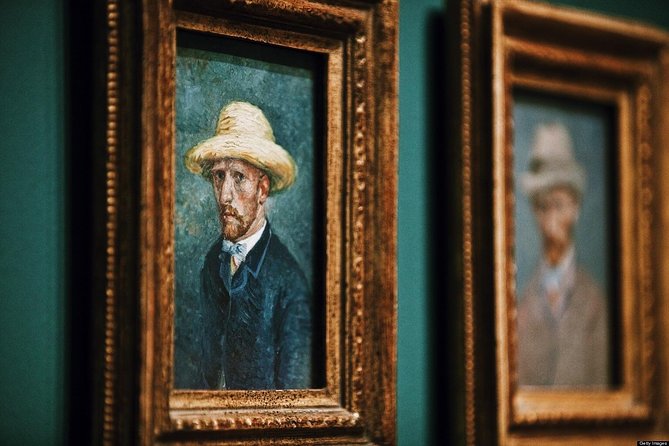
One of the more personal stops is Van Gogh’s former home on Rue Lepic. Vincent van Gogh lived there with his brother from 1886. Seeing the building gives a more human scale to the artist’s Paris years.
The stop is brief, about ten minutes. You will not enter the home, and there is no admission included. Its value comes from the setting and the conversation around Van Gogh’s time in Montmartre, when he was part of the city’s changing art world.
The route also reaches the Place Dalida and the house where the singer lived from 1962 to 1987. These stops broaden the story beyond Impressionism. Montmartre was not only a painters’ quarter. It became home to musicians, performers, writers, and later generations of artists.
The Dalida statue is free to see, while the private residence is viewed from outside. Fans often visit the secluded square, and the route gives you a quieter corner away from the main Sacré-Coeur crowds.
The quieter side of Montmartre
The Jardin Sauvage de Saint-Vincent offers a welcome change from the souvenir shops and busy viewpoints. City gardeners left this sloping patch in a more natural state to observe plants, insects, and biodiversity. Elderberry trees and ivy cover parts of the ground.
This is a small stop, but it helps you see that Montmartre is not only cabarets and postcard streets. The guide can also point out how the hill’s older village character survives in pockets.
Nearby, the Clos Montmartre vineyard is one of the last remaining vineyards in central Paris. It is tucked behind Sacré-Coeur and is easy to miss if you are exploring without a guide. The vines are not a major art museum or a grand monument, but they add a pleasant local detail to the walk.
You also pass Au Lapin Agile, one of Montmartre’s old cabarets and a meeting place for the neighborhood’s bohemian set until 1914. The building’s sign remains a recognizable symbol of the district. Entry is not included, so this is another exterior stop.
Sacré-Coeur and the best city view
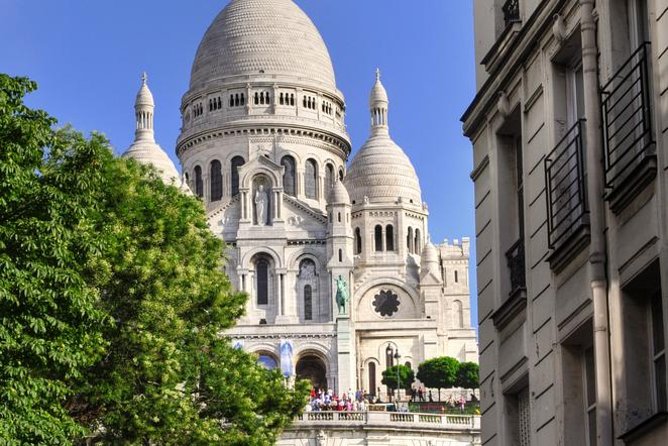
The climb ends at the Basilique du Sacré-Coeur, the white church at Montmartre’s highest point. Completed in 1914, it is dedicated to the Sacred Heart of Jesus.
The interior is free to enter, and the basilica contains one of the world’s largest mosaics, showing Jesus Christ. Appropriate dress is required at some sites, so bring a respectful outfit suitable for entering a church.
Outside, the broad view over Paris is one of the tour’s best payoffs. You can see why this hill attracted painters. The city opens below you, and the outlook gives you a strong sense of Paris as a whole after the narrower streets of Montmartre.
An evening departure may offer sunset, depending on the season and the actual timing. The scheduled start is 1:30 p.m., so sunset is not guaranteed. Treat it as a possible bonus, not a promise.
Place du Tertre, Dalí, and the Bateau-Lavoir
Place du Tertre is only a short walk from Sacré-Coeur. Artists set up easels here, and the square recalls the period when Montmartre was a center of modern art.
Today, it is also one of the most tourist-oriented parts of the hill. You may find the artists interesting, but the square can feel more commercial than the quieter lanes below. A private guide helps by explaining the older artistic setting rather than leaving you with only the present-day scene.
The route passes the Espace Dalí, a permanent exhibition devoted to Salvador Dalí, with around 300 original sculptures and engravings. Museum admission is not included. You view the site from outside unless you arrange a separate visit.
The Bateau-Lavoir is another important artistic address. From 1889, it served as a residence and gathering place for painters, writers, actors, and art dealers. It is associated with the creative life of Montmartre and with the exchange of ideas that helped make the area so important.
Because several stops are close together, the guide can adjust the emphasis. If you are most interested in Van Gogh, you can ask for more context about his Paris years. If you care more about cabaret, Picasso, or Dalí, say so early. That flexibility is one of the clearest advantages of a private tour.
What the private format is worth at $259.04
At $259.04 per person, this is not a bargain sightseeing walk. The price includes the guide exclusively for your group, museum admission, reserved entry, and private transport from the Orsay to Montmartre. It does not include food, drinks, hotel pickup, or temporary exhibitions.
The value depends heavily on your group size. For one person or a couple, the cost is substantial. For a family or group of friends, the private rate is easier to justify, especially if group discounts apply to your booking.
You are paying for time saved and attention, not just admission tickets. At the Orsay, your guide can explain a sequence of paintings at the right pace. In Montmartre, the guide can change the route, answer questions, and help you focus on the parts that matter most to you.
A shared group tour may cost less and still cover the main sights. Choose this private option if you care about art, dislike large groups, or want a guide to connect the museum and neighborhood rather than treat them as separate stops.
Which guide style suits you best
The experience depends on the person leading it. The strongest guide feedback centers on clear art explanations, warmth, and personal attention.
Belen has been singled out for making the tour interactive and tailoring it to the group. Lili has been praised for combining a pleasant museum visit with a helpful Montmartre walk and practical dinner suggestions. Michele has been appreciated for explaining the progression from earlier art to Impressionism in a clear way.
Laura has led a version that began in Montmartre and finished at the Orsay, with a local bistro stop and extra time for the museum. The published schedule for this experience begins at the Orsay, so do not assume the order can change, but the example shows that timing and emphasis may sometimes be adjusted.
Most importantly, tell your guide what you want. Art lovers may want more painting analysis. First-time museum visitors may need a simple introduction to the movements. You can also ask for a slower uphill pace or extra time at Sacré-Coeur when the schedule permits.
There is one warning worth taking seriously: not every guide will suit every group. One experience was hurt by a detached guide who kept checking the time, while the Orsay portion with a different guide was considered excellent. That does not define the tour, but it is a reminder to speak up if you need more explanation or a different pace.
Timing, fitness, and small practical details
You meet at the Musée d’Orsay in Paris at 1:30 p.m. The tour ends in Montmartre, not back at your hotel. Plan your next activity from the Sacré-Coeur area or nearby streets.
You need moderate physical fitness. The museum requires a lot of standing and walking, and Montmartre adds hills and cobblestones. A small bag is best, since large luggage cannot enter the museum.
Provide a mobile phone number with your country code when booking. The operator needs a way to reach you, and private tours depend on a clean meeting arrangement.
Museum closures can happen without warning. If the Orsay opens more than one hour late, an alternative is offered, but refunds or discounts are not provided in that situation. Security lines can also form even with reserved entry.
Free cancellation is available up to 24 hours before the start time. Changes or cancellations inside that window are not accepted for a refund.
Who should book this tour
I would choose this experience if you want a strong first introduction to Impressionism and prefer an expert beside you rather than an audio guide. It suits couples, families, and small groups who want to ask questions and set the pace.
It is also a good fit if Montmartre feels confusing. The hill has many worthwhile corners, but its sights are spread through a maze of lanes. A guide helps you find the artistic addresses, the vineyard, the old cabarets, and the best route to Sacré-Coeur.
I would skip it if you want a slow museum day. Two and a half hours gives you a focused selection, not time to study every room. I would also think twice if you dislike hills or if the price would limit the rest of your Paris plans.
For art lovers, the strongest feature is the connection between place and painting. For everyone else, the basilica, city view, Moulin Rouge, and old Montmartre streets provide plenty of variety.
Should you book it?
Book this tour if you want the Musée d’Orsay explained in a clear sequence, then want to see the Paris neighborhoods behind the art. The private format, reserved museum entry, and transport make a busy afternoon easier to manage.
Before paying, consider your group size, walking ability, and museum priorities. Ask at the start how the five-and-a-half-hour schedule will be divided, and tell the guide which artists or Montmartre stories interest you most.
At this price, the tour needs a strong guide to earn its keep. When the guide is engaged and flexible, as Belen, Lili, Michele, Lucien, Harriet, and Laura have been described, the experience can become a highlight of a Paris visit. If you value personal attention and want art tied to real streets, I think it is worth the splurge.
FAQ
Where does the tour start?
The tour starts at the Musée d’Orsay in Paris at 1:30 p.m.
Where does the tour end?
The tour ends in Montmartre, Paris, generally around the Sacré-Coeur area.
How long does the experience last?
The advertised duration is approximately five hours and 30 minutes.
Is museum admission included?
Yes. Museum entrance fees and reserved entry to the Musée d’Orsay are included. Temporary exhibitions are not included.
Is transportation included between the museum and Montmartre?
Yes. Private transport from the Musée d’Orsay to Montmartre is included.
Is this a private tour?
Yes. On the private option, only your group participates and the guide is exclusively assigned to you. A semi-private option may also be available, but the exclusive guide arrangement does not apply to that choice.
What should I bring or wear?
Wear comfortable shoes because the tour includes substantial walking and an uphill route through Montmartre. Large bags and suitcases are not allowed inside the museum, and appropriate dress is required for entry into some sites.
Newest additions around Paris
- Family escape Game with kids and teens on the Île de la Cité★ 4.5 · 11 reviews
- Private Photoshoot with the Iconic Eiffel Tower in Paris★ 5.0 · 11 reviews
- 2-day Private Mont Saint-Michel, 3 Loire Castles, D-Day Express★ 4.5 · 11 reviews
- Paris: Batobus Hop-On Hop-Off Cruise & Landmarks Audio Tour★ 3.0 · 11 reviews
- Paris Revolutionary Walking Tour: Iconic French Sights & Stories★ 5.0 · 11 reviews
- Guided and Private Tour of 3 hours through Paris aboard a Citroën 2cv★ 5.0 · 11 reviews
- Kids in the Kitchen – CrOisSaNtS★ 4.0 · 11 reviews
- Paris: Ghosts and Dark Stories Guided Walking Tour★ 4.1 · 11 reviews
Orsay & Art Museum Tours, compared.
Orsay Museum Entry Ticket and Digital Audio Guide App
Read our review →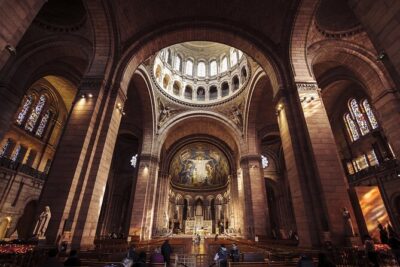
Paris in a Day: Louvre or Orsay, Eiffel Tower, City Walk & Cruise
Read our review →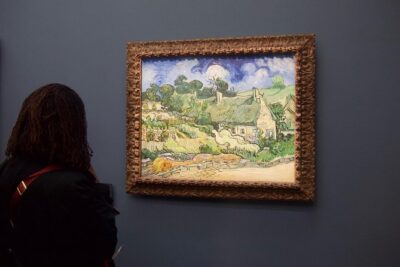
Musée d’Orsay Skip-the-Line Tour with Expert Guide
Read our review →
Musée d’Orsay Skip-the-Line Tour with Expert Guide
Read our review →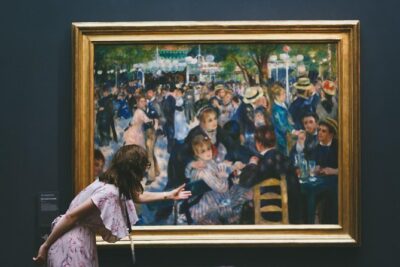
The Musée d’Orsay Guided Tour Orsay Museum Semi-Private 6ppl Max
Read our review →
Louvre & Musée d’Orsay Guided Museum Tour Semi-Private 6ppl Max
Read our review →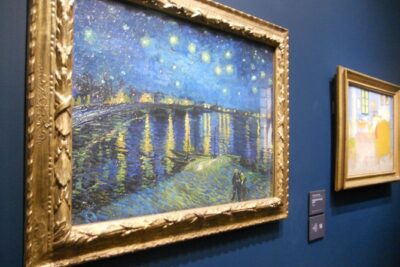
Browse the lists this tour appears in