
Reviewed · ORSAY & ART MUSEUM TOURS
The Musée d’Orsay in Focus: Impressionists & Beyond (Max 6)
Paris art makes more sense when you see it through the people who made it. This two-hour Musée d’Orsay tour links Monet, Renoir, Degas, and Van Gogh with the new trains, paint tubes, electricity, and social upheaval that changed 19th-century life. You get a guided route through the museum, then time to continue on your own.
I like the six-person limit, which gives the guide room to involve you rather than deliver a speech to a crowd. I also like the mix of famous paintings and artist backstories. Guides Adam and Lilijana have been especially praised for clear explanations, warm personalities, and a willingness to adjust the pace, including finding seats when needed.
The main drawback is the price: $190.52 per person for about two hours is a serious spend. You are paying for a licensed expert, admission, and a very small group, so this makes more sense for art lovers, first-time visitors, or anyone who wants structure inside a large museum.
In This Review
- Key points to know before booking
- Why the Musée d’Orsay works so well for this tour
- Meeting your guide at the Orsay entrance
- The first gallery: Paris and art in a changing century
- Monet, Renoir, and the Impressionist break
- Degas and the question of modern subjects
- Van Gogh and the move beyond Impressionism
- How much value do you get for $190.52?
- Pace, comfort, and group size
- Who should book this Musée d’Orsay visit?
- Is this small-group Orsay tour worth booking?
- FAQ
- How long does the Musée d’Orsay tour last?
- Where does the tour begin?
- Where does the tour end?
- Is museum admission included?
- What language is the tour offered in?
- How many people can join the tour?
- Can I cancel for a full refund?
Key points to know before booking
- Six people maximum: This is small enough for questions, conversation, and a more personal pace.
- Famous works with useful context: Expect Monet, Renoir, Degas, and Van Gogh, plus the social changes behind their art.
- Two hours with museum time afterward: The guided portion gives you a framework, and the tour ends inside the Orsay so you can keep looking.
- English-speaking licensed guide: Adam and Lilijana are named guides praised for clear speech, strong subject knowledge, and engaging delivery.
- Admission is included: You do not need to arrange a separate museum ticket.
- Free cancellation up to 24 hours ahead: Late cancellations and changes are not refunded or accepted.
Why the Musée d’Orsay works so well for this tour
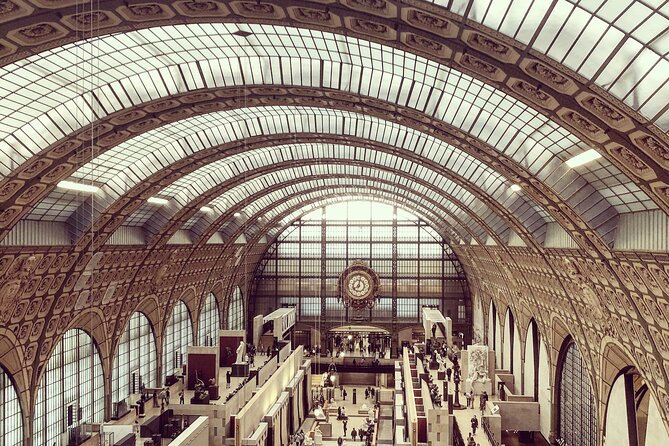
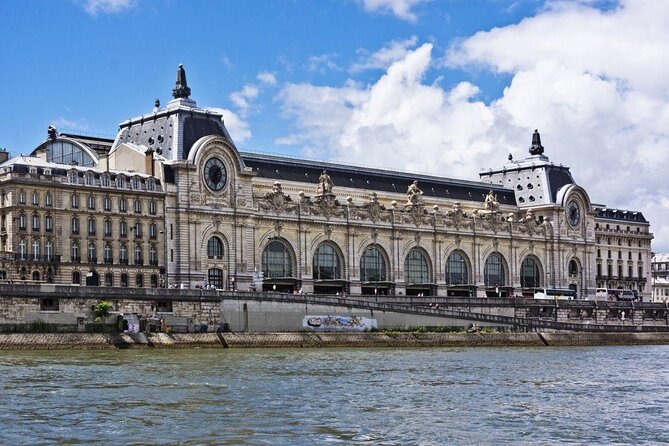
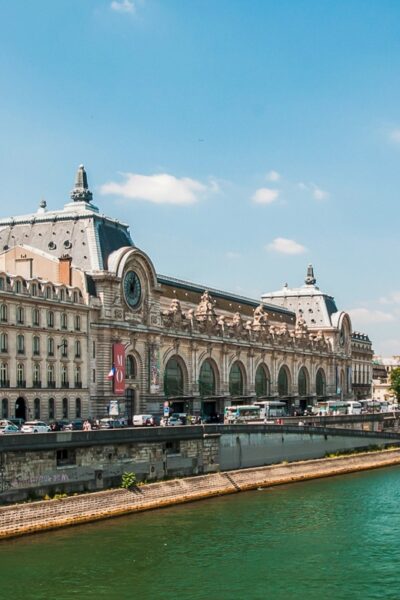
The Musée d’Orsay occupies a former railway station, and that setting fits the collection. The art inside comes from a period when trains, electric light, industrial production, and new paint technology were changing daily life. You are not simply looking at pretty French pictures. You are seeing artists react to a world moving faster than before.
The museum’s collection runs from 1848 to 1914. That range covers major shifts in painting, from more traditional academic work to Impressionism and then Post-Impressionism. A guide can help you see those changes in sequence instead of treating every famous canvas as an isolated masterpiece.
I find this especially useful at the Orsay because the collection can feel dazzling and crowded with famous names. Without a plan, you may spend too much time chasing the paintings you already know and miss the connections between them. A good guide gives you a route and a reason to pause.
This tour also places the artists in conversation with one another. Monet, Renoir, Degas, and Van Gogh did not create in a vacuum. Their working lives were shaped by friendships, disagreements, shared ideas, exhibitions, and changes in what the public expected from art. That human side can make the paintings easier to remember.
More Orsay and art museum visits:
- Paris: Orsay Museum Entry Ticket
★ 4.7 · 25,647 reviews - Paris: Orsay Museum Entry Ticket and Digital Audio Guide App
★ 4.4 · 3,170 reviews - Paris in a Day: Louvre or Orsay, Eiffel Tower, City Walk & Cruise
★ 5.0 · 1,956 reviews
Meeting your guide at the Orsay entrance
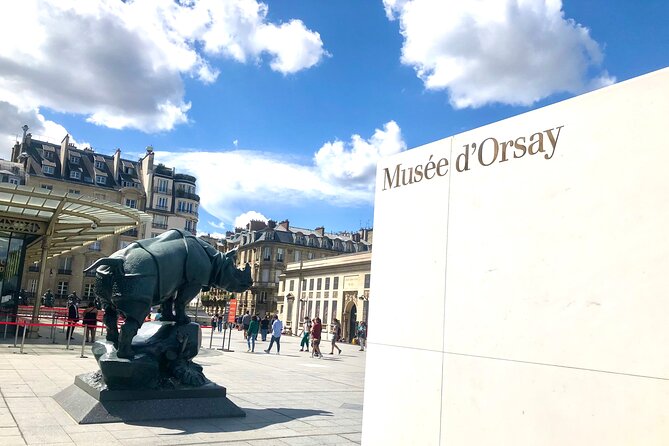
The meeting point is on the Esplanade Valéry Giscard d’Estaing, at the Musée d’Orsay in the 7th arrondissement. The tour begins and ends at the museum, and admission is included.
The location is convenient if the Orsay is already part of your Paris plans. It also keeps the tour focused. You are not spending part of your two hours walking between neighborhoods or visiting several unrelated sights. From the start, the guide can concentrate on the museum and its collection.
You should allow enough time to reach the meeting point without rushing. The experience is listed at about two hours, and the benefit of a small-group tour begins before the first painting: you want time to identify the guide, settle in, and be ready when the visit starts.
The ticket is included, which simplifies the day. You do not need to buy a separate entry ticket and then work out how to join the group. The tour is offered in English, and the guide is a licensed English-speaking professional.
The first gallery: Paris and art in a changing century
The opening part of the visit sets up the period from 1848 onward. This is important because Impressionism can seem like a sudden break with the past if you only look at the brushwork. The guide can show you how much had already changed before Monet and Renoir pushed painting in a new direction.
Paint tubes made it easier for artists to work outside the studio. Trains opened new places to visit and changed how people experienced distance. Electricity altered the city after dark. These inventions affected not just technology, but also the subjects artists chose and the way they painted modern life.
You may find yourself looking at a street, a railway scene, a leisure activity, or a figure in a new way once you know what was happening around the canvas. That context is one of the strongest reasons to take a guided visit rather than simply walk through the galleries with an audio guide or map.
The period was also socially unsettled. The collection covers a time when Paris and France were dealing with political shifts, new industries, changing class structures, and fresh ideas about public life. The art reflects that uncertainty. A guide can keep the history connected to what you are seeing rather than turning the visit into a separate lecture.
Monet, Renoir, and the Impressionist break
The Impressionist section is likely the core of the tour. You will see works by Claude Monet and Pierre-Auguste Renoir, artists known for painting modern scenes with looser brushwork and close attention to light, weather, movement, and everyday life.
The value of seeing these works in person is scale and surface. Reproductions flatten the paint and often make a work seem more polished than it is. In the gallery, you can notice how quickly a brushstroke may have been placed, how colors sit beside one another, and how the image changes when you step closer or farther away.
A guide can point out these choices without making you feel that there is only one correct interpretation. That matters in a museum where visitors often feel pressure to admire the famous names without knowing what to look for.
The tour also places Impressionism among the artists’ relationships and shared circles. That turns a list of painters into a connected story. You begin to understand why certain techniques spread, why some artists challenged official taste, and why their work caused resistance before becoming central to the story of modern art.
The small group helps here. With no more than six people, you can ask why a painting looks unfinished, how to compare two artists, or what makes one scene different from another. You are less likely to lose the guide’s explanation in a large crowd.
A different way to spend the day in Paris:
- Paris: Louvre Museum Timed-Entrance Ticket
★ 4.6 · 71,977 reviews - Disneyland® Paris 1-Day Ticket
★ 4.6 · 49,412 reviews - Paris: Versailles Palace and Gardens Full Access Ticket
★ 4.6 · 41,579 reviews - Paris: Arc de Triomphe Rooftop Tickets
★ 4.6 · 34,264 reviews
Degas and the question of modern subjects
Edgar Degas brings another angle to the visit. His work helps show how artists could make ordinary, contemporary subjects worthy of serious painting. His interest in dancers and modern city life also raises questions about viewpoint, movement, cropping, and observation.
A guide’s role is useful with Degas because a quick look can leave you focused only on the subject. The more interesting question is often how the scene has been arranged. What has been cut off? Where does your eye land first? Does the image feel posed, caught by chance, or carefully constructed?
These are practical questions you can carry into the rest of the museum. Once you start examining composition and viewpoint, you are no longer depending entirely on the label beside the painting. You are actively reading the work.
That active approach matches the strongest parts of this tour. Adam, one of the named guides, was praised for involving the group, speaking clearly, and making the visit feel like a conversation. He also adjusted the experience for two older visitors who needed occasional seats and continued beyond the scheduled time to allow more appreciation of the art.
You should not assume every tour will run long, but the detail tells you something useful about the guide’s approach. The experience is not designed only for people who already know the artists. It can work well if you want explanations in plain English and a guide who notices when the pace needs adjusting.
Van Gogh and the move beyond Impressionism
The final part moves toward Post-Impressionism, including Vincent Van Gogh. This shift is central to the tour because Van Gogh is not simply another famous painter on the route. His work shows how artists took some Impressionist ideas about color and light but pushed them toward stronger emotion, personal symbolism, and a more forceful surface.
Seeing Van Gogh after Monet, Renoir, and Degas lets you compare different answers to the same broad question: how should modern painting represent experience? Impressionism often directs your attention to changing light and immediate perception. Van Gogh can make the painted surface feel more urgent and personal.
The guide’s backstory about relationships and artistic movements is valuable here. You can learn about more than technique. You can also see how one generation’s experiments helped create the conditions for the next generation’s work.
This is where the tour’s balance works well. You receive a guided explanation of major works, but you are not rushed out of the museum when the two hours end. The tour finishes inside the Orsay, allowing you to continue looking at Post-Impressionist works at your own pace.
That extra museum time is worth planning for. The formal tour is short, but the building contains far more than can be covered in two hours. If you are particularly interested in Van Gogh or the later collection, keep part of your day open after the guide leaves.
How much value do you get for $190.52?
At $190.52 per person, this is not a budget museum visit. The price needs to be judged against what you receive: entry ticket, a licensed English-speaking guide, skip-the-line access, a maximum group size of six, and about two hours of focused attention.
For one person, the cost may be hard to justify if you are content to wander and read labels. The Orsay can certainly be visited without a private or small-group guide, and you may prefer the freedom of setting your own route from the beginning.
The calculation changes if you value time and interpretation. A small group can move more directly to major works and avoid the uncertainty of deciding where to begin. You also get connections among artists and movements that are difficult to build from isolated labels.
Group discounts are listed as a feature, though the available information does not give the discount amount or conditions. If you are booking for a larger party, check the final price carefully before assuming the discount will apply to every reservation.
I would see the tour as a time-saving and confidence-building purchase rather than a cheap ticket. It is best for a first visit, an art-focused Paris itinerary, or a special occasion when you want a guide who can make the collection feel manageable.
Pace, comfort, and group size
Two hours is long enough to create a clear story, but short enough to avoid turning the visit into an all-day art course. You will not see every gallery in detail. The point is to understand a strong selection of works and leave with a better plan for exploring the rest.
The physical demand is listed as moderate. You should expect to walk and stand inside the museum, although one guide accommodated requests for occasional seating. That is encouraging if you need a slower pace, but you should still consider your own comfort before booking.
A group of six is a real advantage. The guide can hear your questions, adjust explanations, and keep the group together without the slow, impersonal feel of a large tour. It also means the experience may feel more conversational than a standard museum lecture.
Service animals are allowed, and the museum is near public transportation. Those details make the visit easier to fit into a Paris day, though the provided information does not specify the exact transit lines, seating availability throughout the museum, or other accessibility arrangements.
Who should book this Musée d’Orsay visit?
I would recommend it to you if you want to see the major Impressionist names but also understand why their work mattered. It is a good match if you prefer a human guide to an app and if you enjoy asking questions along the way.
It also suits older visitors or anyone who values a flexible, attentive guide. Adam’s willingness to accommodate occasional seating and extend the visit suggests a thoughtful style, though guide assignments can vary.
First-time visitors to the Orsay will get the most practical benefit. You can use the guided route to learn the museum’s basic structure, then return to the rooms or works that interest you most.
You may want to skip it if you have already studied the collection closely, dislike fixed routes, or mainly want to browse alone. The $190.52 price is difficult to defend if you will not use the guide’s explanations or the small-group format.
Booking well ahead is sensible. This experience is booked an average of 110 days in advance, which suggests that preferred dates and times may fill early. Free cancellation is available until 24 hours before the start time, but cancellations or changes made inside that window are not refunded or accepted.
Is this small-group Orsay tour worth booking?
Book it if you want a focused introduction to Impressionism and Post-Impressionism, especially if the relationships among Monet, Renoir, Degas, and Van Gogh interest you. The six-person cap, included admission, clear English guidance, and time to continue inside the museum give the visit a useful shape.
Skip it if your main goal is the lowest possible price or complete independence. At $190.52, you are paying for expert structure and personal attention, not simply entry.
For many first-time Paris visitors, that structure is the point. The Musée d’Orsay is large, famous, and easy to approach without a plan. A good guide can help you see beyond the familiar names and leave you ready to explore more on your own.
FAQ
How long does the Musée d’Orsay tour last?
The tour lasts approximately two hours.
Where does the tour begin?
It begins at the Musée d’Orsay, on the Esplanade Valéry Giscard d’Estaing, 75007 Paris, France.
Where does the tour end?
The tour ends inside the Musée d’Orsay at the same listed location.
Is museum admission included?
Yes. All entry tickets are included.
What language is the tour offered in?
The tour is offered in English with an English-speaking licensed guide.
How many people can join the tour?
The maximum group size is six people.
Can I cancel for a full refund?
Yes, if you cancel at least 24 hours before the experience starts. Cancellations or changes made less than 24 hours before the start time are not refunded or accepted.
Newest additions around Paris
- Family escape Game with kids and teens on the Île de la Cité★ 4.5 · 11 reviews
- Private Photoshoot with the Iconic Eiffel Tower in Paris★ 5.0 · 11 reviews
- 2-day Private Mont Saint-Michel, 3 Loire Castles, D-Day Express★ 4.5 · 11 reviews
- Paris: Batobus Hop-On Hop-Off Cruise & Landmarks Audio Tour★ 3.0 · 11 reviews
- Paris Revolutionary Walking Tour: Iconic French Sights & Stories★ 5.0 · 11 reviews
- Guided and Private Tour of 3 hours through Paris aboard a Citroën 2cv★ 5.0 · 11 reviews
- Kids in the Kitchen – CrOisSaNtS★ 4.0 · 11 reviews
- Paris: Ghosts and Dark Stories Guided Walking Tour★ 4.1 · 11 reviews
Orsay & Art Museum Tours, compared.
Orsay Museum Entry Ticket and Digital Audio Guide App
Read our review →
Paris in a Day: Louvre or Orsay, Eiffel Tower, City Walk & Cruise
Read our review →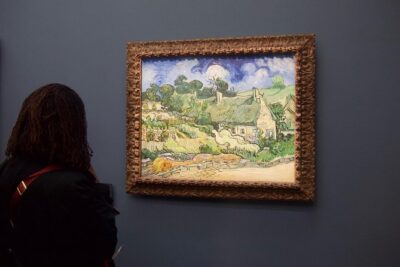
Musée d’Orsay Skip-the-Line Tour with Expert Guide
Read our review →
Musée d’Orsay Skip-the-Line Tour with Expert Guide
Read our review →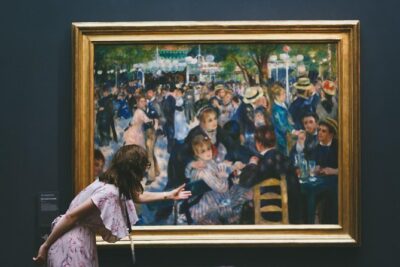
The Musée d’Orsay Guided Tour Orsay Museum Semi-Private 6ppl Max
Read our review →
Louvre & Musée d’Orsay Guided Museum Tour Semi-Private 6ppl Max
Read our review →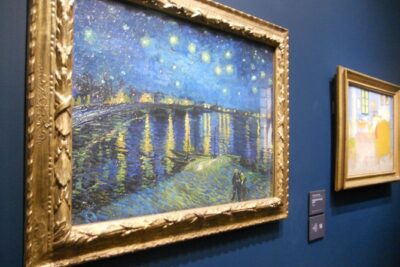
Browse the lists this tour appears in