
Reviewed · MONTMARTRE & SACRé-COEUR TOURS
Private Walking Tour of Montmartre and Sacré-Cœur Visit
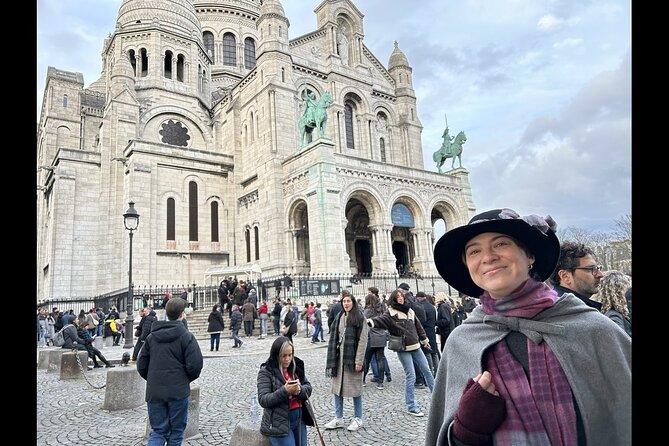
Montmartre is best understood on foot, one steep street at a time. This two-hour walk links the cabaret district with Picasso’s old studio, Renoir’s Moulin de la Galette, Dalida’s quiet square, the artists of Place du Tertre, and the white dome of Sacré-Cœur.
I like the way the route ties famous art to real addresses, especially Le Bateau-Lavoir, where Picasso painted Les Demoiselles d’Avignon. I also like the finish at the basilica, where you can look across Paris after working your way uphill. The catch is simple: this is a real climb, with steep stretches and little time for long stops.
In This Review
- Key points to know before booking
- Starting beside Moulin Rouge
- Streets linked to Van Gogh and local life
- Le Bateau-Lavoir and the making of modern art
- Moulin de la Galette and an Impressionist afternoon
- Le Passe-Muraille and a touch of the surreal
- Place Dalida and the quieter side of Montmartre
- The pink house and the working artists’ quarter
- Place du Tertre and the artists at work
- The I Love You wall
- Reaching Sacré-Cœur after the uphill walk
- What the guide adds
- Price, timing, and practical value
- Who should book this Montmartre walk?
- Should you book it?
- FAQ
- How long is the Montmartre walking tour?
- Where does the tour begin?
- Where does the tour end?
- Is entry to Sacré-Cœur included?
- Is the tour private?
- Can I cancel for a full refund?
Key points to know before booking
- Picasso’s former studio comes early: Le Bateau-Lavoir helps explain why Montmartre became a center for modern art.
- The route is mostly uphill: Wear firm shoes and expect stairs, slopes, and uneven streets.
- Sacré-Cœur entry is free: Access to the dome costs an additional €7 per person.
- The guide shapes the experience: Guides named in past bookings include Ifi and Benedict, both praised for clear stories and helpful photo stops.
- Wine tasting is optional: You can upgrade the walk to include a French wine tasting.
- The format needs checking: The activity is described as private, though some booking language refers to small-group options and group discounts.
Starting beside Moulin Rouge
The meeting point is 5 Place Blanche, a short walk from Moulin Rouge. This is a useful starting place because it puts you at the foot of Montmartre’s rise, where the neighborhood’s nightlife, cabarets, and old bohemian identity come into focus.
Moulin Rouge is more than a bright red windmill and a photo stop. It helped define the Belle Époque, the period when Parisian entertainment, dance halls, posters, and new ideas about leisure took off. Your guide discusses the artists, dancers, and famous nights tied to the cabaret.
You should expect an exterior visit rather than a cabaret performance. The tour is built around walking and storytelling, not a show. That makes sense at this price and duration, but anyone hoping to see a stage production will need a separate ticket.
From Place Blanche, the route turns into Montmartre’s narrower streets. The change is quick. Traffic and neon give way to bakeries, cafés, small shops, and sloping lanes. The neighborhood feels most appealing when you stop thinking of it as one big sight and start noticing the small details between the major stops.
More Montmartre walks and visits:
- Montmartre Hidden Gems and Scenic Highlights Walking Tour
★ 5.0 · 2,684 reviews - Montmartre Hill French Gourmet Food and Wine Tasting Walking Tour
★ 5.0 · 2,588 reviews - Paris: Montmartre Cheese, Wine & Pastry Guided Walking Tour
★ 4.8 · 2,255 reviews
Streets linked to Van Gogh and local life
One part of the route follows a winding street where Vincent van Gogh once lived. The attraction here is not a grand monument. It is the chance to picture Montmartre as a working neighborhood where painters rented modest rooms, met in cafés, and crossed paths with other artists.
The guide’s local knowledge matters most on streets like this. Without context, you may see another attractive Paris lane. With a good explanation, the cafés, studios, and old façades connect to the people who used them.
The walk also reaches one of Montmartre’s more genuine streets, lined with Parisian bistros and boutiques and marked by an Art Nouveau metro entrance. This is a good place to slow down for a photograph and watch everyday life pass by.
The route is not only about famous names. It gives you a sense of how Montmartre balances tourism with ordinary neighborhood life. That is one reason I would take this walk early in a Paris stay. You can return later for a meal, a pastry, or a longer look at a street that caught your eye.
Le Bateau-Lavoir and the making of modern art
Le Bateau-Lavoir is one of the most important stops for anyone interested in painting. This former artists’ residence housed Picasso, Modigliani, and other artists who worked in cramped conditions at the start of the twentieth century.
Picasso painted Les Demoiselles d’Avignon here, a work that helped break apart traditional ideas of perspective and the human figure. You do not need to be an art specialist to understand why the address matters. The building represents the point where Montmartre’s cheap rooms and loose creative circles helped produce art that changed Europe.
The stop lasts about seven minutes, and admission is not included. The value comes from the explanation outside, not from a long interior visit. Do not expect a museum tour or a chance to wander through working studios.
I especially like this stop because it corrects the postcard version of Montmartre. The area was not only pretty cafés and charming views. It was also a place where artists took risks, lived simply, and argued over new ways to paint.
Moulin de la Galette and an Impressionist afternoon
Le Moulin de la Galette recalls a time when Montmartre was a place for social life as much as art. It was a favorite meeting spot for artists and Parisians, and Renoir used it as the setting for Bal du moulin de la Galette.
The painting is famous for sunlight, movement, music, and a crowded outdoor gathering. At the stop, your guide can help you connect the real place with Renoir’s version of it. The modern setting may not match the painting exactly, but that contrast is part of the lesson. Artists did not paint Montmartre as a neutral backdrop. They turned its parties and streets into their own vision of Paris.
Again, the scheduled visit is brief, about seven minutes, and admission is not included. Think of this as a viewpoint and history stop rather than a formal art visit. If Renoir is a major interest, you will want extra time elsewhere in Paris to see his work in a museum.
More Paris walking tours:
- Paris Top Sights Half Day Walking Tour with a Fun Guide
★ 5.0 · 2,893 reviews - Paris Île de la Cité and Notre-Dame Walking Tour With Crypt
★ 5.0 · 2,272 reviews - Paris in a Day: Louvre or Orsay, Eiffel Tower, City Walk & Cruise
★ 5.0 · 1,956 reviews - Paris: Montmartre Highlights Walking Tour with a Local Guide
★ 4.9 · 1,668 reviews
Le Passe-Muraille and a touch of the surreal
In a small square, you find Le Passe-Muraille, a sculpture of a man passing through a wall. It comes from a story by Marcel Aymé and adds a playful note to a route otherwise filled with painters, churches, and old cafés.
This is an easy stop to enjoy without preparation. The optical illusion works well in photographs, and the sculpture gives the walk a change of pace. Montmartre has plenty of serious artistic history, but it also has room for odd, witty public art.
The scheduled time is about seven minutes. There is no admission fee listed, so this is a quick outdoor stop. Your guide can explain the story, point out the best angle, and keep the group moving toward the higher streets.
Place Dalida and the quieter side of Montmartre
Place Dalida is a small square dedicated to Dalida, the French-Italian singer who became a major figure in French music. Her statue is here, and local legend says that touching her bronze bust brings good luck.
The square provides a welcome pause from the more crowded sections of Montmartre. It also widens the story of the neighborhood beyond nineteenth-century painters. Music, performance, and popular culture remain part of Montmartre’s identity.
The stop is free and lasts about seven minutes. You may notice that the bronze has been polished by many hands. Treat the good-luck story as local folklore, but enjoy the ritual. These small customs often give a place more character than another formal monument.
The pink house and the working artists’ quarter
La Petite Maison Rose is one of Montmartre’s most photographed buildings. Its pink walls and compact shape make it an easy target for cameras, but the address has more going for it than color. It was once associated with artists such as Picasso and Modigliani.
The building helps show how Montmartre’s visual appeal became part of its artistic identity. A house, a café, or a bend in the road could become part of a painting and later part of the neighborhood’s public image.
The stop is about seven minutes, and admission is not included. This is an exterior photo stop, so do not plan on a full interior visit. If you want a quiet picture, listen to your guide’s timing and be ready to move on. The area can be busy, and the best angle may not be available for long.
Place du Tertre and the artists at work
Place du Tertre is Montmartre’s best-known artist square. Painters and portrait artists set up their easels here, continuing the neighborhood’s long connection with art.
This is one of the stops where the present matters as much as the past. You can see artists working in front of you, watch a portrait take shape, and listen to street performers nearby. The square is also lined with cafés, so it is a natural place to return after the tour if you want to sit and watch the scene.
There is a trade-off. Place du Tertre is popular, and its fame brings crowds and commercial pressure. A private guide helps you understand what you are seeing, but the square will not feel like an untouched artists’ village.
Still, I would not skip it. The painters may be working in a tourist setting, yet the act of sitting outdoors with an easel remains part of Montmartre’s character. You can decide for yourself if you want a portrait, a sketch, or only a photograph.
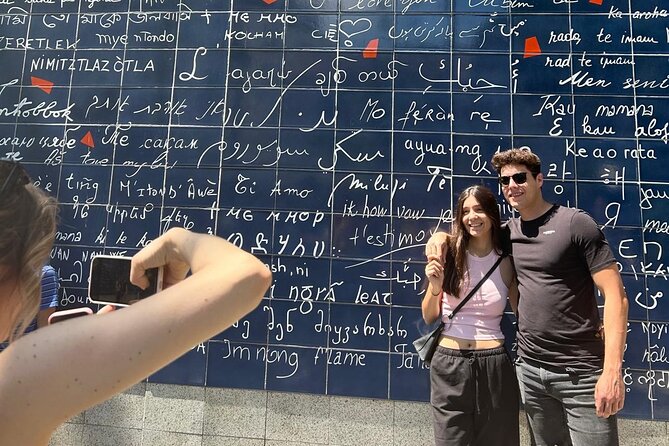
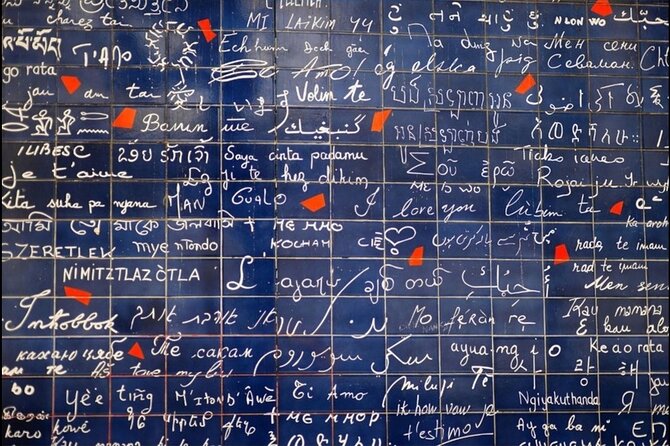
The I Love You wall
The I Love You installation is tucked into a small garden near Montmartre. The phrase appears in more than 250 languages, making this one of the most accessible stops on the walk. You do not need an art background or a long explanation to enjoy it.
It is a popular photo stop for couples, families, and anyone who likes a little sentiment with their sightseeing. The installation also fits Montmartre’s mix of romance and art. After the grand stories of Picasso and the cabarets, this offers something direct and personal.
Your guide can help you find the artwork and take a picture. The visit is short, so do not expect an extended discussion. It works best as a cheerful pause between the lower streets and the climb toward the basilica.
Reaching Sacré-Cœur after the uphill walk
The route ends at Basilique du Sacré-Cœur de Montmartre, at 35 Rue du Chevalier de la Barre. The basilica is free to enter, but the dome is a separate experience and costs €7 per person.
The climb is the main physical issue with this tour. One past booking described the route as mostly uphill, with some steep sections. That is useful advice, not a minor footnote. You should wear comfortable shoes, bring water, and allow for a slower pace if hills are difficult for you.
Once you reach the upper part of Montmartre, the reward is the view across Paris. The basilica’s white exterior is striking, but the broad city view is the real finish. You can see why this hill has attracted artists, worshippers, and sightseers for generations.
The tour description includes an ascent to the summit, while the practical details specify a €7 fee for access to the dome. Confirm exactly what your booking includes before you go. The free basilica visit and the paid dome visit are not the same thing.
The scheduled time at the basilica is about seven minutes, which is enough for an introduction and a quick look. It is not enough for a slow visit, prayer, or a full examination of the interior. Since the tour ends here, you can remain on your own afterward and give the church more time.
What the guide adds
A Montmartre walk lives or dies by the guide. The streets are easy to reach on your own, but the connections between artists, singers, cabarets, cafés, and public art are harder to spot without local explanation.
Guides named in past bookings include Ifi and Benedict. Ifi was praised for answering questions, explaining each sight, and patiently helping with photographs. Benedict was praised for her love of the area and for giving useful recommendations. Guide assignments can change, so treat those names as examples rather than a promise.
The strongest guide style for this route is flexible and personal. You want someone who can explain Picasso clearly, pause for photos, answer questions, and adjust the pace to your interests. A private format should make that easier, although the supplied details also refer to small-group and group-discount options. Confirm the format and maximum party size when booking.
Price, timing, and practical value
At $118.63 per person, this is not a bargain-priced neighborhood stroll. The price makes more sense if you value a private English-language guide, a planned route, and the chance to ask questions rather than simply follow a large group.
You are paying for about two hours of guidance through a compact but layered part of Paris. The walk includes several art-related addresses, a cabaret district, public art, a music landmark, Place du Tertre, and Sacré-Cœur. If you covered all of that alone, you would save money but likely miss many of the connections.
The optional French wine tasting can make the experience more appealing if you want a social finish. It also raises the total cost, so compare the upgrade with simply choosing a wine bar or café after the walk.
The tour is offered in English, uses a mobile ticket, allows service animals, and begins near public transportation. You receive confirmation when booking. Free cancellation is available up to 24 hours before the start time. The tour requires moderate physical fitness, mainly because of the uphill route.
One serious service problem has been recorded: a guide failed to appear after a 25-person booking was canceled in the system but not properly communicated. The provider accepted responsibility and issued a full refund. That incident appears unusual beside the strong overall score, but I would still save the meeting details, arrive at Place Blanche with a charged phone, and contact the booking platform quickly if the guide is missing.
The current score is 4.8 out of 5 from 40 ratings, with 95 percent recommending the experience. That is a strong result, while the no-show incident is a reminder to keep a backup plan for a tightly scheduled Paris day.
Who should book this Montmartre walk?
I would choose this tour if you want Montmartre explained rather than simply photographed. It suits first-time visitors, art lovers, couples, and anyone who enjoys neighborhood walks with a clear endpoint.
It is also a good choice early in your Paris stay. One guide’s advice was especially useful: take the walk near the start of your visit so you can return to the streets, cafés, and shops that interest you.
I would think twice if you have limited mobility, dislike hills, or want long visits inside monuments. The route moves briskly, each stop is short, and the dome fee is extra. A self-guided visit may suit you better if you prefer to linger.
Should you book it?
Book this Montmartre tour if you want a compact, story-filled climb from Moulin Rouge to Sacré-Cœur, with art, music, public sculpture, and city views along the way. The best part is the guide’s ability to connect ordinary streets with Picasso, Van Gogh, Renoir, Dalida, and the cabaret world.
Before paying, confirm whether your reservation is fully private, what the wine upgrade costs, and whether dome access is included. If you can manage the uphill walk and accept the short stop times, the tour offers a useful introduction to one of Paris’s most layered neighborhoods.
FAQ
How long is the Montmartre walking tour?
The tour lasts approximately two hours.
Where does the tour begin?
It begins at 5 Place Blanche, 75009 Paris, France, near Moulin Rouge and public transportation.
Where does the tour end?
The tour ends in front of Sacré-Cœur Basilica at 35 Rue du Chevalier de la Barre, 75018 Paris.
Is entry to Sacré-Cœur included?
Entry to the basilica is free. Access to the dome requires an additional €7 per person.
Is the tour private?
The activity is described as a private tour in which only your group participates. Other booking details refer to small-group options and group discounts, so confirm the format for your selected reservation.
Can I cancel for a full refund?
Yes. You can cancel up to 24 hours before the experience begins for a full refund. Changes or cancellations made less than 24 hours before the start time are not accepted for a refund.
Newest additions around Paris
- Family escape Game with kids and teens on the Île de la Cité★ 4.5 · 11 reviews
- Private Photoshoot with the Iconic Eiffel Tower in Paris★ 5.0 · 11 reviews
- 2-day Private Mont Saint-Michel, 3 Loire Castles, D-Day Express★ 4.5 · 11 reviews
- Paris: Batobus Hop-On Hop-Off Cruise & Landmarks Audio Tour★ 3.0 · 11 reviews
- Paris Revolutionary Walking Tour: Iconic French Sights & Stories★ 5.0 · 11 reviews
- Guided and Private Tour of 3 hours through Paris aboard a Citroën 2cv★ 5.0 · 11 reviews
- Kids in the Kitchen – CrOisSaNtS★ 4.0 · 11 reviews
- Paris: Ghosts and Dark Stories Guided Walking Tour★ 4.1 · 11 reviews
Montmartre & Sacré-Coeur Tours, compared.

Montmartre Hidden Gems and Scenic Highlights Walking Tour
Read our review →
Montmartre Hill French Gourmet Food and Wine Tasting Walking Tour
Read our review →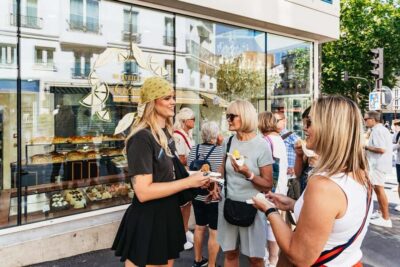
Montmartre Cheese, Wine & Pastry Guided Walking Tour
Read our review →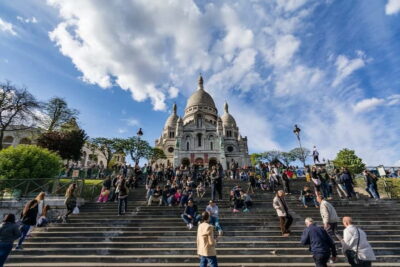
Montmartre Highlights Walking Tour with a Local Guide
Read our review →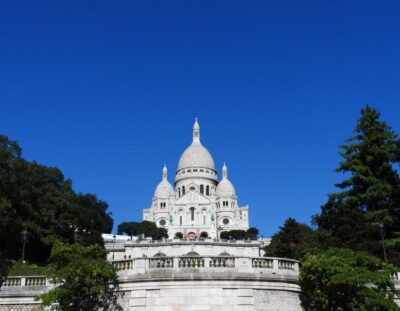
Sacré-Coeur and Montmartre Tour with Expert Guide
Read our review →
Private Montmartre Food Tour with Wine, Cheese & Pastries
Read our review →
Paris Montmartre Food Tour – A Full French Meal by Do Eat Better
Read our review →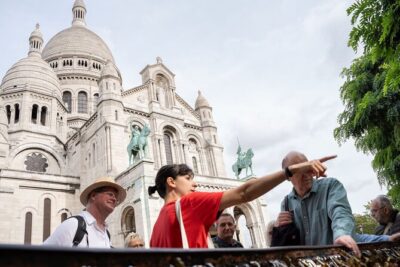
Hidden Montmartre: Paris’ Secret Streets Walking Tour
Read our review →Browse the lists this tour appears in