
Reviewed · MONTMARTRE & SACRé-COEUR TOURS
Paris: Walking Tour of Montmartre
Montmartre reveals itself slowly, one uphill street at a time. This two-hour walk starts at the Moulin Rouge and climbs past old windmills, painterly cafés, artist squares, and the white domes of Sacré-Cœur. I like that the guide mixes famous sights with quieter corners, and I like the steady flow of stories about artists, cabarets, and ordinary Paris life. The main catch is the hill, plus the meeting point can be confusing around the traffic island near Blanche.
I also like the personal feel created by guides such as Vera, Solene, Nadine, and Christin, who are praised for lively storytelling and patient answers. Still, language and group size matter: English walks run only on selected days, and groups may grow on public holidays.
In This Review
- Key points to know before you book
- Starting at Blanche and the Moulin Rouge
- Following the old lanes toward Moulin de la Galette
- La Maison Rose and Montmartre’s picture-book side
- Place du Tertre and the living artist tradition
- Reaching Sacré-Cœur after the final climb
- The guides make the difference
- What $34 buys you in Paris
- Who will enjoy this walk most
- Tips for getting more from the two hours
- FAQ
- Where does the Montmartre walking tour start?
- Where does the tour finish?
- How long is the walking tour?
- Which languages are available?
- On which days are the English tours offered?
- On which days are the German tours offered?
- Is the tour suitable for wheelchair users?
- Should you book this Montmartre tour?
Key points to know before you book
- The route climbs Montmartre: You walk uphill from Blanche and the Moulin Rouge toward Sacré-Cœur, mostly on city streets and cobbles.
- The stories are the main attraction: Expect anecdotes about artists, cabaret life, local residents, and the everyday character of Paris.
- You see the classic sights: The route includes Moulin Rouge, Moulin de la Galette, La Maison Rose, Place du Tertre, and Sacré-Cœur.
- English dates are limited: English tours run Monday, Wednesday, and Saturday. German tours run Tuesday, Thursday, Saturday, and Sunday.
- The walk offers more than postcard stops: Your guide points out quieter, less crowded places with character and local color.
- The price is reasonable for a live guide: At $34 per person, the tour makes sense if you want context and company rather than a self-guided stroll.
Starting at Blanche and the Moulin Rouge
Your meeting point is outside Blanche metro station, at the traffic island in front of the Moulin Rouge. Look for a guide carrying a HelpTourists bag and wearing a pink base cap.
That sounds simple, but the traffic island detail matters. The area has more than one traffic circle, so give yourself extra time and check the exact position before you arrive. The Moulin Rouge itself is the easiest landmark to spot, but the meeting point is not necessarily right at the cabaret entrance.
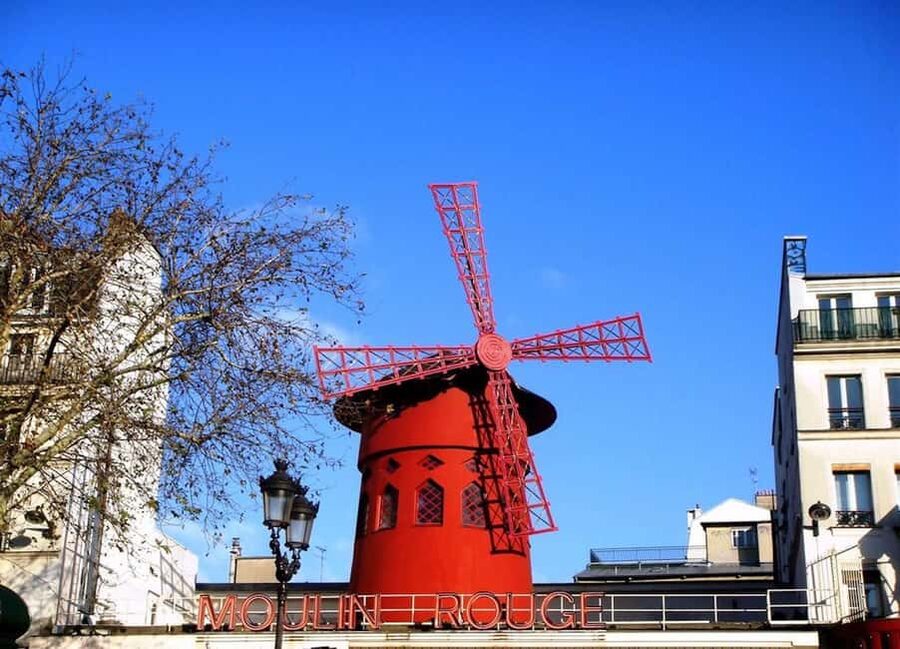
The tour begins in one of Paris’s most famous nightlife districts. The Moulin Rouge facade makes an easy first photo, with its bright red windmill and unmistakable cabaret identity. Your guide also covers the cabaret’s less obvious stories, so this is not just a quick picture stop.
You should expect to remain outside. Food, drinks, and entry to attractions are not included. The value here comes from the guide’s explanation, not from admission to the Moulin Rouge.
Starting at Blanche gives the walk a useful shape. You begin in the lower, busier part of Montmartre, then move gradually uphill into streets that feel more residential and artistic. The change is part of the experience. Instead of appearing suddenly at Sacré-Cœur by metro or taxi, you get a sense of how the district rises above the rest of Paris.
More Montmartre walks and visits:
- Montmartre Hidden Gems and Scenic Highlights Walking Tour
★ 5.0 · 2,684 reviews - Montmartre Hill French Gourmet Food and Wine Tasting Walking Tour
★ 5.0 · 2,588 reviews - Paris: Montmartre Cheese, Wine & Pastry Guided Walking Tour
★ 4.8 · 2,255 reviews
Following the old lanes toward Moulin de la Galette
From the Moulin Rouge, the walk continues through Montmartre’s cobbled streets. The guide uses the route to explain the district’s bohemian past, the people who lived here, and the painters and writers who made the hill famous.
The phrase bohemian can sound like tourist shorthand, but here it has a clear use. Montmartre was associated with artists, cafés, small studios, entertainers, and people living outside the polished center of Paris. The guide’s anecdotes help connect those broad ideas to particular streets and buildings.
Moulin de la Galette is one of the more unusual stops. It recalls the windmills that once marked the hill and also links Montmartre with its former village character. The stop is mainly for sightseeing and photographs, but it gives the neighborhood a visual identity beyond the basilica and cabarets.
I would pay close attention here if you enjoy the contrast between modern Paris and older traces of the hill. The stop is not a museum visit, and you should not expect a long indoor presentation. It is a short outdoor pause where the guide adds meaning to what you are seeing.
The walking pace appears to suit a mixed group. Several detailed comments praise guides for keeping people together, answering questions, and moving at a comfortable speed. Those qualities matter on Montmartre’s narrow streets, where it is easy to lose sight of a group while stopping for a photograph.
La Maison Rose and Montmartre’s picture-book side
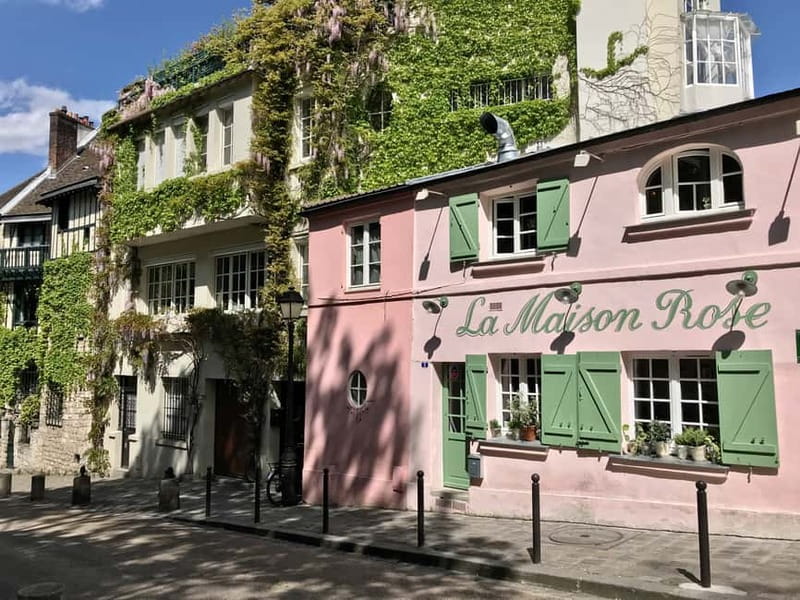
La Maison Rose is one of the district’s most recognizable facades. Its soft pink exterior makes an obvious photo stop, but the appeal is not only visual. It represents the highly photographed, storybook side of Montmartre that draws people up the hill in the first place.
Your guide helps place this corner within the wider neighborhood. That context is useful because Montmartre can quickly become a string of pretty facades and photo queues if you walk it without a plan. A good explanation turns the route into a connected story rather than a hunt for famous backgrounds.
This is also where the tour’s small-group aim can help. The provider tries to keep groups small, although the size can increase on national or public holidays. A smaller group makes it easier to hear on a narrow lane and easier to ask about details that catch your eye.
Do not expect every street to be quiet. Montmartre is one of Paris’s most visited areas, and the famous stops can be crowded. The promise is not an empty neighborhood. It is a route that includes places with more character and fewer people than the most direct path between the main sights.
Place du Tertre and the living artist tradition
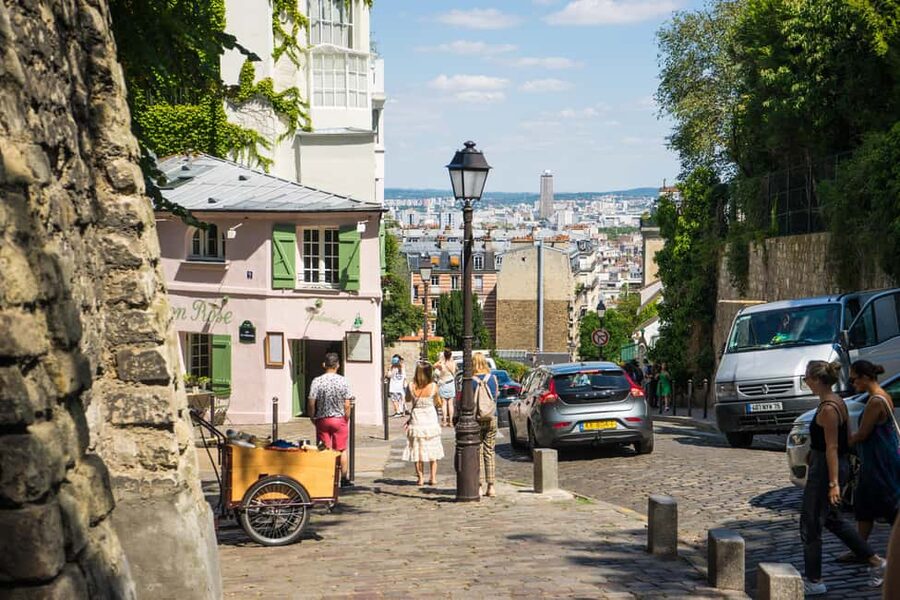
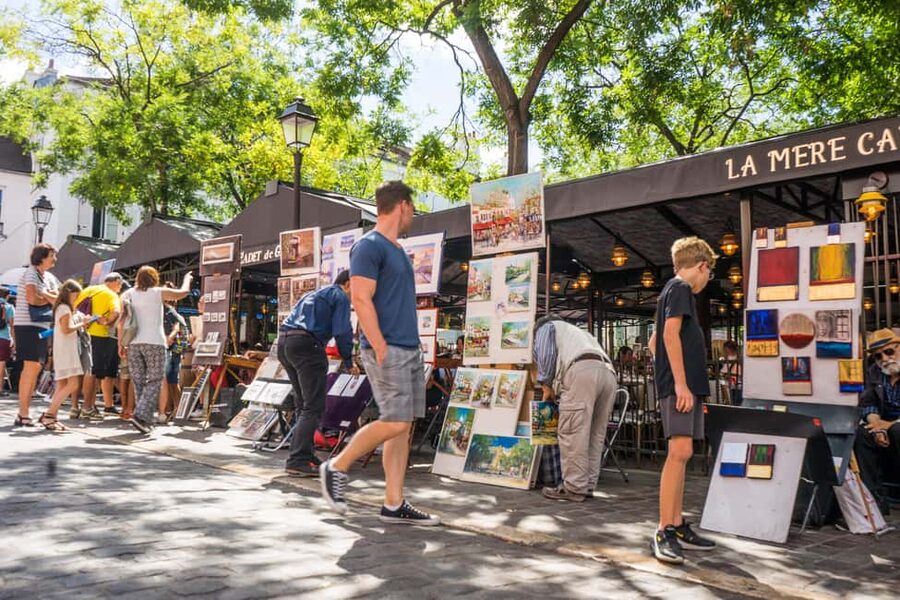
Place du Tertre is the heart of the tourist-facing Montmartre experience. Artists work beneath the open sky, and the square keeps alive the district’s connection with portrait painters and street art.
You will have time to see the square and take photographs. The guide’s role is especially useful here because you can learn how the square fits into Montmartre’s wider artistic identity rather than treating it as a standalone photo opportunity.
The atmosphere can be lively and crowded. If you want to browse the paintings or buy a piece of art, the square gives you that chance, but the tour price does not include purchases. One detailed account describes buying art after learning about the area, which suggests the walk can work well as an introduction before you return independently.
I would not count on a long shopping stop. This is a walking tour, not an art-buying session. If a painting catches your eye, note the location and come back after the tour so you do not hold up the group.
Place du Tertre also marks a useful shift in the route. By this point, you have moved from the Moulin Rouge’s cabaret world through the hill’s older streets and into the best-known artistic center. The walk gives you several versions of Montmartre instead of presenting it as one simple theme.
More Paris walking tours:
- Paris Top Sights Half Day Walking Tour with a Fun Guide
★ 5.0 · 2,893 reviews - Paris Île de la Cité and Notre-Dame Walking Tour With Crypt
★ 5.0 · 2,272 reviews - Paris in a Day: Louvre or Orsay, Eiffel Tower, City Walk & Cruise
★ 5.0 · 1,956 reviews - Paris: Montmartre Highlights Walking Tour with a Local Guide
★ 4.9 · 1,668 reviews
Reaching Sacré-Cœur after the final climb
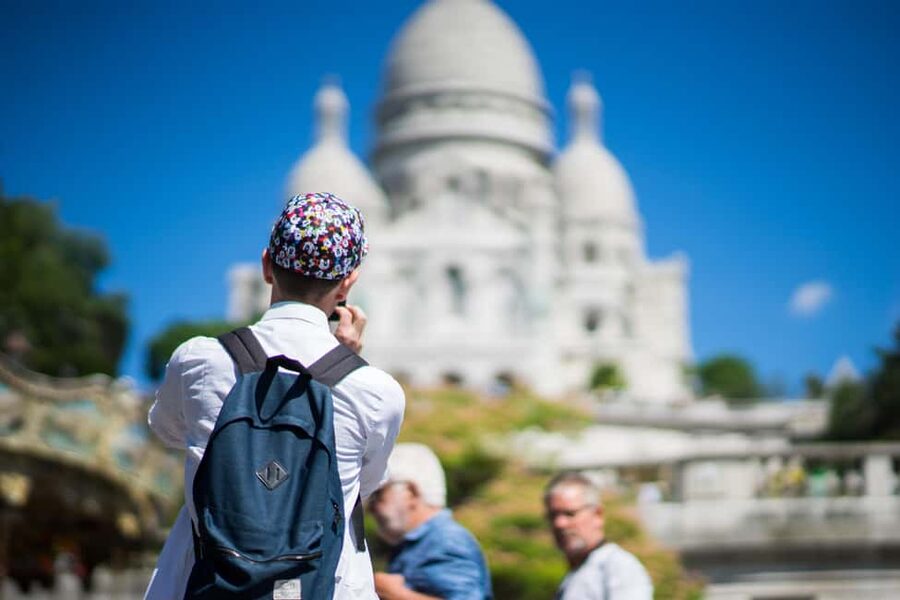
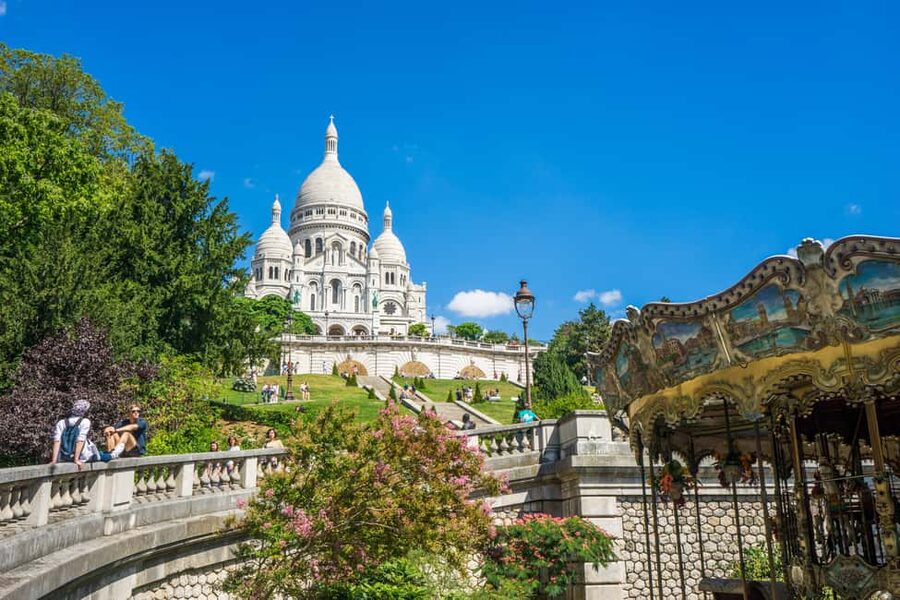
The route finishes at the Basilica of Sacré-Cœur, the great white landmark on Montmartre’s summit. The basilica provides both a strong final sight and a clear sense of the hill’s height above Paris.
Expect a final stretch of walking and uphill movement. The route is not suitable for wheelchair users, and the cobbled streets and incline may also be tiring for anyone who has difficulty walking. Wear comfortable shoes, and treat the two-hour duration as active sightseeing rather than a relaxed café stop.
At Sacré-Cœur, you can admire the exterior and visit the basilica as part of the sightseeing stop. The information provided does not promise a private interior tour or reserved entry, so the focus remains on seeing the building and understanding its place in Montmartre.
The basilica is a fitting finish because it brings together the district’s strongest features: a famous monument, a dramatic position, and the sense that you have crossed a distinct neighborhood rather than simply visited another Paris attraction.
There is one practical inconsistency to note. The route lists Sacré-Cœur as the finish, while the meeting information says the activity ends back at the meeting point. Confirm the end point when you book or ask your guide at the start. If the walk ends at the basilica, you are already near Montmartre’s upper streets and can continue exploring from there.
The guides make the difference
This experience depends heavily on the person leading it. The strongest feedback points to guides who are lively, funny, attentive, and generous with local stories.
Vera is praised for filling the gradual climb with historical facts and small anecdotes. Solene is described as engaging, clear, and fluent in English. Nadine receives especially strong praise for funny details, patient answers, and the ability to make people curious about exploring more of Montmartre. Christin is noted for taking the group through quieter, less touristy streets and giving people time to ask questions.
These names do not mean you can select a particular guide. They show the style you might encounter: a personal walk built around stories rather than a formal lecture.
The language schedule deserves careful attention. English walks take place Monday and Wednesday at 3 p.m., and Saturday at 5 p.m. German walks take place Tuesday and Thursday at 4 p.m., Saturday at 3 p.m., and Sunday at 2 p.m. Live guiding is offered in English and German.
One language-related problem has been reported in the supplied feedback: an English guide did not appear, so a French guide spoke mainly German and gave two English-speaking participants only a short recap. That sounds unusual, but it is a useful reason to confirm the language at the meeting point if communication is important to you.
What $34 buys you in Paris
At $34 per person, this is priced above a free self-guided walk but far below a private tour. You are paying for a live guide, a planned route, and the stories that connect Montmartre’s sights.
The price is good value if you want to understand what you are seeing. You could walk past the Moulin de la Galette, La Maison Rose, and Place du Tertre on your own, but you would miss much of the background unless you prepared in advance.
The two-hour length is also practical. It is long enough to cover the main route without taking half a day from your Paris schedule. You can book the walk early in your stay, use it to get oriented, then return to the streets or art square that interested you most.
The limits are clear. Food and drinks are not included, and the tour does not include a meal or a special entry to the Moulin Rouge. You also do not get a private group guarantee. The provider tries to keep groups small, but holiday dates can be busier.
Free cancellation up to 24 hours before the start gives you some flexibility, and the reserve-now, pay-later option can help if your Paris plans are still shifting.
Who will enjoy this walk most
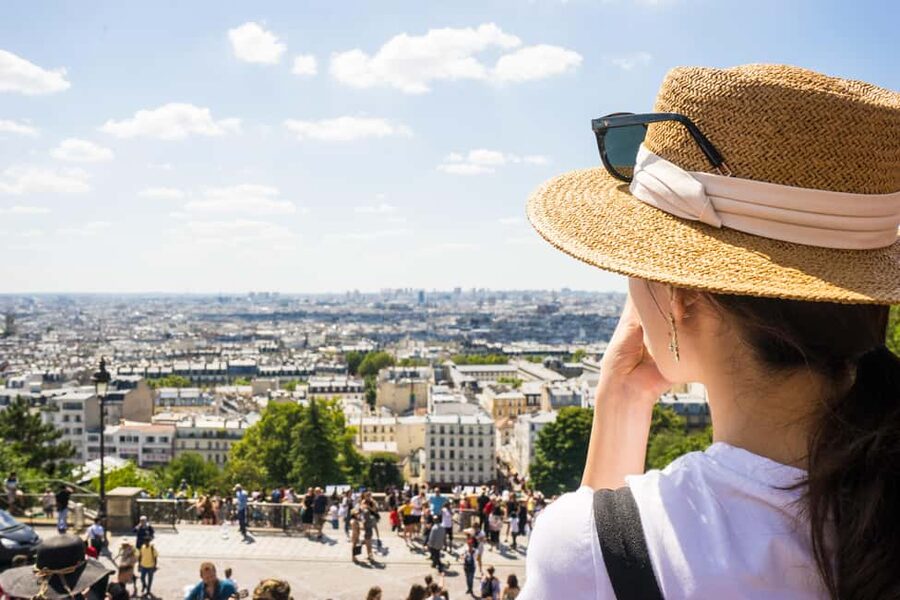
I would recommend this tour to a first-time Paris visitor who wants Montmartre explained in plain language. It is also a good fit if you like city walks built around anecdotes, local characters, and small details rather than a list of dates.
Art lovers will get the most from the connection between Place du Tertre, Moulin de la Galette, and the district’s former artists. Film and cabaret fans may also enjoy beginning at the Moulin Rouge and hearing about the area’s entertainment tradition.
The tour suits people who prefer a guided introduction before exploring alone. It can help you decide where to spend more time, where to return for photographs, and where to avoid lingering if the crowds become tiring.
I would hesitate if you want a fully private experience, a flat route, or guaranteed quiet streets. The hill is real, the cobbles are real, and popular Montmartre can feel busy. People using wheelchairs should choose another way to see the district because this activity is not suitable for wheelchair users.
Tips for getting more from the two hours
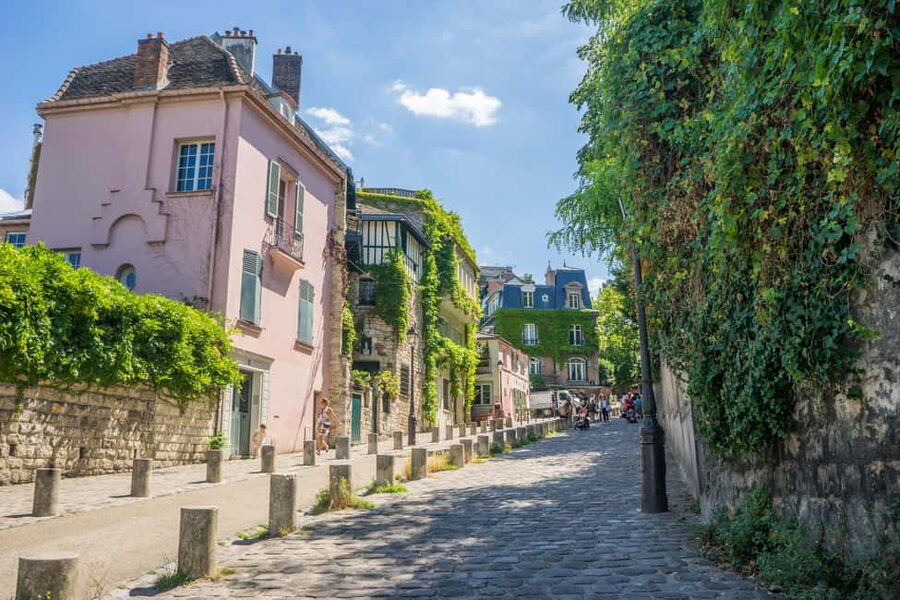
Arrive early at Blanche metro station and use the Moulin Rouge as your main landmark. Then look for the HelpTourists bag and pink base cap rather than waiting by the first traffic circle you see.
Wear shoes with a firm sole. The route includes cobbled streets and a gradual climb, so comfort matters more than stylish footwear.
Bring water, especially for a warm afternoon. There is no food or drink included, and the walk keeps moving between stops.
Keep your questions ready. The best part of this format is the guide’s ability to explain small details, and guides such as Nadine, Vera, Solene, and Christin are praised for making time for questions.
If you want art from Place du Tertre, browse without rushing. You can note the artist or location and return after the walk, rather than trying to make a purchase while the group is moving.
Check the final location before you leave the meeting point. The route indicates Sacré-Cœur, but the general meeting information also refers to returning to the starting point.
FAQ
Where does the Montmartre walking tour start?
It starts outside Blanche metro station, at the traffic island in front of the Moulin Rouge. Look for a guide with a HelpTourists bag and a pink base cap.
Where does the tour finish?
The route lists the Basilica of Sacré-Cœur de Montmartre as the final stop. The meeting information also says the activity ends back at the meeting point, so confirm the final location with the guide or provider.
How long is the walking tour?
The tour lasts two hours.
Which languages are available?
Live guiding is available in English and German.
On which days are the English tours offered?
English tours take place Monday and Wednesday at 3 p.m., and Saturday at 5 p.m.
On which days are the German tours offered?
German tours take place Tuesday and Thursday at 4 p.m., Saturday at 3 p.m., and Sunday at 2 p.m.
Is the tour suitable for wheelchair users?
No. The activity is not suitable for wheelchair users.
Should you book this Montmartre tour?
I would book it if you want Montmartre to feel like a neighborhood with people, stories, and layers, not just a hilltop basilica and a few famous photo spots. The gradual route from Moulin Rouge to Sacré-Cœur, plus the stops at Moulin de la Galette, La Maison Rose, and Place du Tertre, gives you a well-shaped introduction for $34.
Choose another option if you need a private guide, a guaranteed small group, or an easy flat walk. For most able-bodied visitors who enjoy stories and do not mind a climb, this is a practical way to meet Montmartre, especially early in a Paris stay.
Newest additions around Paris
- Family escape Game with kids and teens on the Île de la Cité★ 4.5 · 11 reviews
- Private Photoshoot with the Iconic Eiffel Tower in Paris★ 5.0 · 11 reviews
- 2-day Private Mont Saint-Michel, 3 Loire Castles, D-Day Express★ 4.5 · 11 reviews
- Paris: Batobus Hop-On Hop-Off Cruise & Landmarks Audio Tour★ 3.0 · 11 reviews
- Paris Revolutionary Walking Tour: Iconic French Sights & Stories★ 5.0 · 11 reviews
- Guided and Private Tour of 3 hours through Paris aboard a Citroën 2cv★ 5.0 · 11 reviews
- Kids in the Kitchen – CrOisSaNtS★ 4.0 · 11 reviews
- Paris: Ghosts and Dark Stories Guided Walking Tour★ 4.1 · 11 reviews
Montmartre & Sacré-Coeur Tours, compared.

Montmartre Hidden Gems and Scenic Highlights Walking Tour
Read our review →
Montmartre Hill French Gourmet Food and Wine Tasting Walking Tour
Read our review →
Montmartre Cheese, Wine & Pastry Guided Walking Tour
Read our review →
Montmartre Highlights Walking Tour with a Local Guide
Read our review →
Sacré-Coeur and Montmartre Tour with Expert Guide
Read our review →
Private Montmartre Food Tour with Wine, Cheese & Pastries
Read our review →
Paris Montmartre Food Tour – A Full French Meal by Do Eat Better
Read our review →
Hidden Montmartre: Paris’ Secret Streets Walking Tour
Read our review →Browse the lists this tour appears in