
Reviewed · MONTMARTRE & SACRé-COEUR TOURS
Paris South Montmartre Gourmet French Flavors Tasting Food Tour
Montmartre tastes best when you leave the postcard streets and follow food into the neighborhood’s smaller shops, gardens, and cafés. This three-hour walk begins near the Moulin Rouge and ends around Rue des Martyrs, with wine, cheese, charcuterie, bread, pastries, chocolates, and other sweet bites along the way.
I like the six-person limit, which gives your guide room to adjust the pace and answer questions. I also like the mix of food and local stories, especially when guides such as Isa explain the area between stops. The main caution is that the tasting count and selection can change by season and day, and one stop may feel more like a coffee break than a major food event.
In This Review
- Key points at a glance
- A food walk through southern Montmartre
- Starting near the Moulin Rouge
- What you may taste along the route
- From Rue des Martyrs to Notre-Dame de Lorette
- Why the six-person group matters
- How much value do you get for $156.20?
- Walking conditions and practical preparation
- The kind of history you will hear
- Who should book this Montmartre tasting walk?
- Should you book it?
- FAQ
- Where does the tour start?
- Where does the tour end?
- How long does the food tour last?
- How many people can join the tour?
- What food and drinks are included?
- Are museums or churches visited?
- Are vegan options available?
Key points at a glance
- Small group of six: Expect a more personal walk, with time for questions and guide-led conversation.
- Eight to nine tastings: The food may include cheese, bread, charcuterie, wine, pastries, chocolates, ice cream, and other sweets.
- Starts near the Moulin Rouge: You hear neighborhood anecdotes before walking toward Rue des Martyrs.
- Local food shops matter: The route introduces you to artisans and addresses you may not find on a standard sightseeing walk.
- No museum or church visits: The Moulin Rouge and Notre-Dame de Lorette serve as landmarks, not interior stops.
- Seasonal menu: Tell the provider about allergies or foods you avoid, but note that vegan choices are not available.
A food walk through southern Montmartre
This experience focuses on the lower part of Montmartre, where the tourist crowds around the Sacré-Coeur hill give way to food shops, cafés, bakeries, and old streets. You are not signing up for a grand monument tour. You are signing up to eat your way through a neighborhood while your guide supplies the local setting.
That difference matters. If you want to climb the hill, visit the basilica, or spend time inside Paris museums, this is the wrong format. If you want a closer look at daily food culture, the route makes more sense.
The walk lasts about three hours. That is enough time to sample several foods without turning the afternoon into a full meal. You should arrive with a light breakfast or lunch already in you, though. The advice is practical: tasting portions add up, but they are not designed to replace a meal.
The tour is offered in English and uses a mobile ticket. It is priced at $156.20 per person, so you are paying for more than a plate of food. The value rests on the guide, the access to several independent food addresses, the small group, and the time saved finding good stops yourself.
More Montmartre walks and visits:
- Montmartre Hidden Gems and Scenic Highlights Walking Tour
★ 5.0 · 2,684 reviews - Montmartre Hill French Gourmet Food and Wine Tasting Walking Tour
★ 5.0 · 2,588 reviews - Paris: Montmartre Cheese, Wine & Pastry Guided Walking Tour
★ 4.8 · 2,255 reviews
Starting near the Moulin Rouge
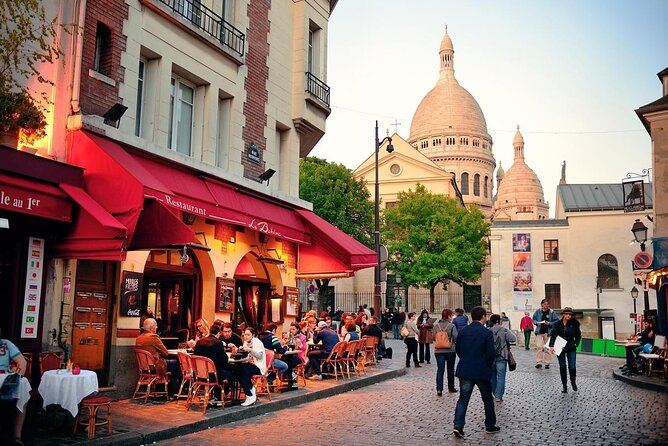
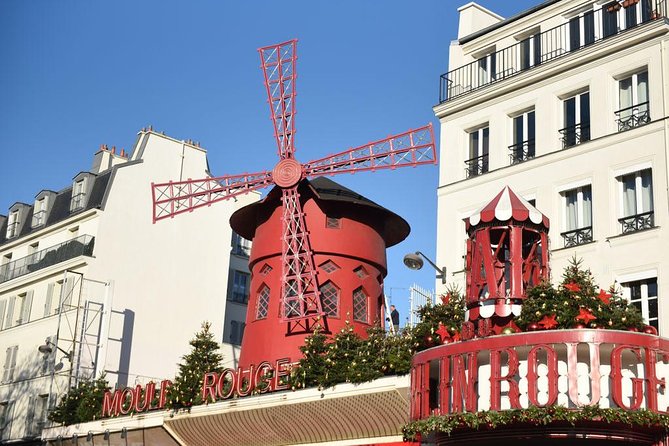
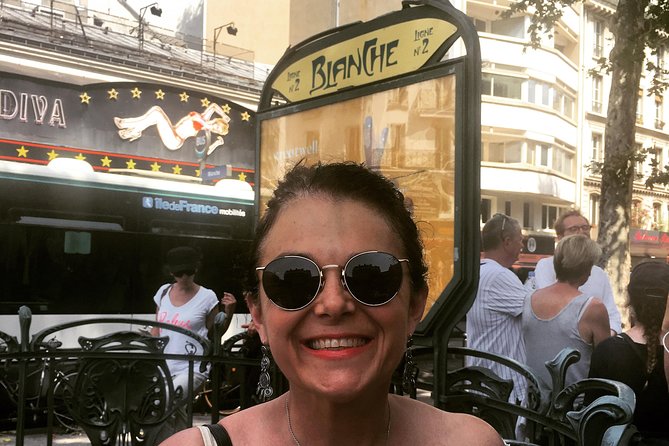
The meeting area is Blanche, close to the Moulin Rouge in the 18th arrondissement. The exact opening point is useful for orientation, but do not expect to enter the cabaret. The Moulin Rouge is a landmark for the start of the walk, and your guide uses the surrounding streets to introduce Montmartre through anecdotes and neighborhood history.
This is a good place to begin because the area has an obvious tourist face, yet the food walk quickly moves beyond the famous sign and red windmill. Your guide sets the scene, then leads you to addresses where you can taste rather than simply take photographs.
The first portion lasts about two hours. During that time, you may stop at several food businesses and sit down for some tastings. The route is not just a chain of quick bites on the pavement. Some stops offer a chance to pause, talk, and pay attention to what you are eating.
Guide Isa received particular praise for explaining local subjects and the colorful past of the area at length. That gives you a useful sense of what the guide adds. You are not only handed a piece of cheese and told its name. You can ask how the food fits into French habits, how the district changed, and why a particular shop belongs on the route.
What you may taste along the route
The advertised food covers both savory and sweet items. Expect a spread that can include charcuterie, cheese, bread, wine, pastries, chocolates, sweets, and possibly ice cream. One version of the description refers to eight tastings, while the itinerary describes nine savory and sweet tastings, so it is safest to plan for roughly eight to nine samples rather than a fixed number.
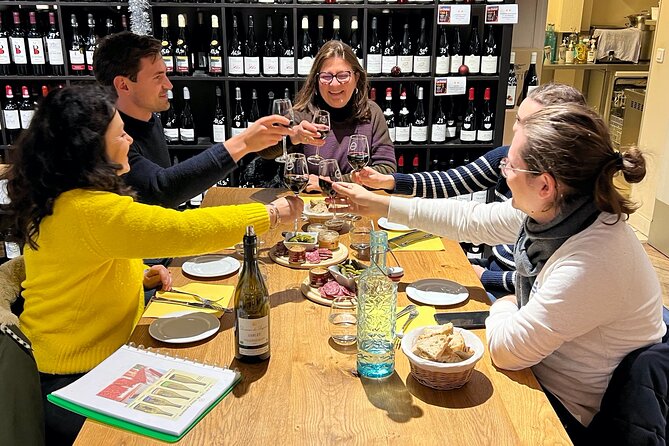
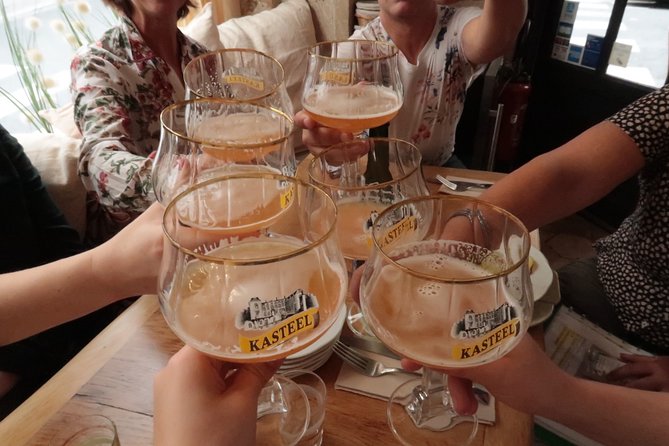
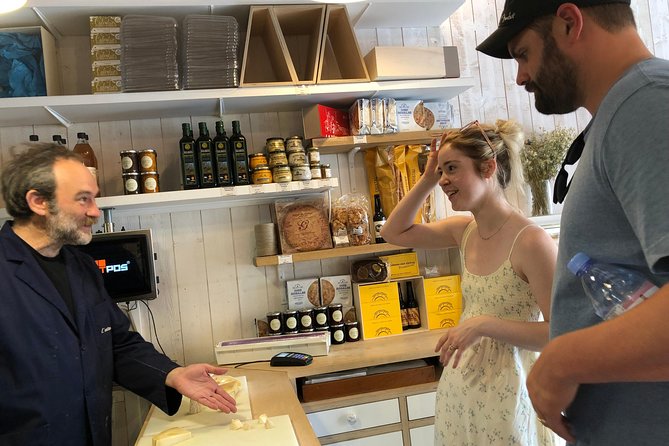
The savory part is likely to be the heart of the experience. A charcuterie plate with wine gives the walk a proper French food moment, while cheese and bread show how much variety can come from simple ingredients. The cheese tasting is connected with a historic fromagerie, giving that stop more purpose than a generic supermarket sample.
You may also visit places for tea or coffee. One route included a hidden tea garden, which adds a pleasant change from shop counters and crowded sidewalks. Still, coffee or tea takes up part of the experience, so you should know what you are buying. A person looking for a nonstop parade of large tastings may find the rhythm too light.
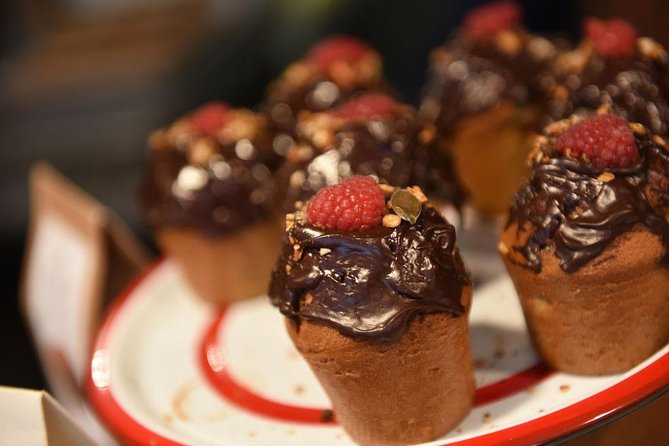
The sweet stops can include two different shops and may feature pastries, chocolates, sweets, or ice cream. These are welcome late in the walk, when you have already tried the cheese and charcuterie. Seasonal changes mean the exact pastry or dessert is not guaranteed.
The food is not presented as a formal cooking class. You will not be preparing dishes or receiving a lesson in professional technique. The appeal is comparison: several small tastings, different food makers, and the guide’s explanation of what makes each stop worth your time.
From Rue des Martyrs to Notre-Dame de Lorette
The second part brings you toward the foot of Rue des Martyrs and the area around Eglise Notre-Dame de Lorette. This is another landmark rather than an interior visit. The church is part of the setting, not a scheduled sightseeing stop.
Rue des Martyrs is a fitting endpoint for a food walk. The street is known for its concentration of food businesses, and the guide introduces you to local artisans before the tour finishes. This final hour gives you time to round out the tasting sequence with more sweets, cheese, chocolate, or other seasonal items.
The end point is on Rue des Martyrs, near Pigalle metro stations on lines 2 and 12. That makes it easy to continue your day without returning to Blanche. You can use the recommendations from your guide to keep eating in the area, since the experience includes a list of addresses visited plus restaurant and shop suggestions.
That follow-up information adds real value. A three-hour tour is brief, but a list of places to revisit can stretch its usefulness across the rest of your Paris stay. You might return for a purchase, choose a restaurant nearby, or use the food stops to plan your own walk another day.
More Paris food tours:
- Paris: Seine Cruise & Crepe Tasting near the Eiffel Tower
★ 4.4 · 11,231 reviews - Authentic Parisian Gourmet Food Tour with 10 Local Dishes & Wines
★ 5.0 · 4,754 reviews - Normandy D-Day Small-Group Day Trip with Omaha Beach, Cemetery & Cider Tasting
★ 5.0 · 2,786 reviews - Paris: Illuminated Evening River Cruise & Waffle Tasting
★ 4.1 · 2,697 reviews
Why the six-person group matters
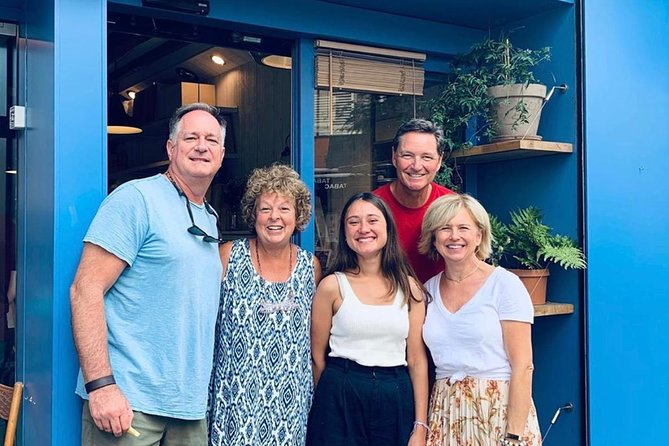
A maximum of six people changes the feel of a food tour. At a larger group size, you often spend time waiting for everyone to gather, squeezing around a counter, or trying to hear the guide over street noise. Here, the guide can keep the group together with less effort.
The small size also helps with food questions. You can explain what you do not eat, ask about ingredients, or request more context without holding up a crowd. It does not guarantee that every dietary need can be met, but it makes the conversation easier.
Guide Isa was praised for making the walk personal and tailored. That is the main reason to choose this format over a cheaper large-group outing. You are paying for a guide who can talk with you, not just recite a prepared speech.
The small group does not remove every drawback. If the other people in your group have different eating habits or walking speeds, the pace still has to suit everyone. And a group of six can feel quiet or social depending on the mix. The format gives the guide a better chance to shape the experience, but it cannot control the personalities at the table.
How much value do you get for $156.20?
At $156.20 per person, this is not a bargain food crawl. You should compare it with the cost of buying similar food on your own, but that is only part of the calculation.
If you already know Montmartre and feel comfortable choosing fromagers, pastry shops, and charcuterie counters, you can spend less by making your own route. You would also control the portions and spend as much time as you like at each address.
The tour earns its price through convenience and guidance. In three hours, you get a planned route, an English-speaking local guide, a small group, a selection of sweet and savory samples, wine, and a useful list of addresses. You do not need to research which shops are worth a stop or work out how to connect them geographically.
The value is strongest for a first visit to Paris, for food-focused visitors, and for anyone who wants context with the tasting. It is weaker for someone who mainly wants a large lunch. Portions are tasting portions, and one stop may be coffee or tea rather than a substantial dish.
There is also a quality difference between a guided tasting and a self-guided snack route. A guide can explain why a cheese was chosen, point out local details between stops, and help you notice how the neighborhood changes as you move toward Rue des Martyrs. If that kind of interpretation matters to you, the price becomes easier to justify.
Walking conditions and practical preparation
Wear comfortable shoes and clothes. The activity is a walking tour through city streets, with stops at shops and places where you may sit. The walk took place successfully on a very hot day when participants carried plenty of water, but heat can affect your comfort and appetite.
Bring water, especially in warm weather. You should also avoid arriving hungry enough to feel faint. The provider advises a light breakfast or lunch before the tour, which is sensible given the number of samples and the walking time.
Tell the provider about allergies and specific foods you do not eat when booking. The tour does not offer vegan options, so strict vegans should choose a different experience. Other dietary requests should be raised in advance, but the changing menu means no specific substitute can be promised here.
Most people can take part, and service animals are allowed. The route is near public transportation. Supply a telephone number in case the provider needs to reach you, and keep the mobile ticket available.
The tastings vary by season and day of the week. Think of the itinerary as a food framework, not a locked menu. You may get a slightly different cheese, sweet, or shop experience depending on when you go.
The kind of history you will hear
This is not a lecture with a long list of dates. The history is tied to the streets, food businesses, and famous landmarks around you. At the Moulin Rouge, the guide shares neighborhood anecdotes. As you walk, local stories help explain why southern Montmartre feels different from the more heavily visited upper slopes.
The food gives the history a useful anchor. A fromagerie, a pastry shop, or a wine and charcuterie stop gives you something concrete to remember. You learn the district while doing something ordinary and very Parisian: shopping for food, pausing for a drink, and discussing what you have just tasted.
The guide’s role is especially important here. Strong guiding turns a series of purchases into a connected walk. Isa was noted for speaking at length on local subjects and for sending useful follow-up information after the tour. That suggests you should make room for questions rather than rushing from one sample to the next.
Who should book this Montmartre tasting walk?
I would recommend it to you if food is one of your main reasons for visiting Paris and you want a neighborhood introduction rather than a monument checklist. It suits couples, solo visitors, and small parties who enjoy talking with a guide and trying several foods in modest portions.
It is also a good choice early in your Paris stay. The address list and shop recommendations can help shape later meals, and the route gives you a practical introduction to the Blanche, Pigalle, and Rue des Martyrs area.
You may want to skip it if you need vegan food, dislike walking between stops, or expect a full meal. You should also think twice if you have already explored Montmartre’s food shops and prefer to choose every stop yourself.
The tour requires a minimum number of people. If that minimum is not met, the provider offers another date or experience, or a full refund. For ordinary cancellations, you can receive a full refund if you cancel at least 24 hours before the local start time. Changes or cancellations inside that window are not accepted.
Should you book it?
Book this tour if you want a small, guided introduction to Montmartre built around food, conversation, and local addresses. The strongest reasons are the six-person limit, the combination of history with tasting, the wine and charcuterie stop, and the practical list of places to use afterward.
Go in with realistic expectations. You are getting a sequence of small tastings, not a three-course lunch, and the menu can change. If you prepare with a light meal, comfortable shoes, water, and clear dietary information, the experience should work best for you.
FAQ
Where does the tour start?
The tour starts in the Blanche area of Paris, near the Moulin Rouge.
Where does the tour end?
It ends on Rue des Martyrs, near Pigalle metro stations on lines 2 and 12.
How long does the food tour last?
The tour lasts approximately three hours. The first portion near the Moulin Rouge takes about two hours, followed by about one hour near the foot of Rue des Martyrs.
How many people can join the tour?
The group has a maximum of six participants.
What food and drinks are included?
The experience includes tastings such as sweets, pastry or ice cream, charcuterie and wine, cheeses and bread, and chocolates. The exact tastings can vary by season and day of the week.
Are museums or churches visited?
No. The Moulin Rouge and Eglise Notre-Dame de Lorette are landmarks on the route. Museums and churches are not visited during the food tour.
Are vegan options available?
No vegan options are available. You should provide information about allergies and other dietary requirements when booking.
Newest additions around Paris
- Family escape Game with kids and teens on the Île de la Cité★ 4.5 · 11 reviews
- Private Photoshoot with the Iconic Eiffel Tower in Paris★ 5.0 · 11 reviews
- 2-day Private Mont Saint-Michel, 3 Loire Castles, D-Day Express★ 4.5 · 11 reviews
- Paris: Batobus Hop-On Hop-Off Cruise & Landmarks Audio Tour★ 3.0 · 11 reviews
- Paris Revolutionary Walking Tour: Iconic French Sights & Stories★ 5.0 · 11 reviews
- Guided and Private Tour of 3 hours through Paris aboard a Citroën 2cv★ 5.0 · 11 reviews
- Kids in the Kitchen – CrOisSaNtS★ 4.0 · 11 reviews
- Paris: Ghosts and Dark Stories Guided Walking Tour★ 4.1 · 11 reviews
Montmartre & Sacré-Coeur Tours, compared.
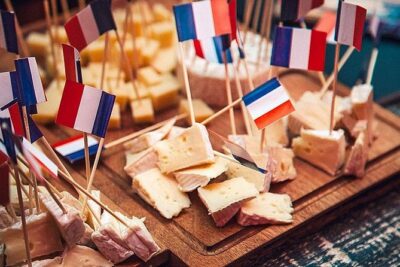
Montmartre Hidden Gems and Scenic Highlights Walking Tour
Read our review →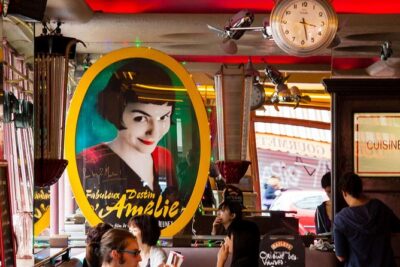
Montmartre Hill French Gourmet Food and Wine Tasting Walking Tour
Read our review →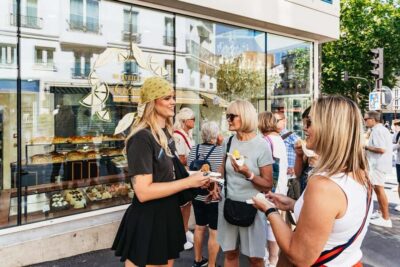
Montmartre Cheese, Wine & Pastry Guided Walking Tour
Read our review →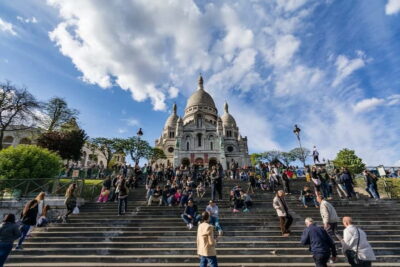
Montmartre Highlights Walking Tour with a Local Guide
Read our review →
Sacré-Coeur and Montmartre Tour with Expert Guide
Read our review →
Private Montmartre Food Tour with Wine, Cheese & Pastries
Read our review →
Paris Montmartre Food Tour – A Full French Meal by Do Eat Better
Read our review →
Hidden Montmartre: Paris’ Secret Streets Walking Tour
Read our review →Browse the lists this tour appears in