
Reviewed · MONTMARTRE & SACRé-COEUR TOURS
Paris: Small Group Moulin Rouge &Sacré Cœur Montmartre Tour
Montmartre is where Paris gets pleasantly strange: cabarets, windmills, painters, singers, vineyards, pink houses, and a white basilica all share one steep hill. This two-hour walking tour connects those pieces in a way that is easy to follow, especially if you are new to the neighborhood.
I like the small group size, capped at 15, and the way the route mixes famous sights with less obvious corners such as Le Bateau-Lavoir and the Montmartre vineyard. I also like the guides’ personal approach. Alice, Selda, Daniel, and Danyel are praised for clear storytelling, good photos, patience, and adjusting the pace when needed.
The catch is simple: this is a hill walk. You will climb streets and stairs, and the busiest parts of Montmartre can make it hard to hear. The tour does not include the Moulin Rouge show, and the guide’s tip is extra.
In This Review
- Key points to know before booking
- Starting beneath the red windmill at Moulin Rouge
- Amélie, windmills, and the village feel of Montmartre
- Place des Abbesses and the story behind Saint Denis
- The Wall of Love and a pause for photos
- Le Bateau-Lavoir and Montmartre’s artists
- Dalida’s home and the famous bust
- La Maison Rose and the vineyard on the hill
- La Bonne Franquette and the café tradition
- The climb to Sacré-Cœur and the Paris panorama
- How the two-hour format affects the experience
- Small groups, guide quality, and crowded streets
- Is $59.28 good value for two hours?
- Who should book this Montmartre walk?
- Should you book the Moulin Rouge and Sacré-Cœur tour?
- FAQ
- Where does the tour start?
- Where does the tour end?
- How long does the tour last?
- Is the Moulin Rouge show included?
- What language is the tour offered in?
- How large is the group?
- Is the tour suitable for most people?
- What is included in the price?
- Can I cancel for a full refund?
Key points to know before booking
- The route begins at the Moulin Rouge and ends at Sacré-Cœur, so you cross much of Montmartre rather than circling one small area.
- Groups are limited to 15 people, with some departures possibly much smaller.
- The walking is often uphill, with stairs and pauses along the way.
- The Moulin Rouge is an exterior stop only, and its cabaret admission is not included.
- The best guide feedback centers on warm storytelling, photos, and flexible pacing, with Alice, Selda, Daniel, and Danyel singled out by name.
- The price is $59.28 per person for roughly two hours, with free cancellation up to 24 hours before the start time.
Starting beneath the red windmill at Moulin Rouge
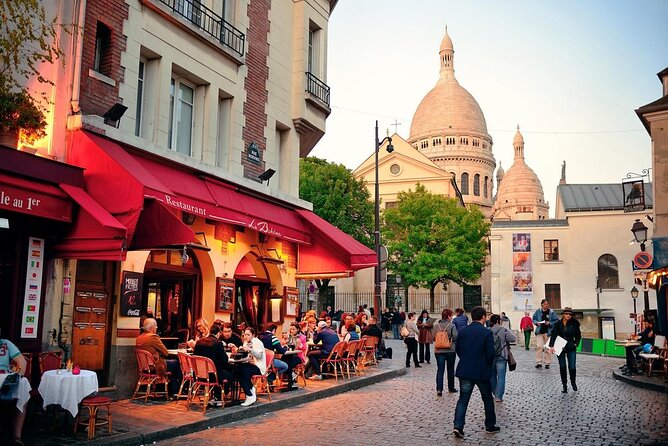
The meeting point is 5 Place Blanche, an easy place to reach by public transport. It puts you right beside the Moulin Rouge, where your guide begins with the story of one of the world’s best-known cabarets.
You spend about 10 minutes here, learning about the venue and its place in Parisian entertainment. This is not a cabaret performance, and admission to a Moulin Rouge show is not included. Think of it as a useful introduction and a photo stop before the walking begins.
That distinction matters. If you want sequins, music, and a full evening show, you must book that separately. If you mainly want to understand how the Moulin Rouge fits into Montmartre’s artistic identity, this short stop does the job without adding a second expensive ticket.
More Montmartre walks and visits:
- Montmartre Hidden Gems and Scenic Highlights Walking Tour
★ 5.0 · 2,684 reviews - Montmartre Hill French Gourmet Food and Wine Tasting Walking Tour
★ 5.0 · 2,588 reviews - Paris: Montmartre Cheese, Wine & Pastry Guided Walking Tour
★ 4.8 · 2,255 reviews
Amélie, windmills, and the village feel of Montmartre
From Place Blanche, the route heads through streets linked with films and artists. At Café des Deux Moulins, you see the café made famous by Amélie and the place where the character worked. The stop lasts about five minutes and is free, so it is more about recognition and atmosphere than a long café visit.
Next comes Le Moulin de la Galette, one of Montmartre’s old windmills. Renoir and other artists helped turn this windmill into a lasting image of the neighborhood’s bohemian past. The guide gives you the context that a quick photograph cannot provide, explaining why working windmills and artists once belonged to the same local world.
Montmartre can feel like a small village within Paris, and this early part of the walk helps explain why. You are not simply moving from monument to monument. You are following the way entertainment, daily life, art, and old rural traces overlap on the hill.
Place des Abbesses and the story behind Saint Denis
Place des Abbesses is another early stop, scheduled for about 10 minutes. Here, the guide discusses Saint Denis, remembered as the first bishop of Paris, along with the dramatic story of his martyrdom.
The tour also introduces the Red Abbess and a church described as different from other Paris churches. This is the kind of local tale that gives the area a stronger sense of place. You get more than a list of buildings and dates, although the short schedule means the presentation remains an overview rather than a full history lesson.
The square is also a practical marker in the route. From here, the walk moves farther into Montmartre’s art and romance, so it helps to pay attention to your guide’s meeting instructions and stay close in crowded areas.
The Wall of Love and a pause for photos
Le Mur des Je t’aime, or the Wall of Love, is a compact landmark covered with the phrase I love you in many languages. You have about 10 minutes here, enough to look closely, take photographs, and hear why the artwork is tied to love and unity.
This is one of the easiest stops for a mixed-age group. It requires little historical background, and the visual design gives you an immediate photo subject. Still, it can feel brief if you want a long stop at every location. The value comes from the route as a whole, not from spending half an hour at any one attraction.
More cabaret nights in Paris:
- Paris: Moulin Rouge Cabaret Show Ticket with Champagne
★ 4.7 · 16,088 reviews - Paris: Dinner Show at the Moulin Rouge
★ 4.8 · 3,333 reviews - Paris: Crazy Horse Cabaret Show
★ 4.7 · 2,726 reviews - Seine Dinner Cruise, Eiffel Tower Access and Moulin Rouge Show
★ 4.0 · 2,310 reviews
Le Bateau-Lavoir and Montmartre’s artists
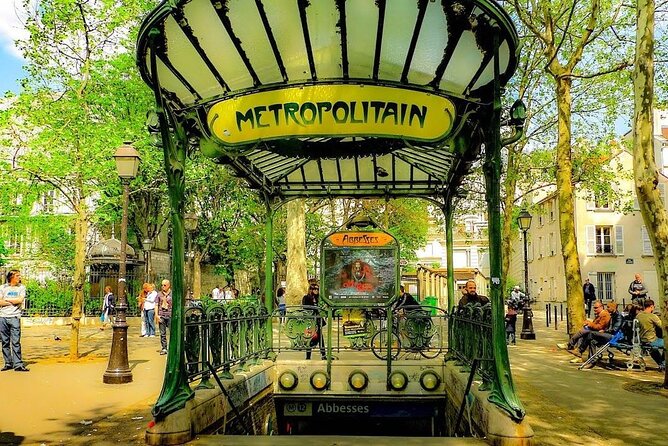
At Le Bateau-Lavoir, the tour turns toward the neighborhood’s early 20th-century art scene. The building once housed artists such as Pablo Picasso and Amedeo Modigliani, and the guide shares stories about the people who worked and lived in this part of Paris.
The stop lasts about 15 minutes, making it one of the longer pauses. That extra time is welcome because this place benefits from explanation. Without a guide, it can be easy to walk past and see only another building. With context, it becomes a clue to how Montmartre drew artists who were experimenting, living cheaply, and working close to one another.
If you have come to Paris mainly for grand museums, this stop offers a different kind of art experience. You are seeing the neighborhood that shaped creative lives, not viewing finished works behind glass.
Dalida’s home and the famous bust
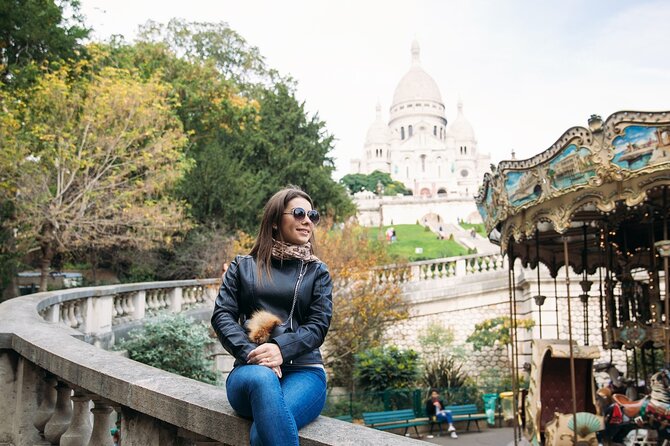
The route continues to La Maison de Dalida, the former home of the beloved singer. You then stop at the nearby Dalida Statue, a monument dedicated to her connection with Montmartre and French popular culture.
Each stop is allotted about 10 minutes. Together, they show that Montmartre’s identity is not limited to painters and cabaret performers. Dalida remains part of the neighborhood’s emotional life, and the statue gives the tour another recognizable photo point.
These stops also break up the art-history narrative. The walk moves from cinema to painting to music, which keeps the experience from feeling like a single-topic lecture. If you already know Dalida’s work, the guide’s local context should add meaning. If you do not, you still get a clear introduction to an important Montmartre figure.
La Maison Rose and the vineyard on the hill
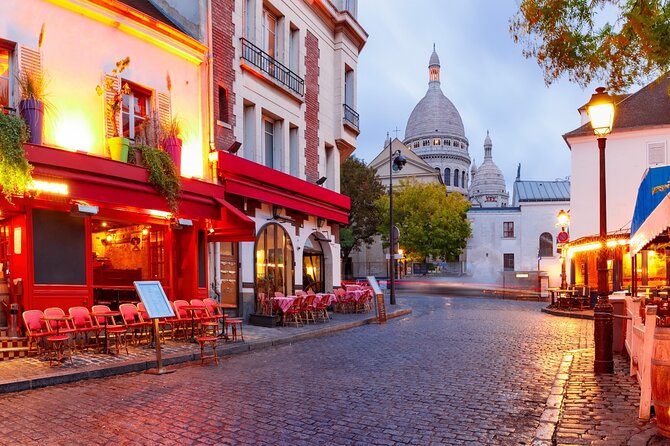
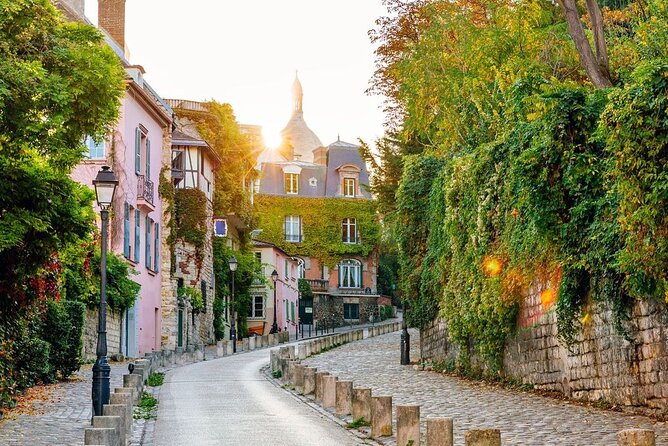
La Maison Rose is one of Montmartre’s most photographed sights. Its pink exterior has inspired artists and photographers, and the tour allows about 10 minutes for the view and pictures.
A little later, you reach Vigne du Clos Montmartre, the local vineyard. The five-minute stop introduces the history of winemaking in the area and its continuing importance to the neighborhood.
The vineyard is especially useful because it challenges the usual picture of Paris as dense streets and famous monuments. Montmartre has rural traces, and this small patch of vines helps explain the hill’s older character. Do not expect a wine tasting to be part of the tour. The supplied details describe an explanation and a look at the site, not a tasting or cellar visit.
La Bonne Franquette and the café tradition
At La Bonne Franquette, the guide discusses a historic Montmartre café associated with artists such as Van Gogh and Toulouse-Lautrec. You spend around 10 minutes taking in the setting and hearing about its role in the neighborhood.
Cafés are central to the story of Montmartre because they were places to eat, meet, argue, plan, and work. This stop pairs well with Le Bateau-Lavoir. One shows the artists’ residential world, while the other points to the social spaces where creative life unfolded.
Again, the tour does not promise a meal or a reserved table. If you want to eat here, treat it as a separate plan after the walk. The tour’s purpose is to help you recognize the café and understand its place in Montmartre.
The climb to Sacré-Cœur and the Paris panorama
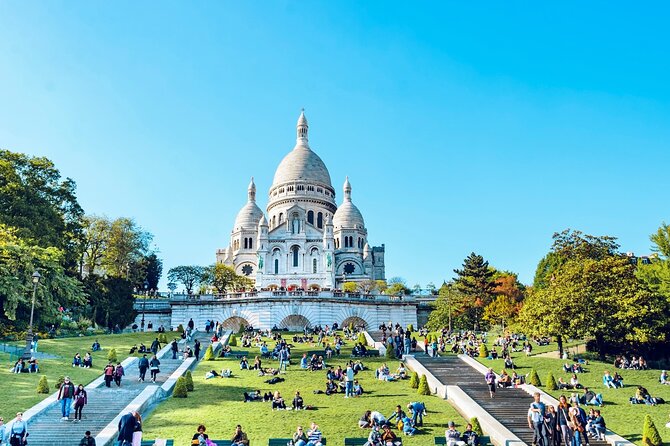
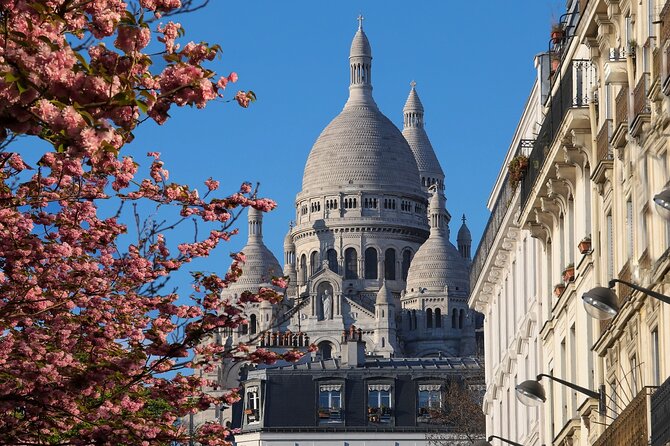
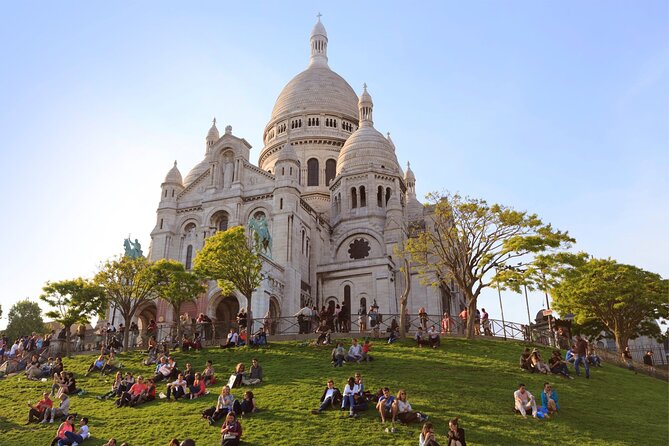
The final major stop is the Basilique du Sacré-Cœur de Montmartre. The basilica offers striking architecture and broad views across Paris from the hilltop. You have about 15 minutes here, so the guide can explain the site and point out the main visual rewards.
This is the payoff of the route, but it is also where the physical effort matters most. Several people describe the walk as uphill, with stairs and plenty of walking. One particularly useful tip is to consider the 300-step climb to the dome if you want an even higher view. That dome visit is not described as part of this tour, so you would need to handle it separately and allow extra time.
The basilica itself is free to enter according to the tour details, but the tour ends outside or near 35 Rue du Chevalier de la Barre, not back at Place Blanche. Plan your next move from the Sacré-Cœur area rather than assuming you will return to the starting point.
How the two-hour format affects the experience
The schedule adds up to a brisk sequence of short stops. Most locations receive five to 10 minutes, while Le Bateau-Lavoir and Sacré-Cœur receive about 15. That makes the tour efficient for a first look at Montmartre, but it leaves little room for long café breaks, shopping, or extended time inside any one place.
I see this as a good orientation walk. You cover the Moulin Rouge, film locations, windmills, religious stories, artists’ addresses, Dalida landmarks, a vineyard, a historic café, and Sacré-Cœur in a compact block. Afterward, you can return to the places that caught your attention.
The tradeoff is depth. You will hear many stories, but you should not expect a specialist art seminar or a slow photographic walk. The best guides make the short stops work through storytelling. Danyel is praised for bringing the neighborhood to life and taking photographs, while Daniel is noted for moving at a comfortable pace and giving people time to rest. Alice and Selda are praised for clear, friendly explanations and a personal manner.
Small groups, guide quality, and crowded streets
A maximum of 15 people is a real advantage in Montmartre. Narrow streets and busy viewpoints are easier to manage with a small group, and your guide has a better chance of hearing questions and keeping everyone together.
Some departures may be much smaller. A very small group lets the guide adjust the pace and offer suggestions based on your interests. That flexibility is one reason this format can feel more personal than a large coach tour.
There is one practical weakness: no audio system is mentioned, and one experience found it hard to hear the guide in crowded places. Stay near the guide, especially around popular photo stops and at Sacré-Cœur. If you have hearing concerns, a large tour with headsets might be a better fit.
Wear shoes suited to uphill pavement and stairs. The walk is described as manageable when taken in pieces, but it is not a flat stroll. Guides have been praised for noticing when people need a rest, so speak up if you need to slow down.
Is $59.28 good value for two hours?
At $59.28 per person, this is not the cheapest way to walk around Montmartre. You can visit many of the exterior sights on your own for free. The fee pays for the guide’s time, the connected route, the stories, and the convenience of seeing a large part of the hill without having to research every address.
The value is strongest if you are visiting Montmartre for the first time, want an English-speaking guide, or prefer a clear route through a confusing set of streets. It is also useful if you have only a short stay in Paris and want to cover the neighborhood’s main themes quickly.
The value is weaker if you already know Montmartre well, dislike group walking, or expect entry to the Moulin Rouge show. Remember that tips are not included, and the Moulin Rouge performance is a separate purchase.
The tour is recommended by 97 percent of customers and carries a 4.9 rating from 152 reviews. Those figures point to very strong satisfaction, but one serious operational complaint involved a last-minute cancellation and a request to move the tour to an earlier time. The stated policy allows a full refund when you cancel at least 24 hours ahead, and poor weather may lead to a new date or a full refund. Changes inside 24 hours are not accepted, and cancellations inside that period are not refunded.
Who should book this Montmartre walk?
I would choose this tour for first-time Paris visitors who want a lively introduction to northern Paris without spending half a day on one museum. It also suits families and mixed-age groups, since the route includes films, music, art, romance, religious stories, and good photo stops.
It works well for people who value a personable guide. Alice, Selda, Daniel, and Danyel receive especially warm praise for their storytelling, patience, humor, and photos. You may not receive a particular guide, but the pattern of feedback makes guide quality a central reason to book.
I would be more cautious if you have limited mobility, need a flat route, or want a quiet experience with guaranteed audio support. The tour is outdoors, weather dependent, and uphill. Most people can participate, but the physical demands should be part of your decision.
Should you book the Moulin Rouge and Sacré-Cœur tour?
Book it if you want a compact, story-led introduction to Montmartre with a small group and an English-speaking guide. The route gives you far more than the Moulin Rouge and Sacré-Cœur, linking film, art, music, cafés, old windmills, vineyards, and neighborhood legends.
Skip it if you mainly want a Moulin Rouge show, a long visit inside Sacré-Cœur, or a relaxed café morning. For everyone else, $59.28 is a fair price for a well-planned first walk through one of Paris’s most distinctive neighborhoods, provided you are ready for hills and a brisk pace.
FAQ
Where does the tour start?
The tour starts at 5 Place Blanche, 75009 Paris, France, near the Moulin Rouge and accessible by public transport.
Where does the tour end?
The tour ends at 35 Rue du Chevalier de la Barre, 75018 Paris, France, in the Sacré-Cœur area.
How long does the tour last?
The tour lasts approximately two hours.
Is the Moulin Rouge show included?
No. The tour includes an explanation and exterior stop at the Moulin Rouge, but admission to a Moulin Rouge show is not included.
What language is the tour offered in?
The experience is offered in English.
How large is the group?
The group can include a maximum of 15 people. Some departures may be smaller.
Is the tour suitable for most people?
Most people can participate, but the route includes a lot of walking, uphill sections, and stairs. The tour also requires good weather.
What is included in the price?
A guide is included. Tips and the Moulin Rouge show are not included.
Can I cancel for a full refund?
Yes. You can cancel at least 24 hours before the start time for a full refund. Cancellations or changes made within 24 hours are not accepted or refunded. If poor weather causes the operator to cancel, you will be offered another date or a full refund.
Newest additions around Paris
- Family escape Game with kids and teens on the Île de la Cité★ 4.5 · 11 reviews
- Private Photoshoot with the Iconic Eiffel Tower in Paris★ 5.0 · 11 reviews
- 2-day Private Mont Saint-Michel, 3 Loire Castles, D-Day Express★ 4.5 · 11 reviews
- Paris: Batobus Hop-On Hop-Off Cruise & Landmarks Audio Tour★ 3.0 · 11 reviews
- Paris Revolutionary Walking Tour: Iconic French Sights & Stories★ 5.0 · 11 reviews
- Guided and Private Tour of 3 hours through Paris aboard a Citroën 2cv★ 5.0 · 11 reviews
- Kids in the Kitchen – CrOisSaNtS★ 4.0 · 11 reviews
- Paris: Ghosts and Dark Stories Guided Walking Tour★ 4.1 · 11 reviews
Montmartre & Sacré-Coeur Tours, compared.

Montmartre Hidden Gems and Scenic Highlights Walking Tour
Read our review →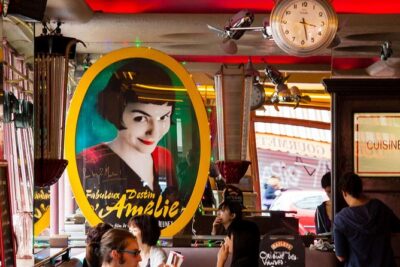
Montmartre Hill French Gourmet Food and Wine Tasting Walking Tour
Read our review →
Montmartre Cheese, Wine & Pastry Guided Walking Tour
Read our review →
Montmartre Highlights Walking Tour with a Local Guide
Read our review →
Sacré-Coeur and Montmartre Tour with Expert Guide
Read our review →
Private Montmartre Food Tour with Wine, Cheese & Pastries
Read our review →
Paris Montmartre Food Tour – A Full French Meal by Do Eat Better
Read our review →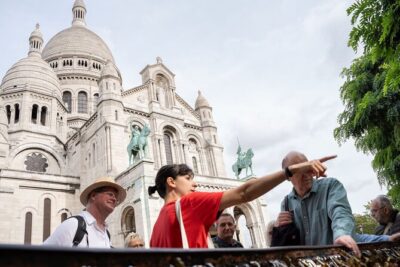
Hidden Montmartre: Paris’ Secret Streets Walking Tour
Read our review →Browse the lists this tour appears in