
Reviewed · ORSAY & ART MUSEUM TOURS
Paris: Rodin Museum Ticket & Optional Digital AudioGuide App
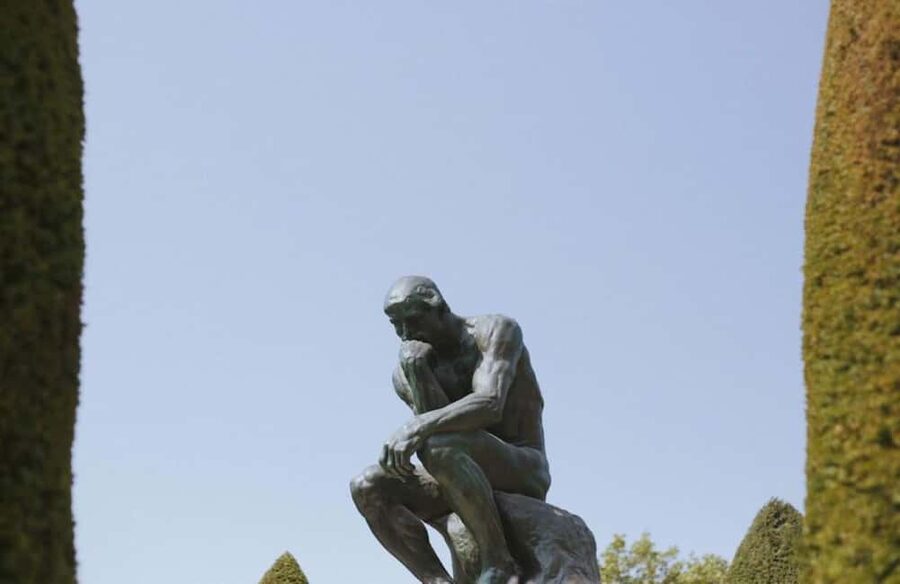
The most rewarding part of the Musée Rodin is seeing The Thinker and other famous sculptures at close range, then stepping outside to view them among lawns, trees, and old stone. You are not rushing through a group tour here. You enter on your own and set the pace.
I like the chance to explore Rodin’s former home and studio, Hôtel Biron, and I like that personal photography is allowed in the museum and garden areas. The $23 price is fair for a full day, especially if you want time for both the indoor rooms and outdoor sculptures.
The main consideration is the audio guide. It is a separate service, not the museum’s official guide, and it does not cover the gardens or temporary exhibitions. You must bring a charged phone, headphones, and the access link sent by email.
In This Review
- Key points to know before you go
- Why the Rodin Museum is worth your Paris time
- Entering at 77 Rue de Varenne
- Hôtel Biron, Rodin’s home and studio
- Meeting The Thinker and The Gates of Hell
- Camille Claudel and the wider collection
- The garden changes how the sculptures feel
- What the digital audio guide adds
- Timing your one-day ticket
- Is $23 good value?
- Who should book this experience?
- Practical preparation for your visit
- Should you book the Musée Rodin ticket?
- FAQ
- Where is the Musée Rodin?
- Is there a meeting point for this activity?
- How long is the ticket valid?
- Can I leave and re-enter the museum?
- What are the museum’s opening hours?
- Which days is the museum closed?
- Is the audio guide included?
- What languages are available for the digital audio guide?
- Do I need to bring headphones?
- Can children enter the museum alone?
Key points to know before you go

- See Rodin’s major works in person: The Thinker and The Gates of Hell are the headline pieces, but the collection also shows early plasters and later works.
- Walk through Hôtel Biron: Rodin’s former home and studio gives the visit an intimate setting instead of a plain gallery experience.
- Take your time outdoors: The garden displays sculptures in an open-air setting, though the digital audio guide does not cover this area.
- Use your own phone: The optional app works through a link, and you need a charged smartphone plus your own earphones.
- Plan around the opening days: The museum is open Tuesday through Sunday from 10:00 AM to 6:30 PM, with last entry at 5:45 PM.
- Check age rules before paying: Visitors under 18 and European Union residents under 26 can enter free with valid identification.
Why the Rodin Museum is worth your Paris time
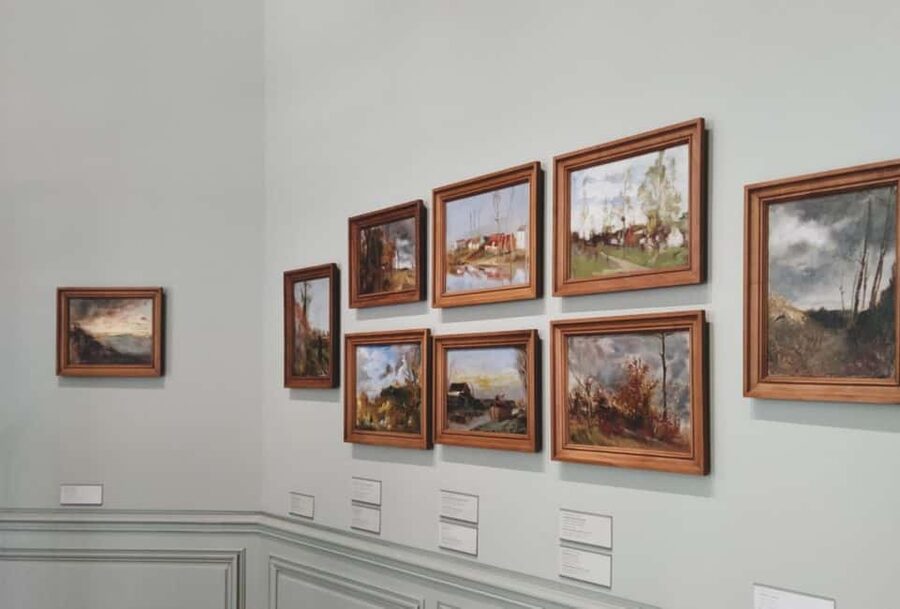
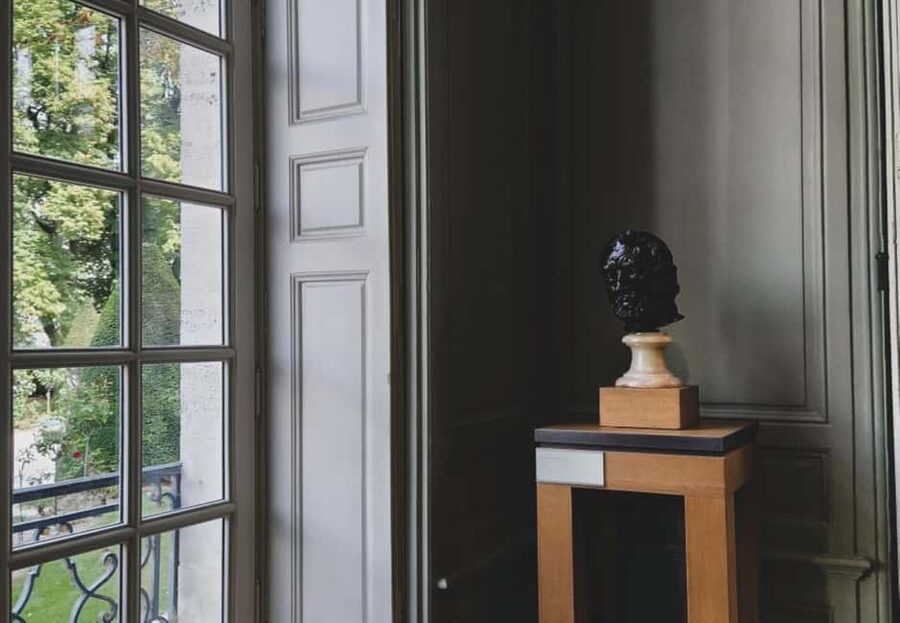
Paris has no shortage of major museums, but Musée Rodin offers a more manageable visit than the city’s biggest collections. You come for a focused look at one sculptor, then get both a historic mansion and a garden filled with art.
Rodin’s work is especially rewarding in person because sculpture depends on scale, surface, and changing light. A photograph can show the outline of The Thinker, but it cannot fully convey the marks, tension, and texture that appear when you walk around the figure.
The collection includes more than 6,000 sculptures. You will not see every work in a single visit, but that number explains why the museum feels like a study of Rodin’s working life rather than a short display of greatest hits.
I also like the presence of Camille Claudel’s work. She was Rodin’s muse and protégé, and her sculptures add another perspective to the artistic world presented here. The museum is not only about one famous male sculptor and his best-known figure.
More Orsay and art museum visits:
- Paris: Orsay Museum Entry Ticket
★ 4.7 · 25,647 reviews - Paris: Orsay Museum Entry Ticket and Digital Audio Guide App
★ 4.4 · 3,170 reviews - Paris in a Day: Louvre or Orsay, Eiffel Tower, City Walk & Cruise
★ 5.0 · 1,956 reviews
Entering at 77 Rue de Varenne
Your visit begins at Musée Rodin, 77 Rue de Varenne, in Paris’s 7th arrondissement. There is no guide or group meeting point. You simply make your own way to the museum and enter with your ticket.
That independent format suits you if you prefer freedom. You do not need to wait for a group, keep up with a guide, or leave when the scheduled tour ends. Once inside, you can stay as long as you like during the museum’s opening hours.
There is one important limit: you cannot leave and re-enter with the same ticket. Plan to visit the indoor galleries and garden in one continuous stretch, and consider taking a short break before entry if you expect to stay several hours.
The museum is closed on Mondays, May 1, January 1, and December 25. On open days, rooms close at 6:15 PM, before the official closing time of 6:30 PM, so do not treat 6:25 PM as a useful arrival time.
Hôtel Biron, Rodin’s home and studio
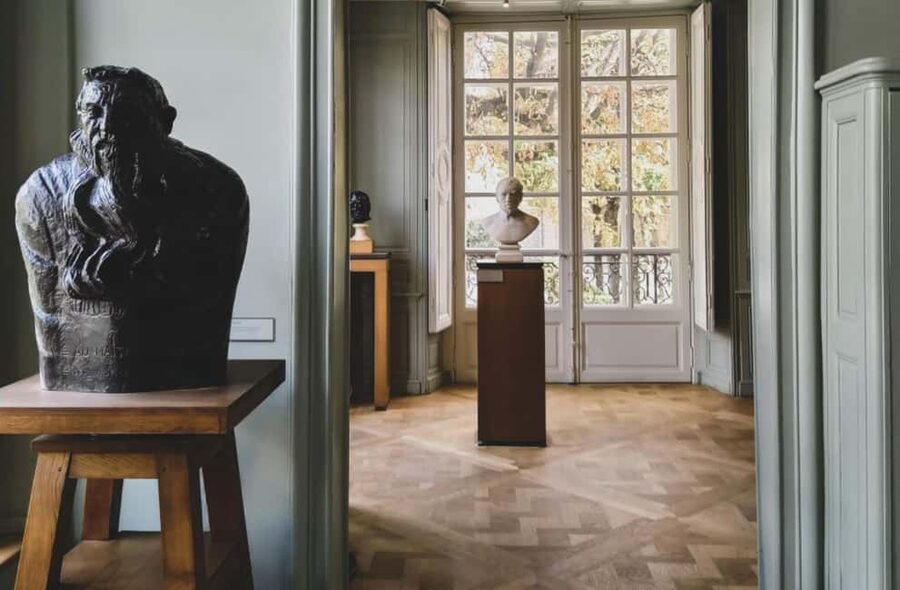
The historic Hôtel Biron is more than a container for the collection. It was once Rodin’s home and studio, and its rooms give the visit a direct connection to the artist’s daily working world.
Inside, you can see Rodin’s sculptures arranged through elegant rooms, including early plasters that reveal how his ideas began. These pieces are useful because they show process. You see the work before it reaches the polished form most people recognize.
The early plasters also help you understand that Rodin’s art did not appear fully formed. His career developed through experiments with shape, movement, fragments, and the human body. If you only seek out The Thinker, you miss the part of the museum that explains how Rodin arrived there.
Give the indoor galleries enough time for comparison. A later sculpture may look familiar, while a rougher or earlier piece shows a more searching stage of his work. The contrast makes the famous works more interesting.
Meeting The Thinker and The Gates of Hell
The Thinker is the museum’s most famous draw, and seeing it in person is different from seeing it reproduced on posters or in books. You can study the figure’s posture, size, surface, and expression from close range, then move around it to see how the form changes.
The Gates of Hell is another essential stop. It represents one of Rodin’s largest and most ambitious projects, and it brings together many figures and ideas that shaped his sculpture. Its detail rewards slow looking, so do not give it only a quick photograph and a few seconds of attention.
The collection lets you see Rodin’s work at different stages. Some sculptures feel complete and commanding, while others reveal the looseness and experimentation of his method. That variety is one reason this visit works well for both first-time art museum visitors and people already familiar with Rodin.
You are free to take your own photographs in the museum and gardens. Use the camera as a record, but also set the phone aside now and then. Sculpture needs a little time without a screen between you and the work.
More Paris museums to visit:
- Paris: Louvre Museum Timed-Entrance Ticket
★ 4.6 · 71,977 reviews - Louvre Museum Masterpieces Guided Tour with Access
★ 4.5 · 12,023 reviews - Paris: Louvre Museum Entry Ticket With Host and River Cruise
★ 4.6 · 9,926 reviews - Les Invalides: Napoleon’s Tomb & Army Museum Entry
★ 4.6 · 9,185 reviews
Camille Claudel and the wider collection
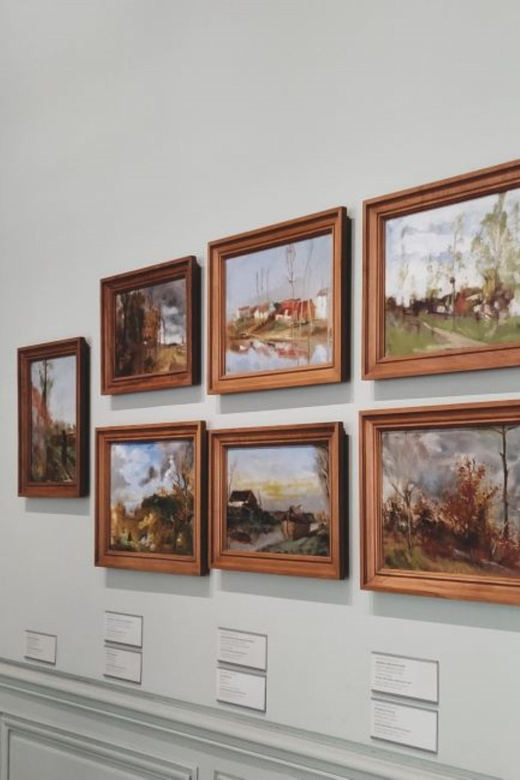
Camille Claudel’s work adds an important layer to the visit. Her connection with Rodin is part of the museum’s story, but the sculptures themselves deserve attention on their own terms.
You can compare her work with Rodin’s and consider the different ways each artist handled emotion, movement, and the human figure. The museum gives you room to make those comparisons without a guide directing every response.
The collection is large enough that your interests should guide the route. If you care most about Rodin’s best-known pieces, focus first on the major works and then return to less familiar objects. If you enjoy artistic process, spend more time with the early plasters and later pieces.
There is no need to force yourself through every room. A shorter, attentive visit can be better than racing through thousands of sculptures simply to say you saw them all.
The garden changes how the sculptures feel
The garden is one of the strongest reasons to choose this museum. Rodin’s sculptures are not confined to rooms, and the outdoor setting gives you a different way to judge scale, distance, and the effect of natural light.
A sunny day can make this part of the visit particularly pleasant. You walk through an historic estate while encountering sculpture from different angles, with the surroundings adding space that an indoor gallery cannot provide.
The garden is also where the audio guide has a clear gap. The digital app does not cover the garden area, so you should expect to explore outside without the same commentary available indoors.
That is not necessarily a problem. The garden works well as a pause from concentrated gallery viewing, and you can look at the sculptures at your own pace. Still, if you want detailed explanations for every outdoor work, this ticket and app combination may feel incomplete.
Because re-entry is not allowed, save enough energy and time for the garden before you leave. It would be a shame to spend the whole visit indoors and discover too late that you have no chance to return.
What the digital audio guide adds
The digital audio guide is available in English, German, French, Italian, Japanese, Spanish, Chinese, Korean, Dutch, Portuguese, Hindi, and Arabic. For many people, that language choice will be more useful than a printed guide.
The app offers background on Rodin’s life, his works, his techniques, and the period in which he worked. Personal details and artistic context can help you understand why a sculpture matters rather than simply identifying its title.
I would use it selectively. Listen to the explanations for the major works, then move on when you want quiet time with the collection. A self-guided visit is at its best when the information supports your looking instead of becoming a nonstop stream in your ear.
You receive access through a link. A valid email address is required when booking, and the link is sent the day before your visit. It also appears on your voucher, so check your email before leaving for the museum.
Bring your own headphones or earphones. They are not included, and museum staff cannot help with this independent audio service. If the app gives you trouble, you must contact the activity provider directly.
The service is not the museum’s official audio guide. The museum staff cannot assist with it, and information about temporary exhibitions is not included. If temporary displays are a priority, plan to read the museum’s own material on site.
Timing your one-day ticket
The ticket is valid for one day, with availability shown for starting times. This gives you room to fit the museum into a larger Paris plan, but you still need to respect the entry window you select.
Opening hours are Tuesday through Sunday, 10:00 AM to 6:30 PM. Last entry is at 5:45 PM, while rooms close at 6:15 PM.
For a relaxed visit, I would avoid arriving near the final entry time. The mansion, garden, and major sculptures deserve more than 30 or 45 hurried minutes, especially if you want to use the audio guide.
The museum’s one-day format does not mean you can come back later that day. Once you exit, the same ticket cannot be used for re-entry. Think of the ticket as a single continuous visit.
Children must be accompanied by an adult, and unaccompanied minors are not allowed. Visitors under 18 and European Union residents under 26 may enter free with valid identification, so check whether the $23 ticket is necessary for each person in your group.
Is $23 good value?
At $23 per person, the ticket offers good value if you plan to see the mansion and garden at an unhurried pace. You are paying for access to a major collection, a historic setting, and outdoor sculpture displays, not just one famous statue.
The value is strongest for art lovers who want context. The early plasters, later works, Camille Claudel’s pieces, and the indoor rooms make the visit broader than a quick stop for The Thinker.
The audio guide can add value if you want explanations in your preferred language. It is especially useful if you like learning about technique and biography while moving independently.
The price is less attractive if you only have a few minutes or mainly want one photograph. In that case, the no-reentry rule and the museum’s size may work against you. Allow enough time to make the ticket worthwhile.
Also check the age discounts before booking. Free entry for visitors under 18 and European Union residents under 26 with valid ID can change the calculation for a family or student group.
Who should book this experience?
I recommend it for independent museum visitors, sculpture fans, and anyone who wants a quieter alternative to Paris’s largest art museums. It also suits you if you like combining art with architecture and garden time.
The experience works well for families with older children who can stay with an adult and enjoy looking at large sculptures. The outdoor area can break up the indoor visit, although the app will not explain the garden works.
It is a good pick for visitors who want multilingual support but do not need a live guide. You can listen in one of twelve listed languages and stop whenever you like.
I would think twice if you require hands-on technical support or expect a museum employee to explain the audio app. This is a self-guided visit, and the provider, not the museum, handles app assistance.
The same caution applies if temporary exhibitions are your main goal. The digital guide does not cover them, so this package is best chosen for Rodin’s permanent collection, Hôtel Biron, and the gardens.
Practical preparation for your visit
Bring your passport or ID card, particularly if you may qualify for free entry. Carry a charged smartphone and your own headphones, and check that you can access the email or voucher containing the audio link.
Wear something comfortable for walking through the mansion and garden. The visit is not a scheduled walking tour, but you will get more from it if you move slowly and take time with the sculptures.
Keep the audio guide link ready before you enter. Downloading or checking it in advance can save you from dealing with a weak connection or a low battery while standing at the museum entrance.
Take photos if you like. The freedom to photograph works in the museum and garden areas is useful for remembering details, comparing sculptures later, or simply keeping a visual record of your visit.
Should you book the Musée Rodin ticket?
Book this experience if you want Rodin’s major sculptures, his former home, and a garden visit in one flexible stop. The $23 price makes sense when you can give the museum several hours and use the audio app as a supplement.
Choose another arrangement if you need a live, official museum guide or detailed commentary for temporary exhibitions and the garden. For most independent visitors, though, this is a practical way to meet Rodin’s work at your own pace, with enough freedom to look closely rather than hurry from one famous piece to the next.
FAQ
Where is the Musée Rodin?
The museum is at 77 Rue de Varenne, 75007 Paris, France.
Is there a meeting point for this activity?
No. You visit the museum independently and enter at the stated address.
How long is the ticket valid?
The ticket is valid for one day.
Can I leave and re-enter the museum?
No. Once you leave, you cannot re-enter with the same ticket.
What are the museum’s opening hours?
The museum is open Tuesday through Sunday from 10:00 AM to 6:30 PM. Last entry is at 5:45 PM, and the rooms close at 6:15 PM.
Which days is the museum closed?
It is closed on Mondays, May 1, January 1, and December 25.
Is the audio guide included?
A digital audio guide app is included with this experience when selected. It is accessed through a link and is separate from the museum’s paid official audio guide.
What languages are available for the digital audio guide?
The listed languages are English, German, French, Italian, Japanese, Spanish, Chinese, Korean, Dutch, Portuguese, Hindi, and Arabic.
Do I need to bring headphones?
Yes. Headphones or earphones are not provided, so bring your own.
Can children enter the museum alone?
No. Children must be accompanied by an adult, and unaccompanied minors are not allowed. Visitors under 18 can enter free with valid identification.
More Self-Guided Tours in Paris
- Paris: Illuminations River Cruise with Audio Commentary
★ 4.3 · 12,340 reviews - From Paris: Giverny Day Trip with Audio Guide or Live Guide
★ 4.3 · 2,372 reviews - Giverny and Monet’s House Half Day Trip from Paris Guide or Audio
★ 4.0 · 1,319 reviews - Paris: Catacombs Entry & Seine River Cruise with Audio Guide
★ 4.4 · 1,150 reviews
Newest additions around Paris
- Family escape Game with kids and teens on the Île de la Cité★ 4.5 · 11 reviews
- Private Photoshoot with the Iconic Eiffel Tower in Paris★ 5.0 · 11 reviews
- 2-day Private Mont Saint-Michel, 3 Loire Castles, D-Day Express★ 4.5 · 11 reviews
- Paris: Batobus Hop-On Hop-Off Cruise & Landmarks Audio Tour★ 3.0 · 11 reviews
- Paris Revolutionary Walking Tour: Iconic French Sights & Stories★ 5.0 · 11 reviews
- Guided and Private Tour of 3 hours through Paris aboard a Citroën 2cv★ 5.0 · 11 reviews
- Kids in the Kitchen – CrOisSaNtS★ 4.0 · 11 reviews
- Segway tour Capital sites★ 5.0 · 11 reviews
Orsay & Art Museum Tours, compared.

Orsay Museum Entry Ticket and Digital Audio Guide App
Read our review →
Paris in a Day: Louvre or Orsay, Eiffel Tower, City Walk & Cruise
Read our review →
Musée d’Orsay Skip-the-Line Tour with Expert Guide
Read our review →
Musée d’Orsay Skip-the-Line Tour with Expert Guide
Read our review →
The Musée d’Orsay Guided Tour Orsay Museum Semi-Private 6ppl Max
Read our review →
Louvre & Musée d’Orsay Guided Museum Tour Semi-Private 6ppl Max
Read our review →
Browse the lists this tour appears in