
Reviewed · ORSAY & ART MUSEUM TOURS
Paris: Musee d’Orsay Private Tour
The best part of this private Musée d’Orsay tour is the chance to see major Impressionist works with a guide who can give each painting a clear story instead of leaving you to wander from room to room. You may examine Monet’s Water Lilies, Van Gogh’s Starry Night over the Rhône, and works by Degas, Renoir, and Gauguin while your guide adjusts the talk to your group.
I like the small group limit of six, which makes questions easy and keeps the visit personal. I also like the focus on artists and famous works rather than a rushed march through every gallery. Guides Ivan and Christophe have been especially effective with children and teenagers, though the tour is offered in French, so language fit matters.
The main drawback is the price: $530 per group is a serious outlay for two hours, especially for one or two people. The museum can also have security delays, and one recorded booking problem involved a guide who failed to appear, so keep your confirmation details close and arrive early.
In This Review
- Key points at a glance
- Why two hours can work well at the Musée d’Orsay
- Meeting the guide by the elephant statue
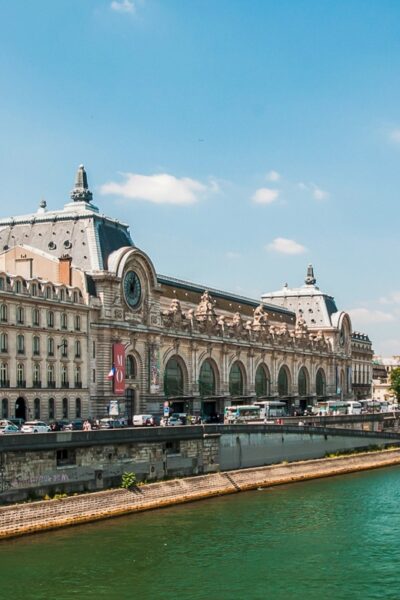
- The old railway station sets the tone
- Monet’s Water Lilies and the calm of repetition
- Van Gogh up close, with room for questions
- Degas, Renoir, and Gauguin fill out the picture
- A guide who can teach different ages
- What the $530 price really means
- Access, security, and the Monday closure
- Who will get the most from this visit
- Should you book the private Musée d’Orsay tour?
- FAQ
- How long is the Musée d’Orsay private tour?
- How many people can join the private group?
- What language is the tour offered in?
- Where do I meet the guide?
- How early should I arrive?
- Is entry to the museum included?
- Is the museum open every day?
Key points at a glance
- See major Impressionist works in two focused hours: Monet, Van Gogh, Degas, Renoir, and Gauguin are central to the visit.
- Private group of up to six: You get a dedicated guide rather than a large shared group.
- Meet by the elephant statue: Arrive 15 minutes early outside the Musée d’Orsay and look for the UTG Experience badge.
- Former railway station setting: The building itself becomes part of the museum story.
- Strong family potential: Ivan and Christophe have been praised for explaining art at a level that works for both adults and children.
- French-language tour: Confirm that this suits everyone in your party before booking.
Why two hours can work well at the Musée d’Orsay
The Musée d’Orsay is not a museum you should treat like a checklist. Its collection is broad, and a first visit can easily turn into a blur of famous names, pale skies, bright dresses, and gilded frames. A two-hour private tour gives you a sensible boundary.
Your guide can select the main works and explain why they matter, instead of asking you to read every wall label. That is useful if you are visiting Paris with children, have limited museum stamina, or want a first look before returning on your own.
The tour is designed to move room by room, with commentary centered on 19th-century art and the Impressionists. You should expect a guided selection, not a full survey of every collection in the building. That is both the strength and the limit. You get focus, but you will not cover the entire museum in detail.
Because the group is private, you can ask for more time on a particular artist or move along when a room does not interest you. The guide can also adjust explanations to the ages in your party. That flexibility is more useful than it may sound. A family with a tired 10-year-old needs a different pace from two adults who want to discuss technique and artistic movements.
More Orsay and art museum visits:
- Paris: Orsay Museum Entry Ticket
★ 4.7 · 25,647 reviews - Paris: Orsay Museum Entry Ticket and Digital Audio Guide App
★ 4.4 · 3,170 reviews - Paris in a Day: Louvre or Orsay, Eiffel Tower, City Walk & Cruise
★ 5.0 · 1,956 reviews
Meeting the guide by the elephant statue
The meeting point is outside the museum at the statue of the elephant. You should arrive 15 minutes before the scheduled start, then look for a guide wearing a company badge marked UTG Experience.
This simple detail matters at a large museum, especially during a busy Paris morning. Do not walk straight into the building expecting to find the guide inside. Your meeting takes place outside first, and the guide leads the group toward entry.
Bring your booking information and give yourself enough time to reach the area around the museum. The exact start times depend on availability, and security checks can slow entry even when you have skip-the-line tickets. Skip-the-line access means you avoid the normal ticket line, not that you bypass all security screening.
One booking problem involved a guide not showing up. It appears to be an isolated issue among the supplied feedback, but it is still a practical reason to arrive early and make sure you can contact the operator if the meeting does not go as planned. The stated cancellation policy allows a full refund when you cancel at least 24 hours ahead.
The old railway station sets the tone
Before you focus on the paintings, your guide will explain how the Musée d’Orsay was made from an old railway station. This is one of the most memorable parts of the visit because the building does not feel like a neutral container for art.
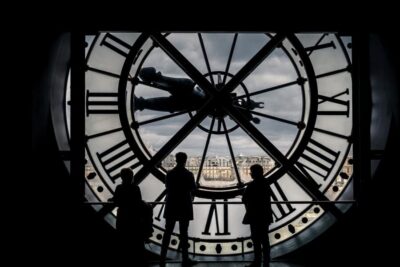
The great interior, the clock-filled structure, and the former station setting help explain why the museum feels different from the Louvre or a traditional gallery. Your guide may point out details that are easy to miss when you hurry toward the famous canvases. The tour also promises little-known museum facts and less obvious spots, though the precise stops can vary with the guide and museum conditions.
This opening context is valuable for first-time visitors. You begin to see the museum as part of the story, not just as a list of rooms. It also gives younger visitors an easy question to hold onto: how did a railway station become an art museum?
Monet’s Water Lilies and the calm of repetition
Monet’s Water Lilies are among the main attractions on this route. The scale and repeated subject give your guide plenty to discuss: the way a familiar pond can become an exercise in color, light, and changing mood.
You will not simply be told that Monet painted water lilies. A good explanation should help you look at how the series works as a group and why repeated views can feel different from one canvas to the next. That is where a private guide earns the fee. You can ask why a work feels calm, how the brushwork affects the surface, or what makes a large mural different from a small painting.
The tour description calls these epic murals, but you should still expect museum conditions, including other people nearby and possible delays inside. Private does not mean you have the gallery to yourself. It means your guide’s attention belongs to your party.
A few more Paris ideas to compare
- Paris: Private Photoshoot at the Eiffel Tower
★ 4.7 · 2,636 reviews - Top Private Cruises in Paris with French Champagne and surprises
★ 5.0 · 1,553 reviews - Private Paris Airport Arrival Transfer – CDG & ORLY Airports
★ 4.5 · 1,119 reviews - Paris Private Arrival Transfer from Charles de Gaulle (CDG) or Orly (ORY)
★ 4.0 · 1,084 reviews
Van Gogh up close, with room for questions
Van Gogh’s Starry Night over the Rhône is another featured work. Seeing it in person gives you a chance to examine the paint, color contrasts, and night sky at close range rather than relying on a reproduction.
Your guide’s job here is to connect the painting to Van Gogh’s artistic choices and the wider story of 19th-century art. The strongest part of a guided visit is often the conversation that follows a famous work. You can ask what to look for, why the colors matter, or how this painting differs from the Van Gogh images you already know.
The tour also brings in Degas, Renoir, and Gauguin. That wider selection keeps the visit from becoming only a Monet and Van Gogh greatest-hits show. You get different approaches to modern life, movement, color, and the human figure, all within a manageable route.
Degas, Renoir, and Gauguin fill out the picture
Degas, Renoir, and Gauguin help show that Impressionism and its neighbors were not one tidy style. Your guide can use these artists to explain contrasts between subjects, brushwork, and artistic aims.
That comparison is particularly useful for teenagers and adults who know individual paintings but have not studied the period. Instead of memorizing labels, you can look for differences from room to room. The guide’s commentary is focused on famous works and Impressionist artists, so this is not the tour for someone seeking a complete history of every movement represented at the museum.
The supplied information does not promise a fixed list of paintings beyond the featured works. Museum displays can change, and your exact route may depend on access and the guide’s judgment. Think of the named paintings as the core sights, with other works added around them.
A guide who can teach different ages
The strongest personal feedback centers on the guides’ ability to explain art clearly. Ivan is praised for passion, teaching skill, and a large command of the subject. Christophe is praised for sharing lesser-known facts and adjusting explanations for children.
That matters if your group includes mixed ages. A child who is tired after a morning in Paris may not want a lecture on artistic theory, while adults may want more than a string of simple facts. A private format lets the guide change pace and pitch as the visit unfolds.
One particularly useful detail is that Ivan handled a 10-year-old while still giving adults enough substance. Another family visit described Christophe as kind with children and effective with teenagers. These comments point to a tour that can work well for families, provided the French-language format suits your group.
The guide is listed as a live French-speaking docent. If your party needs English, do not assume it is available from this booking. Language is the most important fit question to settle before paying.
What the $530 price really means
The price is $530 for a private group of up to six, with the two-hour guided tour and skip-the-line entry tickets included. For six people, that works out to about $88 per person. For two people, it is $265 each, which makes the cost much harder to justify.
I see the value most clearly for a full family or friend group that wants personal attention and does not want to spend time figuring out the museum alone. The cost covers the guide and entry for the group, so you are paying for direction, context, and convenience as much as for admission.
For a couple on a tight budget, a standard museum visit or audio guide may be the better choice. The museum audioguide is not included, but that may not matter if your main goal is a human explanation and a flexible pace. Food, drinks, hotel transport, and activities outside the two-hour tour are also not included.
This tour makes the most financial sense when you value time and shared attention. Six people splitting the price can make it reasonable. One or two people paying the full group rate should book only if a private art lesson is central to the Paris plan.
Access, security, and the Monday closure
The Musée d’Orsay is closed on Mondays, so check your proposed date before you build the rest of the day around this visit. The experience is listed as wheelchair accessible, which is important for anyone planning a museum day around mobility needs.
Heightened security measures can cause delays at entry. Leave some space before your next appointment, especially if you are planning lunch, a train, or another timed attraction immediately afterward.
There is no hotel pickup or transfer. You must make your own way to the meeting point, and the tour begins outside the museum. Since the experience lasts two hours, you can fit it into a larger Paris day, but do not treat the scheduled end time as a guarantee if entry is slowed by security.
Who will get the most from this visit
I would recommend this tour most strongly to:
- Families who want art explained without losing younger members of the group
- First-time Musée d’Orsay visitors who want to see the major Impressionist works
- Groups of four to six who can share the fixed cost
- Visitors who prefer questions and conversation to a recorded guide
- Art lovers who want context around Monet, Van Gogh, Degas, Renoir, and Gauguin
I would be more cautious if you are traveling alone, watching every euro, or hoping for a full museum survey. Two hours is selective, and $530 is a large price for a short visit when the group is small.
Should you book the private Musée d’Orsay tour?
Book it if you want a focused introduction to the museum and can fill most of the six-person group. The former railway station, Water Lilies, Starry Night over the Rhône, and the guide’s artist stories give the visit a clear shape, while the private format lets you ask questions and keep children involved.
Before booking, confirm the French-language format and make sure the cost works for your group size. Arrive 15 minutes early at the elephant statue, allow time for security, and remember that skip-the-line entry does not remove screening.
For a family or full group seeking a personal art lesson, this is a useful way to spend two hours in Paris. For one or two budget-minded visitors, the price is the deciding issue. The experience has earned a 4.6 rating from 22 bookings, with especially strong praise for Ivan and Christophe, but the single no-show account is a reminder to keep your booking details handy.
FAQ
How long is the Musée d’Orsay private tour?
The guided visit lasts two hours.
How many people can join the private group?
The group can include up to six people.
What language is the tour offered in?
The live tour guide is listed as French-speaking.
Where do I meet the guide?
Meet outside the Musée d’Orsay at the statue of the elephant. Look for a guide wearing a UTG Experience company badge.
How early should I arrive?
Arrive 15 minutes before the scheduled start time.
Is entry to the museum included?
Skip-the-line entry tickets are included for the Musée d’Orsay tour. Other entrance fees or activities outside the two-hour guided visit are not included.
Is the museum open every day?
No. The Musée d’Orsay is closed on Mondays. Security checks may also delay entry, even with skip-the-line tickets.
Newest additions around Paris
- Family escape Game with kids and teens on the Île de la Cité★ 4.5 · 11 reviews
- Private Photoshoot with the Iconic Eiffel Tower in Paris★ 5.0 · 11 reviews
- 2-day Private Mont Saint-Michel, 3 Loire Castles, D-Day Express★ 4.5 · 11 reviews
- Paris: Batobus Hop-On Hop-Off Cruise & Landmarks Audio Tour★ 3.0 · 11 reviews
- Paris Revolutionary Walking Tour: Iconic French Sights & Stories★ 5.0 · 11 reviews
- Guided and Private Tour of 3 hours through Paris aboard a Citroën 2cv★ 5.0 · 11 reviews
- Kids in the Kitchen – CrOisSaNtS★ 4.0 · 11 reviews
- Paris: Ghosts and Dark Stories Guided Walking Tour★ 4.1 · 11 reviews
Orsay & Art Museum Tours, compared.
Orsay Museum Entry Ticket and Digital Audio Guide App
Read our review →
Paris in a Day: Louvre or Orsay, Eiffel Tower, City Walk & Cruise
Read our review →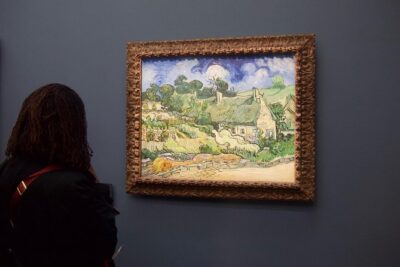
Musée d’Orsay Skip-the-Line Tour with Expert Guide
Read our review →
Musée d’Orsay Skip-the-Line Tour with Expert Guide
Read our review →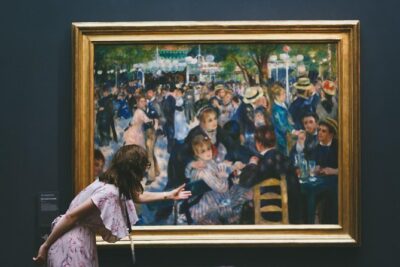
The Musée d’Orsay Guided Tour Orsay Museum Semi-Private 6ppl Max
Read our review →
Louvre & Musée d’Orsay Guided Museum Tour Semi-Private 6ppl Max
Read our review →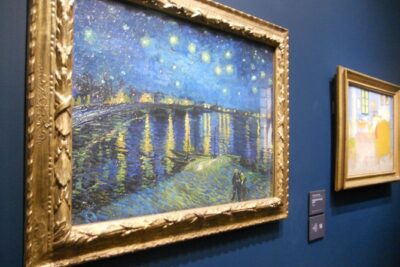
Browse the lists this tour appears in