
Reviewed · MONTMARTRE & SACRé-COEUR TOURS
Paris: Montmartre Private Walking Tour
Montmartre is Paris with its sleeves rolled up. On this private two-hour walk, you follow old lanes from the Moulin Rouge to Sacré-Coeur, hearing how painters, drinkers, dancers, and struggling writers turned a former suburb into the city’s most famous artistic quarter. It is part neighborhood stroll, part social history lesson.
I like the small private format, which lets your guide adjust the pace and explain the odd details that a large group might miss. I also like the mix of celebrated sights and less polished streets, from the Can-Can’s old cabarets to Picasso’s drinking haunts and Montmartre’s surviving vineyard.
The main drawback is time. Two hours gives you a useful introduction, but not a leisurely look inside every stop. Expect hills and some uphill walking, too. This is a rain-or-shine tour, so sensible shoes and a weather-ready jacket matter.
In This Review
- Key points at a glance
- Starting beneath the Moulin Rouge at Metro Blanche
- Climbing ancient Rue Lepic through old Montmartre
- Moulin de la Galette and the neighborhood’s artistic past
- Cabarets, illegal alcohol, and the Can-Can
- Place du Tertre and the village in the city
- The Vigne de Montmartre and a surviving patch of countryside
- Lapin Agile and the artists’ drinking dens
- Sacré-Coeur and the final uphill reward
- What $171 per person means in practical terms
- Who will get the most from this Montmartre walk
- Should you book the private Montmartre tour?
- FAQ
- Where does the Montmartre walking tour begin?
- Where does the tour end?
- How long does the tour last?
- What languages are available?
- Is this a private tour?
- What happens if it rains?
Key points at a glance
- Start at Metro Blanche: Meet your guide by the exit, identified by a red canvas tote bag.
- Follow Rue Lepic uphill: This old road links cabarets, artists’ homes, cafés, and the Moulin de la Galette.
- Hear Montmartre’s unruly past: Learn about illegal alcohol, Can-Can dancers, slums, and the neighborhood’s shift into fashionable Paris.
- See the artistic side: Visit Place du Tertre, the Vigne de Montmartre, and Lapin Agile, associated with Picasso and Modigliani.
- Private guide in three languages: Tours are offered in English, French, or Serbo-Croatian.
- Useful booking flexibility: You can cancel up to 24 hours ahead for a full refund and reserve now while paying later.
Starting beneath the Moulin Rouge at Metro Blanche
The tour begins at the exit of Metro Blanche, a handy place to meet because Montmartre’s story starts with the entertainment district below the hill. Look for the guide carrying a red canvas tote bag. The walk ends back at the same meeting point, which makes the outing easy to fit into a day of sightseeing.
From here, you are close to the Moulin Rouge and the old Maison Blanche, now associated with Metro Blanche. The area introduces one of Montmartre’s central themes: pleasure, money, and art all sharing the same few streets.
The Moulin Rouge is the best-known cabaret in the neighborhood, but the point of this walk is not simply to take a photograph outside it. Your guide explains how the Can-Can developed in Parisian dance halls and how Montmartre once sat outside the city’s jurisdiction. That legal position helped the area attract businesses and behavior that were restricted elsewhere.
I find this beginning useful because it gives the neighborhood a reason for being. Montmartre was not always the postcard hill topped by a basilica. It had rough edges, cheap drinking spots, entertainment halls, and a reputation for mischief.
More Montmartre walks and visits:
- Montmartre Hidden Gems and Scenic Highlights Walking Tour
★ 5.0 · 2,684 reviews - Montmartre Hill French Gourmet Food and Wine Tasting Walking Tour
★ 5.0 · 2,588 reviews - Paris: Montmartre Cheese, Wine & Pastry Guided Walking Tour
★ 4.8 · 2,255 reviews
Climbing ancient Rue Lepic through old Montmartre
Rue Lepic is one of the most important stretches of the walk. You climb it gradually, following an old route through a district that still feels different from central Paris. The street connects several themes at once: village life, artists, working-class housing, and nightlife.
The climb is also the practical challenge of the tour. You will not be walking flat boulevards for two hours. The guide can set the pace for your private group, but you should still wear shoes suited to uneven pavement and uphill sections.
Along Rue Lepic, expect contrasts rather than a tidy museum version of Montmartre. Lavish houses can appear close to worn buildings and former slum areas. That visual tension helps explain why the neighborhood appealed to artists with limited money, as well as wealthier Parisians looking for a fashionable address.
The tour connects the street to the birth of Impressionism in the 19th century. You hear about painters who worked and socialized in the area, rather than receiving only a list of monuments. For me, that makes the walk more useful than a simple photo hunt. You begin to see Montmartre as a place where art grew out of daily life, nightlife, and cheap rent.
Moulin de la Galette and the neighborhood’s artistic past
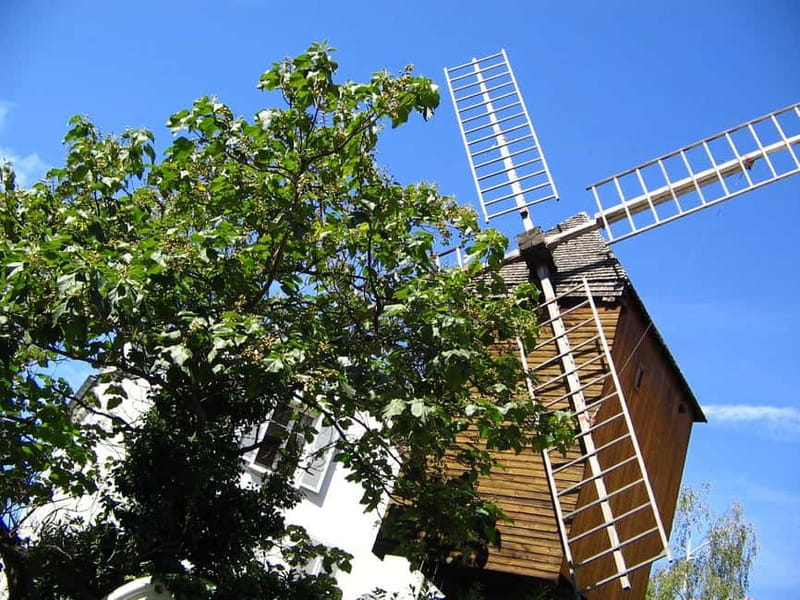
The Moulin de la Galette is another major stop on the route. Its name recalls the windmills and dance halls that once marked Montmartre’s outer edge. It also points to the district’s change from rural-looking suburb to city neighborhood.
This is where a good guide can add welcome context. The story is not only about famous painters. It is also about the people who ran cafés, cabarets, dance halls, and small businesses that gave artists somewhere to work and socialize.
You may find the exterior stops more rewarding if you enjoy atmosphere and social history. This is not an indoor museum tour, and the experience does not promise entry to the Moulin Rouge, Moulin de la Galette, Lapin Agile, or Sacré-Coeur. The value comes from seeing where these places fit into Montmartre’s story and hearing the connections between them.
The guide-led format matters here. With Boris, one guide named in the tour feedback, the emphasis included broad Paris history and clear English. Isabella is another named guide associated with the experience. Guide assignments can vary, but the personal format gives you a chance to ask questions instead of waiting for a scripted group explanation.
Cabarets, illegal alcohol, and the Can-Can
Montmartre’s cabaret story is more complicated than the bright red windmill suggests. The walk covers illegal alcohol and the obscene Can-Can dancers who helped give the neighborhood its unruly reputation.
That material adds humor, but it also explains the district’s appeal. Montmartre became a place where rules were looser, drinks were easier to find, and entertainers could attract an audience. The result was a social mix that helped writers and painters meet people outside respectable Paris.
You should expect stories about the character of the district, not a cabaret performance. The tour takes you past famous venues and explains their role in local life. If you want a full evening show, this walk will not replace one. If you want to understand why the Moulin Rouge matters before seeing it at night, it makes a useful introduction.
A night walk is possible when starting times allow, and that changes the feel of the streets. One evening outing included scenery and historical explanation. Still, availability varies, so check the offered times before planning around sunset or cabaret lights.
More Paris walking tours:
- Paris Top Sights Half Day Walking Tour with a Fun Guide
★ 5.0 · 2,893 reviews - Paris Île de la Cité and Notre-Dame Walking Tour With Crypt
★ 5.0 · 2,272 reviews - Paris in a Day: Louvre or Orsay, Eiffel Tower, City Walk & Cruise
★ 5.0 · 1,956 reviews - Paris: Montmartre Highlights Walking Tour with a Local Guide
★ 4.9 · 1,668 reviews
Place du Tertre and the village in the city
Place du Tertre is the most openly picturesque part of the route. Its artists’ tables and old-square setting give Montmartre a village feel, even though you are in one of Europe’s largest capitals.
This is likely to be one of the busiest points on the walk. The square is famous for street artists, so it can feel more polished and commercial than the rougher lanes below. That is not a flaw, but it is worth knowing. You are seeing a living tourist center, not an untouched artists’ colony.
A private guide helps you read the square beyond its appearance. You can ask how the place fits into Montmartre’s artistic identity and how the neighborhood shifted from a working suburb to a fashionable destination. The contrast between the square’s charm and the district’s harsher past is part of the appeal.
Families may find this section especially approachable. Boris kept two children, aged 10 and 12, interested during one private walk, and the format allows the guide to explain stories in a way that works for younger listeners. That is more useful than assuming children will enjoy a long lecture about 19th-century art.
The Vigne de Montmartre and a surviving patch of countryside
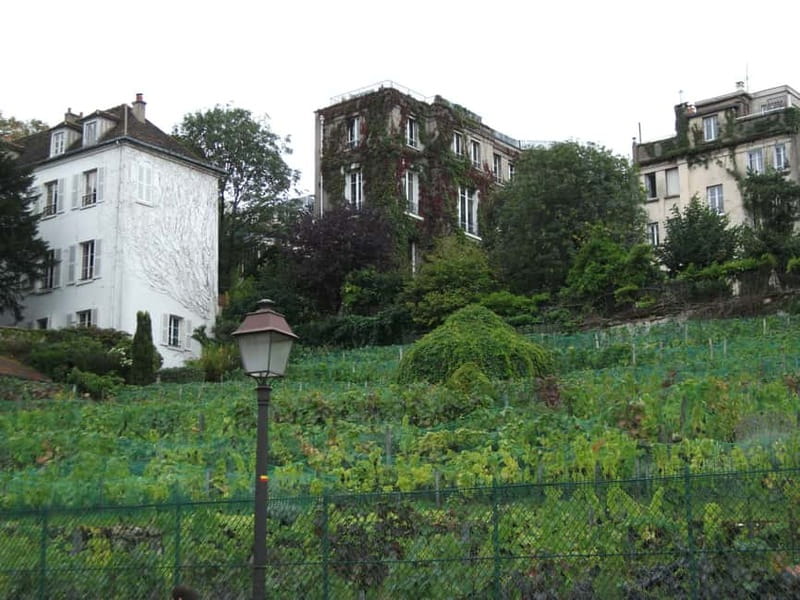
The Vigne de Montmartre, or Montmartre vineyard, gives the tour one of its most unusual details. It is a reminder that the hill was once associated with rural land and winemaking, not just apartment blocks and tourist cafés.
The vineyard is not the kind of major monument you build an entire visit around. Its importance is as a surviving piece of the old village character. After hearing about cabarets, slums, painters, and fashionable homes, this small agricultural remnant helps complete the picture.
I like stops such as this because they prevent the tour from becoming a parade of famous names. Montmartre is more interesting when you see the ordinary traces of its past alongside Sacré-Coeur and the Moulin Rouge.
Lapin Agile and the artists’ drinking dens
Lapin Agile is a historic cabaret associated with struggling artists and writers, including Picasso and Modigliani. The stop brings the artistic story down to a human scale. Instead of thinking only about masterpieces in museums, you picture young artists meeting in inexpensive drinking places, arguing about art, and trying to make a living.
The tour also points out other favorite drinking dens connected with Picasso and his circle. These details are valuable because they show how artistic movements often grow through friendships and shared places, not in isolation.
Again, expect to see the location and hear its story rather than attend a show. The focus is on Montmartre’s social world. If you have already visited the Louvre or Musée d’Orsay, this walk adds the streets and cafés behind the paintings.
Sacré-Coeur and the final uphill reward
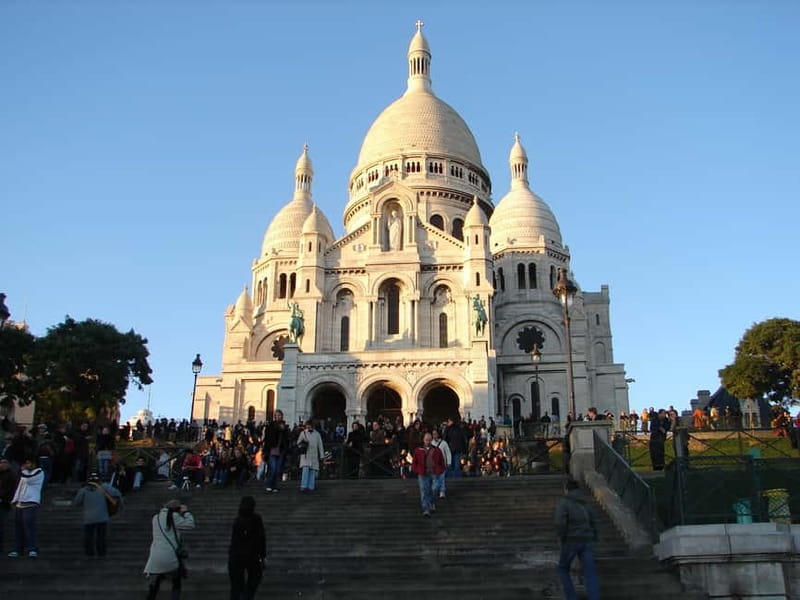
The white façade of Sacré-Coeur provides the walk’s grand visual finish. Reaching it after Rue Lepic and the neighborhood’s smaller streets gives the basilica more impact than arriving directly by the most convenient route.
The tour does not state that it includes an interior visit, so plan on an exterior look unless your guide confirms otherwise. The key experience is the approach: you move from old cabarets and narrow streets toward one of Paris’s most recognizable landmarks.
Because the route ends back at Metro Blanche, this is not a one-way transfer to the basilica. You return to the starting point after seeing the upper part of Montmartre. That arrangement makes the tour easy to pair with another activity, though you should allow time for the walk back.
What $171 per person means in practical terms
At $171 per person, this is not a budget walking tour. You are paying for a two-hour private experience with a live guide, not for admission tickets, meals, drinks, or transportation.
The value depends heavily on your group size and priorities. A couple or family that wants a flexible explanation of Montmartre may find the private format worthwhile. A solo visitor comparing prices with a large group walk will likely see this as an expensive choice.
The strongest reason to pay more is control. You can ask about Impressionism, cabarets, family history, architecture, or the people connected with Lapin Agile. A private guide can also keep children involved and adjust the rhythm of the climb.
The operator, Paris in person private tours, was selected among the top 10 small tour operators in Europe in 2025 from a field of 26,000 companies. That recognition does not guarantee that every guide will suit every guest, but it adds useful context when judging the price.
There is also some booking flexibility. You can reserve now and pay later, and cancellation is free up to 24 hours before the tour. Since the walk runs rain or shine, that policy is helpful if the forecast looks poor, although you should not assume bad weather cancels the outing automatically.
Who will get the most from this Montmartre walk
I would choose this tour if you want Montmartre explained rather than simply photographed. It suits first-time visitors who want a clear introduction to the district, families who benefit from a guide’s personal attention, and repeat visitors who want more social history behind familiar sights.
It also suits anyone curious about the people around Parisian art movements. The combination of Rue Lepic, Moulin de la Galette, Lapin Agile, the vineyard, and Place du Tertre gives you more than a basilica visit.
You may want another option if you dislike uphill walking, prefer independent wandering, or mainly want interior visits. The tour is only two hours, and several locations are viewed from outside. It is best treated as a guided orientation, not an all-day Montmartre program.
Tours are available in English, French, and Serbo-Croatian. The guide names connected with the experience include Boris and Isabella, but the guide you receive depends on the booking. One important strength is the ability to keep the discussion lively. Boris handled questions and kept two children engaged, while Isabella was described as both informative and fun in the experience details.
Should you book the private Montmartre tour?
Book it if you want a compact, personal introduction to Montmartre’s artists, cabarets, vineyard, and village streets. The private format and strong 4.9 rating from 45 reviews support its appeal, especially for couples and families who value conversation over a fixed script.
Think twice if $171 per person feels high for two hours or if you want museum entry, food, drinks, or a full cabaret evening. For the right group, the price buys context, flexibility, and a more human look at Montmartre than a quick stroll can provide. Wear good shoes, arrive at Metro Blanche, and be ready for a hill.
FAQ
Where does the Montmartre walking tour begin?
Meet your guide by the exit of Metro Blanche. The guide will be carrying a red canvas tote bag.
Where does the tour end?
The activity ends back at the meeting point near Metro Blanche.
How long does the tour last?
The walking tour lasts two hours. Starting times depend on availability.
What languages are available?
The live tour guide can conduct the experience in English, French, or Serbo-Croatian.
Is this a private tour?
Yes. The tour is arranged for a private group.
What happens if it rains?
The tour takes place rain or shine. You should dress for the weather and wear comfortable shoes for the uphill streets.
Newest additions around Paris
- Family escape Game with kids and teens on the Île de la Cité★ 4.5 · 11 reviews
- Private Photoshoot with the Iconic Eiffel Tower in Paris★ 5.0 · 11 reviews
- 2-day Private Mont Saint-Michel, 3 Loire Castles, D-Day Express★ 4.5 · 11 reviews
- Paris: Batobus Hop-On Hop-Off Cruise & Landmarks Audio Tour★ 3.0 · 11 reviews
- Paris Revolutionary Walking Tour: Iconic French Sights & Stories★ 5.0 · 11 reviews
- Guided and Private Tour of 3 hours through Paris aboard a Citroën 2cv★ 5.0 · 11 reviews
- Kids in the Kitchen – CrOisSaNtS★ 4.0 · 11 reviews
- Paris: Ghosts and Dark Stories Guided Walking Tour★ 4.1 · 11 reviews
Montmartre & Sacré-Coeur Tours, compared.

Montmartre Hidden Gems and Scenic Highlights Walking Tour
Read our review →
Montmartre Hill French Gourmet Food and Wine Tasting Walking Tour
Read our review →
Montmartre Cheese, Wine & Pastry Guided Walking Tour
Read our review →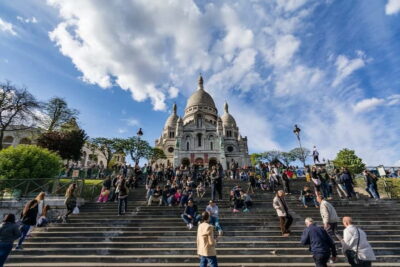
Montmartre Highlights Walking Tour with a Local Guide
Read our review →
Sacré-Coeur and Montmartre Tour with Expert Guide
Read our review →
Private Montmartre Food Tour with Wine, Cheese & Pastries
Read our review →
Paris Montmartre Food Tour – A Full French Meal by Do Eat Better
Read our review →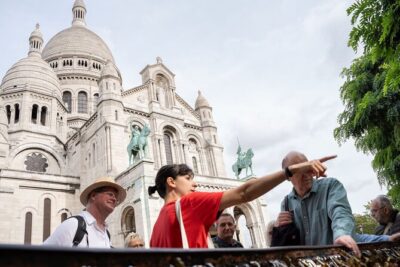
Hidden Montmartre: Paris’ Secret Streets Walking Tour
Read our review →Browse the lists this tour appears in