
Reviewed · MONTMARTRE & SACRé-COEUR TOURS
Paris: Montmartre Must-See Walking Tour with a Local Guide
Montmartre is at its best when someone helps you read the streets. This 150-minute walk connects Sacré-Cœur and Place du Tertre with the old vineyard, Dalida’s former home, artist workshops, cabaret stories, and the Wall of Love. Jean-Baptiste, often called JB or Ratatouille, brings a lively personal style, while other French Tales guides may lead the walk.
I like the route’s range: you get major sights and small neighborhood details, not just a photo stop at the basilica. I also like the practical touch, with café, bakery, restaurant, and safety suggestions woven into the walk. The catch is the terrain. Hills, stairs, and cobblestones make this a poor fit for wheelchairs or anyone who struggles with uneven ground.
In This Review
- Key points to know before you book
- Why this Montmartre walk is more than a Sacré-Cœur visit
- Starting below the hill at Place Saint-Pierre
- Square Louise Michel and the climb to Sacré-Cœur
- Place du Tertre, Le Poulbot, and Montmartre’s public face
- Square Nadar, Dalí, and the neighborhood’s quieter corners
- La Maison Rose and the Clos Montmartre vineyard
- Lapin Agile, Dalida, and local Montmartre stories
- Moulin de la Galette and the world of Renoir
- Bateau-Lavoir and the artists who changed modern art
- Ending at the Wall of Love and Place des Abbesses
- Guide style: why Jean-Baptiste gets such strong praise
- Price, pace, and who gets the best value
- Practical advice for making the walk easier
- Should you book this Montmartre tour?
- FAQ
- How long does the Montmartre walking tour last?
- What language is the tour offered in?
- How much does the tour cost?
- Where does the tour start?
- How can I find the guide?
- Which Metro stations are near the meeting point?
- Is the tour wheelchair accessible?
- What should I bring?
Key points to know before you book
- Sacré-Cœur is only one part of the walk: The tour also reaches the Clos Montmartre vineyard, Moulin de la Galette, Dalida’s home, and Bateau-Lavoir.
- JB is the guide most often praised: He is funny, energetic, attentive, and good at keeping children and teenagers involved.
- The price is modest for a full neighborhood orientation: At $29 per person, you get a local guide, a 150-minute walk, landmark stops, and food recommendations.
- Expect a real uphill walk: Square Louise Michel, the basilica steps, narrow lanes, and cobblestones call for sturdy shoes and water.
- You finish near Place des Abbesses: That gives you a useful base for continuing around Montmartre or finding a café afterward.
- Weather matters: The tour runs rain or shine, so a wet day can make the slopes and stone streets harder work.
Why this Montmartre walk is more than a Sacré-Cœur visit
A first look at Montmartre can seem simple: climb the hill, admire Sacré-Cœur, take a picture, and wander through the artist square. That plan misses the neighborhood’s best quality, its mixture of village corners, famous names, local businesses, and stories that explain why artists came here.
This walk gives you a route through that larger picture. You start at Place Saint-Pierre, below the hill, then work upward through Square Louise Michel before reaching the basilica. From there, the group moves through the lanes and squares where painters, musicians, writers, cabaret performers, and ordinary residents shaped Montmartre.
I would use this tour early in a Paris stay. It gives you a map in your head and a list of places to return to. The guide’s suggestions can also help with later meals, bakeries, cafés, and quieter streets.
The format is small-group, and the guide speaks English. An English audio guide is included as well, though the live guide is the main reason to book. Jean-Baptiste is frequently named in the feedback, and his style seems especially strong for people who enjoy stories, jokes, local contacts, and a bit of theater. Marcella has also led the walk, showing that the quality does not depend on only one person, though JB receives the most attention.
More Montmartre walks and visits:
- Montmartre Hidden Gems and Scenic Highlights Walking Tour
★ 5.0 · 2,684 reviews - Montmartre Hill French Gourmet Food and Wine Tasting Walking Tour
★ 5.0 · 2,588 reviews - Paris: Montmartre Cheese, Wine & Pastry Guided Walking Tour
★ 4.8 · 2,255 reviews
Starting below the hill at Place Saint-Pierre
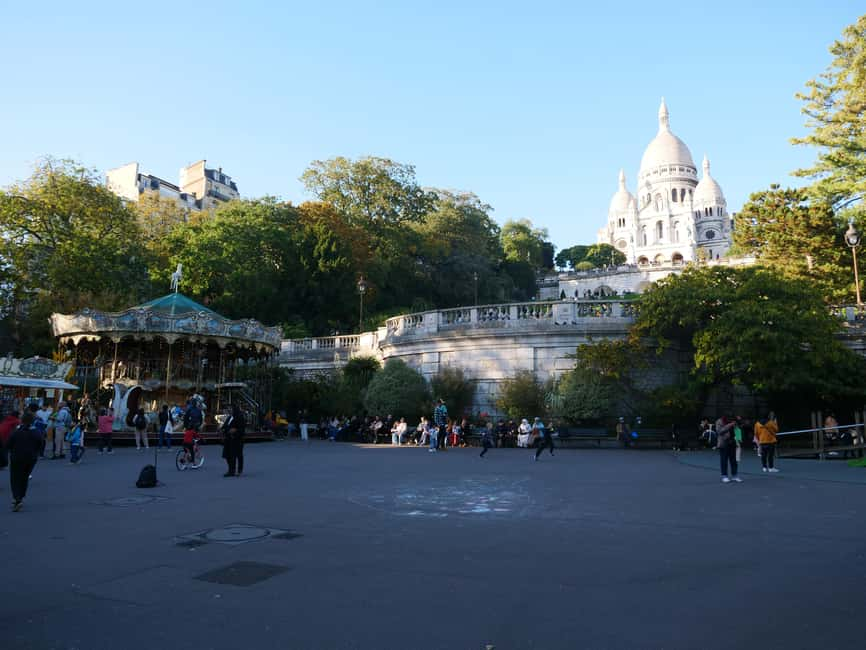
Your meeting point is the Carrousel de Saint-Pierre, in front of Café Le Ronsard at the bottom of Square Louise Michel. Look for the guide holding a French Tales sign and a stick with Disney’s Ratatouille character. That detail matters because Place Saint-Pierre can feel busy, and a clear meeting marker saves time.
Arrive 15 minutes early. Anvers station on Metro Line 2 is about a five-minute walk away. Abbesses on Line 12 takes about seven to ten minutes, and the station has elevators available, so you do not need to take the stairs there.
The carrousel and the square provide an easy opening. You are not dropped straight into a lecture inside a church. Instead, the tour starts with Montmartre as a neighborhood, then builds toward the hilltop.
Square Louise Michel and the climb to Sacré-Cœur
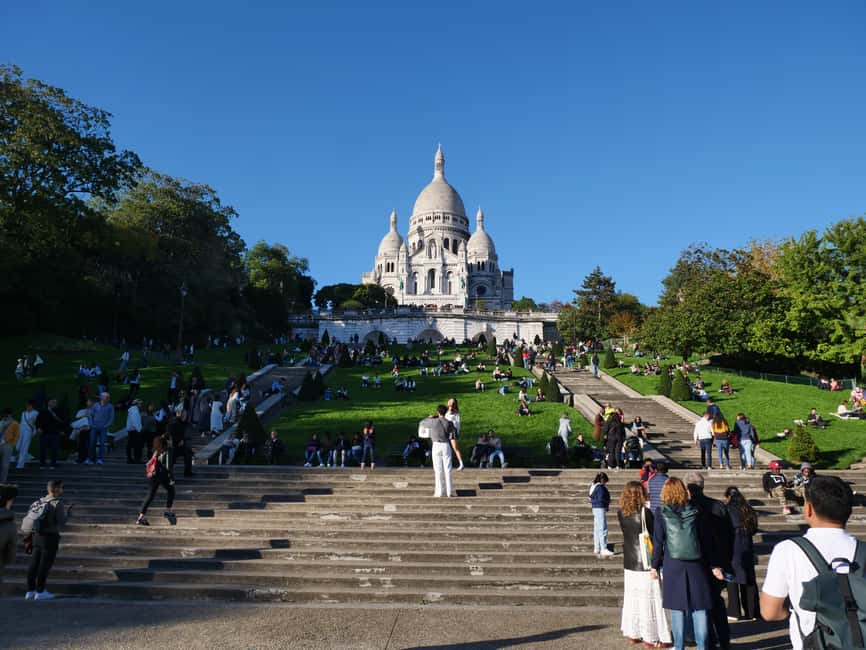
Square Louise Michel is the first major stretch of the walk. The gardens sit below the basilica and offer one of the classic uphill views in Paris. This is also where you begin to understand the physical shape of Montmartre. The route rises, and the steps are part of the story as much as the scenery.
The climb is manageable for most people who are comfortable walking uphill, but do not treat this as a flat city stroll. The guide makes stops along the way, which helps the group catch its breath and gives you time for pictures.
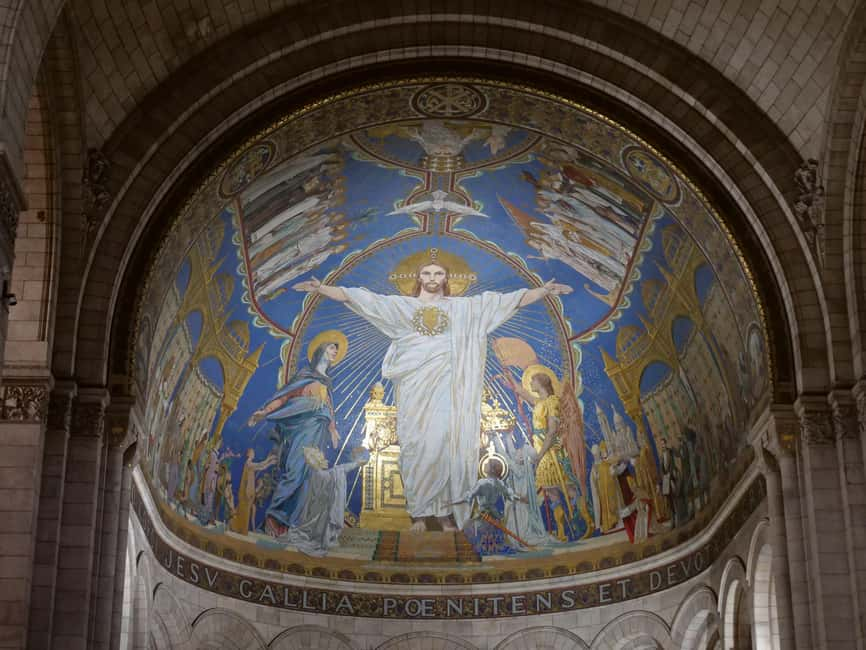
At the parvis of Sacré-Cœur, you get a wide view across Paris. The basilica is one of the city’s highest points, so this is a natural place to pause. You also step inside to see the large mosaics. Dress respectfully, and remember that a church visit is different from a quick exterior photo.
The basilica section takes about 30 minutes, making it the longest named stop. That is useful if you want both the building and the view, but it also means the tour gives less time to linger at later locations. If you want a slow, private visit inside Sacré-Cœur, plan to return on your own.
Place du Tertre, Le Poulbot, and Montmartre’s public face
Place du Tertre is the famous artist square, lined with painters, caricaturists, cafés, and people taking pictures. It can be crowded and commercial, but it remains an important part of Montmartre’s identity. A guide helps you see more than the obvious souvenir scene.
You will hear about the artists who worked here and how the square fits into the district’s creative life. You may also get advice on how to approach portraits or avoid pressure from street sellers, although the exact experience depends on the day.
Nearby, Le Poulbot connects the neighborhood to illustrator Francisque Poulbot, known for drawings of Montmartre’s street children. The restaurant is also useful as a practical stop. Several people returned there after the tour for traditional French dishes, including duck confit and crème brûlée.
I like this pairing because it connects art with food. Montmartre is not only a museum district. It is also a place where a restaurant recommendation can turn a walking tour into an evening plan.
More Paris walking tours:
- Paris Top Sights Half Day Walking Tour with a Fun Guide
★ 5.0 · 2,893 reviews - Paris Île de la Cité and Notre-Dame Walking Tour With Crypt
★ 5.0 · 2,272 reviews - Paris in a Day: Louvre or Orsay, Eiffel Tower, City Walk & Cruise
★ 5.0 · 1,956 reviews - Paris: Montmartre Highlights Walking Tour with a Local Guide
★ 4.9 · 1,668 reviews
Square Nadar, Dalí, and the neighborhood’s quieter corners
The route also includes Square Nadar, a calmer place named for the photographer Nadar. It gives the walk a pause after the crowds around Sacré-Cœur and Place du Tertre.
You then pass the Dali Museum, a reminder that Montmartre’s art story does not stop with the painters of the late 19th and early 20th centuries. Salvador Dalí’s presence adds a surrealist note, and the guide may connect his work to small cultural details, such as his design of the Chupa Chups logo.
These stops are not grand monuments. That is their value. You get context for the neighborhood’s artistic reputation without spending the whole walk inside formal museums.
La Maison Rose and the Clos Montmartre vineyard
La Maison Rose is one of Montmartre’s most photographed buildings. Its pink exterior and corner position make it an easy picture, but the guide gives you a reason to see it as part of the district rather than just a social-media backdrop.
The nearby Vignes du Clos Montmartre is one of the route’s most surprising stops. Paris is not the first place you think of for vineyards, yet this small patch preserves a piece of Montmartre’s rural past. It is a good example of how quickly the neighborhood changes character. One minute you are near packed cafés and camera phones, and soon you are looking at vines inside the city.
Do not expect a wine estate or a tasting. This is a visual and historical stop. Food and drinks are not included, so any tasting or meal is your own expense.
Lapin Agile, Dalida, and local Montmartre stories
Cabaret Au Lapin Agile brings in the nightlife and performance side of Montmartre. The venue has hosted major artists and writers, and its story helps explain why the district became a magnet for creative people.
Place Dalida and Dalida’s former home offer a different kind of connection. The singer remains deeply loved in France and beyond, and the statue is a popular place for a tribute and a photograph. The guide can link her story to the modern identity of Montmartre, where famous residents still shape how people understand the streets.
Square Suzanne Buisson provides another quieter pause. The garden is dedicated to a local heroine and gives the group a break from the narrow lanes. These gardens and side squares are exactly the sort of places that are easy to pass without a guide.
The tour’s strength is its range of personalities. You are not hearing only about painters. You move from photographers to illustrators, singers, cabaret performers, and local figures. That makes Montmartre feel like a lived-in quarter rather than a single art-history chapter.
Moulin de la Galette and the world of Renoir
Moulin de la Galette is one of the district’s best-known historic windmills. Its importance comes from both its physical presence and its role in Montmartre’s social life. The windmills once reflected the area’s rural side, while the dance hall associated with Moulin de la Galette became part of the neighborhood’s pleasure culture.
This is also where art and everyday life meet. The place is closely tied to famous paintings and the image of Montmartre as a district of dancing, drinking, and creative friendships. The guide’s explanation gives you a stronger sense of why artists painted ordinary leisure scenes here.
You should expect a photo stop and a short talk, not a long interior visit. The route has many points to cover, so the guide keeps each one moving.
Bateau-Lavoir and the artists who changed modern art
Bateau-Lavoir is one of the most meaningful stops for art lovers. This former workshop was linked with Picasso, Modigliani, and other artists who pushed painting in new directions.
The setting helps put those names in place. You are not simply being told that Picasso once lived or worked in Paris. You are shown the building associated with the friendships, experiments, and hard years behind major artistic change.
For a first visit, this is valuable because Montmartre’s art story can otherwise become a blur of famous names. A local guide can sort out who lived where, which places still exist, and how the neighborhood changed over time.
If you are not an art specialist, do not worry. The tour is designed around stories and clear explanations rather than a technical lecture. The guides are praised for using humor and memorable facts to keep the subject accessible.
Ending at the Wall of Love and Place des Abbesses
The Wall of Love, or Le Mur des Je T’aime, is a fitting final stop. The phrase I love you appears in more than 250 languages, creating a simple, romantic finish after two and a half hours of art, churches, cabarets, singers, gardens, and old workshops.
The tour ends at Place des Abbesses. This is convenient because you can continue exploring, find food, or head to the Abbesses Metro station. It also gives you a different starting point for a second walk through the neighborhood.
The ending is not at Sacré-Cœur, so plan your afternoon around the finish. If you want sunset pictures from the basilica, you will need to return uphill after the tour or visit Sacré-Cœur before meeting the group.
Guide style: why Jean-Baptiste gets such strong praise
The clearest strength of this experience is the guiding. Jean-Baptiste is described as funny, energetic, caring, and highly informed about Montmartre. His presentation includes anecdotes, local recommendations, and small gestures such as taking pictures, helping with bags, checking the group’s comfort, and keeping everyone together.
That style suits people who want a tour with personality. He has also kept teenagers engaged, included a child in a street game, and maintained good energy during heavy rain. On very small departures, he has still led the full walk rather than canceling the experience.
The guide’s local connections add something practical. You may receive suggestions for restaurants and bakeries, advice about avoiding scams, and tips for seeing Paris beyond the main attractions. Some people returned to Le Poulbot for duck confit, while another recommendation was a dessert shop known for madeleines.
The tradeoff is that a lively guide may talk often and keep a steady pace. If you prefer silent wandering or long stretches for photography, a self-guided walk may suit you better. This tour is built around conversation.
Price, pace, and who gets the best value
At $29 per person, this is a good-value introduction to Montmartre. You receive a 150-minute guided walk, access to a local English-speaking guide, landmark stops, and recommendations for food and further sightseeing. You do not pay separately for transportation because the route is on foot, but food, drinks, and any paid attractions are not included.
The value is strongest if you are new to Montmartre or want to cover many places in one morning. A private guide would cost much more, while wandering alone can mean missing the stories behind the vineyard, Dalida, Bateau-Lavoir, and the windmill.
The pace may feel full. The route names many stops, and most are about 10 minutes. That is enough for an explanation and a picture, but not enough for a slow visit at every location.
I would book it for:
- First-time visitors who want a clear introduction to Montmartre
- Art lovers who want Picasso, Dalí, Dalida, Poulbot, and cabaret stories
- Solo visitors who want company and a ready-made route
- Families with children over 12 who enjoy active storytelling
- People who want restaurant and bakery suggestions from someone local
I would think twice if you have limited mobility, dislike hills, need wheelchair access, or want a slow museum-style tour. Children under 12 must be accompanied by an adult, and the activity is not suitable for wheelchair users or people with mobility impairments.
Practical advice for making the walk easier
Wear comfortable walking shoes with good grip. The route includes uphill paths, stairs, and cobblestones, and rain can make the stone streets more tiring.
Bring water and dress for the forecast. The tour operates in all weather, and a cold, wet day can still be enjoyable, but only if you have a waterproof layer and warm clothing.
Keep your schedule flexible after the tour. You may want to eat at one of the recommended local places, revisit Sacré-Cœur, explore Place des Abbesses, or stop for pastries. Free cancellation is available up to 24 hours before the start, and you can reserve now and pay later, which helps if your Paris plans are still moving.
Should you book this Montmartre tour?
Book it if you want Montmartre explained through people and stories, not just landmarks. The route covers the essentials, but its real value comes from the connections between Sacré-Cœur, the vineyard, the cabarets, Dalida, Moulin de la Galette, and Bateau-Lavoir.
The strongest choice is for visitors who enjoy an animated guide. Jean-Baptiste’s humor, care, and local advice receive the clearest praise, though the tour can also be led by another French Tales guide. At $29, the price is easy to justify for a first orientation.
Skip it if uneven ground is a serious problem or if you want complete freedom to stop wherever you like. For everyone else, this is a smart way to meet Montmartre before exploring it on your own.
FAQ
How long does the Montmartre walking tour last?
The tour lasts 150 minutes, or two and a half hours.
What language is the tour offered in?
The live tour guide speaks English, and an English audio guide is included.
How much does the tour cost?
The listed price is $29 per person.
Where does the tour start?
It starts at the Carrousel de Saint-Pierre at Place Saint-Pierre, 75018 Paris, at the bottom of Square Louise Michel.
How can I find the guide?
The guide will hold a French Tales sign and a stick featuring Disney’s Ratatouille character. The meeting point is in front of Café Le Ronsard, which has a red storefront.
Which Metro stations are near the meeting point?
Anvers on Line 2 is about a five-minute walk away. Abbesses on Line 12 is about a seven to ten-minute walk, and elevators are available there.
Is the tour wheelchair accessible?
No. The route includes uneven terrain, uphill paths, stairs, and cobblestones, so it is not suitable for wheelchair users or people with mobility impairments.
What should I bring?
Bring comfortable walking shoes and a bottle of water. Since the tour operates rain or shine, dress for the weather.
Newest additions around Paris
- Family escape Game with kids and teens on the Île de la Cité★ 4.5 · 11 reviews
- Private Photoshoot with the Iconic Eiffel Tower in Paris★ 5.0 · 11 reviews
- 2-day Private Mont Saint-Michel, 3 Loire Castles, D-Day Express★ 4.5 · 11 reviews
- Paris: Batobus Hop-On Hop-Off Cruise & Landmarks Audio Tour★ 3.0 · 11 reviews
- Paris Revolutionary Walking Tour: Iconic French Sights & Stories★ 5.0 · 11 reviews
- Guided and Private Tour of 3 hours through Paris aboard a Citroën 2cv★ 5.0 · 11 reviews
- Kids in the Kitchen – CrOisSaNtS★ 4.0 · 11 reviews
- Paris: Ghosts and Dark Stories Guided Walking Tour★ 4.1 · 11 reviews
Montmartre & Sacré-Coeur Tours, compared.

Montmartre Hidden Gems and Scenic Highlights Walking Tour
Read our review →
Montmartre Hill French Gourmet Food and Wine Tasting Walking Tour
Read our review →
Montmartre Cheese, Wine & Pastry Guided Walking Tour
Read our review →
Montmartre Highlights Walking Tour with a Local Guide
Read our review →
Sacré-Coeur and Montmartre Tour with Expert Guide
Read our review →
Private Montmartre Food Tour with Wine, Cheese & Pastries
Read our review →
Paris Montmartre Food Tour – A Full French Meal by Do Eat Better
Read our review →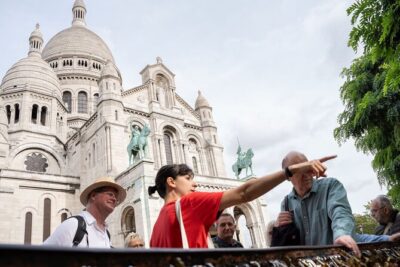
Hidden Montmartre: Paris’ Secret Streets Walking Tour
Read our review →Browse the lists this tour appears in