
Reviewed · MONTMARTRE & SACRé-COEUR TOURS
Paris : Montmartre highlights walking tour
Montmartre is Paris at its most theatrical: red windmills, white domes, portrait painters, steep lanes, and stories about artists who once lived on the hill. This 105-minute walking tour links the district’s famous sights from Place Blanche to Sacré-Coeur, so you get both the postcard views and the local details between them.
I like the small group limit of 10, which gives the guide room to answer questions and pause for photos. I also like the route itself: you move from the Moulin Rouge and the Wall of Love through old artists’ haunts before finishing at the Basilica of Sacré-Coeur with a broad view over Paris.
The main drawback is the walking. Montmartre is hilly, and this tour is not suitable for wheelchair users or people with mobility impairments. You also finish at Sacré-Coeur rather than returning to Place Blanche, so plan your next stop from the basilica.
In This Review
- Key points to know before you book
- Starting at Place Blanche beside the Moulin Rouge
- The Wall of Love and Montmartre’s playful side
- Moulin de la Galette and the artists who shaped the hill
- Dalida’s statue and a personal Montmartre story
- La Maison Rose and the picture-book streets
- Lapin Agile and the old cabaret tradition
- Place du Tertre and the working artists
- The climb to Sacré-Coeur
- Why the guide matters on this route
- How much value do you get for $29?
- Who will enjoy this walking tour most?
- My take on the Montmartre route
- FAQ
- Where does the Montmartre walking tour begin?
- How will I identify the guide?
- Where does the tour finish?
- How long does the tour last?
- What language is the tour conducted in?
- How many people can join the group?
- Is food or drink included?
- What should I bring?
- Is the tour suitable for wheelchair users?
Key points to know before you book
- Start near the Moulin Rouge: Meet by the exit of Blanche Metro station on Line 2, where your guide carries a green booklet and wears a green badge.
- Follow the artists’ trail: The route includes places tied to Picasso, Van Gogh, Toulouse-Lautrec, Dalida, and Montmartre’s café culture.
- Expect a genuinely small group: No more than 10 people means easier questions, clearer explanations, and a better chance to keep pace with the guide.
- Finish at Paris’s highest city point: Sacré-Coeur provides wide views toward the Eiffel Tower, Notre Dame, and Montparnasse Tower.
- Bring practical footwear: The tour lasts 105 minutes and includes uphill walking, so comfortable shoes matter.
- Choose an English tour: The guide speaks English, and the booking includes the walking tour and guide only. Food and drinks are extra.
Starting at Place Blanche beside the Moulin Rouge
Your meeting point is near the exit of Blanche Metro station, close to the Moulin Rouge. Look for the guide with a green booklet and green badge. That marker is useful in a busy part of Paris, where people gather for theater shows, restaurants, and late-night activity.
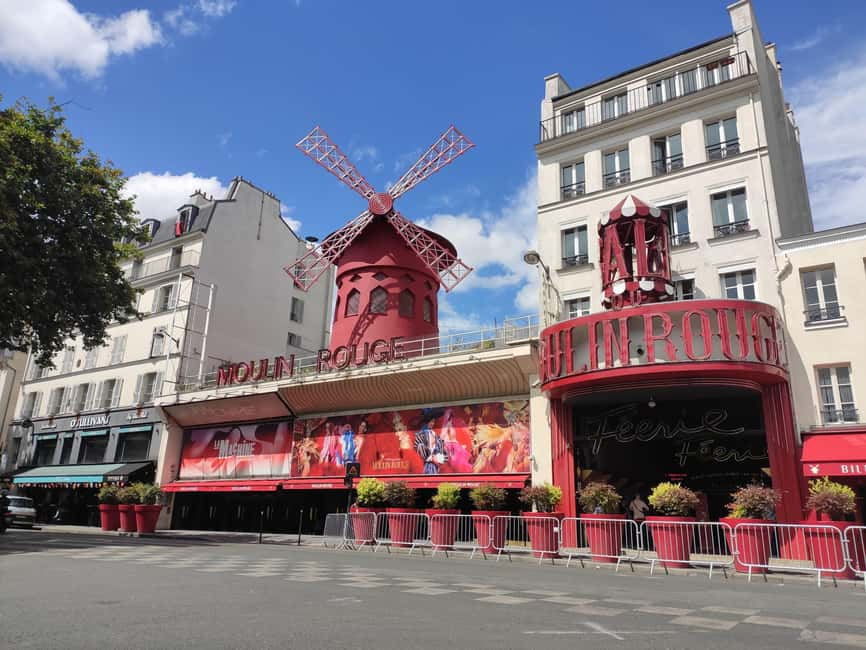
The opening stop is the Moulin Rouge, one of Montmartre’s best-known symbols. You get about 10 minutes for a guided visit and photos rather than entry to the cabaret. That distinction matters: this experience is an outdoor neighborhood walk, not a show ticket or a behind-the-scenes visit.
I like beginning here because it gives you a clear sense of Montmartre’s public face before the route turns into quieter streets. The Moulin Rouge is famous, but the better part of this stop is hearing how it fits into the district’s entertainment and artistic identity.
More Montmartre walks and visits:
- Montmartre Hidden Gems and Scenic Highlights Walking Tour
★ 5.0 · 2,684 reviews - Montmartre Hill French Gourmet Food and Wine Tasting Walking Tour
★ 5.0 · 2,588 reviews - Paris: Montmartre Cheese, Wine & Pastry Guided Walking Tour
★ 4.8 · 2,255 reviews
The Wall of Love and Montmartre’s playful side
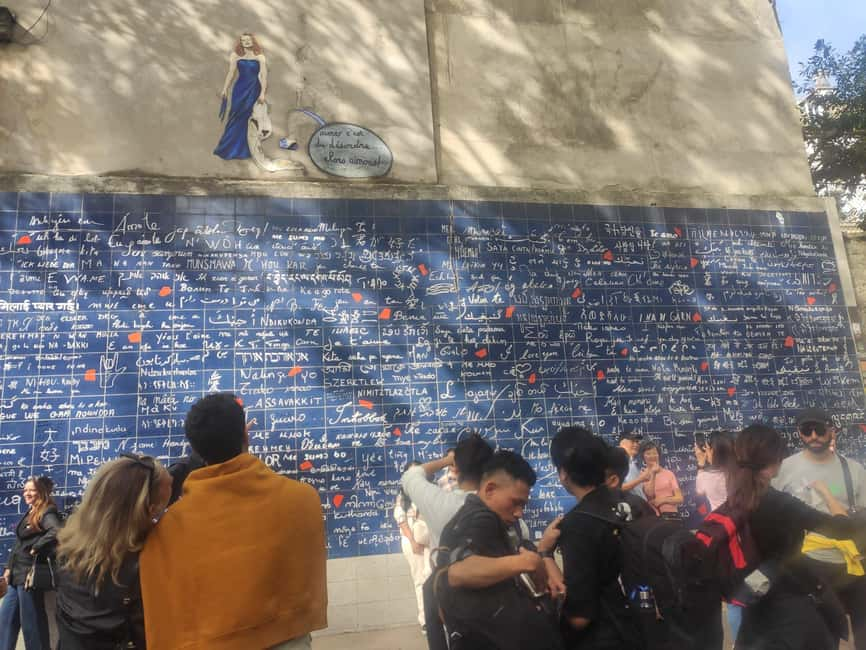
From the Moulin Rouge, the group continues to the Wall of Love, or Le Mur des Je T’aime. You have another short stop for photographs and an explanation from the guide.
This is a quick, visual stop rather than a long museum-style visit. The wall’s message is simple and easy to appreciate, especially if you want a photograph that feels different from the usual Eiffel Tower shot. Your guide also helps connect it to Montmartre’s romantic image without letting the walk become only a collection of photo locations.
The tour is structured in roughly 10-minute sections. That keeps the route moving, although you should not expect long free periods at each site. If you like a guide who keeps a firm rhythm and still allows questions, the timing should suit you.
Moulin de la Galette and the artists who shaped the hill
The next stop is Moulin de la Galette, another of Montmartre’s famous windmills. The site recalls the period when the hill had a more rural feel, long before it became one of Paris’s most visited districts.
This is also where the art story becomes more important. Montmartre was home to painters such as Picasso, Van Gogh, and Toulouse-Lautrec, and the guide explains how artists, performers, and writers helped give the area its bohemian character.
I would pay close attention here if you enjoy art but do not want a formal gallery tour. You are not examining paintings in a museum. Instead, you are learning how streets, cafés, studios, and dance halls became part of the artists’ daily world.
Dalida’s statue and a personal Montmartre story
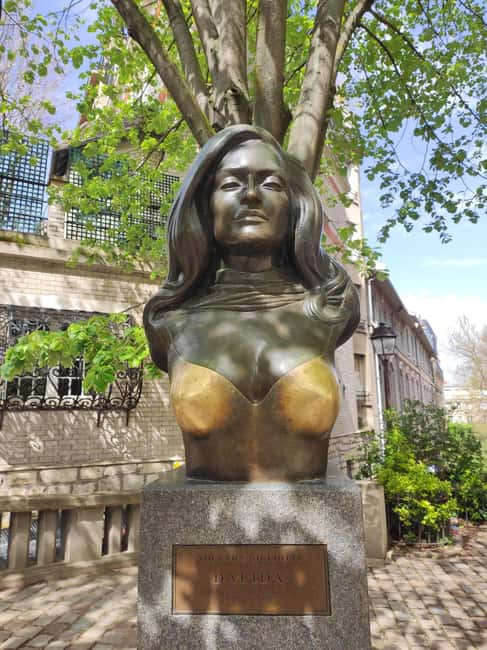
The statue of Dalida provides one of the route’s more unusual stops. The French-Italian singer lived in Montmartre, and her connection with the neighborhood remains strong.
The stop is brief, with time for a photo and commentary. It gives the walk a useful change of tone. The route is not limited to nineteenth-century painters and famous cabarets. It also shows how Montmartre continued to attract performers and public figures in later decades.
Your guide may use photographs or visual material while telling these stories. Samy, also listed by some visitors as Sammy, is especially noted for bringing pictures along and giving plenty of background. Diana is another guide praised for sharing stories about Montmartre in a relaxed way.
More Paris walking tours:
- Paris Top Sights Half Day Walking Tour with a Fun Guide
★ 5.0 · 2,893 reviews - Paris Île de la Cité and Notre-Dame Walking Tour With Crypt
★ 5.0 · 2,272 reviews - Paris in a Day: Louvre or Orsay, Eiffel Tower, City Walk & Cruise
★ 5.0 · 1,956 reviews - Paris: Montmartre Highlights Walking Tour with a Local Guide
★ 4.9 · 1,668 reviews
La Maison Rose and the picture-book streets
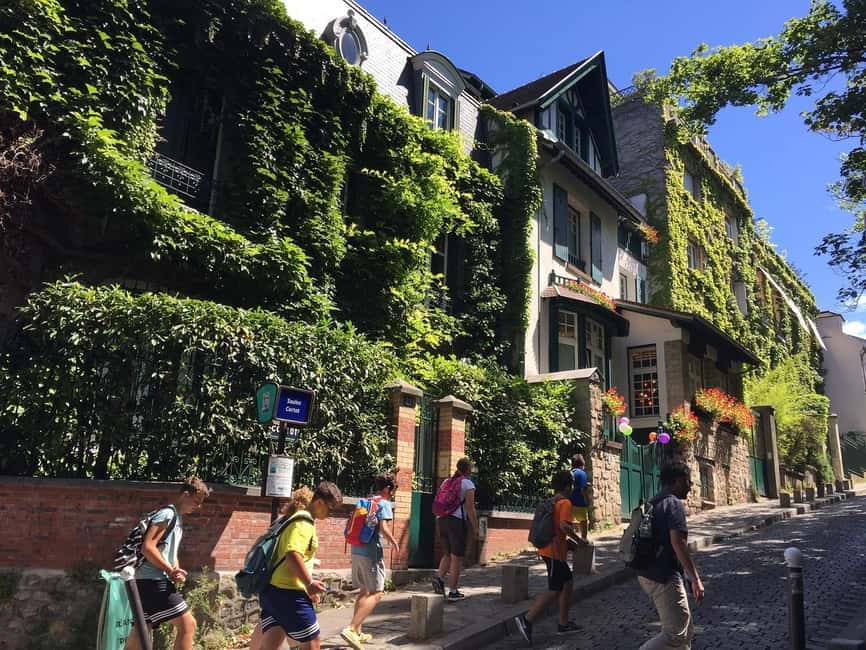
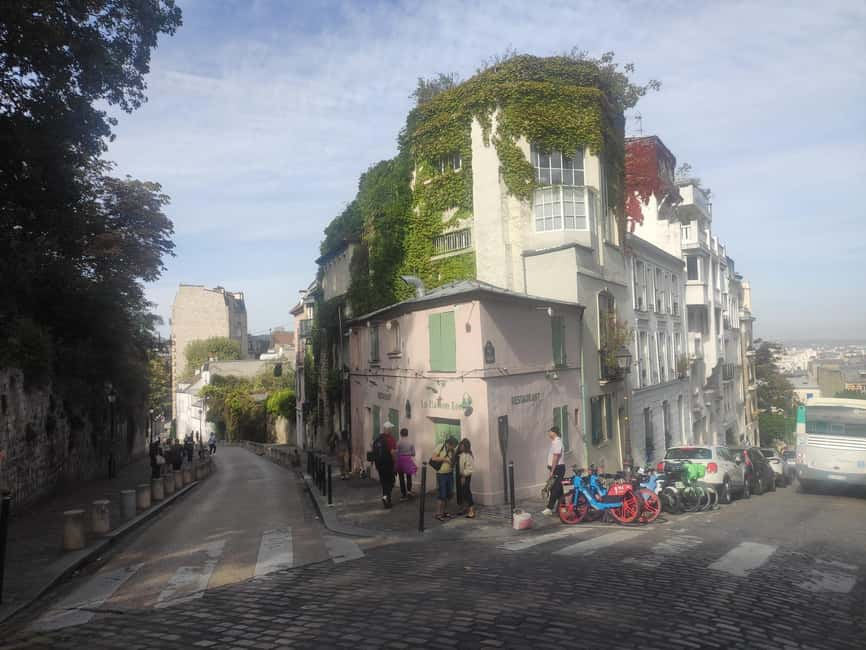
La Maison Rose is one of Montmartre’s most recognizable buildings, with its pink exterior and picturesque setting. The tour stops here for photos and an explanation before moving on.
This is the kind of place that can feel overfamiliar if you only arrive, take a picture, and leave. A guide adds value by placing the building in the wider story of Montmartre’s artists and street life.
You should expect other people taking pictures at several points along the route. That is part of the district’s appeal and part of its reality. The guide helps you make better use of a short stop, but this is not a private photo session with unlimited time.
Lapin Agile and the old cabaret tradition
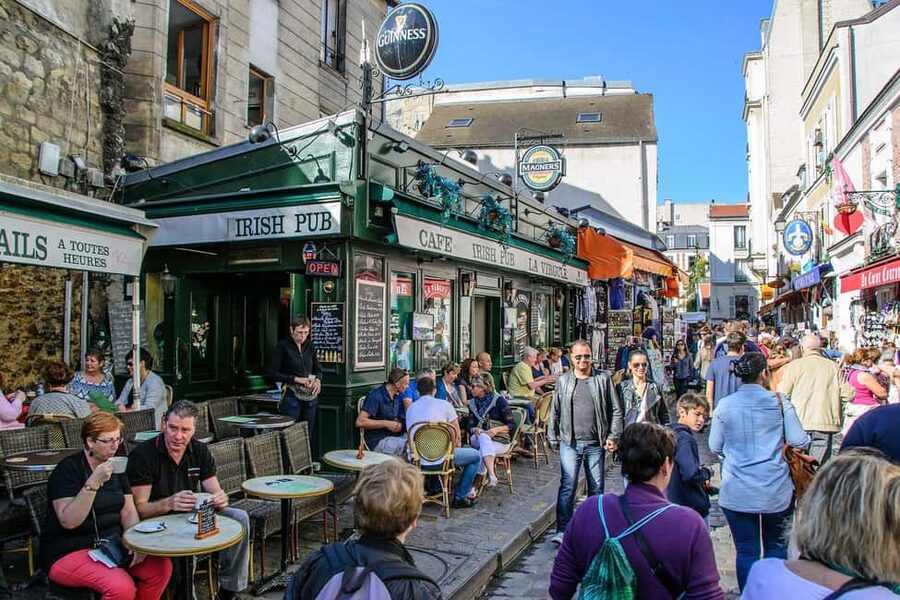
Lapin Agile is another historic cabaret stop. Like the Moulin Rouge, it helps explain why Montmartre became linked with music, comedy, performance, and unconventional artistic life.
The two cabarets offer different impressions. The Moulin Rouge is the grand, instantly recognized name. Lapin Agile feels more connected to the neighborhood’s older cabaret tradition. Seeing both gives you a fuller picture than visiting either one alone.
The itinerary lists Lapin Agile as a photo stop and guided stop, not an admission visit. You will be learning about the place from outside. That keeps the tour affordable, but you should not book it expecting interior access to every attraction.
Place du Tertre and the working artists
Place du Tertre is one of Montmartre’s essential stops. Painters set up their work around the square, and you can see portraits, drawings, and other artwork displayed in the open air.
This is a lively part of the route, but the guide keeps the focus on what makes the square significant. Place du Tertre is not just a pretty plaza. It represents Montmartre’s continuing link with street artists and portrait painters.
I recommend treating this stop as a chance to look rather than shop automatically. If you want a portrait or artwork, take a moment to compare styles and prices. The tour gives you context, but purchases are not included and the guide is not there to negotiate for you.
The small group helps here. With up to 10 people, you can stay close enough to hear the explanation without forming a large crowd around the square. Several people who took the tour with groups of five or fewer found that the guide could spend more time answering questions and adapting the pace.
The climb to Sacré-Coeur
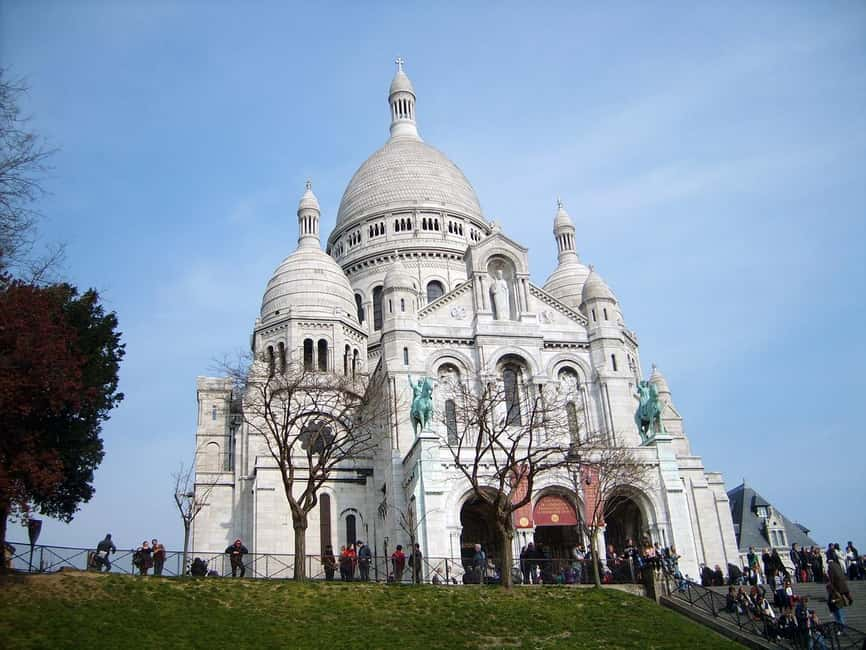
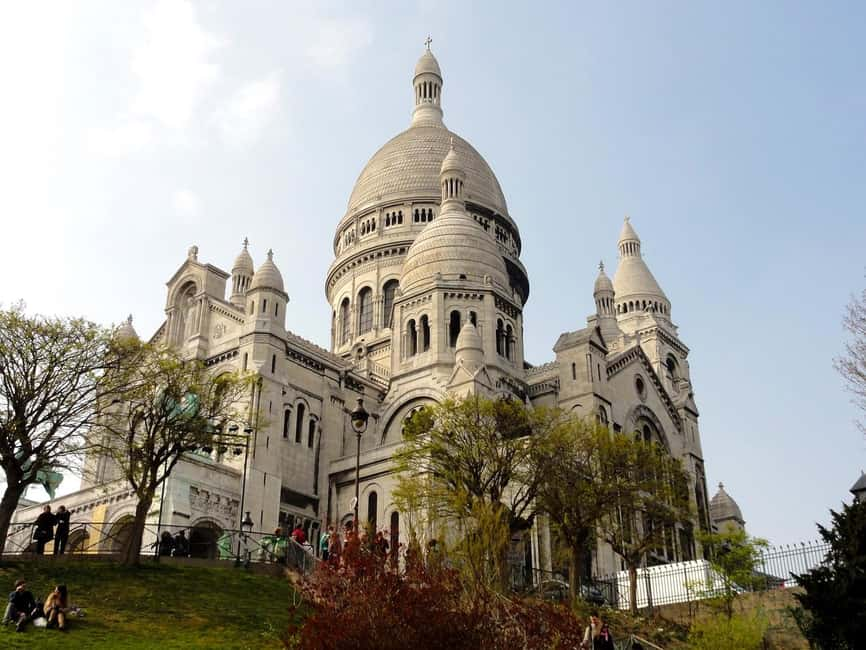
The walk finishes at the Basilica of Sacré-Coeur de Montmartre. This is the highest point in Paris, and the approach provides scenic views along the way.
You should prepare for uphill walking. The route is not described as accessible for wheelchairs or people with mobility impairments, and comfortable shoes are specifically recommended. Even if you walk regularly, the combination of pavement, slopes, and standing at each stop makes sensible footwear a good idea.
The basilica is the visual payoff of the tour. Its white exterior is impressive from the hill, but the larger reward is the view behind and around it. From Montmartre, you can look across Paris toward landmarks including the Eiffel Tower, Notre Dame, and Montparnasse Tower.
Because the tour ends here, you have flexibility afterward. You can spend more time around Sacré-Coeur, explore nearby streets, or make your own way elsewhere in Paris. The guide does not return you to the original meeting point.
Why the guide matters on this route
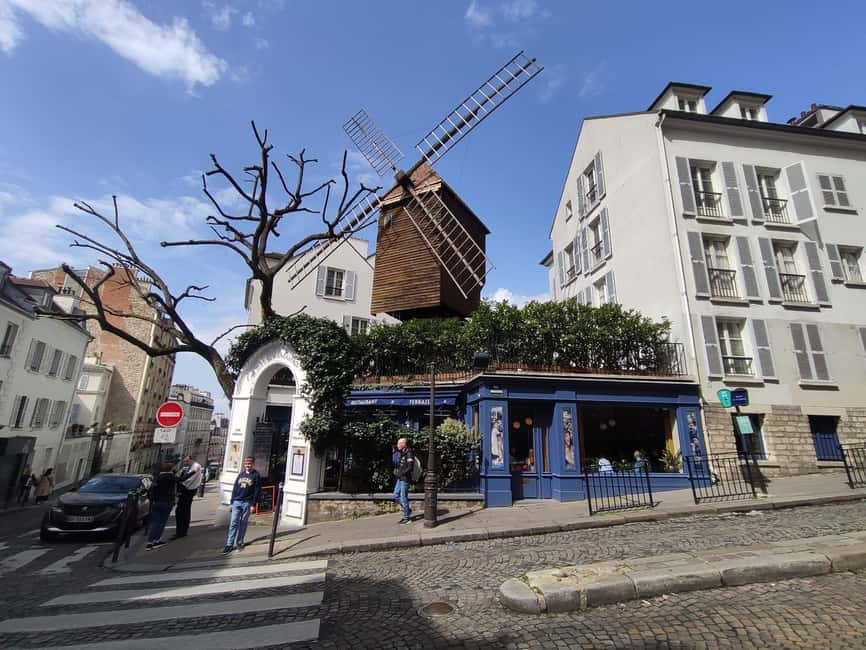
Montmartre is easy to visit independently, but it is also easy to reduce to a few famous photo stops. A guide turns the walk into a connected story.
The strongest praise for this experience centers on the guides’ manner. Sammy and Samy are repeatedly described as friendly, patient, chatty, and generous with information. Diana is also praised for her warmth and storytelling. One particularly useful detail is that Samy was patient with visitors who were working through their French, so you do not need to be fluent in French to enjoy the neighborhood.
The guide also leaves room for questions and photographs. That matters because the route contains many short stops, and a rushed guide could make the experience feel mechanical. The available feedback points instead to a relaxed pace, with some groups small enough to become nearly private tours.
Do not assume you will have a private tour, though. The official group limit is 10, and the actual size can change with the booking date. The value of the small-group format is that even a full group should remain manageable.
How much value do you get for $29?
At $29 per person, this is a reasonable price for a 105-minute guided walk in one of Paris’s most sought-after neighborhoods. You are paying for a guide, a planned route, local stories, and the convenience of seeing many major Montmartre sights in one sitting.
You are not paying for food, drinks, museum tickets, cabaret admission, or transport. The price works best if you want orientation and context rather than a long interior visit.
I see the tour as especially good value on a first visit to Montmartre. In less than two hours, you cover the Moulin Rouge, Wall of Love, Moulin de la Galette, Dalida’s statue, La Maison Rose, Lapin Agile, Place du Tertre, and Sacré-Coeur. You can then decide which area deserves a slower return visit.
The value is also helped by the flexible booking terms. You can cancel up to 24 hours in advance for a full refund, and you can reserve now and pay later. Those options are useful when your Paris schedule is still shifting.
Who will enjoy this walking tour most?
I would recommend it to first-time Paris visitors who want a clear introduction to Montmartre without spending half a day on a large group tour. It also suits couples, solo visitors, and small groups who like hearing stories while walking rather than reading signs on their own.
Art lovers will appreciate the links to Picasso, Van Gogh, and Toulouse-Lautrec. Music and cabaret fans will enjoy the Moulin Rouge, Lapin Agile, and Dalida connections. Photographers will have plenty of recognizable settings, from La Maison Rose to the Sacré-Coeur view.
It is less suitable if you want extensive time inside the basilica, a full art lecture, or a completely flat route. It is also not the right choice for wheelchair users or anyone who finds uphill walking difficult.
Book an early start if you want to use the rest of the day in Montmartre, or choose a time that fits your evening plans near the Moulin Rouge. The tour is conducted in English, so make sure that matches your needs before booking.
My take on the Montmartre route
I like this tour because it combines the obvious Montmartre sights with enough lesser-known detail to make the walk feel worthwhile. The route does not simply point at the Moulin Rouge, take you to Sacré-Coeur, and call it a day. It connects cabarets, artists, singers, street painters, and neighborhood landmarks.
The guide is the deciding factor. Sammy, Samy, and Diana receive particularly strong praise for being friendly, patient, and willing to answer questions. That human touch is important on a neighborhood walk, where a good story can make an ordinary street memorable.
Book it if you want a well-paced introduction, a small group, and a strong final view over Paris. Skip it if you need accessible terrain, extensive interior visits, or a tour with food included. For most visitors who want to get their bearings on Montmartre, $29 is a sensible buy.
FAQ
Where does the Montmartre walking tour begin?
The tour begins near the exit of Blanche Metro station on Metro Line 2, close to the Moulin Rouge.
How will I identify the guide?
Look for a guide carrying a green booklet and wearing a green badge.
Where does the tour finish?
The tour finishes at the Basilica of Sacré-Coeur de Montmartre.
How long does the tour last?
The walking tour lasts 105 minutes.
What language is the tour conducted in?
The tour is conducted in English, with an English-speaking live guide.
How many people can join the group?
The tour is limited to 10 participants.
Is food or drink included?
No. Food and drinks are not included in the tour price.
What should I bring?
Bring comfortable shoes because the experience involves walking through Montmartre and going uphill toward Sacré-Coeur.
Is the tour suitable for wheelchair users?
No. The tour is not suitable for wheelchair users or people with mobility impairments.
Newest additions around Paris
- Family escape Game with kids and teens on the Île de la Cité★ 4.5 · 11 reviews
- Private Photoshoot with the Iconic Eiffel Tower in Paris★ 5.0 · 11 reviews
- 2-day Private Mont Saint-Michel, 3 Loire Castles, D-Day Express★ 4.5 · 11 reviews
- Paris: Batobus Hop-On Hop-Off Cruise & Landmarks Audio Tour★ 3.0 · 11 reviews
- Paris Revolutionary Walking Tour: Iconic French Sights & Stories★ 5.0 · 11 reviews
- Guided and Private Tour of 3 hours through Paris aboard a Citroën 2cv★ 5.0 · 11 reviews
- Kids in the Kitchen – CrOisSaNtS★ 4.0 · 11 reviews
- Paris: Ghosts and Dark Stories Guided Walking Tour★ 4.1 · 11 reviews
Montmartre & Sacré-Coeur Tours, compared.

Montmartre Hidden Gems and Scenic Highlights Walking Tour
Read our review →
Montmartre Hill French Gourmet Food and Wine Tasting Walking Tour
Read our review →
Montmartre Cheese, Wine & Pastry Guided Walking Tour
Read our review →
Montmartre Highlights Walking Tour with a Local Guide
Read our review →
Sacré-Coeur and Montmartre Tour with Expert Guide
Read our review →
Private Montmartre Food Tour with Wine, Cheese & Pastries
Read our review →
Paris Montmartre Food Tour – A Full French Meal by Do Eat Better
Read our review →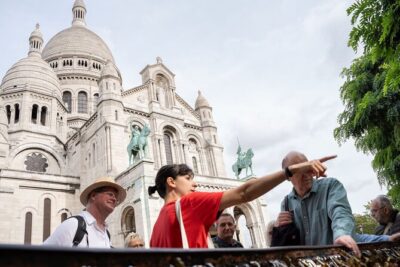
Hidden Montmartre: Paris’ Secret Streets Walking Tour
Read our review →Browse the lists this tour appears in