
Reviewed · MONTMARTRE & SACRé-COEUR TOURS
Paris: Montmartre hidden gems walking Tour with Local Guide
Montmartre is at its best when you get away from the postcard view of Sacré-Cœur and follow the crooked lanes where artists, singers, revolutionaries, and village workers once crossed paths. This 140-minute walk links the basilica with Place du Tertre, Moulin de la Galette, Picasso’s studio, the Pink House, vineyards, and old cabaret streets.
I especially like the small group limit of 16 and the way the guides bring in music as well as art. Yazid and Yadiz are praised for lively stories about Picasso, Van Gogh, Dalida, Aznavour, and Salvador Dalí, while Zoe has used song recordings to add a local soundtrack. The main consideration is the uphill walking on cobblestones, and one review felt the tour did not cover as many sites as expected.
In This Review
- Key points to know before you book
- Why this Montmartre walk works
- Starting below Sacré-Cœur on Place Saint-Pierre
- The high view across Paris
- Place du Tertre and the artist village
- Moulin de la Galette and the old windmill district
- Picasso’s studio and stories of famous residents
- The Pink House, vineyards, and quieter lanes
- Cabarets, musicians, and the sound of Montmartre
- What the 16-person group size means
- Time, effort, and value
- Who should book this Montmartre experience?
- Should you book it?
- FAQ
- How long is the Montmartre walking tour?
- Where does the tour meet?
- What language is the tour offered in?
- What places does the tour visit?
- Is the tour suitable for children?
- How large is the group?
- Can I cancel or pay later?
Key points to know before you book
- A 140-minute walk through old Montmartre: You visit Sacré-Cœur, Place du Tertre, Moulin de la Galette, Picasso’s studio, the Pink House, vineyards, lanes, and cabarets.
- Stories are the main attraction: Guides focus on the artists, musicians, revolutionaries, and village life that shaped this district.
- A small group of no more than 16: This gives you a better chance to hear the guide and ask questions than on a large city tour.
- Sacré-Cœur provides the big Paris view: The basilica sits on the highest hill in Paris, with a broad outlook across the city.
- Family-friendly, but not flat: Children are welcome, though you should expect hills, stairs, and uneven cobblestones.
- English only: The live guiding is offered in English, with flexible cancellation up to 24 hours before departure.
Why this Montmartre walk works
I like this tour because it treats Montmartre as more than a basilica and a square full of portrait artists. You still see the famous places, but the guide explains how the area changed from farmland and windmills into one of Paris’s best-known artist districts.
That change gives the walk a useful shape. You begin with the grand religious monument of Sacré-Cœur, then move through streets that feel much smaller and older. By the time you reach the village lanes, the story has shifted from church and city views to cafés, studios, music halls, local characters, and the complicated business of turning a working neighborhood into a fashionable one.
The experience has earned a 4.9 rating from 78 reviews, with particularly strong praise for the guides. Yazid and Yadiz are singled out for engaging stories about artists and Montmartre’s past. Sylvia receives praise for her energy and route choices, Marcella for adjusting her presentation to the group, and Zoe for adding music to the history.
That matters because Montmartre can be confusing on your own. The streets twist, the major sights are mixed with ordinary buildings, and some of the best stories are attached to places that look unremarkable at first glance. A good guide gives those corners a reason to matter.
More Montmartre walks and visits:
- Montmartre Hidden Gems and Scenic Highlights Walking Tour
★ 5.0 · 2,684 reviews - Montmartre Hill French Gourmet Food and Wine Tasting Walking Tour
★ 5.0 · 2,588 reviews - Paris: Montmartre Cheese, Wine & Pastry Guided Walking Tour
★ 4.8 · 2,255 reviews
Starting below Sacré-Cœur on Place Saint-Pierre
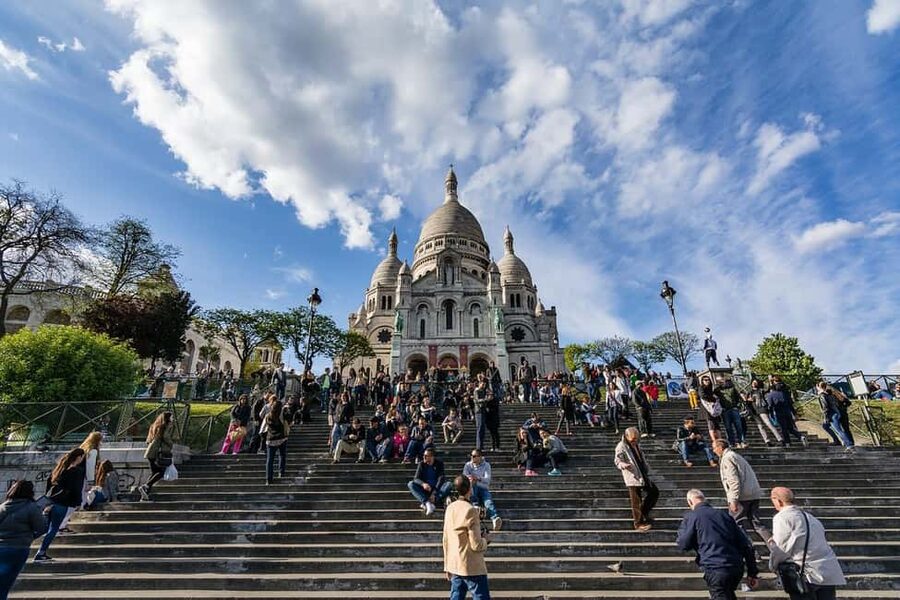
You meet near Sacré-Cœur on La Place Saint-Pierre, by the carrousel. Look for Paris Tours Experiences and a guide wearing a name tag. The listed coordinates are 48.88438415527344, 2.3435277938842773.
This is a useful meeting area because it places you at the lower edge of the Montmartre climb. The basilica rises above you, and the route leads into the district rather than beginning in a random side street. Still, give yourself time to find the carrousel and guide. A busy meeting place can be harder to sort out than the address suggests.
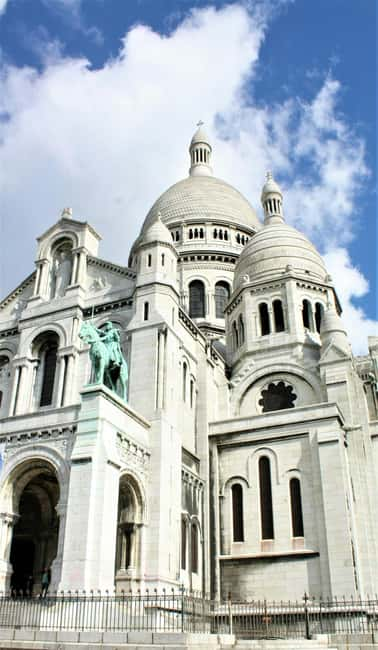
The first section introduces the Sacré-Cœur basilica and its religious imagery. You hear about the Sacred Heart of Jesus mosaic, described here as the largest mosaic in the world, with the Virgin Mary, Joan of Arc, and the Archangel Saint Michael included in the scene.
I appreciate starting with context rather than simply taking a photograph and moving on. Sacré-Cœur is one of Paris’s most recognizable buildings, but the guide helps explain what you are looking at and why the interior decoration matters. The basilica also gives the rest of the walk a clear reference point as you move through the district.
The high view across Paris
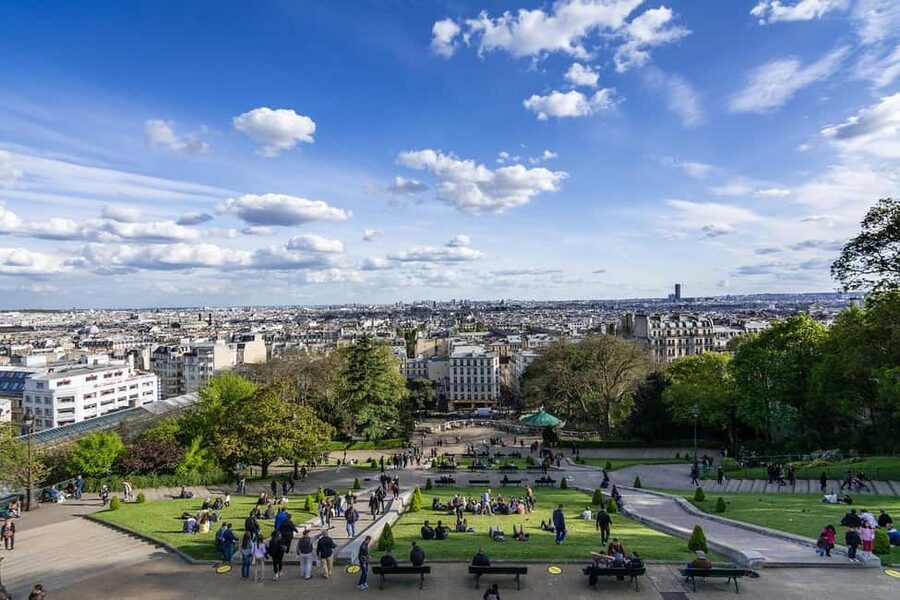
Montmartre sits on Paris’s highest hill, so the city view is one of the tour’s main rewards. From the basilica area, you can look out across the City of Light and get a sense of how central Paris is arranged.
The view is especially helpful early in your visit because it gives you a mental map. You can see the city spread below, then spend the next two hours in a neighborhood that feels surprisingly separate from it. That contrast is part of Montmartre’s appeal.
The tradeoff is physical. The route involves uphill walking, uneven cobblestones, and stops along sloping streets. Kathleen described the climb as manageable because Sylvia paused often, but you should still wear firm, comfortable shoes. This is not a good place for flimsy footwear or a rushed schedule.
The route may approach the basilica from the lower streets, even though the tour begins with Sacré-Cœur as its main reference point. Either way, the hill is part of the experience, not an inconvenience to ignore.
Place du Tertre and the artist village
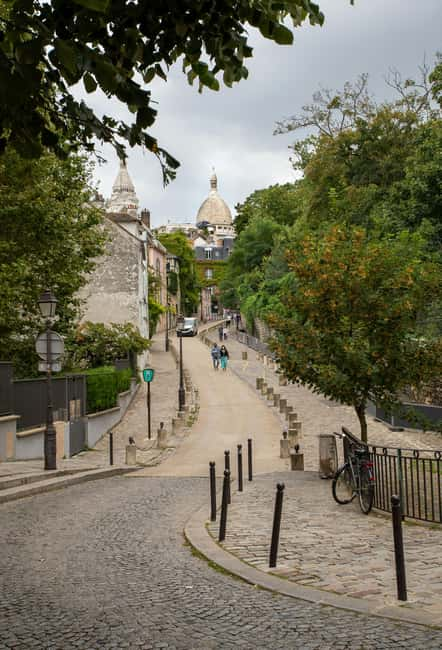
Place du Tertre is Montmartre’s best-known artist square. It is the place most closely linked with the district’s public image, with artists working in the open and visitors stopping to look at portraits and paintings.
The guide gives the square a past as well as a present. You learn how Montmartre attracted artists and how the neighborhood became associated with people such as Picasso, Van Gogh, and Salvador Dalí. The tour also covers present-day street artists, which keeps the story from ending in the 1920s.
I like this balance. It is easy to turn Montmartre into a museum of famous names, but the working artists in the square help show that art remains part of the area’s identity. At the same time, Place du Tertre can be one of the more visitor-heavy parts of the route, so do not expect a quiet village square at every moment.
The guide’s storytelling is important here. Yazid is praised for explaining the relationships between artists and the neighborhood, not just reciting names. That approach helps you understand why Montmartre attracted so many creative people in the first place.
More Paris walking tours:
- Paris Top Sights Half Day Walking Tour with a Fun Guide
★ 5.0 · 2,893 reviews - Paris Île de la Cité and Notre-Dame Walking Tour With Crypt
★ 5.0 · 2,272 reviews - Paris in a Day: Louvre or Orsay, Eiffel Tower, City Walk & Cruise
★ 5.0 · 1,956 reviews - Paris: Montmartre Highlights Walking Tour with a Local Guide
★ 4.9 · 1,668 reviews
Moulin de la Galette and the old windmill district
Moulin de la Galette connects present-day Montmartre with its earlier life as an agricultural village. Before the district was absorbed into Paris, the hill was known for windmills and rural work. The mill is a reminder that this was not always a fashionable address.
The walk explains how the area shifted from fields and mills into a neighborhood filled with cafés, cabarets, studios, and rented rooms. That is one of the most useful historical threads in the tour because it explains the unusual mix of village lanes and famous cultural landmarks.
You are not simply ticking off a windmill. You are seeing how geography shaped Montmartre. A hill at the edge of the city could remain partly rural, attract people looking for cheaper space, and later draw artists who wanted a freer setting than central Paris.
Moulin de la Galette also gives the guide a chance to explain how memory and myth have shaped Montmartre. The district’s artistic reputation is real, but it has also been polished over time. A good guide can make the past interesting without pretending every corner is untouched.
Picasso’s studio and stories of famous residents
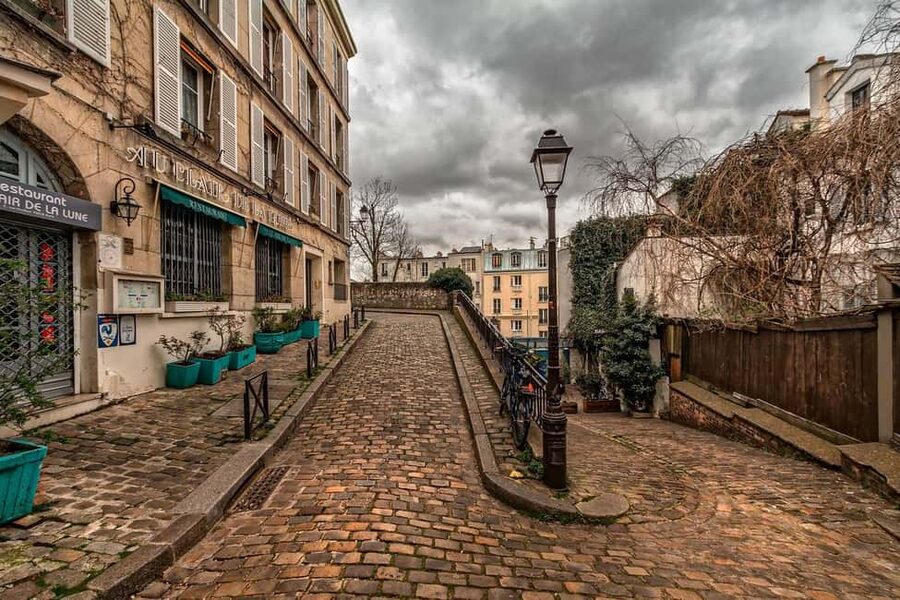
Picasso’s studio is one of the stops that makes the tour especially useful for people interested in art. The point is not only that Picasso lived or worked in Montmartre, but that his presence fits into a much wider circle of artists and performers who gave the district its identity.
You also hear about Van Gogh, Salvador Dalí, and other figures linked with the neighborhood. The strongest guiding style here appears to be personal and story-driven. Yadiz, Yazid, and the other guides are praised for explaining the characters, their connections, and their relationship to Montmartre.
That is more satisfying than a list of dates. I would rather hear why an artist came to Montmartre, what kind of place he or she found, and how the neighborhood affected the person’s work. The tour is not presented as a specialist lecture, so it should suit people with a general interest in art as well as those already familiar with Picasso.
Families can enjoy this section, too. One family found that both adults and children aged six and nine stayed interested throughout the walk. The guide’s energy and use of stories seem to matter more than a child’s prior knowledge of art.
The Pink House, vineyards, and quieter lanes
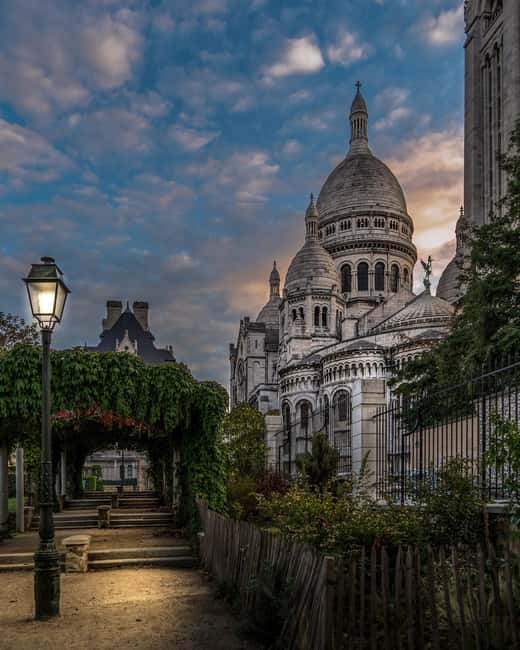
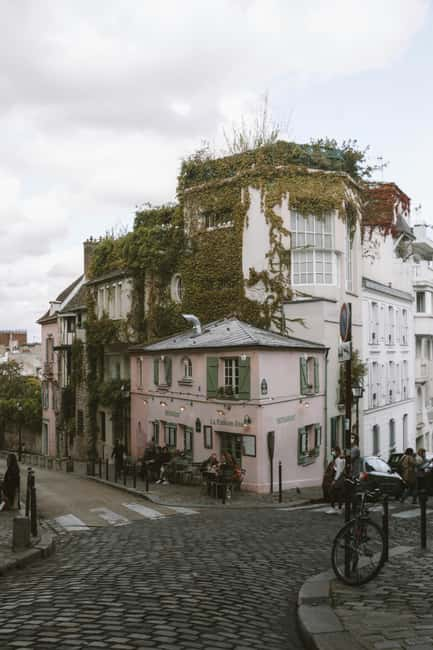
The Pink House and Montmartre’s vineyards show a softer side of the district. These places help you see that Montmartre is not only grand views and famous artists. It also retains small reminders of village life, local color, and the hill’s agricultural past.
The vineyards are particularly useful in the story of Montmartre’s transformation. They connect the modern neighborhood with the time when the area was associated with cultivation, mills, and country life. The guide explains that shift as you move through streets that do not always look like the Paris most people picture.
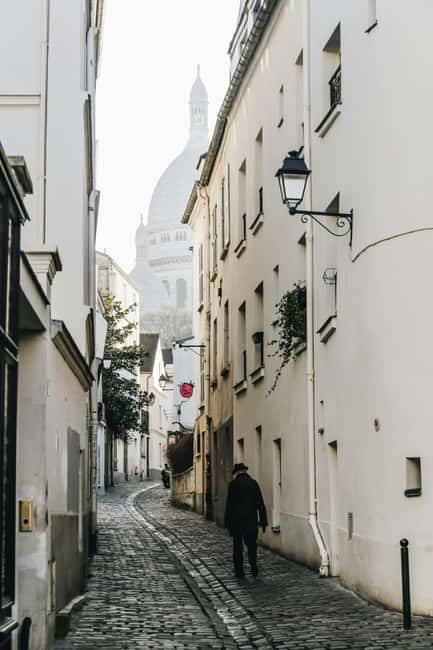
This part of the walk is also where the phrase bohemian village begins to make sense. You pass alleys, cabarets, and winding streets that give the district a more intimate feel than the wide avenues below.
Do not expect every stop to be a major monument. Some are best appreciated through the explanation that comes with them. Without a guide, you might walk past a lane or building and see only a pleasant photo opportunity. With the story, the place becomes part of Montmartre’s larger change.
Cabarets, musicians, and the sound of Montmartre
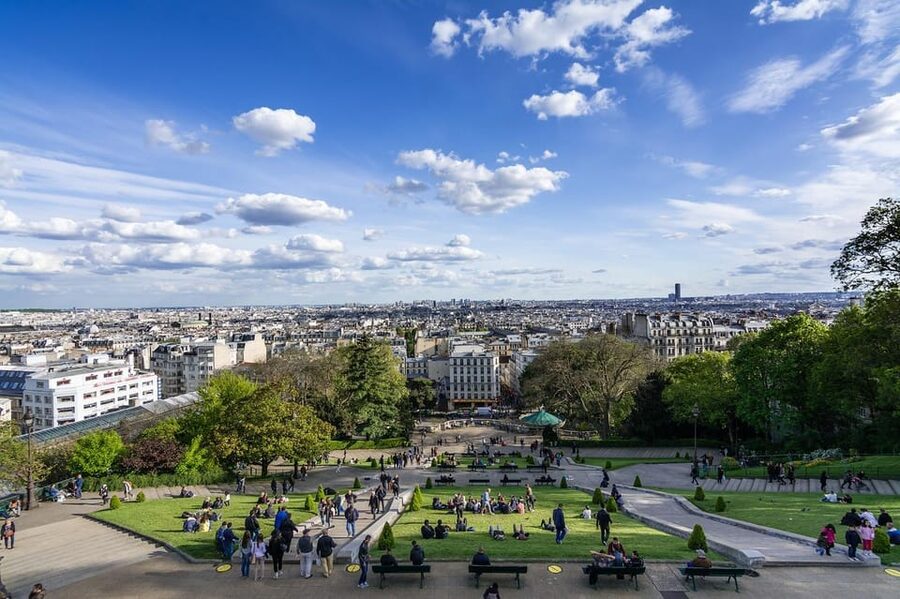
Music is one of the most distinctive parts of this tour. The guiding does not stop with painters. You hear about performers and singers such as Dalida and Charles Aznavour, along with the cabarets that helped make Montmartre famous.
Zoe is praised for sharing recordings of songs during her tour. That small detail can make a difference. Music gives you a direct feel for the district’s entertainment culture, rather than keeping the experience inside the world of paintings and architecture.
The inclusion of musicians also makes the tour more accessible if art history is not your main interest. You can follow the story through song, nightlife, local characters, and popular culture. I would choose this walk over a narrowly focused art tour if your group has mixed interests.
The tour also touches on revolutionaries and their role in Parisian history. That broadens the experience again. Montmartre was not only a refuge for painters and singers. It was also tied to the social and political events that shaped the city.
What the 16-person group size means
A maximum of 16 people is a sensible limit for Montmartre. The streets are narrow, the group will stop in busy public areas, and a very large crowd would make it harder to hear or stay together.
A smaller party also gives you a better chance to ask questions. Marcella is praised for reading the group and finding the right amount of explanation, while other guides are noted for keeping conversation going even when the group is quiet.
That flexibility is valuable on a walking tour. Some groups want a steady stream of history. Others need more pauses, photos, or explanations of basic Paris landmarks. The best guides adjust without losing the route’s shape.
The experience is offered in English with a live guide. If you need another language, this is not the right choice based on the information available.
Time, effort, and value
At 140 minutes, this is long enough to give Montmartre a real shape without taking the entire day. You get the main sights plus smaller streets, artist stories, music, and background on the district’s earlier rural life.
I see the value in the guide rather than in the number of landmarks alone. You could walk past Sacré-Cœur, Place du Tertre, Moulin de la Galette, the Pink House, and the vineyards independently. The benefit here is having someone connect them into one story and point out why the less obvious locations belong in that story.
The tour is also a useful first activity in Paris. It gives you a neighborhood orientation, a city view, and ideas for what to revisit later. Several guides offer suggestions for what to do after the walk, which can help you make better use of the rest of your day.
One guest felt the route did not include as many sites as expected. That is a fair caution. The experience favors explanation and atmosphere over racing from one landmark to the next. If you want a fast checklist of every famous Montmartre address, you may find it too measured.
The reserve-now, pay-later option keeps your plans flexible, and cancellation is free up to 24 hours before the start for a full refund. Those terms are useful if your Paris schedule is still shifting, but the real booking decision comes down to your preferred pace and fitness.
Who should book this Montmartre experience?
I would choose this tour for a first visit to Montmartre, especially if you want more than photographs of Sacré-Cœur. It suits couples, families, solo visitors, and small groups who enjoy hearing the human stories behind a neighborhood.
It is also a good match for mixed-age groups. Children do not need to know Picasso or Dalí in advance, and the combination of streets, music, artists, and colorful characters gives the guide several ways to hold their attention.
Art lovers should pay close attention to the guide choice if names are shown when booking. Yazid and Yadiz receive especially strong praise for artist stories, while Zoe’s music-based approach may appeal if singers and cabarets interest you. Sylvia and Marcella are also praised for warmth, pacing, and practical help.
I would hesitate only if you have limited mobility, dislike hills, or want a quiet, self-directed stroll. The route uses cobblestones and slopes, and the public spaces can be busy. You also need to be comfortable with an English-language tour.
Should you book it?
Book this Montmartre walk if you want local stories, art, music, and a clear sense of place in one outing. The strongest part is the guiding. The tour turns familiar stops into a connected story about a rural hill becoming an artistic and cultural center.
Choose something else if your priority is speed, a long basilica interior visit, or a complete list of every Montmartre sight. For most people, though, the small group, lively guides, city view, and 140-minute length offer a good way to meet the neighborhood without spending the whole day on your feet.
FAQ
How long is the Montmartre walking tour?
The tour lasts 140 minutes, or about two hours and 20 minutes.
Where does the tour meet?
Meet near Sacré-Cœur on La Place Saint-Pierre, close to the carrousel. Look for Paris Tours Experiences and a guide wearing a name tag.
What language is the tour offered in?
The live tour guide speaks English.
What places does the tour visit?
The route includes Sacré-Cœur, Place du Tertre, Moulin de la Galette, Picasso’s studio, the Pink House, Montmartre’s vineyards, cabarets, alleys, and other local landmarks.
Is the tour suitable for children?
Yes. The walk is adapted for children, and families with children aged six and nine have enjoyed it. You should still expect uphill walking and cobblestone streets.
How large is the group?
The group has a maximum of 16 people.
Can I cancel or pay later?
You can cancel up to 24 hours before the tour for a full refund. The reserve-now, pay-later option lets you book without paying immediately.
Newest additions around Paris
- Family escape Game with kids and teens on the Île de la Cité★ 4.5 · 11 reviews
- Private Photoshoot with the Iconic Eiffel Tower in Paris★ 5.0 · 11 reviews
- 2-day Private Mont Saint-Michel, 3 Loire Castles, D-Day Express★ 4.5 · 11 reviews
- Paris: Batobus Hop-On Hop-Off Cruise & Landmarks Audio Tour★ 3.0 · 11 reviews
- Paris Revolutionary Walking Tour: Iconic French Sights & Stories★ 5.0 · 11 reviews
- Guided and Private Tour of 3 hours through Paris aboard a Citroën 2cv★ 5.0 · 11 reviews
- Kids in the Kitchen – CrOisSaNtS★ 4.0 · 11 reviews
- Paris: Ghosts and Dark Stories Guided Walking Tour★ 4.1 · 11 reviews
Montmartre & Sacré-Coeur Tours, compared.

Montmartre Hidden Gems and Scenic Highlights Walking Tour
Read our review →
Montmartre Hill French Gourmet Food and Wine Tasting Walking Tour
Read our review →
Montmartre Cheese, Wine & Pastry Guided Walking Tour
Read our review →
Montmartre Highlights Walking Tour with a Local Guide
Read our review →
Sacré-Coeur and Montmartre Tour with Expert Guide
Read our review →
Private Montmartre Food Tour with Wine, Cheese & Pastries
Read our review →
Paris Montmartre Food Tour – A Full French Meal by Do Eat Better
Read our review →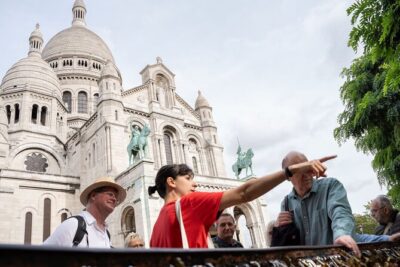
Hidden Montmartre: Paris’ Secret Streets Walking Tour
Read our review →Browse the lists this tour appears in