
Reviewed · MONTMARTRE & SACRé-COEUR TOURS
Paris: Magical Montmartre, without the crowds. Small group
Montmartre is at its best when you leave the postcard views behind. This 90-minute walk starts near Moulin Rouge and climbs through artists’ streets, old village corners, local cafés, vineyards, and the broad view from Sacré Coeur. The stories give the neighborhood shape, from Renoir and Van Gogh to Picasso and the much-disliked church itself.
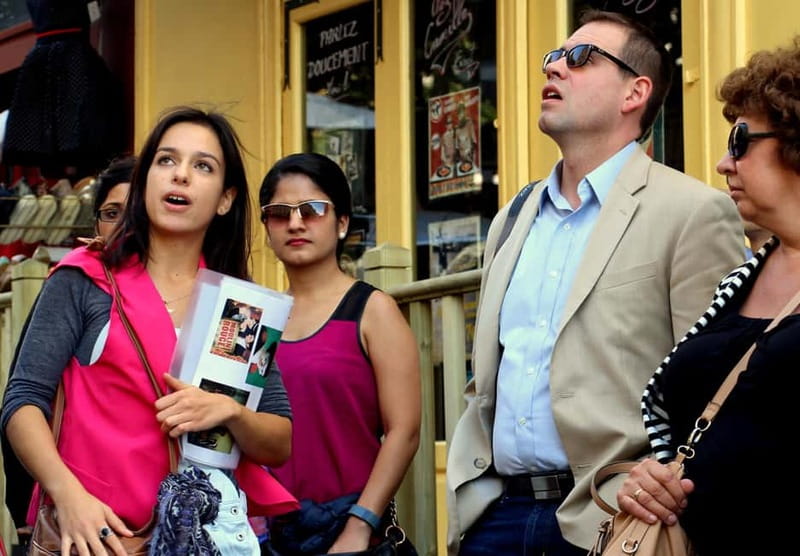
I like two things right away: the $17 price is hard to beat for an English walking tour, and the route connects famous sights with places you might miss on your own. The local guides, including Mathieu, Anna, Max, and Léonie, are praised for humor, warmth, and a personal feel. The main drawback is that the advertised small group may sometimes reach 20 or more people.
In This Review
- Key points at a glance
- Why Montmartre works best on foot
- Starting at Place Blanche and Moulin Rouge
- Following the artists through Montmartre
- Moulin de la Galette and the old windmill country
- Place du Tertre and the artist quarter
- Clos du Montmartre and the village that remains
- Reaching Sacré Coeur and the Paris view
- How small is the group?
- Is $17 good value?
- What to bring and how to prepare
- Who should book this Montmartre walk?
- Should you book it?
- FAQ
- Where does the Montmartre tour start?
- Where does the tour finish?
- How long is the walking tour?
- Is the tour offered in English?
- Does the tour run in bad weather?
- Is transportation included?
- Is the tour suitable for wheelchair users?
Key points at a glance
- A climb through Montmartre: Begin at Place Blanche and finish at Sacré Coeur.
- The big sights included: See Moulin Rouge, Moulin de la Galette, Place du Tertre, and the basilica.
- Artists at the center: Learn how Renoir, Van Gogh, Picasso, and others shaped the district.
- A local angle: Hear about Montmartrois life, old cafés, vineyards, windmills, and village traditions.
- Twilight option: The 6:30 PM departure is timed for fading daylight and fewer daytime crowds.
- Practical limits: It runs rain or shine and is not suitable for wheelchairs or people with mobility impairments.
Why Montmartre works best on foot
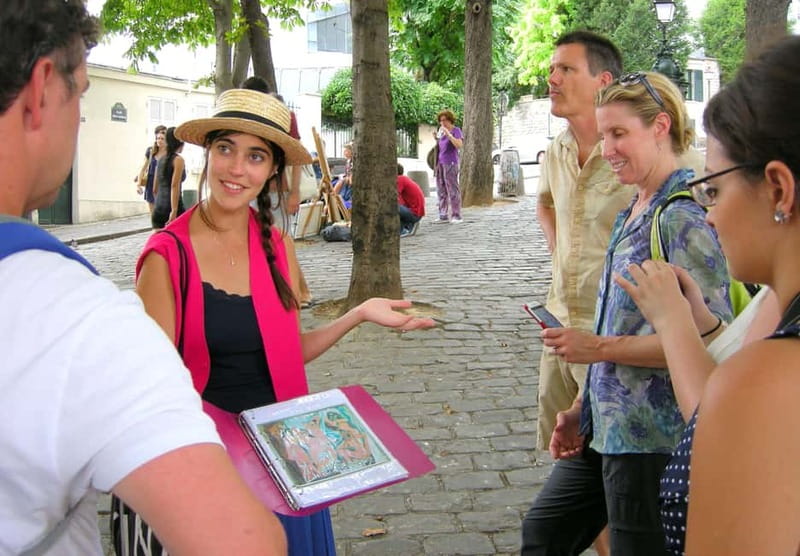
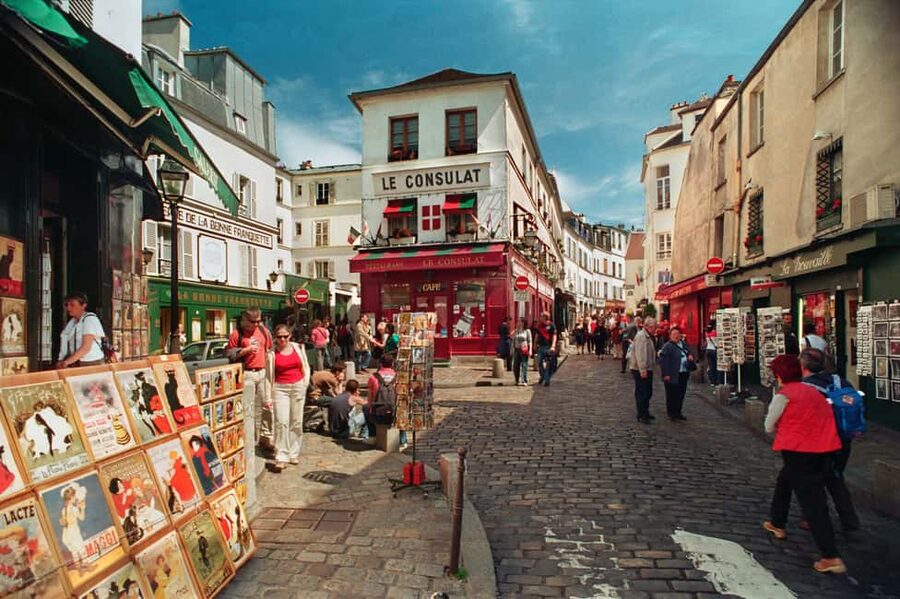
Montmartre feels unlike most of central Paris. It sits on a hill, and its streets change character as you climb. At the bottom, Place Blanche and Moulin Rouge feel urban and theatrical. Higher up, the route turns quieter, with narrow lanes, old houses, little squares, and traces of the village Montmartre used to be.
That change is the real value of the walk. You are not simply moving from one monument to another. You are watching Paris shift from nightlife district to artists’ quarter to old village. A guide helps you notice why that shift happened and where the older Montmartre still survives.
The route also gives you a useful first look at the neighborhood before you explore alone. You learn where the major sights are, how steep the streets can be, and which corners deserve a second visit. If you have only one day in Montmartre, this walk helps you use it well.
More Montmartre walks and visits:
- Montmartre Hidden Gems and Scenic Highlights Walking Tour
★ 5.0 · 2,684 reviews - Montmartre Hill French Gourmet Food and Wine Tasting Walking Tour
★ 5.0 · 2,588 reviews - Paris: Montmartre Cheese, Wine & Pastry Guided Walking Tour
★ 4.8 · 2,255 reviews
Starting at Place Blanche and Moulin Rouge
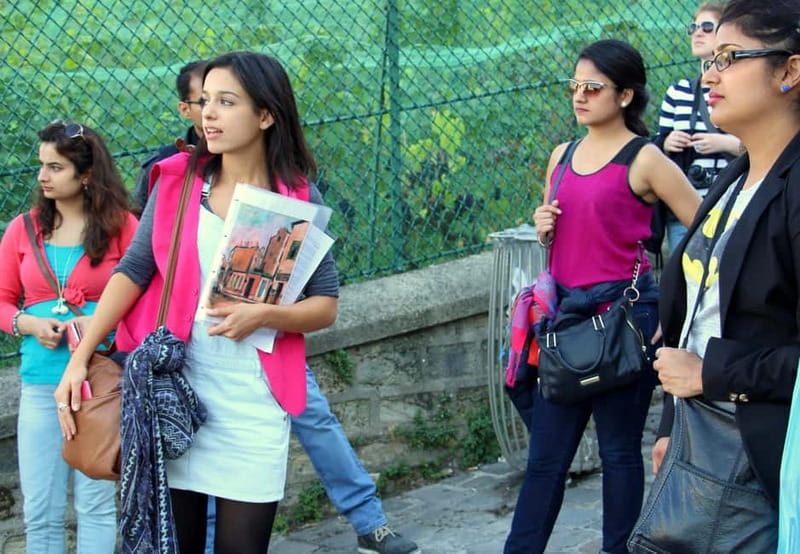
Meet the guide at street level outside the Blanche Metro station on Line 2. Look for the pink vest. This detail matters because Place Blanche is busy, and the start is not inside the station. The group leaves on time, so arrive early rather than trying to find the guide at the last second.
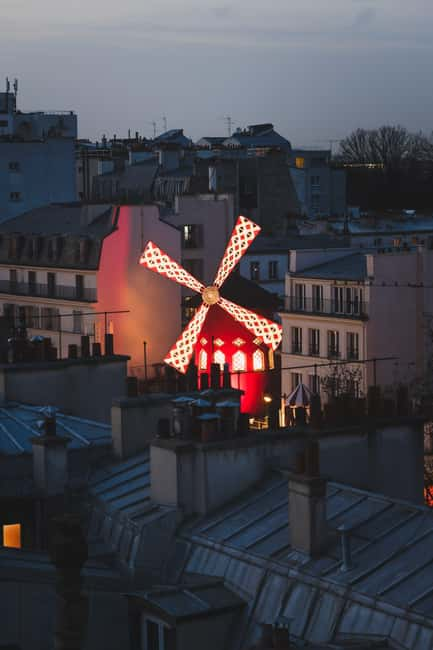
Moulin Rouge is the first major landmark. Its famous red windmill is instantly recognizable, but the guide adds the background that a quick photograph cannot provide. You hear about the cabaret world and the strange story behind the Cabaret of the Assassins, one of the tour’s more unusual local tales.
The stop is brief, about 10 minutes, and mainly an outdoor explanation rather than a cabaret visit. Entry to Moulin Rouge is not included, and the walk does not take you inside. That is worth knowing if you hoped for a show. This experience is about the streets and stories around the landmark.
From here, you begin walking uphill. Montmartre’s slope is part of the experience, but it also demands a bit from your legs. Wear proper walking shoes, especially if the ground is wet. The tour is not designed for wheelchair users or people with mobility impairments.
Following the artists through Montmartre
Montmartre became a meeting place for artists because it offered a different kind of life from the grand boulevards below. The tour explains how the district was linked to Impressionism and to artists such as Renoir, Van Gogh, and Picasso.
I find this part especially useful because the names are not treated as a loose list of famous painters. The guide connects them to particular streets and places where they worked, lived, or spent time. You begin to see Montmartre as a working neighborhood that attracted people trying new ideas, not just as a backdrop for souvenir photographs.
The best guides give this section a human scale. Mathieu is described as a Paris native who speaks with clear affection for the city. Anna has a reputation for mixing precise facts with comic stories. Max is known for an engaging, funny approach. The guide on your departure may be different, but the format clearly depends on a lively storyteller rather than a memorized lecture.
Expect a mix of dates, personalities, odd local customs, and explanations of how the district changed. Some stories may appeal more to adults interested in art and social history than to very young children. Teenagers can still enjoy it, especially when the guide brings out the eccentric side of Montmartre.
Moulin de la Galette and the old windmill country
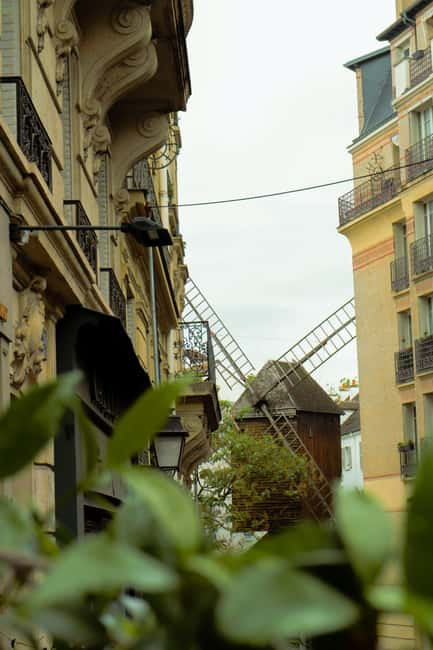
Moulin de la Galette is one of the most atmospheric stops on the route. The name recalls the windmills and dance halls that once made Montmartre feel far removed from central Paris. Renoir helped preserve that world in art, and the guide uses the site to explain how rural life and entertainment once shared the hill.
The stop lasts around 10 minutes. You should not expect a long indoor visit or a formal museum presentation. Instead, you get a street-level explanation of what stood here, why artists were drawn to it, and how the old windmill country became part of Paris.
This is where the village theme starts to make sense. Montmartre was not always the polished tourist quarter you see today. It had vineyards, working people, mills, cafés, and a reputation for independent habits. The tour gives you enough background to understand why local identity remains so strong.
A different way to spend the day in Paris:
- Paris: Louvre Museum Timed-Entrance Ticket
★ 4.6 · 71,977 reviews - Disneyland® Paris 1-Day Ticket
★ 4.6 · 49,412 reviews - Paris: Versailles Palace and Gardens Full Access Ticket
★ 4.6 · 41,579 reviews - Paris: Arc de Triomphe Rooftop Tickets
★ 4.6 · 34,264 reviews
Place du Tertre and the artist quarter
Place du Tertre is one of Montmartre’s best-known squares. Artists work around the square, and the setting is highly photogenic. It is also one of the places where crowds can gather, especially during the middle of the day.
The guide’s job here is not simply to point out easels. You learn how the square fits into Montmartre’s artistic identity and how the public image of the neighborhood developed. The explanation helps separate the historic art district from the modern tourist scene.
I would not treat Place du Tertre as the quietest part of the walk. It may feel crowded, and the tour’s promise to avoid crowds is practical rather than absolute. Your guide can choose calmer streets when possible, but famous Parisian squares cannot be made empty.
The route is usually easier to follow if you stay close to the guide and keep the pink vest in view. On a larger departure, the back of the group may have trouble hearing every word. Stand near the guide when you can, particularly during the short stops.
Clos du Montmartre and the village that remains
The Vignes du Clos Montmartre gives you one of the district’s most unexpected details: working vineyards on the Paris hill. The vines are a reminder that Montmartre once had an agricultural side. This small patch of green helps explain why locals still talk about the area as a village.
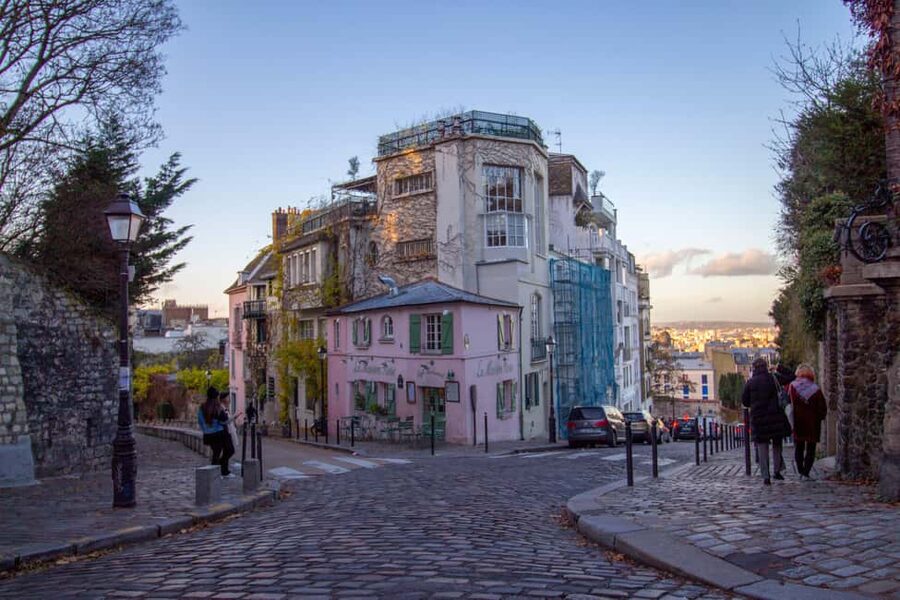
The tour also takes you through what is described as the traditional village part of Montmartre. Here, the reward is less about one famous monument and more about the feel of the lanes, old buildings, local cafés, and places that residents take pride in.
The guide talks about Montmartrois, the people of Montmartre, and their relationship with the neighborhood. That local viewpoint gives the walk more personality. You hear not only why visitors love Sacré Coeur, but also why some local people dislike the basilica.
That criticism is an important part of the tour. Sacré Coeur is one of Paris’s most recognizable churches, yet it does not represent the same thing to everyone. The guide explains the local tensions and historical reasons behind that attitude rather than presenting the monument as a simple, universally loved symbol.
Reaching Sacré Coeur and the Paris view
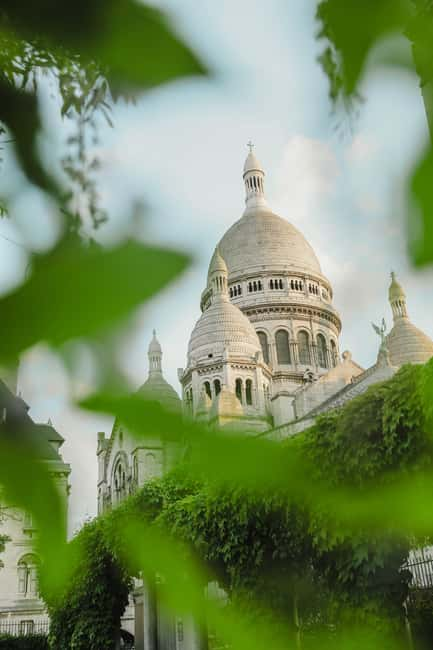
The walk ends at the Basilica of the Sacred Heart of Paris, better known as Sacré Coeur. The final approach rewards you with views over Paris and a clear sense of how high Montmartre sits above the city.
The basilica itself is treated as the last chapter of the neighborhood story. You learn about its place in Montmartre and why local reactions to it can be complicated. The tour does not include an entry fee, and the supplied details describe a guided stop rather than an extended interior visit.
If you want to go inside afterward, allow extra time for your own visit. The walk ends back at the stated meeting point, although the route description also places the final stop at Sacré Coeur. Since the information gives both descriptions, confirm the exact ending point when booking or ask the guide at the start.
The view is especially appealing at the 6:30 PM departure. This twilight option is intended for the hour when daytime crowds begin to thin and locals come out. Light and crowd levels vary by season, but the timing should feel less rushed than a midday visit.
How small is the group?
The tour is sold as small-group, English-only, but the practical group size can vary. Some departures have been described as 20 or more people. That is still manageable for a walking tour, but it is not the same as a private or very small experience.
A bigger group affects the walk in three ways. You may need to position yourself near the guide to hear well. Crossing streets and gathering at viewpoints can take longer. Personal questions may be harder to fit in.
The upside is that the guides appear comfortable keeping a mixed group together. Reports of Mathieu, Anna, Léonie, Floriane, Virginie, Sophie, Anaelle, and others point to a tour style built around questions, humor, and direct interaction. Do not book it assuming you will get one particular guide, but expect an English-speaking local guide selected for the departure.
Is $17 good value?
At $17 per person, this is a strong-value introduction to Montmartre. You are paying for a live guide, a structured route, and local context, not transportation, food, drinks, or paid entry. Since the main attractions are seen from the outside, there are no included admission costs to inflate the price.
The value is highest if you are new to Montmartre. A guide can save you from wandering past the old windmills, vineyards, and artists’ connections without understanding what you are seeing. You also get a useful orientation for returning later to cafés, streets, or Sacré Coeur.
It is less useful if you want a long art lecture, museum access, or a private experience. The 90-minute length gives you a good overview, but it cannot cover every artist, church, street, and viewpoint in detail. Think of it as a well-priced introduction rather than a complete study of Montmartre.
The free cancellation policy allows you to cancel up to 24 hours ahead for a full refund. You can also reserve now and pay later, which helps if your Paris schedule is still moving around.
What to bring and how to prepare
Wear comfortable shoes. This is not a flat stroll, and the route climbs from Place Blanche toward Sacré Coeur. Bring weather-appropriate clothing and a reusable water bottle.
The walk operates rain or shine. That promise is useful, but it also means you should not assume poor weather will cancel the outing. A light rain jacket, shoes with a good grip, and a protective layer for the wind can make a major difference.
There is no transportation included. You reach the start and leave the finish under your own arrangements. The Blanche station on Metro Line 2 is the key reference point for meeting the guide.
If you are late, try looking for the guide about 15 minutes after departure at the roundabout in front of Moulin Rouge. This is a backup rather than a guarantee, so arriving before the start is the safer plan.
Who should book this Montmartre walk?
I would recommend it to first-time Paris visitors who want a clear introduction to Montmartre without paying for a full-day excursion. It also suits anyone drawn to art, local stories, old neighborhoods, and the less polished side of Paris.
It is a good fit for adults and older children who can manage the hill. The guides’ humor and storytelling should help keep the walk lively, especially for people who might lose interest during a dry lecture.
I would choose another option if you need step-free access, use a wheelchair, or dislike walking in bad weather. I would also look elsewhere if your main goal is to enter Sacré Coeur, visit Moulin Rouge, or spend a long time at each site.
Should you book it?
Book this walk if you want a low-cost, story-led introduction to Montmartre and like the idea of seeing both the famous sights and the old village corners between them. The strongest part is the human touch: local guides such as Mathieu, Anna, Max, and Léonie bring art, neighborhood life, and local arguments into the same short route.
Go with realistic expectations. The group may be larger than the small-group label suggests, the tour runs in all weather, and the hill is real. If those points suit you, $17 buys an efficient, entertaining way to understand why Montmartre feels like more than just the view from Sacré Coeur.
FAQ
Where does the Montmartre tour start?
Meet the guide outside the Blanche Metro station on Line 2, at street level near the exit. The guide wears a pink vest.
Where does the tour finish?
The activity information gives Sacré Coeur as the final stop and also says the activity ends back at the meeting point. Confirm the exact ending point with the guide at the start.
How long is the walking tour?
The tour lasts 1.5 hours. Starting times vary, so check availability when booking.
Is the tour offered in English?
Yes. It is an English-only walking tour with a live guide.
Does the tour run in bad weather?
Yes. The tour runs rain or shine, so bring clothing suited to the forecast.
Is transportation included?
No. Transportation is not included. You make your own way to Blanche Metro station and from the tour’s ending point.
Is the tour suitable for wheelchair users?
No. The tour is not suitable for wheelchair users or people with mobility impairments.
Newest additions around Paris
- Family escape Game with kids and teens on the Île de la Cité★ 4.5 · 11 reviews
- Private Photoshoot with the Iconic Eiffel Tower in Paris★ 5.0 · 11 reviews
- 2-day Private Mont Saint-Michel, 3 Loire Castles, D-Day Express★ 4.5 · 11 reviews
- Paris: Batobus Hop-On Hop-Off Cruise & Landmarks Audio Tour★ 3.0 · 11 reviews
- Paris Revolutionary Walking Tour: Iconic French Sights & Stories★ 5.0 · 11 reviews
- Guided and Private Tour of 3 hours through Paris aboard a Citroën 2cv★ 5.0 · 11 reviews
- Kids in the Kitchen – CrOisSaNtS★ 4.0 · 11 reviews
- Paris: Ghosts and Dark Stories Guided Walking Tour★ 4.1 · 11 reviews
Montmartre & Sacré-Coeur Tours, compared.

Montmartre Hidden Gems and Scenic Highlights Walking Tour
Read our review →
Montmartre Hill French Gourmet Food and Wine Tasting Walking Tour
Read our review →
Montmartre Cheese, Wine & Pastry Guided Walking Tour
Read our review →
Montmartre Highlights Walking Tour with a Local Guide
Read our review →
Sacré-Coeur and Montmartre Tour with Expert Guide
Read our review →
Private Montmartre Food Tour with Wine, Cheese & Pastries
Read our review →
Paris Montmartre Food Tour – A Full French Meal by Do Eat Better
Read our review →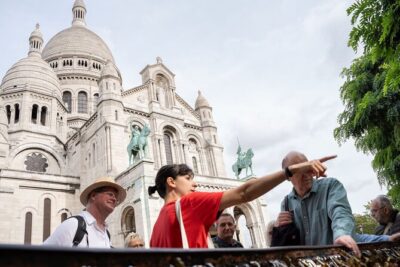
Hidden Montmartre: Paris’ Secret Streets Walking Tour
Read our review →Browse the lists this tour appears in