
Reviewed · PASTRY & MACARON CLASSES
Paris: Macarons Class, Teatime and To-Go Box
Making a good macaron is less about stirring a bowl and more about control: the meringue, the piping, the oven, and the filling all have to cooperate. At Le Foodist on Rue Cardinal Lemoine, you learn the more reliable Italian meringue method, then sit down for tea and stories while your creations are ready to eat.
I like the small groups, usually three to seven people and limited to six, because an instructor can catch a piping mistake before it becomes a tray of lopsided shells. I also like the generous take-home box. You do not just taste one macaron and walk away. You leave with enough to share, if you are feeling unusually generous.
The main consideration is the price: $152 per person is a serious outlay for a three-hour activity. It makes more sense if you value instruction, a social kitchen setting, and the food you take home, rather than simply wanting a quick pastry demonstration.
In This Review
- Key points at a glance
- Why the Italian meringue method matters
- A two-hour kitchen session at Le Foodist
- Mixing, coloring, and piping your shells
- Making the filling: ganache or curd
- Teatime with macarons and French stories
- What you take home
- Is $152 a fair price?
- Who should book this Paris class?
- My take: a sweet activity with real substance
- FAQ
- Where does the macaron class meet?
- How long does the experience last?
- What macaron technique will I learn?
- Is the class taught in English?
- How many people are in the class?
- Can children participate?
- What is included in the price?
- Can I cancel the booking?
Key points at a glance
- Italian meringue technique: Learn the harder method, prized for its consistency when handled correctly.
- Hands-on piping practice: Pipe your own shells, add color, and make a ganache or curd filling.
- Small English-speaking class: Groups are limited to six, with close help from the pastry chef.
- Tea and French stories: Enjoy tea, coffee, fruit juices, and some of your macarons while hearing about French food and culture.
- A box for later: Take home your own finished macarons, along with recipes in printed and electronic form.
- Central Paris address: The class meets at Le Foodist, 59 Rue Cardinal Lemoine in the 5th arrondissement.
Why the Italian meringue method matters
Macarons look delicate, but the basic recipe is not forgiving. A small error in the meringue or the mixing can leave you with cracked tops, hollow centers, or shells that spread across the baking sheet.
This class focuses on Italian meringue, made by adding hot sugar syrup to whipped egg whites. It is more demanding than the simpler French meringue approach, since you must handle hot syrup and get the texture right. The payoff is a method that is generally more stable and repeatable once you understand it.
That choice gives the class real value. You are not simply copying a recipe for one afternoon. You are learning why the mixture behaves as it does, which matters if you hope to make macarons at home. The printed and electronic recipes also help, since macarons are exactly the kind of dessert that benefits from notes taken while the technique is still fresh.
You should not expect a passive pastry show. The instructor demonstrates each stage, explains what to look for, and then has you work through the process. If you are new to baking, that is reassuring. Several instructors, including Stéphane, Anne, Fanny, Amanda, Florence, Anna, Hugo, and Luc, have been praised for patience and clear explanations. The exact instructor depends on the class date, but the format is designed for beginners.
More pastry and macaron classes:
- Paris: Montmartre Cheese, Wine & Pastry Guided Walking Tour
★ 4.8 · 2,255 reviews - Paris Croissant Small-Group Baking Class with a Chef
★ 5.0 · 910 reviews - Paris: Macaron Class at Galeries Lafayette
★ 4.3 · 905 reviews
A two-hour kitchen session at Le Foodist
The class itself lasts about two hours within the three-hour experience. You meet at Le Foodist, 59 Rue Cardinal Lemoine, 75005 Paris. The setting is a dedicated cooking school rather than a restaurant dining room, giving the session a practical, work-focused feel.
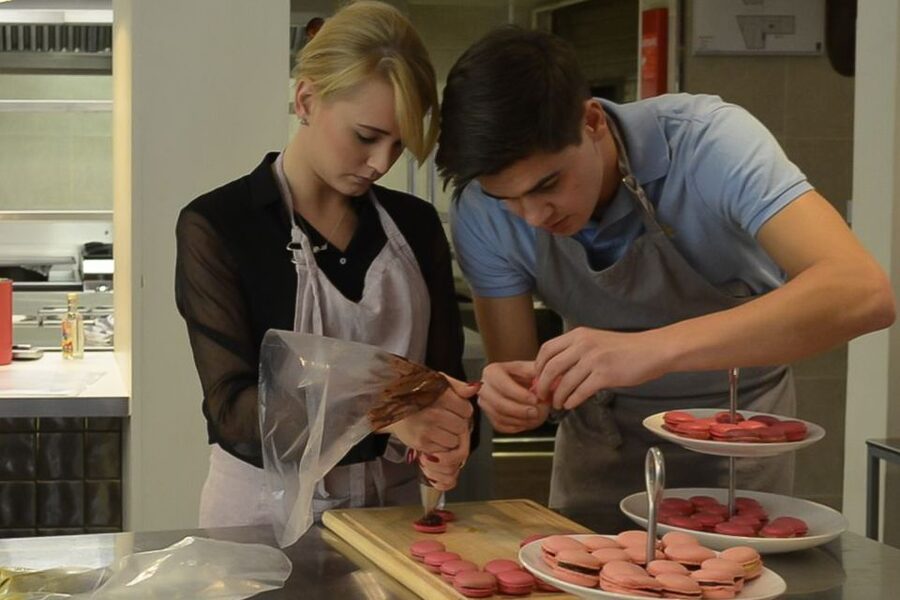
You receive an apron and use the supplied equipment, so there is no need to pack baking tools. The small group format is important here. With only a few people working together, the chef can watch how you fold, pipe, and handle the mixture. That individual attention is one of the strongest reasons to choose this class over a large demonstration.
The work is shared and cooperative. You will likely have tasks that require attention and coordination, not just a quick turn at the counter. One useful point for families is that everyone in the kitchen is expected to participate. Only paying participants can enter the kitchen, so an adult who pays but plans only to watch may not have a personal batch to make.
That detail matters if you are booking for a family. A parent cannot assume they can buy a spot as an observer and then have a child do all the baking. If you want to make macarons yourself, reserve a participating place for yourself.
Mixing, coloring, and piping your shells
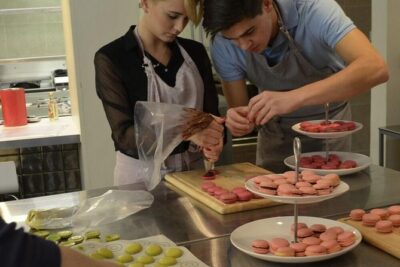
The most satisfying part of the class is turning a bowl of prepared ingredients into neat little rounds. You learn how to incorporate color into the shells and how to pipe them onto the baking surface.
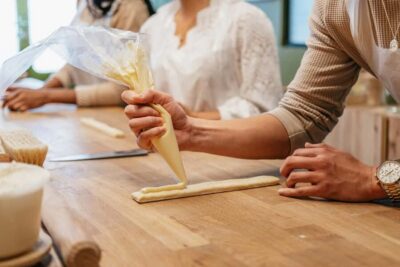
Piping sounds simple until you try to produce uniform circles. The chef can show you how to hold the bag, control pressure, and stop cleanly. Those small movements make a visible difference. A beginner may not produce bakery-perfect shells on the first attempt, but the class gives you a chance to understand the hand position and rhythm.
You also learn how to judge the mixture as you work. Macaron batter needs the right consistency: too stiff and the shells retain peaks, too loose and they flatten. This is the sort of practical judgment that a recipe alone cannot fully explain.
The hands-on structure suits people who like to stay busy. The two-hour session is not padded with long periods of watching. One participant described working almost continuously, which is worth keeping in mind if you prefer a slow, relaxed cooking demonstration. Bring your attention and be ready to take part.
For teenagers and older children, the format can work especially well. Children under 12 cannot participate. Those aged 12 to 16 must be accompanied by a participating adult, and there are no childcare facilities. Several families have used the class for teenagers, including a group with 14 and 16 year olds. The clear lesson is simple: this is a cooking class for active participants, not a child drop-off activity.
Making the filling: ganache or curd
Shells are only half the macaron. The class also covers a filling, with the choice described as a ganache or curd. This adds another useful layer because filling affects the final flavor, texture, and balance of sweetness.
A ganache brings chocolate richness and a smooth texture. A curd provides a brighter, sharper contrast. The precise flavor choices can vary, so do not book expecting one guaranteed menu unless the class confirms it in advance. Past sessions have included several flavors, giving some participants the chance to make four different varieties.
This part also teaches you how to assemble the finished cookies without breaking the shells. A macaron should look tidy from the outside, but it also needs enough filling to make the bite soft and flavorful. The chef helps you judge how much to pipe and how to match shells by size.
If you are a complete beginner, this is where the instructor’s patience matters most. Macarons have a reputation for being difficult, and the class does not pretend otherwise. Instead, it breaks the process into manageable steps and gives you someone to ask when the batter or filling does not look right.
A few more Paris ideas to compare
- Fragonard Paris: Mini Perfume Workshop
★ 4.5 · 1,924 reviews - Paris Cooking Class and Lunch with Wine plus Market Visit Option
★ 5.0 · 1,024 reviews - Paris: 2-Hour Perfume Creation Workshop
★ 4.8 · 731 reviews - Paris: French Croissant Baking Class with a Chef
★ 4.9 · 712 reviews
Teatime with macarons and French stories
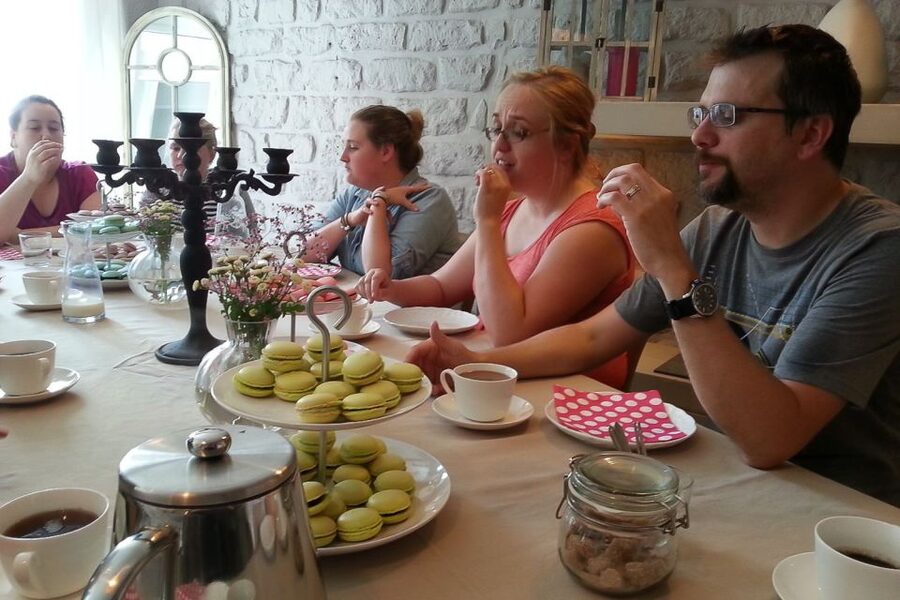
Once the baking work is finished, the mood shifts from kitchen concentration to shared teatime. You sit down with tea, coffee, fruit juices, and some of the macarons you made.
This is more than a snack break. The host uses the time to explain the story of the macaron and share a few observations about French culture. The tone may include humor and tongue-in-cheek stories, so the session has a social side as well as a technical one.
I like this pause because it gives the activity a proper ending. You get to compare the results, taste the work while it is fresh, and talk with the other people in the group. The small class helps here too. With only a handful of participants, it is easier to get to know the people working beside you.
The teatime also makes the experience useful for a mixed group. One person may be more interested in pastry technique, while another enjoys the food and conversation. Everyone has something to do, and nobody has to be a serious baker to have a good time.
Do keep an eye on the clock if you have arranged a taxi or another fixed appointment. The three hours can pass quickly, and the informal tea portion is part of the experience rather than a spare few minutes to fill.
What you take home
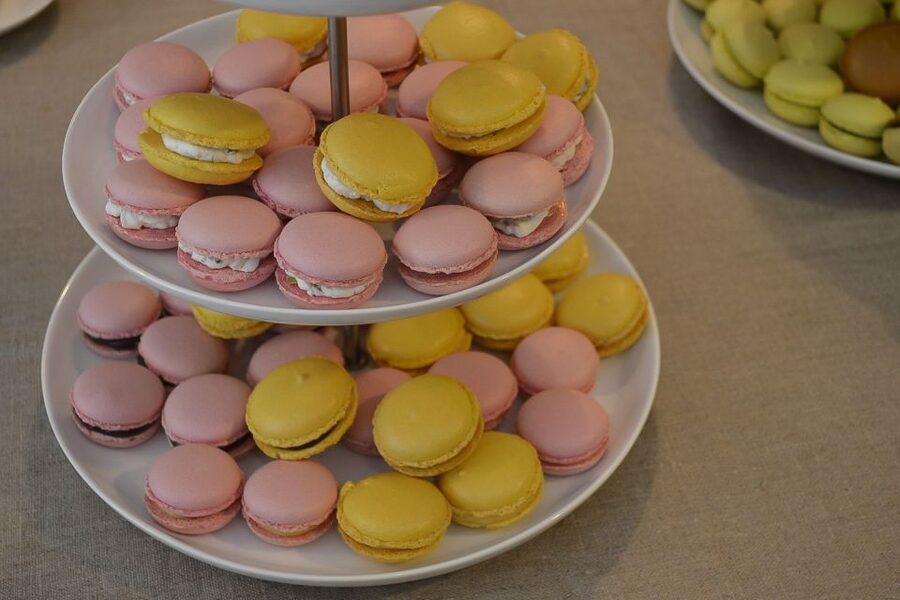
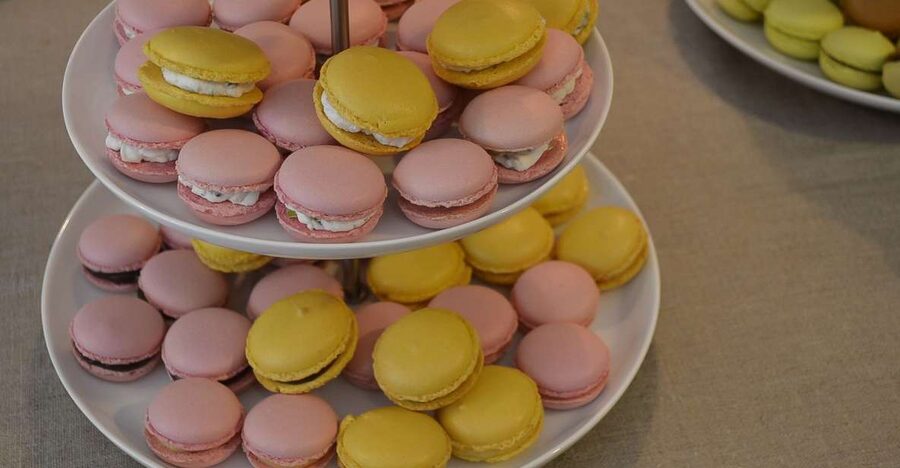
Before leaving, you receive a box of your own macarons. The quantity can be generous. Past participants have described taking home a large box, and some families have had enough to enjoy later with friends and relatives.
This is a practical advantage in Paris, where edible souvenirs are often easier to transport and share than fragile keepsakes. Your macarons will not last forever, of course, but they give you a sweet reminder of the class during the next few days.
You also receive the recipes in English, both as a hard copy and electronically. The printed version is handy for notes during the lesson. One small improvement I would like is more room for the chef’s personal tips directly on the recipe sheet, since those observations can be as useful as the ingredient list.
Still, the combination of food and instructions makes the take-home element stronger than a simple tasting. You leave with both a finished product and the information needed to try again. Your first home batch may require practice, but you will understand far more about the process than if you had only watched a professional make them.
Is $152 a fair price?
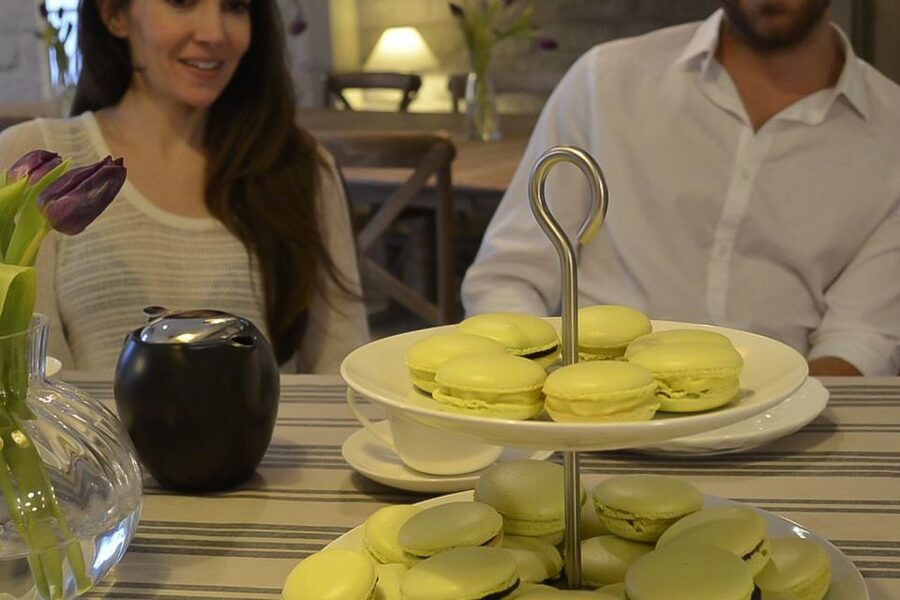
At $152, this is not a bargain pastry stop. You are paying for three hours, a small group, an English-speaking chef, kitchen equipment, an apron, tea and other drinks, recipes, instruction, and a box of macarons.
The value improves if you would otherwise book a cooking class or food-focused activity in Paris. The class combines instruction with a social meal-like finish, and the food you take home adds something tangible. It also saves you from buying baking equipment for a one-time holiday activity.
The price is harder to justify if your main goal is simply eating macarons. Paris has plenty of pastry shops where you can sample them for far less. This experience is for learning how the pastry is made, working with your own hands, and enjoying the company of a small group.
I would also compare it with the rest of your Paris schedule. Three hours is a meaningful block of time, but it is long enough to feel like a real activity rather than a quick diversion. It works well on a day when you want a break from museums and monuments. It may be less suitable if every hour of your trip is already packed.
Who should book this Paris class?
This class fits first-time bakers especially well. You do not need professional experience, and the instructors are used to explaining technical steps in a friendly, usable way. If you enjoy learning by doing, you will get much more from it than from a pastry tasting.
It is also a good choice for couples, families with teenagers, and friends who want an activity they can share. The group size makes it personal without turning the class into a private lesson. English instruction removes a major barrier for many international visitors.
Teenagers aged 12 and older can participate under the stated supervision rules. Families should count each person who wants a hands-on place in the kitchen. Children under 12 cannot take part, and there is no childcare.
Experienced bakers may still enjoy the Italian meringue method, but should set expectations correctly. The class is built for a range of ability levels, not for advanced pastry professionals seeking highly specialized training.
Booking is flexible: you can reserve now and pay later, and cancellation is free up to 24 hours in advance for a full refund. Check the available starting times before planning the rest of your day.
My take: a sweet activity with real substance
I would recommend this class if you want more than a box of French pastries. The best parts are the close instruction, the chance to practice piping and filling, and the relaxed teatime that follows. The cheerful, patient teaching style associated with instructors such as Stéphane, Anne, Fanny, and Luc is especially useful for beginners and families.
The drawbacks are clear. It costs more than a pastry stop, the work can be fairly nonstop, and nonparticipating companions cannot simply wait in the kitchen. But if you book the right number of active places and arrive ready to work, the class gives you a memorable Paris afternoon and a useful skill to take home.
FAQ
Where does the macaron class meet?
The meeting point is Le Foodist, 59 Rue Cardinal Lemoine, 75005 Paris.
How long does the experience last?
The full experience lasts three hours. The hands-on macaron class itself lasts two hours, followed by teatime and stories.
What macaron technique will I learn?
You will learn the Italian meringue method, which is more difficult to master but generally more reliable when prepared correctly.
Is the class taught in English?
Yes. The instructor teaches in English, and the recipes are provided in English in both printed and electronic formats.
How many people are in the class?
The group is limited to six participants. Typical groups may range from three to seven people, depending on the session information provided.
Can children participate?
Children under 12 cannot participate. Children aged 12 to 16 must be accompanied by a participating adult, and only participants may enter the kitchen.
What is included in the price?
The price includes the two-hour hands-on class, cooking equipment, an apron, teatime with drinks and stories, recipes, and a box of your macarons to take away.
Can I cancel the booking?
You can cancel up to 24 hours in advance for a full refund. You can also reserve now and pay later.
Newest additions around Paris
- Family escape Game with kids and teens on the Île de la Cité★ 4.5 · 11 reviews
- Private Photoshoot with the Iconic Eiffel Tower in Paris★ 5.0 · 11 reviews
- Paris Revolutionary Walking Tour: Iconic French Sights & Stories★ 5.0 · 11 reviews
- 2-day Private Mont Saint-Michel, 3 Loire Castles, D-Day Express★ 4.5 · 11 reviews
- Paris: Batobus Hop-On Hop-Off Cruise & Landmarks Audio Tour★ 3.0 · 11 reviews
- Guided and Private Tour of 3 hours through Paris aboard a Citroën 2cv★ 5.0 · 11 reviews
- Kids in the Kitchen – CrOisSaNtS★ 4.0 · 11 reviews
- Paris: Ghosts and Dark Stories Guided Walking Tour★ 4.1 · 11 reviews
Pastry & Macaron Classes, compared.
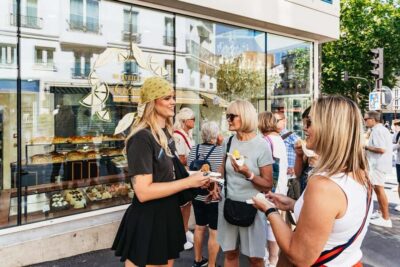
Montmartre Cheese, Wine & Pastry Guided Walking Tour
Read our review →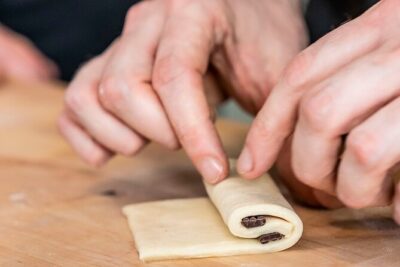
Paris Croissant Small-Group Baking Class with a Chef
Read our review →
Paris Cooking Class: Learn How to Make Macarons
Read our review →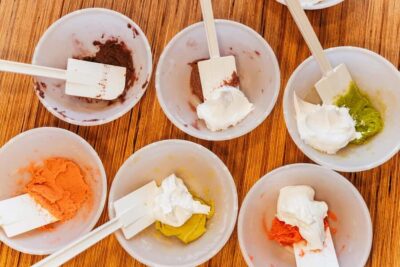
A Morning in Paris Food Tour: Croissants, Baguettes & Chocolate
Read our review →
Paris Chocolate, Macaron & Pastry Food Tour: 10 Gourmet Tastings
Read our review →Browse the lists this tour appears in