
Reviewed · MONTMARTRE & SACRé-COEUR TOURS
Paris: Hidden Gems of Montmartre with Local Guide
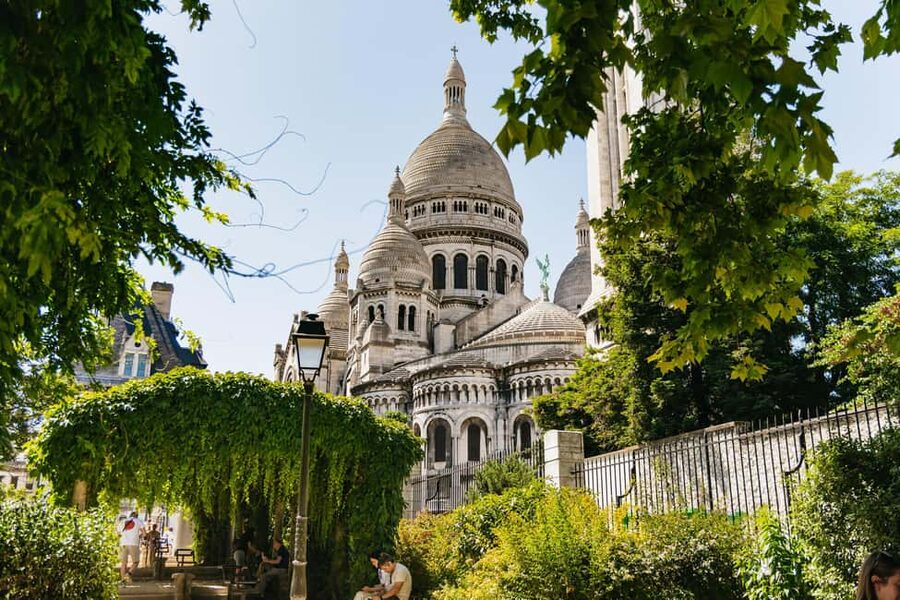
Montmartre is at its best when you leave the broad route to Sacré-Coeur and turn into the lanes where artists once lived, cafés inspired films, and a tiny vineyard still survives. This two-hour walk links the famous sights with quieter corners, a good croissant, and a fine view of Paris from behind the basilica.
I especially like the small group limit of 14, which keeps the walk personal and means you do not need a microphone. I also like the gentle pace, a useful feature on Montmartre’s hills, and the included butter croissant from a respected local bakery. The main consideration is the uphill walking: the route covers about 2 kilometers, and comfortable shoes are essential.
In This Review
- Key points at a glance
- Starting at Blanche and the Moulin Rouge
- The Wall of Love and the café from Amélie
- Croissants, bakeries, and a short French pause
- Artists’ homes and the stories behind the streets
- Moulin de la Galette and Montmartre’s social life
- Dalida, fountains, and the human side of Montmartre
- The vineyard and Le Lapin Agile
- The final climb to Sacré-Coeur
- Pace, hills, and the small-group difference
- Is $41 a fair price?
- Who should book this Montmartre walk?
- Should you book it?
- FAQ
- Where does the Montmartre tour begin?
- Where does the tour end?
- How long is the experience?
- How far do you walk?
- Is the tour conducted in English?
- Is a croissant included?
- Is the tour suitable for children and dietary restrictions?
Key points at a glance

- A real Montmartre introduction: See the Moulin Rouge, Wall of Love, Moulin de la Galette, Lapin Agile, vineyards, and Sacré-Coeur in one compact route.
- A proper French pastry stop: The included butter croissant gives you a quick taste of local bakery culture without turning the tour into a full food crawl.
- Quieter streets and secret passages: The route leaves some of the busiest tourist paths for lanes, courtyards, and less obvious viewpoints.
- Art and pop culture together: Hear stories about Picasso, Van Gogh, Renoir, Dalida, Amélie, and the painting donkey Lolo.
- A useful finish: The tour ends at the Basilica of the Sacred Heart, so you can continue exploring from one of Paris’s best-known landmarks.
- Good flexibility: Morning and afternoon departures are available, with free cancellation up to 24 hours before the tour and a reserve-now, pay-later option.
Starting at Blanche and the Moulin Rouge

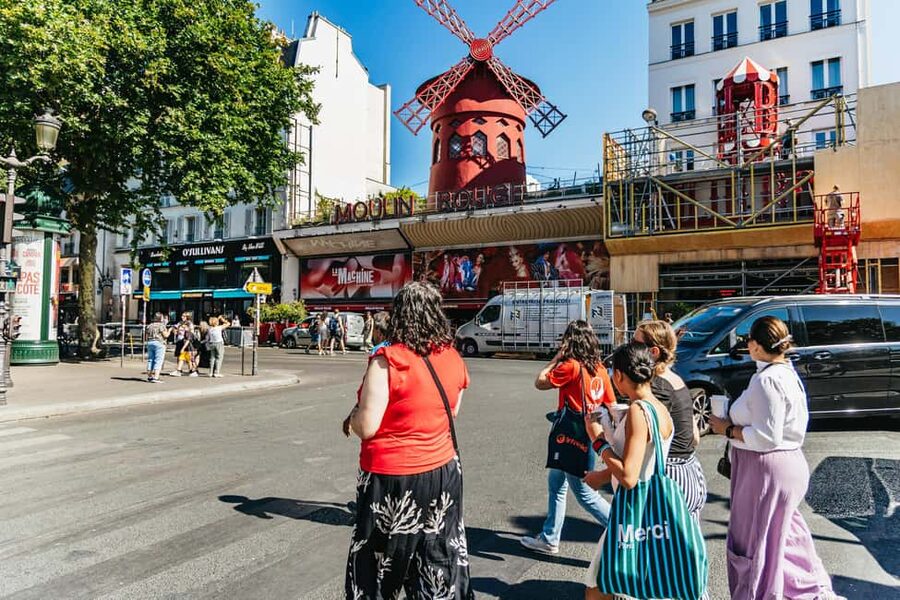
Meet outside the Blanche Metro stop on Line 2, at street level. This is a handy starting point because you are immediately in the lower part of Montmartre, close to the Moulin Rouge and its famous red windmill.
The opening stop gives the guide a chance to explain how Montmartre developed from a hilltop village into one of Paris’s best-known artistic districts. You will not simply pause for a photo and move on. The guide uses the streets around the Moulin Rouge to set up the area’s links with cabaret, painting, cinema, and popular music.
The Moulin Rouge itself is a working entertainment venue, not a museum included in this walk. The value here is the setting and the story, not a backstage visit or show. If you want to attend a performance, you will need a separate ticket and a different evening plan.
Starting at Blanche also means the route builds gradually toward the hilltop. That matters. Montmartre can feel tiring when you attack the steepest streets all at once, but this walk spreads the climb across two hours, with regular stops for stories, photographs, and the pastry break.
More Montmartre walks and visits:
- Montmartre Hidden Gems and Scenic Highlights Walking Tour
★ 5.0 · 2,684 reviews - Montmartre Hill French Gourmet Food and Wine Tasting Walking Tour
★ 5.0 · 2,588 reviews - Paris: Montmartre Cheese, Wine & Pastry Guided Walking Tour
★ 4.8 · 2,255 reviews
The Wall of Love and the café from Amélie
One of the early stops is the Wall of Love, a tiled artwork where the words I love you appear in 250 languages. It is a small stop, but a pleasant one, especially for couples and anyone who enjoys the playful side of Montmartre.
Your guide can help you spot the phrase in different scripts and explain why this square fits the neighborhood’s romantic image. It is also a useful photo stop, though the wall is not a grand monument and will not hold your attention for long.
The walk also points out a café associated with the film Amélie. You should think of this as a film location viewed from the outside, not a movie-themed attraction. That distinction helps set expectations. The appeal is seeing how an ordinary Paris café became part of modern screen culture.
The tour mixes these contemporary references with older stories. That combination works well for first-time visitors. You get a sense of the Montmartre shown in films, but also the neighborhood connected with painters, singers, and working Parisians.
Croissants, bakeries, and a short French pause
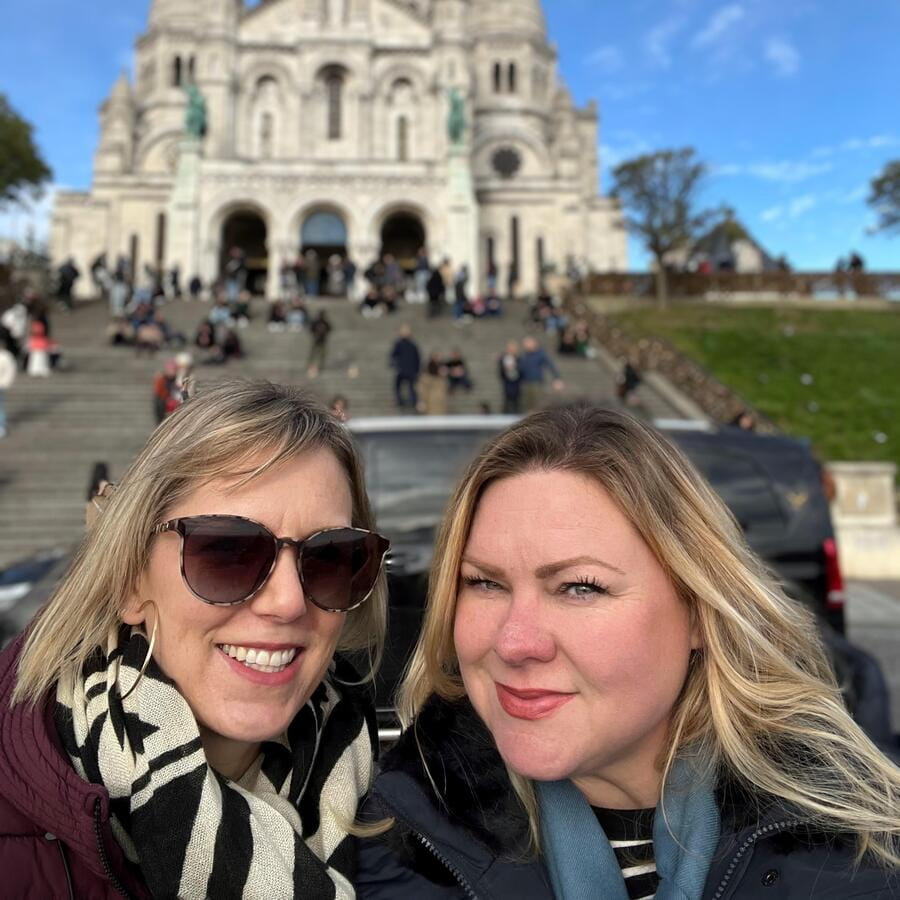
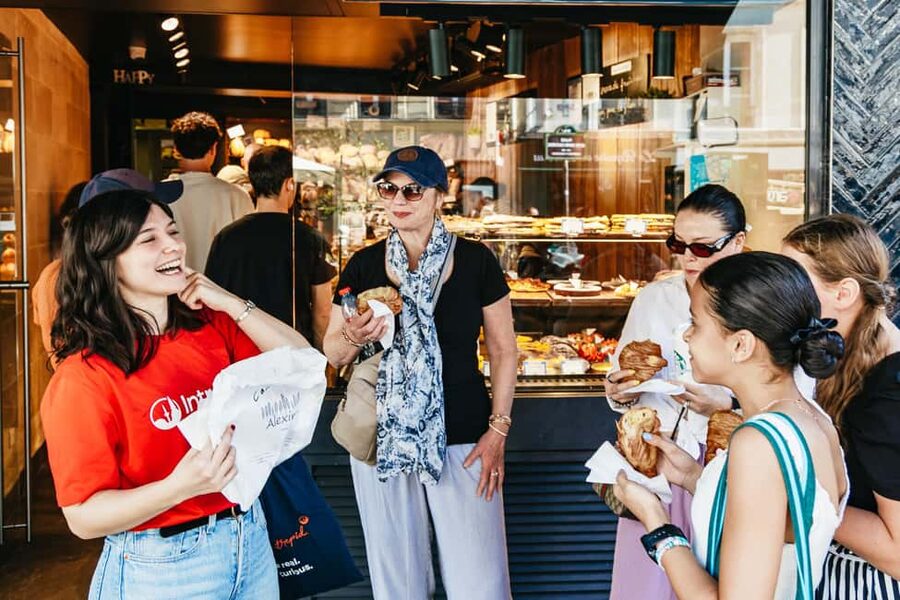
The included croissant is one of the most practical pleasures of the tour. You receive a freshly baked butter croissant from a local bakery, and the pastry is not treated as an afterthought. It gives the group a brief pause and a taste of something distinctly Parisian.
Several guides have taken groups to Boulangerie Alexine, where the croissant has been singled out as a prize-winning or particularly fine example. The exact guide and bakery arrangements can vary, so check the current details when booking, but you should expect one pastry rather than a full breakfast.
This is important if you are comparing the walk with a dedicated Paris food tour. At $41 per person, the pastry adds value, but this is still mainly a neighborhood and history tour. Drinks, extra food, and a series of tastings are not included.
I like this balance. You do not spend the whole morning eating sweets, yet you get a genuine bakery stop that breaks up the walking. If you need a vegan, gluten-free, or lactose-free option, this experience is not suitable. It is suitable for vegetarians.
Artists’ homes and the stories behind the streets
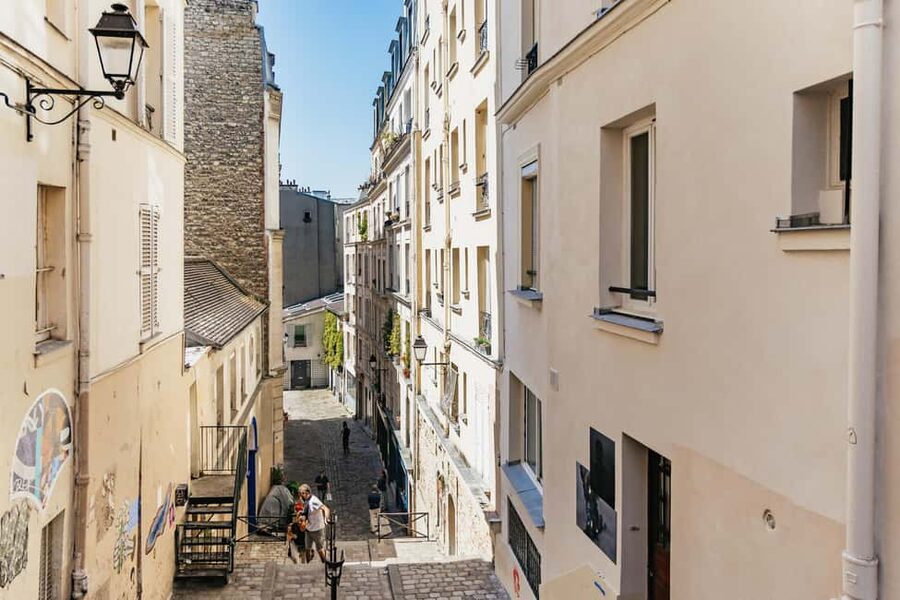
Montmartre’s art story is often reduced to a few famous names, but a good guide can make the streets feel more specific. Along the route, you may see Van Gogh’s former residence and the old home of Picasso, while hearing about Renoir and the painters who helped shape the district’s reputation.
The tour does not take you through private homes or offer entry to artists’ studios. Instead, the guide connects visible buildings and streets with the people who lived and worked there. That is the right format for a walking tour because the neighborhood itself becomes the subject.
The guides are a major part of the experience. Camila has led groups with a strong mix of art history, local detail, humor, and pop culture. Paloma has been praised for linking Montmartre with paintings displayed in Paris museums and for helping people with photographs. Max, Linda, Sarah, Camille, and other English-speaking guides have also led this route.
You should not book on the assumption that one particular guide will be assigned unless the booking page confirms it. Still, the repeated pattern is clear: the tour depends on storytelling, and the company uses guides who can explain the area rather than simply recite dates.
A few more Paris ideas to compare
- Paris: Louvre Guided Tour with Reserved Access & Boat Cruise
★ 4.3 · 16,353 reviews - Louvre Museum Masterpieces Guided Tour with Access
★ 4.5 · 12,023 reviews - Louvre Museum – Exclusive Guided Tour (Entry Included)
★ 5.0 · 6,296 reviews - Versailles: Skip-the-Line Guided Palace Tour and Full Access
★ 4.6 · 5,214 reviews
Moulin de la Galette and Montmartre’s social life
The Moulin de la Galette is one of the route’s strongest history stops. Its name recalls Montmartre’s old windmills and the dance hall that became part of the area’s social life. It also brings the art story to life, since the scene is tied to famous paintings and the way artists recorded everyday Paris.
This stop helps you see that Montmartre was not only a place of solemn studios and grand artistic ideas. It was also a neighborhood of cafés, music, dancing, and ordinary recreation. The guide’s explanation is what turns a windmill-themed landmark into a useful piece of the area’s past.
You will continue through winding lanes and smaller passages rather than staying only on the most obvious streets. The route is designed to show a quieter side of the hill, but do not expect complete solitude. Montmartre remains one of Paris’s most visited districts, and popular spots can still be busy.
The reward is variety. One turn may show a postcard view, while the next reveals a plain residential lane or a building connected with a famous name. That contrast is more interesting than a walk made only of major monuments.
Dalida, fountains, and the human side of Montmartre
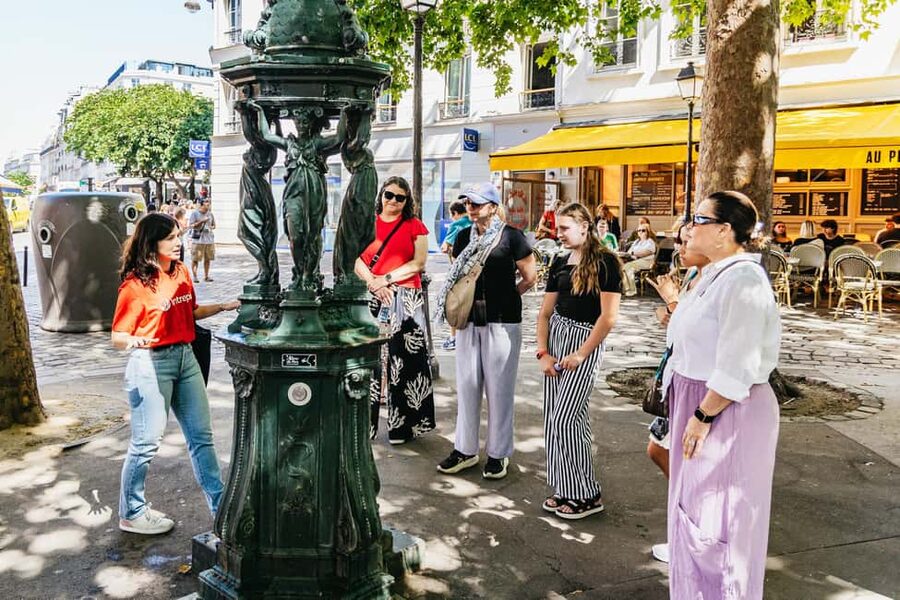
The tour includes stories about Dalida, the much-loved French singer, along with her statue and the neighborhoods connected to her life. This adds a strong modern French thread to a route otherwise dominated by painters and nineteenth-century cafés.
You may also encounter Wallace fountains, which are a familiar part of Paris street life. They are easy to overlook when you are hurrying uphill, but a guide can explain why these decorative public fountains matter to the city.
These smaller details are where the walk earns its name. You can visit Montmartre alone and see the basilica, the windmill, and the main square. A guide helps you notice the things that do not always appear in a standard sightseeing plan.
The stories also make the tour work for people who are not art specialists. You do not need to know French painting or Parisian music in advance. The guide connects the names to places you can see, keeping the subject grounded in the street rather than turning it into a lecture.
The vineyard and Le Lapin Agile
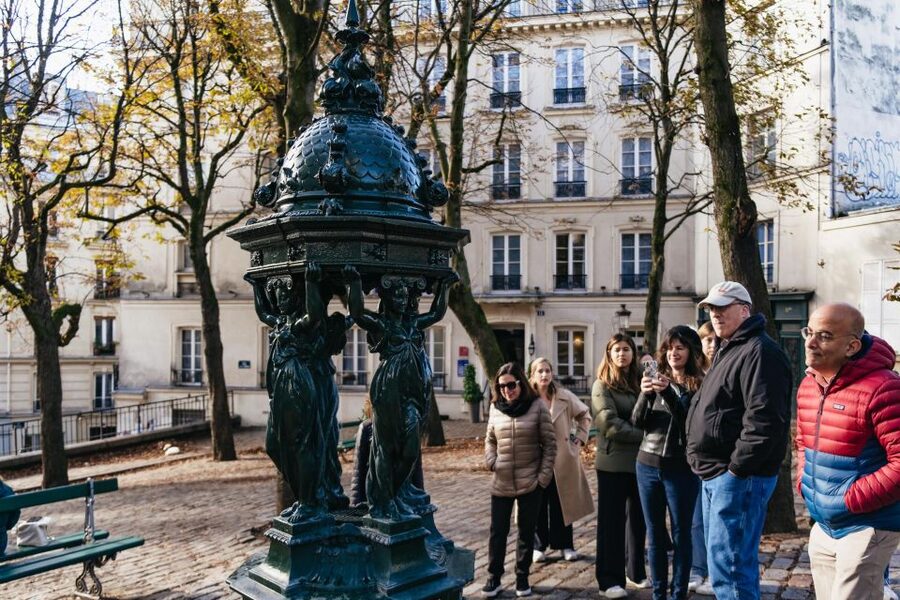
Montmartre still has a vineyard, a surprising reminder that this hill was once outside central Paris and had a more rural character. The vineyard is a visual treat, especially when you have just been walking through dense city streets. It is not a large wine estate and there is no wine tasting included, but it is an unusual sight in the capital.
Near the vineyard is Le Lapin Agile, a legendary cabaret with strong ties to Montmartre’s artistic past. The building helps show how the district’s creative life grew around small venues, informal gatherings, and places where artists met one another.
Here you will hear the odd story of Lolo, the painting donkey. It is exactly the kind of local tale that gives a walking tour character. You may not remember every date from Montmartre’s past, but you are likely to remember a donkey associated with art.
The stop also offers a useful warning about the phrase hidden in the tour title. Montmartre is not truly secret. Its famous corners are well known, and some lanes may be crowded. The quieter experience comes from the route, the timing, and the guide’s choice of details, not from having the whole hill to yourself.
The final climb to Sacré-Coeur
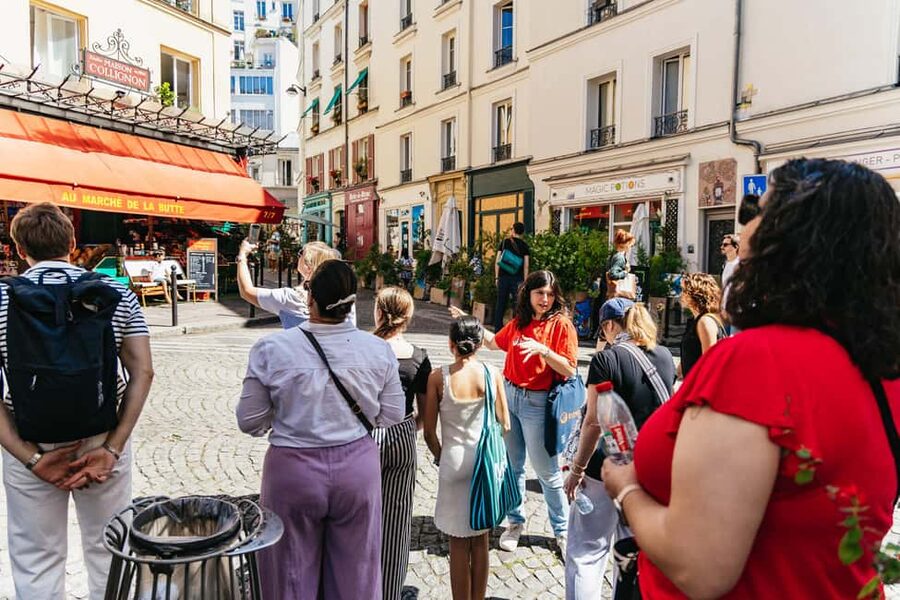
The tour finishes at the Basilica of the Sacred Heart, usually called Sacré-Coeur, after taking you to a less familiar viewing angle near the back of the building. This is a smart ending because the basilica is the natural high point of Montmartre, both physically and visually.
You will see the white basilica from a different side than the standard front approach, with broad views over Paris. The panorama is one of the best reasons to choose this tour instead of simply walking straight up from the Metro.
The tour does not include a dedicated interior visit, a timed entry, or a climb into the dome. You finish outside the basilica, free to look around, take photographs, enter if permitted, or continue toward the square in front.
The last stop also makes the tour useful for planning the rest of your day. Afterward, you can explore Sacré-Coeur on your own, visit the nearby artists’ square, find lunch, or walk back through Montmartre. Since the route ends uphill, avoid scheduling a hurried activity immediately afterward.
Pace, hills, and the small-group difference
The walk covers about 2 kilometers in two hours. That is not a long distance, but Montmartre’s slopes and uneven cobbled streets make the effort greater than the number suggests.
The pace is described as reasonable and gentle, with stops along the way. Guides have adjusted the route for guests who needed a break and have used less severe paths where possible. Still, you should wear comfortable shoes and bring weather-appropriate clothing. The tour runs in morning and afternoon time slots, so check the available start time before building your day around it.
A maximum of 14 people is a real advantage here. You can hear an English-speaking guide without a headset or microphone, ask questions, and stay connected with the group while moving through narrow streets. It also avoids the impersonal feel of a large procession.
Private groups are available if you want more control over the pace or are visiting with family and friends. The shared small-group format should be enough for most people, particularly at this price.
Is $41 a fair price?
At $41, this tour sits in a sensible middle range for a two-hour guided walk in Paris. You are paying for a local English-speaking guide, a carefully planned route, a small group, and a fresh croissant. The price is not a bargain if you only want to see Sacré-Coeur and take photographs, since you can walk through the area independently.
The value improves if this is your first visit to Montmartre or if you have already been there but felt you missed the point. The guide supplies the connections between places, and the pastry stop adds a simple local pleasure without the cost of a full food tour.
You also get flexibility through free cancellation up to 24 hours ahead and the option to reserve now and pay later. The operator describes the outing as carbon-neutral and is B Corp-certified, which may matter to you if responsible tourism is part of your booking decision.
Who should book this Montmartre walk?
I would choose this tour for a first or second visit to Paris, especially if you want an introduction to Montmartre without spending half a day on a large sightseeing circuit. It suits couples, solo visitors, families with older children, art fans, film lovers, and people who prefer stories to a list of monuments.
It is child-friendly, but specify at booking if you are bringing a child under six. The hills, cobbles, and two-kilometer route may be tiring for very young children, even at a manageable pace.
I would choose a different experience if your main goal is a full food tour, a detailed art-specialist walk, a private luxury experience, or a formal visit inside Sacré-Coeur. This walk gives you one croissant, not a meal, and its art coverage is broad rather than narrowly academic.
Should you book it?
Book this Montmartre tour if you want the neighborhood explained by a local guide, with a small group, a relaxed uphill route, and a few details you would likely miss alone. The best parts are the mix of famous names and modest street corners, plus the final view behind Sacré-Coeur.
Skip it if you dislike hills, want a completely independent walk, or need dairy-free, gluten-free, or vegan food. For most visitors, though, $41 is a fair price for a well-paced introduction that leaves you at the basilica with plenty of Montmartre still available to explore.
FAQ
Where does the Montmartre tour begin?
Meet outside the Blanche Metro stop on Line 2, at ground level.
Where does the tour end?
The walk ends at the Basilica of the Sacred Heart of Paris, also known as Sacré-Coeur.
How long is the experience?
The guided walk lasts two hours.
How far do you walk?
The route covers about 2 kilometers, or 1.2 miles.
Is the tour conducted in English?
Yes. The tour has a live English-speaking guide.
Is a croissant included?
Yes. A freshly baked butter croissant from a local bakery is included. Drinks and additional food are not included.
Is the tour suitable for children and dietary restrictions?
The tour is child-friendly, but you should specify at booking if bringing a child under six. It is suitable for vegetarians, but not for lactose-free, gluten-free, or vegan customers.
Newest additions around Paris
- Family escape Game with kids and teens on the Île de la Cité★ 4.5 · 11 reviews
- Private Photoshoot with the Iconic Eiffel Tower in Paris★ 5.0 · 11 reviews
- Paris: Batobus Hop-On Hop-Off Cruise & Landmarks Audio Tour★ 3.0 · 11 reviews
- Paris Revolutionary Walking Tour: Iconic French Sights & Stories★ 5.0 · 11 reviews
- 2-day Private Mont Saint-Michel, 3 Loire Castles, D-Day Express★ 4.5 · 11 reviews
- Guided and Private Tour of 3 hours through Paris aboard a Citroën 2cv★ 5.0 · 11 reviews
- Kids in the Kitchen – CrOisSaNtS★ 4.0 · 11 reviews
- Paris: Ghosts and Dark Stories Guided Walking Tour★ 4.1 · 11 reviews
Montmartre & Sacré-Coeur Tours, compared.

Montmartre Hidden Gems and Scenic Highlights Walking Tour
Read our review →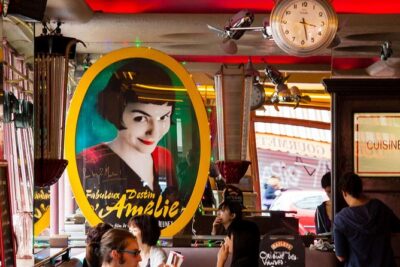
Montmartre Hill French Gourmet Food and Wine Tasting Walking Tour
Read our review →
Montmartre Cheese, Wine & Pastry Guided Walking Tour
Read our review →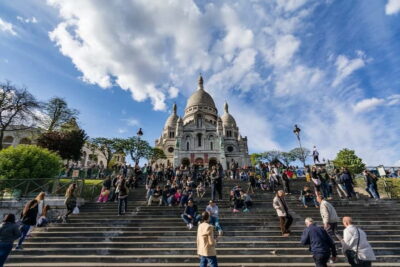
Montmartre Highlights Walking Tour with a Local Guide
Read our review →
Sacré-Coeur and Montmartre Tour with Expert Guide
Read our review →
Private Montmartre Food Tour with Wine, Cheese & Pastries
Read our review →
Paris Montmartre Food Tour – A Full French Meal by Do Eat Better
Read our review →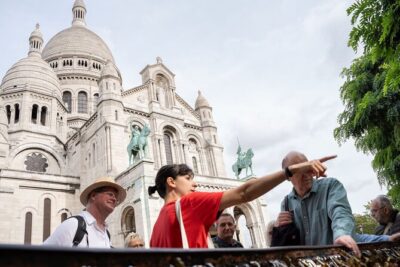
Hidden Montmartre: Paris’ Secret Streets Walking Tour
Read our review →Browse the lists this tour appears in