
Reviewed · PASTRY & MACARON CLASSES
Paris French Baking Class Baguettes and Croissants in a Bakery
The best part of this Paris class is that you go behind the bakery counter and into the working kitchen. Baker Didier demonstrates how French bread is made, while an English translator explains the techniques, stories, and practical tips. You shape baguettes, work with croissant dough, and taste the results warm from the oven.
I like the small group limit of 10, which gives you a real chance to handle the dough and ask questions. I also like the bakery’s unusual focus on flour: Didier mills his own grain, and his lessons cover ingredients, additives, equipment, and the long story of French bread. The main consideration is that this is more a baguette workshop than a full croissant-making course. You learn the croissant process and roll the dough, but most of the hands-on work centers on bread.
In This Review
- Key points to know before booking
- Entering Le Petit Mitron in Oberkampf
- Meeting Didier, the baker behind the lesson
- The baguette lesson takes center stage
- Croissants, lamination, and pain au chocolat
- Baking history adds context
- A warm, personal setting for families
- What you take home
- Is the $264.95 price good value?
- Timing, communication, and cancellation
- Who should book this Paris baking class?
- Should you book it?
- FAQ
- Where does the French baking class meet?
- How long does the experience last?
- Is the class offered in English?
- What will I make?
- What is included in the price?
- How many people can join the class?
- Can children take part?
Key points to know before booking
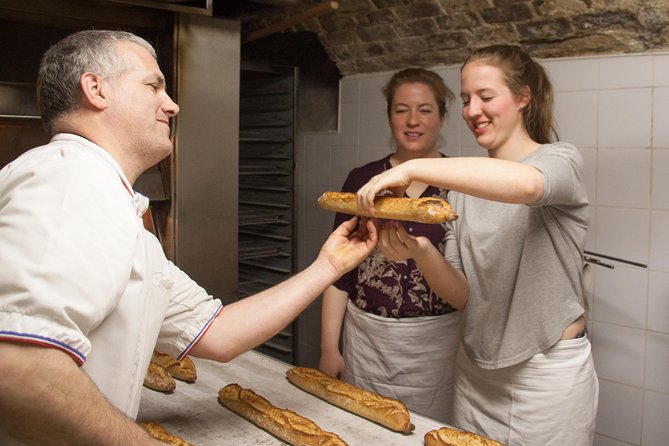
- Baguettes get most of the hands-on time: You shape dough, score loaves, and learn the details that affect texture and rise.
- Croissants are taught by demonstration and practice: You see lamination, roll croissant dough, and may also prepare pain au chocolat, but you do not make every step from raw dough.
- Didier brings the personality: His humor, passion, and attention to flour make the lesson feel personal rather than scripted.
- English support is provided: An interpreter works throughout the class, making the French instruction accessible.
- You taste the results warm: The class includes baguette and pastry tasting, with recipes sent home for later baking.
- Families can join: The minimum age is 6, but children need to stay focused for roughly two and a half hours.
Entering Le Petit Mitron in Oberkampf
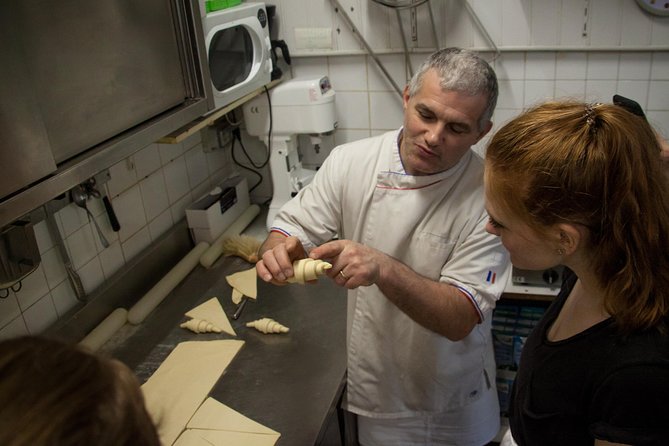
Your class begins at Boulangerie Pâtisserie Le Petit Mitron, at 8 Rue Oberkampf in Paris’s 11th arrondissement. The activity starts and ends at the bakery, so you arrange your own way there and back. The location is near public transportation, which makes it practical to fit into a day of exploring eastern Paris.
This is not a sightseeing tour with a bakery visit added on the side. The bakery is the setting and the subject. You move into the kitchen area, watch the baker work at close range, and take part in the preparation rather than simply buying a pastry at the front counter.
The class runs for about two hours and 30 minutes. That is a useful length for a lesson with demonstrations, practice, oven time, tasting, and questions. It is also long enough that younger children may need a little preparation. The activity has a minimum age of 6, and minors must be accompanied by an adult.
Morning and afternoon start times are offered. I would choose based on your wider Paris plans, not on the idea that one session is automatically better. Either way, you should allow time to arrive at the stated meeting point and settle in before the lesson begins.
More pastry and macaron classes:
- Paris: Montmartre Cheese, Wine & Pastry Guided Walking Tour
★ 4.8 · 2,255 reviews - Paris Croissant Small-Group Baking Class with a Chef
★ 5.0 · 910 reviews - Paris: Macaron Class at Galeries Lafayette
★ 4.3 · 905 reviews
Meeting Didier, the baker behind the lesson
Didier is the heart of the experience. He is a French baker with a strong personal connection to his craft, and his teaching style mixes technical instruction with humor and stories. He does not speak English, so an interpreter, often identified as Luz in the class descriptions, translates throughout the workshop.
That language arrangement is worth understanding before you book. You are not receiving a fully English-speaking baker who happens to demonstrate bread. Instead, you watch Didier’s demonstrations and communicate through the interpreter. The format can add a little time to each explanation, but it also lets you hear directly from the person doing the work.
The interpreter’s role is more than simply translating ingredient names. The lesson covers methods, baking history, and tips for adapting professional techniques at home. If you have a question about your own baking, bring it up. Didier’s teaching style is described as responsive, and the small class size should make it easier to get individual help.
I especially like the fact that the lesson includes the baker’s ideas about flour. Didier mills his own grain on site, and he discusses how flour affects the finished loaf and why some commercial products rely on additives. You will not just copy a recipe. You will get a clearer sense of how ingredients and handling work together.
The baguette lesson takes center stage
The baguette portion receives most of the practical attention. Didier first shows you the professional method, including how to handle, shape, and prepare the dough. You then try the movements yourself, with help when needed.
The class may not involve making the dough entirely from the beginning. That matters if you are booking because you want a full start-to-finish bread recipe. Several class details point instead to a lesson built around prepared dough, shaping, scoring, and learning the process through close demonstration.
Still, those steps are where much of the craft lies. A baguette can look simple, but the way you handle and shape it affects the crumb, crust, and final form. You get to roll the loaves and make different patterns on the surface. At one point, you may help place or remove bread from the oven using the long wooden paddle, an especially memorable bakery task.
The baker also explains equipment and ways to work at home without professional tools. That practical advice is one of the strongest reasons to bring a notebook or make careful mental notes. A home oven and a Paris bakery oven are not the same, so tips about adapting the method can be more useful than a list of exact measurements alone.
The tasting comes after the hard work. You sample baguette while it is still warm, when the crust and soft interior show what the method is meant to produce. You also leave with bread to enjoy later, giving the lesson a useful picnic angle. I would pair it with cheese from a nearby shop, though the class itself does not include cheese or a separate food tour.
Croissants, lamination, and pain au chocolat
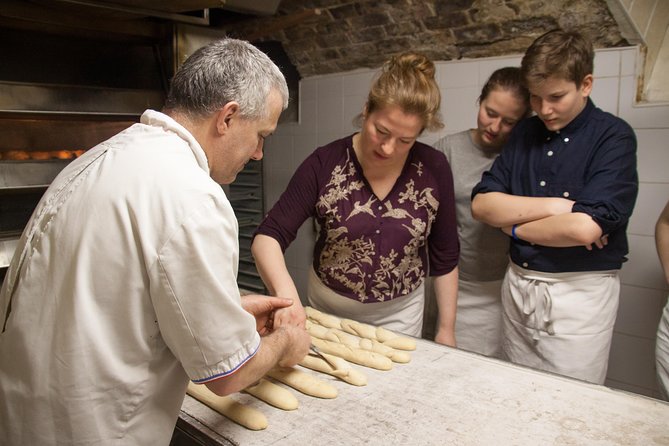
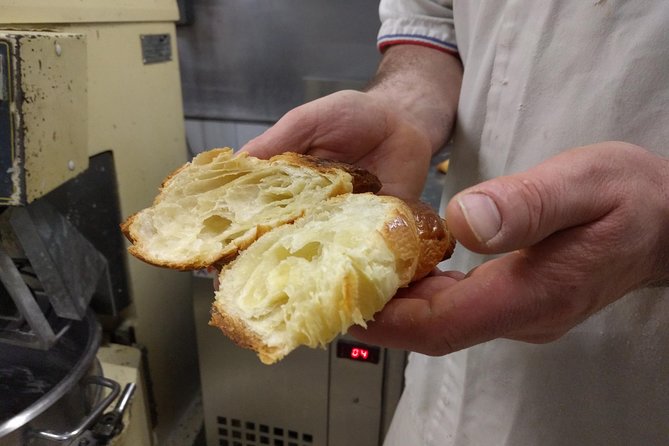
Croissants receive a shorter treatment than baguettes, so set your expectations carefully. Didier demonstrates the process and explains how the butter layers create the flaky texture. You get to roll or shape the dough and may also prepare pain au chocolat, depending on the class format.
This is valuable if you want to understand what makes croissant dough different from ordinary bread dough. You see the importance of lamination, butter, rolling, and careful handling. You also get to taste the finished result, including the buttery croissant listed as the dessert.
It is not the right choice if your main goal is to spend two and a half hours making croissants from scratch, folding the dough through every stage, and producing a full batch independently. The class gives you a guided look at the process, but the baguette work is the main event.
For many people, that balance makes sense. French baking is not only about pastries. The baguette is a daily food in France, and learning how it is shaped, scored, and baked gives you a better feel for the country’s food culture. The croissant section adds the pastry side without pretending that a short class can cover every professional step in detail.
More cooking classes in Paris:
- Paris Cooking Class and Lunch with Wine plus Market Visit Option
★ 5.0 · 1,024 reviews - Paris: French Croissant Baking Class with a Chef
★ 4.9 · 712 reviews - Paris Cooking Class: Learn How to Make Macarons
★ 5.0 · 634 reviews - Paris Evening Cooking Class French Dinner and Market Visit Option
★ 5.0 · 430 reviews
Baking history adds context
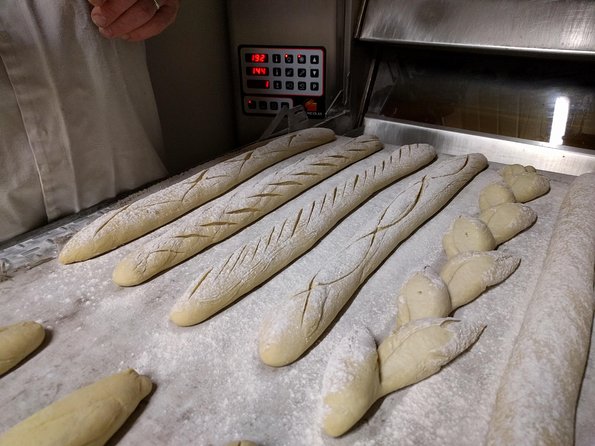
Didier talks about the history of baguettes, croissants, and French food while he works. These stories give the techniques a reason and place them in everyday French life. You learn not only what to do with the dough, but why these products became such recognizable parts of the French table.
The history is woven into the workshop rather than delivered as a separate lecture. That keeps the class active, though the information can come quickly. If you have little baking experience, pay close attention during the demonstrations and ask the interpreter to clarify anything that moves too fast.
Experienced home bakers can still find plenty to take away. Flour quality, dough handling, scoring, lamination, and oven technique are useful subjects even if you already bake regularly. At the same time, the lesson remains approachable for someone who rarely bakes. You do not need to arrive with professional skills.
A warm, personal setting for families
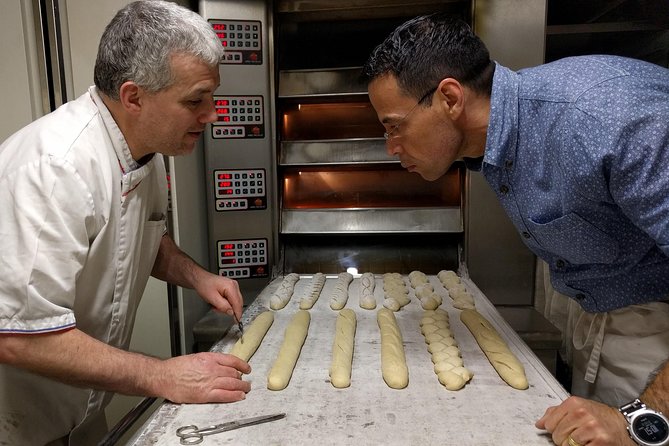
The group limit of 10 is important. Baking classes can become frustrating when too many people crowd around one work surface or wait for a turn. Here, the smaller format should give you more contact with the baker and more opportunity to try the shaping and decorating steps yourself.
The class works well for families, including children and grandparents, provided everyone can concentrate for the full session. Children as young as 6 may participate, but the two-and-a-half-hour duration is the real test. Younger children may enjoy shaping dough and tasting pastries, while older children and teenagers are more likely to follow the technical explanations.
Didier’s humor helps keep the mood relaxed. The interpreter also plays a major role in making the group feel comfortable and included. You may notice a little back-and-forth between the baker and interpreter, but that is part of the character of the class rather than a flaw.
This is also a good choice when you want a break from museums and monuments. Paris can fill a day with famous sights, but a bakery workshop gives you something physical to do. You work with your hands, meet a local craftsperson, and leave with food and recipes rather than another photograph.
What you take home
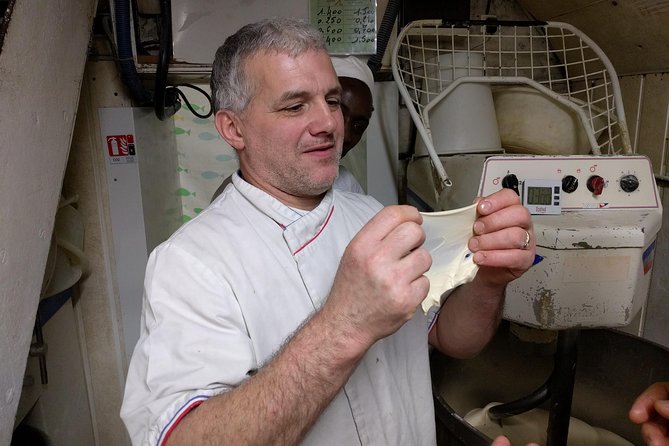
The activity includes tasting and recipes. You sample baguettes and pastries during the class, and you leave with the know-how to try the methods in your own kitchen. Depending on what is produced during your session, you may also take home a baguette or loaf.
The recipes are useful, but the demonstrations may be even more valuable. Bread depends on feel, timing, flour, temperature, and handling. A written recipe cannot show you exactly how dough should look or how gently it should be shaped. Watching Didier work gives you a visual reference for your next attempt.
Do not expect to recreate a Paris bakery perfectly on your first try. Home ovens and ingredients vary, and croissants demand patience. The payoff is that you return with a clearer method and practical suggestions for working without commercial equipment.
One particularly nice touch is the sense of ongoing support described during the class. The baker and interpreter have offered help with questions after the session, including photos of home attempts. That does not replace a formal follow-up course, but it can make the recipes feel more usable.
Is the $264.95 price good value?
At $264.95 per person, this is a costly two-and-a-half-hour activity. You are paying more than the price of a bakery breakfast or a casual food walk. The value depends on how much you want an interactive lesson rather than simply eating French pastries.
The price covers the cooking class, tasting, and recipes. It also buys access to a small group, a working bakery, a specialist baker, an interpreter, and hands-on practice. If you are a serious home baker, a food-focused visitor, or someone marking a special occasion, the personal instruction can justify the cost.
For a family, the total price rises quickly. I would book only if everyone joining can take part and stay interested. A child who dislikes organized activities may get more out of a simple bakery stop, which would cost much less.
The experience is also priced on the assumption that the setting and instruction matter. If you only want to eat a warm croissant, use the money elsewhere. If you want to understand how French bread is made and attempt it later at home, the class offers more lasting value than a standard tasting.
The experience is often reserved well ahead, with an average booking lead time of about 43 days. That suggests you should not leave it until the final morning of your Paris trip, especially if your schedule is tight.
Timing, communication, and cancellation
The class is offered in English through interpretation, with morning and afternoon options. You receive a mobile ticket, and the activity ends at the same bakery where it begins. Hotel pickup and drop-off are not included.
Free cancellation is available up to 24 hours before the start time. Changes or cancellations inside that 24-hour window are not accepted for a refund. The class also requires a minimum number of participants, so a session can be canceled after confirmation if too few people are booked or a booking creates an over-capacity problem.
That minimum-number rule is worth taking seriously if your Paris schedule is short. A cancellation may result in an alternative date or a full refund, but it can still disrupt your plans. Check your final time and meeting details carefully after booking, especially if the provider contacts you about a change.
The stated maximum is 10 participants, though the minimum number can affect whether a session runs. Keep the bakery’s address handy and plan your route in advance. Since there is no hotel transfer, arriving at the correct location is your responsibility.
Who should book this Paris baking class?
I would book this if you meet one or more of these conditions:
- You enjoy food experiences that teach a skill.
- You want to work inside a real Paris bakery rather than attend a polished cooking studio.
- You are curious about flour, dough, French food history, or traditional bread.
- You are traveling with children who can focus for about 2.5 hours.
- You want recipes and practical tips to use after returning home.
- You prefer a small class where the baker can respond to questions.
I would think twice if you want a fully hands-on croissant course from start to finish. I would also skip it if your schedule cannot absorb a possible change caused by the minimum-number rule, or if you have sensitive airborne allergies, since the activity is not recommended for you.
Should you book it?
Book this class if you want an authentic, personal look at French baking and you are happy for baguettes to receive most of the attention. Didier’s humor, flour expertise, demonstrations, and direct teaching give the experience a clear personality, while the interpreter makes the lesson workable for English speakers.
Do not book it expecting to leave as a trained croissant maker after one session. You will learn the process, roll and shape dough, taste warm pastries, and gain recipes, but the class is best understood as a bakery workshop with a strong baguette focus.
For food-loving families, curious home bakers, and anyone needing a break from the standard Paris checklist, I think it is a worthwhile splurge. Plan your route carefully, confirm the time, and arrive ready to listen, shape, taste, and laugh a little.
FAQ
Where does the French baking class meet?
The class begins and ends at Boulangerie Pâtisserie Le Petit Mitron, located at 8 Rue Oberkampf, 75011 Paris, France.
How long does the experience last?
The workshop lasts approximately 2 hours and 30 minutes.
Is the class offered in English?
Yes. The class is offered in English through an interpreter who translates the baker’s instruction.
What will I make?
You will learn about and work with French baguettes and croissants. The class may also include pain au chocolat. Most of the hands-on work focuses on baguettes, while croissant preparation is taught through demonstration and rolling or shaping practice.
What is included in the price?
The price includes the cooking class, tasting of baguettes and pastries, and recipes.
How many people can join the class?
The maximum group size is 10 participants. A minimum number is also required for the class to run.
Can children take part?
The minimum age is 6. Minors must be accompanied by an adult, and children should be able to stay focused for approximately two and a half hours.
More Workshops in Paris
- Fragonard Paris: Mini Perfume Workshop
★ 4.5 · 1,924 reviews - Paris: 2-Hour Perfume Creation Workshop
★ 4.8 · 731 reviews - Paris: French Macaron Culinary Class with a Chef
★ 4.9 · 591 reviews - Paris: French Wine Tasting Class with Sommelier
★ 4.8 · 505 reviews
Newest additions around Paris
- Family escape Game with kids and teens on the Île de la Cité★ 4.5 · 11 reviews
- Private Photoshoot with the Iconic Eiffel Tower in Paris★ 5.0 · 11 reviews
- 2-day Private Mont Saint-Michel, 3 Loire Castles, D-Day Express★ 4.5 · 11 reviews
- Paris: Batobus Hop-On Hop-Off Cruise & Landmarks Audio Tour★ 3.0 · 11 reviews
- Paris Revolutionary Walking Tour: Iconic French Sights & Stories★ 5.0 · 11 reviews
- Guided and Private Tour of 3 hours through Paris aboard a Citroën 2cv★ 5.0 · 11 reviews
- Kids in the Kitchen – CrOisSaNtS★ 4.0 · 11 reviews
- Paris: Ghosts and Dark Stories Guided Walking Tour★ 4.1 · 11 reviews
Pastry & Macaron Classes, compared.
Montmartre Cheese, Wine & Pastry Guided Walking Tour
Read our review →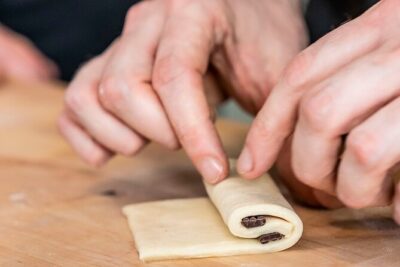
Paris Croissant Small-Group Baking Class with a Chef
Read our review →
Paris Cooking Class: Learn How to Make Macarons
Read our review →
A Morning in Paris Food Tour: Croissants, Baguettes & Chocolate
Read our review →
Paris Chocolate, Macaron & Pastry Food Tour: 10 Gourmet Tastings
Read our review →Browse the lists this tour appears in