
Reviewed · PASTRY & MACARON CLASSES
Paris: Croissant Baking Class with a Chef
Paris: Croissant Baking Class with a Chef
The best part of this Paris cooking class is that you do not simply watch a chef make croissants. You handle the dough yourself, from the first mix through the final crescent shape, then eat the warm results. Chef Leo, and on some sessions Chef Maria, keep the mood light while explaining the details that make French pastry work.
I like the small group of eight, which gives the chef time to correct your rolling and folding technique. I also like the balance between practical work and pastry science, especially the talk about butter quality, resting, and proofing. The one thing to consider is the physical effort. Rolling laminated dough takes arm strength, and the three-hour class is not a quick demonstration.
In This Review
- Key points at a glance
- Why this class works better than a pastry demonstration
- Arriving at Studio Pâtisserie near Rome and Villiers
- Mixing the dough and learning the pastry basics
- Folding and rolling: the class’s real test
- Shaping crescents and pain au chocolat
- Proofing, baking, and the first warm croissant
- What the chef adds to the three-hour format
- Is $140 good value for a Paris baking class?
- Who should book this croissant class?
- Useful booking details for your Paris schedule
- Should you book it?
- FAQ
- How long does the croissant baking class last?
- Where does the class meet?
- Is the class taught in English?
- How many people are in the group?
- What is included in the price?
- Can children take the class?
- Will I make pain au chocolat as well as croissants?
- Can I cancel the booking?
Key points at a glance
- Eight-person limit: Expect more direct help than in a large demonstration class.
- Chef-led instruction: Chef Leo and Chef Maria explain not only what to do, but why each step matters.
- Hands-on from start to finish: You prepare, fold, roll, cut, shape, proof, and bake the dough.
- A generous final haul: Sessions have produced four butter croissants and four pain au chocolat per person.
- Professional kitchen tools: You work with the equipment and ingredients needed for proper laminated pastry.
- Optional bi-colour class: On selected days, you can learn to add colour to the croissant dough.
Why this class works better than a pastry demonstration
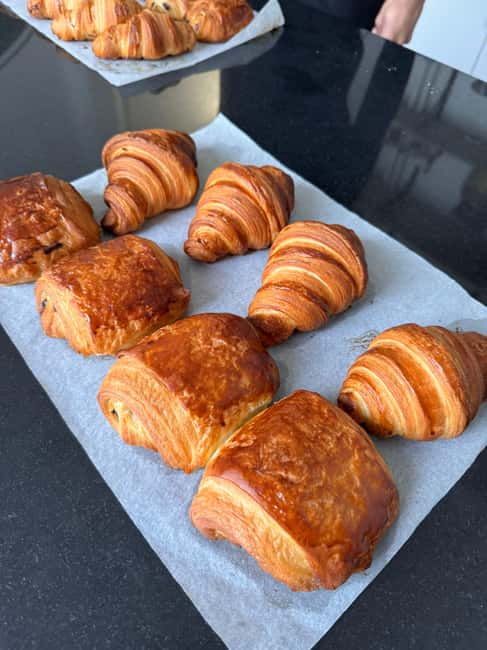
Croissants look simple in a bakery case. They are not. The dough must be rolled evenly, the butter must stay in the right condition, and each fold needs care. This class gives you a useful look at the work behind that familiar Paris breakfast.
The format is practical. You gather at a workstation in the cosy Studio Pâtisserie kitchen, then follow the chef through the process. You are not left to copy a finished example from across the room. The chef watches how you knead and roll, steps in when needed, and answers questions as you work.
That matters for beginners. Croissant dough can feel awkward at first, and a small mistake during folding can affect the layers later. Personal help saves you from guessing. It also makes the class suitable for a mixed group, from people who rarely bake to keen home cooks looking for better technique.
The atmosphere is another strength. Chef Leo is known for an energetic, funny teaching style, while Chef Maria brings warmth and humour to her sessions. The class keeps moving, but the mood is relaxed enough for questions and conversation.
More pastry and macaron classes:
- Paris: Montmartre Cheese, Wine & Pastry Guided Walking Tour
★ 4.8 · 2,255 reviews - Paris Croissant Small-Group Baking Class with a Chef
★ 5.0 · 910 reviews - Paris: Macaron Class at Galeries Lafayette
★ 4.3 · 905 reviews
Arriving at Studio Pâtisserie near Rome and Villiers
The meeting point is Studio Pâtisserie, marked by its gray storefront. It is easy to reach by public transport, with Metro Line 2 at Rome and Metro Line 3 at Villiers serving as the nearest listed stations.
I would allow a little extra time to find the entrance, especially if you are coming straight from another part of Paris. Look for the gray-coloured frontage rather than expecting a grand pastry-school sign. Once inside, the professional kitchen gives the class a working feel rather than a staged sightseeing setting.
The location also makes this a sensible morning or afternoon addition to a Paris itinerary. It is not tied to a major monument, so you can pair it with other plans in the area. Just remember that you will leave carrying pastries, so avoid scheduling a long museum visit immediately afterward if you want to keep them in good shape.
Mixing the dough and learning the pastry basics
The class begins with the foundations of the croissant. The chef takes you through the dough preparation, including the role of each ingredient and the handling needed before the butter is added.
This is where the class earns its price. You learn that good croissants depend on more than a recipe. Butter quality affects flavour and texture. Dough temperature matters. Resting gives the gluten time to relax, while proofing affects the final lightness of the pastry.
The chef explains these points in plain language and connects the theory to what you see on the worktable. That makes the lesson easier to remember when you try the recipe at home. Instead of blindly following instructions, you start to understand why one batch becomes flaky and airy while another turns dense.
The class uses all the necessary ingredients and professional-grade kitchen equipment. You do not need to bring baking supplies, and the recipe is provided for future use.
Folding and rolling: the class’s real test
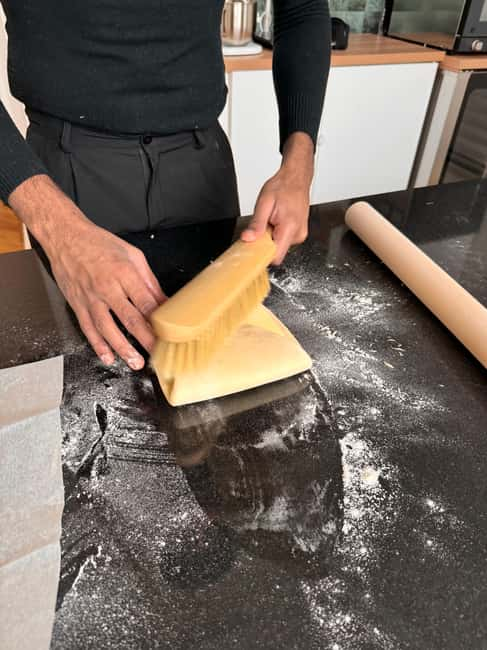
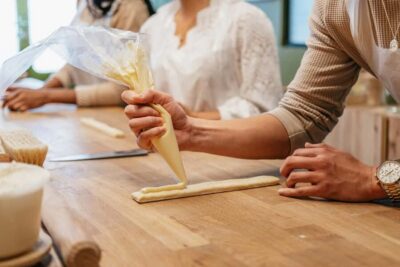
Lamination is the part that demands the most work. You roll the dough, place or work with the butter, and fold the layers carefully. Then you roll again, repeating the process that creates the thin sheets of dough and butter responsible for a croissant’s flakiness.
This is also the point where physical strength becomes important. Several people who enjoyed the class specifically noted that kneading and rolling require effort. The activity is not suitable for children under 15, and anyone under 17 must attend with a paying adult.
The chef’s attention is valuable here. Rolling too aggressively can push butter out of the dough. Rolling unevenly can create thick and thin spots. You get personal tips on pressure, shape, and timing rather than a vague instruction to keep going until it looks right.
Do not expect every minute to be filled with active kneading. Croissant dough needs time to rest and rise. One practical consequence is that the three-hour class includes pauses between active stages. That is necessary for the pastry, though anyone hoping for nonstop activity should know the rhythm in advance.
The pauses are used well. The chef continues with advice, answers questions, and explains what is happening inside the dough. You get a clearer picture of the full process rather than rushing from one task to the next.
More cooking classes in Paris:
- Paris Cooking Class and Lunch with Wine plus Market Visit Option
★ 5.0 · 1,024 reviews - Paris: French Croissant Baking Class with a Chef
★ 4.9 · 712 reviews - Paris Cooking Class: Learn How to Make Macarons
★ 5.0 · 634 reviews - Paris Evening Cooking Class French Dinner and Market Visit Option
★ 5.0 · 430 reviews
Shaping crescents and pain au chocolat
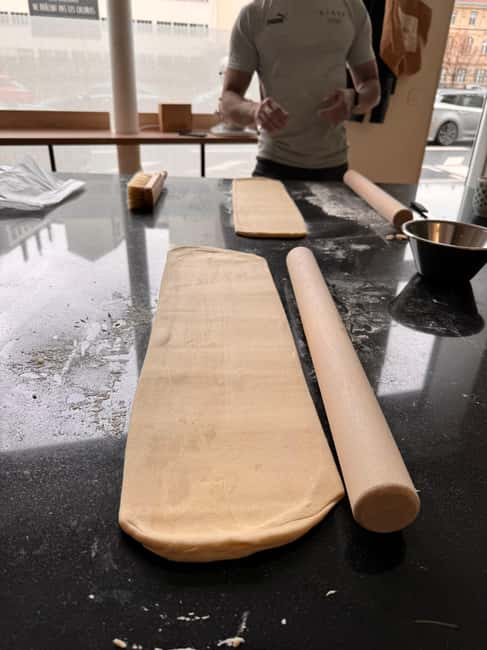
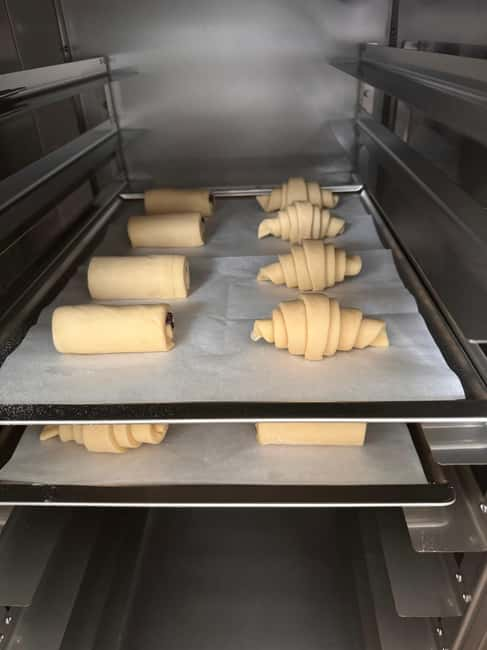
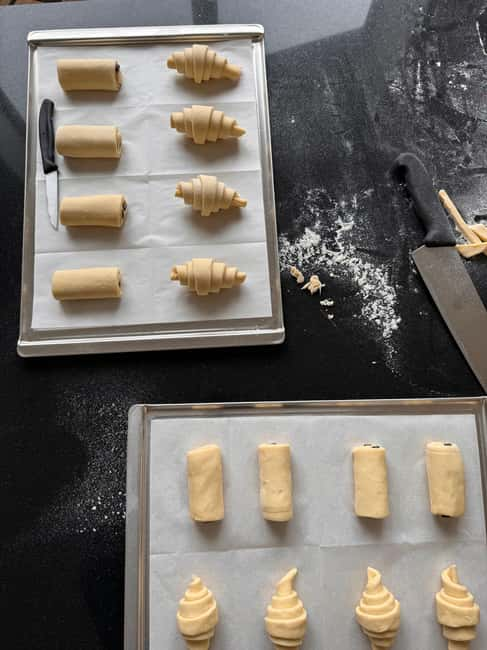
Once the dough is ready, you cut it into portions and shape the pastries. The classic croissant requires careful rolling into a crescent, with enough tension to hold its shape without crushing the layers.
Many sessions also include pain au chocolat. The common format described by participants is four butter croissants and four chocolate pastries per person, though you should check the specific class option when booking. That is a substantial amount of pastry for one person, so plan to share, save some for later, or take a bag back to your accommodation.
Shaping is fun because the dough begins to look like the pastry you know. It is also a useful lesson in consistency. Croissants that are similar in size will bake more evenly, and the chef can show you how to position and roll each piece.
The class is not about making a perfect pastry on your first attempt. It is about learning the hand movements and seeing how small choices affect the finished shape. The chef checks each stage and offers corrections without turning the session into a strict technical exam.
Proofing, baking, and the first warm croissant
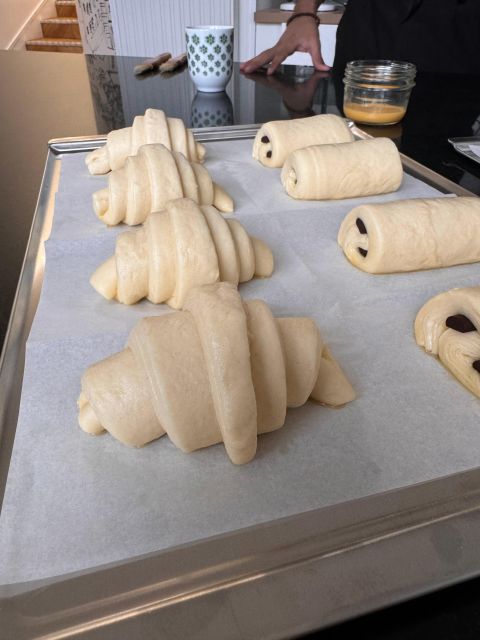
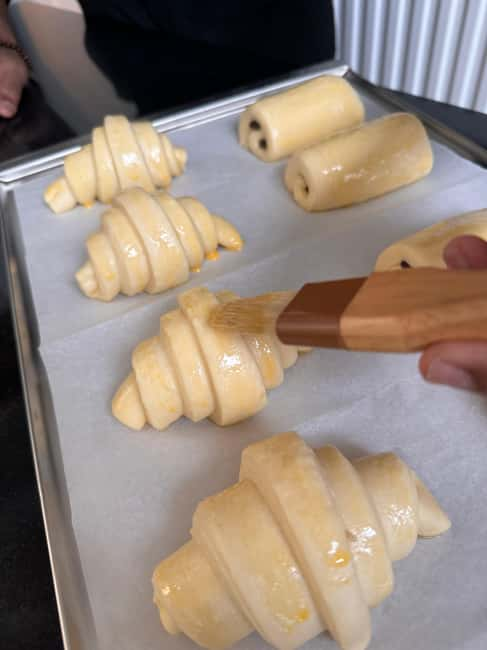
After shaping, the pastries need to proof before baking. This can feel like the slowest part of the session, but it is one of the most important. Proper proofing helps create the open, tender interior associated with a good croissant.
The chef explains what to watch for and why rushing this stage can hurt the result. You also learn how the pastry changes as it prepares for the oven. That kind of explanation is useful at home, where you may not have the same equipment or conditions as a professional kitchen.
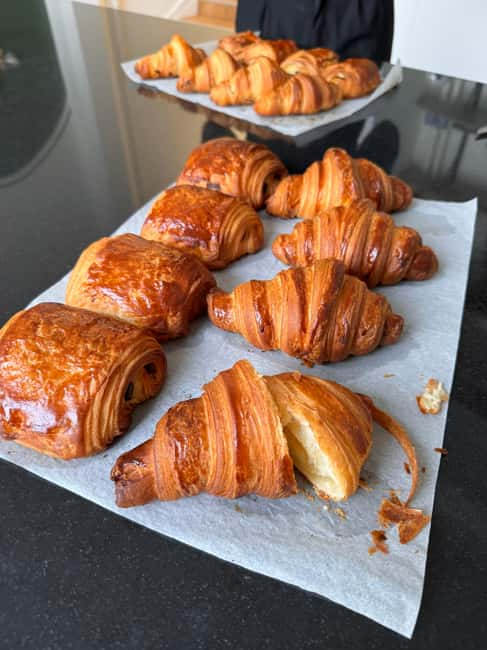
The payoff comes when the croissants emerge warm. You sample the pastries made during the class, often with a beverage at the end. The fresh-from-the-oven tasting is more than a snack. It lets you judge the texture immediately and connect the finished pastry to the work you did earlier.
You will also have plenty to take away. Eight pastries per person have been a repeated part of the class format, with a mix of regular croissants and pain au chocolat. Bring a container or bag if you have one, though the activity includes what you need for the class itself.
What the chef adds to the three-hour format
The named instructors most often associated with the class are Chef Leo and Chef Maria. Leo’s teaching style is lively and personable, with plenty of jokes and encouragement. Maria is also described as warm, funny, and careful about checking that everyone understands each stage.
Their role is important because pastry classes can go wrong in two ways. A teacher can move too quickly, leaving beginners behind, or spend so long on technical detail that the class feels like a lecture. Here, the stated format aims for a middle ground, with hands-on work supported by short explanations.
I especially like the attention to individual progress. The chef does not only demonstrate the correct method. The chef looks at your dough, your folds, and your shaping, then gives small corrections. Those quick tips are often more useful than a long written recipe.
The class also works for couples, families with older children, solo participants, and mixed-ability groups. You do not need to arrive as an experienced baker. At the same time, someone who already bakes can still learn useful details about lamination, proofing, and butter handling.
Is $140 good value for a Paris baking class?
At $140 per person, this is not a cheap breakfast. You can buy a croissant in Paris for a few euros. The value comes from the instruction, the small class size, the ingredients, the use of professional equipment, and the amount of pastry you produce.
You are also paying for a skill you can carry home. The recipe and practical tips make the class more useful than a one-off tasting. If you have wanted to make croissants but found the process intimidating, three hours with a chef can save a lot of trial-and-error baking.
The quantity helps the calculation. Making roughly eight pastries gives you some to eat during the session and several to share or keep. That does not turn the activity into a bargain, but it makes the price easier to justify for food lovers who value instruction and an active role.
For a family, the total cost rises quickly, especially since every participant pays. For a dedicated baker, a couple celebrating a special trip, or someone looking for a memorable Paris activity, the cost may feel more reasonable.
The optional bi-colour version adds another choice. On selected days, you can learn how to incorporate colour into the dough and create a more decorative pastry. I would choose that option if you already bake or want something beyond the classic butter and chocolate versions. For a first class, the standard format gives you plenty to manage.
Who should book this croissant class?
This is a strong pick if you want a Paris activity that produces something tangible. You learn a classic French skill, eat the results, and leave with a recipe and pastries rather than only photographs.
It suits people who enjoy doing rather than watching. The class involves kneading, rolling, folding, cutting, and shaping, so you should be ready to work with your hands. It is also a good rainy-morning plan, when an indoor kitchen beats another walk along wet streets.
Families should check the age rules carefully. Children under 15 cannot take part. Participants under 17 must be accompanied by a paying adult, and the rolling work may be tiring for younger bakers.
I would not choose this class if you want a quick, polished cooking show with no pauses. The dough must rest and proof, and the work requires effort. You should also be comfortable spending three hours on one focused activity.
Useful booking details for your Paris schedule
The class lasts three hours, with starting times depending on availability. Instruction is in English, which makes the technical explanations accessible to English-speaking participants.
The group is limited to eight people. That is small enough for direct help while still giving the session a social feel. Past class formats have included solo participants, couples, and family groups, so you do not need to arrive with a large party.
The activity includes free cancellation up to 24 hours before the start time for a full refund. You can also reserve and pay later, which helps if your Paris schedule is still changing.
Meet at Studio Pâtisserie, the building with the gray storefront. Rome on Metro Line 2 and Villiers on Metro Line 3 are the nearest listed stations. Check the exact meeting details and starting time before setting out.
Should you book it?
Book this class if croissants are more than something you grab with coffee. The small group, patient chef guidance, hands-on work, and large batch of pastries give you a real lesson rather than a quick tourist photo opportunity.
I would especially recommend it for couples, food-focused visitors, older families, and home bakers who want to understand lamination instead of simply buying another pastry. Skip it if kneading and rolling sound unpleasant, or if your Paris schedule cannot spare three hours.
For most people who enjoy baking, the combination of skill, humour, warm pastries, and a recipe to take home makes this one of the more satisfying ways to spend part of a Paris day.
FAQ
How long does the croissant baking class last?
The class lasts three hours. Starting times vary, so check availability for the date you want.
Where does the class meet?
It meets at Studio Pâtisserie, in the building with the gray-colored storefront. The nearest listed metro stations are Rome on Metro Line 2 and Villiers on Metro Line 3.
Is the class taught in English?
Yes. The listed language for the instructor and activity is English.
How many people are in the group?
The class is limited to eight participants, allowing the chef to provide personal guidance during the hands-on stages.
What is included in the price?
The class includes chef instruction, all necessary ingredients, professional-grade kitchen equipment and tools, a recipe to take home, pastry-making tips, and sampling of the freshly baked croissants. Bi-colour ingredients and instruction are included only if that option is selected.
Can children take the class?
Children under 15 are not suitable for this activity. Anyone under 17 must be accompanied by a paying adult. Croissant making requires physical strength for rolling the dough.
Will I make pain au chocolat as well as croissants?
The class format has included both regular croissants and pain au chocolat. Several sessions have produced four of each per person, but you should confirm the exact format for your selected option.
Can I cancel the booking?
You can cancel up to 24 hours in advance for a full refund. The activity also offers a reserve-now, pay-later option.
More Workshops in Paris
- Fragonard Paris: Mini Perfume Workshop
★ 4.5 · 1,924 reviews - Paris: 2-Hour Perfume Creation Workshop
★ 4.8 · 731 reviews - Paris: French Macaron Culinary Class with a Chef
★ 4.9 · 591 reviews - Paris: French Wine Tasting Class with Sommelier
★ 4.8 · 505 reviews
Newest additions around Paris
- Family escape Game with kids and teens on the Île de la Cité★ 4.5 · 11 reviews
- Private Photoshoot with the Iconic Eiffel Tower in Paris★ 5.0 · 11 reviews
- 2-day Private Mont Saint-Michel, 3 Loire Castles, D-Day Express★ 4.5 · 11 reviews
- Paris: Batobus Hop-On Hop-Off Cruise & Landmarks Audio Tour★ 3.0 · 11 reviews
- Paris Revolutionary Walking Tour: Iconic French Sights & Stories★ 5.0 · 11 reviews
- Guided and Private Tour of 3 hours through Paris aboard a Citroën 2cv★ 5.0 · 11 reviews
- Kids in the Kitchen – CrOisSaNtS★ 4.0 · 11 reviews
- Paris: Ghosts and Dark Stories Guided Walking Tour★ 4.1 · 11 reviews
Pastry & Macaron Classes, compared.
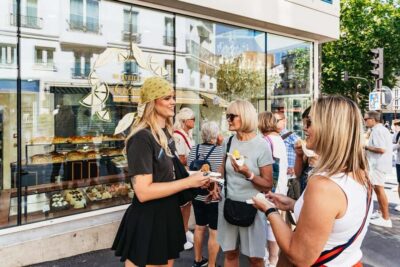
Montmartre Cheese, Wine & Pastry Guided Walking Tour
Read our review →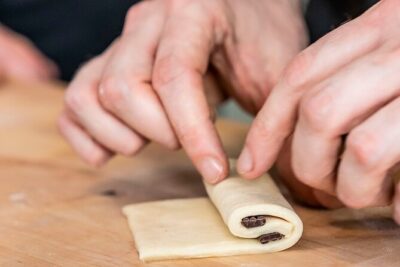
Paris Croissant Small-Group Baking Class with a Chef
Read our review →
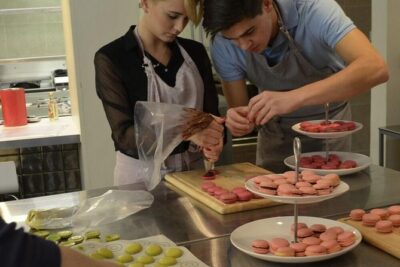
Paris Cooking Class: Learn How to Make Macarons
Read our review →
A Morning in Paris Food Tour: Croissants, Baguettes & Chocolate
Read our review →
Paris Chocolate, Macaron & Pastry Food Tour: 10 Gourmet Tastings
Read our review →Browse the lists this tour appears in