
Reviewed · WORKSHOPS
Paris Create your Own Perfume Workshop with a Perfumer
Creating a perfume from scratch is far more personal than buying one in a department store. At ABC du Parfum, perfumer Marina Jung teaches you how scents work, then gives you the raw materials and guidance to build three of your own.
I especially like the small groups, capped at eight, and the fact that you leave with a 50-ml bottle of your chosen formula. The main consideration is time: 90 minutes passes quickly, and the many scent choices can feel overwhelming if you arrive without an idea of what you like.
In This Review
- Key points to know
- A hands-on perfume class near the Eiffel Tower
- Why the small group matters
- Learning perfume families before mixing
- Making three perfumes of your own
- Choosing the bottle you take home
- What makes this feel distinctly Parisian
- Is $118.56 a fair price?
- Who should book this experience?
- Timing, transport, and what to bring
- Cancellation and booking details
- My verdict: book it for the personal result
- FAQ
- Where does the perfume workshop begin?
- Where does the activity end?
- How long does the experience last?
- How many people can join the class?
- Is the workshop offered in English?
- Who teaches the perfume class?
- How many perfumes will I make?
- Do I take perfume home?
- Can I reorder my perfume later?
- What is included in the price?
Key points to know
- Create three personal scents: Test combinations yourself, with help from Marina when you need it.
- Take home a full 50-ml bottle: Choose one finished formula for packaging and use after your Paris trip.
- Learn the structure of perfume: Understand top, heart, and base notes, scent families, and tenacity.
- Small-group setting: The maximum of eight people allows for individual advice and hands-on help.
- A personal Paris address: The workshop begins at 7 Rue Vineuse, near the Eiffel Tower and public transportation.
- Keep your formula: You can reorder your scent later if you save the formula.
A hands-on perfume class near the Eiffel Tower
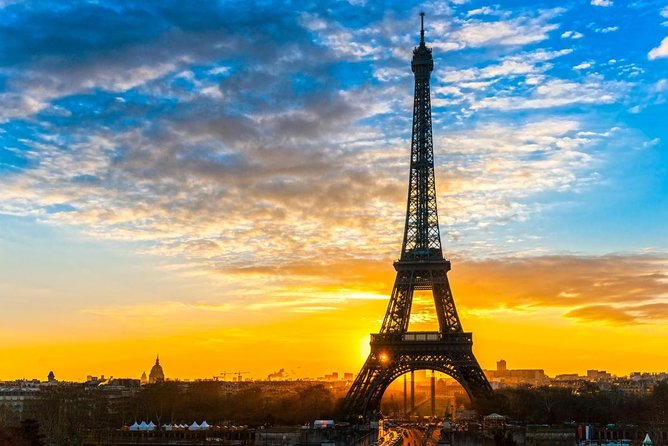
The workshop begins at 7 Rue Vineuse in Paris’s 16th arrondissement. The Eiffel Tower is listed as the second stop, but this is not a tower tour or a sightseeing walk. Its role is mainly geographic: you are creating perfume in the Eiffel Tower area, with the activity returning to the same meeting point.
The setting has a personal feel. The space is described as a beautiful Parisian home or apartment, rather than a large commercial classroom. That gives the experience a more intimate character, though you should pay close attention to the address and meeting instructions.
Once the group is together, Marina Jung introduces the basic language of perfumery. You learn about families of notes, families of perfumes, and tenacity, which is the length of time a scent lasts. These ideas may sound technical at first, but they give you a practical way to explain what your nose is noticing.
The class also covers top, heart, and base notes. Top notes are the first scents you notice. Heart notes form the main character of the perfume, while base notes remain longer and help anchor the blend. You do not need prior knowledge, and the instruction is designed to make the process approachable.
More perfume workshops in Paris:
- Fragonard Paris: Mini Perfume Workshop
★ 4.5 · 1,924 reviews - Paris: 2-Hour Perfume Creation Workshop
★ 4.8 · 731 reviews - Paris: Perfume Creation Workshop
★ 4.8 · 289 reviews
Why the small group matters
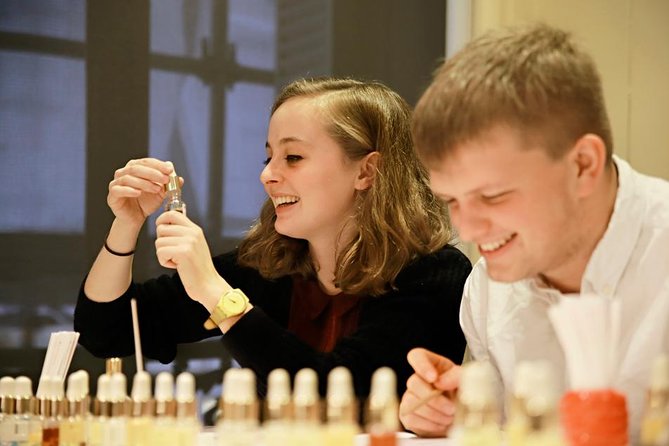
The workshop usually has six to eight participants, with a maximum of eight. Some sessions may have fewer people, which gives Marina more time to work with each person.
That matters here. Perfume making is not a simple follow-the-recipe activity. Everyone responds to scent differently, and you may need help narrowing down a combination or balancing a blend. A large class would make that personal guidance harder.
The small format also lets you ask questions as you work. If one scent seems too sharp, sweet, floral, woody, or heavy, you can ask how to soften it. If you know the general style you want, Marina can guide you toward compositions that fit.
This is especially useful for families and pairs. Parents have done the class with teenagers, couples have made separate colognes, and adults have created scents alongside children. The experience is creative without requiring artistic skill, making it a good shared activity for people who want to do something together rather than simply look at another Paris monument.
Learning perfume families before mixing
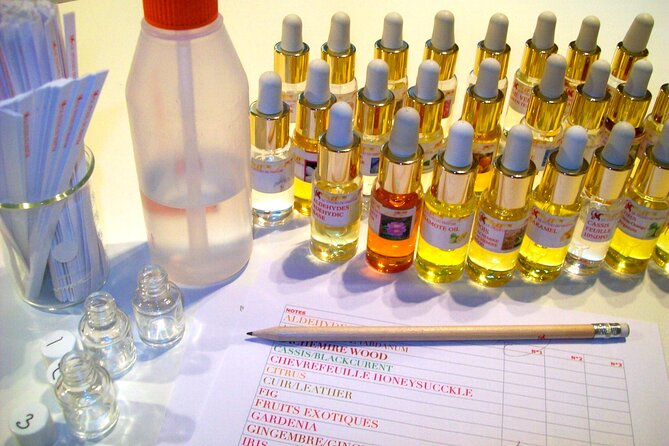
The teaching comes before the serious blending. Marina explains how individual scents fit into larger families and how different notes behave over time.
This short lesson is valuable because your first reaction to a scent is not always the final impression. A top note may seem appealing at once but fade quickly. A base note might initially feel too strong, then become the part that gives the perfume depth. Understanding this keeps you from choosing ingredients based only on a quick sniff.
You will work with about 50 compositions. That is enough variety to make the class feel like a real creative exercise, but it can also be a lot to process in 90 minutes. I recommend approaching the choices with some patience. Smell a small number at a time, take notes if needed, and tell Marina clearly what you like and dislike.
Do not worry about using the correct perfume vocabulary. You can say that something reminds you of soap, flowers, wood, citrus, or a familiar cologne. Marina’s job is to translate your reactions into useful advice.
Making three perfumes of your own
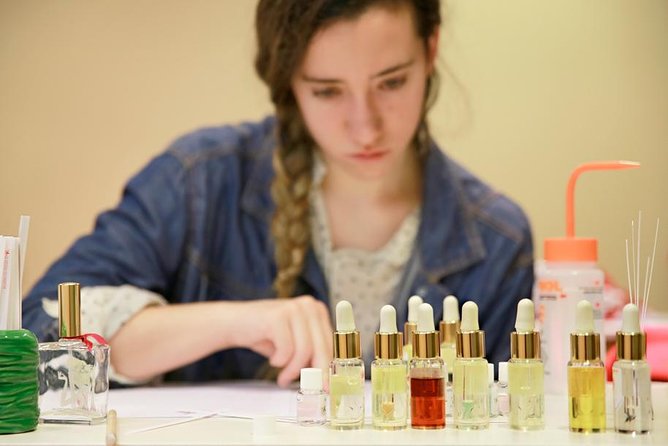
The central part of the class is creating three perfumes. You work independently, but Marina is available to assist with combinations and balance.
The three-scent format is a smart part of the experience. It lets you try different directions instead of putting all your effort into one uncertain formula. You might create a lighter scent first, then a bolder blend, or test different balances of floral, fresh, woody, or other available compositions.
You may also create the perfumes with another person. Parents and children, couples, and friends can compare ideas while still making individual scents. The process has enough structure to keep you moving, but it leaves room for experimentation.
Many people find that the hard part is not mixing. It is deciding when a scent is finished. Marina helps you judge the balance and suggests combinations when you are stuck. Her patience is important here, especially for younger participants or anyone who has never worked with fragrance before.
The experience is not presented as a professional certification course. You are learning the basic principles and using them to make personal scents. That is the right expectation. You gain a useful introduction to perfume, not a full training program in commercial fragrance production.
A few more Paris ideas to compare
- Paris Cooking Class and Lunch with Wine plus Market Visit Option
★ 5.0 · 1,024 reviews - Paris Croissant Small-Group Baking Class with a Chef
★ 5.0 · 910 reviews - Paris: Macaron Class at Galeries Lafayette
★ 4.3 · 905 reviews - Paris: French Croissant Baking Class with a Chef
★ 4.9 · 712 reviews
Choosing the bottle you take home
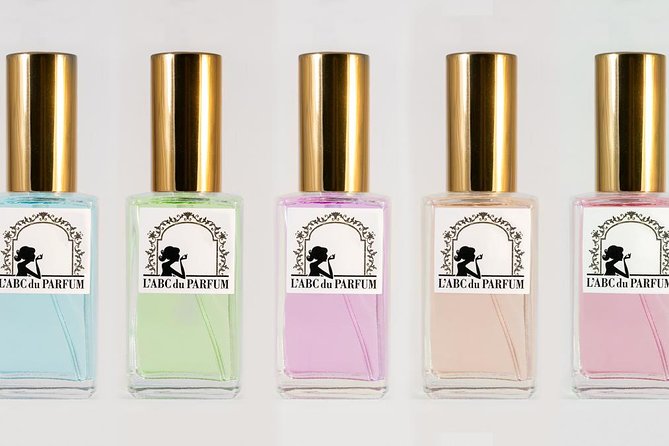
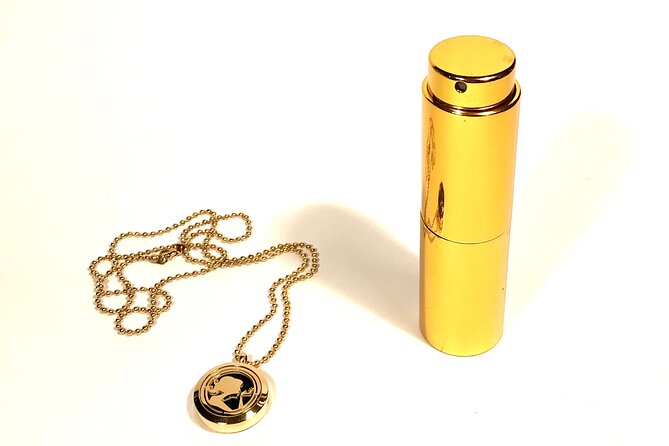
After making three perfumes, you choose one to receive in a 50-ml bottle with packaging. The smaller creations are also available to keep, according to the experience details and firsthand accounts of the workshop.
The full bottle is the main physical benefit of the class. You are not simply smelling ingredients and leaving with a temporary memory. You take home a scent made to your own preferences, and it is described as a formula that cannot be purchased in a store.
You can keep the formula for future orders. This is worth clarifying during the workshop. If you find a scent you love, make sure you retain the formula information in a safe place. That gives you a practical way to replace the perfume later instead of trying to recreate it from memory.
The 50-ml size is also sensible for packing. It is large enough to feel like a proper perfume bottle, but not so large that it becomes an awkward souvenir. Include it in your travel plans when considering liquids and baggage.
What makes this feel distinctly Parisian
Paris is strongly associated with fragrance, fashion, and personal style. This workshop gives you a direct connection to that part of the city without requiring a luxury shopping budget.
You are not selecting a famous label from a polished counter. You are learning how a scent is built and making a choice based on your own nose. That makes the experience more personal than a standard shopping stop, particularly if you have searched for a perfume that never quite matched what you wanted.
The address near the Eiffel Tower adds an easy pairing option to your day. You can plan the workshop around sightseeing in the area, though the class itself is the main event. Nearby public transportation makes the meeting point practical, and the activity ends where it begins.
The setting also contributes to the mood. A Parisian apartment or home gives the session a less formal feel than a factory visit or a large retail demonstration. At the same time, you should not expect a major perfume museum, an extensive tour of production facilities, or a long guided walk around the neighborhood. This is a focused creative class.
Is $118.56 a fair price?
At $118.56 per person, this is not a budget activity. Its value depends on how much you want a personal, hands-on experience rather than a quick attraction.
The price includes the raw materials, instruction from an experienced teacher, the 50-ml bottle, and packaging. You also make three perfumes during the class. Those inclusions make the cost easier to justify, particularly when you consider that the finished bottle is a usable souvenir rather than a small promotional sample.
I would compare it with the cost of buying a quality perfume in Paris, but that is only part of the calculation. You are paying for the lesson, the time with Marina, the ability to test different combinations, and the personal formula. If you mainly want a bottle from a known brand, shopping may be simpler. If you want to understand perfume and make something unique, the workshop offers more value.
The 90-minute duration is another factor. It is long enough for an introduction and three trials, but not long enough for a slow, open-ended studio session. If you like to take your time with every choice, the pace may feel brisk. A small group helps, but the schedule still requires you to make decisions.
Who should book this experience?
I would recommend this workshop to anyone curious about fragrance, from first-time perfume buyers to people who already know the difference between a light cologne and a heavy evening scent.
It suits:
- Couples and friends who want a shared activity with separate results.
- Parents and teenagers looking for something more active than sightseeing.
- Families who enjoy creative projects and can follow guided instructions.
- Perfume shoppers who have never found exactly the scent they want.
- Repeat visitors to Paris who want an experience beyond the usual monuments.
- Gift planners seeking a personal souvenir with a practical use.
The workshop may be less suitable if you dislike strong smells, prefer a fixed demonstration, or want a broad tour of Parisian perfume history. It also may not appeal if you only have a short time near the Eiffel Tower and need a quick activity. Most people can participate, but the class still requires attention, smelling, and making choices.
Children have taken part successfully, including a six-year-old, but the class involves fragrance materials and patient listening. Parents should decide if their child will enjoy a structured activity lasting about 90 minutes.
Timing, transport, and what to bring
The meeting point is 7 Rue Vineuse, 75116 Paris, France. The location is near public transportation, and the workshop ends back at the same point.
The experience is offered in English, which makes the technical vocabulary easier to follow if you are not comfortable discussing scent in French. Confirmation arrives when you book, and the activity uses a mobile ticket.
You do not need to bring food or drinks, since neither is included. The class is short enough that you can schedule a meal before or after. Shopping and restaurants are available in the surrounding area, giving you an easy way to continue your afternoon.
I would arrive with a loose idea of the scents you enjoy, but not a rigid formula. Think about perfumes or colognes you already wear, along with notes you avoid. The more clearly you can describe your preferences, the easier it is for Marina to help you.
You may also want to leave some room in your schedule afterward. Smelling many compositions can be tiring, and a quiet coffee or walk near the Eiffel Tower would make a sensible follow-up.
Cancellation and booking details
The activity is often booked about 49 days ahead, so reserve early if you need a particular date. The group maximum is eight, and the experience requires a minimum number of participants to operate.
You can cancel up to 24 hours before the start time for a full refund. Cancellations or changes made less than 24 hours ahead are not accepted for a refund. If the minimum group size is not met and the activity is canceled, you are offered another date or experience, or a full refund.
My verdict: book it for the personal result
You should book this workshop if you want to make something rather than simply see something. The most appealing parts are the small group, Marina Jung’s patient guidance, the chance to create three blends, and the 50-ml bottle you take home.
I would think twice only if $118.56 feels high for a 90-minute class or if you prefer traditional sightseeing. For perfume fans, families with older children, couples, and repeat visitors to Paris, this is a thoughtful use of an afternoon. You leave with new knowledge, three experiments, and one scent that belongs to you alone.
FAQ
Where does the perfume workshop begin?
It begins at 7 Rue Vineuse, 75116 Paris, France.
Where does the activity end?
The workshop ends back at the meeting point.
How long does the experience last?
The workshop lasts approximately 1 hour and 30 minutes.
How many people can join the class?
The maximum group size is eight people. The usual group size is six to eight participants.
Is the workshop offered in English?
Yes. The activity is offered in English.
Who teaches the perfume class?
The workshop is taught by perfumer Marina Jung, using methods created by Marina Jung.
How many perfumes will I make?
You will make three personal perfumes during the workshop.
Do I take perfume home?
Yes. You choose one creation to receive in a 50-ml bottle with packaging. The smaller creations may also be kept.
Can I reorder my perfume later?
Yes, you can reorder your scent if you keep the formula.
What is included in the price?
The price includes all needed raw materials, an experienced teacher, and one 50-ml bottle with packaging. Food and drinks are not included.
Newest additions around Paris
- Family escape Game with kids and teens on the Île de la Cité★ 4.5 · 11 reviews
- Private Photoshoot with the Iconic Eiffel Tower in Paris★ 5.0 · 11 reviews
- 2-day Private Mont Saint-Michel, 3 Loire Castles, D-Day Express★ 4.5 · 11 reviews
- Paris: Batobus Hop-On Hop-Off Cruise & Landmarks Audio Tour★ 3.0 · 11 reviews
- Paris Revolutionary Walking Tour: Iconic French Sights & Stories★ 5.0 · 11 reviews
- Guided and Private Tour of 3 hours through Paris aboard a Citroën 2cv★ 5.0 · 11 reviews
- Kids in the Kitchen – CrOisSaNtS★ 4.0 · 11 reviews
- Paris: Ghosts and Dark Stories Guided Walking Tour★ 4.1 · 11 reviews
Workshops, compared.
Paris Cooking Class and Lunch with Wine plus Market Visit Option
Read our review →
Paris Croissant Small-Group Baking Class with a Chef
Read our review →
Paris Cooking Class: Learn How to Make Macarons
Read our review →
Browse the lists this tour appears in