
Reviewed · PASTRY & MACARON CLASSES
Paris: Bread and Croissant-Making Class
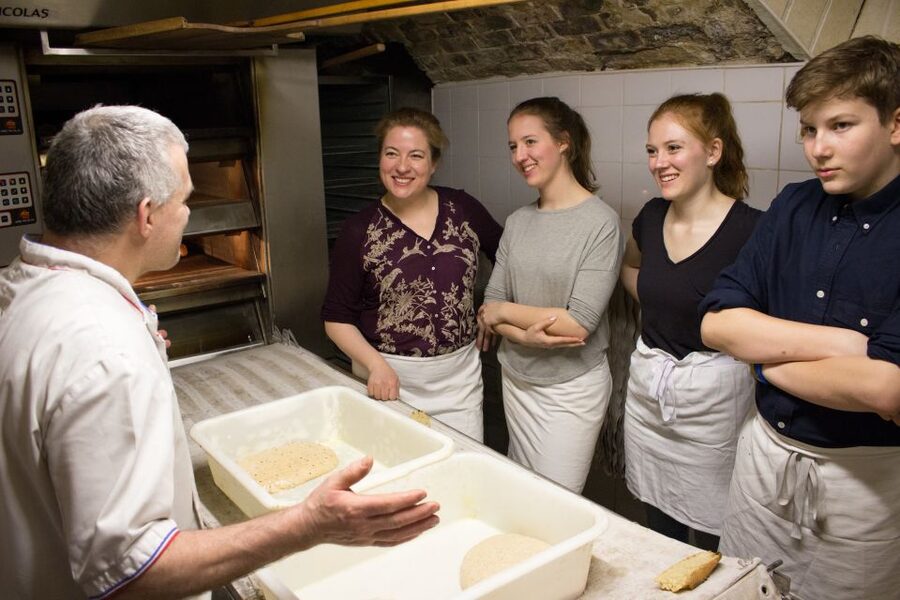
A French bakery class is at its best when it gets past the pretty pastries and shows you what actually makes the bread work. Here, you go behind the counter at family-run Le Petit Mitron, work with dough, and learn from Didier, a baker whose craft has passed through three generations. I especially like the chance to make both a classic baguette and the bakery’s own La Parisse, plus the warm bread tasting at the end.
I also like the small group limit of eight and the patient interpretation offered in sessions with guides such as Luis, Elsa, and Luce. You get real attention rather than a crowded demonstration. The main drawback is the price: at $258 per person for two hours, this is a costly activity, and the class includes more teaching and tasting than a large quantity of food to take home.
In This Review
- Key points about the Paris bread class
- Inside Le Petit Mitron on Rue Oberkampf
- Getting your hands into baguette dough
- Shaping croissants and tasting them warm
- Why the family story adds value
- What the two-hour format really means
- Is $258 per person good value?
- Language, timing, and practical details
- Who should book this bakery class?
- Final verdict: book it if bread matters to you
- FAQ
- Where does the bread and croissant class take place?
- How long does the activity last?
- How much does the class cost?
- What bread will I make?
- Will I make croissants?
- Is the class hands-on?
- What languages are available?
- How many people can join the class?
- Are children allowed?
- What is included in the price?
Key points about the Paris bread class
- Work inside a real family bakery: Meet at Le Petit Mitron, 8 rue Oberkampf, in Paris’s 11th arrondissement.
- Learn two baguettes: Make a classic French baguette and La Parisse, the bakery’s special version.
- Handle the dough yourself: Expect flour, shaping, folding, and practical tips for a crisp crust and soft center.
- Make and shape croissants: The baker explains the pastry process and gives you hands-on practice.
- Small group setting: The class is limited to eight people, allowing individual help.
- Leave with recipes: Ingredients, utensils, an apron, tastings, and emailed recipes are included.
Inside Le Petit Mitron on Rue Oberkampf
You meet at Le Petit Mitron, a family-owned bakery at 8 rue Oberkampf, 75011 Paris. This matters because the class takes place in the baker’s working shop, not in a detached cooking studio designed only for tourists.
The setting gives the lesson a useful sense of place. You are learning in the same kind of bakery where French bread is made and sold, with the counter and shop around you. The bakery has been run by a baker whose father and grandfather also worked in the trade, so the class includes more than a basic recipe.
Didier is the central figure. He is described as energetic, funny, and generous with his time. His teaching style seems informal rather than stiff. He explains the process, jokes with the group, and gives individual attention as people try the techniques.
If you do not speak French, language support is available in English, French, Japanese, and Spanish. English-language sessions have included interpreters such as Luis, Elsa, and Luce. A good interpreter matters here because bread making depends on small physical details, and a missed instruction can mean a flat loaf later.
More pastry and macaron classes:
- Paris: Montmartre Cheese, Wine & Pastry Guided Walking Tour
★ 4.8 · 2,255 reviews - Paris Croissant Small-Group Baking Class with a Chef
★ 5.0 · 910 reviews - Paris: Macaron Class at Galeries Lafayette
★ 4.3 · 905 reviews
Getting your hands into baguette dough
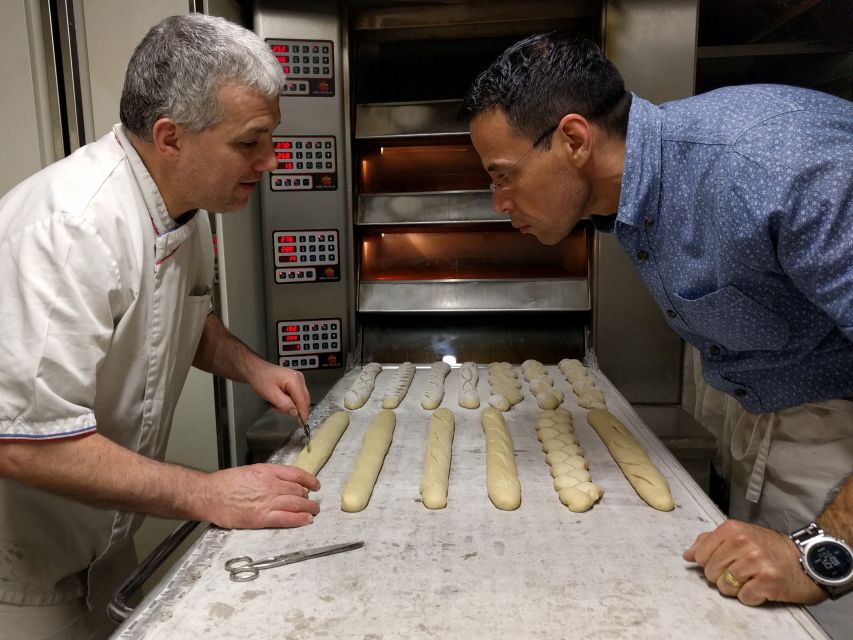
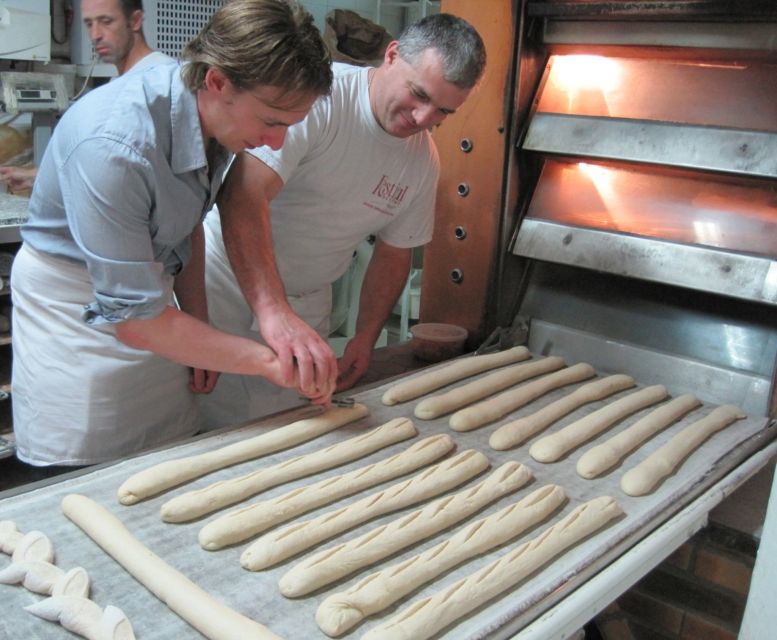
The baguette portion is the heart of the class. You do not simply watch a baker pull finished loaves from the oven. You handle the ingredients and learn the steps behind the familiar French loaf.
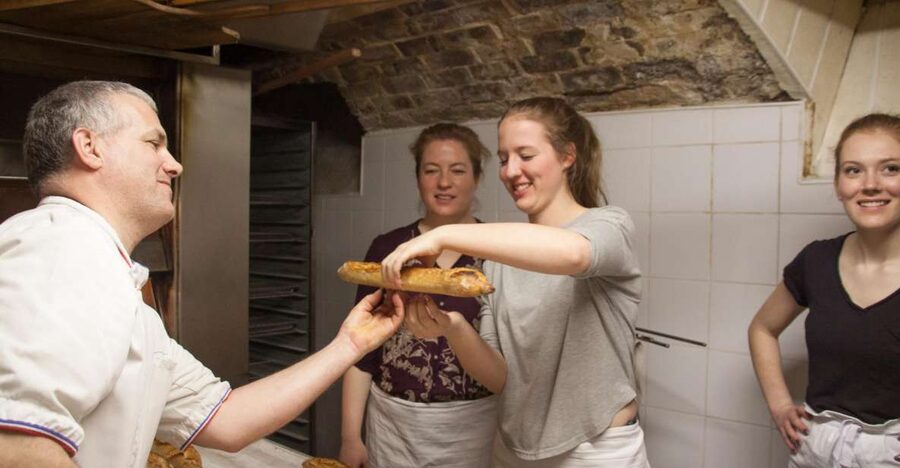
The focus is on technique. Didier explains how to work the dough, how to shape it, and how small changes affect the finished bread. You learn how to aim for the crusty golden exterior and the soft, warm interior that people expect from a good baguette.
That practical approach is useful for home bakers because it goes beyond measuring flour and water. Bread can fail even when the recipe looks right. Shaping, handling, and timing all matter, and the baker uses the dough in front of you to show what to look for.
You make two types of baguette. The first is the classic French version. The second is La Parisse, a special baguette associated with this bakery. This is one of the strongest parts of the experience because you can compare a familiar style with the shop’s own creation.
The class also gives you a chance to learn about the ingredients. One past session included discussion of wheat sourced and ground by the baker in the shop. That detail offers useful context for anyone who wonders why a baguette from a Paris bakery can taste different from one made at home with ordinary supermarket flour.
Do not expect to become a professional baker in two hours. You will get a clear working method, practical corrections, and recipes to continue at home. The value is in learning what the dough should feel like and how the baker makes decisions along the way.
Shaping croissants and tasting them warm
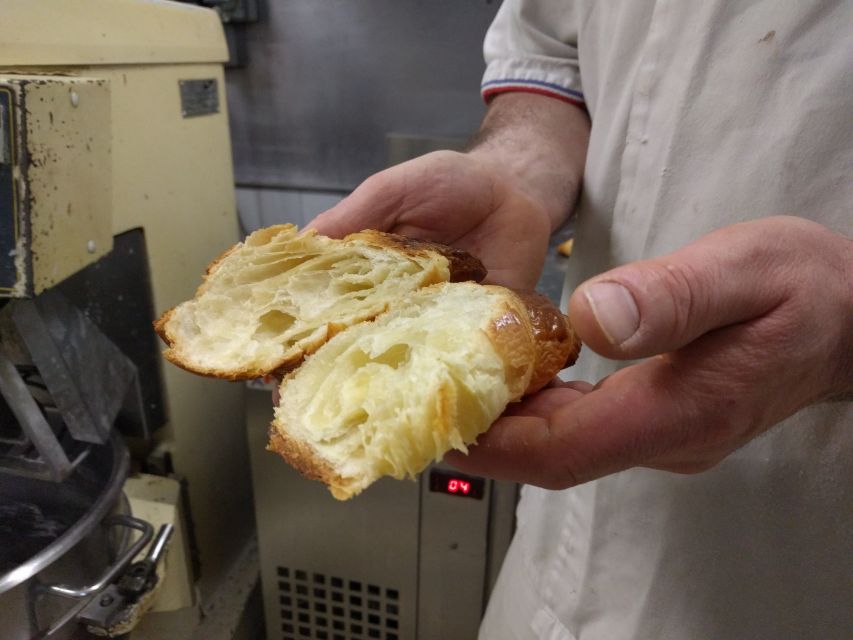
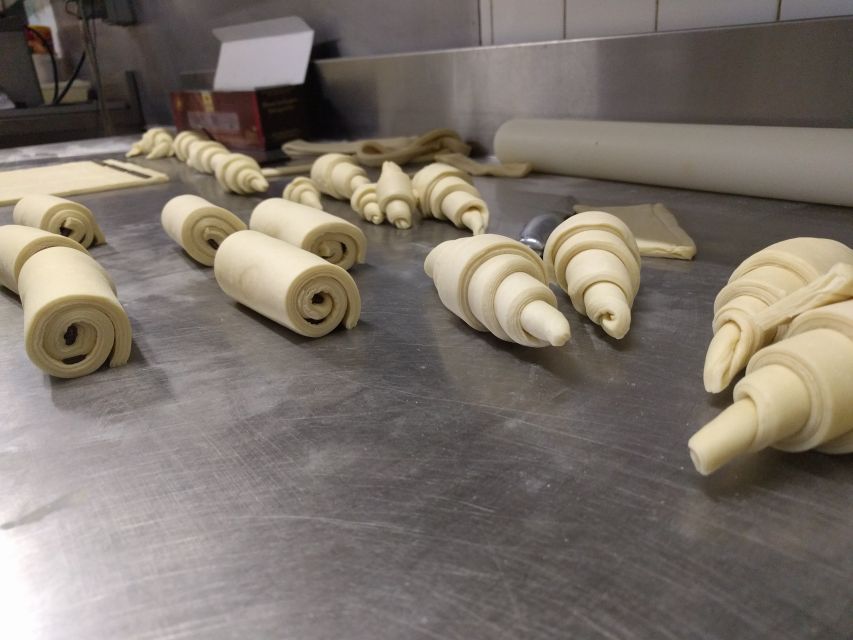
The croissant lesson adds a pastry side to the bread work. You learn how croissants are made and shaped, with the baker showing the handling needed to form the familiar crescent.
Croissants are less forgiving than simple bread. The dough needs careful treatment, and the shape affects how it bakes. Watching the baker demonstrate the process gives you a better sense of the technique than reading a recipe alone.
Past classes have also covered pain au chocolat, but the advertised focus is baguettes and croissants. If that extra pastry appears in your session, treat it as a bonus rather than something to count on.
The tasting is a major pleasure. You sample warm baguettes and croissants as they finish baking, which makes the lesson feel complete. You get to connect the baker’s instructions with the result in front of you: the crust, the crumb, the aroma, and the difference between the bread styles.
The timing also means you should arrive hungry. The food is part of the lesson, but it is also your reward after working with flour and dough. One useful caution: the exact amount you take home can vary. Some past participants left with a large bag of bread, while another wished there had been more to bring back.
Why the family story adds value
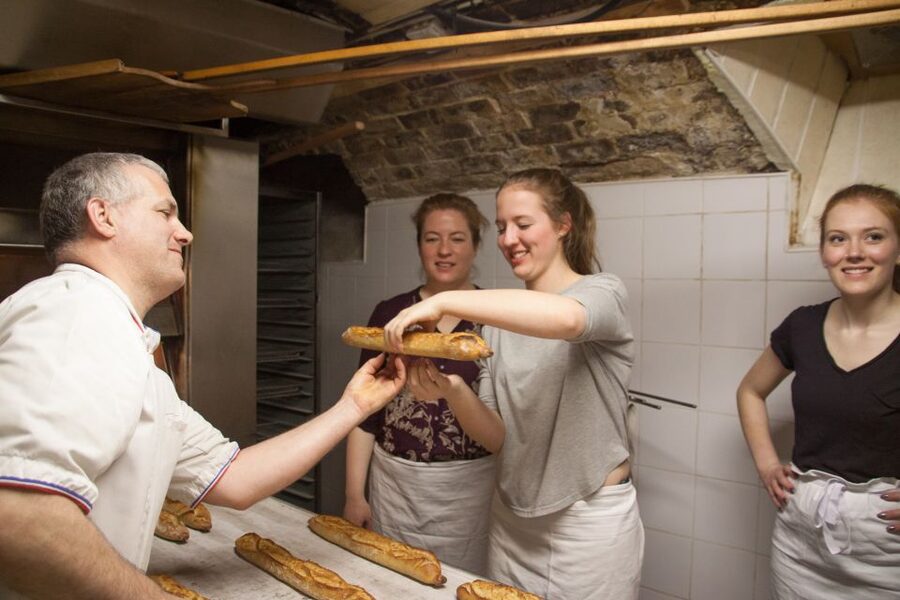
The family background is not just decoration. It explains why the baker pays such close attention to trade skills that are easy to overlook.
You hear about methods passed from Didier’s father and grandfather, along with the daily pressures of running an independent bakery. Classes have included discussion of bread history, French food culture, health, and current issues facing the business.
That wider conversation makes the activity more interesting than a standard cooking lesson. You learn why bread matters in French life, how bread styles developed, and how an artisan bakery works today.
The humor helps, too. Didier is known for a warm and mischievous teaching style. That can be a real advantage in a hands-on class, especially when the dough does not behave perfectly. You are more likely to keep trying when the instructor treats mistakes as part of the work.
The interpreters also add cultural context. Luis, in particular, has explained French pastry history and translated the baker’s technical points clearly. In a bilingual class, the interpreter is not just repeating words. The best sessions use interpretation to keep the pace moving and explain terms that do not translate neatly.
A few more Paris ideas to compare
- Fragonard Paris: Mini Perfume Workshop
★ 4.5 · 1,924 reviews - Paris Cooking Class and Lunch with Wine plus Market Visit Option
★ 5.0 · 1,024 reviews - Paris: 2-Hour Perfume Creation Workshop
★ 4.8 · 731 reviews - Paris: French Croissant Baking Class with a Chef
★ 4.9 · 712 reviews
What the two-hour format really means
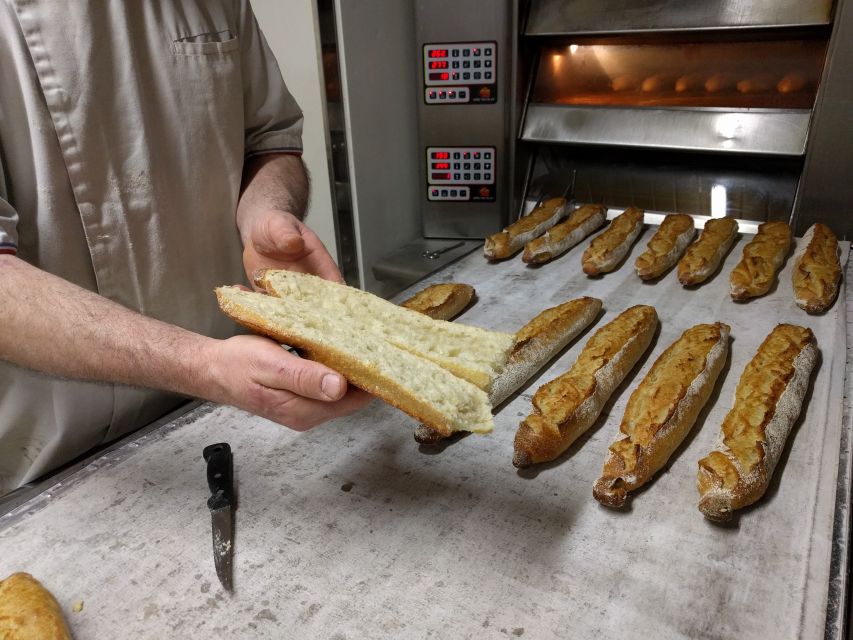
Two hours is enough for an introduction, but it is not a full professional baking course. You will learn the core process, practice key movements, and taste the finished bread. You will not cover every stage of long fermentation or spend a whole day mastering laminated pastry.
The class works best if you want a focused Paris activity that you can remember and repeat at home. It is not ideal if you want an advanced pastry workshop with extensive production or a large box of baked goods.
The small group limit helps make the short format work. With no more than eight participants, the baker can watch your shaping and offer corrections. Several past sessions had a particularly personal feel, and one group even received a private class because no other participants had booked that time.
That privacy is not guaranteed, but the group cap still keeps the class manageable. You should have a better chance of touching the dough and asking questions than you would in a large demonstration.
Is $258 per person good value?
At $258, this is an expensive two-hour activity. The price is much higher than simply buying a baguette and croissant from a Paris bakery, so the value depends on what you want from your time in Paris.
You are paying for access to a working artisan baker, hands-on instruction, interpretation when needed, ingredients, utensils, an apron, tasting, and recipes sent by email. You are also paying for a small group rather than a large class.
I think the price makes the most sense for people who bake at home, enjoy food traditions, or want an activity with a lasting result. The emailed recipes give you a way to continue the experience after your trip. If you successfully recreate even part of the technique, the class can keep paying off in your own kitchen.
For a family, the cost adds up quickly. Still, cooking activities can work well for parents and children because everyone has a task and the finished food arrives quickly. Past participants have brought children aged eight, ten, and eleven, and families with children and adults have found the format engaging.
The activity is not suitable for children under six. Older children can take part, but you should consider their interest in following instructions and handling dough. The baker’s lively style appears to work well with children, but this remains a baking lesson, not a play session.
Language, timing, and practical details
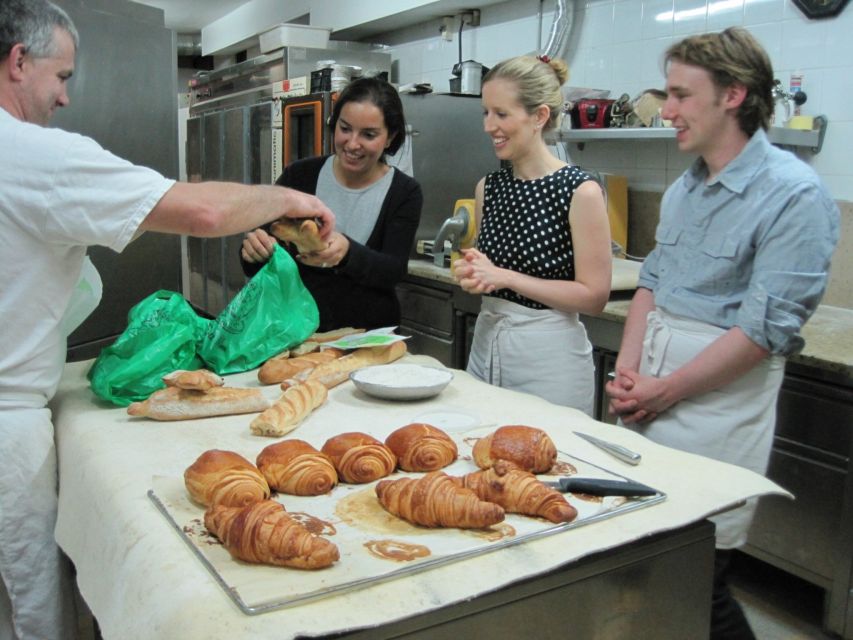
The class lasts two hours, with starting times depending on availability. Check the available slot carefully because the bakery visit needs to fit around your other Paris plans.
Meet directly at Le Petit Mitron on Rue Oberkampf. The provided meeting point is specific, so you should use the full address, 8 rue Oberkampf, 75011 Paris, when planning your route.
Instruction is available in English, French, Japanese, and Spanish. If you book in a language other than French, confirm the language option shown for your selected time. Past English sessions have used different interpreters, including Luis, Elsa, and Luce.
All ingredients and utensils are included, as is an apron. The recipe copy is sent by email, so check that the booking contact details are correct and keep an eye on your inbox after the class.
If you have a gluten intolerance or another food concern, ask the provider before booking. One past participant discussed the baker’s additive-free flour and had a positive personal experience, but that does not guarantee that the class is safe for every dietary condition.
Cancellation is flexible up to 24 hours before the activity for a full refund. You can also reserve now and pay later, which helps if your Paris schedule is still changing.
Who should book this bakery class?
I would choose this for a home baker who wants better French bread technique, a family looking for a hands-on activity, or a food-focused visitor who has already seen the major monuments and wants something more local in feel.
It is also a good pick for grandparents and children, couples, and small groups of friends. The class has worked with a wide age range, from children to adults in their seventies, and the friendly teaching style helps bridge those age gaps.
You should be comfortable with a little mess. Working with dough means flour on your hands and close attention to shaping. If you prefer to sit back and sample pastries without participating, a bakery tasting would suit you better.
You should also know that the class is centered on teaching, not sightseeing. There is no city tour attached to it. The reward is the bakery setting, the craft, the warm bread, and the chance to repeat the methods later.
Final verdict: book it if bread matters to you
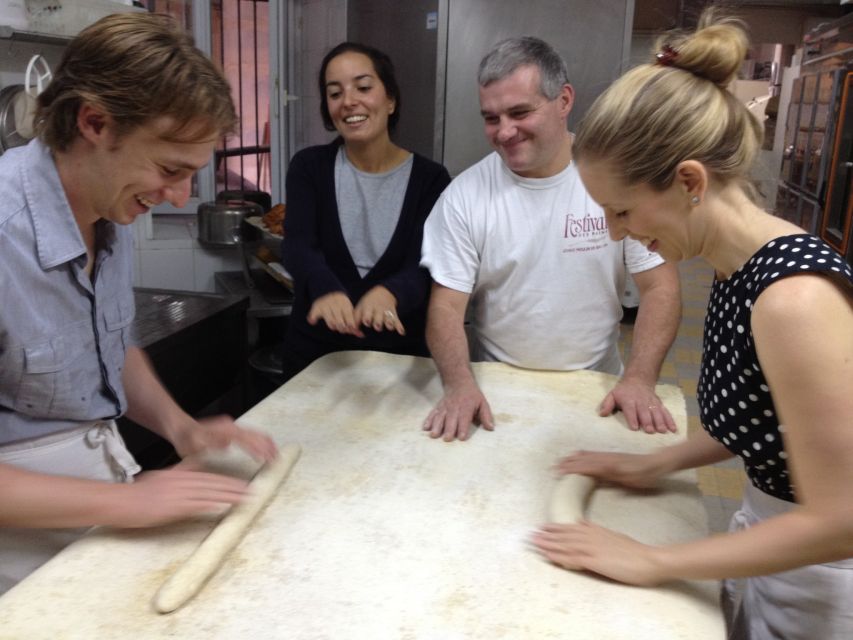
This is a strong Paris activity for anyone who wants more than a quick pastry stop. Didier’s personality, the family bakery setting, the small group, and the hands-on work give the class a personal feel.
The price is the clear concern. At $258, you need to care about the lesson itself, not just the food you eat or carry away. If you want practical bread-making skills, cultural context, and a memorable activity with your family, I think the cost can be justified.
Book it if you want to learn why French bread works and plan to use the recipes at home. Skip it if you are looking for a cheap tasting or a full-day professional pastry course.
FAQ
Where does the bread and croissant class take place?
The class takes place at Le Petit Mitron, a family-run bakery at 8 rue Oberkampf, 75011 Paris.
How long does the activity last?
The class lasts two hours.
How much does the class cost?
The listed price is $258 per person.
What bread will I make?
You make two types of baguette: a classic French baguette and La Parisse, a special baguette associated with the bakery.
Will I make croissants?
Yes. The class includes instruction on making and shaping croissants.
Is the class hands-on?
Yes. You work with the dough and practice bread-making and shaping techniques rather than only watching a demonstration.
What languages are available?
Instruction or language support is available in English, French, Japanese, and Spanish.
How many people can join the class?
The group is limited to eight participants.
Are children allowed?
Children under six are not suitable for the activity. Older children have taken part in past classes.
What is included in the price?
Ingredients, utensils, an apron, bread and pastry tasting, and a copy of the recipe sent by email are included.
Newest additions around Paris
- Family escape Game with kids and teens on the Île de la Cité★ 4.5 · 11 reviews
- Private Photoshoot with the Iconic Eiffel Tower in Paris★ 5.0 · 11 reviews
- 2-day Private Mont Saint-Michel, 3 Loire Castles, D-Day Express★ 4.5 · 11 reviews
- Paris: Batobus Hop-On Hop-Off Cruise & Landmarks Audio Tour★ 3.0 · 11 reviews
- Paris Revolutionary Walking Tour: Iconic French Sights & Stories★ 5.0 · 11 reviews
- Guided and Private Tour of 3 hours through Paris aboard a Citroën 2cv★ 5.0 · 11 reviews
- Kids in the Kitchen – CrOisSaNtS★ 4.0 · 11 reviews
- Paris: Ghosts and Dark Stories Guided Walking Tour★ 4.1 · 11 reviews
Pastry & Macaron Classes, compared.
Montmartre Cheese, Wine & Pastry Guided Walking Tour
Read our review →
Paris Croissant Small-Group Baking Class with a Chef
Read our review →
Paris Cooking Class: Learn How to Make Macarons
Read our review →
A Morning in Paris Food Tour: Croissants, Baguettes & Chocolate
Read our review →
Paris Chocolate, Macaron & Pastry Food Tour: 10 Gourmet Tastings
Read our review →Browse the lists this tour appears in