
Reviewed · ORSAY & ART MUSEUM TOURS
Paris: Best of Orsay Museum Small Group Tour with Tickets
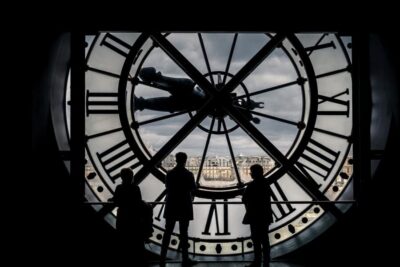
Musée d’Orsay is where Parisian art history clicks into place. In two hours, you move from the strict academic rules that shaped 19th-century painting to the bold brushwork of Monet, Renoir, Degas, Cézanne, and Van Gogh. The setting helps: this former railway station is itself part of the story, not just a box for displaying art.
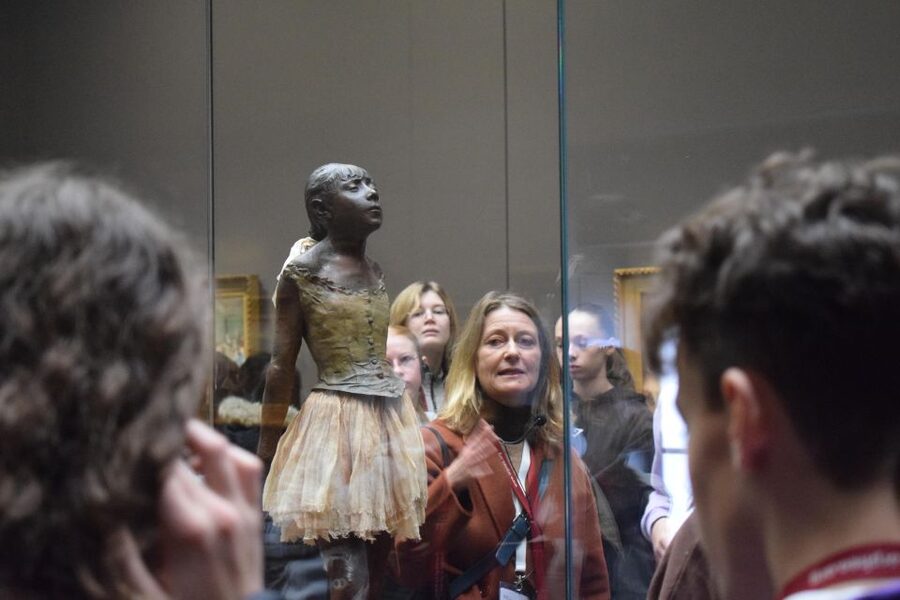
I like the small group format, often around six people or fewer, because you can hear the guide and ask questions. I also like the way the best guides, including Blerta, Olga, Vanina, and Marine, connect paintings to politics, daily life, and changing ideas about art. The main drawback is crowding. When the museum is packed, seeing a famous painting and hearing every word can be difficult.
In This Review
- Key points to know before you book
- Why the Orsay works so well for a guided visit
- Meeting at the elephant statue outside the museum
- The station before the paintings
- From Manet’s Realism to the Impressionists
- Monet, Cézanne, and the many forms of modern painting
- Sculpture, Art Nouveau, and an original Lady Liberty
- What the small group changes
- Two hours, tickets, and the real value
- Who should book this Orsay tour
- My call: book it for context, not just entry
- FAQ
- How long is the Musée d’Orsay tour?
- What is included in the price?
- Where do I meet the guide?
- Which languages are available?
- Can I skip the security line?
- What should I bring?
- Can I cancel the booking?
Key points to know before you book

- A former railway station: The building’s great clock, high roof, and wide central hall give the museum a memorable sense of place.
- A clear art story: The tour links Realism, Impressionism, Post-Impressionism, Art Nouveau, sculpture, and early modern art.
- Small groups matter: A group of six is much easier to follow than a large guided crowd.
- Two hours is focused: You see major works without trying to cover every room.
- Tickets are included: You have quick access to the collections, but you still pass through museum security.
- Choose private if needed: The shared tour cannot slow its pace for people with mobility limitations.
Why the Orsay works so well for a guided visit
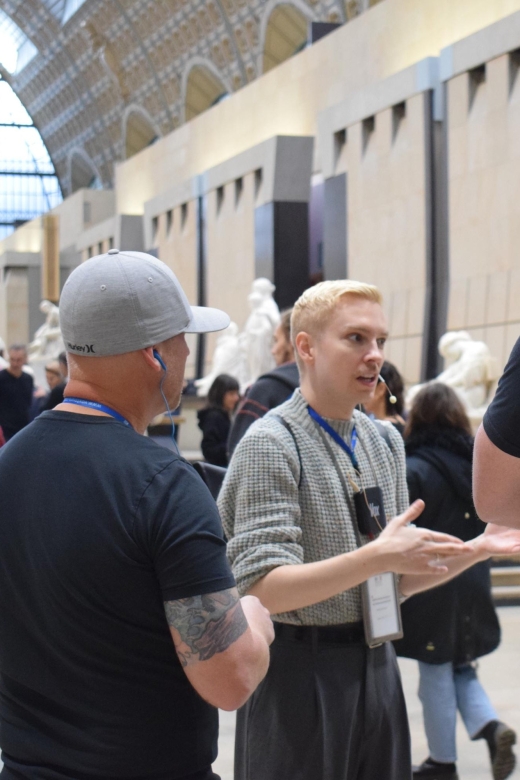
The Louvre can feel like a city. Musée d’Orsay feels more manageable, but it still has enough major art to overwhelm you. A guide gives the collection a route and a plot.
The museum covers art from the mid-19th century to the early 20th century. That period saw painters challenge official taste, new subjects enter serious art, and artists experiment with color, light, brushwork, and composition. If you simply walk through the rooms, you may admire the pictures without seeing how one movement pushed against another.
I value the way this tour starts with context rather than rushing straight to the famous names. You learn about Realist painters such as Édouard Manet and the academic standards they challenged. From there, the guide shows how artists including Degas, Pissarro, Renoir, Monet, Sisley, and others developed new ways to show modern life.
That sequence gives the paintings more force. A Monet landscape is not just a pretty view. A Renoir scene is not only a cheerful group of people. The guide explains how the artists’ choices broke from accepted practice and why those choices mattered at the time.
More Orsay and art museum visits:
- Paris: Orsay Museum Entry Ticket
★ 4.7 · 25,647 reviews - Paris: Orsay Museum Entry Ticket and Digital Audio Guide App
★ 4.4 · 3,170 reviews - Paris in a Day: Louvre or Orsay, Eiffel Tower, City Walk & Cruise
★ 5.0 · 1,956 reviews
Meeting at the elephant statue outside the museum
The meeting point is in front of Musée d’Orsay at 1 Rue de la Légion d’Honneur, by the large elephant statue. Look for a guide holding a Connecting France sign.
Give yourself enough time to find the statue and gather before the start. The location is outside the museum, so do not assume that entering the building first will make the meeting easier. You need your passport or ID card, and anyone aged 17 or younger needs photo identification because the tickets are personal.
The meeting arrangement is simple, but the area can be busy. Keep your booking details ready and watch for the sign rather than trying to identify a guide from a distance. This is a small practical point, yet it can prevent a stressful start to an otherwise calm museum visit.
The station before the paintings
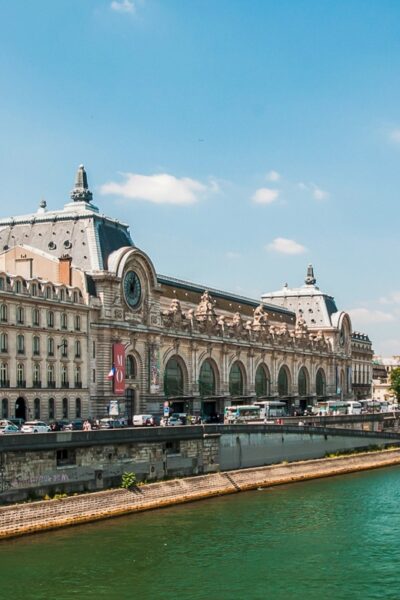
The first stop is the building itself. Musée d’Orsay began life as a railway station, and the guide explains how it was transformed into a fine arts museum several decades ago.
That background is more than a quick architectural footnote. The station’s scale affects the whole visit. The enormous central space, high ceiling, clocks, and long sightlines create a setting unlike the grand palace rooms of the Louvre. You are looking at paintings inside a structure designed for movement, schedules, and modern transport.
I especially like beginning here because it makes the museum feel connected to the period it presents. The art on display grew out of a changing Paris, and the building reflects that change in its own way. Your guide may also point out architectural details that are easy to miss when you hurry toward the paintings.
The station section is a viewpoint rather than a separate excursion. You will not leave the museum for another location. It is the opening frame for the two-hour tour.
From Manet’s Realism to the Impressionists
The central lesson of the tour is the shift from traditional academic painting toward Impressionism. Your guide sets out the rules that artists were expected to follow, then shows how Realists such as Manet helped weaken those rules.
This part is useful even if you already recognize Monet or Renoir. It explains why the Impressionists seemed so disruptive. Their brushwork, light effects, modern subjects, and less polished surfaces were not random quirks. They answered a changing society and argued with the official art system.
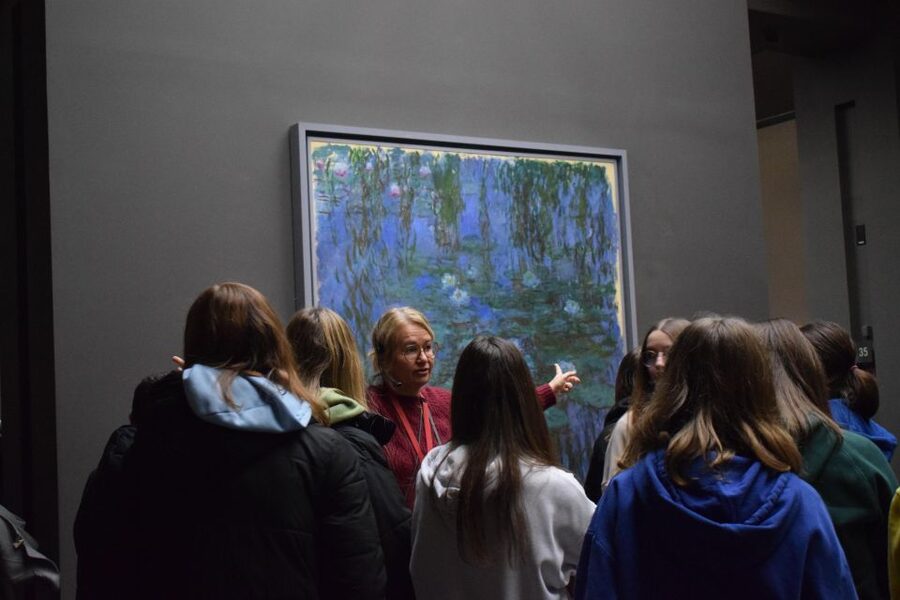
The tour includes major figures such as Degas, Pissarro, Renoir, Monet, and Sisley. You might discuss how each artist handled color, movement, outdoor light, or ordinary life in a different way. The guide also connects artistic changes to political and social changes, an approach that several highly praised guides use especially well.
One useful feature is the chance to look closely at clues in a painting. Alison, describing a tour led by Marine, highlighted the guide’s attention to symbols and small details, along with extra information shown on an iPad. That kind of explanation helps you move beyond simply recognizing a famous title.
Renoir’s Dance at Le Moulin de la Galette is one of the major works featured. The painting gives the tour a chance to discuss leisure, crowds, light, and the Impressionist interest in modern Parisian life. You may have to wait for a clear view if the room is crowded, but having a guide identify what matters helps you use your time well.
More Paris museums to visit:
- Paris: Louvre Museum Timed-Entrance Ticket
★ 4.6 · 71,977 reviews - Louvre Museum Masterpieces Guided Tour with Access
★ 4.5 · 12,023 reviews - Paris: Louvre Museum Entry Ticket With Host and River Cruise
★ 4.6 · 9,926 reviews - Les Invalides: Napoleon’s Tomb & Army Museum Entry
★ 4.6 · 9,185 reviews
Monet, Cézanne, and the many forms of modern painting
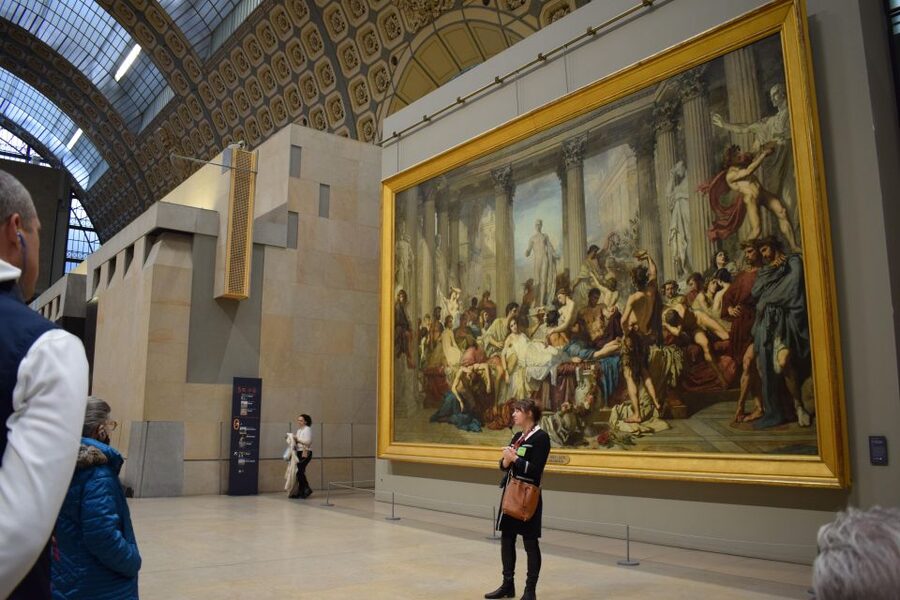
The tour does not treat Impressionism as the final answer. It follows the movement toward Post-Impressionism, where artists took some Impressionist ideas and pushed them in new directions.
You see works connected to Cézanne, Van Gogh, and Gauguin, along with other major artists from the period. The point is not to force every painter into a neat category. Instead, the guide helps you see how artists borrowed from one another while pursuing very different goals.
Van Gogh’s work often attracts the biggest crowds, and it can be hard to stand in front of a famous painting for long. A strong guide helps by explaining the work’s technique, emotional force, and place in the wider story before the group moves on.
Cézanne gives you a different lesson. His approach shows how artists could simplify and rebuild what they saw, rather than merely copying appearances. Gauguin adds another turn in the story, while the inclusion of Matisse points toward the early modern movements that followed.
The best experience here is not a checklist of names. I would rather understand three or four works clearly than race past twenty paintings with only their titles. The two-hour format encourages that kind of selectivity, though you should not expect to see every important room in the museum.
Sculpture, Art Nouveau, and an original Lady Liberty
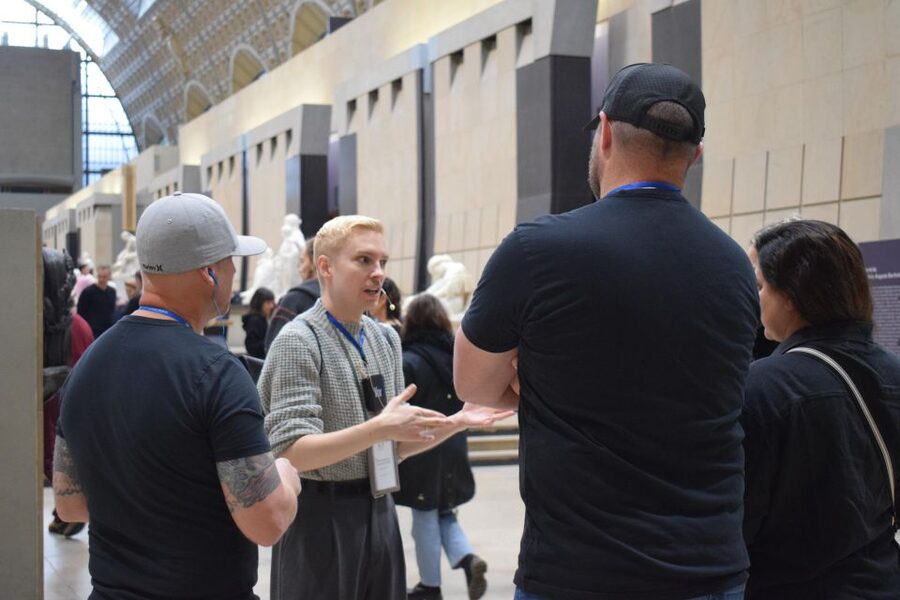
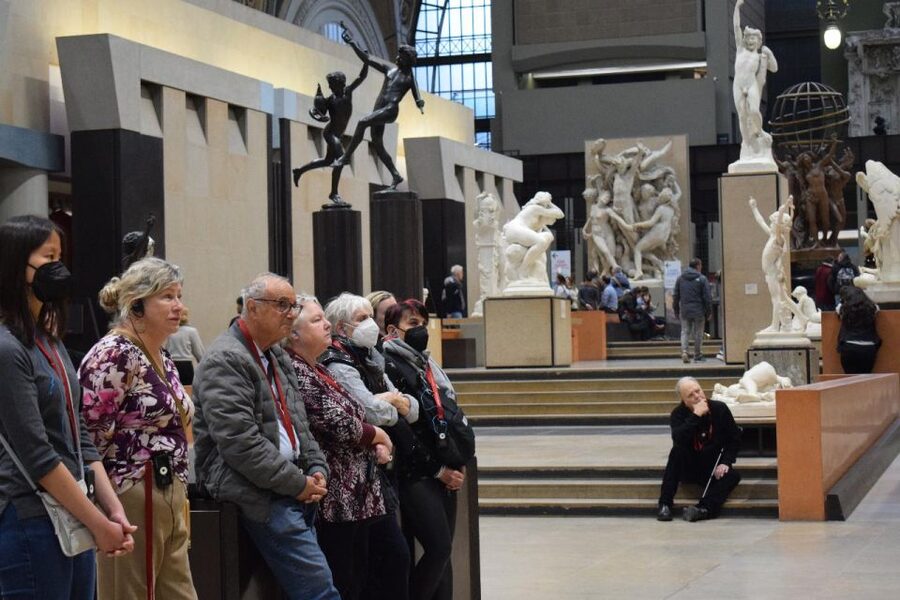
Painting receives most of the attention, but the tour also includes Art Nouveau, Rodin’s sculpture, and an original Lady Liberty. These stops widen the experience and keep the visit from becoming a single story about colorful paintings.
Rodin’s sculptures bring the human body and surface texture into the discussion. You can compare the physical presence of sculpture with the quick brushwork and changing light found in Impressionist painting. Art Nouveau adds another strand, showing how artistic ideas moved into design and decorative forms.
The original Lady Liberty is another memorable detail. It gives the tour a surprising visual connection to a symbol many people know from elsewhere, while reminding you that the Orsay collection is not limited to the most familiar French canvases.
These sections may receive less time than the major Impressionist rooms. That is sensible in a two-hour visit, but it also means you should ask your guide about your priorities at the beginning. If sculpture matters more to you than Post-Impressionism, a private tour may offer more flexibility.
What the small group changes
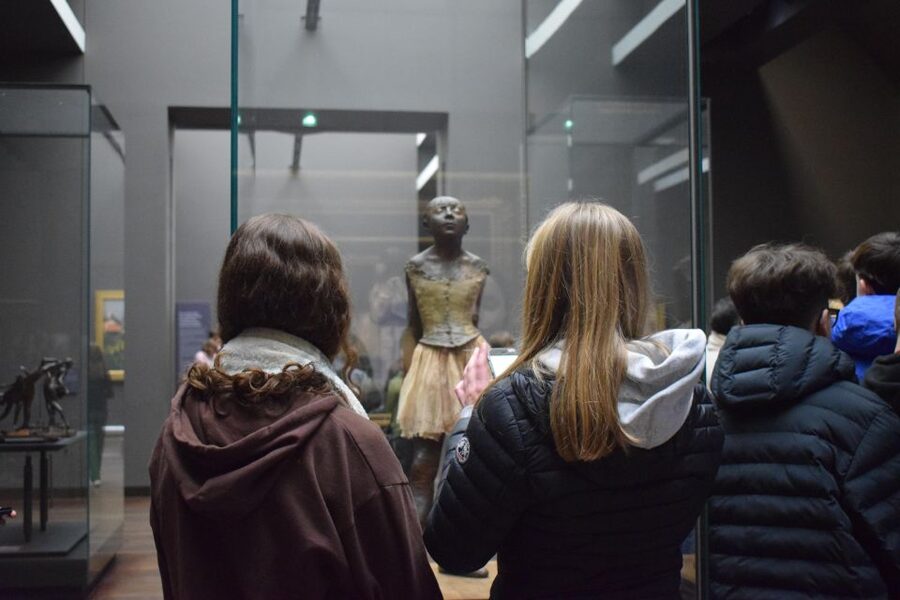
Group size is one of the strongest reasons to book this particular format. Groups are described as small or semi-private, and several experiences have had only two, three, or four participants. When six people share a guide, it is much easier to stay close, see what is being pointed out, and ask a question without interrupting the whole room.
The guides also seem to bring different strengths. Blerta is praised for building a clear progression from academic painting to Impressionism and for knowing the museum’s rooms well. Olga is noted for handling crowds while still reaching the major works. Vanina is especially strong at explaining the period before Impressionism and including artists such as Berthe Morisot.
Other named guides include Miriam, Marine, Patrick, Nadia, Emily, Mathieu, Antoine, Alban, Vincent, and Cecilia. The recurring quality I would want is not a particular personality, but the ability to explain art in plain language and adjust examples to the group.
A small group does not remove every problem. The museum can be crowded and warm, and one person noted that surrounding noise made it hard to hear without a speaking device. The group size helps, but it cannot guarantee a quiet room or an unobstructed view.
Two hours, tickets, and the real value
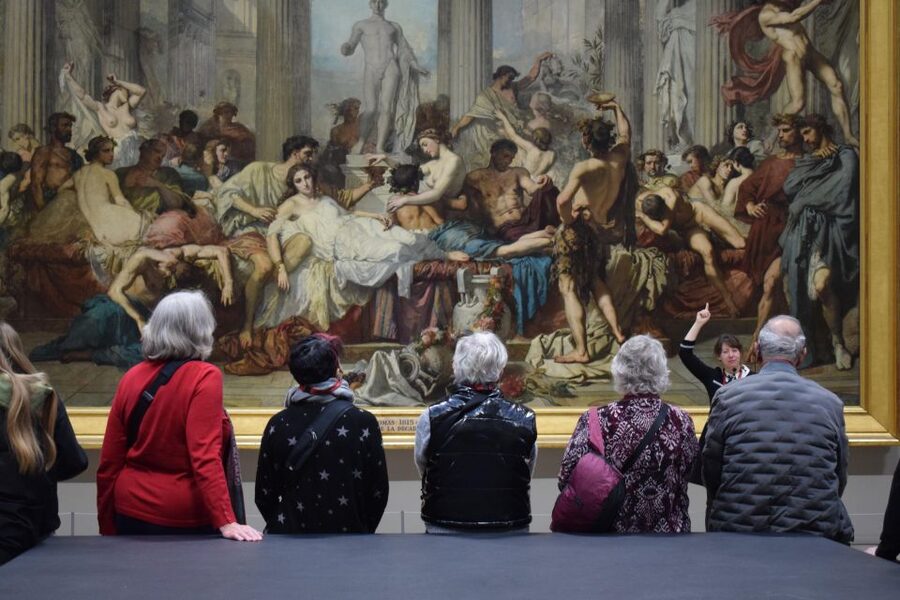
The price is $102 per person for two hours, including museum admission, a local guide, and the guided visit. That is not the cheapest way to enter Musée d’Orsay, so the value depends on what you want from the collection.
If your goal is simply to walk in and look at art at your own speed, a guided tour may feel expensive. If you are visiting for the first time and want the major artists explained in a sensible order, the price buys structure, saved decision-making, and a chance to ask questions.
Included admission is especially useful on busy dates. The ticket gives quick access to the collections, but it does not let you skip security. You should still expect a security check, and large bags, backpacks, umbrellas, and luggage are not allowed.
The two-hour length is a good compromise. It is long enough to build an art-history story but short enough to leave energy for another Paris sight. Several experiences have ended with time to look around independently, though you should treat that as possible rather than guaranteed.
Flexible booking also helps. You can cancel up to 24 hours before the start for a full refund, and you can reserve now and pay later. Museum closures or strikes can happen in France, including at Orsay. In that case, the operator may offer another time slot or a walking tour, with cancellation and a refund if the alternative does not suit you.
Who should book this Orsay tour
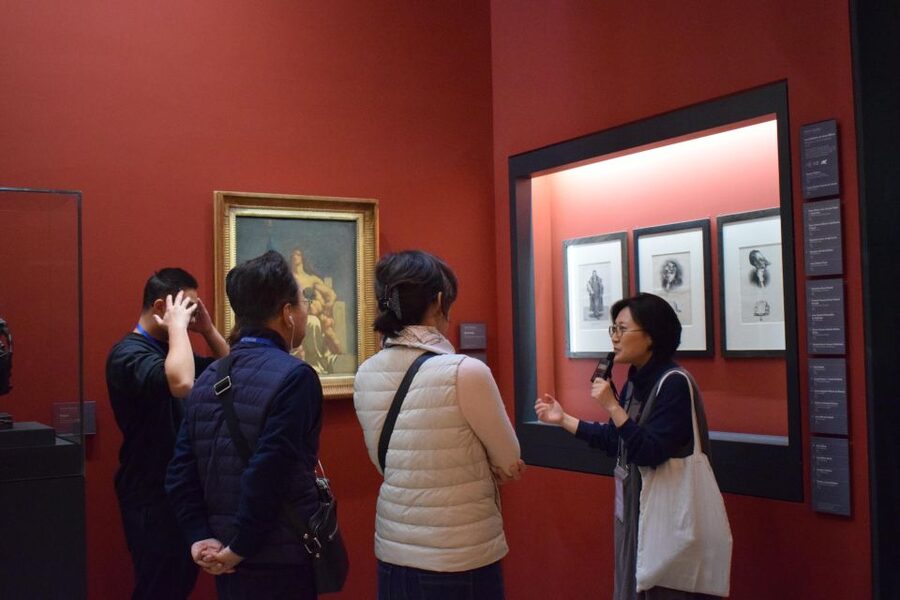
I would choose this for a first visit to Musée d’Orsay, especially if Impressionism is one of your main reasons for coming to Paris. It also suits couples, families with older children, and anyone who finds art museums easier when someone explains the connections.
It is a good choice if you want social and political context rather than a stream of dates and titles. The guides regularly connect art to changing ideas, daily life, and the practical limits artists faced.
Families should know that the tour can work well for children when the guide uses stories and questions. A guide named Berta was specifically praised for making the material engaging for children, but the pace remains that of a shared museum tour.
I would think twice if you want a slow, silent visit or a detailed study of one artist. The group has a set pace, and the guide must keep moving through busy rooms. For mobility limitations, the shared semi-private tour is not suitable because the pace cannot be changed. A private tour may be available, but wheelchair users and people with mobility impairments are listed as not suitable for this activity.
My call: book it for context, not just entry
Book this tour if you want the Orsay’s famous paintings to make sense as part of a larger story. The former station, the small group, the included ticket, and the movement from Manet through Monet to Van Gogh give the visit a clear shape.
Skip it if you already know the collection well and prefer to set your own pace. Also consider a private option if mobility, hearing, or a very specific art interest is important to you.
For most first-time visitors, $102 is a fair price for a focused introduction, particularly on a crowded day. Go in expecting a brisk selection of highlights, not every masterpiece. Meet by the elephant statue, bring photo ID, leave the big bag behind, and let the guide help you see why these paintings changed art.
FAQ
How long is the Musée d’Orsay tour?
The guided museum visit lasts two hours.
What is included in the price?
The price includes entrance tickets to Musée d’Orsay, a local guide, and the museum tour.
Where do I meet the guide?
Meet in front of Musée d’Orsay at 1 Rue de la Légion d’Honneur, by the large elephant statue. The guide will hold a Connecting France sign.
Which languages are available?
Tours are available in English, French, Spanish, Italian, and German.
Can I skip the security line?
The tickets provide quick access to the collections, but the security line cannot be skipped.
What should I bring?
Bring your passport or ID card. Anyone aged 17 or younger should have photo identification because tickets are personal.
Can I cancel the booking?
You can cancel up to 24 hours in advance for a full refund. You can also reserve now and pay later.
Newest additions around Paris
- Family escape Game with kids and teens on the Île de la Cité★ 4.5 · 11 reviews
- Private Photoshoot with the Iconic Eiffel Tower in Paris★ 5.0 · 11 reviews
- 2-day Private Mont Saint-Michel, 3 Loire Castles, D-Day Express★ 4.5 · 11 reviews
- Paris: Batobus Hop-On Hop-Off Cruise & Landmarks Audio Tour★ 3.0 · 11 reviews
- Paris Revolutionary Walking Tour: Iconic French Sights & Stories★ 5.0 · 11 reviews
- Guided and Private Tour of 3 hours through Paris aboard a Citroën 2cv★ 5.0 · 11 reviews
- Kids in the Kitchen – CrOisSaNtS★ 4.0 · 11 reviews
- Paris: Ghosts and Dark Stories Guided Walking Tour★ 4.1 · 11 reviews
Orsay & Art Museum Tours, compared.
Orsay Museum Entry Ticket and Digital Audio Guide App
Read our review →
Paris in a Day: Louvre or Orsay, Eiffel Tower, City Walk & Cruise
Read our review →
Musée d’Orsay Skip-the-Line Tour with Expert Guide
Read our review →
Musée d’Orsay Skip-the-Line Tour with Expert Guide
Read our review →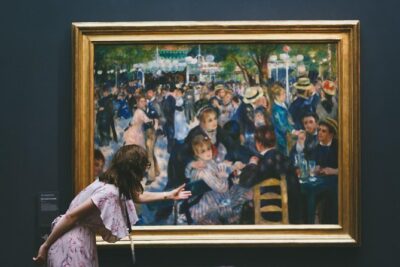
The Musée d’Orsay Guided Tour Orsay Museum Semi-Private 6ppl Max
Read our review →
Louvre & Musée d’Orsay Guided Museum Tour Semi-Private 6ppl Max
Read our review →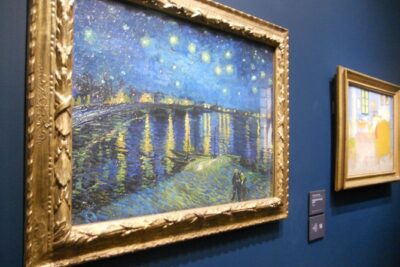
Browse the lists this tour appears in