
Reviewed · PASTRY & MACARON CLASSES
Paris: Baking Insider Experience with a Professional Baker
A warm bakery, a worktable dusted with flour, and a French baker showing you how to shape a baguette: this is the heart of the Paris Baking Insider Experience. In two hours, you work with bread and pastry dough, taste sweet and savory treats, and see how a neighborhood boulangerie functions.
I like the small group of no more than eight, since the baker can watch your hands and correct your technique. I also like the range of projects: you do not spend the whole class making one item, but move between baguette shaping, croissant dough, and a small pastry such as a financier.
The main drawback is practical rather than culinary. You must stand for much of the class, climb 15 steps to a second-floor bakery with no elevator, and the short session may leave you wishing for the full recipes or more time with the croissants.
In This Review
- Key Points at a Glance
- What This Paris Bakery Class Is Really Like
- Your First Taste: Pastry, Coffee, and Bakery Basics
- Shaping a Baguette in a Working Boulangerie
- Financiers and Other Small French Pastries
- Laminating Croissant Dough Without Losing Your Patience
- The People Who Shape the Experience
- Why the Small Group Size Matters
- Is $108 a Fair Price?
- Location, Stairs, and What to Wear
- Who Should Book This Experience
- My Verdict on This Two-Hour Baking Class
- FAQ
- How long does the Paris baking experience last?
- How much does the experience cost?
- What language is the class conducted in?
- How many people are in the group?
- What will I learn to make?
- Where does the experience begin and end?
- Can children take part?
- Is the bakery accessible to wheelchair users?
- Can I cancel or pay later?
Key Points at a Glance
- Shape several French classics: Work with baguette dough, croissant dough, and small pastries rather than making only one recipe.
- Learn inside a working bakery: You see how a Paris boulangerie operates and may meet the bakers and owner.
- Get direct instruction: English-speaking guides including Pierre, Jess, Martin, David, Candice, and Rachel have led sessions.
- Taste as you learn: Samples of sweet and savory bakery goods help you compare flavors and textures.
- Plan for stairs and standing: The bakery is reached by 15 steps, with no elevator, and the class is not suitable for wheelchair users.
- Good value for food lovers: At $108 per person, the price covers a two-hour lesson, tastings, expert instruction, and baked goods to enjoy.
What This Paris Bakery Class Is Really Like
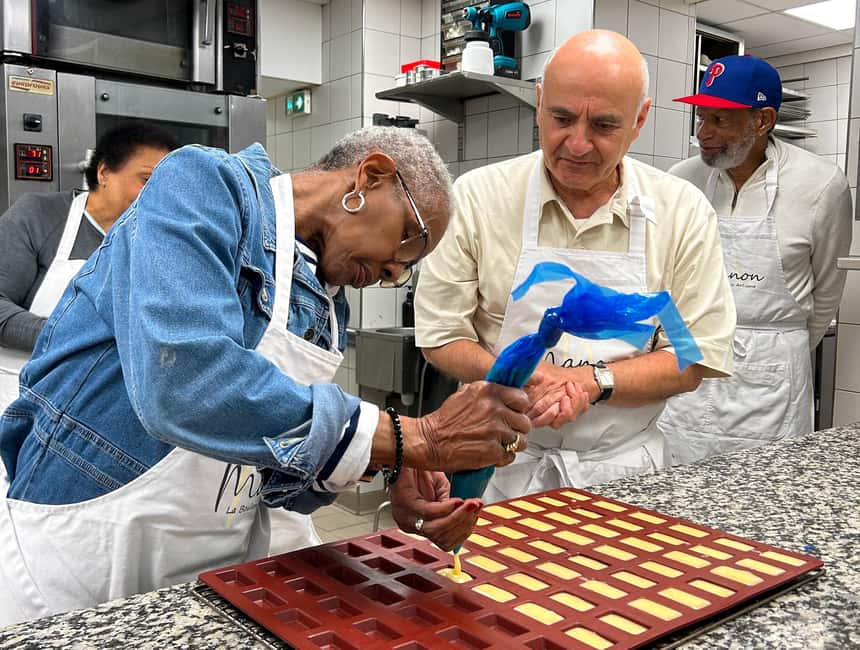
This is not a polished demonstration where you sit quietly and watch a chef work. You are expected to handle the dough. That makes the class useful for anyone who wants to understand French baking with their hands, not just eat the finished result.
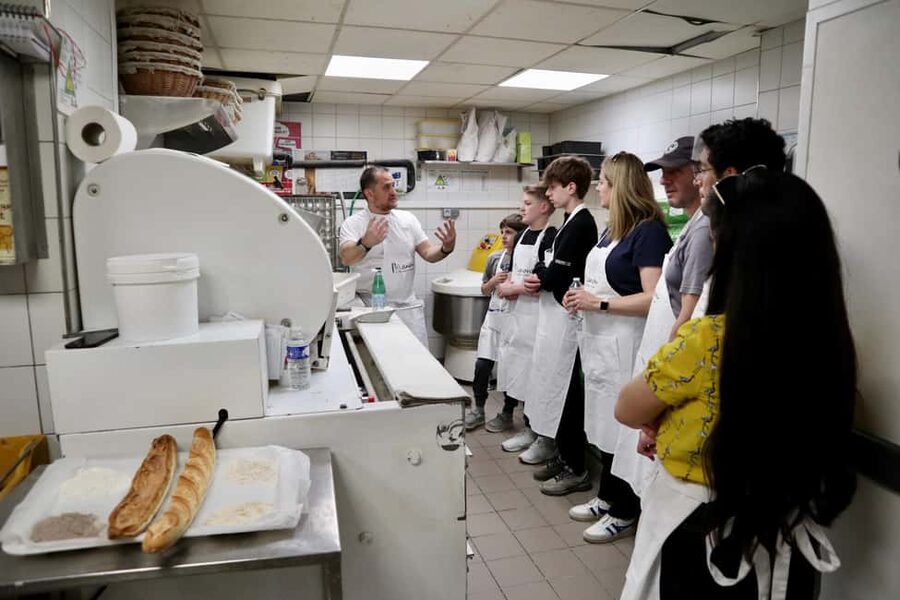
The setting matters. The activity takes place in one of two traditional Paris bakeries, depending on the option you book. You are in a working bakery rather than a generic teaching kitchen, so you get a look at the pace, equipment, staff, and daily routines behind the counter.
The atmosphere can be social and informal. Guides such as Pierre, Jess, Martin, David, Candice, and Rachel have been praised for keeping children and adults involved. The guide leads the English-language instruction, while bakery staff may continue their normal work around you.
You should arrive ready to stand, listen, touch dough, and taste. Long hair should be tied back. One particularly useful tip is to bring a hair tie or clip, since you will be working near food and equipment.
More pastry and macaron classes:
- Paris: Montmartre Cheese, Wine & Pastry Guided Walking Tour
★ 4.8 · 2,255 reviews - Paris Croissant Small-Group Baking Class with a Chef
★ 5.0 · 910 reviews - Paris: Macaron Class at Galeries Lafayette
★ 4.3 · 905 reviews
Your First Taste: Pastry, Coffee, and Bakery Basics
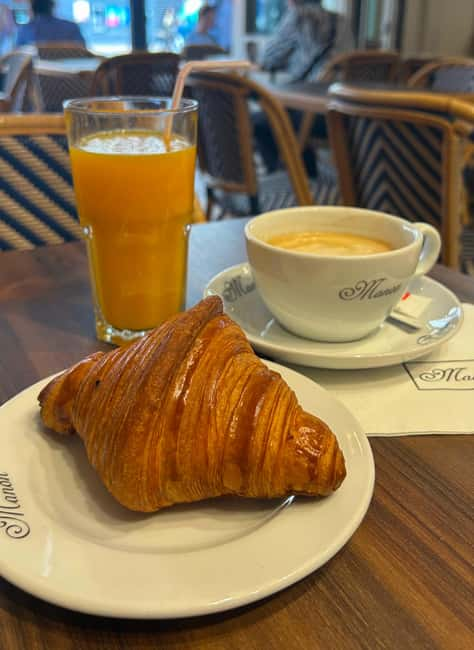
Some sessions begin with a pastry and drink from the bakery. This is a pleasant way to settle in, but it also serves a purpose: you start by tasting before you make anything.
The guide explains what you are eating and how French bakery products differ. You may compare two types of baguette, paying attention to crust, crumb, flavor, and texture. This gives you a better way to judge bread than simply asking which loaf is best.
The class also covers basic ingredients. You learn about different bread flours, yeast, and sourdough. Those details may sound technical, but they explain why two baguettes made with similar shapes can taste very different.
I especially like this part because it changes the way you walk into a Paris bakery afterward. Instead of treating every long loaf as the same, you begin to notice the flour, fermentation, crust, and interior.
The session also touches on French bakery customs and regulations. That behind-the-counter view adds useful context without turning the class into a lecture. Your guide connects the rules and ingredients to the food in front of you.
Shaping a Baguette in a Working Boulangerie
The baguette portion is one of the clearest hands-on moments. You work with dough and learn how to shape it into the familiar long loaf. The technique looks simple when an experienced baker does it. It feels less simple when the dough is in your own hands.
Your guide demonstrates how to handle the dough without flattening away its structure. You get a turn, then adjust your movements as needed. With only eight people in the group, there is a better chance that the guide can give you personal help instead of rushing through a large crowd.
The baguettes you shape may be baked later, allowing you to enjoy the results during the rest of your day. The baked goods are an important part of the experience because you are not only practicing a motion for its own sake. You get to see and taste what your work produces.
The exact flow can vary. One account describes making two types of baguette, discussing their differences, shaping personal loaves, and later cooking them. Another notes that the bakery made its products in-house and used organic ingredients. Treat that as specific to the bakery assigned to your session, not a promise for every possible location.
This is also where the class gives you a new respect for professional bakers. A baguette has few ingredients, yet the handling, timing, and baking all matter. You leave with a better idea of why a proper loaf is more than flour, water, yeast, and salt.
Financiers and Other Small French Pastries
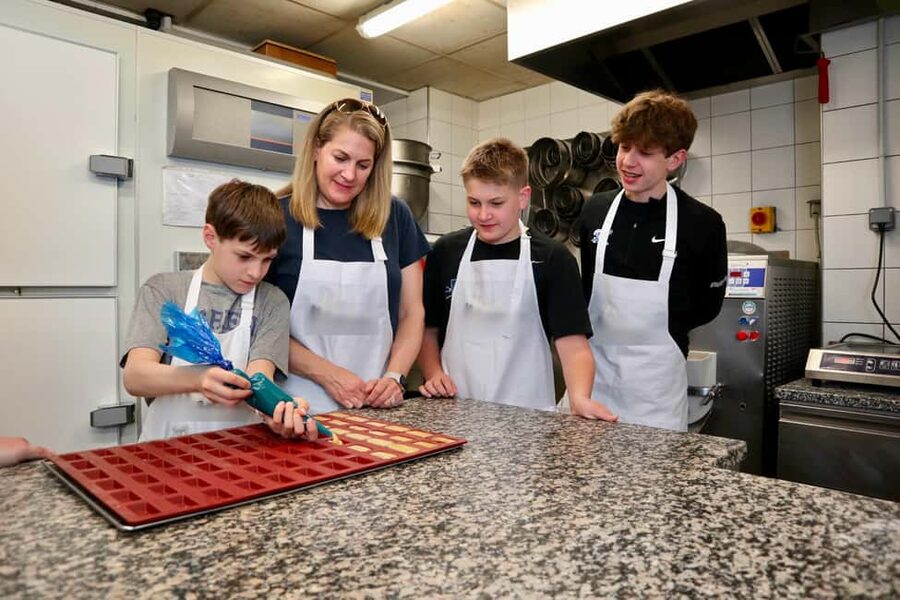
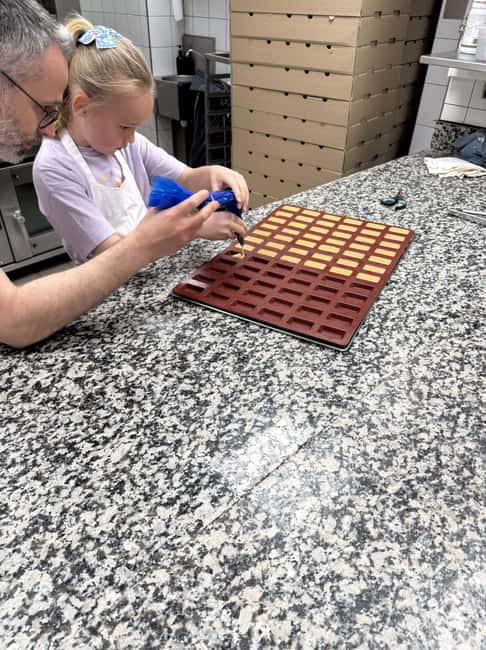
The class may also include financiers, small French cakes often made with ground nuts and browned butter. The supplied details identify financiers as one of the baked goods prepared during the session, along with baguettes and croissants.
This smaller pastry is a nice contrast to bread. You move from a stretchy dough that needs careful handling to a compact sweet mixture where flavor and texture take center stage. You also get a chance to understand how French baking includes more than the famous croissant.
The pastry portion gives the class a good rhythm. Bread can require patience and controlled shaping. A small cake offers another kind of lesson, with attention to ingredients, portions, and baking.
You may take some of the things you prepare with you or snack on them during the day. Come hungry, but do not eat a large breakfast if you want to make the most of the tastings. The experience includes snacks, and several sessions have included pastries, bread, or small cakes to enjoy after the lesson.
A different way to spend the day in Paris:
- Paris: Louvre Museum Timed-Entrance Ticket
★ 4.6 · 71,977 reviews - Disneyland® Paris 1-Day Ticket
★ 4.6 · 49,412 reviews - Paris: Versailles Palace and Gardens Full Access Ticket
★ 4.6 · 41,579 reviews - Paris: Arc de Triomphe Rooftop Tickets
★ 4.6 · 34,264 reviews
Laminating Croissant Dough Without Losing Your Patience
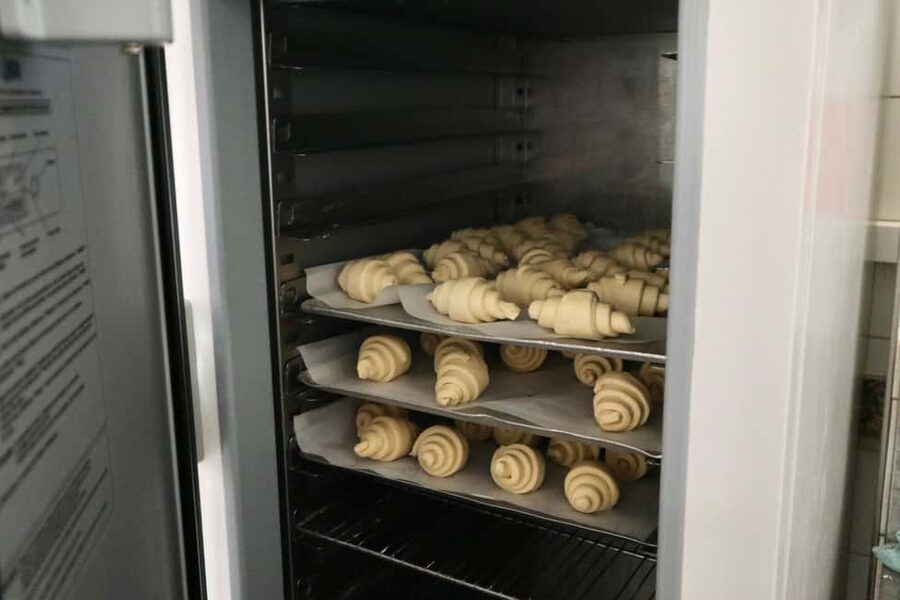
Croissant dough is the most technically interesting part for many people. The guide explains lamination, the process of layering dough and butter so the pastry can puff into thin, flaky layers.
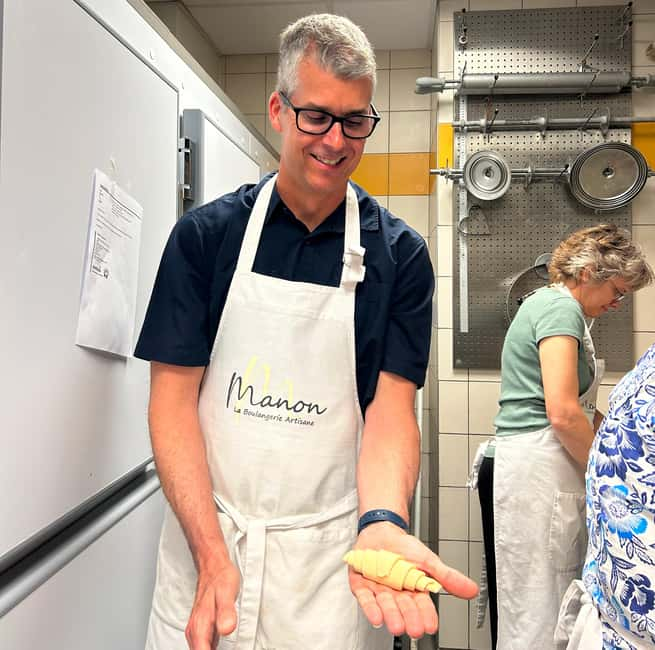
You learn how the dough is prepared and folded. You may roll or shape croissant dough yourself while the baker explains the method and the story behind this iconic French pastry. The goal is not to turn you into a professional baker in two hours. It is to show you the key movements and help you understand what the layers require.
This section can be more demonstration-based than the baguette work, since croissant dough needs careful preparation and timing. One practical limitation is that you may not taste the exact croissants you rolled during the class. They may need more time to proof or bake, so the finished result is not always ready before the session ends.
That is worth knowing before you book. If your main goal is to eat a croissant you personally made, the timing may disappoint. If you want to understand how the layers form and why puff pastry takes so much work, the lesson is still worthwhile.
The guide also shares the background of classic French pastries. These short stories help explain why certain shapes and methods became familiar in French bakeries. The focus remains practical, with the history tied to what you are rolling and folding.
The People Who Shape the Experience
The baker leading your class matters a great deal. The named guides associated with these sessions include Pierre, Igor, Jessica or Jess, Martin, Candice, David, and Rachel.
Pierre has led sessions in Le Marais and at Chez Manon. His style is described as welcoming, entertaining, and good at keeping a group involved while the bakery continues working around you. Igor has also been singled out for giving extra attention to a couple during their session.
Jess is a strong choice for families and first-time bakers. She has led sessions where children and older adults each received a turn, and her friendly approach helped keep the class moving. Martin has also been praised for engaging children and explaining ingredients and technique clearly.
David’s session included two baguette types, financiers, and croissant work, along with an explanation of the bakery’s methods. Rachel has led mixed-age groups and made a point of including everyone.
You cannot select a particular guide based on the information provided, and the guide may change. Still, the range of names gives you a useful sense of the experience: this depends not only on the dough, but on a personable teacher who can explain, demonstrate, and keep eight pairs of hands busy.
Why the Small Group Size Matters
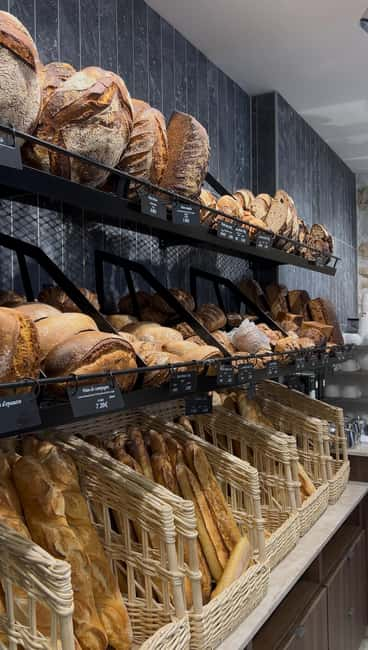
A maximum of eight people is a real advantage here. Baking technique is difficult to learn from the back of a large room. You need to see the guide’s hand movements, then try them yourself while the dough is still workable.
A small group also helps families. Children around nine to eleven have taken part successfully, and guides have made sure younger participants receive a turn. The activity can work across age groups, provided everyone can stand safely and follow instructions.
Children under five are free, but they cannot take part in the hands-on baking for safety reasons. That makes the experience a poor fit if your main reason for booking is to give a preschool child an active cooking class.
The small size does not mean every moment is quiet or highly personalized. You are still in a working bakery, and the guide must divide attention among several people. Even so, eight is a sensible limit for this kind of practical lesson.
Is $108 a Fair Price?
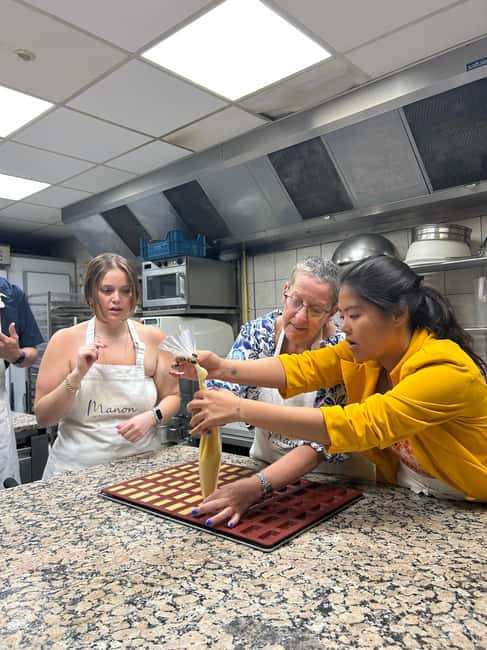
At $108 per person, this is not a cheap snack stop. You are paying for two hours of instruction, use of a real bakery setting, tastings, an English-speaking guide, and the chance to handle several types of dough.
I think the value is strongest if you care about food and want an activity with more substance than a tasting. You get a look behind the counter, learn terms and techniques you can use later, and usually leave with baked items to eat. The memory also lasts longer than a pastry purchased from a shop window.
The price is less appealing if you only want a quick bakery visit or a formal cooking lesson with a take-home recipe booklet. One person left wishing for the recipes, and the class does not promise a complete set of written instructions.
The variety helps justify the cost. You may work with baguettes, financiers, and croissants in one session, rather than paying for a class devoted to only one item. You also taste along the way, so the lesson remains enjoyable even when your own dough is not yet finished.
Free cancellation up to 24 hours before the start gives you some protection if your Paris plans change. You can also reserve now and pay later, which is useful when you are arranging several fixed-time activities.
Location, Stairs, and What to Wear
The meeting point can vary with the option you choose. Check the exact location before setting out, and leave enough time to find the bakery without arriving flustered.
The bakery is on the second floor and requires climbing 15 steps. There is no elevator. The activity is not suitable for wheelchair users, and you should be comfortable standing for an extended period.
Wear practical clothing and secure long hair. You are handling dough in a working food space, so this is not the time for an outfit that cannot tolerate a little flour.
The class lasts two hours. That is long enough to cover several techniques without taking an entire day from sightseeing. It also fits well on a rainy or cold Paris morning, when an indoor activity and fresh bread make good sense.
Who Should Book This Experience
I would recommend it to food-focused visitors, first-time bakers, families with school-age children, and anyone who wants a break from monuments. It is especially good for a mixed-age group because the guides have experience involving children, teenagers, parents, and older adults.
It also suits couples and small groups who want a shared activity. The work is social, but not so large that you disappear into the crowd.
You should think twice if you need step-free access, cannot stand for two hours, or want a fully written baking course. It may also disappoint you if you expect to take home every croissant you roll or leave with professional-level baking skills.
My Verdict on This Two-Hour Baking Class
I like this experience because it turns familiar Paris food into something you can understand. You see how flour, yeast, butter, timing, and hand movements become the baguettes and pastries you normally buy at the counter.
Book it if you want active participation, a real bakery setting, and several French classics in one short session. Skip it if stairs and standing are a problem, or if you want a quiet tasting rather than flour on your hands.
For most food lovers, the strongest payoff comes after the class. You walk into the next boulangerie with sharper eyes, a better appetite, and a new respect for the work behind an ordinary-looking baguette.
FAQ
How long does the Paris baking experience last?
The activity lasts two hours. Starting times vary, so check availability for the date you want.
How much does the experience cost?
The listed price is $108 per person.
What language is the class conducted in?
The live tour guide conducts the experience in English.
How many people are in the group?
The group is limited to eight participants.
What will I learn to make?
You will learn techniques for bread and pastry, including baguette shaping, croissant dough lamination, and preparation of small pastries such as financiers.
Where does the experience begin and end?
The meeting point may vary depending on the option booked. The activity ends back at the meeting point.
Can children take part?
Children under five are free, but they cannot participate in the hands-on baking for safety reasons. School-age children have taken part in the practical class.
Is the bakery accessible to wheelchair users?
No. The bakery requires climbing 15 steps to a second-floor location and has no elevator. The activity is not suitable for wheelchair users.
Can I cancel or pay later?
You can cancel up to 24 hours in advance for a full refund. You can also reserve your place and pay later.
Newest additions around Paris
- Family escape Game with kids and teens on the Île de la Cité★ 4.5 · 11 reviews
- Private Photoshoot with the Iconic Eiffel Tower in Paris★ 5.0 · 11 reviews
- 2-day Private Mont Saint-Michel, 3 Loire Castles, D-Day Express★ 4.5 · 11 reviews
- Paris: Batobus Hop-On Hop-Off Cruise & Landmarks Audio Tour★ 3.0 · 11 reviews
- Paris Revolutionary Walking Tour: Iconic French Sights & Stories★ 5.0 · 11 reviews
- Guided and Private Tour of 3 hours through Paris aboard a Citroën 2cv★ 5.0 · 11 reviews
- Kids in the Kitchen – CrOisSaNtS★ 4.0 · 11 reviews
- Paris: Ghosts and Dark Stories Guided Walking Tour★ 4.1 · 11 reviews
Pastry & Macaron Classes, compared.
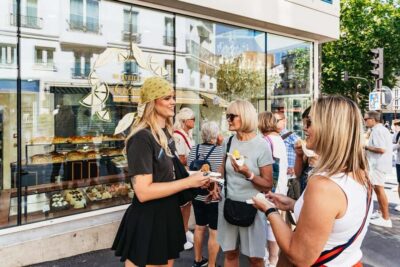
Montmartre Cheese, Wine & Pastry Guided Walking Tour
Read our review →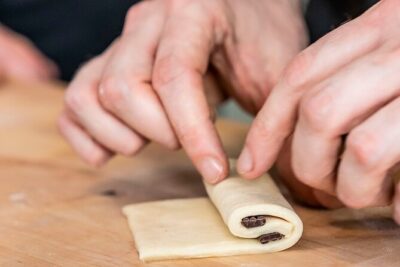
Paris Croissant Small-Group Baking Class with a Chef
Read our review →
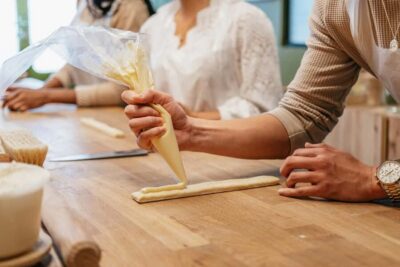
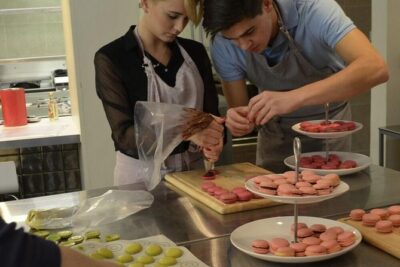
Paris Cooking Class: Learn How to Make Macarons
Read our review →
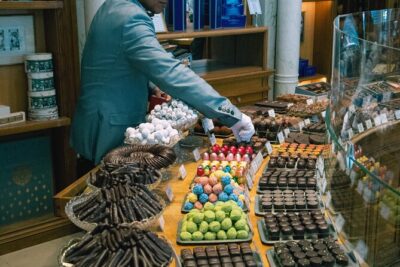
A Morning in Paris Food Tour: Croissants, Baguettes & Chocolate
Read our review →
Paris Chocolate, Macaron & Pastry Food Tour: 10 Gourmet Tastings
Read our review →Browse the lists this tour appears in