
Reviewed · WORKSHOPS
Paris: Baguette and French Breads Class
Fresh bread is the real star of this Paris class. You work from four basic ingredients, flour, water, salt, and yeast, then turn them into baguettes, brioche, and ciabatta. The best part is that the lesson covers the full process, from weighing and mixing to scoring and baking.
I like the small group of eight, where you work in pairs and can get help with sticky dough and tricky shaping. I also like the generous finish: you sit down to taste the bread with butter, cheese, jam, and, in some sessions, wine, then leave with a bag of your own baking.
The main consideration is the price, $175 per person. That is a serious spend for a four-hour activity, and the hands-on time may vary by task. If you want to watch every dough being weighed, mixed, and baked, ask how the class is organized at the start.
In This Review
- Key points to know before you book
- Four ingredients, many French breads
- Mixing and proofing: where good bread begins
- Shaping a baguette, brioche, and ciabatta
- Scoring and proofing before the oven
- Tasting the results with French flavors
- What the small group changes
- Is $175 a fair price?
- Who will enjoy this Paris bread class?
- Timing, flexibility, and practical planning
- My take: book it if bread is part of your Paris plan
- FAQ
- How much does the baguette and French breads class cost?
- How long does the class last?
- Where does the class take place?
- What language is the class taught in?
- How many people are in the group?
- Which breads do you make?
- What skills do you learn?
- Is food included in the class?
- Can you take the bread home?
- Can you cancel the booking?
Key points to know before you book
- Three classic breads in one class: You can make baguettes, brioche, and ciabatta from scratch during the four-hour session.
- A compact group of eight: The small format helps you get guidance, though some work is done in pairs.
- Technique matters as much as ingredients: You learn mixing, proofing, deflating, shaping, scoring, oven temperature, timing, and humidity.
- An English-speaking instructor: Florence has led a highly praised session and demonstrates the skills before helping you practice them.
- A shared tasting at the end: Try the bread with butter, French cheese, jam, or use it for Pain Perdu.
- You take your baking with you: Bring home a bag of creations for a picnic, a shared snack, or a private treat.
Four ingredients, many French breads
This class begins with a useful truth: bread needs very little to get started. Flour, water, salt, and yeast form the base. Add butter or oil, and the dough can take on a different character.
That simple beginning makes the lesson useful beyond your time in Paris. You are not just following a recipe with hard-to-find ingredients. You are learning how changes in fat, handling, rest, and baking affect the final loaf.
The instructor first helps you measure what you need. That may sound basic, but careful measuring matters in bread making. Small errors can change the texture, rise, and handling of the dough. If you hope to repeat the recipes at home, pay close attention here and take notes if allowed.
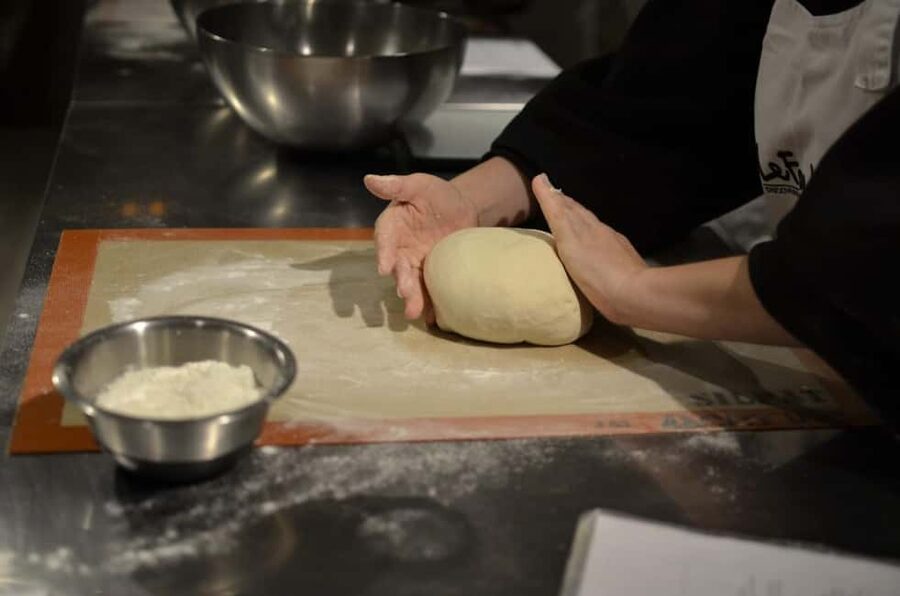
Next comes mixing. This is where the class moves from cooking demonstration to practical lesson. You learn what the dough should look and feel like, along with the early do’s and don’ts that can prevent a dense or poorly risen loaf.
A few more Paris ideas to compare
- Fragonard Paris: Mini Perfume Workshop
★ 4.5 · 1,924 reviews - Paris Cooking Class and Lunch with Wine plus Market Visit Option
★ 5.0 · 1,024 reviews - Paris Croissant Small-Group Baking Class with a Chef
★ 5.0 · 910 reviews
Mixing and proofing: where good bread begins
Bread dough often looks unpromising at first. It can be rough, sticky, or too loose to shape. The class gives you a chance to understand when to keep working and when to stop, rather than relying only on a timer.
Proofing gives the dough time to rise. You then deflate it before shaping, and the process may include one or several rests depending on the bread. Each rest has a purpose, so this is a good place to focus on the instructor’s timing and handling advice.
I find this part especially valuable for home bakers. A recipe may tell you to let dough rise for a set period, but temperature and dough condition can change the result. The practical lesson is to look at the dough, not only at the clock.
One point to keep in mind is that paired work can limit how much of every step you personally perform. A past participant enjoyed the small group but wanted more direct involvement with weighing ingredients, seeing the dough mix, and watching the loaves in the oven. If you are serious about baking technique, let the instructor know that you want to be hands-on whenever possible.
Shaping a baguette, brioche, and ciabatta
Once the dough has rested, shaping becomes the main event. Different breads call for different movements, and the class treats them as separate skills rather than one general method.
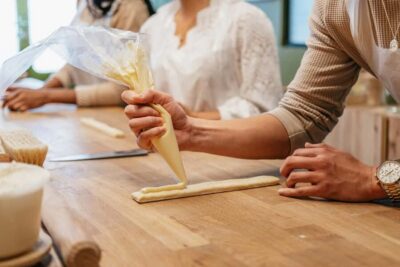
For a baguette, tension is critical. You need to create a firm outer surface without crushing the dough or pushing out too much air. The baguette shape looks simple, but getting an even loaf takes practice.
Brioche uses a different approach. The description of the class points to rolling as part of its technique, and the added butter gives the dough a softer, richer character. This is a useful contrast with baguette dough, since you can see how the ingredients change the way the dough behaves.
Ciabatta brings another texture and shape to the table. It is made from scratch during the session, alongside the baguettes and brioche. Since the breads require different handling, you get a broad introduction to French-style baking rather than a single loaf repeated several times.
The work is done in pairs. That can make the class more social and gives you another set of hands, but it also means you should keep track of your own dough. One practical improvement would be to identify each pair’s bakes clearly, since it can be hard to tell how your exact mixing and shaping affected the result when several loaves are made together.
Scoring and proofing before the oven
After shaping, the dough rests again. It then goes through another proof before baking. This pause may test your patience, but it is part of the craft. Bread needs time, and rushing the process usually shows in the final texture.
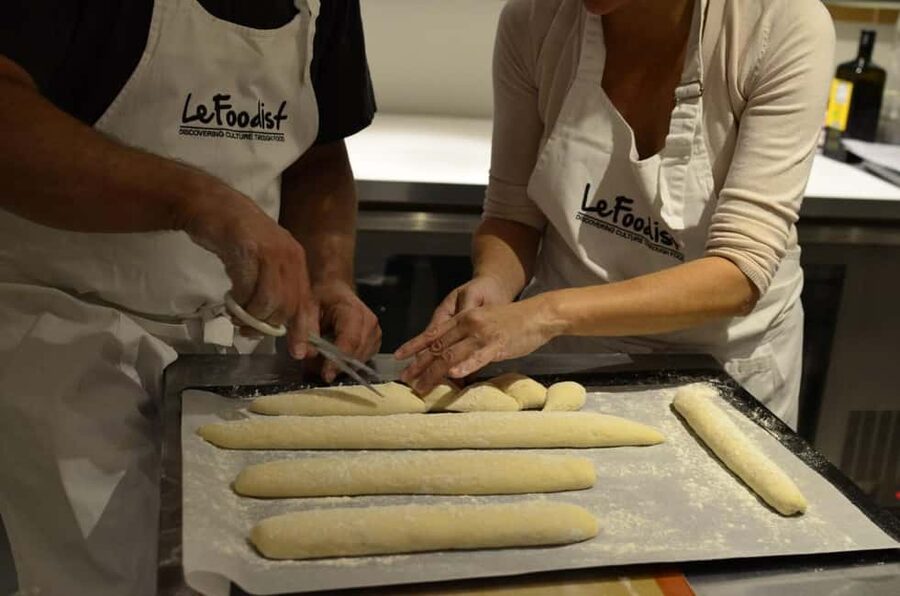
You also learn how to sign the bread by scoring it. Those cuts are not just decoration. They help control how the loaf opens in the oven, while also giving the finished bread its familiar French look.
This is one of the more important moments in the class. A loaf can be well mixed and properly shaped, yet still bake poorly if it is scored incorrectly or put into the oven at the wrong stage of proofing. Watch closely as the instructor demonstrates the depth and placement of the cuts.
The oven introduces another set of variables. Temperature, baking time, and humidity all affect the result. You may not personally handle every loaf at every stage, so ask questions as the breads move toward the oven. The class is most useful when you treat the baking stage as a lesson in cause and effect, not just a wait for lunch.
A different way to spend the day in Paris:
- Paris: Louvre Museum Timed-Entrance Ticket
★ 4.6 · 71,977 reviews - Disneyland® Paris 1-Day Ticket
★ 4.6 · 49,412 reviews - Paris: Versailles Palace and Gardens Full Access Ticket
★ 4.6 · 41,579 reviews - Paris: Arc de Triomphe Rooftop Tickets
★ 4.6 · 34,264 reviews
Tasting the results with French flavors
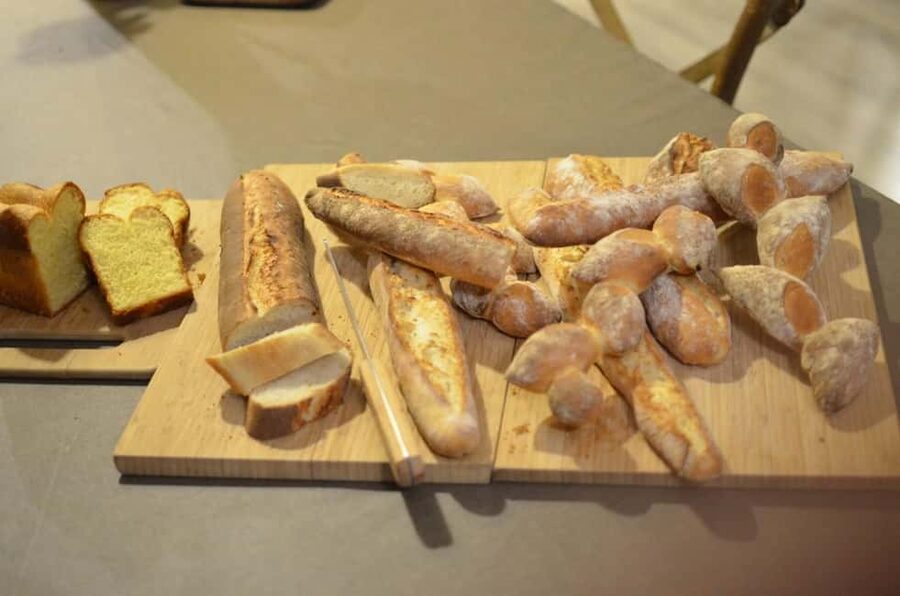
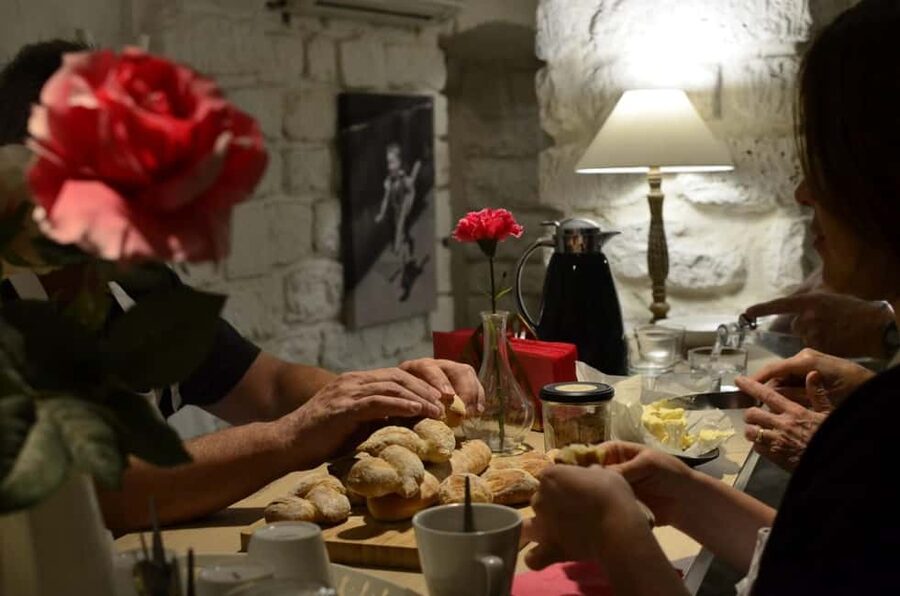
The reward comes when the breads are ready to eat. You taste what you have made with butter, French cheese, jam, or other pairings suited to each loaf. Some sessions also include wine at the shared table.
The tasting helps you understand the breads in a practical way. A crisp baguette may work best with cheese or butter. Brioche can lean sweet and pair well with jam. Bread that is not eaten fresh can also become Pain Perdu, the French version of French toast.
This shared meal is a pleasant part of the experience, especially if you enjoy food classes as much for the company as for the instruction. You sit with the group and sample the results together instead of simply collecting a finished loaf at the door.
The class does not promise a restaurant meal, and the focus remains on bread. Still, tasting the warm results gives the four-hour session a satisfying finish. You can judge the crust, crumb, richness, and flavor while the techniques are still fresh in your mind.
What the small group changes
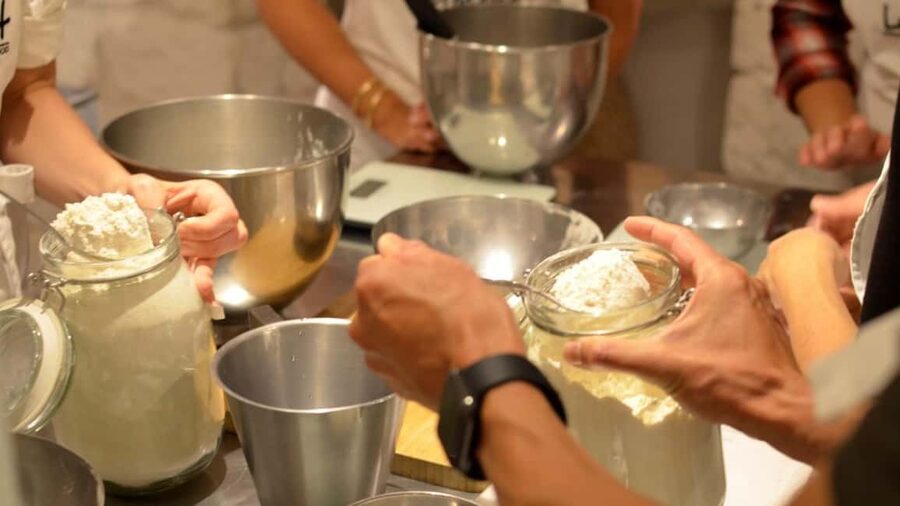
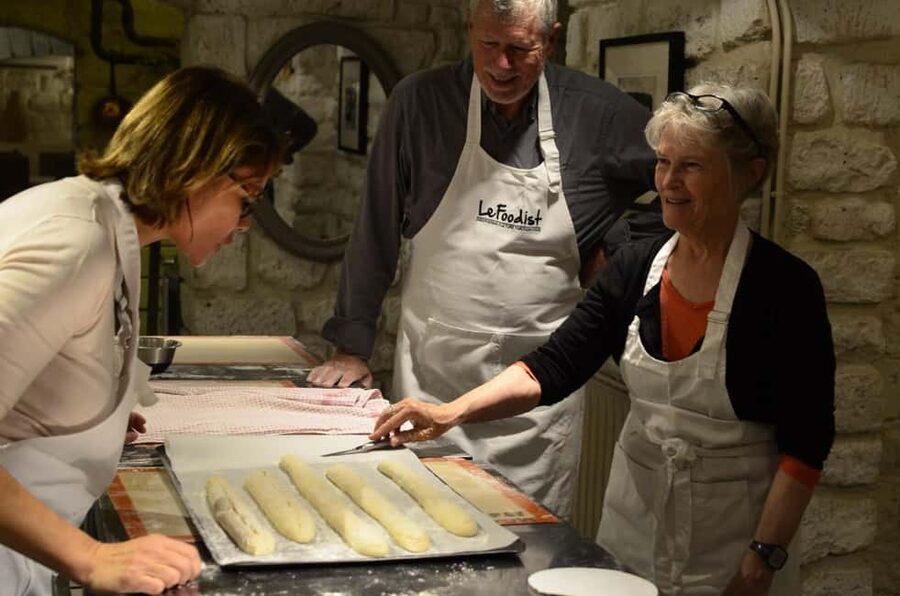
The group is limited to eight people, with work done in pairs. That is a strong size for a cooking lesson. It is large enough for a social table but small enough for the instructor to move among the participants.
Florence received particularly strong praise for demonstrating each skill and helping the group achieve good results. The instructor’s role matters here because bread dough can change quickly. A short correction to shaping or proofing may save a loaf.
Still, small group does not mean every participant has an individual workstation for every single task. You may share some measuring, mixing, or oven duties with your partner. If you want maximum practice, volunteer for the jobs that matter most to you and ask to handle the dough rather than simply watch.
The class is taught in English. That removes a major barrier for English-speaking visitors who want to learn technical terms and ask questions as they work. The listed instructor language is English, and no other teaching language is specified.
Is $175 a fair price?
At $175 per person, this is not a cheap way to get a baguette. You are paying for a four-hour class, instruction, several types of bread, a group tasting, and the food you take away.
The value is strongest if you care about learning repeatable technique. Measuring, mixing, proofing, shaping, scoring, and baking are the hard parts of bread making, and the class addresses all of them. You also get to compare baguette, brioche, and ciabatta in one sitting.
The value is weaker if you mainly want a quick Paris food activity or a large amount of finished bread. Some of the work is shared in pairs, and the exact amount you personally handle may depend on the group and the instructor’s organization.
I would compare it with the cost of several separate meals and a short sightseeing activity. If you already enjoy baking, the instruction and chance to practice in a Paris setting may justify the price. If you rarely bake, the class can still be fun, but you may want to make sure you are comfortable spending this much on an activity centered on technique.
Who will enjoy this Paris bread class?
This experience suits people who like to understand how food is made. You do not need to be an expert baker, but patience helps. Bread involves waiting, repeated handling, and attention to small changes in the dough.
It is also a good choice for couples, friends, and families with older children who can work carefully with ingredients and follow instructions. The pair format gives you a shared task without making the group feel too large.
You should book it if you want to bring home more than a photograph. The bag of baked goods gives the class a useful afterlife, since you can share them later or use them for a picnic during the rest of your day in Paris.
You may want a different activity if your priority is a fully individual lesson. The class is intimate, but it is still a group session. It also may not suit someone who wants to see every ingredient weighed and every loaf handled personally.
Timing, flexibility, and practical planning
The activity lasts four hours, so plan it as a substantial half-day commitment. Starting times vary, and you need to check availability for the date you want.
The flexible booking terms make it easier to fit into a Paris schedule. You can reserve and pay later, and cancellation is free up to 24 hours in advance for a full refund. Even with that flexibility, leave enough room around the class for the full bread process. Dough does not hurry because your museum reservation starts soon.
The class takes place in the Ile-de-France region, with Paris identified as the experience location. The supplied details do not give a specific meeting point, so confirm the exact address and allow time to reach it.
You should also plan what to do with the bread afterward. You leave with a bag of creations, which is ideal for a picnic or later snack, but less convenient if you have a long day of walking without a place to store food.
My take: book it if bread is part of your Paris plan
I would book this class if you want a hands-on food experience with real take-home results. The combination of baguette, brioche, and ciabatta gives you more range than a single-recipe workshop, and the lessons on proofing, shaping, scoring, temperature, and humidity have value long after your trip.
The strongest reasons to go are the small group, English instruction, experienced help from Florence, and the shared tasting at the end. The main question is whether $175 feels right for a class where some jobs are shared with a partner.
For an enthusiastic baker, the answer is likely yes. For a casual visitor, book only if you enjoy spending four hours on one craft and want to leave Paris with bread rather than another souvenir. Ask early for hands-on tasks, keep track of your pair’s loaves, and you will get more from the session.
FAQ
How much does the baguette and French breads class cost?
The class costs $175 per person.
How long does the class last?
The experience lasts four hours.
Where does the class take place?
It takes place in Paris, in the Ile-de-France region of France.
What language is the class taught in?
The instructor teaches in English.
How many people are in the group?
The group is limited to eight participants.
Which breads do you make?
The class includes baguettes, brioche, and ciabatta made from scratch.
What skills do you learn?
You learn to measure ingredients, mix dough, proof it, deflate it, shape different breads, score the dough, and bake it while considering temperature, time, and humidity.
Is food included in the class?
The cooking class is included. At the end, you taste the breads with options such as butter, French cheese, jam, or Pain Perdu. A session may also include wine at the shared tasting.
Can you take the bread home?
Yes. You leave with a bag of your creations to share, enjoy later, or use for a picnic.
Can you cancel the booking?
You can cancel up to 24 hours in advance for a full refund. You can also reserve now and pay later.
Newest additions around Paris
- Family escape Game with kids and teens on the Île de la Cité★ 4.5 · 11 reviews
- Private Photoshoot with the Iconic Eiffel Tower in Paris★ 5.0 · 11 reviews
- 2-day Private Mont Saint-Michel, 3 Loire Castles, D-Day Express★ 4.5 · 11 reviews
- Paris: Batobus Hop-On Hop-Off Cruise & Landmarks Audio Tour★ 3.0 · 11 reviews
- Paris Revolutionary Walking Tour: Iconic French Sights & Stories★ 5.0 · 11 reviews
- Guided and Private Tour of 3 hours through Paris aboard a Citroën 2cv★ 5.0 · 11 reviews
- Kids in the Kitchen – CrOisSaNtS★ 4.0 · 11 reviews
- Segway tour Capital sites★ 5.0 · 11 reviews
Workshops, compared.

Paris Cooking Class and Lunch with Wine plus Market Visit Option
Read our review →
Paris Croissant Small-Group Baking Class with a Chef
Read our review →

Paris Cooking Class: Learn How to Make Macarons
Read our review →
Browse the lists this tour appears in