
Reviewed · PASTRY & MACARON CLASSES
Paris: 2.5-Hour French Pastry Cooking Class
French pastry is not just about sugar and butter. It is about timing, texture, piping, and knowing when a mixture has reached the right stage. In this 150-minute class with Chef Noémie, you work through classic desserts in a private loft-style atelier near Montmartre, then sit down to eat what you made.
I like the small group of up to eight, which gives you room to ask questions, and I like that Noémie explains the reasons behind each step rather than handing you a bare recipe. The main consideration is that the class is shared: you may take turns measuring, mixing, piping, or decorating rather than handling every part of every dessert yourself.
In This Review
- Key points at a glance
- A pastry class in a real Paris neighborhood
- Why Chef Noémie’s training matters
- What happens during the 150 minutes
- Paris-Brest and the value of learning choux pastry
- Soufflés, chocolate cake, and seasonal changes
- How hands-on is the experience?
- The tasting is part of the lesson
- What you take home
- Who will get the most from this class?
- Price, timing, and getting there
- A few limits to keep in mind
- Should you book Chef Noémie’s pastry class?
- FAQ
- How long does the French pastry class last?
- Where is the class held?
- Who teaches the class?
- Is the class taught in English?
- How many people can join the class?
- Which desserts will I make?
- Can I request Paris-Brest?
- Is the class suitable for children?
- What is included in the price?
- Can I cancel the booking?
Key points at a glance
- Learn in Chef Noémie’s private Paris loft: The setting feels more personal than a large cooking school.
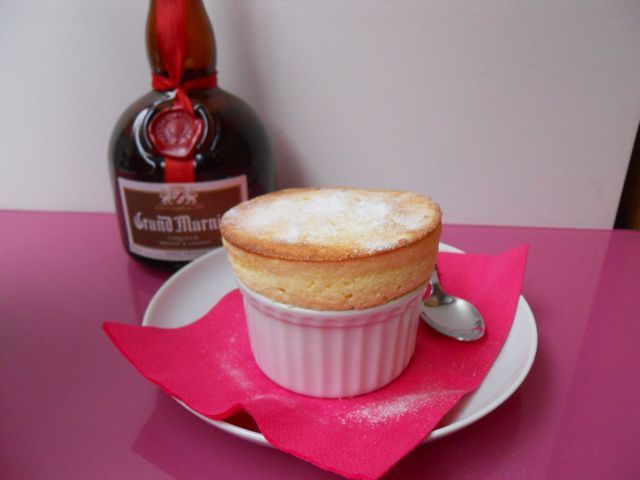
- Make two or three French desserts: Possible recipes include Paris-Brest, molten chocolate cake, and Grand Marnier soufflé, with seasonal choices affecting the menu.
- Get clear instruction in English: Noémie guides you step by step and welcomes questions.
- Expect a class that suits families: Children and adults have both enjoyed the format, including ages 8, 9, 10, 12, 13, and 16.
- Eat your work at the end: Tea or coffee accompanies the pastries in the atelier.
- Take home practical tools: You receive English recipes, pastry tips, and a new understanding of choux pastry and other French techniques.
A pastry class in a real Paris neighborhood
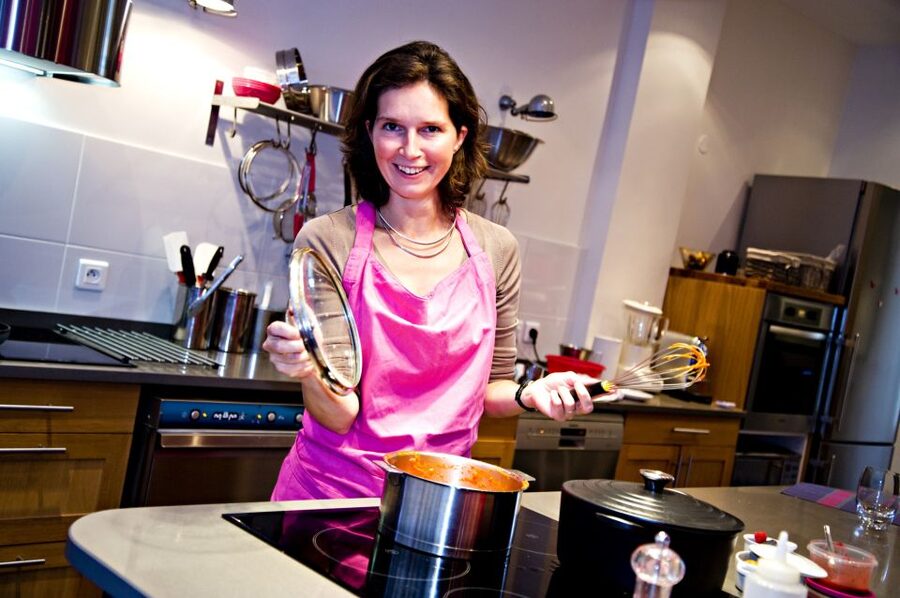
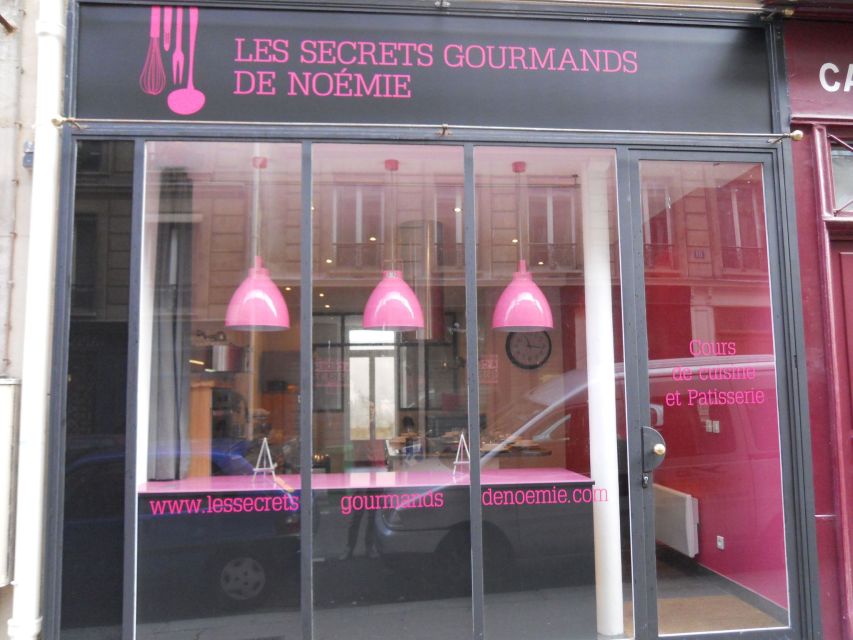
The class takes place at 92 rue Nollet in Paris’s 17th arrondissement. This is not a grand culinary school with a parade of stations and a crowd of tourists. You meet Chef Noémie in her charming loft-style atelier, where the small setting keeps the focus on the food and the teaching.
That location also gives the experience a useful local feel. You are spending part of your day in an ordinary Paris neighborhood rather than staying only around the Eiffel Tower, the Louvre, or the Champs-Élysées. The class itself lasts two and a half hours, long enough to learn several techniques without taking over your entire day.
The studio is described as clean and well organized, which matters in a pastry class. Baking depends on order. Ingredients must be measured correctly, tools need to be ready, and each stage has to happen at the right time. A tidy workspace makes it easier for you to follow what is happening instead of losing the thread among bowls, trays, and piping bags.
More pastry and macaron classes:
- Paris: Montmartre Cheese, Wine & Pastry Guided Walking Tour
★ 4.8 · 2,255 reviews - Paris Croissant Small-Group Baking Class with a Chef
★ 5.0 · 910 reviews - Paris: Macaron Class at Galeries Lafayette
★ 4.3 · 905 reviews
Why Chef Noémie’s training matters
Noémie is a graduate of the Lenôtre Culinary Institute, one of France’s best-known patisserie schools. That background helps explain the class’s focus on technique rather than simple assembly.
You are not only shown how to produce a dessert. You learn why a pastry behaves as it does, how to recognize the right texture, and how small changes can affect the finished result. This is especially useful with choux pastry, the light dough used in treats such as Paris-Brest and other French pastries.
The instruction is in English, and the class is designed for a small group. That combination is important. You do not need to translate technical directions while trying to pipe dough or judge a mixture, and you can ask for clarification when a step seems unclear.
Noémie’s teaching style also appears to suit different ages and skill levels. Children have taken part with parents and grandparents, while adults who described themselves as beginners or uncomfortable in the kitchen also found the class approachable. I would not book it expecting professional kitchen intensity. The strength here is patient, personal instruction.
What happens during the 150 minutes
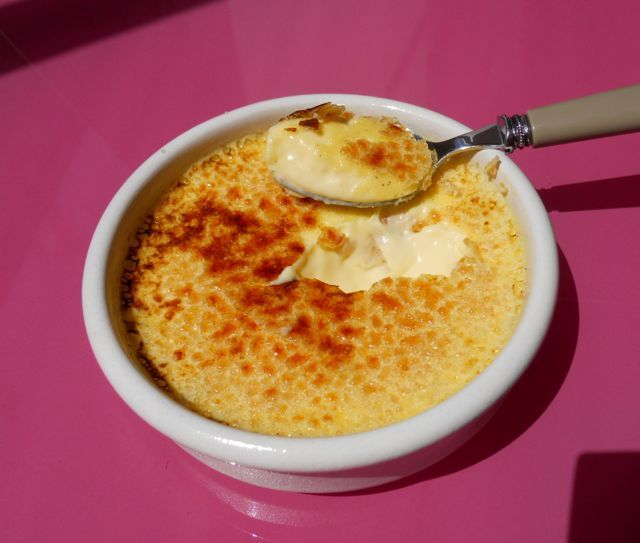
The exact desserts depend on the season, so you should check the menu available for your date. Possible choices include Paris-Brest, molten chocolate cake, and Grand Marnier soufflés. Other classes have included crème brûlée, and the selection can be adapted in some cases when a particular pastry is requested in advance.
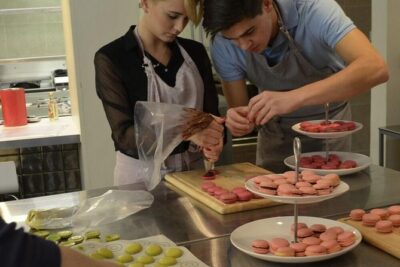
A typical class begins with introductions and an explanation of the recipes. From there, Noémie leads you through the ingredients and method. The class is hands-on, but not every person is necessarily doing every task at once. You might measure while another participant mixes, then take your turn with a pastry bag or decoration.
That shared format is worth understanding before you book. One participant found the class not completely hands-on, while another described taking turns measuring, mixing, using the pastry bag, and decorating. In a group of eight, you will likely be involved in the key steps, but you should not expect to make three entire desserts alone from start to finish.
The advantage is that you get to watch each stage closely. You can see how another person handles the dough, then try it yourself with Noémie’s corrections. For many beginners, that is less stressful than working alone while a teacher moves quickly from station to station.
The class has included three desserts in the past, giving you a broad lesson in French pastry. A choux-based dessert teaches piping and structure. A molten chocolate cake focuses on baking time and the contrast between a cooked exterior and soft center. A soufflé requires careful preparation and a light touch. The recipes differ, but each one gives you a practical lesson you can use at home.
Paris-Brest and the value of learning choux pastry
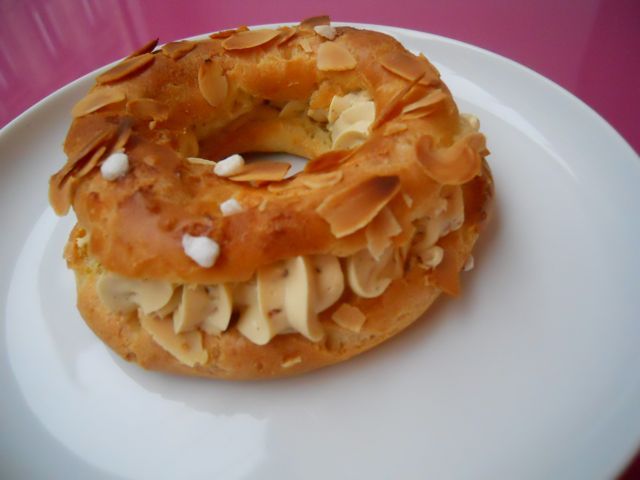
Paris-Brest is a particularly good choice for a pastry class because it teaches a base that appears in many French desserts. The dough must be handled correctly, piped with care, and baked so it develops enough structure to hold its filling.
You may not leave able to reproduce every detail perfectly on your first attempt. That is normal. The useful part is learning what the dough should look like and how to work with a pastry bag. One participant especially valued the choux pastry lesson because the technique can be used in several other French desserts.
If Paris-Brest is your priority, contact the provider ahead of time to ask if it can be included. One family did exactly that and had the dessert added to its class. This is not a guarantee for every date, but it is a sensible request to make before booking.
More cooking classes in Paris:
- Paris Cooking Class and Lunch with Wine plus Market Visit Option
★ 5.0 · 1,024 reviews - Paris: French Croissant Baking Class with a Chef
★ 4.9 · 712 reviews - Paris Cooking Class: Learn How to Make Macarons
★ 5.0 · 634 reviews - Paris Evening Cooking Class French Dinner and Market Visit Option
★ 5.0 · 430 reviews
Soufflés, chocolate cake, and seasonal changes
Grand Marnier soufflés offer a different kind of pastry lesson. They are delicate and depend on careful preparation and proper timing. You will learn more than a fixed recipe because Noémie can explain the steps that help the dessert rise and the mistakes that can cause it to fall too soon.
Molten chocolate cake is a familiar dessert, but it still rewards precise work. The timing affects the center, and the result is best understood when you have watched the cake move from mixture to oven to plate.
The seasonal menu is a practical point, not a minor footnote. If you have your heart set on one dessert, ask what will be prepared on your date. If you are happy to follow the chef’s choice, seasonal changes may give you a better match for the class and available ingredients.
How hands-on is the experience?
This is a participation class, but the degree of individual work depends on the group. With eight people, tasks may be shared. You might not personally complete each recipe, yet you should have a chance to handle important parts of the process.
The best way to think about it is as a guided workshop. You measure, stir, pipe, decorate, and taste, while Noémie keeps the group moving and explains the technique. Her patient approach is helpful if you are new to baking or want advice on a specific problem.
I like this format for families and couples because it creates a social activity without requiring everyone to work in silence. People can watch one another, compare results, and ask questions together. If you want a private, individual workstation and full control of every dessert, this may feel less thorough than a one-to-one lesson.
The tasting is part of the lesson
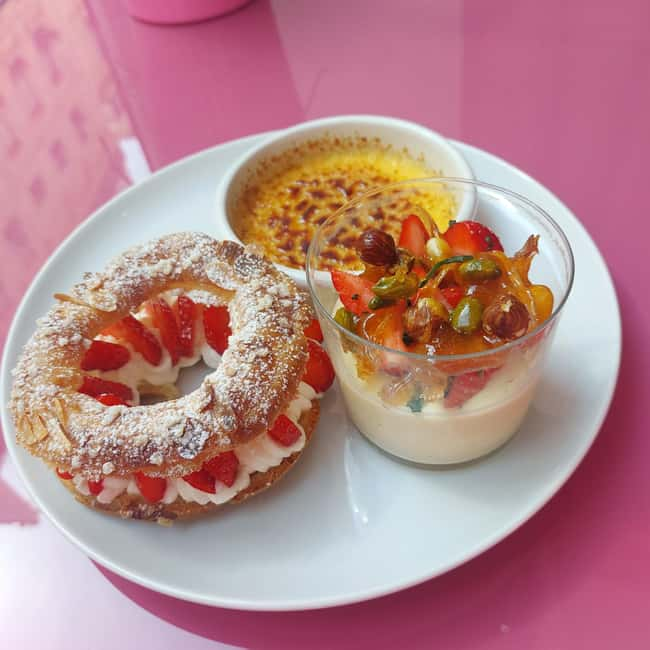
After the baking, you sit down in the loft atelier with tea or coffee and taste the desserts you prepared. This is not just a pleasant finish. Eating the results helps you notice texture, sweetness, structure, and presentation.
It also gives you time to talk with Noémie after the formal instruction ends. That matters because practical questions often come up once you see the finished pastry. You may want to ask about substitutions, baking at home, piping, or how to avoid a familiar mistake.
The tasting makes the class feel complete. You learn the method, share the work, and then enjoy the result in the same place. You do not need to carry unfinished food around Paris for the rest of the day.
What you take home
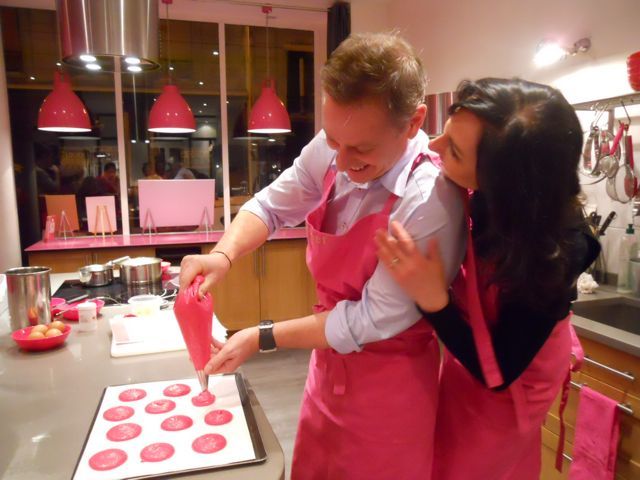
An apron is included during the class, and you receive English-language copies of the recipes. The recipes are useful, but the real value is the advice that surrounds them.
Noémie explains the small details that written instructions often leave out. She can show you how a mixture should look, how to use a pastry bag, and what to watch for during each stage. Those visual clues are hard to get from a cookbook.
Several people used the class as a way to gain confidence. One participant who called himself a mess in the kitchen still enjoyed piping and decorating. That is a good sign for beginners. You do not need advanced baking skills to take part, but you should be willing to try, make a few imperfect shapes, and learn from them.
Who will get the most from this class?
This is a strong choice for families looking for an activity beyond sightseeing. Children aged 8 and 10 have enjoyed the class with adults, and older children and teenagers have taken part too. The class can also work well for a birthday celebration or a special family afternoon.
Couples and friends will find an easy shared activity here. A honeymooning couple with little baking experience found the class accessible, while another parent chose it as a different kind of day with a teenage daughter. You can talk, work together, and leave with a skill rather than only a photograph.
It also suits solo visitors. If other bookings cancel, the class may run with very few people, and one solo participant received a personal lesson with time for questions. That arrangement is not guaranteed, but the small-group structure gives solo bookers a better chance of direct contact with the chef than a large tour would.
Experienced home bakers may enjoy the class too, especially if they want French techniques and Noémie’s professional advice. Just keep your expectations realistic. This is a short introduction to several pastries, not a full professional certification course.
Price, timing, and getting there
The listed price is $141 per person. That is a serious spend for two and a half hours, but it includes instruction, an apron, recipes, tea or coffee, and the pastries you prepare. The value is strongest if you care about learning and not just eating dessert.
A typical Paris pastry tasting may cost much less, but it does not teach you how the pastry was made. A longer formal culinary course may offer more individual practice, but it will also take more time. This class sits between those options: personal teaching in a small group, several recipes, and a finished tasting in one afternoon.
The meeting point is 92 rue Nollet, 75017 Paris. By subway, use line 13 and get off at Brochant or La Fourche. Bus options include numbers 66, 54, or 74 to Legendre, and number 31 to Parc Martin Luther King. The Navette Péreire Pont Cardinet also serves the area, with Pont Cardinet as the stop.
Plan your route before class and allow enough time to arrive calmly. Baking is easier when you are not rushing in from the metro. Pets and smoking are not allowed.
You can cancel up to 24 hours before the class for a full refund, and the reserve-now, pay-later option can help if your Paris plans are still shifting. Check the available start times when booking, since the schedule is not given as a single fixed time.
A few limits to keep in mind
The class is in English, which is helpful for many international visitors, but it may not suit you if you want instruction in another language. The menu also changes with the season, so confirm the planned pastries if a certain recipe is the main reason you are booking.
The class is small, not private by default. You will get personal advice, but your time at the mixing bowl or pastry bag may be shared with others. That is part of the social appeal and also the main limitation for anyone seeking nonstop individual practice.
The experience is focused on baking. You should not expect a broad tour of French food, a market visit, or a walking tour of Paris. The reward is narrower and more useful: you spend 150 minutes learning pastry with a trained chef and eating the results.
Should you book Chef Noémie’s pastry class?
I would book this class if you want a relaxed, personal food experience and like the idea of learning a skill you can use after Paris. It is especially well suited to families, beginners, couples, and anyone who would rather spend an afternoon making something than standing in another museum line.
At $141, it is not the cheapest dessert activity in Paris. The price makes more sense if you value Chef Noémie’s instruction, the small group, the English recipes, and the chance to taste several pastries you helped prepare.
Book it if you are happy with a shared, guided format and a seasonal menu. Think twice only if you require every step to be fully individual or have one exact dessert that must be included. For most visitors who want a friendly introduction to French pastry, this is a practical and memorable choice.
FAQ
How long does the French pastry class last?
The class lasts 150 minutes, or two and a half hours.
Where is the class held?
The class meets at 92 rue Nollet, 75017 Paris, in Chef Noémie’s loft-style atelier.
Who teaches the class?
Chef Noémie teaches the class. She is a graduate of the Lenôtre Culinary Institute.
Is the class taught in English?
Yes. The live instruction is in English, and English-language copies of the recipes are included.
How many people can join the class?
The class is limited to eight participants.
Which desserts will I make?
The menu can vary by season. Possible desserts include Paris-Brest, molten chocolate cake, and Grand Marnier soufflés. Crème brûlée has also been included in some classes.
Can I request Paris-Brest?
You can ask the provider in advance if Paris-Brest can be included. Its availability is not guaranteed for every class date.
Is the class suitable for children?
Yes. Children of several ages, including 8, 9, 10, 12, 13, and 16, have taken part with adults.
What is included in the price?
The class includes the pastry instruction, an apron, English-language recipes, tea, and coffee.
Can I cancel the booking?
You can cancel up to 24 hours in advance for a full refund. A reserve-now, pay-later option is also available.
More Workshops in Paris
- Fragonard Paris: Mini Perfume Workshop
★ 4.5 · 1,924 reviews - Paris: 2-Hour Perfume Creation Workshop
★ 4.8 · 731 reviews - Paris: French Macaron Culinary Class with a Chef
★ 4.9 · 591 reviews - Paris: French Wine Tasting Class with Sommelier
★ 4.8 · 505 reviews
Newest additions around Paris
- Family escape Game with kids and teens on the Île de la Cité★ 4.5 · 11 reviews
- Private Photoshoot with the Iconic Eiffel Tower in Paris★ 5.0 · 11 reviews
- 2-day Private Mont Saint-Michel, 3 Loire Castles, D-Day Express★ 4.5 · 11 reviews
- Paris: Batobus Hop-On Hop-Off Cruise & Landmarks Audio Tour★ 3.0 · 11 reviews
- Paris Revolutionary Walking Tour: Iconic French Sights & Stories★ 5.0 · 11 reviews
- Guided and Private Tour of 3 hours through Paris aboard a Citroën 2cv★ 5.0 · 11 reviews
- Kids in the Kitchen – CrOisSaNtS★ 4.0 · 11 reviews
- Paris: Ghosts and Dark Stories Guided Walking Tour★ 4.1 · 11 reviews
Pastry & Macaron Classes, compared.
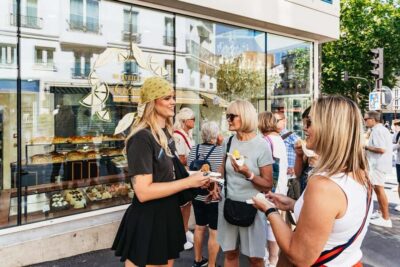
Montmartre Cheese, Wine & Pastry Guided Walking Tour
Read our review →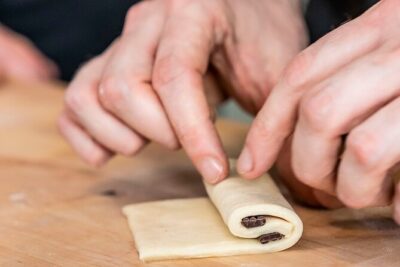
Paris Croissant Small-Group Baking Class with a Chef
Read our review →
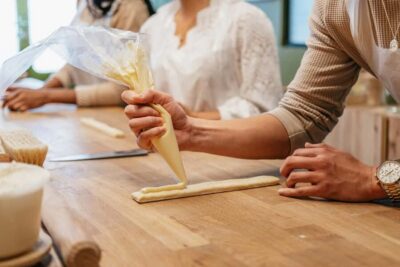
Paris Cooking Class: Learn How to Make Macarons
Read our review →
A Morning in Paris Food Tour: Croissants, Baguettes & Chocolate
Read our review →
Paris Chocolate, Macaron & Pastry Food Tour: 10 Gourmet Tastings
Read our review →Browse the lists this tour appears in