
Reviewed · MONTMARTRE & SACRé-COEUR TOURS
Montmartre Walking Tour with a Local Guide
Montmartre is at its best when you walk it slowly, moving from the Moulin Rouge through quiet lanes, artists’ corners, and steep little streets toward Sacré-Cœur. This tour connects the famous sights with the stories of Picasso, Van Gogh, Toulouse-Lautrec, and other artists who gave the hill its bohemian character.
I like the small-group feel, with guide Samy often leading no more than eight people, and I like the easygoing pace, which leaves room for questions, photos, and short rests. The main caution is the hill itself: this is a walking tour with moderate climbs, and Montmartre’s cobbled streets can be tiring in poor weather.
In This Review
- Key points at a glance
- Why Montmartre works best on foot
- From Place Blanche to the Moulin Rouge
- The Wall of Love and Montmartre’s romantic side
- Moulin de la Galette and the artists’ hill
- Dalida’s statue and La Maison Rose
- Place du Tertre and the modern artist quarter
- The climb to Sacré-Cœur
- Sacré-Cœur inside and out
- What the guide adds
- Timing, weather, and physical effort
- Is $27 a fair price?
- Who should book this Montmartre walk?
- Should you book it?
- FAQ
- Where does the Montmartre walking tour begin?
- Where does the tour finish?
- How long does the tour last?
- What language is the tour in?
- Is the Sacré-Cœur Basilica included?
- What should I bring?
- Does the tour run in bad weather?
- Is the tour suitable for wheelchair users?
Key points at a glance
- Starts beside the Moulin Rouge: Meet near the Blanche Metro station on Line 2, an easy landmark in the lower part of Montmartre.
- Follows the artists’ Montmartre: Hear stories about Picasso, Van Gogh, Toulouse-Lautrec, and the district’s changing character.
- Includes the area’s most photogenic stops: See La Maison Rose, the Dalida Statue, Moulin de la Galette, and Place du Tertre.
- Finishes at Sacré-Cœur: End inside and outside the basilica, with a wide view across Paris.
- Good for families and mixed ages: Guides can adjust the pace, answer questions, and take family photos.
- Costs $27 per person: For two hours of guiding and local context, that is a fair price, especially on a first Paris visit.
Why Montmartre works best on foot

Montmartre is more than a hill with a church on top. It was once a separate village outside Paris, and traces of that older identity remain in its narrow lanes, old mills, small squares, and sloping streets.
The walk begins at Place Blanche, near the Moulin Rouge. From there, you gradually leave the bright theater district and move into the quieter upper neighborhood. That change is part of the pleasure. You get a sense of Montmartre as a place where ordinary residential streets sit close to major tourist sights.
A guide adds real value here because many of the best details are easy to miss. A doorway, statue, painted wall, or café facade may seem like a quick photo stop until someone explains its connection to local artists, cinema, music, or Parisian life.
I especially like this kind of introduction early in a Paris stay. It gives you a mental map of the hill and helps you decide where to return later for a meal, a museum, more photographs, or a slower wander.
More Montmartre walks and visits:
- Montmartre Hidden Gems and Scenic Highlights Walking Tour
★ 5.0 · 2,684 reviews - Montmartre Hill French Gourmet Food and Wine Tasting Walking Tour
★ 5.0 · 2,588 reviews - Paris: Montmartre Cheese, Wine & Pastry Guided Walking Tour
★ 4.8 · 2,255 reviews
From Place Blanche to the Moulin Rouge
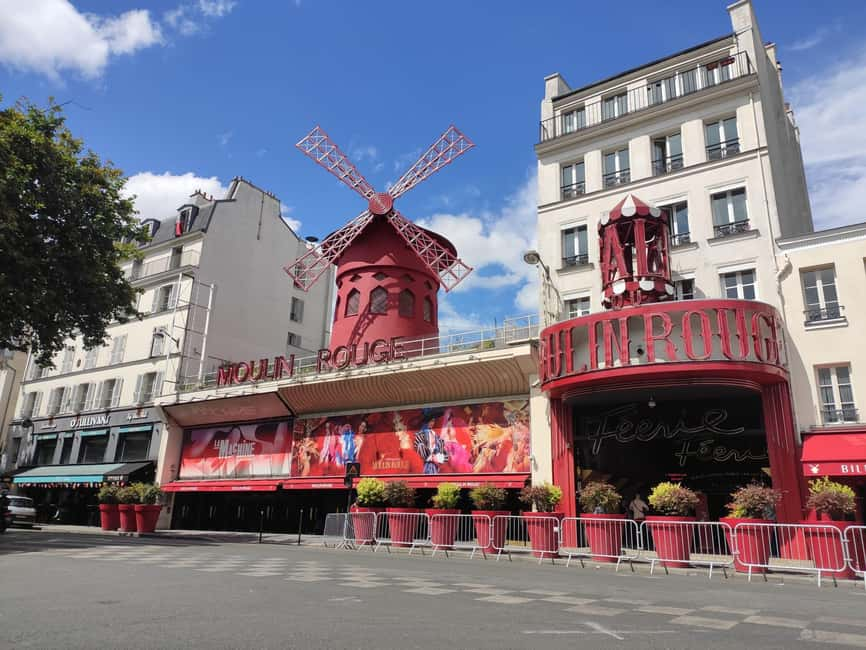
Your meeting point is near the exit of Blanche Metro station, close to the Moulin Rouge. Look for the guide carrying a green booklet and wearing a green badge.
The Moulin Rouge is a lively place to begin, even if the tour does not include a cabaret performance. You stop for photographs and hear about the role of the area in Montmartre’s entertainment culture. The guide-led portion here lasts about ten minutes, though the walk between stops is part of the overall experience.
This is also a practical meeting point. Blanche is on Metro Line 2, and the Moulin Rouge is large and easy to recognize. Give yourself enough time to find the correct station exit and locate the guide without rushing.
The Wall of Love and Montmartre’s romantic side
The next stop is Le Mur des Je T’aime, or the Wall of Love. The wall displays the words I love you in many languages, making it an appealing photo stop and a pleasant change from the grand monuments elsewhere in Paris.
A guide can give this stop more meaning than a quick photograph alone. You learn why it was created and how it fits Montmartre’s modern image as a district of romance, art, and street-level discovery.
This part of the walk is also useful for families. It offers a clear visual focus, and the guide can keep younger participants interested by connecting the place to language, love, and popular culture rather than giving only dates and names.
Moulin de la Galette and the artists’ hill
Moulin de la Galette is one of Montmartre’s most evocative names. The old windmill recalls the time when the hill was still filled with gardens, farms, vineyards, and working mills rather than souvenir shops and cafés.
The stop also connects directly with the artists who lived and worked here. Renoir painted the famous scene associated with the Moulin de la Galette, while Picasso, Van Gogh, and Toulouse-Lautrec were part of the wider artistic world that made Montmartre famous.
This is where a good guide earns the fee. The important point is not just seeing an old mill. It is understanding how Montmartre became attractive to painters, performers, and writers, and how its rural setting slowly became part of Paris.
You may find the stop crowded, depending on the time of day. The tour is still useful because the guide helps you look beyond the obvious photograph and notice the historical setting around it.
More Paris walking tours:
- Paris Top Sights Half Day Walking Tour with a Fun Guide
★ 5.0 · 2,893 reviews - Paris Île de la Cité and Notre-Dame Walking Tour With Crypt
★ 5.0 · 2,272 reviews - Paris in a Day: Louvre or Orsay, Eiffel Tower, City Walk & Cruise
★ 5.0 · 1,956 reviews - Paris: Montmartre Highlights Walking Tour with a Local Guide
★ 4.9 · 1,668 reviews
Dalida’s statue and La Maison Rose
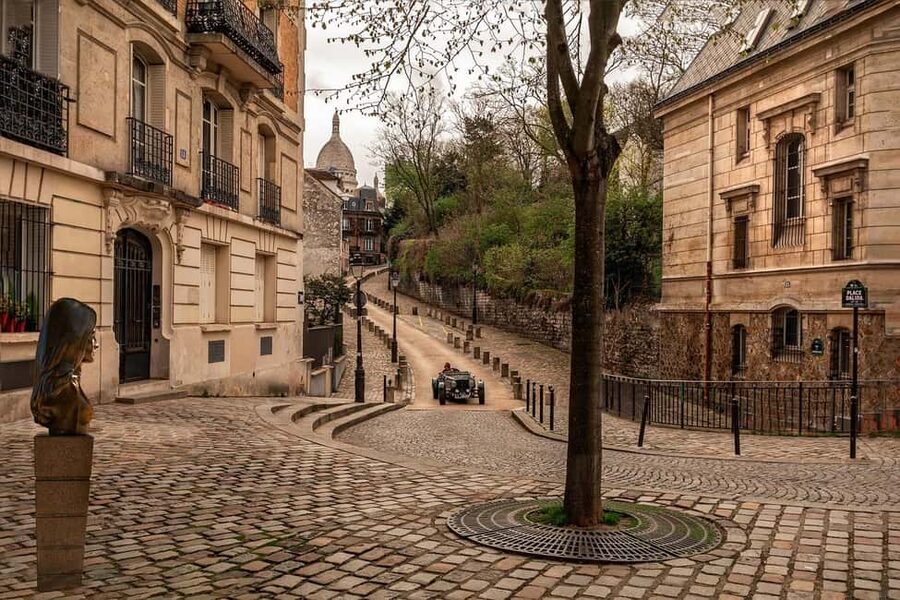
The Dalida Statue is one of the more unusual stops. Dalida was a famous French-Italian singer, and her connection with Montmartre remains strong. The statue is easy to recognize, and the polished chest has become part of the local folklore surrounding the monument.
The guide can explain why this particular statue matters to the neighborhood and point out details you might otherwise pass without noticing. It is a good example of the tour’s broader range: Montmartre is not only about nineteenth-century painters.
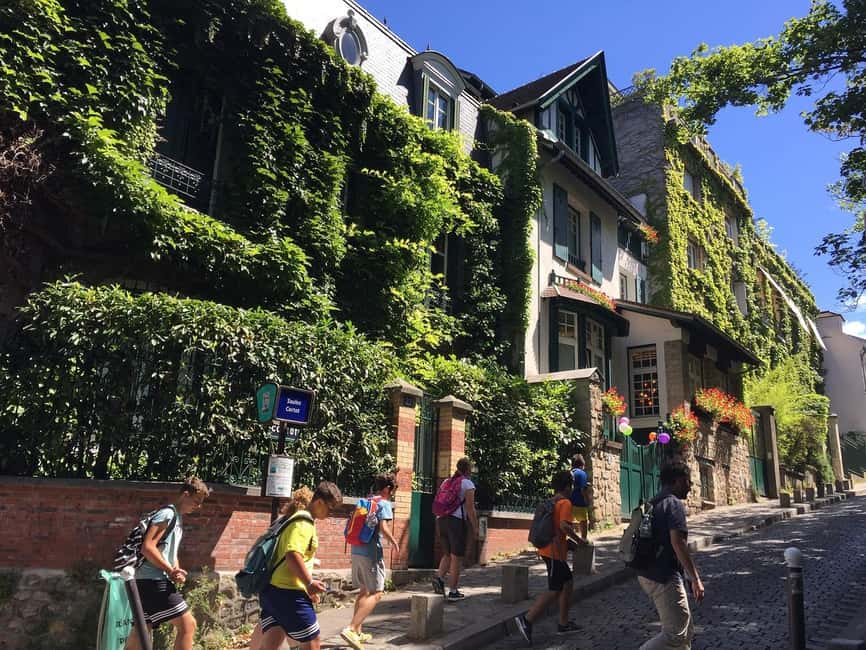
La Maison Rose follows, one of the most recognizable painted houses in Paris. Its pink facade and green shutters make it a natural photo stop, but the building also helps show how Montmartre’s visual identity was shaped by artists and later by film, photography, and social media.
You should expect people taking photographs at both places. The guide’s role is less about giving you a long time at each point and more about placing these sights in the story of the district.
Place du Tertre and the modern artist quarter
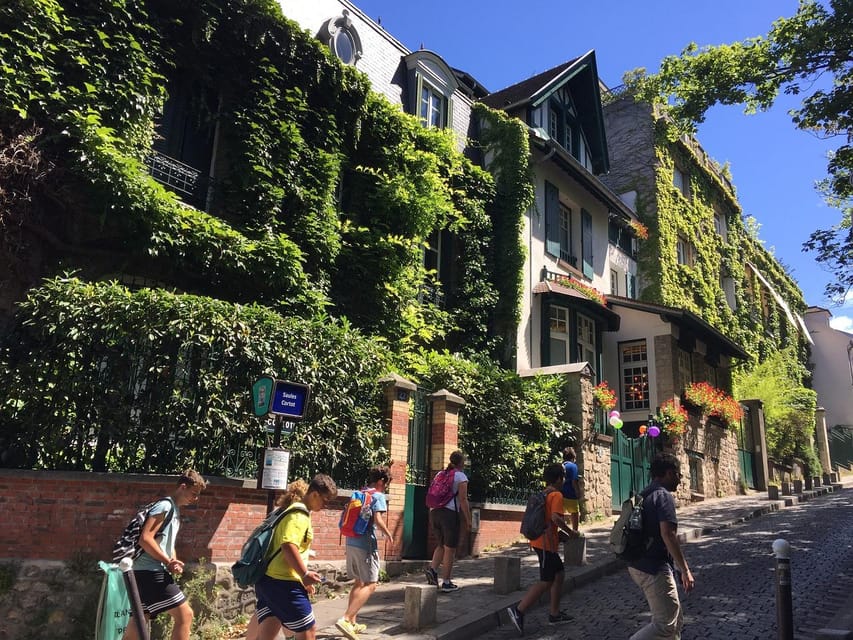
Place du Tertre is the traditional artist square near the top of Montmartre. Painters display their work, sketch portraits, and invite passersby to stop and look.
It is a charming place, but it is also one of the busiest parts of the neighborhood. You will find art, portrait stands, cafés, and plenty of people moving through the square. If you want to commission a portrait or buy artwork, treat that as a separate decision and allow extra time after the walking tour.
The guide-led stop lasts about ten minutes, with time for photographs and a short walk through the square. I like having context here because the modern artist stalls can otherwise feel disconnected from the painters who made Montmartre famous.
This is also a useful moment to ask for practical advice. Samy is often praised for answering questions and suggesting other things to see in Paris, so you can use the final part of the tour to get ideas for the rest of your visit.
The climb to Sacré-Cœur
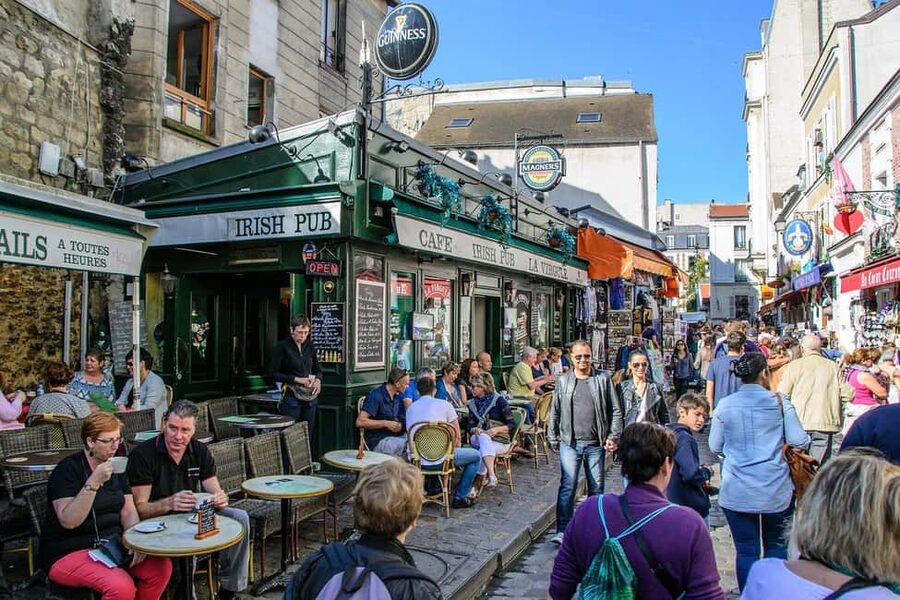
The route continues uphill toward the Basilica of Sacré-Cœur. Montmartre is not a flat neighborhood, and this is the part where comfortable shoes matter most.
The good news is that the walk generally uses a gradual route rather than forcing you to tackle every staircase in one go. One booking described the approach as reaching Sacré-Cœur by the back way, with small inclines and breaks along the route.
That does not make the walk effortless. You should be comfortable walking uphill for part of two hours, and you should expect uneven paving. The pace can be adjusted, which is helpful for families, older participants, and anyone who wants to take the climb steadily.
The tour is not suitable for wheelchair users or people with mobility impairments. If you have difficulty with hills, stairs, or cobbled streets, this is not the right way to see Montmartre.
Sacré-Cœur inside and out
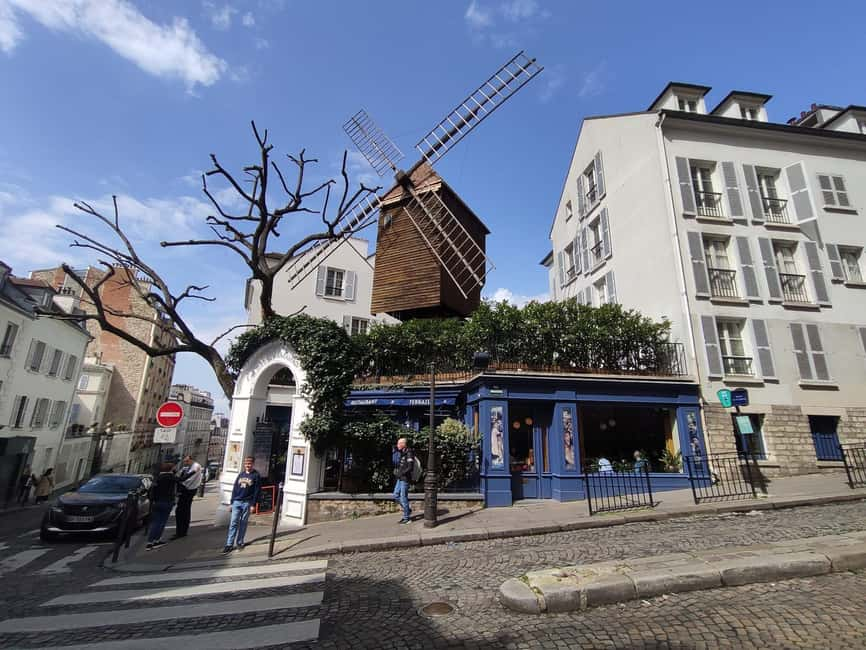
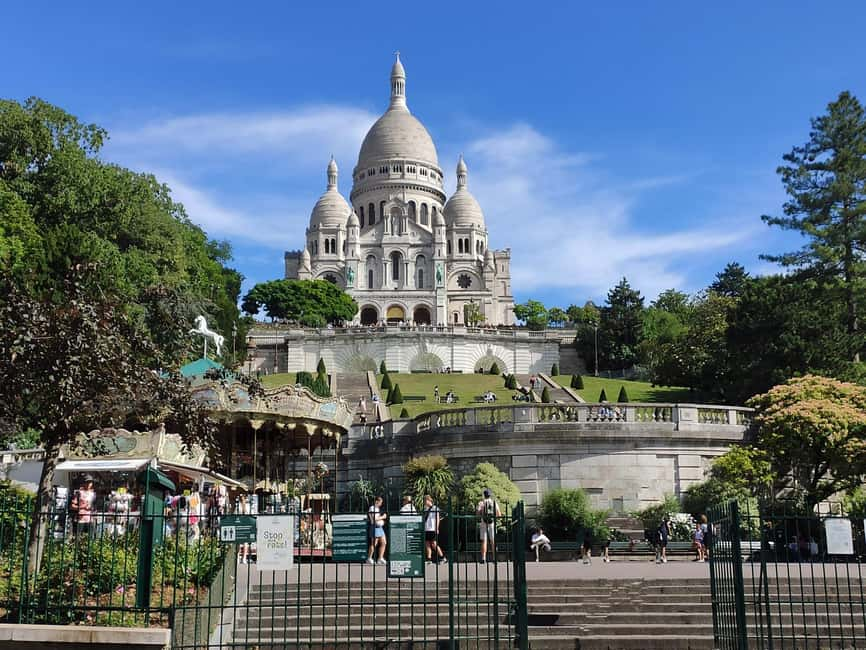
The Basilica of the Sacred Heart of Paris is the finishing point. The tour includes time to explore the outside and the inside, followed by the panoramic view from the hill.
The white-domed basilica is one of Paris’s most recognizable landmarks. Its position high above the city gives the final section a strong sense of arrival, even though the tour is short.
Inside, keep in mind that Sacré-Cœur is a working place of worship. Dress and behave respectfully, and expect the atmosphere to be quieter than the lively streets below. The guide explains the basilica and gives you time to look around rather than rushing you through.
Outside, the view reaches across Paris. On a clear day, you can pick out the Eiffel Tower, Notre Dame, and Montparnasse Tower. The panorama is one of the tour’s best rewards, but visibility depends on weather and air conditions.
The tour finishes at the basilica, not back at Place Blanche. That is convenient if you want to continue exploring the upper neighborhood, visit the church on your own, or take the Montmartre Funicular down afterward. The funicular is not included, and you would use your own Paris transit ticket or pass.
What the guide adds
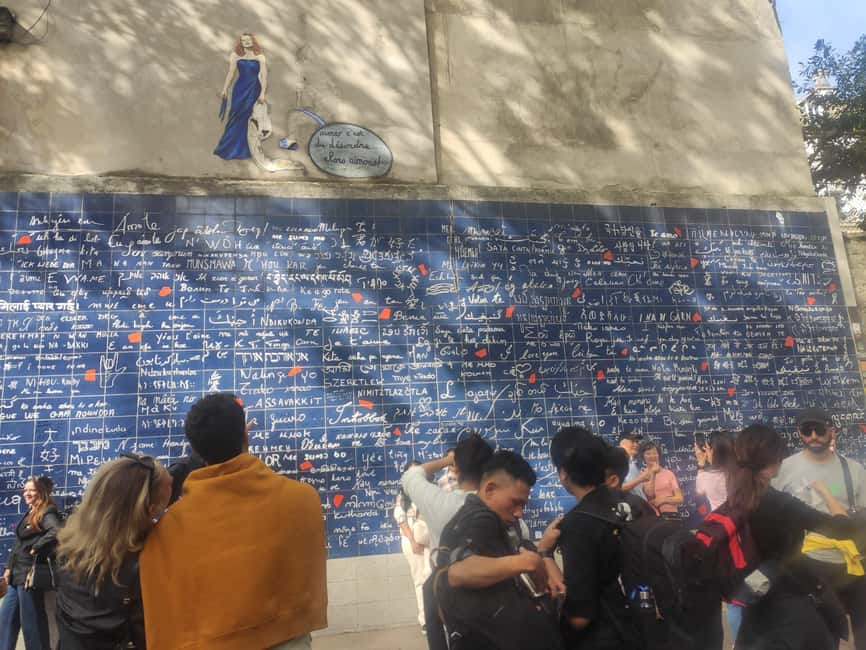
The guide makes the biggest difference on this experience. Samy is the guide name most closely associated with these walks, and the strongest pattern in the feedback is his friendly, patient approach.
He is praised for bringing historic characters to life, explaining local details in clear English, and adjusting the walk for children, toddlers, and older family members. One family with an 87-year-old participant appreciated the attention to comfort and safety. Another group with children found that the pace and storytelling kept everyone involved.
You should not expect a formal lecture. The best version of this tour is conversational, with short explanations at each stop and time to ask questions. Samy has also been noted for taking family photographs, which is a small but useful touch when everyone wants to appear in the picture.
The group may sometimes be very small, even just two people, although you should not book on the assumption that you will receive a private tour. A small group makes it easier to hear, ask questions, and keep a comfortable pace.
The guide also points out safety concerns and gives local suggestions. That matters in a busy district where it is easy to become distracted by photographs, artists, cafés, and crowds.
Timing, weather, and physical effort
The advertised duration is two hours, but you should treat that as an approximate length. The walk can run longer if the group stops often, moves slowly, or spends extra time answering questions. One wet-weather walk lasted close to three hours, with the full route still completed.
The tour runs rain or shine. Bring a rain jacket or umbrella if the forecast is unsettled, and wear shoes with good grip. Montmartre’s slopes and cobblestones are manageable for most active walkers, but sandals or stiff new shoes could make the route less pleasant.
You are not buying a bus tour with a quick photo from the curb. You are walking through a hilly district, stopping often, and gradually gaining height. That is exactly why the tour is rewarding, but it is also the main physical consideration.
Because food and drinks are not included, eat before the meeting point or plan to stop after the tour. The route passes many cafés and restaurants, but the provided tour does not promise a food break.
Is $27 a fair price?
At $27 per person, this is a strong-value introduction to Montmartre. You receive about two hours with a local English-speaking guide, a planned route covering the district’s best-known sights, explanations that connect the stops, and family photos.
You are not paying for entry to a major museum or a private vehicle. The value comes from good orientation and local stories. If you wandered alone, you could photograph most of these places, but you might miss the connections between the artists, entertainers, buildings, and streets.
The price also compares well with the time involved. A two-hour guided walk at this rate is a relatively modest part of a Paris budget, especially if it saves you from spending half a day finding the main sights on your own.
I would not choose it if you already know Montmartre well or prefer to explore without a schedule. The route is focused on highlights, so you will not have long stretches for shopping, sitting in cafés, or browsing every side street.
Who should book this Montmartre walk?
I would recommend it to first-time Paris visitors, families, and anyone who wants a quick but meaningful introduction to the hill. It is especially useful during the first days of a trip, when you are still learning how the neighborhoods fit together.
It also suits people who enjoy stories more than checklists. The route includes famous sights, but the guide adds background about artists, music, films, local characters, and small details on the streets.
Families should find the flexible pace helpful. Older walkers may also manage it if they are comfortable with moderate uphill walking and the group moves at a relaxed speed.
I would be cautious if you have limited mobility, dislike hills, or want a completely quiet experience. Montmartre can be crowded, particularly around the Moulin Rouge, Place du Tertre, and Sacré-Cœur.
Should you book it?
Book this tour if you want to understand Montmartre rather than simply photograph it. For $27, you get a compact route, a local English-speaking guide, useful Paris tips, and a satisfying finish at Sacré-Cœur.
The strongest reason to choose it is the guide’s personal touch. Samy’s patient pace, clear explanations, willingness to answer questions, and habit of taking photos can make the walk feel more like an introduction from a helpful local than a standard group tour.
Skip it if you want to explore at your own speed, avoid uphill walking, or have already spent time learning Montmartre’s history. For most first visits, though, this is a practical and well-priced way to get oriented.
FAQ
Where does the Montmartre walking tour begin?
The tour begins near the exit of Blanche Metro station on Line 2, close to the Moulin Rouge.
Where does the tour finish?
The tour finishes at the Basilica of the Sacred Heart of Paris, also called Sacré-Cœur.
How long does the tour last?
The usual duration is about two hours. It may take longer depending on the group’s pace, number of stops, and comfort level.
What language is the tour in?
The live tour is conducted in English.
Is the Sacré-Cœur Basilica included?
Yes. The tour includes the outside and inside of the Basilica of Sacré-Cœur, along with the scenic view from Montmartre.
What should I bring?
Bring comfortable shoes. The route includes cobbled streets and moderate uphill sections.
Does the tour run in bad weather?
Yes. The tour runs rain or shine, so bring suitable clothing for the forecast.
Is the tour suitable for wheelchair users?
No. The tour is not suitable for wheelchair users or people with mobility impairments because of the uphill walking and street conditions.
Newest additions around Paris
- Family escape Game with kids and teens on the Île de la Cité★ 4.5 · 11 reviews
- Private Photoshoot with the Iconic Eiffel Tower in Paris★ 5.0 · 11 reviews
- 2-day Private Mont Saint-Michel, 3 Loire Castles, D-Day Express★ 4.5 · 11 reviews
- Paris: Batobus Hop-On Hop-Off Cruise & Landmarks Audio Tour★ 3.0 · 11 reviews
- Paris Revolutionary Walking Tour: Iconic French Sights & Stories★ 5.0 · 11 reviews
- Guided and Private Tour of 3 hours through Paris aboard a Citroën 2cv★ 5.0 · 11 reviews
- Kids in the Kitchen – CrOisSaNtS★ 4.0 · 11 reviews
- Paris: Ghosts and Dark Stories Guided Walking Tour★ 4.1 · 11 reviews
Montmartre & Sacré-Coeur Tours, compared.

Montmartre Hidden Gems and Scenic Highlights Walking Tour
Read our review →
Montmartre Hill French Gourmet Food and Wine Tasting Walking Tour
Read our review →
Montmartre Cheese, Wine & Pastry Guided Walking Tour
Read our review →
Montmartre Highlights Walking Tour with a Local Guide
Read our review →
Sacré-Coeur and Montmartre Tour with Expert Guide
Read our review →
Private Montmartre Food Tour with Wine, Cheese & Pastries
Read our review →
Paris Montmartre Food Tour – A Full French Meal by Do Eat Better
Read our review →
Hidden Montmartre: Paris’ Secret Streets Walking Tour
Read our review →Browse the lists this tour appears in