
Reviewed · MONTMARTRE & SACRé-COEUR TOURS
Montmartre Self-Guided Audio Tour: More Than Meets the Eye
Montmartre is best understood on foot, one sloping street at a time. This self-guided audio tour leads you from Rue des Abbesses through the old artists’ quarter, past Picasso’s former studio, Renoir’s famous windmill, Maison Rose, Lapin Agile, and Place du Tertre before ending at Sacré-Cœur. The stories give meaning to streets you might otherwise pass without a second glance.
I like the GPS-guided pacing, which starts the next story as you reach the right place and gently redirects you if you wander off course. I also like the freedom to pause for a coffee, repeat a story, or linger at a view without holding up a group. The main caution is physical: Montmartre is hilly, with stairs and steep streets, and some people found the navigation or app behavior less reliable than expected.
In This Review
- Key points to know before you book
- What this Montmartre walk actually covers
- Starting at Rue des Abbesses and the Wall of Love
- An old church and Montmartre’s long past
- Picasso’s studio and the artists around Place Émile-Goudeau
- The windmill behind Renoir’s famous scene
- Rue de l’Abreuvoir, Maison Rose, and the small vineyard
- Lapin Agile and Montmartre’s cabaret past
- Place du Tertre and a classic Montmartre restaurant
- Finishing at Sacré-Cœur
- How the VoiceMap app works in practice
- Hills, stairs, timing, and comfort
- Is $14.99 a good value?
- Who should choose this tour?
- Should you book it?
- FAQ
- Where does the Montmartre audio tour start?
- Where does the tour end?
- How long does the tour take?
- What language is the audio tour offered in?
- What does the price include?
- Do I need my own phone and headphones?
- Does the tour include transportation, food, or entrance fees?
- Is the tour private?
- Can I cancel for a full refund?
Key points to know before you book
- Artists, cafés, and old Montmartre: Follow the trail of Picasso, Modigliani, Renoir, Van Gogh, Utrillo, Dalida, and other figures tied to the neighborhood.
- A route from Abbesses to Sacré-Cœur: The walk begins at 22 Rue des Abbesses and ends in front of the basilica at 35 Rue du Chevalier de la Barre.
- Self-paced audio: Stop, restart, slow down, or speed up the recording as you choose.
- Offline access: Download the audio, maps, and geodata through the VoiceMap app before setting out.
- A real hill workout: The advertised walking time is about one to two hours, but frequent stops, photos, cafés, and music can stretch it to four hours or more.
- Good value for independent visitors: At $14.99 per person, you get lifetime access in English, with no scheduled departure and no group to keep up with.
What this Montmartre walk actually covers
This is not a broad Paris sightseeing tour. It concentrates on Montmartre, the hilltop district that became famous for its artists, cabarets, cafés, village-like lanes, and views over Paris.
The route is designed as a continuous walk rather than a menu of separate stops. That matters. You cannot simply choose Picasso, then jump straight to Sacré-Cœur inside the app. You follow the planned path from the lower part of the neighborhood upward, with stories triggered by your location.
That structure gives the walk a natural sense of place. You begin amid the streets around Abbesses, then move into quieter corners before reaching the most photographed parts of Montmartre. The tradeoff is flexibility. If Place du Tertre is your top priority, check the route and time your day carefully so you do not arrive after the artists’ square has lost its appeal or nearby attractions have closed.
More Montmartre walks and visits:
- Montmartre Hidden Gems and Scenic Highlights Walking Tour
★ 5.0 · 2,684 reviews - Montmartre Hill French Gourmet Food and Wine Tasting Walking Tour
★ 5.0 · 2,588 reviews - Paris: Montmartre Cheese, Wine & Pastry Guided Walking Tour
★ 4.8 · 2,255 reviews
Starting at Rue des Abbesses and the Wall of Love
The tour starts at 22 Rue des Abbesses, a convenient place to begin exploring Montmartre by public transport. From there, the first notable stop is the Mur des je t’aime, usually called the Wall of Love in English.
Created in 2000 by Frédéric Baron and Claire Kito, the wall displays the words I love you in 250 languages across 311 blue and white tiles. It is a quick stop, but a good opening note for the neighborhood. Montmartre can sometimes feel like a collection of postcard scenes, and the wall gives you an easy, human-scale place to pause before the route turns toward churches, artists, and old cafés.
The audio format works well here because you can listen while looking closely at the tiles. You are not forced to stand in a fixed place while a guide speaks over street noise. If you need a moment, pause the recording and continue when ready.
An old church and Montmartre’s long past
The walk then brings you to a church site with written records dating to 885, making it one of the oldest Christian sites in Paris. The stop adds useful depth to a neighborhood often reduced to modern art and tourism.
The church portion is also where the app may need a little patience. The tour can direct you inside and resume when you finish, but location tracking may sometimes assume you have wandered off while you are indoors. I would download everything in advance, keep the phone charged, and avoid rushing through the stop just to satisfy the GPS.
Entrance fees for museums or other attractions are not included. The tour is mainly an outdoor route, and the supplied details do not promise admission to every place mentioned.
Picasso’s studio and the artists around Place Émile-Goudeau
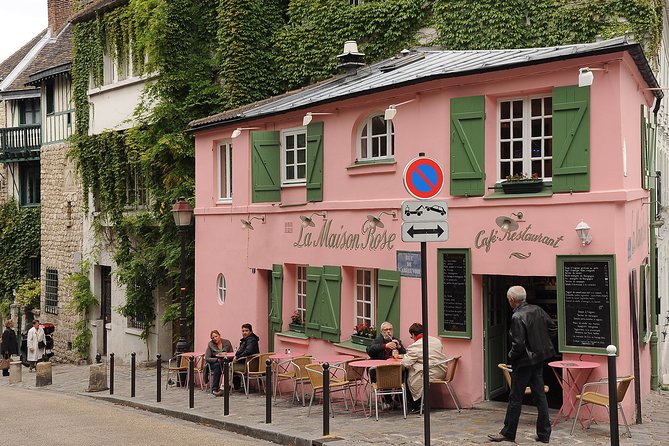
One of the strongest sections follows Montmartre’s artist connections. You visit the workshop where Picasso lived between 1904 and 1909. Modigliani also lived and worked there, along with Renoir, Juan Gris, Max Jacob, le Douanier Rousseau, and many other artists.
The value here is not just the list of famous names. The audio places those people in the same physical quarter, helping you picture Montmartre as a working neighborhood rather than a museum display. You pass through Place Émile-Goudeau and by Picasso’s first studio, then continue toward other homes and studios connected with the district.
For me, this is where a self-guided tour earns its price. A bare map can show you a street, but it cannot explain why an ordinary-looking building matters. The narrator provides the context while you stand in the actual setting.
The route also passes La Maison de Dalida, associated with the popular singer Dalida. It is another example of the tour’s wider view of Montmartre. The neighborhood’s story is not only about painters. Singers, writers, performers, and local characters all left their mark.
A few more Paris ideas to compare
- Paris: Illuminations River Cruise with Audio Commentary
★ 4.3 · 12,340 reviews - Paris: Orsay Museum Entry Ticket and Digital Audio Guide App
★ 4.4 · 3,170 reviews - From Paris: Giverny Day Trip with Audio Guide or Live Guide
★ 4.3 · 2,372 reviews - Giverny and Monet’s House Half Day Trip from Paris Guide or Audio
★ 4.0 · 1,319 reviews
The windmill behind Renoir’s famous scene
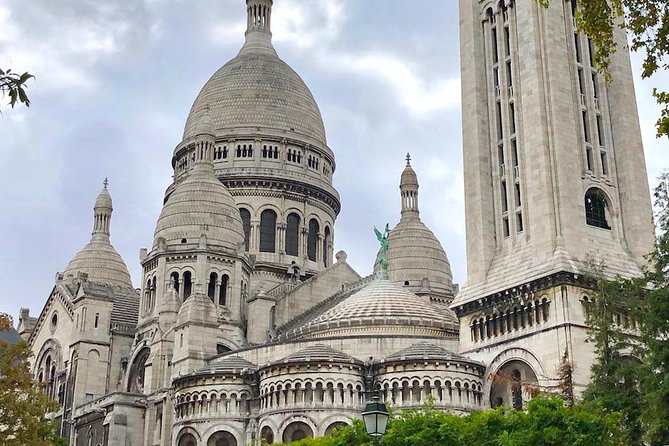
The walk continues to one of Montmartre’s two remaining windmills. This one was used to grind wheat and later operated as a restaurant.
Artists including Renoir, Van Gogh, and Pissarro frequented the restaurant and painted it, helping turn the windmill into one of Montmartre’s best-known symbols. Renoir’s Bal au Moulin de la Galette shows the party behind the famous façade rather than the windmill itself. Van Gogh painted several versions because his brother Theo lived nearby and knew the area well.
This is a fine example of the tour’s approach: look at the building, then listen for the story behind the image. You gain a better sense of how paintings and real places overlap, and how artists used the neighborhood around them.
The route is not a museum visit, and the information provided does not include an entrance to the restaurant or any meal. You are seeing the exterior and learning its connection to Montmartre’s art world.
Rue de l’Abreuvoir, Maison Rose, and the small vineyard
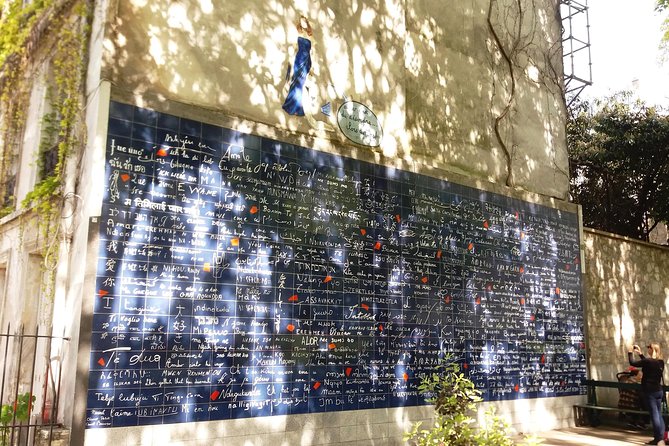
After passing Le Passe-Muraille, a statue inspired by the man who could walk through walls, the route continues by the Statue of Saint-Denis and down Rue de l’Abreuvoir.
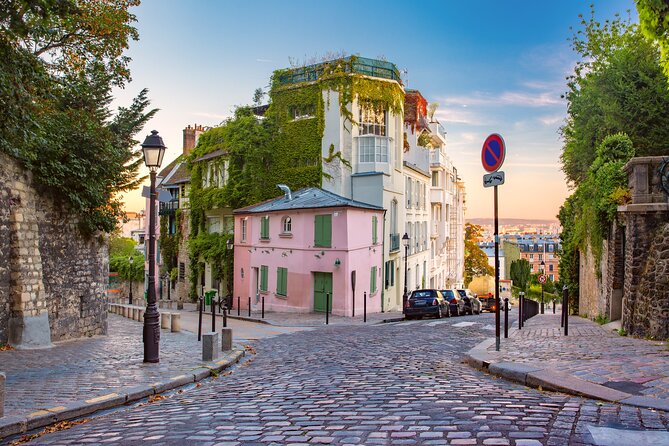
This street is one of the prettiest stretches on the walk, with its steep descent and old-fashioned Montmartre feel. At the bottom or along this part of the route, you see the pink building known as Maison Rose. The house became famous through the painter Utrillo, then gained another layer of celebrity when it was bought by someone connected with famous singers.
Édith Piaf, Aznavour, and Jacques Brel were frequent visitors, and Albert Camus also liked the place. The audio gives you more than a photo stop by connecting the building to the musicians and writers who spent time there.
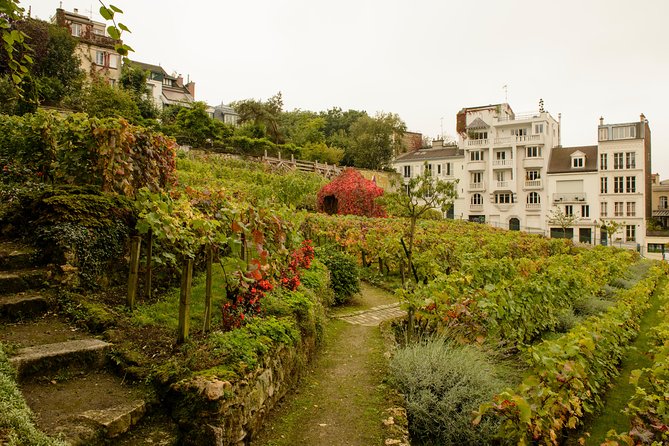
The nearby vineyard offers a different kind of story. Paris once had many vineyards, but only a few remain. This one is small enough for a single person to care for, yet it receives plenty of attention from tour guides, the mayor, television crews, and people passing through.
Do not expect a sprawling wine estate. The appeal is precisely its size and odd location. It is a reminder that Montmartre was once a village on the edge of Paris, with working land as well as artists and cafés.
Lapin Agile and Montmartre’s cabaret past
The tour then passes Lapin Agile, a cabaret and drinking establishment that first opened in 1795. Its earlier names were less charming: Rendez-vous of Thieves and later Cabaret of the Assassins.
In 1880, caricaturist André Gill was asked to create a new look for the place. His rabbit drawing led to the name Lapin Agile, or nimble rabbit.
This stop helps balance the painting-focused sections. Montmartre was also a place for performance, drinking, humor, and bohemian nightlife. You are hearing about the social world that made the district attractive to artists, not just the studios where they worked.
As with the other stops, the tour passes by the venue rather than including a cabaret performance. If you want to attend anything inside, you would need to arrange that separately and allow extra time.
Place du Tertre and a classic Montmartre restaurant
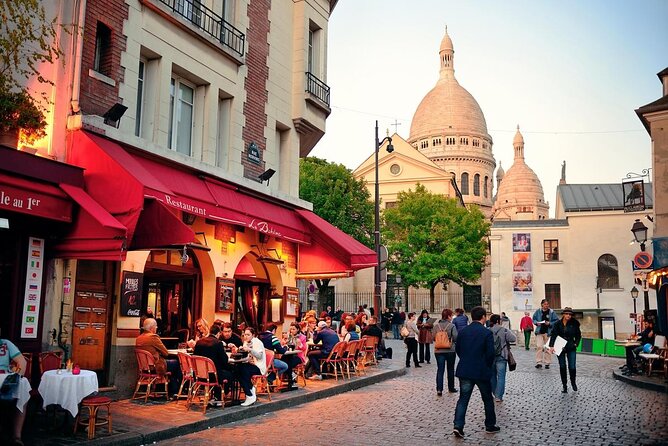
Place du Tertre is one of the district’s essential stops. It is closely tied to Montmartre’s street artists and remains one of the places most people hope to see.
The audio also takes you past the second Statue du Chevalier de la Barre and a long-running restaurant whose name means simple and without ceremony. A restaurant has occupied the site since the 1500s, though the building has been rebuilt and renamed several times.
Painters and poets once came for meals and drinks, including Degas, Renoir, Monet, Cézanne, Sisley, and Toulouse-Lautrec. In 1886, Van Gogh painted his La Guinguette à Montmartre there.
I would allow extra time around Place du Tertre. The stated tour duration is only an estimate for walking and listening. If you stop for a drink, watch the artists, take photographs, or pause for music, the route can take at least four hours at an easy pace.
There is also a practical issue with the order of the route. Since the walk starts lower down and works uphill, you may be tired by the time you reach the most famous square. If this is the main reason you want to see Montmartre, review the map before starting and plan your day around it.
Finishing at Sacré-Cœur
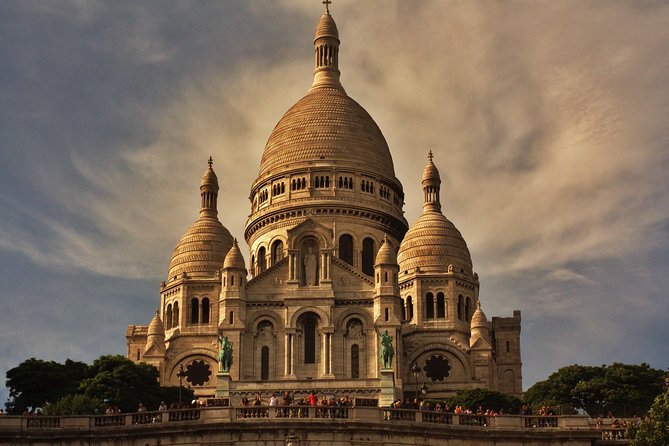
The tour ends at the Basilica of Sacré-Cœur, in front of 35 Rue du Chevalier de la Barre. The final approach gives you the satisfaction of reaching the summit after the neighborhood’s stairs and inclines.
The ending includes a peep inside the basilica, but tickets or entrance fees for attractions are not included. The supplied information does not specify a separate admission charge or a guaranteed interior visit, so treat the audio tour as the route to the basilica rather than a full basilica tour.
Sacré-Cœur is also a practical endpoint. Once you finish, you can stop listening and continue exploring on your own, or use public transport from the surrounding area. The tour itself does not include transportation.
How the VoiceMap app works in practice
You use the VoiceMap app on an Android or iOS smartphone, with your own headphones. The tour includes offline access to the audio, maps, and geodata, which is important in a dense neighborhood where phone service or battery life may become a nuisance.
GPS starts the narration as you reach the relevant location. If you stray from the route, the app can provide a gentle reminder to turn back. That hands-free quality is one of the best reasons to choose this format. You can look at buildings instead of constantly checking written directions.
There are a few things you should do before leaving:
- Charge your phone fully.
- Download the audio and map while you have a reliable connection.
- Bring a portable charger if your phone battery is not strong.
- Use headphones that still let you hear street sounds.
- Preview the route so you know where the major stops fall.
- Keep time for pauses, especially at Place du Tertre and Maison Rose.
The app has worked very well for many users, but it has not been perfect for everyone. Problems have included crashes, trouble pausing, audio that failed to restart, GPS points that felt slightly off, and unclear directions at certain turns. If the app stops behaving properly, VoiceMap offers support by phone and email. Still, you should not treat technical support as a substitute for preparation.
Hills, stairs, timing, and comfort
Montmartre’s physical demands are the biggest consideration. This is a hill neighborhood with staircases, uphill streets, and downhill stretches that can be hard on your legs. The route takes about one to two hours at a direct walking pace, but that is not the same as a relaxed sightseeing time.
I would schedule at least half a day if you want to stop often. Break the walk into sections if needed. The tour can be paused, and the lifetime access means you can return to it later, though the tour price does not include transportation between sections.
Most people can participate, but the route is not a flat stroll. If you are traveling with children, managing limited mobility, or planning another major walking tour on the same day, choose your timing with care. Comfortable shoes and water matter more here than fancy sightseeing plans.
Is $14.99 a good value?
At $14.99 per person, this is a low-cost way to add structure and context to a Montmartre walk. A traditional private guide would cost far more, while a free map would not give you the stories about Picasso, Renoir, Van Gogh, Lapin Agile, or the neighborhood’s old religious sites.
The strongest value comes from lifetime access. You are not tied to one departure time, and you can listen again later. You can also speed up the recording if you want a shorter walk, or pause it when a café, street musician, or view deserves your attention.
The price is less compelling if you expect a fully flexible attraction list, personal answers from a guide, or guaranteed technical perfection. You also need to supply the phone and headphones, and food, transportation, museums, and other entrance fees are extra.
The experience has a rating of 4.3 from 35 reviews, which fits the overall picture: the storytelling and freedom are strong, but the app and route order can frustrate some people.
Who should choose this tour?
I would choose this for a solo visitor who wants company without joining a group. It also suits couples and small private groups who want to walk at their own speed and stop when they please.
It is especially useful if you enjoy stories about people and places. The route gives you links between buildings, paintings, singers, cabarets, cafés, and old Parisian customs. You will likely notice more than you would by wandering with a map alone.
I would be more cautious if your main goal is to enter specific attractions, select only a few stops, or avoid steep streets. This is a fixed walking route, not a customizable audio library. Check the map before booking, and do not leave it until your final afternoon if Place du Tertre or the basilica is the main point of your visit.
Free cancellation is available if you cancel at least 24 hours before the local start time. Cancellations within 24 hours are not refunded.
Should you book it?
Book this Montmartre audio tour if you want an affordable, story-filled walk and value the freedom to pause, repeat, and explore without a group. The Wall of Love, Picasso’s studio, the windmill, Maison Rose, Lapin Agile, Place du Tertre, and Sacré-Cœur make a satisfying route through the district’s many sides.
Skip it if hills and stairs will make the walk unpleasant, or if you need a guide who can answer questions and adjust the route on the spot. For most independent visitors, the best plan is simple: download the tour early, start with a full battery, allow several hours, and treat the GPS as a helpful guide rather than an infallible one.
FAQ
Where does the Montmartre audio tour start?
The tour starts at 22 Rue des Abbesses, 75018 Paris, France.
Where does the tour end?
It ends in front of the Basilique du Sacré-Cœur de Montmartre at 35 Rue du Chevalier de la Barre, 75018 Paris, France.
How long does the tour take?
The estimated duration is one to two hours. If you walk slowly, stop for photographs, enjoy a café, or pause for music and sightseeing, it can take four hours or more.
What language is the audio tour offered in?
The tour is offered in English.
What does the price include?
The $14.99 price includes lifetime access to the English tour, the VoiceMap app for Android and iOS, and offline access to the audio, maps, and geodata.
Do I need my own phone and headphones?
Yes. A smartphone and headphones are not included.
Does the tour include transportation, food, or entrance fees?
No. Transportation, food, drinks, museum tickets, and entrance fees for other attractions are not included.
Is the tour private?
Yes. Only your group participates, and there is no larger group to keep up with.
Can I cancel for a full refund?
Yes, if you cancel at least 24 hours before the experience start time. Cancellations or changes made less than 24 hours in advance are not refunded.
More Audio Tours in Paris
- Paris: Catacombs Entry & Seine River Cruise with Audio Guide
★ 4.4 · 1,150 reviews - Paris: Catacombs, Audio Guide, and River Cruise Option
★ 4.6 · 966 reviews - Paris: Openair Double Decker Bus Audio-Guided City Tour
★ 3.5 · 938 reviews - Bruges Guided or Audio Trip with Canal Cruise Option from Paris
★ 4.0 · 795 reviews
Newest additions around Paris
- Family escape Game with kids and teens on the Île de la Cité★ 4.5 · 11 reviews
- Private Photoshoot with the Iconic Eiffel Tower in Paris★ 5.0 · 11 reviews
- 2-day Private Mont Saint-Michel, 3 Loire Castles, D-Day Express★ 4.5 · 11 reviews
- Paris: Batobus Hop-On Hop-Off Cruise & Landmarks Audio Tour★ 3.0 · 11 reviews
- Paris Revolutionary Walking Tour: Iconic French Sights & Stories★ 5.0 · 11 reviews
- Guided and Private Tour of 3 hours through Paris aboard a Citroën 2cv★ 5.0 · 11 reviews
- Kids in the Kitchen – CrOisSaNtS★ 4.0 · 11 reviews
- Paris: Ghosts and Dark Stories Guided Walking Tour★ 4.1 · 11 reviews
Montmartre & Sacré-Coeur Tours, compared.

Montmartre Hidden Gems and Scenic Highlights Walking Tour
Read our review →
Montmartre Hill French Gourmet Food and Wine Tasting Walking Tour
Read our review →
Montmartre Cheese, Wine & Pastry Guided Walking Tour
Read our review →
Montmartre Highlights Walking Tour with a Local Guide
Read our review →
Sacré-Coeur and Montmartre Tour with Expert Guide
Read our review →
Private Montmartre Food Tour with Wine, Cheese & Pastries
Read our review →
Paris Montmartre Food Tour – A Full French Meal by Do Eat Better
Read our review →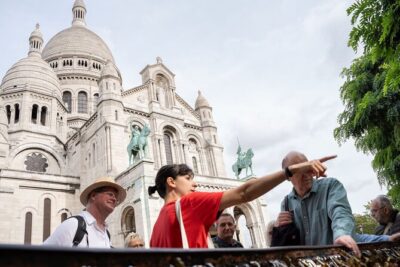
Hidden Montmartre: Paris’ Secret Streets Walking Tour
Read our review →Browse the lists this tour appears in