
Reviewed · MONTMARTRE & SACRé-COEUR TOURS
Montmartre Sacre Coeur Tour with Local guide
Montmartre is at its best when you follow its back streets instead of charging straight up to Sacré-Cœur. This 90-minute walking tour links the Moulin Rouge, former artists’ homes, small squares, the old vineyard, Place du Tertre, and the basilica in one brisk route.
I like the mix of famous sights and quieter corners, especially Van Gogh’s Paris address and Place Dalida. I also like that guides such as Salome, Niko, Denise, and Pierre have been praised for warm storytelling and useful tips on food, shops, and nearby sights. The main drawback is the pace: ten minutes at each stop leaves little room for long conversations or a relaxed look around.
In This Review
- Key points at a glance
- Why this short walk works in Montmartre
- Starting at the Moulin Rouge and climbing into Montmartre
- Van Gogh’s Paris address
- The Wall of Love and a simple pause
- Le Bateau-Lavoir and Montmartre’s art circles
- Moulin de la Galette and Renoir’s Montmartre
- Place Dalida and the neighborhood’s musical memory
- La Maison Rose, a quick photo stop
- The Clos Montmartre vineyard
- Place du Tertre and the living art scene
- Sacré-Cœur and the reward at the top
- What the guides add to the experience
- Price, pace, and practical value
- Who should book this Montmartre walk?
- Should you book it?
- FAQ
- How long is the Montmartre Sacré-Cœur tour?
- Where does the tour begin?
- Where does the tour end?
- What time does the tour start?
- Is the tour offered in English?
- Is the Moulin Rouge show included?
- Is admission to Sacré-Cœur included?
- What is the maximum group size?
- Can I cancel for a full refund?
Key points at a glance
- A downhill-to-uphill Montmartre route: Begin near Moulin Rouge and finish at Sacré-Cœur, with plenty of walking between stops.
- Strong art and music connections: Hear about Van Gogh, Picasso’s former circle at Le Bateau-Lavoir, Renoir, and singer Dalida.
- Useful for first-time visitors: The guide helps you cover major sights without wasting time on confusing hill streets.
- A small-group feel is possible: The maximum group size is 25, and some tours have been much smaller.
- The view is the payoff: The tour ends in front of Sacré-Cœur, high above Paris.
- Weather matters: Poor weather can lead to cancellation, and one serious complaint reports a guide failing to appear in bad weather.
Why this short walk works in Montmartre
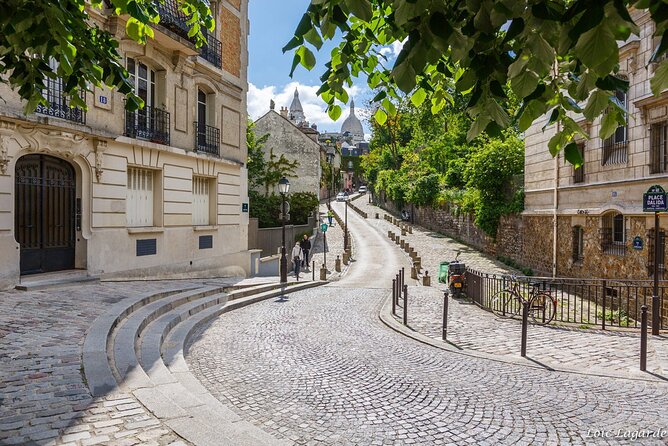
Montmartre can feel like several neighborhoods stitched together. At the foot of the hill, the Moulin Rouge and Pigalle have a show-business edge. Higher up, the streets become quieter, more residential, and more village-like. Near the summit, painters gather around Place du Tertre and visitors crowd the basilica steps.
That change is the point of this tour. Instead of seeing Sacré-Cœur as an isolated church with a view, you walk through the district that gives it meaning. Your guide supplies the links: cabaret, artists, music, cafés, vineyards, and modern Parisian life.
The meeting point is 59 Boulevard de Clichy, near the Moulin Rouge, at 2 p.m. The tour ends at 35 Rue du Chevalier de la Barre, in front of the Basilica of Sacré-Cœur. You should expect an uphill route over cobbled and winding streets. The total duration is about an hour and a half, so wear shoes you can use comfortably on an incline.
The maximum group size is 25. That is not a private tour, but it is more manageable than the large groups often seen around Sacré-Cœur. Some past departures have felt almost private, including one booking that turned into a private walk. Do not count on that, but it shows that group size may vary.
More Montmartre walks and visits:
- Montmartre Hidden Gems and Scenic Highlights Walking Tour
★ 5.0 · 2,684 reviews - Montmartre Hill French Gourmet Food and Wine Tasting Walking Tour
★ 5.0 · 2,588 reviews - Paris: Montmartre Cheese, Wine & Pastry Guided Walking Tour
★ 4.8 · 2,255 reviews
Starting at the Moulin Rouge and climbing into Montmartre
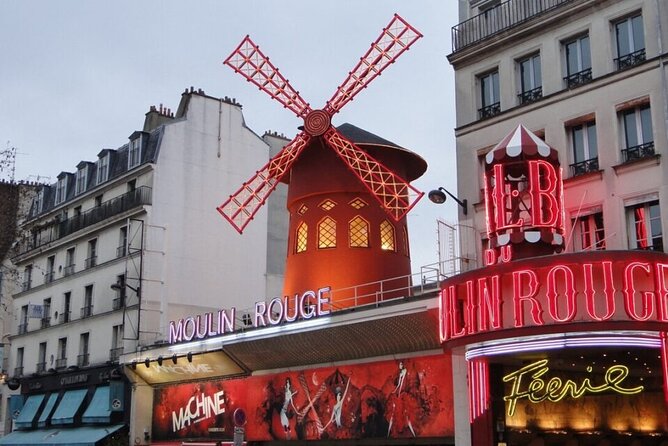
The tour opens at the Moulin Rouge, where the guide explains the roots of extravagant cabaret and its high-energy stage shows. You do not enter for a performance, and the Moulin Rouge show is not included.
That distinction matters. If you hoped to see a full cabaret show, you need a separate ticket and a separate evening plan. Here, the stop works as an introduction to Montmartre’s entertainment culture and its long link with nightlife, performers, and artistic outsiders.
You get about ten minutes at the Moulin Rouge. That is enough for an orientation and a few photos, but not for a full historical lecture. I find this a sensible opening because it gives you a clear starting point before the route turns toward the artists and quieter streets above.
Van Gogh’s Paris address
The next stop is the former home of Vincent van Gogh. The guide uses the address to explain how Paris affected his work and what his life in the city was like.
You will not visit an interior museum here. The stop is about the place and the story attached to it, with free admission. It is a good example of what this tour does well: it turns an ordinary-looking street address into a point of connection with a major artist.
If Van Gogh is your main interest, keep your expectations measured. The visit is brief, and the tour does not promise entry into the home. Still, it gives you a useful piece of context before the route moves into Montmartre’s wider art story.
The Wall of Love and a simple pause
Le Mur des Je t’aime, or the Wall of Love, is one of the tour’s gentler stops. The phrase I love you appears in many languages, making the wall a simple symbol of affection and unity.
This is a short stop, but it breaks up the climb. You can take photos and enjoy a more modern piece of Montmartre art before returning to the district’s older artistic landmarks.
I like the variety here. The tour is not only a parade of famous men, old buildings, and grand churches. The Wall of Love adds a contemporary, accessible note. It is also an easy stop for anyone who wants a quick photo without needing to understand a long artistic explanation.
A few more Paris ideas to compare
- Paris: Louvre Guided Tour with Reserved Access & Boat Cruise
★ 4.3 · 16,353 reviews - Louvre Museum Masterpieces Guided Tour with Access
★ 4.5 · 12,023 reviews - Louvre Museum – Exclusive Guided Tour (Entry Included)
★ 5.0 · 6,296 reviews - Versailles: Skip-the-Line Guided Palace Tour and Full Access
★ 4.6 · 5,214 reviews
Le Bateau-Lavoir and Montmartre’s art circles
Le Bateau-Lavoir is one of the most important art addresses on the route. The guide explains how this building became linked with major artistic changes in the early 20th century and with the artists who worked and lived around Montmartre.
The stop is another exterior visit, not a museum tour. Its value comes from the story. In a few minutes, you get a sense of why this hill attracted artists who were experimenting with new ideas and new ways to make a living.
This is where a good guide matters most. A bare building can be easy to overlook. A clear explanation gives it weight, especially for you if modern art is not already your strong subject. Pierre, Salome, Niko, and Denise have each been praised for making local history understandable and for adding personal tips along the way.
Moulin de la Galette and Renoir’s Montmartre
At Le Moulin de la Galette, you hear how the old windmill became a meeting place for artists, bohemians, and local people looking for an evening out. Pierre-Auguste Renoir helped fix its image in the public mind through his art.
This stop lets you picture Montmartre as a place of music, dancing, conversation, and inexpensive pleasure. It was not only a workplace for serious artists. It was also a social district where people came to eat, drink, watch, and be seen.
Again, you spend about ten minutes here. That keeps the tour moving, though it means you will not get a full account of every artist connected with the area. For most first-time visitors, the short format is a fair trade. You get the main idea and still have time to see several more landmarks.
Place Dalida and the neighborhood’s musical memory
The walk also includes Place Dalida, a small square dedicated to the singer Dalida. A bust of the artist marks her connection with Montmartre, and the surrounding cafés and shops give the spot a calm neighborhood feel.
This is a thoughtful addition. Many Montmartre tours focus almost entirely on painters, but Dalida brings music and popular culture into the story. The guide explains her place in the district rather than treating Montmartre as a neighborhood frozen in the age of Renoir and Picasso.
The square is also a useful reminder to look around between official stops. Montmartre is made up of small corners, plaques, statues, and streets that are easy to miss when you are focused only on the basilica.
La Maison Rose, a quick photo stop
La Petite Maison Rose de Montmartre, known as La Maison Rose, is one of the area’s most photographed buildings. Its pink exterior and compact setting make it instantly recognizable.
The guide shares its links with artists, writers, and bohemian life, then gives you a little time for pictures. This is not a long meal stop, and the tour does not include food or a restaurant visit. Plan on a brief look rather than a leisurely café break.
The photo opportunity is worthwhile, but the setting can be busy. A guide helps you find the building and understand why it matters, while keeping the group on schedule. If you want a quiet photograph with no one else in it, you may need to return later on your own.
The Clos Montmartre vineyard
The Vigne du Clos Montmartre is one of the most unexpected sights on the hill. Montmartre has a small working vineyard, and the guide explains its place in the neighborhood and its connection with local winemaking.
Do not expect a large wine estate or a tasting as part of this tour. The stop is a look at the vines and an explanation of their role in Montmartre. It adds a rural touch to a district that can otherwise feel thoroughly urban.
I especially like this stop for the contrast. Within a short walk, you move from cabaret signs and grand city views to rows of vines. It helps explain why Montmartre still feels different from much of central Paris.
Place du Tertre and the living art scene
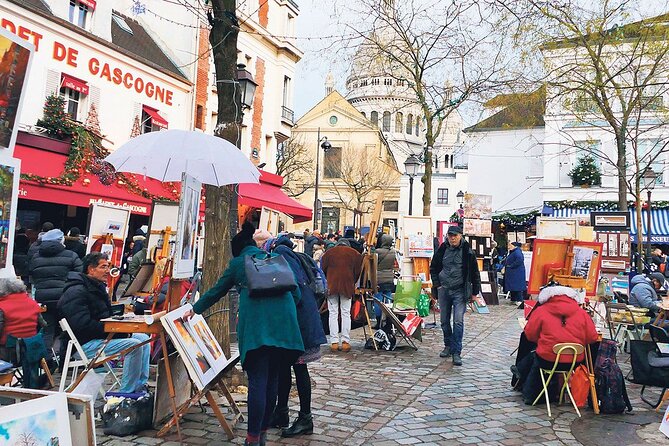
Place du Tertre is the classic artist square near the top of Montmartre. Painters display their work, portraits are made, and visitors stop to look at the artwork around the square.
This is one of the most recognizable places on the route, but it is also where the tour can feel busiest. You may find it harder to pause in the middle of the square, especially when several groups arrive at once. Your guide can help you understand the square’s role, but you will want extra time later if you hope to browse art or sit at a café.
The square is still worth seeing because it connects the old Montmartre story with the neighborhood you see today. It is not simply a museum display. Artists still work here, even though the setting is now firmly on the Paris sightseeing circuit.
Sacré-Cœur and the reward at the top
The final stop is the Basilica of Sacré-Cœur, the main sight on the hill. The route ends in front of the basilica, where you can take in the wide view over Paris.
The basilica itself is free to enter, but this experience is a guided exterior walk and does not promise an extended interior visit. You should check the time and access arrangements with your guide if you want to go inside afterward.
The view is the payoff for the climb. One detailed account praised the clear sight of Paris from the parvis in February, when bare trees can leave the Eiffel Tower and the Haussmann rooftops easier to see. Weather and season will change the view, but the high position gives you a strong city panorama in any case.
Because the tour ends here, you are free to linger, enter the basilica if open, or continue exploring Montmartre on your own. That is more useful than finishing at a distant meeting point and needing to retrace your steps.
What the guides add to the experience
The strongest part of this tour is the human guide. Salome has been praised for handling a rainy walk with care while keeping the tour on track. Niko is described as patient and well informed, with a calm approach that allows time to enjoy the setting. Denise has received similar praise for helping the group through cool, wet conditions.
Pierre has been singled out for making the walk fun and informative, and for giving extra suggestions around Montmartre. Those tips can be valuable after the tour, since you finish in an area with more streets, cafés, and sights than you can cover in 90 minutes.
The guide also makes this route more flexible than a printed list of addresses. You can ask about restaurants, shopping, and nearby sights. The quality may vary by departure, as it does with any guide-led walk, but the named guides have made a strong impression.
Price, pace, and practical value
At $30.04 per person, this is reasonably priced for a guided introduction to one of Paris’s most confusing districts. You are paying for route planning, local explanation, and the ability to connect nine or so sights without stopping to navigate every turn yourself.
The value is best if you are visiting Montmartre for the first time. You cover the major landmarks, hear the area’s basic story, and finish at Sacré-Cœur with ideas for a longer independent visit.
The price is less attractive if you already know Montmartre well or want entry into historic buildings. Admission is free at most stops because they are viewed from outside, and the Moulin Rouge show is not included. You are buying a guided walk, not a collection of tickets.
The tour is advertised as approximately 90 minutes, with ten minutes assigned to most stops. Since the route climbs the hill and includes several connecting streets, the schedule is fairly tight. Use it as an orientation walk, then return to the places that interest you most.
The experience is offered in English and uses a mobile ticket. Confirmation arrives when you book. Service animals are allowed, public transportation is nearby, and most people can take part. The route is still a hill walk, so anyone concerned about steep streets should plan accordingly.
Weather deserves special attention. The cancellation terms say the walk requires good weather, with a different date or full refund offered if the operator cancels. There is also a minimum group requirement. One poor experience involved no guide appearing and no notice at first, while another illness-related cancellation resulted in a full refund. I would save the confirmation details and check your messages before leaving for the meeting point, especially in cold or wet weather.
You can cancel for a full refund up to 24 hours before the start time. Changes made inside that window are not accepted, and the money is not refunded if you cancel too late.
Who should book this Montmartre walk?
I would choose this tour if you want a clear first look at Montmartre, prefer stories to a formal museum visit, and have only a short block of time. It suits couples, families, and solo visitors who want the hill’s best-known sights arranged in a sensible order.
It is also useful if you like art but do not know the neighborhood’s layout. Van Gogh’s address, Le Bateau-Lavoir, Moulin de la Galette, and Place du Tertre form a helpful introduction to Montmartre’s creative past.
I would skip it if you dislike uphill walking, need a slow photography tour, or want to spend serious time inside Sacré-Cœur. I would also avoid booking in questionable weather unless you are comfortable with a possible schedule change.
Should you book it?
Book this Montmartre Sacré-Cœur tour if you want good orientation, local stories, and a strong final view for about $30. It is short, affordable, and packed with useful stops.
Just treat it as a guided introduction, not a full-day exploration. Allow extra time after the tour for Place du Tertre, the basilica, the view, or a return to La Maison Rose and the vineyard. If the guide is as warm and helpful as Salome, Niko, Denise, or Pierre, the walk can give you exactly what Montmartre is best at: a little art, a little music, a little village atmosphere, and a lot of uphill Paris.
FAQ
How long is the Montmartre Sacré-Cœur tour?
The tour lasts approximately 1 hour and 30 minutes.
Where does the tour begin?
It begins at 59 Boulevard de Clichy, 75009 Paris, France, near the Moulin Rouge.
Where does the tour end?
The walk ends at 35 Rue du Chevalier de la Barre, 75018 Paris, in front of the Basilica of Sacré-Cœur.
What time does the tour start?
The scheduled start time is 2 p.m.
Is the tour offered in English?
Yes. English is the listed tour language.
Is the Moulin Rouge show included?
No. The tour visits the Moulin Rouge area and explains its cabaret history, but the Moulin Rouge show is not included.
Is admission to Sacré-Cœur included?
The basilica stop has free admission. The tour ends outside in front of the basilica and does not promise an extended interior visit.
What is the maximum group size?
The tour can have a maximum of 25 people.
Can I cancel for a full refund?
Yes. You can cancel at least 24 hours before the experience start time for a full refund. If the operator cancels because of poor weather or insufficient numbers, you will be offered another date or experience, or a full refund.
Newest additions around Paris
- Family escape Game with kids and teens on the Île de la Cité★ 4.5 · 11 reviews
- Private Photoshoot with the Iconic Eiffel Tower in Paris★ 5.0 · 11 reviews
- 2-day Private Mont Saint-Michel, 3 Loire Castles, D-Day Express★ 4.5 · 11 reviews
- Paris: Batobus Hop-On Hop-Off Cruise & Landmarks Audio Tour★ 3.0 · 11 reviews
- Paris Revolutionary Walking Tour: Iconic French Sights & Stories★ 5.0 · 11 reviews
- Kids in the Kitchen – CrOisSaNtS★ 4.0 · 11 reviews
- Guided and Private Tour of 3 hours through Paris aboard a Citroën 2cv★ 5.0 · 11 reviews
- Paris: Ghosts and Dark Stories Guided Walking Tour★ 4.1 · 11 reviews
Montmartre & Sacré-Coeur Tours, compared.

Montmartre Hidden Gems and Scenic Highlights Walking Tour
Read our review →
Montmartre Hill French Gourmet Food and Wine Tasting Walking Tour
Read our review →
Montmartre Cheese, Wine & Pastry Guided Walking Tour
Read our review →
Montmartre Highlights Walking Tour with a Local Guide
Read our review →
Sacré-Coeur and Montmartre Tour with Expert Guide
Read our review →
Private Montmartre Food Tour with Wine, Cheese & Pastries
Read our review →
Paris Montmartre Food Tour – A Full French Meal by Do Eat Better
Read our review →
Hidden Montmartre: Paris’ Secret Streets Walking Tour
Read our review →Browse the lists this tour appears in