
Reviewed · MONTMARTRE & SACRé-COEUR TOURS
Montmartre Guided Walking Tour: Famous Artists and Cabarets
Montmartre is Paris at its most theatrical: red windmills, old cabarets, crooked lanes, working artists, and a white basilica crowning the hill. This private 2-hour-15-minute walk connects the famous sights with the stories that make them matter, from the Moulin Rouge and Van Gogh’s apartment to Picasso’s former studio and Place du Tertre.
I like the small private format, since your guide can adjust the pace and explain what interests your group. I also like the route’s strong finish at Sacré-Cœur, where you get sweeping views across Paris rather than ending in the middle of a side street.
The main consideration is price: at $152.97 per person, this is a serious outlay for a walking tour, especially if you are traveling alone or as a couple. You see the main sites from outside, and hotel transport and admission tickets are not included.
In This Review
- Key points to know before you book
- Why Montmartre works best as a guided walk
- Starting at the Moulin Rouge on Place Blanche
- Van Gogh’s apartment and the artists’ trail
- Windmills at Le Moulin de la Galette
- Picasso at Le Bateau-Lavoir
- Dalida, La Maison Rose, and the everyday quarter
- Au Lapin Agile and the old cabaret tradition
- Montmartre’s vineyard and Place du Tertre
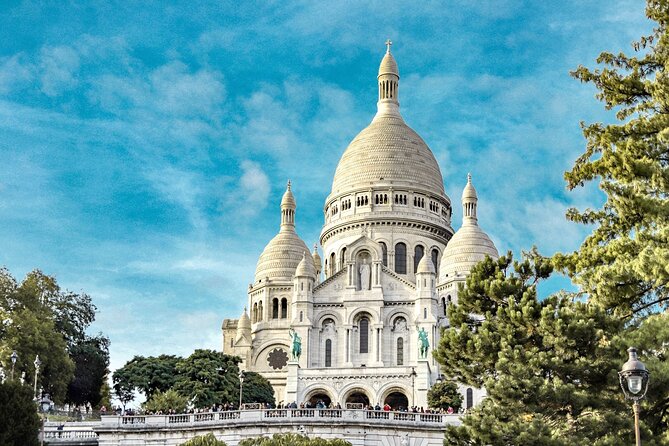
- Finishing at Sacré-Cœur
- How the private format affects the value
- What the guide adds to the experience
- Who should book this Montmartre walk?
- Should you book it?
- FAQ
- How long does the Montmartre walking tour last?
- Is this a private tour?
- Where does the tour begin?
- Where does the tour end?
- Is admission to the Moulin Rouge included?
- Can I enter Sacré-Cœur after the walk?
- Is hotel pickup included?
- What is the cancellation policy?
Key points to know before you book
- Moulin Rouge to Sacré-Cœur: The walk links Montmartre’s best-known cabaret, artists’ addresses, windmills, cafés, and basilica in one compact route.
- Private guide, private pace: Only your group participates, with flexibility to linger, ask questions, or move along.
- Alberto and Florence receive special praise: The tour’s strongest personal touch is its lively guiding, clear explanations, and useful local suggestions.
- Most stops are exterior visits: You see the Moulin Rouge, Van Gogh’s home, Picasso’s Bateau-Lavoir, and other landmarks from the street.
- A hilltop finish: The route ends at Sacré-Cœur, with time afterward to enter the basilica on your own.
- Good for repeat Paris visitors: The route includes familiar sights but also lesser-known corners that can be hard to connect without a guide.
Why Montmartre works best as a guided walk
Montmartre can look simple on a map. The Moulin Rouge sits below the hill, Sacré-Cœur sits at the top, and the rest appears to fill the space between them.
In practice, the neighborhood is a patchwork of squares, stairways, narrow lanes, cafés, former studios, and small landmarks that are easy to pass without noticing. A guide gives the route a narrative. Instead of seeing ten unrelated photo stops, you follow the neighborhood’s change from village to artists’ quarter to major tourist destination.
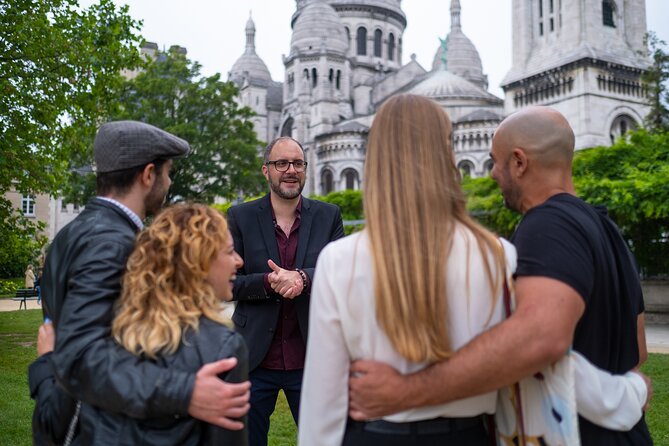
The private setup matters here. You are not tied to the pace of a large group, and you can ask for more detail about a particular painter, singer, cabaret, or street. Alberto is praised repeatedly for an upbeat manner and a strong grasp of Montmartre, while Florence is described as clear, engaging, and informative.
That personal connection seems to be the tour’s biggest strength. One person who generally dislikes guided tours joined after hearing Alberto speak to another group and found his storytelling compelling enough to book. Another person who had lived in Paris for a while still found new corners and fresh details.
You should expect storytelling rather than formal museum visits. The guide brings the streets to life, but most of the stops are viewed from outdoors.
More Montmartre walks and visits:
- Montmartre Hidden Gems and Scenic Highlights Walking Tour
★ 5.0 · 2,684 reviews - Montmartre Hill French Gourmet Food and Wine Tasting Walking Tour
★ 5.0 · 2,588 reviews - Paris: Montmartre Cheese, Wine & Pastry Guided Walking Tour
★ 4.8 · 2,255 reviews
Starting at the Moulin Rouge on Place Blanche
The tour begins outside Starbucks at 5 Place Blanche, near the Moulin Rouge. This is a practical meeting point because the area is easy to reach by public transportation and puts you straight into Montmartre’s entertainment district.
The Moulin Rouge stop lasts about 10 minutes. You will see the famous red windmill from outside and hear about the can-can dancers, performers, artists, and regulars who helped make this cabaret a Paris symbol.
Do not book this walk expecting entry to a show. The Moulin Rouge is an exterior stop, not a performance visit, and admission is not part of the tour. That is perfectly reasonable for a neighborhood walk, but it is important to know the difference.
This opening also gives the guide a chance to explain why Montmartre attracted performers. The cabaret story is not separate from the art story. Music halls, cafés, cheap rooms, and a freer social atmosphere helped make the quarter a magnet for painters and writers.
Van Gogh’s apartment and the artists’ trail
The next stop is the apartment once associated with Vincent and Theo Van Gogh. You spend around 15 minutes hearing about the brothers and Vincent’s troubled life.
The value here is context. You are not entering a preserved Van Gogh museum, and there is no admission ticket. You are looking at the building from the street while the guide connects the address to the artist’s Paris years and his relationship with Theo.
That approach suits Montmartre. The quarter’s artistic past survives in ordinary buildings, not only in grand monuments. A doorway or upper-floor window may not look dramatic by itself, but it becomes meaningful when you know who lived there and what Paris meant to that person.
The wider route also brings in other painters, including Picasso, Monet, and Gauguin. If you enjoy art history but do not want to spend hours inside a museum, this walk gives you a street-level introduction.
Windmills at Le Moulin de la Galette
Montmartre’s windmills are one of the tour’s more unusual themes. At Le Moulin de la Galette, your guide explains the surviving mills and their place in the neighborhood’s story.
The stop lasts about 15 minutes. You will hear how these old windmills inspired artists and became symbols of Montmartre’s former village life. This is a welcome change from a route made only of famous names and postcard scenes.
The windmills also help explain how different Montmartre once was from central Paris. Before the quarter became known for nightlife and art, it had a rural character, with open ground and local production. The guide’s job is to make that earlier setting visible even as you walk through today’s streets.
This is one of the places where a guide adds real value. Without background, you might take a quick photo and keep moving. With the story, the stop becomes part of the larger transition from village to bohemian quarter.
More Paris walking tours:
- Paris Top Sights Half Day Walking Tour with a Fun Guide
★ 5.0 · 2,893 reviews - Paris Île de la Cité and Notre-Dame Walking Tour With Crypt
★ 5.0 · 2,272 reviews - Paris in a Day: Louvre or Orsay, Eiffel Tower, City Walk & Cruise
★ 5.0 · 1,956 reviews - Paris: Montmartre Highlights Walking Tour with a Local Guide
★ 4.9 · 1,668 reviews
Picasso at Le Bateau-Lavoir
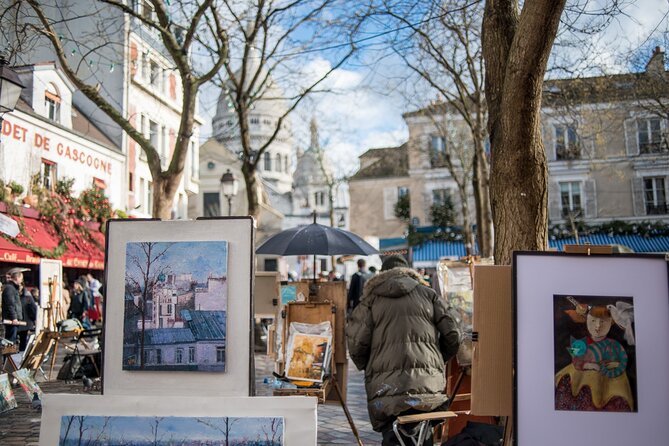
Le Bateau-Lavoir is one of the route’s most important art stops. Picasso lived and worked here for many years, and the guide explains how his Paris career developed.
The 15-minute visit is again an exterior look, but the address carries major weight. This is where Picasso’s work moved away from earlier realism toward Cubism, one of the great turning points in modern art.
I appreciate the way this stop places Picasso in a real neighborhood rather than treating him as a name on a museum label. You see the kind of modest building and street setting where artists lived, worked, argued, and built careers.
If you are especially interested in Picasso, ask questions here. The private format gives you room to focus on his years in Montmartre instead of simply checking off the address.
Dalida, La Maison Rose, and the everyday quarter
The Dalida Statue offers a different view of Montmartre’s cultural life. Dalida was a celebrated singer, and the guide explains her connection to the neighborhood and the story about how she inspired the construction of the Louvre Pyramids.
This is a short stop of about 10 minutes, but it prevents the walk from becoming an art-history lesson alone. Montmartre belongs to singers, performers, café owners, painters, and residents as much as it belongs to famous 19th and 20th-century artists.
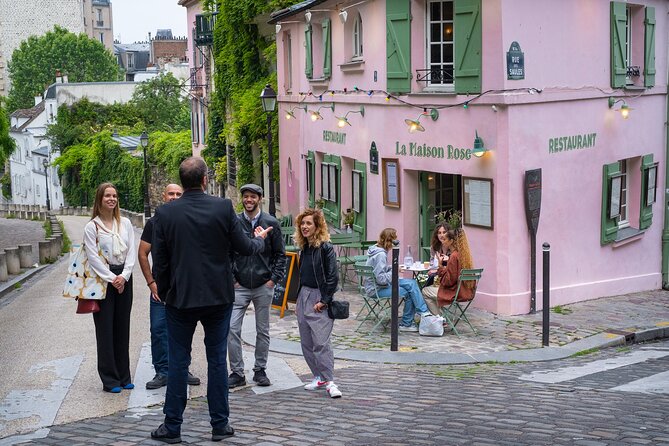
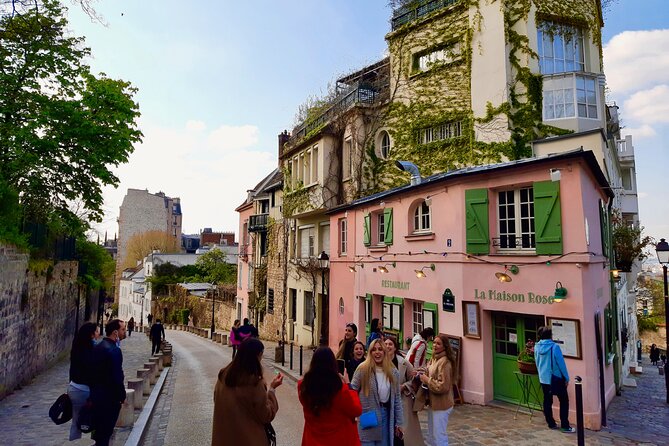
La Maison Rose follows, with about five minutes outside this well-known pink building. It has served coffee and food for more than a century and was once a boarding house for writers and artists.
The stop is brief, so think of La Maison Rose as a photo and storytelling pause rather than a meal break. If you want to eat here, plan to return after the tour. The route continues through several stops, and the guide is not providing lunch.
Au Lapin Agile and the old cabaret tradition
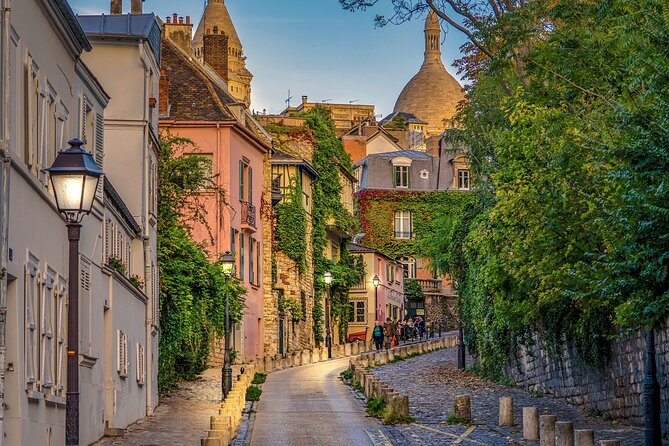
Au Lapin Agile is one of Montmartre’s oldest cabarets and receives about 15 minutes. Its stories include Picasso, Hemingway, and an unusual character named Lolo, a donkey linked to the venue’s colorful past.
This stop brings together the quarter’s main themes: art, nightlife, eccentric personalities, and small venues where creative people met. It also helps you see that Montmartre’s cabarets were not all grand theaters. Some were intimate, rough around the edges, and closely tied to local life.
As at the Moulin Rouge, you should expect to view Au Lapin Agile from outside and hear its story. If you want to attend a cabaret, that would require a separate booking.
The route’s cabaret focus is useful for anyone drawn to the Moulin Rouge but curious about less famous venues. You get a broader picture of the entertainment culture instead of treating one red windmill as the whole story.
Montmartre’s vineyard and Place du Tertre
The Vigne du Clos Montmartre is a charming surprise. Montmartre still has a vineyard, and the guide discusses wine production in the area, with roots reaching back to the Roman era.
You spend around 10 minutes viewing the vineyard and the Montmartre Museum. This stop adds another layer to the neighborhood. The hill was not always an urban artists’ district, and the vineyard keeps a visible link to its older rural identity.
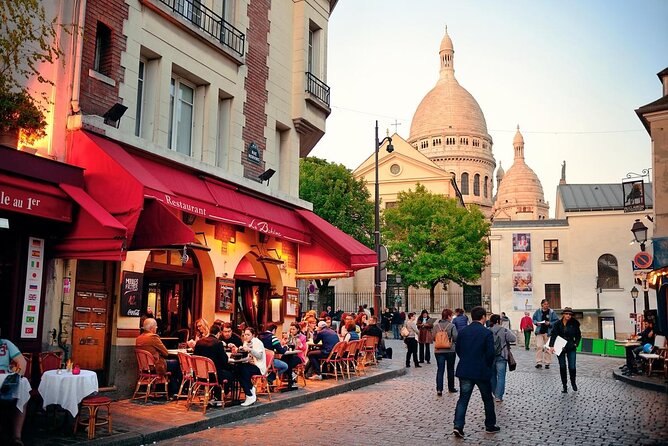
Next comes Place du Tertre, described as the heart of Montmartre. The square is known for artists who paint portraits and make original works in front of passersby. It is also lined with restaurants and bars, making it a useful place to return for lunch, dinner, or a drink.
The scheduled stop is only about five minutes, so you will not have much time to browse art or sit down during the tour. That is not a flaw so much as a planning point. Treat the square as an introduction, then come back after the walk if you want to watch artists at work or eat nearby.
Finishing at Sacré-Cœur
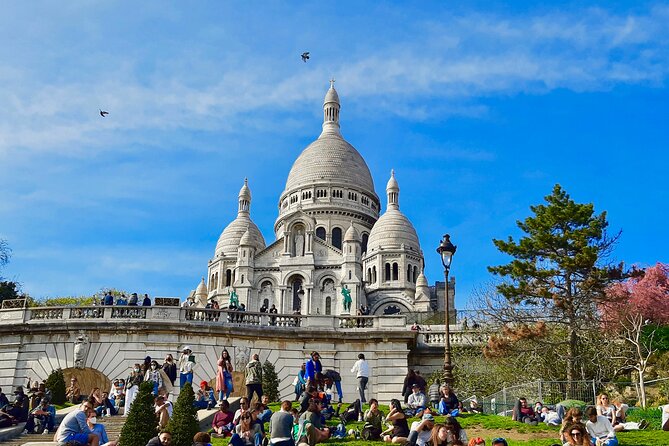
The route ends in front of the Basilica of the Sacred Heart of Paris, usually called Sacré-Cœur. The final stop lasts about 15 minutes and gives you the walk’s best view.
From the top of Montmartre, Paris spreads out below you. The guide explains the basilica and its place above the city, then leaves you at a logical point for continuing on your own.
You may enter the basilica after the tour and admire the interior. The tour does not include a separate admission package, so check the practical arrangements on the day, and remember that the guided portion finishes outside.
Ending here is smart. You finish near one of Paris’s major landmarks, with the city view fresh in your mind and several options afterward. You can enter the basilica, return to Place du Tertre, find a restaurant, or explore more of the hill at your own pace.
The route does involve Montmartre’s hill, so comfortable shoes are a sensible choice. The supplied information does not give an accessibility route or a detailed stair count. If mobility is a concern, use the private format to ask about the pace and route before setting out.
How the private format affects the value
The price is $152.97 per person. That is high compared with a standard group walk, but this is not a standard group walk. Only your party participates, and the itinerary can be adjusted to your interests and speed.
For a family, a group of friends, or a couple who wants focused attention, the price may make sense. Group discounts are available, which could improve the per-person value for a larger booking.
For a solo visitor, the cost is harder to justify unless you place a high value on a personal guide. You are paying for interpretation, route planning, and flexibility rather than entrance tickets.
The tour runs about 2 hours and 15 minutes, which is long enough to connect the major stops without taking up a full day. I would schedule it early in your Montmartre visit. That way, you can return to Place du Tertre, the vineyard, a cabaret, or a café after you know the area.
The meeting point is the Starbucks at 5 Place Blanche. The end point is Sacré-Cœur at 35 Rue du Chevalier de la Barre. Hotel pickup and drop-off are not included, so you need to reach Place Blanche yourself.
What the guide adds to the experience
The guide is the main reason to choose this tour over a map. The strongest feedback centers on clear speech, an easygoing manner, humor, and personal insight into Montmartre.
Alberto appears often in the tour feedback and is praised for making history fun without turning the walk into a lecture. Florence is also singled out for an informative and educational tour. The guide assigned to you may differ, but these names give you a sense of the company’s guiding style.
Useful restaurant and bar suggestions are another benefit. Several participants followed Alberto’s recommendations after the walk, and one person booked another StellarTours experience after enjoying this one.
That does not mean every guide will give identical commentary. A private tour can vary with the guide’s personality and your questions. Still, the repeated praise for storytelling suggests that you should book this for the human explanation, not simply for transportation between landmarks.
Who should book this Montmartre walk?
I would recommend it to:
- First-time visitors who want the major Montmartre sights connected by a clear story
- Art lovers interested in Van Gogh, Picasso, Monet, Gauguin, and the artists’ working lives
- Couples, families, and friends who want a private pace
- Repeat Paris visitors who have seen Sacré-Cœur but not the smaller streets and former studios
- People who want restaurant and bar suggestions after the walk
I would think twice if you mainly want to enter the Moulin Rouge, visit museums, or attend a cabaret. Those are not part of the package.
I would also compare the price carefully if you are traveling alone. A private guide can be worthwhile, but the value depends on how much you want conversation and custom attention.
Should you book it?
Book this tour if you want Montmartre explained through people and places, not just photographed. The route covers the Moulin Rouge, Van Gogh’s apartment, Le Moulin de la Galette, Picasso’s Bateau-Lavoir, Dalida, La Maison Rose, Au Lapin Agile, the vineyard, Place du Tertre, and Sacré-Cœur in one well-shaped walk.
The price is the clear drawback, and most stops are exterior views. But if you are sharing the cost with a group and want a lively guide, the private format gives you something a self-guided route cannot: a flexible conversation that ties Montmartre’s artists, singers, cabarets, and village past together.
FAQ
How long does the Montmartre walking tour last?
The tour lasts approximately 2 hours and 15 minutes.
Is this a private tour?
Yes. Only your group participates, and the itinerary and pace can be adjusted to suit your group.
Where does the tour begin?
The meeting point is Starbucks at 5 Place Blanche, 75009 Paris, France.
Where does the tour end?
The tour ends at Sacré-Cœur Basilica, 35 Rue du Chevalier de la Barre, 75018 Paris, France.
Is admission to the Moulin Rouge included?
No. The Moulin Rouge is viewed from outside, and no admission ticket is included.
Can I enter Sacré-Cœur after the walk?
Yes. After the guided portion ends, you can go inside the basilica and see its interior.
Is hotel pickup included?
No. Hotel pickup and drop-off are not included. The tour provides a certified expert guide and a private walking tour.
What is the cancellation policy?
You can cancel at least 24 hours before the start time for a full refund. Cancellations or changes made less than 24 hours before the experience are not accepted for a refund.
Newest additions around Paris
- Family escape Game with kids and teens on the Île de la Cité★ 4.5 · 11 reviews
- Private Photoshoot with the Iconic Eiffel Tower in Paris★ 5.0 · 11 reviews
- 2-day Private Mont Saint-Michel, 3 Loire Castles, D-Day Express★ 4.5 · 11 reviews
- Paris: Batobus Hop-On Hop-Off Cruise & Landmarks Audio Tour★ 3.0 · 11 reviews
- Paris Revolutionary Walking Tour: Iconic French Sights & Stories★ 5.0 · 11 reviews
- Guided and Private Tour of 3 hours through Paris aboard a Citroën 2cv★ 5.0 · 11 reviews
- Kids in the Kitchen – CrOisSaNtS★ 4.0 · 11 reviews
- Paris: Ghosts and Dark Stories Guided Walking Tour★ 4.1 · 11 reviews
Montmartre & Sacré-Coeur Tours, compared.

Montmartre Hidden Gems and Scenic Highlights Walking Tour
Read our review →
Montmartre Hill French Gourmet Food and Wine Tasting Walking Tour
Read our review →
Montmartre Cheese, Wine & Pastry Guided Walking Tour
Read our review →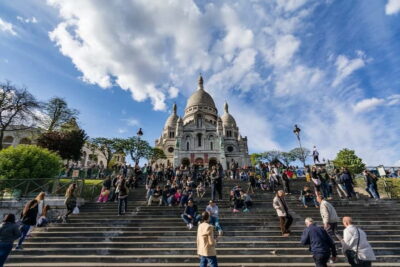
Montmartre Highlights Walking Tour with a Local Guide
Read our review →
Sacré-Coeur and Montmartre Tour with Expert Guide
Read our review →
Private Montmartre Food Tour with Wine, Cheese & Pastries
Read our review →
Paris Montmartre Food Tour – A Full French Meal by Do Eat Better
Read our review →
Hidden Montmartre: Paris’ Secret Streets Walking Tour
Read our review →Browse the lists this tour appears in