
Reviewed · MONTMARTRE & SACRé-COEUR TOURS
Montmartre en chansons: tour with a professional singer
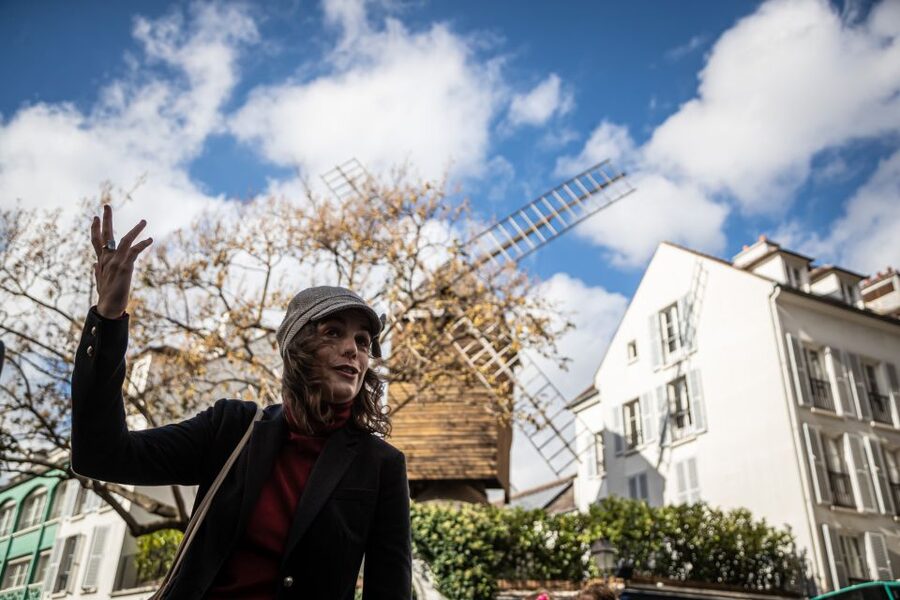
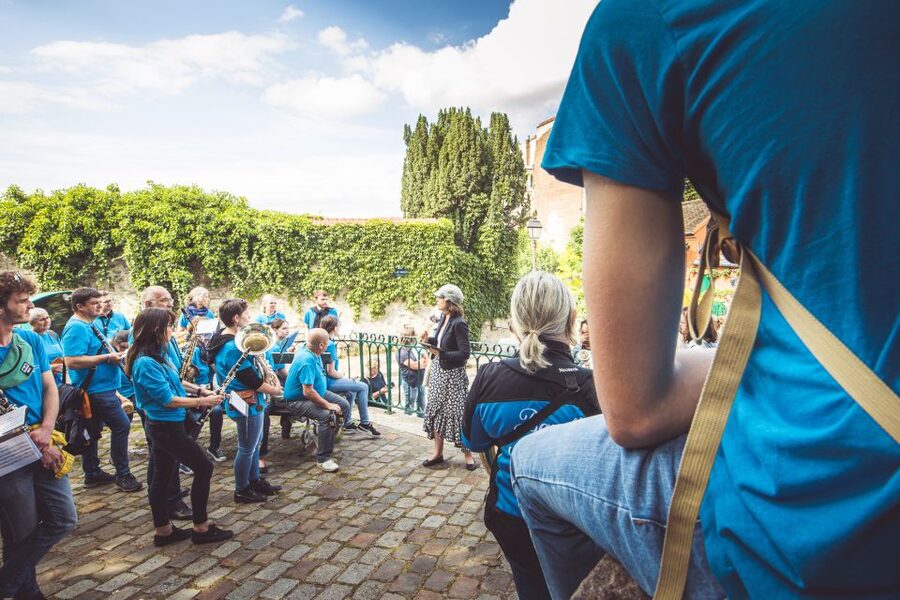
Montmartre en chansons turns a neighborhood walk into a small street concert. Anne-Sophie, a Montmartre resident and professional singer, leads you from Abbesses to Sacré-Cœur, stopping at old cabarets, artists’ haunts, and singers’ former addresses while singing La Vie en Rose, La Bohème, and L’Hymne à l’Amour.
I like the a cappella singing, which brings an old Paris mood to the actual streets rather than placing you in a concert hall. I also like the route’s local focus, from Dalida’s bust and the Moulin de la Galette to La Maison Rose and Au Lapin Agile. The main caution is the hilly, walking-heavy route, which is not suitable for people with mobility impairments.
In This Review
- Key points at a glance
- Why the singing changes a Montmartre walk
- Starting at Abbesses and the Wall of Love
- Rue Lepic and the world of old Montmartre
- Moulin de la Galette and the artistic side of the hill
- Dalida’s home and statue
- Théâtre Lepic and the cabaret tradition
- La Maison Rose and the vineyards
- Au Lapin Agile and La Bonne Franquette
- Place du Tertre and the final climb
- What the $34 price includes
- Language, timing, and practical comfort
- Who will enjoy Montmartre en chansons most
- Should you book this tour?
- FAQ
- Where does the Montmartre en chansons tour begin?
- Where does the tour end?
- How long does the tour last?
- Is the tour offered in English?
- Who leads the tour?
- What songs might I hear?
- Is food included?
- What should I bring?
- Is the tour suitable for people with mobility impairments?
Key points at a glance

- Anne-Sophie sings live in the streets: Her strong, unaccompanied voice is the main event, and short performances are woven through the walk.
- The route connects music with place: You visit sites tied to Piaf, Dalida, Aznavour, Brel, and Montmartre’s cabaret life.
- It begins at Abbesses and ends at Sacré-Cœur: The two-hour walk climbs through Montmartre and finishes on the basilica’s forecourt.
- You get more than songs: Anne-Sophie shares stories about singers, cabarets, restaurants, artists, and the neighborhood’s bohemian traditions.
- Tours run in English or French: Public departures are mainly on Fridays, Saturdays, and Sundays, with private tours available by request during the week and on some Sundays.
- The price is reasonable for a live performance and guided walk: At $34 per person, you are paying for a small cultural experience rather than transport or a meal.
Why the singing changes a Montmartre walk
Montmartre is easy to reduce to a checklist: the white basilica, the painters at Place du Tertre, the pink restaurant, and a few famous streets. This tour gives those places a soundtrack.
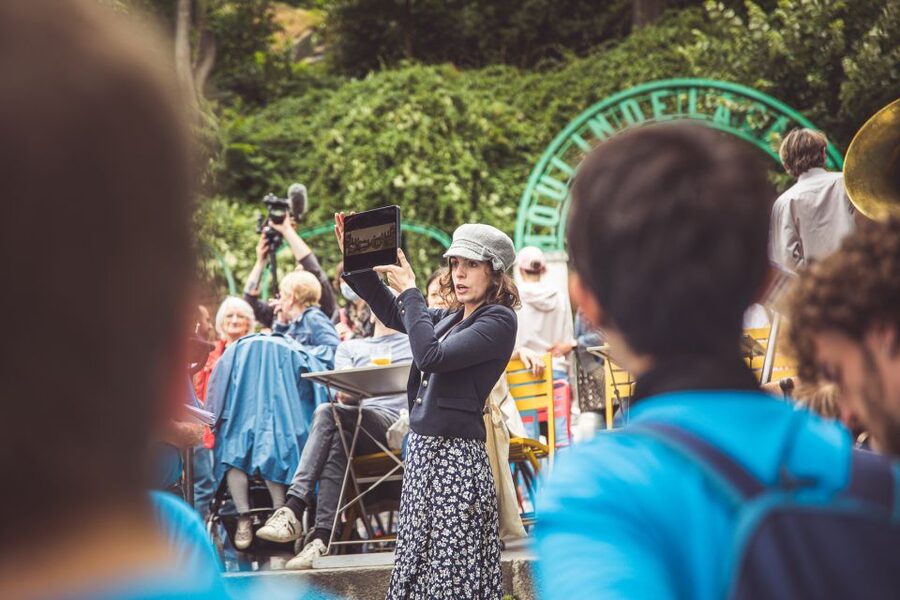
Anne-Sophie sings without instruments, using the street itself as her stage. That matters because the songs are tied to the neighborhood’s old performer culture. When she sings La Vie en Rose or L’Hymne à l’Amour beside a Montmartre landmark, the song feels connected to a real place instead of being background music piped into a coach.
Her singing is described as powerful and moving, with enough force to stop passers-by and quiet nearby café tables. You should not expect a formal theater recital with seats, lighting, and a polished stage. You can expect short live performances during a walking tour, delivered in the open air and shaped by the surroundings.
That informal setting is part of the charm. It recalls the tradition of street singers who once helped create Montmartre’s public character. Anne-Sophie’s cheerful, outgoing style also keeps the tour social rather than solemn. The experience is built around sharing songs and stories, not simply receiving facts.
More Montmartre walks and visits:
- Montmartre Hidden Gems and Scenic Highlights Walking Tour
★ 5.0 · 2,684 reviews - Montmartre Hill French Gourmet Food and Wine Tasting Walking Tour
★ 5.0 · 2,588 reviews - Paris: Montmartre Cheese, Wine & Pastry Guided Walking Tour
★ 4.8 · 2,255 reviews
Starting at Abbesses and the Wall of Love
The meeting point is behind the exit of the Abbesses subway station. This is a practical place to begin, but do pay attention to the exact meeting instructions. Abbesses is a busy neighborhood stop, and a guide may be easier to spot once you are behind the station exit rather than standing on the main street.
The first listed stop is the Wall of Love, a tiled artwork where the words I love you appear in many languages. The visit is brief, about five minutes, and combines sightseeing with a song and commentary.
This is a useful opening because it sets the tone quickly. You are not beginning with a long lecture about dates and monuments. You are meeting Montmartre through romance, song, and public art. The short stop also keeps the group moving before the climb through the neighborhood.
Rue Lepic and the world of old Montmartre
From Abbesses, the route continues along Rue Lepic. This is one of the streets that helps Montmartre feel like a neighborhood rather than only a monument zone. The walk is short, but the street links the opening stop with the district’s older restaurants, mills, theaters, and cabarets.
The tour’s stories about French singers are central here. You learn about the lives of performers such as Édith Piaf, Charles Aznavour, Jacques Brel, and Dalida, along with the places where singers lived, worked, or found inspiration.
The value is in the connection. A standard sightseeing walk may tell you that a building is old or photogenic. Anne-Sophie adds the human layer, explaining how music and nightlife shaped Montmartre’s identity. Her stories also help explain why certain songs remain closely associated with Paris.
Moulin de la Galette and the artistic side of the hill
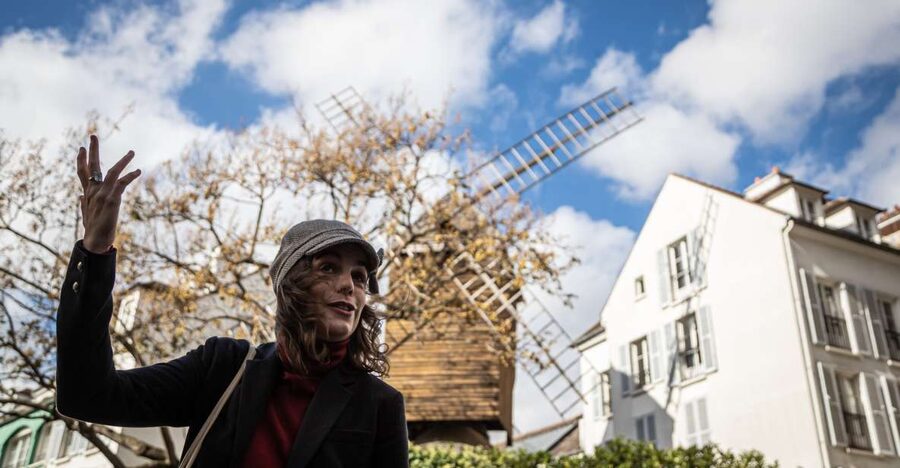
The Moulin de la Galette is one of Montmartre’s best-known historic sights. The windmill recalls the area’s rural past, before the hill was fully absorbed into Paris, while the name also carries strong links with the neighborhood’s restaurant and dance-hall traditions.
The stop includes guided commentary and another musical moment. I like this pairing because the place is not treated as a stand-alone photo stop. You get a brief sense of the social life that once gathered around the mills and entertainment venues.
The stop is short, so you should keep your expectations realistic. This is not a museum visit or an interior tour of the mill. It is an outdoor look, a story, and a song within a larger route.
A different way to spend the day in Paris:
- Paris: Louvre Museum Timed-Entrance Ticket
★ 4.6 · 71,977 reviews - Disneyland® Paris 1-Day Ticket
★ 4.6 · 49,412 reviews - Paris: Versailles Palace and Gardens Full Access Ticket
★ 4.6 · 41,579 reviews - Paris: Arc de Triomphe Rooftop Tickets
★ 4.6 · 34,264 reviews
Dalida’s home and statue
Dalida has an especially strong connection with Montmartre, and the route gives her more than a passing mention. You visit her home, then continue to her bust. These stops make her presence in the neighborhood feel personal and specific.
The statue is also one of the tour’s more recognizable photo opportunities. Anne-Sophie uses it as a place to talk about Dalida’s career and life, linking the singer with the streets around her.
As with other locations, the musical element is part of the stop. A Dalida-related song or story works differently from a general Paris song because the place gives the moment a clear subject. You are hearing about a performer while standing in the neighborhood associated with her.
The route includes enough singer-related locations to make this tour a good choice for anyone who already enjoys classic French music. You do not need to know every song beforehand, though. Anne-Sophie’s explanations give the music context as you go.
Théâtre Lepic and the cabaret tradition
Théâtre Lepic adds another side of Montmartre’s performance culture. The tour does not focus only on famous singers’ homes. It also points you toward the venues and stages that helped make the hill a gathering place for artists and performers.
The cabaret stories are important because Montmartre’s musical identity was never limited to large concert venues. Small halls, cafés, restaurants, and street corners all played a part. The songs on this walk fit that setting well.
I would especially value this section if you have already seen the basilica and Place du Tertre on an earlier visit. Instead of repeating the usual postcard view, the tour explains how entertainment and everyday life worked together in the district.
La Maison Rose and the vineyards
La Maison Rose is one of Montmartre’s most photographed buildings. Its pink exterior makes it an easy landmark, but a picture alone tells you little about the neighborhood. Anne-Sophie adds commentary and a song, giving the stop a place within the wider story of Montmartre’s artists and cafés.
The route then reaches the Vigne du Clos Montmartre, the local vineyard. The vines offer a reminder that Montmartre still preserves traces of its village past. In a city as dense as Paris, this small agricultural corner feels unexpected.
These stops also show why the tour is more than a singer biography walk. You are moving through architecture, food culture, art, music, and old village traditions. The theme is not just famous people. It is the atmosphere that allowed those people and their audiences to gather here.
Au Lapin Agile and La Bonne Franquette
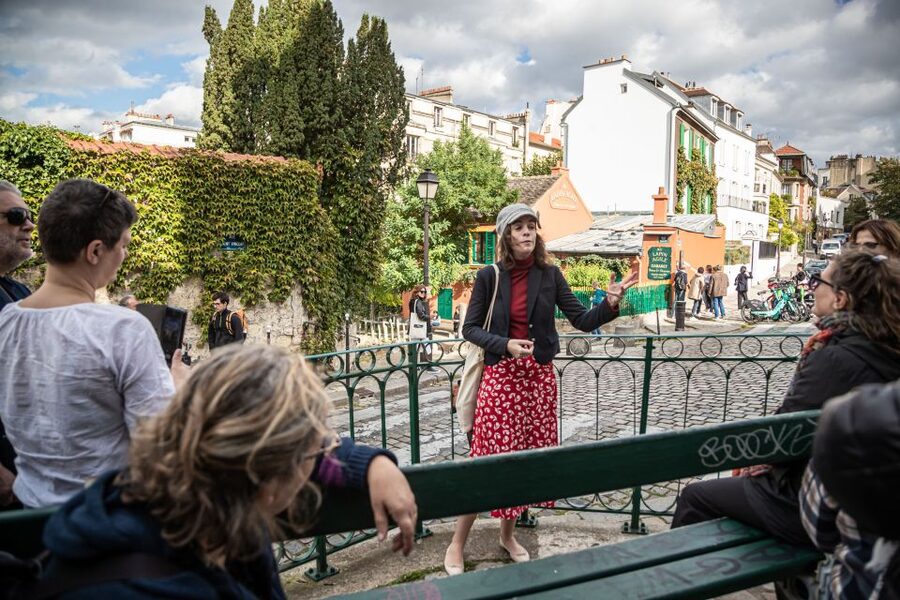
Au Lapin Agile is one of Montmartre’s best-known cabaret addresses. It is closely tied to the area’s artistic reputation and old nightlife. You visit the exterior area, hear commentary, and get another short performance rather than taking a full indoor cabaret show.
La Bonne Franquette continues that food-and-performance theme. The restaurant is part of the neighborhood’s old social fabric, where a meal, conversation, art, and music could share the same evening.
These stops are useful because they broaden the picture of French singers. Artists do not exist only on record covers or theater posters. Their stories are tied to cafés, restaurants, cramped streets, and informal stages. Anne-Sophie’s approach brings that setting forward.
If you want to eat at either place, plan a separate visit. Food and drinks are not included, and the tour is not presented as a restaurant crawl. You will see the locations and hear about their role, but you should not count on a meal during the two-hour walk.
Place du Tertre and the final climb
Place du Tertre is the famous square filled with portrait artists and souvenir-focused activity. It can feel crowded and commercial, especially at busy times, but it remains an important part of the standard Montmartre route.
The musical guide helps you look past the postcard surface. Anne-Sophie connects the square to the district’s artist and bohemian traditions, while her singing gives the stop a more intimate tone.
You should expect some street noise and interruptions here. This is a public square, not a private performance room. That can make the singing feel spontaneous, but it also means nearby conversations and crowds may affect what you hear.
From Place du Tertre, the route continues toward the Sacré-Cœur Basilica. The walk includes uphill sections, stairs, and uneven streets typical of Montmartre. Comfortable hiking shoes are specifically recommended, and you should carry water. A sun hat or umbrella can help depending on the weather.
The tour finishes at the Parvis du Sacré-Cœur, the open area in front of the basilica. You do not get a separate basilica visit as part of the stated program. The end point does, however, leave you in a useful place for views over Paris and for continuing your own sightseeing.
What the $34 price includes
At $34 per person, the tour offers a two-hour guided walk, live songs by a professional singer, commentary on Montmartre and famous performers, and visits to many of the hill’s best-known sights.
I consider that fair value if you want both entertainment and local orientation. A regular walking tour may cover similar streets, but it will not give you live a cappella performances. A concert gives you music, but not a moving route through the places connected with the singers.
The price does not include food, drinks, subway tickets, or hotel pickup and drop-off. Those exclusions are normal for a walking tour, but they matter when you plan your day. You need to reach Abbesses on your own and arrange your own meal afterward.
The strongest value comes from the combination. If you are interested only in architecture or only in a serious music history lecture, another tour may suit you better. If you want an easy-to-follow introduction to Montmartre with a memorable performance in the streets, the cost is sensible.
Language, timing, and practical comfort
The tour is offered in English or French. Private tours in either language can be arranged on request during the week and on some Sundays. Public tours are mainly scheduled on Fridays, Saturdays, and Sundays, with starting times depending on availability.
A two-hour duration is long enough to cross much of the hill without taking over your whole day. I would place it early in your Montmartre visit if you want the stories to shape later wandering. You could also schedule it near the end of a Paris stay, when a musical farewell feels fitting.
Wear sturdy walking shoes. The route is short in distance compared with a full-day excursion, but Montmartre’s slopes make the walk more demanding than a flat central Paris stroll. Bring water, and check the forecast before leaving. An umbrella and sun hat are both listed as useful items.
Oversize luggage, backpacks, bikes, and electric wheelchairs are not allowed. The activity is not suitable for people with mobility impairments. Since group size is not specified, you should check the available departure details if crowd size is important to you.
Free cancellation is available up to 24 hours before the tour for a full refund. You can also reserve now and pay later, which helps if your Paris schedule is still shifting.
Who will enjoy Montmartre en chansons most
I would recommend this tour to:
- Fans of classic French music, especially anyone who knows Piaf, Dalida, Aznavour, or Brel.
- First-time Montmartre visitors who want the major sights with a clear story tying them together.
- Couples and families with older children who prefer an active cultural experience to a standard monument tour.
- Returning Paris visitors who have already seen Sacré-Cœur and want a different way to understand the district.
- People who enjoy live performance, especially informal singing in real public spaces.
It may be less suitable if you want a quiet, slow photo walk, a museum-style lecture, or a fully accessible route. The public setting means that sound and crowd conditions can change from stop to stop. The route also spends much of its time outside and on hills.
The experience has earned a 4.9 rating from 136 reviews, and the strongest praise centers on Anne-Sophie herself. Her friendly manner, warm energy, and beautiful voice are repeatedly singled out, along with the sense that she offers something different from a usual Montmartre tour.
Should you book this tour?
Book it if you want Montmartre to feel like a living music district rather than a row of famous photo stops. Anne-Sophie’s a cappella singing, paired with stories about Piaf, Dalida, Aznavour, Brel, and the cabarets, gives the walk a clear personality.
I would skip it if steep streets are a serious problem, if you dislike public singing, or if you need a fully planned indoor activity. For everyone else, $34 is a fair price for two hours of sightseeing, local storytelling, and live French song in the streets where that tradition still feels at home.
FAQ
Where does the Montmartre en chansons tour begin?
The tour begins behind the exit of the Abbesses subway station.
Where does the tour end?
It ends at the Parvis du Sacré-Cœur, the open area in front of Sacré-Cœur Basilica.
How long does the tour last?
The walking tour lasts two hours.
Is the tour offered in English?
Yes. The tour is available in English and French.
Who leads the tour?
Anne-Sophie, a Montmartre resident and professional singer, leads the experience.
What songs might I hear?
The tour includes well-known French songs such as La Vie en Rose, L’Hymne à l’Amour, and La Bohème.
Is food included?
No. Food and drinks are not included in the tour price.
What should I bring?
Bring comfortable hiking shoes, water, and weather protection such as an umbrella or sun hat.
Is the tour suitable for people with mobility impairments?
No. The activity is not suitable for people with mobility impairments. Bikes, oversize luggage, backpacks, and electric wheelchairs are also not allowed.
Newest additions around Paris
- Family escape Game with kids and teens on the Île de la Cité★ 4.5 · 11 reviews
- Private Photoshoot with the Iconic Eiffel Tower in Paris★ 5.0 · 11 reviews
- 2-day Private Mont Saint-Michel, 3 Loire Castles, D-Day Express★ 4.5 · 11 reviews
- Paris: Batobus Hop-On Hop-Off Cruise & Landmarks Audio Tour★ 3.0 · 11 reviews
- Paris Revolutionary Walking Tour: Iconic French Sights & Stories★ 5.0 · 11 reviews
- Guided and Private Tour of 3 hours through Paris aboard a Citroën 2cv★ 5.0 · 11 reviews
- Kids in the Kitchen – CrOisSaNtS★ 4.0 · 11 reviews
- Paris: Ghosts and Dark Stories Guided Walking Tour★ 4.1 · 11 reviews
Montmartre & Sacré-Coeur Tours, compared.

Montmartre Hidden Gems and Scenic Highlights Walking Tour
Read our review →
Montmartre Hill French Gourmet Food and Wine Tasting Walking Tour
Read our review →
Montmartre Cheese, Wine & Pastry Guided Walking Tour
Read our review →
Montmartre Highlights Walking Tour with a Local Guide
Read our review →
Sacré-Coeur and Montmartre Tour with Expert Guide
Read our review →
Private Montmartre Food Tour with Wine, Cheese & Pastries
Read our review →
Paris Montmartre Food Tour – A Full French Meal by Do Eat Better
Read our review →
Hidden Montmartre: Paris’ Secret Streets Walking Tour
Read our review →Browse the lists this tour appears in