
Reviewed · ORSAY & ART MUSEUM TOURS
l’Orangerie & Monet’s “Water Lilies” Tour Semi-Private 6ppl Max
Monet’s Water Lilies are the star here, but the real pleasure is seeing them in the quiet, oval rooms built for the series. This two-hour tour gives you time to look, listen, and notice how light and color change across the paintings rather than simply ticking off a famous Paris sight.
I especially like the six-person maximum, which keeps questions easy and makes the visit feel personal. I also like that the guide does not stop with Monet, but leads you downstairs to Cézanne, Picasso, Matisse, Renoir, Modigliani, and Utrillo. The main consideration is price: at $143.91 per person, this is a premium museum visit, and temporary exhibitions are not included.
In This Review
- Key points to know before you book
- Why this small museum deserves two hours
- Entering Monet’s oval Water Lilies rooms
- Looking beyond Monet on the lower level
- What the six-person limit really changes
- The guides bring different strengths
- The price, reserved entry, and what you receive
- Meeting point, bags, clothing, and physical effort
- Who will get the most from this Orangerie visit
- Should you book the six-person Orangerie tour?
- FAQ
- How long does the Musée de l’Orangerie tour last?
- What is the maximum group size?
- Is museum admission included?
- Is the tour offered in English?
- What artworks and artists will I see?
- Are temporary exhibitions included?
- Is hotel pickup or drop-off included?
- Can I cancel for a full refund?
Key points to know before you book
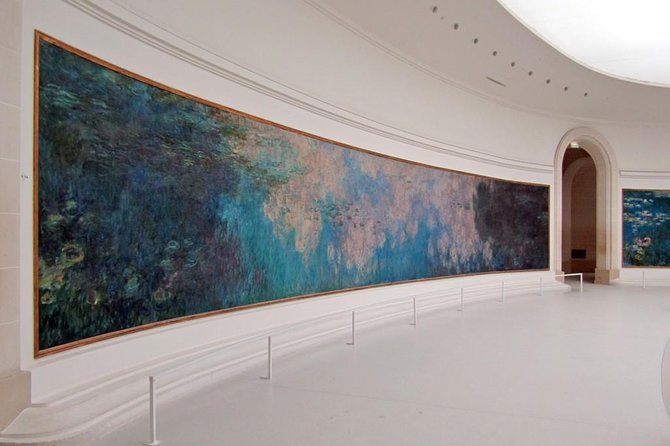
- Monet’s Water Lilies have their own oval galleries: The rooms were designed to let you sit with the paintings and take in their changing light and color.
- Six people is the absolute maximum: A smaller group can feel nearly private, and a private upgrade is available.
- The lower level deserves your attention: Cézanne, Picasso, Matisse, Renoir, Modigliani, and Utrillo add real range to the visit.
- Guides shape the experience: Anatole, Belen, Hugo, Malaika, Michele, Marcel, Dunya, and Taylor are praised for clear explanations, humor, patience, and strong art knowledge.
- Reserved admission saves planning stress: Entrance is included, though security checks and occasional lines can still occur.
- Plan for walking and light luggage: The museum is not suitable for wheelchair users or people with walking disabilities, and large bags are not allowed.
Why this small museum deserves two hours
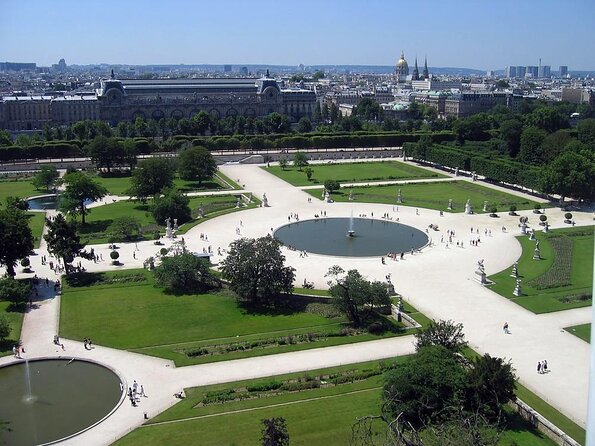
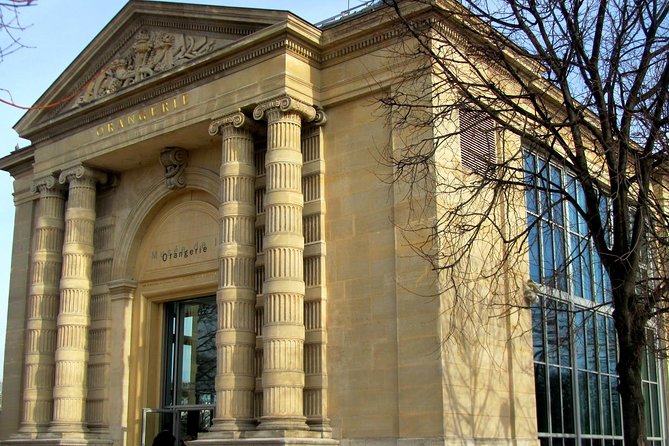
The Musée de l’Orangerie sits in the Tuileries Gardens, an easy place to pair with a walk between the Louvre and Place de la Concorde. The setting helps explain the museum’s appeal. You are not entering a giant building that demands a full day and a map. You are entering a compact museum with one major artistic idea at its heart, followed by a carefully chosen set of later galleries.
The Orangerie began life as a glasshouse for orange trees before becoming museum space in the early 20th century. Paris needed more room for art, and this former garden structure offered it. That practical beginning matters because the building feels different from a grand palace museum. Its scale is manageable, and the Water Lilies rooms feel purpose-built rather than squeezed into leftover gallery space.
A guide is useful here because the museum’s size can fool you. You could walk through quickly and see the famous Monet paintings in less than half an hour. With a good guide, you get the story behind the donation, Monet’s connection with Georges Clemenceau, and a clearer idea of why the paintings were arranged as a series rather than displayed as unrelated canvases.
The tour lasts about two hours. That is long enough to cover Monet and the lower-level collection without turning the visit into an exhausting art lecture. You should expect to stand and walk through the galleries, but the pace also allows time to pause and look.
More Orsay and art museum visits:
- Paris: Orsay Museum Entry Ticket
★ 4.7 · 25,647 reviews - Paris: Orsay Museum Entry Ticket and Digital Audio Guide App
★ 4.4 · 3,170 reviews - Paris in a Day: Louvre or Orsay, Eiffel Tower, City Walk & Cruise
★ 5.0 · 1,956 reviews
Entering Monet’s oval Water Lilies rooms
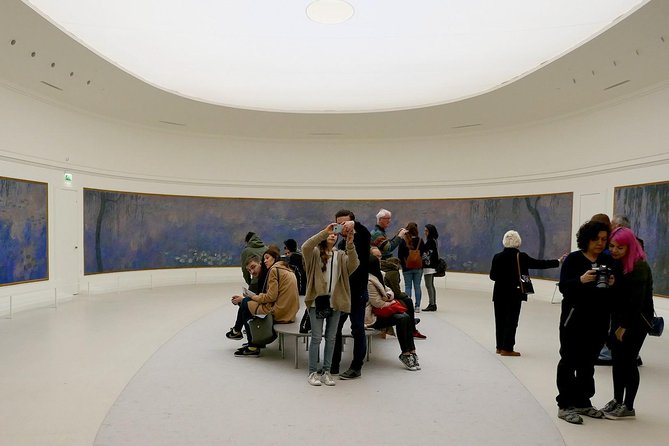
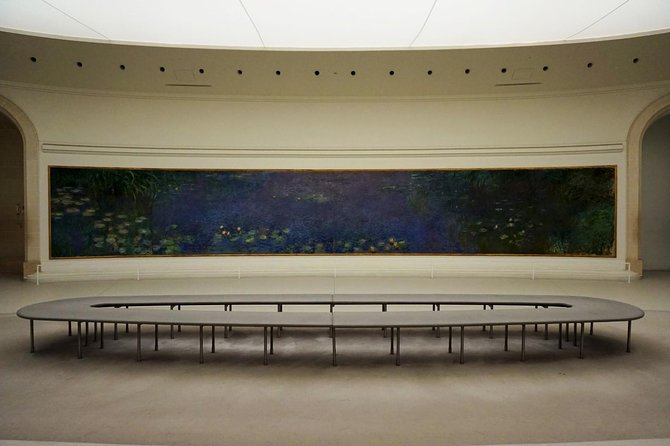
The Water Lilies cycle is the reason most people come, and the tour wisely begins with Monet’s best-known work. The paintings were given to France through Monet’s friendship with Georges Clemenceau, and they received their own special gallery space at the Orangerie.
The rooms are part of the experience. The long, curved walls let the paintings surround you, creating a slower and more reflective visit than a standard row of framed canvases. You are not just looking at one pond scene. You are comparing different treatments of water, foliage, sky, reflection, and changing light.
A strong guide can help you look without drowning you in technical language. Hugo, for example, is praised for taking an inventive approach to the two Water Lilies rooms. Anatole explained Monet’s life, friendships, and the ideas behind the cycle, while Michele made space for quiet viewing after answering questions.
That balance is important. The best part of these rooms is not hearing constant commentary. It is having enough context to see more, then enough silence to let the paintings work on you. Some areas of the museum require very quiet or restricted speaking, so your guide will explain the rules before you enter.
Give yourself permission to look at the paintings from different distances. Up close, you may notice the loose brushwork and breaks in color. Step back, and the surface settles into water, reflection, and atmosphere. You do not need an art degree to follow the basic idea. A guide can simply point out what your eye might otherwise skip.
Photography is mentioned in the tour experience through the chance to get pictures of the Water Lilies, but you should still follow the museum’s current rules. Security procedures and gallery rules can change.
Looking beyond Monet on the lower level
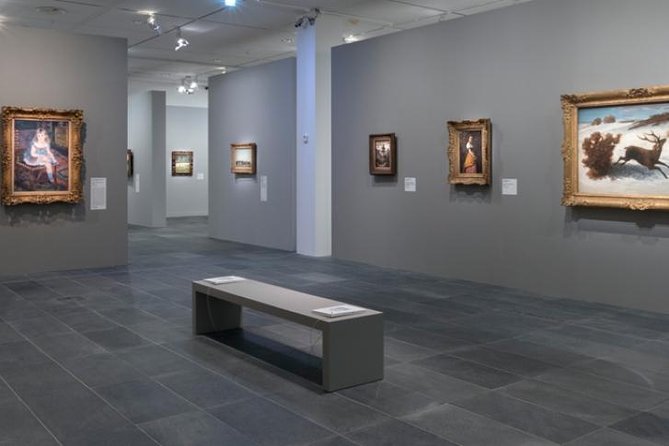
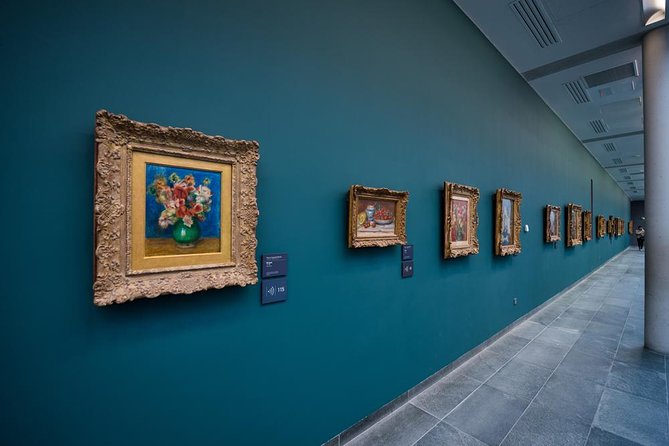
The downstairs collection is where this visit becomes more than a single-artist stop. The Orangerie holds works from the 19th and early 20th centuries, including paintings by artists who shaped Impressionism and the movements that followed it.
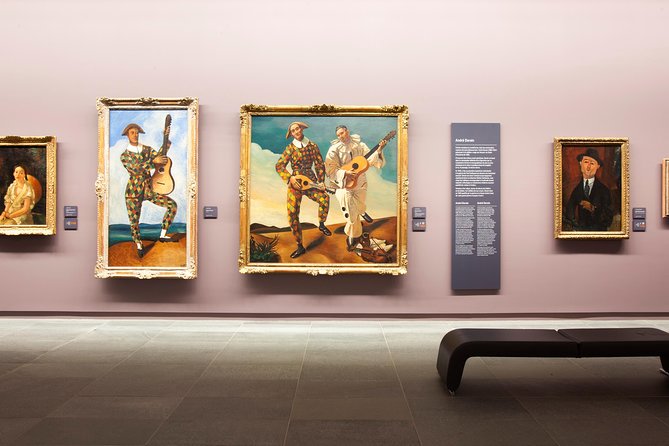
You can expect to see Cézanne’s studies of fruit and flowers, portraits by Matisse, and several stages of Picasso’s career represented through nudes. Renoir, Modigliani, and Utrillo add further views of French painting and city life.
This range gives your guide room to make useful comparisons. Cézanne’s careful studies can be set beside Monet’s changing light. Matisse offers a different approach to color and form. Picasso’s work shows how far painting moved from traditional representation in a relatively short time.
You might not immediately recognize every work in the downstairs galleries, which is exactly why the guide helps. Dunya is praised for explaining the museum and Monet before opening up the unexpected strength of the lower-level collection. Marcel helped one couple understand the sacrifices, problems, techniques, and meanings behind paintings they had known for years.
That kind of explanation is practical for anyone who feels unsure around art museums. You do not need to pretend every painting speaks to you at once. A guide can give you a few ways to look: What is the artist doing with color? What has been simplified? Where does your eye go first? What changed from one period to the next?
The lower level also makes the $143.91 price easier to assess. If the visit covered only a quick look at Monet, the cost would feel steep. Since the guide also interprets a wider collection and helps you understand the museum’s development, the fee offers more value for someone who wants context rather than a photo stop.
What the six-person limit really changes
The advertised group size never exceeds six people, and the minimum is two. That is a meaningful difference from a large museum group where the guide may be speaking to a crowd gathered several rows deep.
With six or fewer people, you can ask questions without interrupting a lecture. The guide can adjust the pace if you are especially interested in Monet, or spend more time downstairs if the modern works catch your attention. You also have a better chance of hearing clearly in rooms where voices must remain low.
The format may feel completely private if other bookings do not fill the group. One family’s visit with Anatole included only three people, and the experience felt like a private tour. Another couple described Taylor’s tour in similar terms. That possibility is one of the strongest reasons to choose this option over a standard group visit.
If you want a guaranteed one-party experience, there is a private upgrade. The semi-private format is the better value if you are comfortable sharing the guide with a few others and want to keep the price below a fully private booking.
The small size does not remove every practical issue. The tour requires at least two people to operate, and a late arrival can affect the schedule. Still, Belen’s handling of a difficult arrival shows why keeping the provider’s phone contact current matters. During severe Olympic security restrictions, roads, buses, Metro routes, and taxi access around Paris became chaotic. The group kept in touch with her, and she waited well beyond the planned start time.
Do not count on that level of flexibility every day. Treat it as a reason to arrive early, not as permission to arrive late.
More Giverny and Monet garden trips:
- From Paris: Giverny Day Trip with Audio Guide or Live Guide
★ 4.3 · 2,372 reviews - From Paris: Giverny, Monet’s House, & Gardens Half-Day Trip
★ 4.5 · 2,174 reviews - Versailles Palace and Giverny Monet House Visit with Lunch
★ 4.0 · 1,948 reviews - Giverny Monet’s Home and Gardens Half Day Tour from Paris
★ 4.5 · 1,836 reviews
The guides bring different strengths
The tour depends heavily on the individual guide. That is common with art tours, and here the guide accounts for much of the value.
Anatole is described as warm, funny, and clear when discussing Monet’s life and friendships. Malaika is praised for an efficient tour that covered the painters without wasting time. Hugo connects the artwork to the society and subjects behind it, and brings a creative way of presenting the Water Lilies rooms.
Belen combines strong knowledge of Monet with patience and humor. Michele is described as fluent in English, friendly, prompt, and careful to leave time for quiet viewing. Marcel explains art in a way that helps newcomers understand technique and the difficulties artists faced.
Dunya focuses on the museum’s background and the surprise of the lower-level collection. Taylor is praised for telling stories about Monet and Hockney. These details point to a useful pattern: the guides do not all use the same method, but they make the art easier to approach.
You should expect an English-speaking professional guide, not a private art historian assigned exclusively to you unless you book the upgrade. The group’s interests can shape the visit, so ask questions when something catches your eye.
The price, reserved entry, and what you receive
At $143.91 per person, this is not a cheap museum ticket. It makes the most sense for you if the guide’s interpretation is a central part of your Paris plans, especially if you are new to Impressionism or want more than a quick look at Monet.
The fee includes reserved museum entry, the two-hour tour, the professional guide, and entrance fees. It does not include hotel pickup, drop-off, gratuities, or temporary exhibitions. A taxi or Uber is recommended for hotel transfers, though the museum is near public transportation.
Reserved admission is useful, but do not read it as a guarantee that you will walk straight through every checkpoint. Increased security can create lines even with reserved access. The museum may also close without advance warning. If opening is delayed by more than an hour, an alternative is offered, but the stated policy does not provide a refund or discount for these situations.
The tour is often booked about 35 days ahead. That is a useful planning clue for a Paris itinerary. If you want a particular morning or travel date, reserve well ahead rather than waiting until you are in town.
Free cancellation is available up to 24 hours before the start time. Cancellation inside that window is not refunded, and late changes are not accepted. Use the local Paris start time when calculating the deadline.
Meeting point, bags, clothing, and physical effort
You meet at Musée de l’Orangerie in the Tuileries Gardens, at Jardin des Tuileries, 75001 Paris. The activity ends back at the same meeting point, so you can continue into the gardens, walk toward the Louvre, or make your way to another central Paris sight afterward.
Bring the mobile phone number you use in Paris, including the country code. The provider says this is imperative, and it gives the guide a way to reach you if meeting details or access conditions change.
Do not arrive with a large suitcase or oversized bag. Only handbags or small, thin backpacks are allowed through security. This is especially important if you are moving between hotels or train stations on the same day.
The tour requires a moderate level of physical fitness and is not available to people with walking disabilities or wheelchair users. The information does not promise special accessibility arrangements, so contact the provider before booking if mobility is a concern.
Appropriate dress may be required for entry into some sites on the tour. For this museum visit, practical clothing and comfortable shoes are the sensible choice. You will be walking and standing, and the museum rules may require you to keep your voice low in certain rooms.
Who will get the most from this Orangerie visit
I would choose this tour if you want Monet explained in plain language, prefer a small group, and are willing to pay for guidance. It suits first-time art museum visitors because the guide can give you a simple framework for looking without making you feel lost.
It also works well for families and mixed-interest groups. One family found that the guide’s humor and stories kept the visit lively, while still leaving time to admire the paintings. A new painter in another group found the visit especially rewarding, but the experience also helped someone with little prior art interest begin to understand the work.
Art lovers who have already seen the Louvre or Musée d’Orsay may appreciate the different scale. The Orangerie is smaller, focused, and easier to absorb in one morning. It will not replace those larger museums, and anyone seeking temporary shows should note that they are excluded.
I would skip the tour if you want to wander alone, dislike guided interpretation, or are mainly looking for the lowest admission cost. You can also find the museum too quiet or controlled if you prefer a fast, independent visit. The tour’s strength is the human explanation, not simply access to the building.
Should you book the six-person Orangerie tour?
Book it if Monet’s Water Lilies are high on your Paris list and you want to understand why the rooms, donation, and paintings matter. The six-person cap, included admission, and consistently strong guide feedback make the format more personal than a large group tour.
At $143.91, I would reserve it for a visit where art matters to you, not as a casual filler between sights. Choose the private upgrade if you want the guide’s full attention. Choose the semi-private option if you want most of that intimacy at a lower level of commitment and are happy to share the experience with up to five other people.
Arrive early, travel light, keep your phone available, and leave room in your schedule for security delays. Done that way, this is a focused and thoughtful way to meet Monet, then discover why the Orangerie’s smaller collection deserves more than a quick look.
FAQ
How long does the Musée de l’Orangerie tour last?
The tour lasts approximately two hours.
What is the maximum group size?
The maximum is six people per tour. The tour requires at least two people to operate.
Is museum admission included?
Yes. Reserved museum entry and all entrance fees are included.
Is the tour offered in English?
Yes. The experience is offered in English with a professional guide.
What artworks and artists will I see?
The visit focuses on Monet’s Water Lilies and also includes works by Cézanne, Picasso, Matisse, Renoir, Modigliani, and Utrillo. Collections can vary during the year.
Are temporary exhibitions included?
No. Temporary exhibitions are not included in the tour price.
Is hotel pickup or drop-off included?
No. Hotel pickup and drop-off are not included. Taxi or Uber is recommended for transfers.
Can I cancel for a full refund?
Yes, if you cancel at least 24 hours before the experience start time. Cancellations made less than 24 hours before the start are not refunded, and changes inside that period are not accepted.
Newest additions around Paris
- Family escape Game with kids and teens on the Île de la Cité★ 4.5 · 11 reviews
- Private Photoshoot with the Iconic Eiffel Tower in Paris★ 5.0 · 11 reviews
- 2-day Private Mont Saint-Michel, 3 Loire Castles, D-Day Express★ 4.5 · 11 reviews
- Paris: Batobus Hop-On Hop-Off Cruise & Landmarks Audio Tour★ 3.0 · 11 reviews
- Paris Revolutionary Walking Tour: Iconic French Sights & Stories★ 5.0 · 11 reviews
- Guided and Private Tour of 3 hours through Paris aboard a Citroën 2cv★ 5.0 · 11 reviews
- Kids in the Kitchen – CrOisSaNtS★ 4.0 · 11 reviews
- Paris: Ghosts and Dark Stories Guided Walking Tour★ 4.1 · 11 reviews
Orsay & Art Museum Tours, compared.
Orsay Museum Entry Ticket and Digital Audio Guide App
Read our review →
Paris in a Day: Louvre or Orsay, Eiffel Tower, City Walk & Cruise
Read our review →
Musée d’Orsay Skip-the-Line Tour with Expert Guide
Read our review →
Musée d’Orsay Skip-the-Line Tour with Expert Guide
Read our review →
The Musée d’Orsay Guided Tour Orsay Museum Semi-Private 6ppl Max
Read our review →
Louvre & Musée d’Orsay Guided Museum Tour Semi-Private 6ppl Max
Read our review →
Browse the lists this tour appears in