
Reviewed · WORKSHOPS
Further training workshop
Paris gives you no shortage of things to photograph. The challenge is learning how to make your pictures feel like your own. This private workshop takes you through Notre Dame, the Louvre, the Tuileries, the Eiffel Tower, and Pont Neuf, with a professional photographer helping you work on exposure, lighting, angles, and composition.
I like the maximum group size of four, since it gives you a real chance to ask questions rather than trail behind a large class. I also like that you do not need previous experience or specialist equipment. The main consideration is the price, $190.10 per person, which makes the most sense for a small group sharing the value of private instruction.
In This Review
- Key Points
- Why a Paris Photo Lesson Can Improve Your Holiday Pictures
- Notre Dame and the Île de la Cité
- The Louvre: Glass, Stone, and Strong Lines
- Tuileries Garden and the Value of a Less Obvious Frame
- Photographing the Eiffel Tower
- Pont Neuf and a Final Practice Session
- What You Will Learn About Your Camera
- Who Gets the Best Value From the $190.10 Price
- Timing, Group Size, and Practical Details
- The Main Strengths and Limitations
- Should You Book This Paris Photography Workshop?
- FAQ
- How long does the photography workshop last?
- How many people can join the private tour?
- What sights are included?
- Do I need photography experience?
- Do I need special camera equipment?
- What photography skills will I learn?
- What time does the tour start?
- Can I cancel for a refund?
Key Points
- Five major Paris photo stops: Practice at Notre Dame, the Louvre, the Tuileries, the Eiffel Tower, and Pont Neuf.
- Private instruction for up to four people: Your guide can adjust the lesson to your skill level and camera.
- Practical camera coaching: Learn about exposure, light, composition, and shooting from different angles.
- A three-hour walking workshop: The pace combines photography practice with central Paris sightseeing.
- No special equipment required: Bring your own camera, and the professional photographer will tailor the session to it.
- Flexible planning: Multiple departure times are offered, with the listed start time at 1:00 pm.
Why a Paris Photo Lesson Can Improve Your Holiday Pictures
Many Paris photographs fail for a simple reason: the photographer points the camera at a famous building and presses the button. You already know what Notre Dame or the Eiffel Tower looks like. The useful lesson is learning how to choose a better angle, use available light, and frame the scene with intention.
That is the purpose of this three-hour experience. You move through some of central Paris with a professional photographer, stopping to work on the pictures in front of you. The lesson is tied to real places, not a classroom presentation, so you can try a technique and see the result at once.
The private format matters here. With no more than four people in your group, you can ask why an image looks flat, how to handle a bright sky, or which setting to change on your camera. The guide can also adjust the lesson to your experience. A beginner may need help with basic camera controls, while a more confident photographer may want to focus on composition and unusual viewpoints.
One past participant singled out Alexander as a patient, informative leader and tutor. That is a useful detail for anyone worried that the workshop may move too quickly. The experience includes a local guide and a professional photographer professor, though a particular guide cannot be guaranteed unless confirmed at booking.
A few more Paris ideas to compare
- Fragonard Paris: Mini Perfume Workshop
★ 4.5 · 1,924 reviews - Paris Cooking Class and Lunch with Wine plus Market Visit Option
★ 5.0 · 1,024 reviews - Paris Croissant Small-Group Baking Class with a Chef
★ 5.0 · 910 reviews
Notre Dame and the Île de la Cité
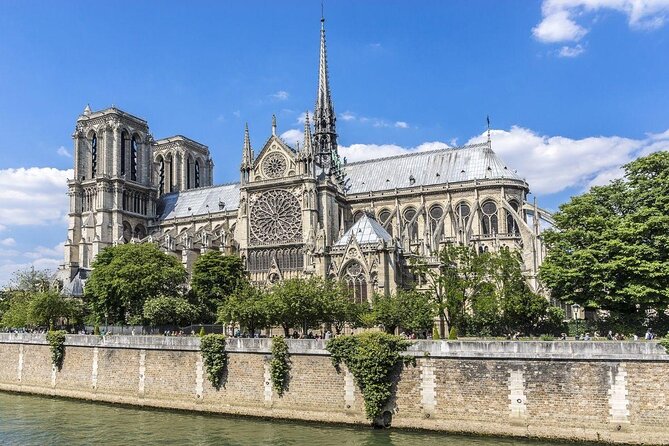
The first listed stop is the Cathedral of Notre Dame de Paris, with about 30 minutes set aside for photography. The cathedral gives you a strong lesson in scale, shape, and detail. You can work on balancing the building with the surrounding space instead of treating it as a flat facade.
The location on the Île de la Cité also gives the guide room to discuss how a setting changes a picture. A close view emphasizes stonework and architecture. A wider view can place Notre Dame within the island setting. Your guide can help you test those choices rather than settle for the first obvious frame.
The stop is free to enter as described, but this workshop is focused on photography rather than an interior visit. You should think of the half hour as a concentrated shooting lesson. If you want a long visit inside the cathedral, that is not what this activity provides.
This is also a sensible place to begin because it gives you a recognizable subject with plenty of visual structure. You can start with basic composition, then experiment with light and angle as your confidence grows.
The Louvre: Glass, Stone, and Strong Lines
The Louvre is the second 30-minute stop. It is an ideal place to practice contrasting subjects: old stone, grand architectural lines, open courtyards, and the modern glass pyramid. Even if you have photographed the museum before, the guide can help you avoid a standard front-on picture.
The Louvre rewards attention to geometry. Look at how the building lines lead the eye. Notice how much of the frame the sky takes up. Try changing your position instead of relying on zoom. These are simple adjustments, but they often make a bigger difference than buying a better camera.
Because the tour includes instruction on exposure and composition, this stop can help you understand how a bright sky or pale stone affects your camera settings. You may also experiment with light and shadow around the buildings. The point is not to collect one required picture. It is to learn a way of seeing that you can use for the rest of your trip.
Thirty minutes goes quickly at the Louvre. That is enough for a focused lesson, but not enough for a full museum visit. Admission to the museum is not part of this experience, and no museum sightseeing time is included in the workshop schedule.
Tuileries Garden and the Value of a Less Obvious Frame
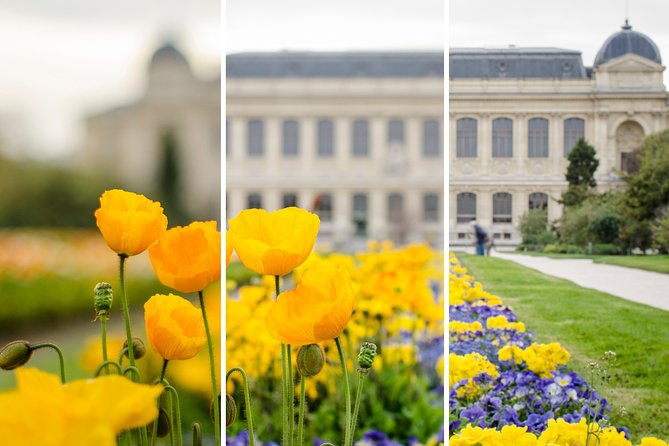
The Tuileries is listed as the third stop, with another 30 minutes for photography. After the architectural scale of the Louvre, the garden offers a different kind of subject. You can work with paths, open views, repeated shapes, and the relationship between people, trees, sculpture, and buildings.
This change of setting is important for a photography class. A good picture is not always a close-up of a monument. The guide can show you how to use foreground and background, how to place a subject off-center, or how to use a path as a line through the frame.
The Tuileries stop may also be useful if you tend to photograph only landmarks. The garden encourages you to notice the spaces between the famous sights. A sculpture, chair, path, or patch of light can sometimes make a more personal travel image than another postcard view.
The supplied schedule gives each main stop roughly half an hour, but walking time is part of the three-hour activity. You should expect a moving workshop, not five long photo sessions with unlimited time at each place.
A different way to spend the day in Paris:
- Paris: Louvre Museum Timed-Entrance Ticket
★ 4.6 · 71,977 reviews - Disneyland® Paris 1-Day Ticket
★ 4.6 · 49,412 reviews - Paris: Versailles Palace and Gardens Full Access Ticket
★ 4.6 · 41,579 reviews - Paris: Arc de Triomphe Rooftop Tickets
★ 4.6 · 34,264 reviews
Photographing the Eiffel Tower
The Eiffel Tower is the fourth stop. It is the one subject almost everyone wants to capture, and it is also one of the easiest to photograph in a predictable way. A professional guide can help you try more than the usual centered tower shot.
This is where angle and composition advice can pay off. A low viewpoint, an off-center frame, or a deliberate use of surrounding space can change the mood of the image. The guide can also help you respond to the light available during the 1:00 pm start and the rest of the afternoon.
The exact conditions will depend on the day, and the supplied details do not promise a particular view, weather condition, or lighting effect. That is worth keeping in mind. You are paying for instruction and guided practice, not a guaranteed perfect sky.
Still, the Eiffel Tower is a valuable teaching subject because it is instantly recognizable. You can clearly see how a small change in position or framing affects the result. If you are using a phone or a basic camera, the lesson may help you get more from the equipment you already own.
Pont Neuf and a Final Practice Session
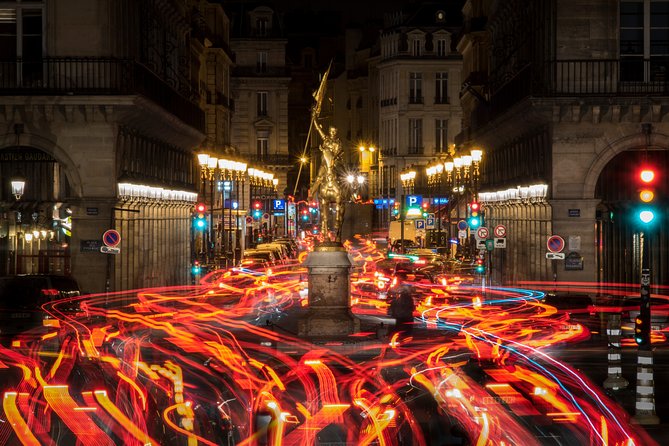
The final listed stop is Pont Neuf, with approximately 30 minutes for photographs. The bridge gives you another chance to work with lines, perspective, water, and the relationship between architecture and the city around it.
A bridge is useful for learning how to guide the eye through an image. You can try framing along its length, focusing on structural details, or including a wider view of the river setting. The guide can also help you review what you have learned at earlier stops and apply it to a different subject.
Pont Neuf is a good closing location because it is not just another single building. It gives you a broader scene and asks you to make more decisions about what belongs in the frame. By this point, you will have practiced with architecture, gardens, and a major monument. The bridge lets you bring those skills together.
The schedule says the activity ends back at the meeting point. Since the exact meeting point is not supplied here, confirm that detail before setting a tight appointment afterward.
What You Will Learn About Your Camera
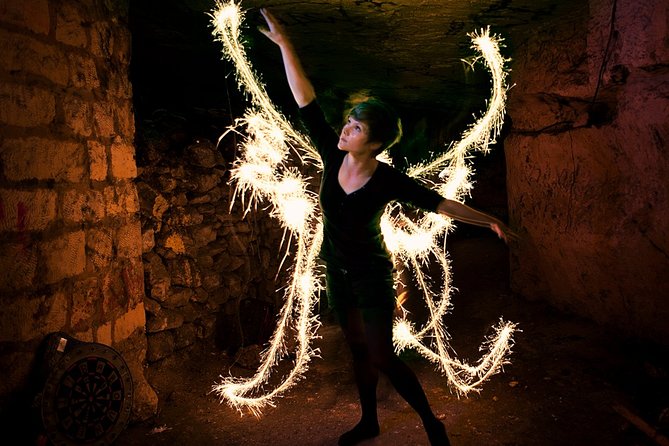
The workshop covers four main areas: technique, exposure, lighting, and composition. Those words can sound technical, but the value comes from connecting them to your own photographs.
Technique means learning how to operate your camera with more control. The experience is suitable for people without specialist equipment, and you are expected to bring your own camera. The guide can tailor the lesson to what you have with you.
Exposure affects how light or dark the picture appears. Paris presents bright stone, dark shadows, open sky, and reflective surfaces in quick succession. A guide can explain what your camera is doing and help you make better choices rather than accepting every automatic result.
Lighting changes the mood and clarity of a scene. You will work with the light that exists at the time of your session, rather than waiting for a studio setup. That makes the advice practical for the rest of your holiday.
Composition is how you arrange the picture. The workshop encourages you to try different angles and light tactics, so you are not limited to the first view in front of you. This is the skill most likely to remain useful after the tour ends.
Who Gets the Best Value From the $190.10 Price
At $190.10 per person, this is not a cheap sightseeing walk. You should judge the cost as payment for private instruction, not just for access to famous Paris locations.
The value improves if four people share the experience and all four want photography help. The maximum group size is four, and the workshop is private, so your group is not mixed with strangers. That gives you a more personal session than a large public photo walk.
The price is also easier to justify if you are serious about improving your pictures. A person who only wants snapshots of Notre Dame may find a regular sightseeing walk or self-guided route more economical. Someone who wants to understand a camera, correct repeated mistakes, and leave with better control may consider the fee worthwhile.
I would also weigh the value of the guide’s feedback. You are not simply visiting five places. You are getting help with decisions you can use throughout Paris and at home. The strongest benefit is the skill transfer, especially if you bring a camera you have struggled to use.
Timing, Group Size, and Practical Details
The activity lasts about three hours and offers multiple departure times, with a listed start time of 1:00 pm. A midday start can fit well between morning plans and an evening meal, though you should remember that the light will change as the session progresses.
The group limit is four people. This makes the experience a good match for a couple, a family, or a small group of friends who want to learn together. It may be less appealing if only one member of your party cares about photography, since the session is built around instruction rather than a standard sightseeing commentary.
Bring your camera. Camera equipment is not included, and specialist equipment is not required. The information does not specify a camera brand, lens type, or required skill level, so the safest approach is to use the equipment you already know or want to learn.
The tour is near public transportation, and most people can participate. Service animals are allowed. Confirmation is provided at booking, and free cancellation is available if you cancel at least 24 hours before the start time. Changes or cancellations made inside that window are not accepted for a refund.
The Main Strengths and Limitations
The clearest strength is personalized teaching. A private group of up to four allows the photographer to see what you are doing and respond to your questions. The positive feedback specifically praised Alexander for being patient and informative, which matches the needs of anyone who wants a lesson rather than a rushed walk.
The route is another strength. Notre Dame, the Louvre, the Tuileries, the Eiffel Tower, and Pont Neuf give you varied subjects in one session. You will practice with grand architecture, open garden space, a famous monument, and a bridge.
The main limitation is time. Five stops in about three hours means the lesson must keep moving. Each location receives about 30 minutes in the schedule, and some of that overall time is used getting from place to place. You should not expect a slow, exhaustive photography session at every site.
Another consideration is the route itself. The information gives the stops but not detailed walking distances or transport arrangements between them. If you have mobility concerns or need to reach another booking immediately afterward, ask for the meeting and route details before you commit.
Should You Book This Paris Photography Workshop?
Book it if you want practical help with your own camera and prefer a small, private lesson to a large group tour. It is especially well suited to beginners, couples, families, and friends who want to photograph Paris with more purpose.
The experience is less suitable if your main goal is a long visit inside the Louvre or Notre Dame, or if you want to spend an entire afternoon at one location. You are buying guided practice across five central Paris sights, not museum admission or a dedicated portrait session.
For the right group, the combination of small-group coaching and famous Paris subjects makes the price easier to understand. If Alexander’s patient teaching style is available for your date, that may be an added benefit, but the provider does not promise a specific guide in the details provided. I would book this workshop when improving your photography matters as much as seeing the sights.
FAQ
How long does the photography workshop last?
The workshop lasts approximately three hours.
How many people can join the private tour?
The private group can include up to four people.
What sights are included?
The route includes Notre Dame Cathedral, the Louvre, the Tuileries Garden, the Eiffel Tower, and Pont Neuf.
Do I need photography experience?
No. The experience is designed for people with no previous experience, and the guide will tailor the lesson to your needs.
Do I need special camera equipment?
No specialist equipment is required. You need to bring your own camera, since a camera is not included.
What photography skills will I learn?
The workshop covers camera technique, exposure, lighting, composition, and ways to use different angles to create distinctive pictures.
What time does the tour start?
The listed start time is 1:00 pm. Multiple departure times are offered.
Can I cancel for a refund?
Yes. You can cancel at least 24 hours before the start time for a full refund. Cancellations or changes made less than 24 hours before the start time are not refunded or accepted.
Newest additions around Paris
- Family escape Game with kids and teens on the Île de la Cité★ 4.5 · 11 reviews
- Private Photoshoot with the Iconic Eiffel Tower in Paris★ 5.0 · 11 reviews
- 2-day Private Mont Saint-Michel, 3 Loire Castles, D-Day Express★ 4.5 · 11 reviews
- Paris: Batobus Hop-On Hop-Off Cruise & Landmarks Audio Tour★ 3.0 · 11 reviews
- Paris Revolutionary Walking Tour: Iconic French Sights & Stories★ 5.0 · 11 reviews
- Guided and Private Tour of 3 hours through Paris aboard a Citroën 2cv★ 5.0 · 11 reviews
- Kids in the Kitchen – CrOisSaNtS★ 4.0 · 11 reviews
- Paris: Ghosts and Dark Stories Guided Walking Tour★ 4.1 · 11 reviews
Workshops, compared.

Paris Cooking Class and Lunch with Wine plus Market Visit Option
Read our review →
Paris Croissant Small-Group Baking Class with a Chef
Read our review →


Paris Cooking Class: Learn How to Make Macarons
Read our review →
Browse the lists this tour appears in