
Reviewed · PASTRY & MACARON CLASSES
Croissants and pains au chocolat with a pastry chef in Paris
The best part of this Paris class is that you do not just eat a croissant, you learn why it works. Pastry chef Joannie guides you through dough, butter, lamination, fermentation, shaping, and baking in her home near Boulevard Voltaire. You get your hands into the process, then enjoy the results.
I like the small maximum group of six, which gives you real time at the worktable. I also like that Joannie sends the recipe and tips afterward, so this is more than a tasty morning that vanishes when you leave Paris. The main consideration is price: at $126.98 per person, it costs more than a bakery breakfast, and the class is not suitable for gluten-free or lactose-free diets.
In This Review
- Key points to know before booking
- Why this class is more than a pastry breakfast
- Arriving at 115 Boulevard Voltaire
- The first lesson: dough, butter, and patience
- Lamination is the heart of the class
- Shaping croissants and pains au chocolat
- Eating the results and packing a Paris snack
- Joannie’s teaching style and local advice
- Is $126.98 a fair price?
- Who should book this Paris pastry class?
- My verdict: book it for the skill, not just the snack
- FAQ
- Where does the croissant class meet?
- How long does the experience last?
- What pastries will I learn to make?
- What languages are available?
- How many people can join the class?
- Is the class suitable for children?
- Can I join if I follow a gluten-free or lactose-free diet?
- Is there a cat at the venue?
- What is included after the class?
- Can I cancel for a refund?
Key points to know before booking
- You make two classic pastries: Learn croissants and pains au chocolat from dough mixing through baking.
- Joannie teaches in a Paris home: The setting is personal, relaxed, and different from a large commercial cooking school.
- Six people is the maximum: Small groups make it easier to handle dough, ask questions, and get individual help.
- The class compresses a long process: Prepared dough at different stages helps you understand fermentation and lamination within about two and a half hours.
- You eat and take pastries home: Expect to sample the finished baking and leave with several pieces to enjoy later.
- A cat lives in the home: This matters if you have a cat allergy or feel uneasy around cats.
Why this class is more than a pastry breakfast
Paris has no shortage of excellent croissants. You can buy one for a few euros, eat it on a bench, and get on with your day. This experience offers something different: a practical look at the work behind that flaky crescent and chocolate-filled cousin.
I like classes that give you a skill to carry home. Croissant dough looks simple, but the method depends on several linked steps. You need the right dough, a cold butter layer, careful rolling, proper folds, enough fermentation, and a good bake. If one part goes wrong, the finished pastry can be heavy instead of light and layered.
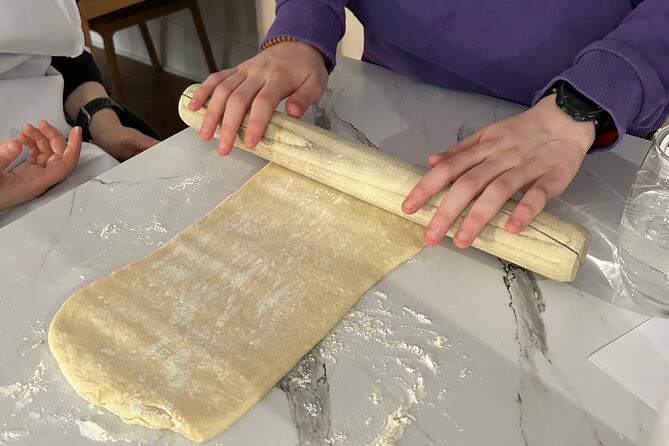
Joannie breaks those stages into manageable jobs. You are not simply watching a chef perform while you stand at the side. You handle the dough, roll it, shape it, and help prepare the pastries for the oven. That hands-on format makes the lesson useful for beginners and satisfying for anyone who already enjoys baking.
The experience also offers a friendly local angle. While your hands are busy beating butter or rolling dough, Joannie talks about Paris and gives suggestions for patisseries and restaurants. That advice can help you plan the rest of your stay, especially if this is your first visit.
More pastry and macaron classes:
- Paris: Montmartre Cheese, Wine & Pastry Guided Walking Tour
★ 4.8 · 2,255 reviews - Paris Croissant Small-Group Baking Class with a Chef
★ 5.0 · 910 reviews - Paris: Macaron Class at Galeries Lafayette
★ 4.3 · 905 reviews
Arriving at 115 Boulevard Voltaire
The meeting point is 115 Boulevard Voltaire, 75011 Paris, near public transportation. The activity begins and ends there, so you do not need to arrange a second meeting point across town or find your way back after carrying a bag of pastries.
The address places you in the 11th arrondissement, an area that feels more residential and lived-in than the grand postcard center. That is a useful change of pace during a Paris trip packed with monuments, museum rooms, and timed entries. You can spend a morning doing something ordinary and very French: baking in a local home.
Allow enough time to find the address and arrive ready to start. The group size can be as large as six, though smaller groups are possible. A group of six is still intimate enough for everyone to participate, but you should expect a shared class rather than a private lesson.
The setting is part of the experience. You are welcomed into Joannie’s home in an old Parisian building, rather than into a hotel kitchen or formal school. That creates a comfortable atmosphere, though it also means the surroundings are domestic. If you prefer professional teaching kitchens with lots of space and restaurant-style equipment, this may feel less polished.
The first lesson: dough, butter, and patience
Croissant making begins long before the pastry takes its familiar shape. Joannie explains the dough and the role of fermentation, then shows how the butter becomes part of the layered structure. These details matter because the finished pastry depends on technique, not just ingredients.
The class uses dough in different stages to fit the entire process into roughly two hours and thirty minutes. That is a smart approach. In a normal home kitchen, croissants can require preparation over two or three days because the dough must rest and ferment. A single class cannot honestly wait through every stage, so prepared examples let you see what the dough should look and feel like at each point.
You can compare stages as Joannie works through the method. This is especially helpful if you plan to repeat the recipe at home. You learn that the dough should not be treated like ordinary bread dough, and that temperature and timing affect the final layers.
The pace is suitable for beginners, but it is not a passive demonstration. Be prepared to listen closely and follow instructions. Croissant dough needs careful handling, and some steps may feel slower than expected. That is part of the lesson. The class shows you where patience matters instead of pretending the process is effortless.
Lamination is the heart of the class
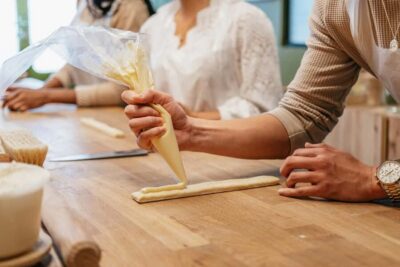
Lamination is the part many home bakers want to understand. This is where butter and dough are rolled and folded to create the thin layers that puff in the oven. Joannie demonstrates the technique step by step, then gives you a chance to take part.
The value here is practical. A recipe can tell you to roll and fold, but it cannot fully show how the dough should feel or how evenly the butter should sit. In person, you can watch the shape, thickness, and handling. You can also ask questions immediately instead of guessing at home.
The class covers fermentation as well. That may sound technical, but it is one of the reasons a croissant can be airy and crisp rather than dense. Seeing dough at several points helps connect the written recipe with the physical changes taking place.
I would not book this expecting to become a professional pastry chef in one morning. You will get a solid introduction and a workable recipe, but repetition at home will still be needed. The strength of the class is that it gives you a clear starting point and a better sense of what to look for.
A different way to spend the day in Paris:
- Paris: Louvre Museum Timed-Entrance Ticket
★ 4.6 · 71,977 reviews - Disneyland® Paris 1-Day Ticket
★ 4.6 · 49,412 reviews - Paris: Versailles Palace and Gardens Full Access Ticket
★ 4.6 · 41,579 reviews - Paris: Arc de Triomphe Rooftop Tickets
★ 4.6 · 34,264 reviews
Shaping croissants and pains au chocolat
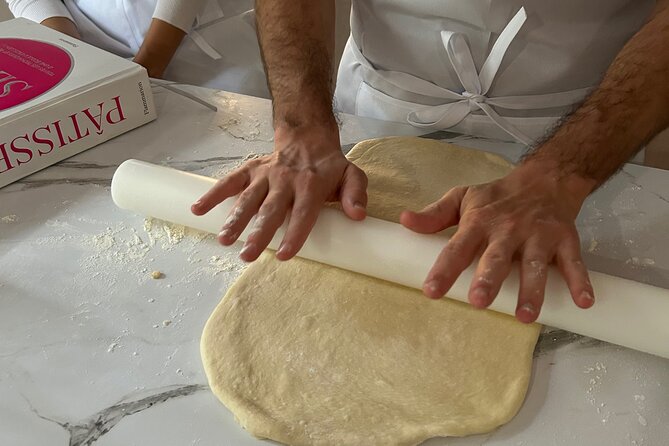
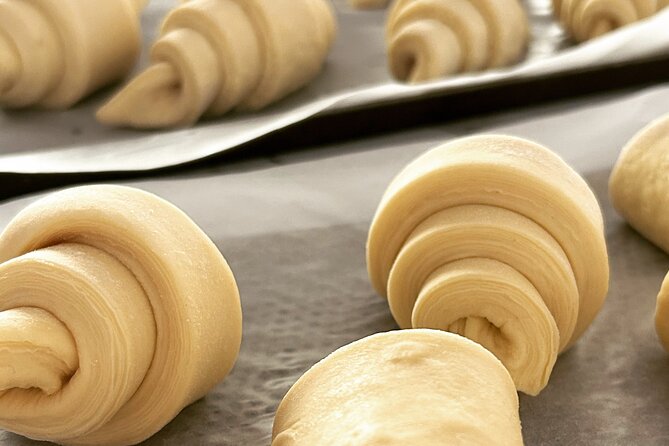
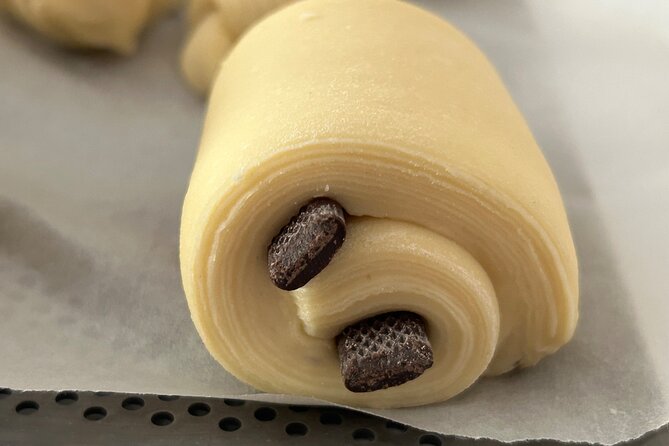
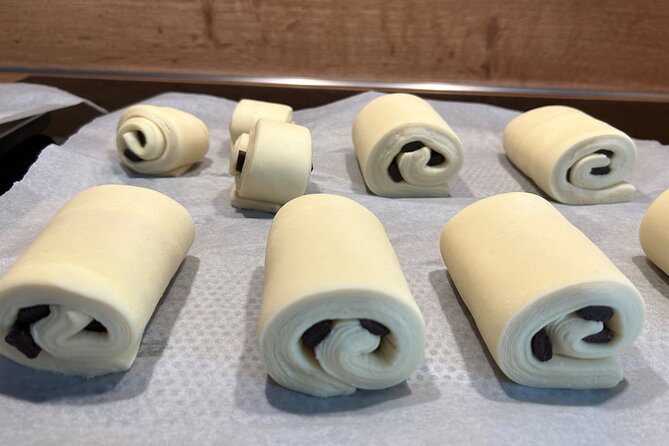
Once the dough is ready, you shape two pastries: croissants and pains au chocolat. Croissants are cut and rolled into their curved form, while pains au chocolat are shaped around chocolate. Making both gives the class useful variety without straying from the main subject.
This is where the experience becomes especially social. Everyone works through the same stages, compares shapes, and waits to see how the pastries bake. A group of six gives each person enough room to participate without turning the class into a crowd around one demonstration table.
The class is also suitable for families with older children. The stated minimum age is 10, and several family groups have included teenagers. One family even managed with an eight-year-old who needed some help, but the official guidance says the activity is not available for children under 10. I would follow that age rule rather than count on an exception.
For younger participants, the practical tasks can be fun, but dough handling requires attention. Older children and teens are more likely to follow the full process and appreciate the final result. Adults who want a quiet, detailed lesson should also find the format manageable, though a family group may bring more noise and movement.
Eating the results and packing a Paris snack
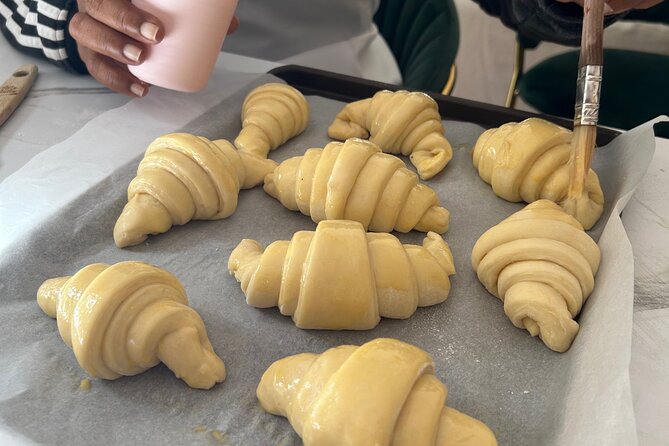
You do not wait until the end of the day to find out if your work paid off. During the class, you enjoy croissants and pains au chocolat with a hot beverage, along with a surprise French pastry prepared by Joannie.
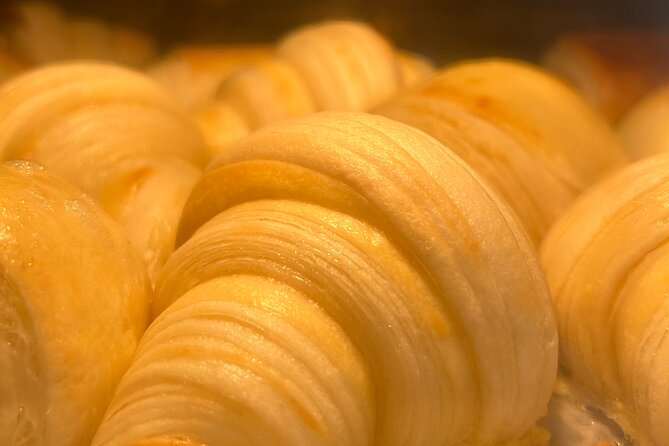
The eating is not just a reward. Tasting the finished pastries helps you notice the texture the lesson is aiming for: crisp outside, tender inside, and properly layered. The surprise pastry adds a small change of pace and gives you another example of French baking.
You also leave with pastries made during the class. This can be one of the best practical details of the experience, since the treats become a snack for later rather than something eaten in a single sitting. One useful tip is to schedule the class early in your Paris visit. That way, you can enjoy the pastries during the rest of your stay instead of carrying them home at the end.
The amount you take away can vary by group and arrangement. The class is designed for shared production, so do not assume each person receives a separate large bag filled only with their own pastries. If taking home a generous personal supply is important to you, ask about the arrangement before booking.
Joannie’s teaching style and local advice
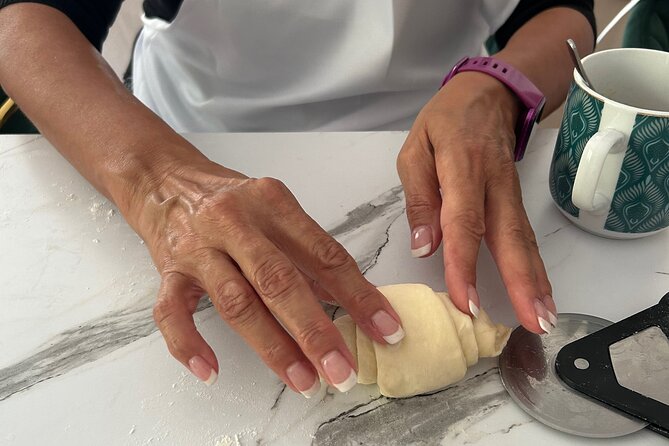
Joannie is the key to the experience. She teaches the technical steps, answers questions, and keeps the atmosphere relaxed. Her approach is warm and personal, which suits a home class better than a strict, formal demonstration.
I particularly like the way the class uses conversation to make the time feel connected to Paris. While the dough rests or you move between tasks, Joannie can discuss your trip and suggest local patisseries and restaurants. These tips are not a replacement for planning, but they can point you toward places that fit your interests.
The class is offered in English, French, and Italian. That makes it accessible to a wide range of visitors, but you should select the language that lets you follow detailed pastry instructions most easily. Baking terms and timing need to be clear, especially during lamination and shaping.
A cat lives in the home. Many people will find that charming, and the cat has become part of the welcome for some participants. If you have a cat allergy or are afraid of cats, take the warning seriously. This is not a neutral venue where pets are kept entirely away from the activity.
Is $126.98 a fair price?
At $126.98 per person, this is a premium food experience. You are paying far more than you would for two pastries and coffee at a bakery. The price makes more sense if you value instruction, a small group, the home setting, local recommendations, and the recipe you can use after Paris.
The class also saves you from trying to understand a complicated pastry method from a book or video alone. The finished baking, take-home pastries, and personal guidance add to the value. For a family, the total cost rises quickly, so compare it with other hands-on activities before booking.
I would see this as a special Paris experience, not a budget breakfast. It works best when you want a memorable activity and are happy to pay for access to a pastry chef’s time. If your main goal is simply to eat an excellent croissant, spend the money at several bakeries instead.
The small group helps support the price. With no more than six people, you are not lost in a large class. You have a better chance to ask questions and get help with the dough. That personal attention is one of the strongest reasons to choose this format.
Who should book this Paris pastry class?
I would recommend it to couples, families with children aged 10 and older, friends, and solo visitors who like meeting people through food. It is a good fit if you want a break from major sights and prefer an activity that leaves you with a new skill.
It also suits repeat visitors who have already seen the Eiffel Tower, Louvre, and main boulevards. Baking gives you a different connection to the city, one based on an everyday French pleasure rather than another viewpoint or museum.
You may want to skip it if you need gluten-free or lactose-free food, since the activity is not recommended for those diets. It is also a poor choice if you strongly dislike cats, want a large professional kitchen, or expect each person to receive a substantial individual box of pastries.
Free cancellation is available if you cancel at least 24 hours before the local start time. Changes or cancellations made later are not accepted for a refund, so keep that deadline in mind when arranging a busy Paris schedule.
My verdict: book it for the skill, not just the snack
This class earns its place on a Paris itinerary because it turns a familiar pastry into a hands-on lesson. Joannie’s friendly instruction, the six-person limit, the old Parisian home, and the recipe sent afterward give the experience lasting value.
Book it early in your stay if you want pastries for later days and time to use Joannie’s restaurant and patisserie suggestions. Skip it if you only want a quick bakery stop or need dietary flexibility. For everyone else, this is a tasty, personal way to spend a Paris morning and bring home more than a souvenir.
FAQ
Where does the croissant class meet?
The class meets at 115 Boulevard Voltaire, 75011 Paris, France. It ends back at the same meeting point.
How long does the experience last?
The activity lasts approximately two hours and thirty minutes.
What pastries will I learn to make?
You will learn to make croissants and pains au chocolat, including the dough, lamination, fermentation, shaping, and baking stages.
What languages are available?
The activity is available in English, French, and Italian.
How many people can join the class?
The maximum group size is six people.
Is the class suitable for children?
The activity is not available for children under 10 years old. Older children and teenagers can take part, with younger participants within the permitted age range possibly needing help with some tasks.
Can I join if I follow a gluten-free or lactose-free diet?
The class is not recommended for people following gluten-free or lactose-free diets.
Is there a cat at the venue?
Yes. The pastry chef has a cat in her home, so the class is not recommended if you are allergic to cats or afraid of them.
What is included after the class?
You enjoy croissants and pains au chocolat with a hot beverage during the class, plus a surprise French pastry made by Joannie. You can also take pastries home, and the recipe and tips are sent afterward.
Can I cancel for a refund?
You can cancel for a full refund up to 24 hours before the experience start time. Cancellations or changes made less than 24 hours before the start are not accepted for a refund.
Newest additions around Paris
- Family escape Game with kids and teens on the Île de la Cité★ 4.5 · 11 reviews
- Private Photoshoot with the Iconic Eiffel Tower in Paris★ 5.0 · 11 reviews
- 2-day Private Mont Saint-Michel, 3 Loire Castles, D-Day Express★ 4.5 · 11 reviews
- Paris: Batobus Hop-On Hop-Off Cruise & Landmarks Audio Tour★ 3.0 · 11 reviews
- Paris Revolutionary Walking Tour: Iconic French Sights & Stories★ 5.0 · 11 reviews
- Guided and Private Tour of 3 hours through Paris aboard a Citroën 2cv★ 5.0 · 11 reviews
- Kids in the Kitchen – CrOisSaNtS★ 4.0 · 11 reviews
- Paris: Ghosts and Dark Stories Guided Walking Tour★ 4.1 · 11 reviews
Pastry & Macaron Classes, compared.
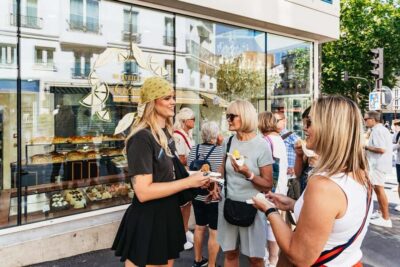
Montmartre Cheese, Wine & Pastry Guided Walking Tour
Read our review →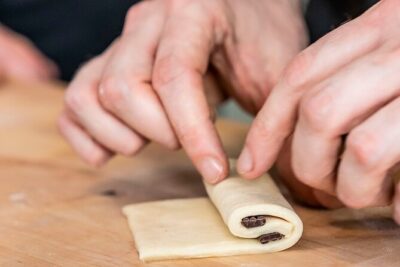
Paris Croissant Small-Group Baking Class with a Chef
Read our review →
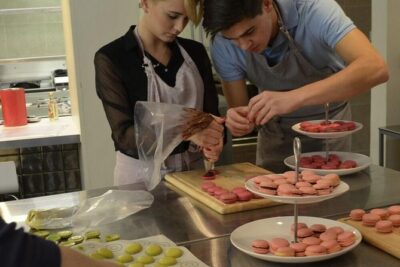
Paris Cooking Class: Learn How to Make Macarons
Read our review →
A Morning in Paris Food Tour: Croissants, Baguettes & Chocolate
Read our review →
Paris Chocolate, Macaron & Pastry Food Tour: 10 Gourmet Tastings
Read our review →Browse the lists this tour appears in