
Reviewed · PASTRY & MACARON CLASSES
Croissant Baking Class, Mastering the Art with a Pastry Chef
Making a croissant from scratch is a fine Paris souvenir because you can recreate it long after your flight home. At Studio Pâtisserie, you work through the butter, dough, folding, rolling, and shaping with a pastry chef rather than simply watching a demonstration. Chef Leo and Chef Maria are both praised for clear, patient instruction and a good sense of humor.
I like the maximum class size of eight, which gives you real time with the dough and a fair chance to ask questions. I also like the practical finish: you bake the pastries, taste the results, and receive recipes or useful measurements for another attempt at home. The main drawback is that croissant dough takes physical work and close attention, so this is not a sit-back tasting session.
In This Review
- Key Details at a Glance
- Why This Paris Baking Class Is Worth Your Morning
- Arriving at 85 Rue de Rome
- Starting with Butter, Flour, and Dough
- The Layering Work That Makes a Croissant Flaky
- Shaping Croissants and Pain au Chocolat
- Baking, Sharing, and Taking the Results Home
- The Teaching Style: Leo, Maria, and Individual Help
- Who Will Enjoy It Most
- Practical Timing and Cancellation Advice
- Is the $143.92 Price a Good Deal?
- Should You Book Studio Pâtisserie?
- FAQ
- Where does the croissant baking class take place?
- How long does the experience last?
- What pastries will I make?
- How many people are in the class?
- Is the class offered in English?
- How old do I need to be?
- Do I need physical strength for the class?
- Can I cancel for a full refund?
Key Details at a Glance
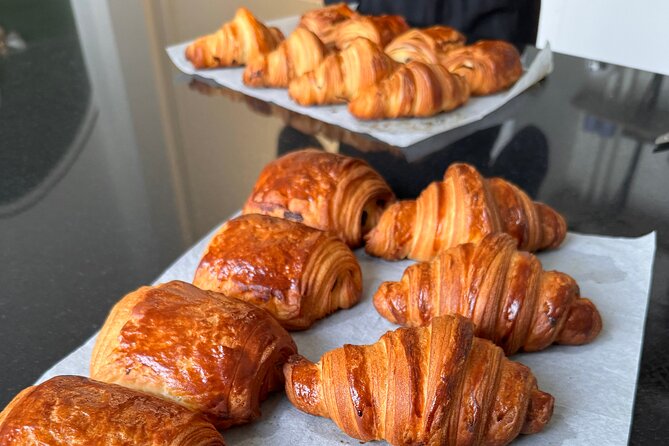
- You make croissants and pain au chocolat: Learn the process from dough preparation through baking, with hands-on rolling and shaping.
- The group is capped at eight people: A small class means the chef can correct your technique and help when the dough fights back.
- Chef Leo and Chef Maria teach with a friendly style: The instruction is structured, patient, and lighthearted.
- The class lasts about three hours: Plan enough time for preparation, lamination, shaping, baking, and packing your pastries.
- You leave with more than a snack: Past class formats have included four croissants and four pain au chocolat per person, along with recipes or emailed instructions.
- The meeting point is central and easy to reach: Find Studio Pâtisserie at 85 Rue de Rome, in Paris 17th arrondissement, near public transportation.
Why This Paris Baking Class Is Worth Your Morning
Paris has no shortage of pastry shops. You can buy a good croissant for a few euros and be eating it within minutes. This class earns its price by showing you why a great croissant takes skill, patience, and a surprising amount of muscle.
The cost is $143.92 per person for roughly three hours. That is far more than buying breakfast, but it covers instruction, ingredients, studio time, and a substantial batch of pastries. You are paying for an activity as much as for food. If you want a hands-on Paris memory and hope to repeat the recipe at home, the price makes better sense.
I would not book this class only for a quick pastry tasting. The value comes from learning the method. You work with quality butter and flour, see how the dough changes at each stage, and learn the measurements that control the final texture.
The class also works well for pairs and small groups. A mother and daughter, couples, friends, and family groups can share a worktable while still getting individual help. With eight people at most, the atmosphere stays intimate without feeling like a private lesson.
More pastry and macaron classes:
- Paris: Montmartre Cheese, Wine & Pastry Guided Walking Tour
★ 4.8 · 2,255 reviews - Paris Croissant Small-Group Baking Class with a Chef
★ 5.0 · 910 reviews - Paris: Macaron Class at Galeries Lafayette
★ 4.3 · 905 reviews
Arriving at 85 Rue de Rome
Your class begins at Studio Pâtisserie, 85 Rue de Rome, 75017 Paris. The address is near public transportation, and the location has been described as easy to find. Give yourself enough time to arrive without rushing. Showing up calm matters when your first task may involve weighing ingredients and handling dough.
The activity returns to the same studio when it ends. That is useful if you want to continue sightseeing from the area, though the class itself does not include transportation or a guided walk through the neighborhood.
The setting is a working pastry studio rather than a grand sightseeing venue. That is part of the appeal. You are there to make something, not pose beside a display kitchen. The environment is laidback, friendly, and focused on the practical business of pastry.
Starting with Butter, Flour, and Dough
The pastry chef begins by introducing the basics of French pastry making. You learn why ingredient quality matters, why precise measurements are important, and how butter behaves inside the dough.
This opening is not filler. Croissants depend on a careful balance. The dough must be strong enough to roll, but not so tough that it becomes difficult to shape. The butter must stay distinct enough to form thin layers, but not melt into the dough before baking.
You then prepare or handle the dough and begin the first rolling stages. This is where the class becomes physical. You need strength to knead and roll, and you will handle several large rectangles as the dough is prepared for lamination.
If you are used to casual home baking, the number of measurements can surprise you. One useful tip is to record the dimensions for the butter, the laminated dough, the final sheet, and the cut pieces. Those measurements matter when you try the recipe later.
American bakers should also be ready to convert metric measurements into pounds, ounces, inches, or cups. The class uses professional pastry methods, so a phone conversion tool will be useful when you return to your own kitchen.
The Layering Work That Makes a Croissant Flaky
Lamination is the heart of the lesson. You fold butter into the dough, roll it out, and fold it again to create thin layers. The class explains how this process produces the flaky texture associated with a proper croissant.
One class format produces a 16-layer pastry. That detail gives you a useful sense of the precision involved. Each fold has a purpose, and uneven pressure can shift the butter or make the dough too thin in one place and too thick in another.
The chef demonstrates the movements, then gives you dough to roll and work yourself. You are not simply standing behind a counter while someone else does the skilled part. If your rectangle is uneven or your butter begins to soften, the instructor can step in with a correction.
This is where the small group pays off. With only eight people, Chef Leo or Chef Maria can watch how you hold the rolling pin, help with a stubborn fold, and answer questions without stopping the entire class.
The process can feel repetitive, especially if you expect a quick cooking demonstration. That is a fair consideration. Pastry rewards steady work more than speed. The repetition is also what makes the finished croissant feel earned.
More cooking classes in Paris:
- Paris Cooking Class and Lunch with Wine plus Market Visit Option
★ 5.0 · 1,024 reviews - Paris: French Croissant Baking Class with a Chef
★ 4.9 · 712 reviews - Paris Cooking Class: Learn How to Make Macarons
★ 5.0 · 634 reviews - Paris Evening Cooking Class French Dinner and Market Visit Option
★ 5.0 · 430 reviews
Shaping Croissants and Pain au Chocolat
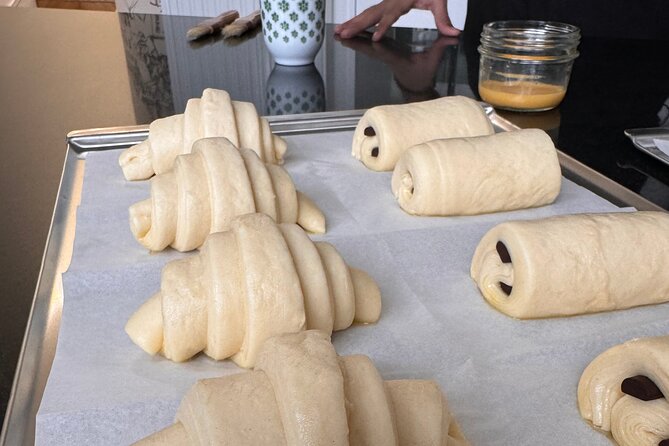
Once the dough has been rolled to the proper size, you cut it into pieces for shaping. Croissants are formed into their familiar crescent shape, while pain au chocolat is prepared with chocolate inside.
You will roll and shape several pastries, so you get more than one chance to improve. Your first piece may be uneven. By the final one, you should have a better sense of how much tension to use and how tightly to roll.
The class gives you individual dough to work with, which keeps the experience active. You are not taking turns with one communal pastry. That is important for anyone who wants to learn the technique rather than simply watch the chef produce a perfect tray.
The instructors receive repeated praise for making the class feel easy to follow. That does not mean the process is effortless. It means the chef breaks a complicated task into clear steps and helps you recover when your shape is less than perfect.
The finished pastries do not need to look identical. A handmade croissant can have a slightly lopsided curve and still bake beautifully. The useful lesson is learning how the shape affects the final rise and texture.
Baking, Sharing, and Taking the Results Home
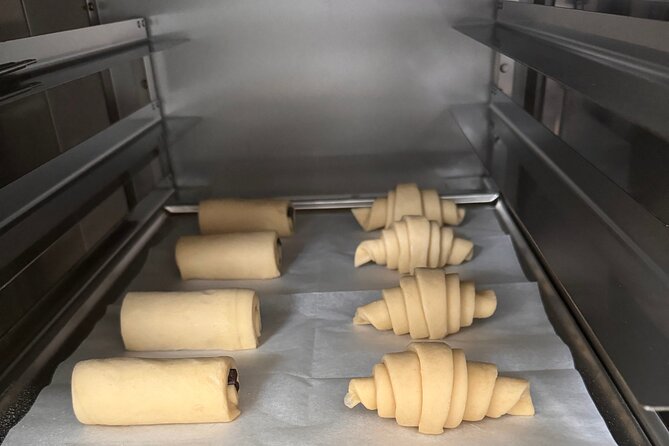
As the pastries bake, the pace changes. The hard rolling work is done, and you can enjoy the social side of the class. You have time to exchange tips, talk with the other bakers, and hear more from the chef about baking and Paris.
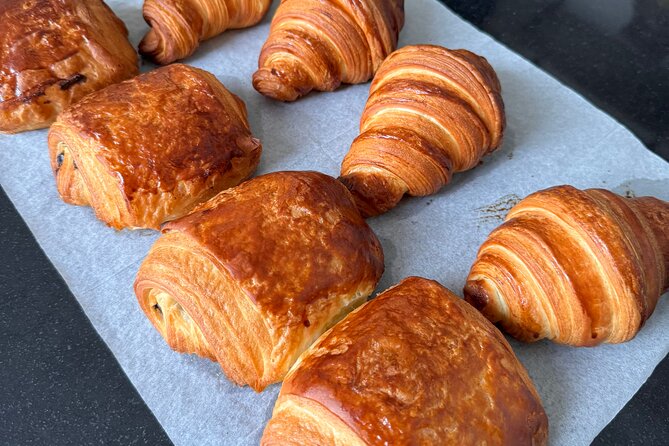
The payoff is a tray of golden pastries. A common class result is four croissants and four pain au chocolat per person, though the exact output can depend on the session. That is a generous amount of food, especially after three hours of work.
You can expect to taste the finished pastries at the studio and take the rest with you. Bring a little room in your day for carrying them. Fresh pastries are delicate, and they are best treated as an edible souvenir rather than squeezed into an already full bag.
The take-home recipes add real value. One participant received recipes by email, while other class sessions included tips and measurements for home baking. Pay close attention during the shaping portion and write down the dimensions you will need later. The recipe is more useful when paired with your own notes from the class.
A clever part of the class structure is the use of dough prepared in advance when needed for proper proofing. In one described format, your class uses dough prepared by an earlier session, and the dough you make helps a later class. That allows you to experience the final bake within three hours rather than waiting through a full proofing schedule.
The Teaching Style: Leo, Maria, and Individual Help
The instructors are a major part of the experience. Chef Leo is frequently described as patient, funny, easygoing, and generous with baking advice. He also shares suggestions about Paris, which adds a local touch without turning the class into a sightseeing tour.
Chef Maria is praised for making the lesson fun and interactive. Her style is friendly and clear, with step-by-step guidance. Both chefs appear to keep the mood relaxed while still taking the pastry work seriously.
That balance matters. Croissant making can make beginners nervous because the technique looks exacting. A patient teacher lets you ask basic questions, try again, and understand the reason behind each step.
The class is offered in English. That makes the technical parts easier to follow, especially when measurements and folding patterns are being explained. You still get the pleasure of making a classic French pastry in Paris, but without guessing what the chef means.
The class has a five-star rating from 116 reviews, with 100 percent recommending it. Those numbers point to a very consistent experience, though they should not hide the effort involved. You will have fun, but you will also knead, roll, measure, and concentrate.
Who Will Enjoy It Most
I would recommend this class to anyone who likes cooking, baking, or food-focused activities. You do not need advanced pastry skills. The instruction is designed to guide beginners through the process, and help is available when you need it.
It is especially good for:
- Couples and parent-child pairs: You can share the experience while each person gets hands-on work.
- Small groups of friends: The eight-person limit keeps the class social without making it anonymous.
- Home bakers: The measurements, folding method, and recipes give you a useful starting point for future attempts.
- Visitors seeking a break from museums: Three hours at a worktable offers a different way to experience Paris.
- People who enjoy food souvenirs: You finish with pastries you made yourself, not just a box bought at a shop.
The minimum age is 17. The class also requires strength for kneading the dough, so it may not suit anyone who has trouble with repetitive rolling or firm dough work. Service animals are allowed.
Families should note the age rule before booking. The class can be a good parent-child activity, but participants must meet the minimum age requirement.
Practical Timing and Cancellation Advice
Plan on about three hours from start to finish. That includes the introduction, dough work, lamination, shaping, baking, and time to enjoy the results. Do not place an important timed appointment immediately afterward.
The experience is booked an average of 47 days ahead, so popular dates may fill well before your visit. If this class matters to your Paris plans, reserve it early rather than waiting until the day before.
A mobile ticket is accepted, and confirmation is provided when you book. The class is offered in English. Cancellation is free if you cancel at least 24 hours before the local start time. Cancellations or changes made less than 24 hours ahead are not refunded or accepted.
Is the $143.92 Price a Good Deal?
At first glance, $143.92 is a steep price for croissants. It becomes easier to justify when you count the three hours of instruction, the small group, the ingredients, the studio, and the pastries you make.
You are also getting a skill that can be used again. Croissants are not the easiest pastry to learn from a written recipe alone. Seeing the correct dough thickness, feeling the resistance during rolling, and watching the chef handle the butter can save you several failed attempts at home.
Still, I would be honest about your priorities. If you want the cheapest way to eat French pastry, visit a bakery. If you want a relaxed, social cooking lesson with a pastry chef and a generous take-home result, this price is reasonable for Paris.
The value is strongest for people who will actually try the recipe again. If you leave your recipe in a drawer, the class becomes an expensive morning activity. If you bake the pastries at home, the lesson keeps paying off.
Should You Book Studio Pâtisserie?
Book this class if you want to understand how French croissants are made, not just eat one. The small group, English instruction, hands-on dough work, and patient teaching from chefs such as Leo and Maria make it a strong choice for beginners and keen home bakers.
Skip it if kneading and rolling sound tiring, if you have less than three hours to spare, or if your main goal is a quick pastry breakfast. For everyone else, this is a tasty and practical Paris experience, with the bonus of leaving the studio carrying the results of your own work.
FAQ
Where does the croissant baking class take place?
The class begins and ends at Studio Pâtisserie, 85 Rue de Rome, 75017 Paris, France.
How long does the experience last?
The class lasts approximately three hours.
What pastries will I make?
You will learn to make croissants and pain au chocolat, including the dough, butter lamination, rolling, cutting, shaping, and baking stages.
How many people are in the class?
The class has a maximum of eight participants.
Is the class offered in English?
Yes. The activity is offered in English.
How old do I need to be?
Participants must be at least 17 years old.
Do I need physical strength for the class?
Yes. The information specifically notes that strength is needed to knead the dough.
Can I cancel for a full refund?
Yes, if you cancel at least 24 hours before the experience start time. Cancellations or changes made less than 24 hours before the local start time are not refunded or accepted.
More Workshops in Paris
- Fragonard Paris: Mini Perfume Workshop
★ 4.5 · 1,924 reviews - Paris: 2-Hour Perfume Creation Workshop
★ 4.8 · 731 reviews - Paris: French Macaron Culinary Class with a Chef
★ 4.9 · 591 reviews - Paris: French Wine Tasting Class with Sommelier
★ 4.8 · 505 reviews
Newest additions around Paris
- Family escape Game with kids and teens on the Île de la Cité★ 4.5 · 11 reviews
- Private Photoshoot with the Iconic Eiffel Tower in Paris★ 5.0 · 11 reviews
- 2-day Private Mont Saint-Michel, 3 Loire Castles, D-Day Express★ 4.5 · 11 reviews
- Paris: Batobus Hop-On Hop-Off Cruise & Landmarks Audio Tour★ 3.0 · 11 reviews
- Paris Revolutionary Walking Tour: Iconic French Sights & Stories★ 5.0 · 11 reviews
- Guided and Private Tour of 3 hours through Paris aboard a Citroën 2cv★ 5.0 · 11 reviews
- Kids in the Kitchen – CrOisSaNtS★ 4.0 · 11 reviews
- Paris: Ghosts and Dark Stories Guided Walking Tour★ 4.1 · 11 reviews
Pastry & Macaron Classes, compared.
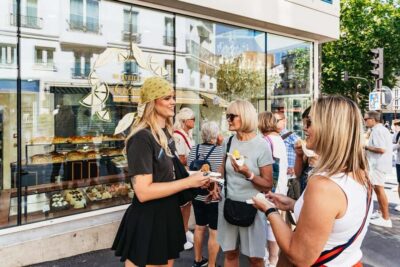
Montmartre Cheese, Wine & Pastry Guided Walking Tour
Read our review →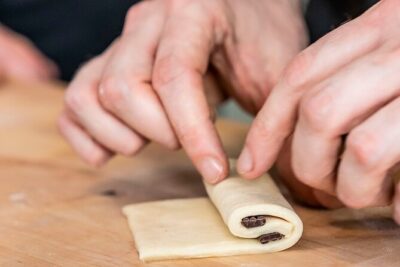
Paris Croissant Small-Group Baking Class with a Chef
Read our review →
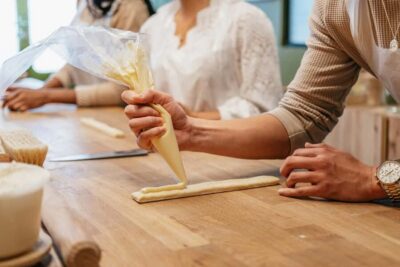
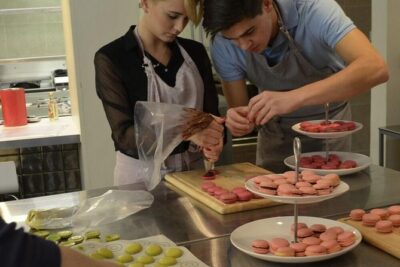
Paris Cooking Class: Learn How to Make Macarons
Read our review →
A Morning in Paris Food Tour: Croissants, Baguettes & Chocolate
Read our review →
Paris Chocolate, Macaron & Pastry Food Tour: 10 Gourmet Tastings
Read our review →Browse the lists this tour appears in