
Reviewed · HISTORICAL TOURS
Paris Jewish History 2-Hour Private Guided Walking Tour
Paris Jewish history is not confined to one museum or one memorial. On this two-hour private walk, you move through the city itself, from the Seine and Notre Dame to the old Jewish quarter in the Marais. The route connects medieval persecution, the Dreyfus affair, the Vichy government, Nazi occupation, and Jewish life today.
I like the small private format, which gives you room to ask questions and set the pace. I also like the route’s mix of major Paris sights and less obvious details, especially the Rue Pavée synagogue and the Pletzl. The main drawback is time: two hours is enough for a strong introduction, but not enough for every chapter of Paris Jewish life.
In This Review
- Key points to know before booking
- Why this walk matters in Paris
- Beginning beside Shakespeare & Company
- Notre Dame and the Jewish details of medieval Paris
- A memorial to the Vichy victims
- Entering the Marais and the Pletzl
- Rue Pavée and its Art Nouveau synagogue
- Place des Vosges and the architecture of the Marais
- From the Dreyfus affair to the present
- What the guide can add to the experience
- Price, timing, and practical value
- Who should book this walk
- Should you book the Paris Jewish History walk?
- FAQ
- Where does the Paris Jewish History walking tour begin?
- Where does the tour finish?
- How long does the tour last?
- What languages are available?
- Is this a private group tour?
- Is the tour wheelchair accessible and does it run in bad weather?
Key points to know before booking
- Start at Shakespeare & Company: Meet by the green fountain, where your guide carries a red canvas tote bag.
- Notre Dame opens the story: Expect about 30 minutes of guided interpretation around one of Paris’s great architectural landmarks.
- The Marais is the heart of the walk: One hour is devoted to the Pletzl, Rue des Écouffes, Jewish landmarks, and the Rue Pavée synagogue.
- Guides bring different strengths: Hannah is praised for answering questions, while Boris is praised for linking Jewish history with Paris and Europe.
- This is a private experience: You get a guide for your own group, with English, French, or Serbo-Croatian available.
- Plan for any weather: The walk operates rain or shine, and food and drinks are not included.
Why this walk matters in Paris
Paris can make history feel polished and distant. This route does the opposite. It places Jewish history in streets, squares, religious buildings, and monuments that you might otherwise pass without a second thought.
You begin with the long story of Jewish settlement in the Paris area, including periods before France existed in its modern form. From there, the guide traces royal raids, medieval prejudice, antisemitic beliefs, the Dreyfus affair, the Second World War, the Nazi occupation, and the Vichy regime.
That range is a strength. You are not getting a single tragic episode presented in isolation. You are seeing how laws, political movements, religious suspicion, and state power affected Jewish life over many centuries.
Still, the subject needs careful pacing. A two-hour walk cannot give equal attention to every era. If you want detailed coverage of wartime deportations, postwar Jewish communities, or contemporary religious life, use this tour as a starting point rather than your only Paris history experience.
More Paris history walks:
- Paris: Louvre Museum Entry with History of Mona Lisa
★ 3.9 · 2,823 reviews - Paris: Dark History and Ghostly Guided Walking Tour
★ 4.7 · 1,000 reviews - Le Marais/Paris – The Historic, Trendy, Jewish, LGBT district
★ 5.0 · 341 reviews
Beginning beside Shakespeare & Company
The meeting point is in front of Shakespeare & Company, by the green water fountain. Your guide will carry a red canvas tote bag, a useful detail in a crowded part of central Paris.
This is a practical starting point. You are near Notre Dame and the Seine, so the tour begins in a central area that is easy to reach while sightseeing. Arrive with a few minutes to spare. The location is busy, and a clear meeting point matters when several walking tours are gathering nearby.
The guide speaks English, French, or Serbo-Croatian. Since this is a private group, you can ask for clarification instead of letting a question disappear into a large crowd. That matters here. The topics include unfamiliar names, changing borders, old prejudices, and political events spread over many centuries.
The guide’s personality may shape your experience. Hannah receives praise for being friendly, professional, and willing to answer questions. Boris is praised for connecting Jewish history with the history of Paris and Europe. Names are not guaranteed for every departure, but they give you a sense of the kind of guiding approach available.
Notre Dame and the Jewish details of medieval Paris
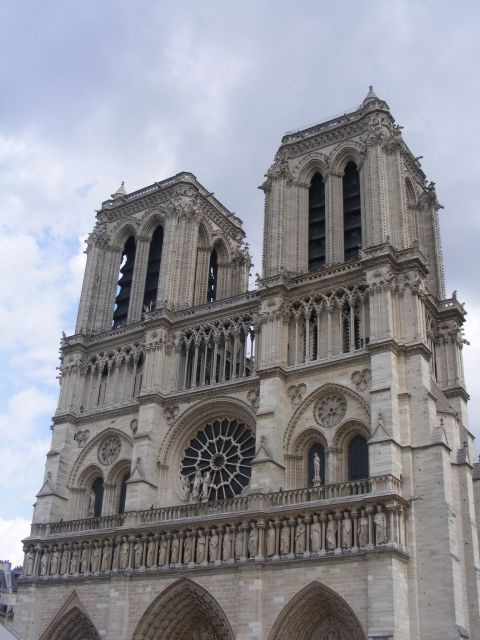
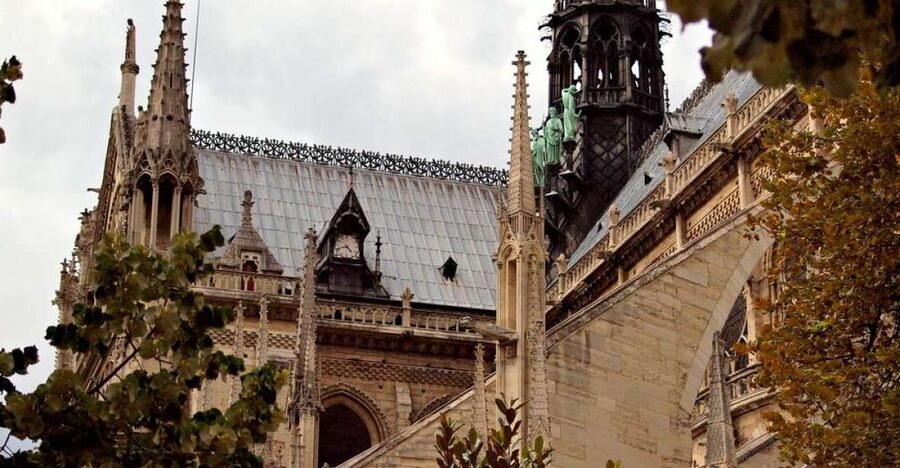
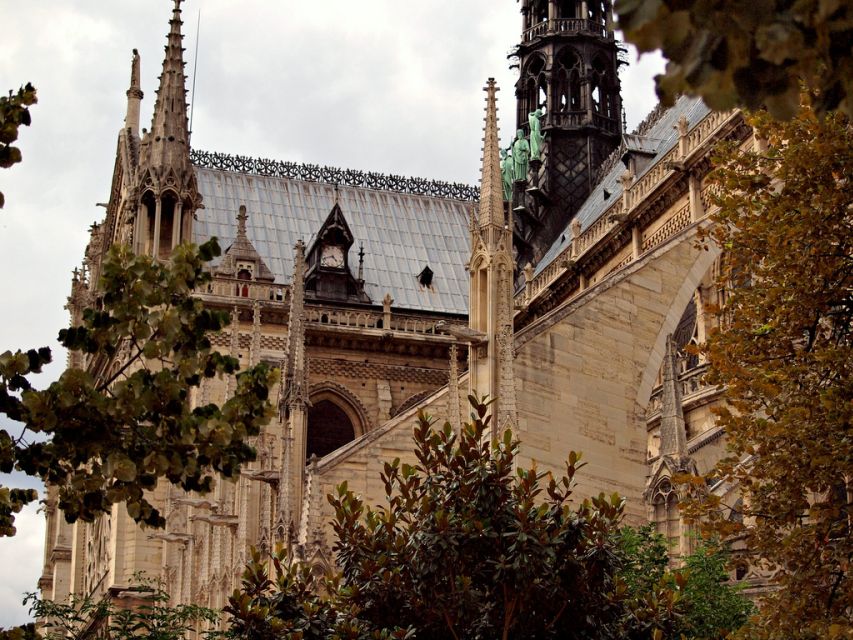
The first major stop is Notre Dame Cathedral, with about 30 minutes of guided attention. Most people come here for Gothic architecture, the towers, the flying buttresses, and the cathedral’s place in Parisian history.
This tour asks you to look at Notre Dame through another lens. You learn about Jewish aspects connected with the cathedral and the wider medieval city. The point is not simply to admire the building. It is to understand how religion, royal power, public ceremony, and social prejudice worked together in medieval Paris.
The cathedral also gives the guide a strong setting for discussing the Jewish community before modern France took shape. You may find this part especially useful if you know Notre Dame mainly as a famous landmark. The tour adds historical questions to the familiar stone: Who held power? Which groups were accepted, restricted, or blamed? How did religious ideas become popular superstitions?
The information provided for the walk does not promise entry into every interior space or a full cathedral visit. Think of this as a guided historical stop connected to Notre Dame, not a replacement for a dedicated cathedral tour.
The half-hour allocation is sensible. It gives you enough time to establish the setting without using up the entire walk before reaching the Marais, where the Jewish quarter becomes more visible and immediate.
A memorial to the Vichy victims
A shorter guided stop follows, lasting about 15 minutes. The itinerary does not identify the stop by name, but the route includes the memorial to the victims of the Vichy regime.
This pause brings the story into the 20th century. The Vichy government, Nazi occupation, and the persecution of Jews in France are among the key subjects covered during the walk. A memorial is a fitting place for this part of the discussion because it shifts the focus from medieval suspicion to modern state action.
You should expect a concise explanation rather than a full wartime seminar. The value comes from the route’s structure. The guide first explains older patterns of prejudice, then shows how antisemitism could take new political and bureaucratic forms in the 20th century.
For some people, this will be the most serious portion of the tour. The subject is painful, and a short walking tour can only present the main events. If you want extensive detail about the Holocaust in France, plan a separate museum or memorial visit.
More Paris walking tours:
- Paris Top Sights Half Day Walking Tour with a Fun Guide
★ 5.0 · 2,893 reviews - Montmartre Hidden Gems and Scenic Highlights Walking Tour
★ 5.0 · 2,684 reviews - Montmartre Hill French Gourmet Food and Wine Tasting Walking Tour
★ 5.0 · 2,588 reviews - Paris Île de la Cité and Notre-Dame Walking Tour With Crypt
★ 5.0 · 2,272 reviews
Entering the Marais and the Pletzl
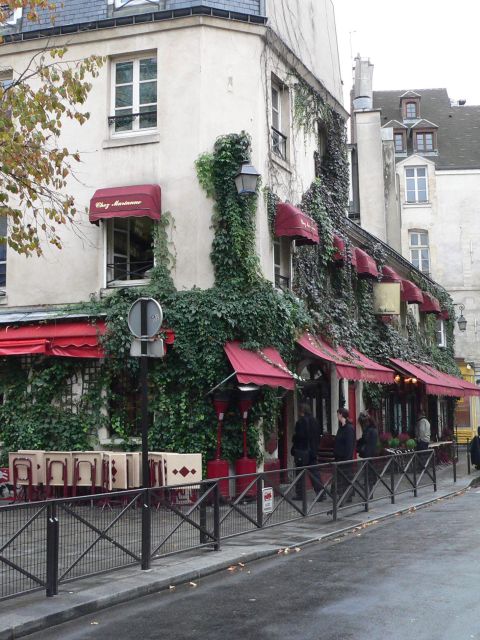
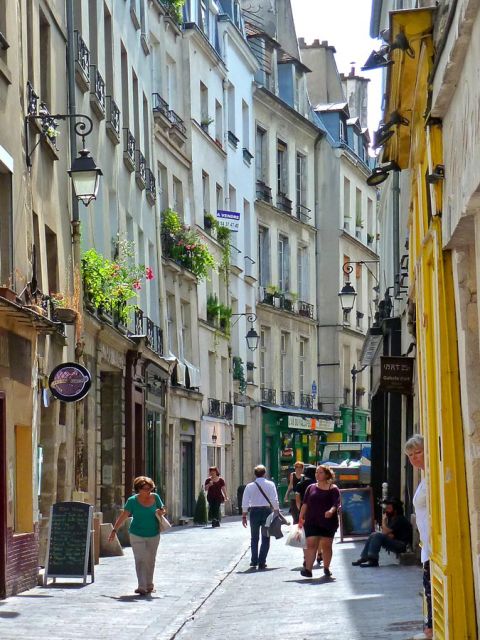
The Marais receives about an hour, making it the main part of the route. Here, the history becomes easier to picture because you are walking through the traditional Jewish quarter rather than only hearing about it from a major monument.
The Pletzl is the historic center of the Hebrew community in Paris. Its streets connect religious life, neighborhood identity, food, commerce, migration, and memory. The guide explains the area’s role while also placing it within the wider story of Paris.
You will pass Rue des Écouffes, one of the streets associated with the quarter, and see the Goldenberg Deli. These details help keep the tour grounded. Instead of treating Jewish history as a list of dates, the walk points to places where community life took shape.
The Marais is also one of the more enjoyable parts of the experience simply because the route combines history with ordinary city scenes. You are not sealed inside a lecture room. You are walking through a working neighborhood with famous squares, old streets, shops, and architectural details around you.
One caution: the area can be crowded, especially around popular streets and landmarks. Listen closely when the guide stops, and wear shoes suited to walking on uneven city surfaces. The total distance is not provided, but this is a walking tour with several stops, not a seated sightseeing experience.
Rue Pavée and its Art Nouveau synagogue
The Rue Pavée synagogue is one of the route’s most distinctive stops. This roughly 100-year-old building is described as an Art Nouveau jewel, giving the tour a welcome change of mood after the heavier historical material.
Art Nouveau is often linked with flowing lines, decorative forms, and careful attention to the relationship between structure and ornament. Here, the architecture becomes part of the Jewish story. You are not only learning where a community lived, but also seeing a religious building that reflects a later period of Parisian Jewish life.
The available details do not confirm that the tour includes entry inside the synagogue. Plan to admire and discuss the building from the route unless your guide confirms interior access. That small distinction matters, especially if synagogue architecture is your main reason for booking.
This stop is also where the tour can feel most different from a standard Paris walk. Notre Dame and Place des Vosges are familiar names. Rue Pavée offers a more specific connection to the neighborhood and its Jewish identity.
Place des Vosges and the architecture of the Marais
Place des Vosges is described as one of the world’s most beautiful squares, and it gives the walk a grand architectural pause. Its regular form and carefully planned buildings show how much design can shape a city space.
The highlight here is not just the view. Your guide discusses the architectural skill that made this complex possible, helping you notice the balance and planning that can be easy to overlook when you are busy taking photographs.
Place des Vosges also helps you understand the Marais as more than a Jewish quarter. The neighborhood contains several layers of Parisian life, and the square connects Jewish history with the political, social, and architectural story of the district.
Do not expect a long architectural lecture. The tour’s central subject remains Jewish Paris. Instead, this stop gives you context for the streets around it and helps explain why the Marais feels so visually distinct.
From the Dreyfus affair to the present
The walk includes the Dreyfus affair, one of the clearest examples of how antisemitism affected modern France. The guide places it within the broader history of the Hebrew community rather than treating it as a separate schoolbook episode.
That approach is useful because the Dreyfus affair was not only about one officer. It exposed divisions over justice, nationalism, the army, the press, and Jewish belonging in France. A good guide can show how the affair affected public life and why it still matters when discussing French identity.
The tour also reaches the Second World War, the Nazi occupation, and the Vichy government. These subjects carry enormous weight, so expect the guide to select the most important points rather than cover every event.
This is where asking questions will improve the experience. The private format gives you that chance. If your group wants more detail about a particular era, say so early. One lower-rated comment specifically wished for more stories about Jewish life in Paris. That is useful advice: tell the guide if you want daily life, family stories, food, customs, or neighborhood change alongside political history.
What the guide can add to the experience
A private history walk succeeds or fails through its guide. The route is good, but the information is dense, and a flat presentation could turn two hours into a string of names and dates.
The strongest guidance described here is personal and connective. Boris is praised for weaving Jewish history together with Paris and Europe. Hannah is praised for making time for questions. Those qualities matter more than simply reciting facts.
You should expect a guide-led conversation, not an audio tour. Ask about the places you pass, the meaning of the Pletzl, the synagogue’s design, the Dreyfus affair, or how older prejudices developed. If you prefer a highly detailed account of Jewish daily life, state that preference at the beginning.
The overall rating is 4.6 from 32 reviews, with several high marks for thorough explanations and strong knowledge of the neighborhoods. The comments are not uniformly glowing, so keep your expectations realistic. The experience appears strongest when you engage with the guide and use the private format to shape the discussion.
Price, timing, and practical value
At $176 per person, this is not a cheap two-hour stroll. The price makes the most sense for couples, families, or small private groups who value personal attention and want a focused introduction to a serious subject.
Because the group is private, the cost buys more than a standard shared walk. You can ask questions freely, move at a pace that suits your party, and request more emphasis on the periods that matter most to you. If you are booking alone, the price is harder to justify unless this subject is a major priority.
Food and drinks are not included. That is not a problem in the Marais, where you can easily continue with a meal or snack after the walk, but budget for your own purchases.
The tour lasts two hours and ends at Place de la Bastille. That finish is convenient for continuing your day, though it is not the same location as the start. You should be ready to walk back toward central Paris or continue with nearby sightseeing.
The experience is wheelchair accessible, according to the activity details. Tours operate rain or shine, so check the forecast and bring suitable clothing. A light raincoat is more useful than hoping Paris will grant you perfect weather.
Free cancellation is available up to 24 hours before the tour for a full refund, and you can reserve now while paying later. Those policies help if your Paris schedule is still shifting.
Who should book this walk
I would recommend this tour to you if you want a clear introduction to Jewish Paris and prefer history tied to actual streets. It suits first-time visitors who want to connect Notre Dame and the Marais, as well as repeat visitors who have already seen the major sights and want a more focused subject.
It is a particularly good match for:
- Couples and families who prefer a private guide
- Visitors interested in European religious and political history
- People who want to explore the Marais with more purpose
- Guests who like asking questions during a walking tour
- Those who want a short introduction before visiting a museum or memorial
You may want another option if you expect a full-day study of Jewish life, guaranteed synagogue entry, or extensive wartime documentation. You should also think twice if you dislike serious historical subjects or find two hours of walking tiring.
Should you book the Paris Jewish History walk?
Book it if you want a compact, thoughtful route that joins Notre Dame, the Marais, the Pletzl, Rue Pavée, and the history of Jewish life in Paris. The private format and guide-led discussion are the main reasons to pay the premium.
Before you start, tell your guide what interests you most. Ask for more daily-life stories if you want the human side of the history, or request more political context if the Dreyfus affair and Vichy period are your priority.
I would treat this as a strong introduction, not the final word. The route gives you the framework, the streets give it a sense of place, and your questions determine how much depth you get.
FAQ
Where does the Paris Jewish History walking tour begin?
The tour begins in front of Shakespeare & Company bookstore, by the green water fountain. Your guide will carry a red canvas tote bag.
Where does the tour finish?
The walk finishes at Place de la Bastille.
How long does the tour last?
The tour lasts two hours.
What languages are available?
The live guide can conduct the tour in English, French, or Serbo-Croatian.
Is this a private group tour?
Yes. The experience is offered for a private group.
Is the tour wheelchair accessible and does it run in bad weather?
The tour is wheelchair accessible and operates rain or shine.
More 2-Hour Experiences in Paris
- The Père Lachaise Cemetery: Guided 2-Hour Small-Group Tour
★ 4.7 · 1,065 reviews - Paris: 2-Hour Perfume Creation Workshop
★ 4.8 · 731 reviews - Paris Louvre: 2-Hour Private Tour for Groups or Families
★ 4.6 · 639 reviews - Paris Montmartre: 2-Hour City Tour in German
★ 4.9 · 299 reviews
Newest additions around Paris
- Family escape Game with kids and teens on the Île de la Cité★ 4.5 · 11 reviews
- Private Photoshoot with the Iconic Eiffel Tower in Paris★ 5.0 · 11 reviews
- 2-day Private Mont Saint-Michel, 3 Loire Castles, D-Day Express★ 4.5 · 11 reviews
- Paris: Batobus Hop-On Hop-Off Cruise & Landmarks Audio Tour★ 3.0 · 11 reviews
- Paris Revolutionary Walking Tour: Iconic French Sights & Stories★ 5.0 · 11 reviews
- Guided and Private Tour of 3 hours through Paris aboard a Citroën 2cv★ 5.0 · 11 reviews
- Kids in the Kitchen – CrOisSaNtS★ 4.0 · 11 reviews
- Paris: Ghosts and Dark Stories Guided Walking Tour★ 4.1 · 11 reviews
Historical Tours, compared.
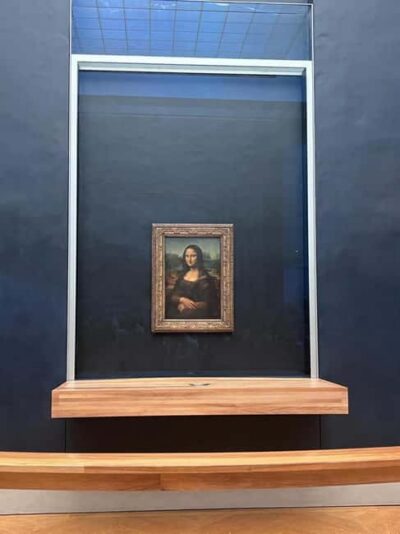
Louvre Museum Entry with History of Mona Lisa
Read our review →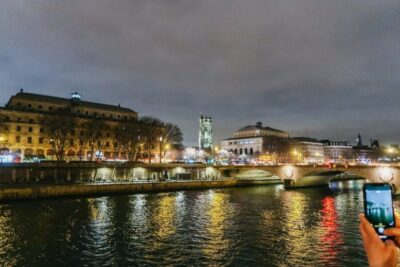

Le Marais/Paris – The Historic, Trendy, Jewish, LGBT district
Read our review →
Paris City of Fashion History Private Guided Walking Tour
Read our review →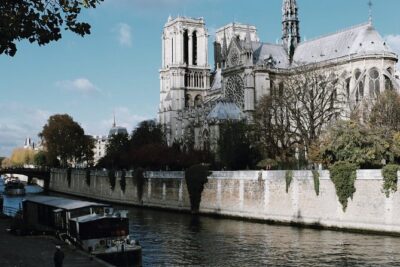
History of Paris City Center w/ Notre Dame Semi-Private 12ppl Max
Read our review →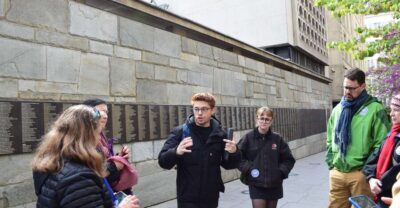
Le Marais & Montmartre Jewish History Walking Tour
Read our review →
Browse the lists this tour appears in